Overview

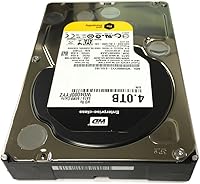
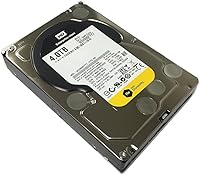
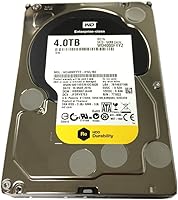
The Western Digital WD4000FYYZ 4TB Enterprise Hard Drive belongs to WD's RE series — a lineup engineered specifically for NAS enclosures, RAID arrays, and light server workloads, not your everyday desktop machine. This enterprise drive sits in an interesting market position: it's an older-generation unit now circulating at a mid-range price, making enterprise-class hardware accessible without a premium outlay. The 3.5-inch SATA 6Gb/s form factor means it slots neatly into standard desktop towers and most NAS bays. Four terabytes of raw capacity gives it genuine utility in storage-intensive environments. Worth knowing upfront: Western Digital has discontinued this model, so you're buying through secondary sellers — something to factor into your decision before purchasing.
Features & Benefits

Running at 7200RPM, this RAID-ready hard drive delivers the kind of consistent throughput that matters when multiple drives work in parallel — something slower consumer drives struggle with under sustained load. The 64MB cache helps maintain steady read/write performance across longer sequential tasks, reducing bottlenecks that plague lighter-duty alternatives. What really sets this drive apart for RAID use is its TLER firmware, which controls how long the drive retries a read error before reporting it to the controller. Standard consumer drives can stall long enough to trigger an array rebuild — disruptive and risky. The SATA 6Gb/s interface adds broad compatibility with both legacy and current hardware platforms.

Best For

This enterprise drive is a strong fit for small business owners building out a NAS with 24/7 uptime requirements, particularly when budget constraints rule out newer enterprise-tier options. Home lab builders assembling RAID 5 or RAID 6 arrays will find the combination of capacity, speed, and TLER support genuinely useful. IT professionals with older SATA-based server hardware get a proven upgrade path without chasing compatibility headaches. It also performs well in surveillance setups — DVR systems and security camera arrays demand sustained, continuous writes, and this drive was built for exactly that constant-duty workload. Just be comfortable sourcing a discontinued model through a third-party seller.

User Feedback

Across a solid base of reviews, buyers consistently praise the WD RE 4TB for holding up well over time in NAS and RAID environments — long-term reliability is the recurring theme. That said, honest expectations matter here. A notable share of buyers report receiving drives with prior power-on hours already logged, consistent with refurbished or pulled OEM stock. Check SMART data immediately after installation; it tells you exactly what you are dealing with. On the upside, value sentiment is strong — enterprise specs at this price tier are hard to argue with. The main friction point: packaging and shipping quality varies, and some drives arrive with scuffs or minimal protection.

Pros

  • TLER firmware actively prevents RAID array rebuilds caused by prolonged error recovery — a critical advantage over consumer drives.
  • The 7200RPM spindle speed delivers consistent throughput that holds up under multi-drive parallel workloads.
  • Four terabytes of capacity hits a practical sweet spot for NAS builds and small business storage pools.
  • Enterprise-class workload rating means this RAID-ready hard drive is genuinely built for 24/7 continuous operation.
  • The 64MB cache buffer keeps sequential read/write performance steady during longer, sustained tasks.
  • Broad SATA 6Gb/s compatibility makes this drive easy to drop into both legacy and modern hardware setups.
  • Buyers consistently report strong long-term reliability when the drive is deployed correctly in NAS or RAID environments.
  • The mid-range price point makes enterprise-grade specs accessible to home lab builders and budget-conscious IT teams.
  • Standard 3.5-inch form factor fits virtually all NAS enclosures, desktop towers, and rack-mounted storage bays.

Cons

  • Manufacturer support is gone — this is a discontinued model with no direct warranty from Western Digital.
  • Many units arrive as refurbished or pulled OEM stock, meaning prior usage hours are common and expected.
  • Shipping quality from third-party sellers is inconsistent; some buyers report drives arriving with minimal protective packaging.
  • No manufacturer warranty means any recourse depends entirely on the individual seller's return policy.
  • Older-generation technology puts it behind current drives in power efficiency and idle noise for some setups.
  • Not a practical choice for buyers who are unfamiliar with SMART diagnostics and drive health monitoring.
  • Secondary market sourcing introduces unit-to-unit condition variability that you simply do not face with new retail stock.
  • Finding a verified seller with reliable stock requires extra due diligence that current-generation drives do not demand.

Ratings

The scores below reflect AI-driven analysis of verified global buyer reviews for the Western Digital WD4000FYYZ 4TB Enterprise Hard Drive, with spam, bot-generated, and incentivized submissions actively filtered out before scoring. This enterprise drive earns strong marks where it counts most — sustained reliability and RAID performance — but the ratings also surface real friction around condition consistency and the realities of buying a discontinued model. Both the wins and the frustrations are reflected honestly here.

Long-Term Reliability
88%
Buyers running this RAID-ready hard drive in multi-drive NAS arrays consistently report years of stable operation without failure. Reviewers who deployed it in RAID 5 or RAID 6 configurations highlight that it holds up under the kind of sustained, repetitive workloads that wear out consumer drives within months.
Reliability scores drop notably when units arrive with high prior usage hours already logged, which is a real risk with secondary-market stock. A subset of buyers reports early failures, almost always traceable to units that showed poor SMART health data on arrival.
RAID Performance
91%
The TLER firmware is genuinely appreciated by NAS builders and IT professionals who have experienced the alternative — a consumer drive stalling mid-array and forcing a full rebuild. Users running six-drive RAID 6 setups report stable controller communication and no unexplained drive drops during normal operation.
Performance advantages are invisible outside of RAID or server environments, meaning buyers who use this enterprise drive in a solo desktop configuration see no meaningful benefit over a cheaper consumer alternative. A small number of users report initial compatibility quirks with older SAS-to-SATA expanders.
Value for Money
83%
For home lab builders and small business operators, getting enterprise-tier specifications — TLER support, 7200RPM, 64MB cache — at a mid-range price point is a genuine draw. Reviewers repeatedly note that finding this level of RAID-optimized hardware at this cost would be difficult with a current in-production drive.
Value perception drops sharply when a unit arrives with significant prior usage hours, because buyers feel they are paying for functional enterprise storage and receiving something closer to end-of-life hardware. Shipping costs from some sellers also erode the price advantage more than buyers anticipate.
Condition on Arrival
58%
42%
Buyers who receive units in clean condition with low power-on hours consistently rate the out-of-box experience positively, noting drives arrive operational and ready to format without complications. A portion of reviewers report receiving well-packaged drives that show minimal cosmetic or operational wear.
This is the single most polarizing category across all reviews. A significant share of buyers receive drives with visible wear, high SMART usage hours, or packaging so minimal that cosmetic damage occurs in transit. The inconsistency across sellers makes condition on arrival feel like a lottery rather than a standard.
Throughput Speed
82%
18%
At 7200RPM with a 64MB buffer, the WD RE 4TB delivers sequential read and write speeds that hold steady under multi-drive workloads, which is exactly what NAS and server environments demand. Users backing up large media libraries or running databases report noticeably smoother transfers compared to 5400RPM alternatives.
This drive is not a performance drive by modern standards — SSDs have completely eclipsed it for raw speed. Buyers expecting benchmark-competitive numbers will be disappointed; the speed advantage here is specifically about sustained consistency, not peak throughput.
NAS Compatibility
87%
The standard 3.5-inch SATA form factor means this RAID-ready hard drive slots into Synology, QNAP, and most other major NAS enclosures without modification. Reviewers across a wide range of NAS hardware confirm clean detection and stable operation once drives are correctly formatted and arrayed.
Some NAS vendors do not include older discontinued WD RE drives on their official compatibility lists, which can create uncertainty for buyers who rely on vendor-certified hardware lists for enterprise or commercial deployments. This is more of a documentation gap than a functional incompatibility in practice.
Noise & Vibration
63%
37%
In enclosed NAS bays with active cooling fans, most users report that operational hum and seek noise blend into the ambient sound of the enclosure. Reviewers who mount these drives in professional rack environments rarely flag noise as a concern.
In quiet home environments or open-bench lab setups, the 7200RPM spin and audible seek clicks are genuinely noticeable. Buyers expecting near-silent operation — common with many modern consumer drives — frequently flag this as a drawback in single-drive or small desktop configurations.
Heat Management
69%
31%
Enterprise 7200RPM drives are designed to shed heat over long operating periods, and buyers running this drive in well-ventilated NAS enclosures report no thermal throttling or heat-related errors during extended use. Proper airflow largely eliminates heat as a concern in purpose-built enclosures.
In cramped or poorly ventilated desktop cases, operating temperatures can climb higher than users expect compared to slower consumer drives. A few reviewers report elevated idle temperatures in single-drive setups without dedicated HDD cooling, which warrants monitoring with a SMART tool.
Seller & Packaging Quality
54%
46%
Buyers who source from reputable third-party sellers with strong feedback histories report satisfactory packaging and accurate product descriptions. A portion of reviewers highlight sellers who individually wrap drives in anti-static bags with foam padding, which makes a visible difference in arrival condition.
Across reviews, inconsistent packaging is a recurring frustration — bare drives shipped in bubble mailers are mentioned multiple times. The lack of manufacturer fulfillment means quality control varies entirely by seller, and there is no standardized expectation buyers can rely on.
Setup & Installation
86%
Experienced users and home lab hobbyists consistently describe installation as straightforward — mount, connect SATA power and data cables, and initialize. The drive requires no special drivers or configuration steps beyond what any standard SATA internal drive demands.
Less experienced buyers occasionally struggle with RAID configuration steps that fall outside the drive itself, sometimes attributing array setup difficulty to the drive rather than the NAS or controller software. The drive offers no installation guide, which is expected for enterprise hardware but can catch newcomers off guard.
Workload Endurance
89%
This enterprise drive is rated for continuous 24/7 operation, and real-world buyer data backs that up — NAS deployments running without downtime for multiple years are a common theme in long-term reviews. Surveillance system operators particularly appreciate the endurance under relentless sequential write cycles.
Workload ratings apply to correctly deployed, properly ventilated units. Drives that run persistently hot or arrive with significant pre-existing wear may not achieve the endurance that fresh enterprise-spec hardware would, and buyers have no way to verify original workload history from the previous owner.
Backward Compatibility
84%
The SATA 6Gb/s interface negotiates cleanly with SATA 3Gb/s controllers through standard backward compatibility, making the WD RE 4TB usable in legacy server and desktop hardware that would otherwise be difficult to expand. IT professionals repurposing older rack hardware frequently highlight this as a practical advantage.
Buyers attempting to use this drive with SAS controllers via SATA adapters occasionally report detection inconsistencies, particularly with older expander cards. These issues are not universal, but they appear often enough in reviews to merit a heads-up for users working with non-standard controller setups.
Manufacturer Support
31%
69%
Western Digital built a strong reputation for enterprise storage quality over the lifespan of the RE series, and that history lends the WD RE 4TB credibility even as a discontinued model. Buyers with prior WD enterprise experience trust the underlying engineering.
There is no active manufacturer support for this model — no warranty, no RMA process, and no firmware updates. Buyers are entirely dependent on seller goodwill for any post-purchase issues, which is a meaningful risk that reviewers who have experienced failures note with frustration.
Documentation & Firmware
47%
53%
Users familiar with enterprise storage need no documentation — the drive behaves predictably within established RAID and NAS frameworks, and TLER behavior is well understood by the target audience. Firmware is stable and does not require updates for typical deployment scenarios.
Western Digital no longer provides firmware updates or official technical documentation for this discontinued model. Buyers who encounter edge-case compatibility questions have no official channel to consult, and third-party resources vary significantly in accuracy and relevance.

Suitable for:

The Western Digital WD4000FYYZ 4TB Enterprise Hard Drive is purpose-built for buyers who need storage that can handle sustained, around-the-clock workloads without flinching. Small business owners running a NAS with four or more bays will immediately appreciate the TLER-optimized firmware, which keeps RAID arrays stable during error recovery instead of triggering costly rebuilds. Home lab enthusiasts building out RAID 5 or RAID 6 configurations on a tighter budget get genuine enterprise architecture without paying for a current-generation drive. IT professionals repurposing older rack or tower hardware with open SATA bays will find this drive fits right in — both physically and from a compatibility standpoint. Surveillance and DVR operators also benefit here, since the 7200RPM spindle and enterprise workload rating handle the kind of monotonous, continuous write cycles that wear out consumer drives within months.
Not suitable for:

The Western Digital WD4000FYYZ 4TB Enterprise Hard Drive is a poor match for buyers who want a simple plug-and-play storage upgrade for a personal desktop or laptop. This is not a drive you pull out of the box and forget about — given that it is discontinued and largely sourced through secondary sellers, there is a real chance you receive a unit with accumulated power-on hours already logged. Buyers who are not comfortable running a SMART diagnostic and interpreting the results should look elsewhere. It is also not the right choice for anyone wanting manufacturer warranty support or a clear upgrade path, since Western Digital no longer backs this model directly. If you are simply looking for extra storage for a home PC, a current consumer drive offers better peace of mind and comparable capacity for a similar outlay.
Specifications

  • Storage Capacity: This enterprise drive provides 4TB (4,000GB) of raw formatted storage, suited for high-volume data environments.
  • Spindle Speed: The drive operates at 7200RPM, delivering consistent rotational throughput required for sustained read/write workloads.
  • Cache Buffer: A 64MB cache buffer helps smooth out data transfer bursts and maintains steady performance during sequential operations.
  • Interface: It uses a SATA 6.0Gb/s interface, offering broad compatibility with both modern motherboards and legacy SATA controllers.
  • Form Factor: The 3.5-inch internal form factor fits standard desktop bays, NAS enclosures, and rack-mounted server chassis.
  • Error Recovery: TLER (Time-Limited Error Recovery) firmware restricts how long the drive retries a bad sector before notifying the RAID controller, protecting array integrity.
  • Workload Rating: Rated for enterprise-class 24/7 continuous operation, with workload tolerances significantly higher than consumer-grade alternatives.
  • RAID Support: The drive is fully RAID-compatible and optimized for use in RAID 0, 1, 5, 6, and 10 array configurations.
  • Platform Support: Compatible with both Mac and PC platforms, making it flexible across mixed-OS storage environments.
  • Dimensions: Physical dimensions measure 9.3 x 5.4 x 3.7 inches, conforming to the standard 3.5-inch hard drive specification.
  • Item Weight: The drive weighs approximately 2 pounds, consistent with typical 3.5-inch enterprise-class hard drive assemblies.
  • Manufacturer: Designed and manufactured by Western Digital, a long-established producer of enterprise and consumer storage solutions.
  • Model Number: The official model number is WD4000FYYZ, part of the WD RE (RAID Edition) product series.
  • Connectivity: Uses Serial ATA (SATA) connectivity, the standard internal interface for desktop and server storage hardware.
  • Installation Type: Designed exclusively for internal installation; it is not intended for use as an external or portable storage device.
  • Product Series: Part of the WD RE series, a lineup engineered specifically for demanding, always-on NAS and server deployments.
  • Manufacturer Status: This model has been discontinued by Western Digital and is currently available only through third-party and secondary market sellers.
  • Warranty: No active manufacturer warranty is provided; coverage depends entirely on the individual seller offering a separate seller-backed guarantee.

Related Reviews
Western Digital RE 3TB Enterprise Hard Drive
72%
76%
Long-Term Reliability
88%
RAID Performance
83%
Sequential Throughput
91%
Vibration Resistance
86%
NAS Compatibility
More
Western Digital 4TB My Book Desktop External Hard Drive
85%
88%
Data Transfer Speed
90%
Ease of Setup
84%
Build Quality
94%
Storage Capacity
91%
Security Features
More
WD Purple 4TB Surveillance Internal Hard Drive
84%
92%
Recording Reliability
94%
NVR/DVR Compatibility
83%
Value for Money
78%
Durability & Longevity
91%
Installation Ease
More
WD RE 2TB Enterprise Hard Drive
76%
74%
Long-Term Reliability
69%
Value for Money
83%
RAID Array Performance
86%
Vibration Tolerance
78%
Sequential Read/Write Speed
More
Western Digital 6TB WD Gold Enterprise Class Internal Hard Drive
88%
95%
Performance in Data-Intensive Tasks
93%
Reliability and Durability
88%
Vibration Protection Effectiveness
92%
Long-Term Stability (MTBF)
85%
Ease of Installation
More
Western Digital WD Gold 8TB Hard Drive
76%
83%
Reliability & Endurance
74%
Performance
88%
RAID Compatibility
81%
NAS Compatibility
78%
Noise & Vibration
More
Western Digital 4TB WD Red Plus NAS Internal Hard Drive
89%
91%
Performance
94%
Reliability
88%
Energy Efficiency
85%
Noise Levels
89%
Workload Handling
More
Western Digital RE4 WD5003ABYX 500GB SATA2 7200rpm Enterprise Hard Drive
85%
89%
Performance in Demanding Environments
91%
Reliability and Longevity
68%
Noise Levels
88%
Data Transfer Speed
90%
Compatibility with Devices
More
Western Digital WD Gold 16TB Internal Hard Drive
79%
88%
Long-Term Reliability
84%
Sustained Performance
91%
Build & Engineering Quality
63%
Noise & Vibration
67%
Thermal Management
More
Western Digital 1TB WD Gold Enterprise Class Internal Hard Drive
84%
91%
Performance Under Load
88%
Reliability for 24/7 Operation
75%
Ease of Setup
90%
Data Transfer Speed
87%
Durability and Build Quality
More

FAQ

That depends heavily on the seller. Since Western Digital discontinued this model, most units circulating on the market are refurbished, OEM pulls, or old stock. Always check the seller's listing carefully and, once the drive arrives, run a SMART diagnostic tool like CrystalDiskInfo to review its actual power-on hours and health status.

In most cases, yes. The drive uses a standard SATA interface and 3.5-inch form factor that fits the majority of Synology and QNAP enclosures. Some NAS manufacturers maintain compatibility lists, so it is worth cross-referencing your specific model just to be safe, though issues are uncommon with this type of drive.

TLER stands for Time-Limited Error Recovery. It caps how long the drive will attempt to fix a read error internally before handing the problem off to the RAID controller. Consumer drives lack this feature and can stall for 30 seconds or more on a single bad sector, which is long enough to cause the controller to drop the drive from the array entirely — a painful and risky situation.

Technically yes, but it is overkill for that purpose and not the best value when used that way. Consumer drives designed for desktop use are quieter, more power-efficient, and available with fresh manufacturer warranties. This RAID-ready hard drive is built for multi-drive, always-on environments — using it as a solo desktop drive does not take advantage of what makes it worth buying.

Enterprise 7200RPM drives are generally louder than 5400RPM consumer alternatives. You will notice operational hum and audible seek noise, especially in a quiet room. In a NAS enclosure or server chassis with other drives and fans running, the noise blends in. For a silent home setup it may be noticeable, but for a closet server or rack it is perfectly normal.

Typically no. Units sourced through secondary sellers usually ship as bare drives without accessories. Budget for SATA data cables and appropriate mounting hardware separately, and confirm with your seller before purchasing if accessories matter to your build.

Yes, it handles that use case well. Continuous write workloads from security cameras are exactly what enterprise-rated drives are built for. Consumer drives often degrade quickly under the relentless write cycles that DVR systems demand, whereas the WD RE series was designed with sustained duty cycles in mind.

Unfortunately, no. Western Digital no longer supports this discontinued model, so there is no manufacturer warranty to fall back on. Your only recourse is through the seller you purchased from. This is why checking the seller's return and warranty policy before buying matters more here than with a current in-production drive.

Download a free SMART monitoring tool — CrystalDiskInfo on Windows or smartmontools on Linux and Mac are reliable options. Run a short self-test and look at the power-on hours, reallocated sector count, and overall health status. If any of those figures look alarming, contact your seller promptly; most reputable ones will work with you on a return or replacement.

Yes, that is genuinely one of its stronger use cases. TLER support is critical in larger arrays because the risk of a timeout-triggered drive drop increases with array size. The enterprise drive's firmware handles error recovery in a way that keeps the array controller informed rather than leaving it waiting, which makes it a more dependable participant in a six-drive or larger RAID 6 setup than any standard desktop drive would be.