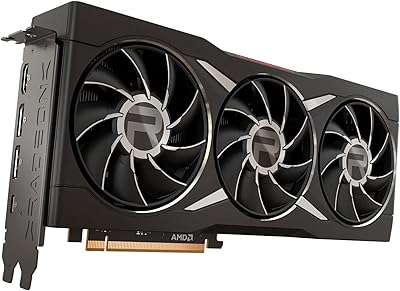
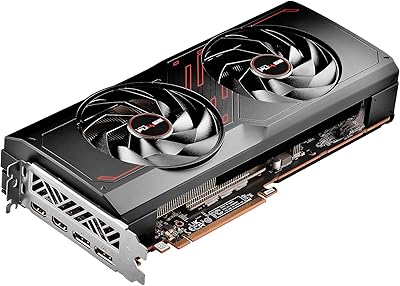
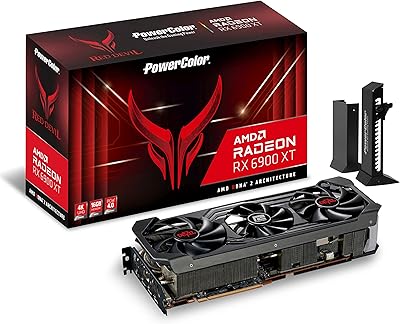
Overview

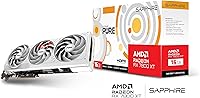
The Sapphire Pure RX 7800 XT 16GB GPU sits in a genuinely interesting spot in AMD's RDNA 3 lineup — not a flagship, but far from a compromise. Sapphire has been one of AMD's most trusted board partners for well over a decade, and the Pure series reflects that relationship: it prioritizes quiet, efficient cooling over flashy RGB theatrics. What really sets this card apart at its tier is the 16GB GDDR6 framebuffer, which gives it breathing room that most competing cards in the same price bracket simply don't have. For 1440p gaming, that headroom matters more than many buyers initially expect.
Features & Benefits

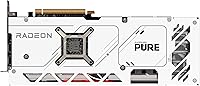
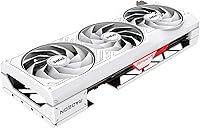
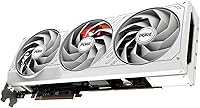
The dual-fan Pure cooler is the centerpiece here, using composite heatpipes to spread heat evenly rather than concentrating it over the GPU die. It works. Temps stay reasonable under sustained load, and fan noise remains unobtrusive at normal workloads. The all-aluminum backplate isn't just cosmetic — it stiffens the PCB and adds a secondary path for heat to escape passively. Clock speeds are tuned well, delivering consistent frame output during demanding scenes rather than wild fluctuations. The memory bandwidth at this speed tier handles high-resolution textures without stuttering, which makes a real difference in open-world titles with dense asset streaming. DisplayPort and HDMI outputs make multi-monitor configurations straightforward.

Best For

This card is squarely aimed at 1440p high-refresh gaming — think 165Hz monitors with demanding titles running at max or near-max settings. It handles that workload comfortably and carries enough VRAM to avoid sweating heavy texture packs or modded games that lighter cards struggle with. Content creators doing occasional video exports or Blender renders will appreciate the buffer size without paying flagship GPU prices. The RX 7800 XT plays nicely within the AMD ecosystem — FSR support is solid, and Radeon software has matured considerably. Builders stepping up from older mid-range cards will notice a substantial generational leap in both performance and efficiency.

User Feedback

Across roughly 450 ratings, the Sapphire Pure card holds a 4.6-star average — respectable without being unanimous. Buyers consistently praise thermal performance and build quality; the cooler earns its keep, and the aluminum backplate feels premium in hand. Where opinions diverge is around software. Some users report occasional driver hiccups or stability quirks, a recurring theme in AMD's Radeon ecosystem that hasn't entirely disappeared. A few note that power draw under heavy load runs higher than expected, worth checking against your PSU before buying. On balance, most feel this RDNA 3 GPU delivers strong performance for the money, though software polish expectations should stay realistic.

Pros

  • The 16GB GDDR6 framebuffer is unusually generous at this price tier, future-proofing the card against increasingly VRAM-hungry titles.
  • Thermal performance is a genuine strong suit — the Pure cooler keeps temperatures well controlled under sustained gaming loads.
  • Build quality feels solid and premium, with the aluminum backplate adding structural reassurance on a card of this weight.
  • 1440p gaming at high settings is handled comfortably across a wide range of modern titles.
  • The dual-fan cooler runs quietly during light-to-moderate workloads, which casual and mid-session gamers will appreciate daily.
  • FSR support is mature and effective, giving AMD users a solid upscaling option across a growing game library.
  • DisplayPort and HDMI outputs give flexibility for multi-monitor setups without requiring adapters.
  • The RX 7800 XT represents a meaningful generational leap over older mid-range cards from two or more generations back.
  • At roughly 12.6 inches, the card fits in most mid-tower cases without requiring unusual planning or clearance acrobatics.
  • A 4.6-star average across hundreds of real buyer ratings reflects consistent satisfaction with day-to-day performance.

Cons

  • AMD Radeon drivers have a history of occasional stability issues, and some buyers report post-update quirks that require troubleshooting.
  • Power draw under heavy load runs higher than the card's efficient reputation might suggest — PSU headroom is genuinely worth checking.
  • Native 4K performance at maximum settings hits a ceiling in the most demanding modern titles, requiring meaningful quality trade-offs.
  • Radeon software, while improved, still lags behind Nvidia's GeForce Experience in polish and ease of use for non-enthusiast users.
  • The card weighs 3.65 pounds, which means cheaper or older motherboards may need GPU support brackets to prevent sag over time.
  • No RGB lighting at all — buyers who care about aesthetics inside a windowed case will find the Pure series visually plain.
  • CUDA-dependent creative workflows are a complete non-starter, limiting appeal for users who mix gaming with professional software.
  • At this price point, competition from Nvidia's alternatives is real, and the value equation depends heavily on your specific game and software mix.
  • Stock availability has historically been inconsistent, and pricing has fluctuated noticeably since the card launched in late 2023.
  • Buyers sensitive to fan ramp-up noise during GPU-intensive workloads may notice the cooler becoming audible under prolonged stress.

Ratings

The scores below reflect AI-assisted analysis of verified global buyer reviews for the Sapphire Pure RX 7800 XT 16GB GPU, with spam, bot-submitted, and incentivized feedback actively filtered out before scoring. Each category captures both the genuine strengths enthusiasts repeatedly celebrate and the real frustrations that show up across buyer communities worldwide. Nothing has been glossed over — the numbers reflect the full picture.

1440p Gaming Performance
91%
Buyers running titles like Cyberpunk 2077, Hogwarts Legacy, and The Witcher 3 at 1440p ultra settings consistently report smooth, confident frame delivery without needing to dial back quality. The card handles demanding open-world scenes without the stuttering or frame dips that plague lighter cards pushed beyond their comfort zone.
A handful of users note that in the most GPU-punishing titles — particularly those with aggressive ray tracing — framerates can dip more than expected compared to Nvidia alternatives at a similar price point. It is a strong 1440p card, but not an untouchable one.
Thermal Performance
89%
The Pure cooler earns consistent praise from buyers who run long gaming sessions and monitor their temps. Under sustained load, most users report GPU temperatures staying in a comfortable range that never triggers thermal throttling, even in warm room environments.
A smaller subset of users in compact or poorly ventilated cases report temps running warmer than expected, suggesting the cooler's performance is partially dependent on having decent airflow in the build. It is not a set-and-forget solution in every chassis.
VRAM Capacity
93%
The 16GB framebuffer is repeatedly cited by buyers as the single most compelling reason they chose this card over competitors. Users running heavily modded Skyrim, high-resolution texture packs in Resident Evil games, or multi-monitor setups note they have never once hit a memory wall during gameplay.
For purely competitive 1080p gaming or esports titles, this much VRAM is overkill and buyers paying for it in that context are not extracting full value. A small number of reviewers feel the memory capacity is ahead of where most games actually are right now.
Build Quality
88%
The aluminum backplate and overall card construction draw regular compliments from builders who appreciate hardware that feels robust in hand. Several users specifically mention the backplate as something that makes the card feel more premium than its price tier would suggest.
Some buyers find the all-black, no-RGB aesthetic too plain for windowed builds where visual impact matters. The card is solid, but aesthetically it prioritizes function over form in a market where competitors offer more flair at the same price.
Cooler Noise Level
84%
During typical gaming sessions the dual-fan cooler stays quiet enough that most users cannot hear it over in-game audio. Casual gamers and those in quieter setups specifically call out how unobtrusive it is compared to reference coolers or cheaper third-party designs.
Under sustained stress — extended benchmark runs or particularly GPU-intensive scenes — the fans ramp up audibly, which some noise-sensitive users notice during quiet passages in games or late-night sessions. It is not loud, but it is not silent under pressure either.
Driver Stability
63%
37%
On stable, established driver versions, the majority of buyers report a perfectly functional day-to-day experience with no crashes or major issues. Long-term users who know to wait before updating drivers tend to have smooth experiences across their entire ownership period.
This is the most common pain point across reviews. Post-update instability, occasional black screens, and stuttering bugs that appear after AMD releases new drivers are reported with enough frequency to be a real concern. It is a platform-level issue rather than specific to this card, but buyers should go in with eyes open.
4K Gaming Capability
71%
29%
For users running less demanding or older titles at 4K, the RX 7800 XT handles the resolution respectably, and with FSR enabled, the experience in many games is genuinely enjoyable on a 4K panel. The 16GB VRAM at least means the card is not memory-limited at 4K resolution.
In the most demanding modern titles at native 4K with quality settings pushed high, the card reaches its limits and requires meaningful compromises — either in resolution scaling or visual fidelity. Buyers expecting native 4K ultra performance across the board will be disappointed.
Value for Money
76%
24%
Buyers who specifically needed a card with this much VRAM without paying flagship prices feel the value proposition holds up well. The combination of 16GB, solid thermal management, and strong 1440p gaming makes the overall package feel reasonably justified to enthusiast builders.
At its full retail price, some buyers feel the competition from Nvidia's RTX 4070 — which offers a stronger ray tracing experience and more polished software — makes the value equation tighter than it looks on paper. Sensitivity to price fluctuations is a recurring theme in longer reviews.
Software Ecosystem
61%
39%
Radeon Software has improved substantially over the years, and most day-to-day features — performance overlays, fan curves, and game optimization profiles — work reliably for users who invest a little time in configuration. FSR integration across supported titles is a genuine plus.
Compared to Nvidia's GeForce Experience, Radeon software still feels less polished and occasionally less intuitive for users who are not already AMD enthusiasts. Features like automatic game optimization and streaming tools lag noticeably behind what users on the other side of the fence take for granted.
FSR Upscaling Quality
82%
18%
Buyers who lean into AMD FidelityFX Super Resolution report meaningful framerate gains with acceptable visual quality in a broad range of supported titles. At Quality and Balanced modes, the difference from native rendering is subtle enough that most users stop noticing it within minutes.
FSR is not universally supported across every game library, and in titles where it is absent, AMD users lack a comparable alternative to Nvidia's DLSS. Buyers with libraries heavily weighted toward unsupported titles will find this upscaling advantage largely irrelevant in practice.
Installation & Compatibility
86%
Most buyers describe installation as straightforward — the card slots in cleanly, drivers are available on day one, and it plays well with mainstream Intel and AMD platforms without compatibility headaches. Builders upgrading from previous-gen AMD cards report the transition is particularly smooth.
At 12.6 inches and three slots wide, the card can be a tight fit in smaller mid-tower cases, and a few users note the weight warrants a GPU support bracket that does not always come included. New builders occasionally underestimate PSU requirements and run into power-related instability.
Multi-Monitor Support
81%
19%
Users running dual or triple monitor productivity setups praise the card's ability to handle multiple displays without any configuration drama. The combination of DisplayPort and HDMI outputs covers most monitor combinations without needing adapters or hubs.
The output configuration works well for typical setups, but buyers with very specific monitor arrays — such as mixed refresh rate panels — occasionally report minor compatibility quirks that require workarounds. High-refresh-rate multi-monitor gaming at ultra settings is still asking a lot of the card.
Long-Term Reliability
78%
22%
Buyers who have owned the card for six months or more generally report continued stable performance with no hardware degradation. The aluminum backplate and solid PCB construction suggest Sapphire built this for durability over a realistic GPU ownership cycle.
The sample size of long-term owners is still relatively limited given the card's 2023 launch date, making it harder to draw confident conclusions about multi-year reliability. A small number of users report RMA situations, though Sapphire's warranty process receives generally positive feedback.
Creative Workload Performance
67%
33%
For light video editing in DaVinci Resolve or occasional Blender work, the large VRAM buffer gives this RDNA 3 GPU a practical advantage that buyers doing part-time creative work genuinely appreciate. Streaming while gaming is handled without the performance hit some users feared.
CUDA-dependent workflows are a hard wall — any buyer relying on Adobe's CUDA acceleration or NVIDIA-specific compute tools will find this card simply does not apply. Even in AMD-friendly creative software, professional-grade rendering workloads expose clear performance ceilings compared to workstation-class alternatives.

Suitable for:

The Sapphire Pure RX 7800 XT 16GB GPU is purpose-built for PC gamers who have settled on 1440p as their target resolution and want to run demanding titles at high or maximum settings without constantly hitting a VRAM ceiling. If you're playing texture-heavy open-world games, running high-resolution asset packs, or modding games aggressively, the 16GB framebuffer gives you room that thinner cards at this tier simply cannot match. Builders upgrading from cards that are two or three generations old will feel a dramatic jump in both raw performance and power efficiency. It also suits AMD loyalists who want tight FSR integration and are comfortable within the Radeon software ecosystem. Light creative work — occasional video exports, simple 3D renders, or streaming — is well within reach too, making this a solid all-rounder for enthusiast-level builds on a considered budget.
Not suitable for:

The Sapphire Pure RX 7800 XT 16GB GPU is not the right call if your primary goal is native 4K gaming at consistently high framerates in the most demanding titles — it can push 4K in many games, but it will require settings compromises in the heaviest workloads. Buyers who are deeply embedded in the Nvidia ecosystem — relying on DLSS, CUDA-accelerated apps, or specific professional software — will find switching to Radeon a friction-filled experience that no cooler design can fix. If you're running a modest power supply under 700W, the card's draw under sustained load could become a real concern, and upgrading PSU adds unexpected cost to your build. Competitive esports players targeting extremely high refresh rates at 1080p will find the card overpowered and overpriced for that specific use case. Finally, anyone who expects plug-and-play software stability comparable to a console should know that AMD driver updates can occasionally introduce short-term headaches.
Specifications

  • GPU Architecture: Built on AMD's RDNA 3 architecture, the Radeon RX 7800 XT offers meaningful efficiency and performance gains over the previous RDNA 2 generation.
  • VRAM: 16GB of GDDR6 memory provides substantial headroom for high-resolution textures, modded games, and light creative workloads.
  • Memory Speed: The GDDR6 memory operates at 2437.5 MHz, enabling fast data throughput that reduces bottlenecking during complex scene rendering.
  • Boost Clock: The GPU can reach a boost clock of up to 2475 MHz, allowing it to push performance hard during demanding gaming workloads.
  • Game Clock: The rated game clock sits around 2169 MHz, reflecting the sustained speed buyers can realistically expect during extended play sessions.
  • Max Resolution: The card officially supports output resolutions up to 7680x4320 (8K), though practical 8K gaming requires significant settings compromises.
  • Display Outputs: Connectivity includes DisplayPort and HDMI ports, supporting multi-monitor configurations and high-refresh-rate displays out of the box.
  • Cooler Design: The Pure series dual-fan cooler uses composite heatpipes engineered to distribute heat evenly across the cooling module rather than concentrating it centrally.
  • Backplate: An all-aluminum backplate adds PCB rigidity, helps passively dissipate heat from the rear of the card, and keeps dust from settling on internal components.
  • Card Dimensions: The card measures 12.6 x 5.07 x 2.07 inches, occupying a triple-slot footprint that fits most standard mid-tower and full-tower cases.
  • Card Weight: At 3.65 pounds, this is a substantial card that may benefit from a GPU support bracket to prevent long-term PCIe slot sag.
  • Power Source: The card draws power via PCIe connectors and should be paired with a quality power supply — a unit with at least 700W is a practical recommendation.
  • Series: This card belongs to Sapphire's Pure RX 7000 series, which prioritizes efficient thermal management and quiet operation over aggressive overclocking headroom.
  • Model Number: The official model number is 11330-03-20G, which can be used to verify compatibility, find driver support, or identify the exact SKU when purchasing.
  • Upscaling Support: AMD FidelityFX Super Resolution (FSR) is fully supported, providing a practical framerate boost in a growing library of compatible titles.
  • Amazon Rating: The card holds a 4.6 out of 5 star rating across 452 verified Amazon ratings at the time of this review, indicating broadly positive buyer satisfaction.
  • Color: The card ships in a clean black finish with no RGB lighting, giving it a subdued, professional look inside a windowed case.
  • Chipset Brand: The GPU chipset is manufactured by AMD, with Sapphire handling board design, cooling, power delivery tuning, and quality control as an authorized partner.

Related Reviews
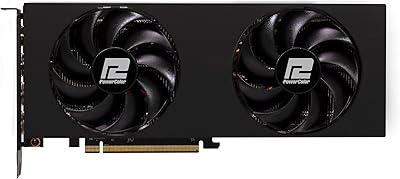
PowerColor RX 7800 XT 16GB Graphics Card
77%
84%
Gaming Performance
93%
VRAM Capacity
76%
Value for Money
81%
Thermal Management
57%
Ray Tracing Performance
More
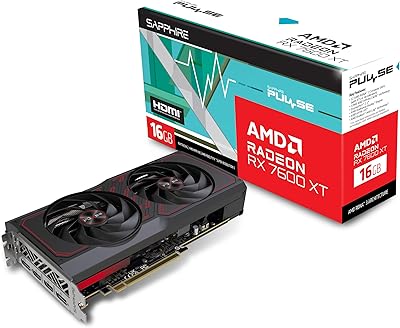
Sapphire Pulse RX 7600 XT 16GB GPU
78%
88%
1080p Gaming Performance
71%
1440p Gaming Performance
91%
VRAM Capacity
58%
Memory Bandwidth
89%
Thermal Performance
More
XFX Speedster MERC319 RX 7800 XT 16GB GDDR6 Graphics Card
85%
91%
Overall Performance
94%
Gaming Performance at 4K
88%
Cooling Efficiency
87%
Value for Money
85%
Build Quality
More
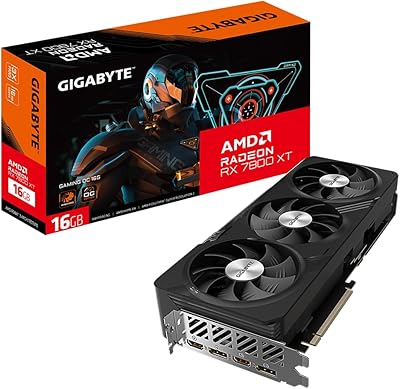
GIGABYTE RX 7800 XT 16GB Graphics Card
78%
91%
1440p Gaming Performance
88%
Thermal Management
93%
VRAM & Future-Proofing
79%
Value for Money
61%
Driver & Software Experience
More
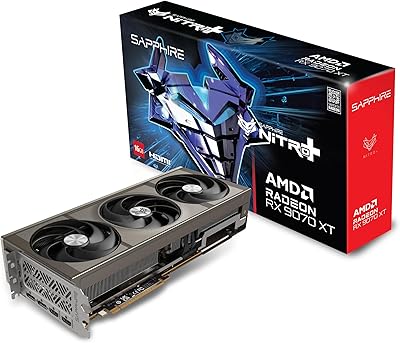
Sapphire Nitro+ RX 9070 XT 16GB
82%
92%
Gaming Performance
88%
Thermal Management
91%
Noise Level
93%
VRAM Capacity & Bandwidth
74%
Ray Tracing Performance
More
XFX RX 9060 XT 16GB
XFX RX 9060 XT 16GB
87%
94%
Gaming Performance
91%
4K Resolution Handling
88%
Cooling Efficiency
85%
Noise Levels
96%
Memory Capacity
More
AMD Radeon RX 6950 XT Graphics Card
72%
92%
4K Gaming Performance
94%
VRAM Capacity & Bandwidth
51%
Power Consumption
48%
Physical Size & Case Fit
67%
Driver Stability
More
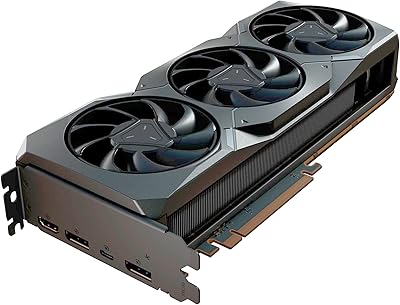
Sapphire Pulse RX 7700 XT 12GB Graphics Card
78%
86%
1440p Gaming Performance
91%
Thermal Performance
89%
Noise Levels
93%
VRAM Adequacy
88%
Build Quality
More
PowerColor Reaper RX 9070 XT 16GB
81%
93%
Gaming Performance at 1440p
88%
Value for Money
71%
Thermal Performance
67%
Noise Levels
84%
Build Quality & Physical Design
More
PowerColor Red Devil RX 6900 XT Graphics Card
78%
91%
Gaming Performance
89%
Thermal Management
84%
Noise Level
88%
Build Quality
93%
VRAM & Memory
More

FAQ

Most system builders pair the RX 7800 XT with a 700W to 750W PSU and have no issues, but if your CPU is particularly power-hungry or you run other high-draw components, leaning toward 800W gives you comfortable headroom. Do not cut corners on PSU quality here — a reliable unit from a reputable brand matters more than raw wattage alone.

In most cases, yes. At 12.6 inches long and occupying three expansion slots, it fits comfortably in the majority of standard mid-tower and full-tower builds. That said, some compact or smaller form factor cases can be tighter, so it is worth measuring your case's maximum GPU length before ordering.

It is genuinely useful, not just a spec sheet talking point. Modern open-world games with high-resolution texture packs, heavily modded titles, and some creative applications can push past 12GB at 1440p with settings cranked up. The extra buffer means you are less likely to hit memory limits as games continue to grow in asset size over the next few years.

The RX 7800 XT handles 1440p in Cyberpunk 2077 at high to ultra settings very well, typically delivering smooth playable framerates without FSR enabled. Turn FSR on for an extra performance cushion with minimal visual cost, and the experience becomes genuinely comfortable even with ray tracing elements in the mix.

AMD's drivers have improved considerably in recent years, and day-to-day stability is solid for most users. That said, occasional hiccups after major driver updates are still reported by a minority of buyers — it is worth waiting a few days after a new driver drops to check community feedback before updating, just as a habit.

For light to moderate creative work — video exports in DaVinci Resolve, basic Blender renders, or streaming — the card handles things well and the large VRAM helps. Where it falls short is CUDA-dependent software like some Adobe workflows or professional tools that are deeply tied to Nvidia's compute ecosystem, which simply won't work on AMD hardware.

At typical gaming workloads the Pure cooler is quiet enough that most users won't notice it over their in-game audio. Under sustained stress testing or very long gaming sessions, the fans ramp up noticeably but not to the point of being distracting. It is one of the quieter cooler implementations in this performance tier.

Yes, dramatically so. Cards from that era at 1080p were already showing their age, and moving to this RDNA 3 GPU at 1440p represents a substantial leap in both resolution capability and raw performance. The jump in VRAM alone removes a real ceiling that older 8GB cards hit constantly in modern titles.

Yes, the card supports multi-monitor configurations through its DisplayPort and HDMI outputs. You can drive multiple displays simultaneously, which works well for productivity setups or multi-screen gaming rigs. For high-refresh-rate competitive gaming, DisplayPort is the connection to use.

At comparable prices, the comparison is genuinely close. The RX 7800 XT wins on raw VRAM capacity by a meaningful margin, which matters for texture-heavy workloads. The RTX 4070 has an edge in ray tracing efficiency and DLSS quality, and Nvidia's software ecosystem is more polished. Your choice depends heavily on whether you rely on any Nvidia-specific features or software — if not, this Sapphire Pure card is a very competitive alternative.

Where to Buy