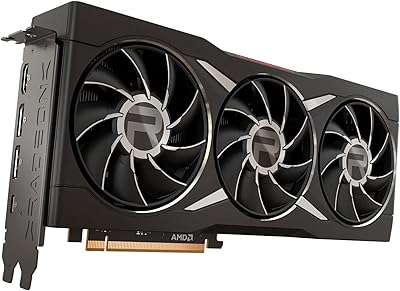
Sapphire Pulse RX 7700 XT 12GB Graphics Card
Overview
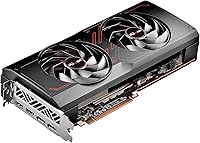
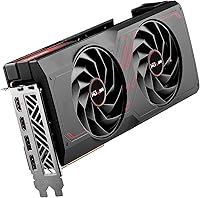
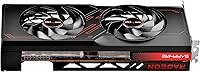
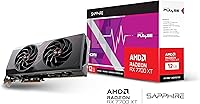
The Sapphire Pulse RX 7700 XT 12GB Graphics Card lands squarely in the mid-range sweet spot, built on AMD's RDNA 3 architecture and aimed at gamers who want genuine 1080p and 1440p performance without paying flagship prices. By the time this Radeon card reached shelves in November 2023, its driver ecosystem and community benchmark library were already maturing — a real advantage for buyers who don't want to deal with early-adopter rough edges. The dual-fan cooler with composite heatpipes keeps temperatures reasonable, and the 12GB GDDR6 buffer gives it a credible edge over competing cards shipping with 8GB at similar price points. Worth flagging before you buy: this card is physically large, so double-check case compatibility in advance.
Features & Benefits
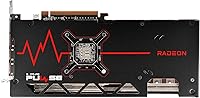
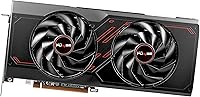
What sets the Pulse 7700 XT apart from a standard board starts with how Sapphire engineered the cooling. The composite heatpipes are tuned to this card's specific thermal layout, distributing heat evenly under sustained gaming loads rather than letting hot spots develop. The angled fan blades generate a layered downward airflow that keeps temperatures stable without the fans needing to spin aggressively loud. Then there's the PCIe fuse protection — a hardware-level safeguard built into the power connector circuit, a thoughtful inclusion given how much current modern GPUs draw. The metal backplate adds structural rigidity, and dual BIOS support makes it straightforward to switch between a quieter daily-use mode and a higher-performance profile without third-party tools.
Best For
This Sapphire GPU hits its stride for 1440p gamers caught between entry-level cards that struggle at higher resolutions and premium options that cost considerably more. If you're upgrading from something like an RX 5700 XT or RTX 3060, the performance gain is meaningful — particularly in open-world titles where high-resolution textures push VRAM past 8GB and older cards start to stutter noticeably. It's also a natural fit for AMD software users who rely on FSR upscaling, Radeon ReLive, or Radeon Super Resolution. One honest caveat: if chasing maximum overclocking headroom is your priority, the Pulse cooling design is tuned for quiet efficiency rather than a high thermal ceiling, and other cards serve that use case better.
User Feedback
Buyers are consistently positive about how quietly this Radeon card runs under real gaming conditions — the thermal performance under sustained load tracks well with what the cooler design promises, which isn't always guaranteed at this price tier. Real-world 1440p feedback is strong, especially from users upgrading from 8GB cards who notice the difference immediately in texture-heavy games. The recurring friction point is AMD's Radeon Software, where occasional driver stability issues and a less intuitive interface frustrate some users compared to Nvidia's ecosystem — worth factoring in if you're switching platforms. A handful of buyers also noted case fitment was tighter than expected given the card's footprint. At 4.6 stars across 145 ratings, the overall verdict feels honest and well-earned.
Pros
- 12GB of GDDR6 memory gives real headroom in texture-heavy games where 8GB cards already struggle.
- The dual-fan cooler keeps temperatures impressively stable under sustained gaming loads without running loud.
- Dual BIOS support makes it easy to switch between a quieter profile and higher performance without extra software.
- PCIe fuse protection on the power connector is a thoughtful hardware safeguard not every card at this tier includes.
- The metal backplate adds structural rigidity and gives the card a premium feel for its class.
- Driver maturity has caught up since launch, making day-one stability issues largely a thing of the past.
- Strong 1440p performance in real-world gaming holds up well against third-party benchmarks, not just marketing claims.
- AMD FSR integration works across a wide range of supported titles, boosting frame rates without requiring proprietary hardware.
- At 4.6 stars across over 100 verified buyer ratings, user satisfaction is consistent and credible.
Cons
- Radeon Software still trails GeForce Experience in usability and driver stability for some users, which can be frustrating.
- The card's physical size demands a full-size case with generous GPU clearance — compact builds may not accommodate it.
- Nvidia alternatives at a similar price bracket offer DLSS and stronger CUDA support for creative or compute workloads.
- Overclocking ceiling is limited by the Pulse cooler's efficiency-first design, leaving performance gains on the table.
- AMD's software ecosystem for content creators and streamers is less mature than Nvidia's equivalent toolset.
- 4K gaming is genuinely outside this card's comfort zone, so resolution-hungry buyers need to look elsewhere.
- A small but recurring portion of buyers report occasional driver conflicts requiring clean reinstalls to resolve.
- The card's weight — nearly 3 pounds — may stress PCIe slots in cases without a GPU support bracket.
Ratings
Our AI rating system analyzed verified global buyer reviews for the Sapphire Pulse RX 7700 XT 12GB Graphics Card, actively filtering out incentivized, bot-generated, and low-signal feedback to surface what real users actually experience. The scores below reflect a transparent synthesis of both the consistent strengths and the recurring pain points that emerged from that analysis. Where this Radeon card earns high marks, the data backs it up — and where it falls short, we have not softened the numbers.
1440p Gaming Performance
Thermal Performance
Noise Levels
VRAM Adequacy
Build Quality
Driver Stability
Software Experience
Value for Money
Case Compatibility
1080p Gaming Performance
Installation Experience
Overclocking Headroom
Long-Term Reliability
Suitable for:
The Sapphire Pulse RX 7700 XT 12GB Graphics Card is purpose-built for PC gamers who want to play at 1440p without stretching their budget into flagship territory. It makes the most sense for players who spend time in open-world RPGs, simulation titles, or heavily modded games where 8GB of VRAM has become a genuine bottleneck rather than a theoretical concern. Builders upgrading from mid-range cards from two or three generations back — think RX 5700 XT or RTX 3060 owners — will feel an immediate and noticeable difference in how the system handles demanding scenes. It also suits users already invested in the AMD ecosystem who want to take advantage of FSR upscaling, Radeon Super Resolution, and ReLive recording without juggling third-party tools. If a quiet, thermally well-managed card matters more to you than squeezing out every last overclocked megahertz, this Radeon card is designed with exactly that priority in mind.
Not suitable for:
The Sapphire Pulse RX 7700 XT 12GB Graphics Card is a harder sell for buyers whose primary concern is raw performance-per-dollar in a competitive market where Nvidia's mid-range lineup offers compelling alternatives at overlapping price points. Hardcore overclockers will find the Pulse cooler tuned for quiet efficiency rather than extreme thermal headroom, so it is not the right platform if pushing limits is the goal. Users in compact or mid-tower builds need to measure carefully before buying — this card's physical footprint is substantial, and case compatibility is not guaranteed without checking clearance first. Anyone deeply embedded in Nvidia's software ecosystem, particularly those relying on DLSS or CUDA-based workflows for creative applications, will find this Sapphire GPU a poor fit regardless of the gaming specs. Finally, buyers chasing 4K gaming at high frame rates should look further up the product stack, as the RX 7700 XT is designed around 1440p as its optimal target resolution.
Specifications
- GPU Architecture: The card is built on AMD's RDNA 3 architecture using the Navi 32 die, the same generation found in AMD's broader RX 7000 series lineup.
- Video Memory: It carries 12GB of GDDR6 VRAM, providing substantial headroom for high-resolution textures and demanding workloads at 1440p.
- Cooling System: Cooling is handled by a dual-fan setup with composite heatpipes tuned to this card's specific thermal layout for even heat distribution across the heatsink fins.
- Fan Design: The fans use angled velocity blades engineered to produce a dual-layer downward airflow pattern, improving pressure and air movement compared to earlier Pulse-generation coolers.
- Power Protection: A hardware fuse is built into the external PCIe power connector circuit to protect onboard components from power delivery irregularities.
- BIOS Modes: The card includes dual BIOS support, allowing users to switch between a performance-oriented profile and a quieter, lower-noise operating mode via a physical switch.
- Backplate: A metal backplate is fitted to the rear of the PCB, adding structural rigidity and protecting the back of the board during handling and transport.
- Model Number: The official item model number is 11335-04-20G, which identifies this specific Pulse variant within Sapphire's RX 7700 XT product family.
- Item Weight: The card weighs approximately 2.88 pounds, which is on the heavier side for a dual-fan mid-range GPU and may require a support bracket in some cases.
- Release Date: This card was made available to buyers on November 17, 2023, giving it a reasonably mature release window with established driver and community support.
- Manufacturer: The card is designed and manufactured by Sapphire Technology, one of the longest-standing AMD board partners with a strong track record in GPU cooler engineering.
- Interface: The card connects via a standard PCIe interface, with the external power delivery routed through a connector circuit that includes the built-in fuse protection feature.
- Best Sellers Rank: As of available data, this card holds a rank of #1,903 in the Computer Graphics Cards category on Amazon, reflecting consistent and steady buyer demand.
- User Rating: The card holds a 4.6 out of 5 star rating based on 145 verified buyer ratings, indicating strong overall satisfaction across a meaningful sample size.
- Target Resolution: The card is optimized for 1080p and 1440p gaming, delivering capable frame rates at those resolutions in the majority of modern titles.
- Airflow Improvement: Sapphire claims the redesigned fan blade geometry delivers up to 44% more downward air pressure compared to the previous generation of Pulse coolers under equivalent load conditions.
Related Reviews
XFX RX 7700 XT Graphics Card
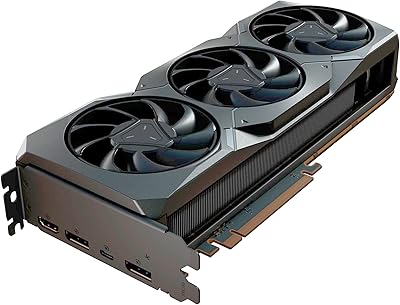
Sapphire Radeon RX 7900 XT Graphics Card
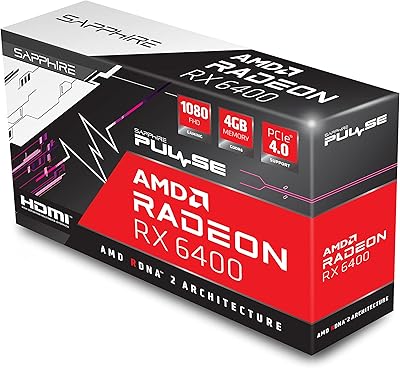
Sapphire Pulse RX 6400 4GB Graphics Card
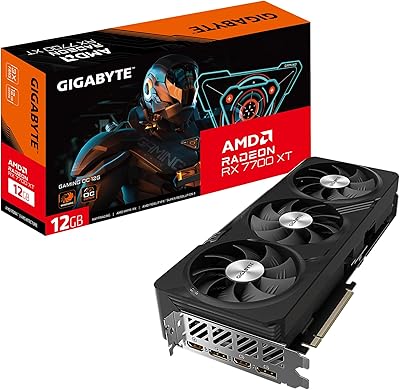
GIGABYTE RX 7700 XT 12GB Graphics Card
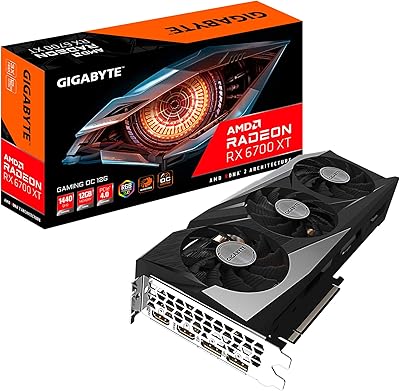
GIGABYTE Radeon RX 6700 XT Gaming OC 12GB Graphics Card
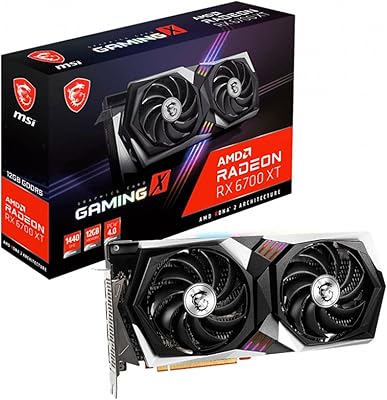
MSI RX 6700 XT Gaming X GPU
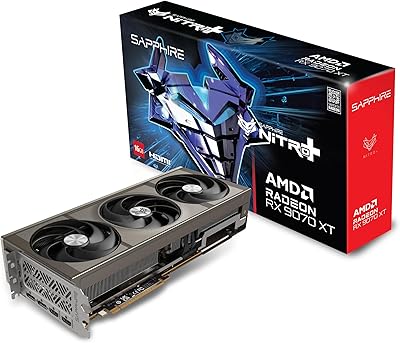
Sapphire Nitro+ RX 9070 XT 16GB
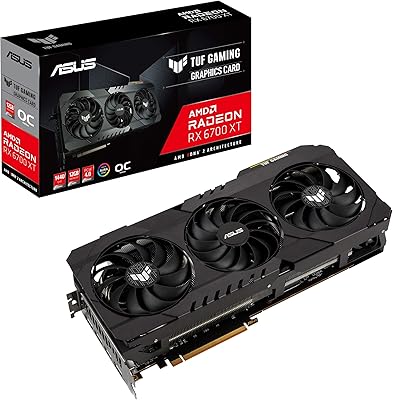
ASUS TUF RX 6700 XT Graphics Card
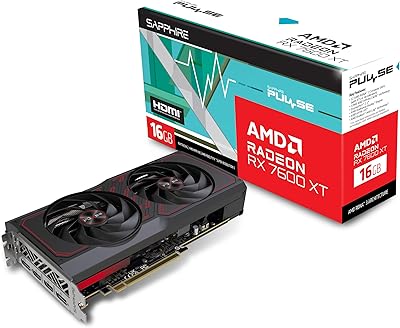
Sapphire Pulse RX 7600 XT 16GB GPU