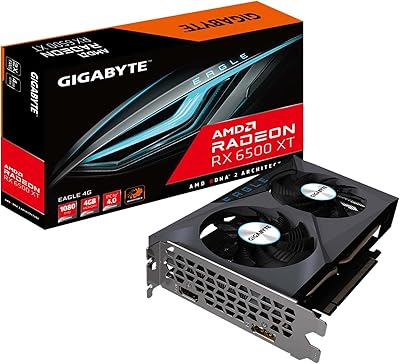
Overview
The ASUS TUF RX 6700 XT Graphics Card enters the market as a serious contender for gamers who care more about sustained performance than flashy lighting effects. The TUF lineup has always leaned into long-term reliability — it's not trying to win a beauty contest. Under the hood, RDNA 2 architecture delivers strong rasterization efficiency and keeps power draw reasonable for the performance on offer. At its price tier, this AMD-powered GPU competes in a crowded space, but its build-first philosophy gives it a distinct identity. Expect a workhorse, not a showpiece.
Features & Benefits
The cooling setup is where this TUF card truly stands apart. ASUS redesigned the fans with a higher blade count and counter-rotation between adjacent fans, reducing turbulence and improving static pressure through the heatsink. Those fans run on dual ball bearings, which last considerably longer than sleeve bearings — a meaningful detail if you run extended gaming sessions or rendering jobs. The all-aluminum shroud adds real rigidity, and the reinforced frame makes installation straightforward without any flex. A vented backplate prevents warm air from recycling back into the heatsink, keeping temperatures in check. The MaxContact heat spreader improves thermal contact with the GPU die itself, and every card goes through a 144-hour validation program before it ships.
Best For
The RX 6700 XT from ASUS is built squarely around high-refresh 1440p gaming. Whether you're running through open-world RPGs or grinding ranked matches in competitive shooters, 12GB of GDDR6 gives you enough headroom to run modern titles at high settings without constant VRAM pressure. It also suits content creators doing occasional video editing or light rendering who want capable GPU memory without buying a dedicated workstation card. One thing to flag: this card is on the larger side at nearly 13 inches long, so compact mATX or mini-ITX builders need to double-check clearance before committing. For anyone upgrading from a previous-generation AMD card or an older mid-range NVIDIA, the generational performance jump is substantial and noticeable in real workloads.
User Feedback
Most buyers come away satisfied with how this AMD-powered GPU handles heat. Temperatures under sustained load stay reasonable, and idle fan behavior is notably quiet — a detail that matters for those sharing a room with their PC. Build quality gets consistent praise; people appreciate the weight and solidity of the card. On the flip side, AMD driver stability draws occasional grumbles, which is a known trade-off on the AMD side regardless of board partner. GPU Tweak II, the bundled software, gets a mixed reception — some find it useful, others ignore it entirely. A small number of buyers reported compatibility hiccups out of the box, and a few felt the OC Edition boost didn't translate to dramatic real-world gains. Overall, expectations align well with reality when buyers understand what this card is optimized for.
Pros
- Sustained thermals under load are genuinely impressive — temperatures stay controlled even during long gaming sessions.
- Dual ball bearing fans are built for longevity, a real advantage over cheaper sleeve bearing designs.
- 12GB of GDDR6 provides comfortable VRAM headroom for modern titles at high 1440p settings.
- The all-aluminum shroud and reinforced frame give the card a premium, solid-in-hand feel.
- Vented backplate actively helps case airflow, reducing hot air buildup inside the chassis.
- RDNA 2 architecture delivers strong rasterization performance with competitive power efficiency.
- Fan noise at idle is very low — a welcome quality-of-life detail in quieter home setups.
- PCIe 4.0 support ensures the card is not a bottleneck on modern platform builds.
- 144-hour pre-ship validation reduces the likelihood of day-one compatibility headaches.
- HDMI 2.1 output covers high-refresh display connectivity without needing an adapter.
Cons
- At nearly 13 inches long, this card is simply too large for many compact and mid-size cases.
- AMD driver stability remains an occasional frustration — not an ASUS problem, but a platform reality buyers should accept.
- The OC Edition factory overclock delivers only modest real-world gains over reference clock speeds.
- GPU Tweak II software feels unpolished compared to competing board partner utilities.
- No meaningful RGB lighting for builders who want their GPU to contribute to an illuminated build aesthetic.
- The card is heavy enough that poor case support rails can stress the PCIe slot over time.
- Pricing at launch made value comparisons with competing cards uncomfortably close for some buyers.
- A small but notable portion of early buyers reported DOA units or initial compatibility issues.
- AMD's ray tracing performance still trails NVIDIA at equivalent price points, which matters if RT is a priority.
Ratings
The scores below for the ASUS TUF RX 6700 XT Graphics Card were generated by our AI system after analyzing verified global buyer reviews, with spam, bot activity, and incentivized feedback actively filtered out. Every category reflects the honest distribution of real user sentiment — not just the highlights. Where buyers consistently flagged pain points, those are weighted into the scores just as heavily as the praise.
1440p Gaming Performance
Thermal Management
Build Quality
Fan Noise
Driver Stability
Value for Money
OC Edition Performance Uplift
Software Experience
Case Compatibility
Connectivity
Long-Term Durability
Ray Tracing Performance
Installation Experience
Suitable for:
The ASUS TUF RX 6700 XT Graphics Card is the right pick for PC gamers who have landed on 1440p as their target resolution and want a card that can sustain high frame rates in demanding titles without thermal throttling cutting into performance over time. It particularly suits builders who prioritize long-term reliability over aesthetics — if you want your GPU to still be running strong three or four years from now, the dual ball bearing fans and robust aluminum construction are genuinely meaningful advantages. Upgraders coming from older AMD cards or a mid-range NVIDIA will notice a real performance jump, especially in rasterization-heavy workloads where RDNA 2 shines. The generous VRAM allocation also makes this a reasonable option for content creators who occasionally do video editing or light 3D work and want headroom without moving to a dedicated professional card. Mid-tower and full-tower builders with good case airflow will get the most out of its cooling design.
Not suitable for:
Buyers expecting a compact solution should look elsewhere — the ASUS TUF RX 6700 XT Graphics Card is a large, heavy card that simply will not fit in smaller form factor cases without careful planning, and in some mATX builds it may not fit at all. Anyone deeply invested in the NVIDIA ecosystem — whether for DLSS, CUDA-dependent software, or specific productivity tools — will find AMD's alternative ecosystem a meaningful trade-off rather than a straightforward swap. This card is also not ideal for users who have had frustrating experiences with AMD's driver software in the past, since that is a platform-level consideration that no board partner can fully resolve. Buyers chasing 4K at maximum settings in the most demanding modern titles may find performance falls short of their expectations at that resolution, as this card is optimized for 1440p rather than true 4K throughput. Finally, those who want an RGB-forward build aesthetic will find the TUF line's understated industrial look a disappointment.
Specifications
- GPU: The card is powered by the AMD Radeon RX 6700 XT, built on the RDNA 2 architecture for strong rasterization performance and improved power efficiency over prior generations.
- VRAM: 12GB of GDDR6 memory provides substantial headroom for high-resolution textures and modern game assets at 1440p.
- Memory Speed: The GDDR6 memory operates at 4000 MHz, supporting fast data throughput between the GPU and its frame buffer.
- PCIe Interface: The card uses a PCIe 4.0 interface, ensuring full bandwidth compatibility with current-generation motherboards while remaining backward compatible with PCIe 3.0 slots.
- Display Outputs: Connectivity includes one HDMI 2.1 port and three DisplayPort 1.4a ports, supporting multiple high-refresh and high-resolution displays simultaneously.
- Max Resolution: The card supports output up to 8K (7680 x 4320) at 60Hz, covering the full range of current consumer display standards.
- Cooling System: An Axial-tech triple-fan array with increased blade count and a counter-rotation scheme on the middle fan reduces turbulence and improves airflow through the heatsink.
- Fan Bearings: All three fans use dual ball bearings, which ASUS rates for significantly longer operational life compared to standard sleeve bearing designs.
- Shroud Material: The outer shroud is constructed from all-aluminum, adding structural rigidity and contributing to the card's overall premium, industrial aesthetic.
- Backplate: A vented metal backplate provides rear structural support and includes ventilation cutouts to prevent hot air from recirculating back through the cooling array.
- Heat Spreader: The MaxContact heat spreader is machined to a tighter tolerance, increasing thermal contact area with the GPU die for more efficient heat transfer under sustained load.
- Validation: Every unit undergoes a 144-hour pre-shipment validation program covering compatibility testing with current game titles and general system stability checks.
- Dimensions: The card measures 12.68 x 5.98 x 2.28 inches, occupying approximately 2.7 slots and requiring adequate clearance in mid-tower or full-tower cases.
- Weight: At 4.84 pounds, the card is substantial enough that builders should verify PCIe slot support or consider a GPU brace for long-term installation stability.
- Software: GPU Tweak II is included for fan curve customization, overclocking, and real-time performance monitoring, though its use is entirely optional.
- Series: This card belongs to the TUF Gaming OC Edition lineup, which ships with a factory overclock applied above AMD reference specifications.
- Architecture: RDNA 2 delivers meaningful gains in compute performance per watt compared to the previous RDNA 1 generation, particularly in rasterization workloads.
- Power Connector: The card requires two 8-pin PCIe power connectors, so builders should confirm their PSU has adequate connectors and sufficient wattage — a 650W or greater PSU is recommended.
Related Reviews
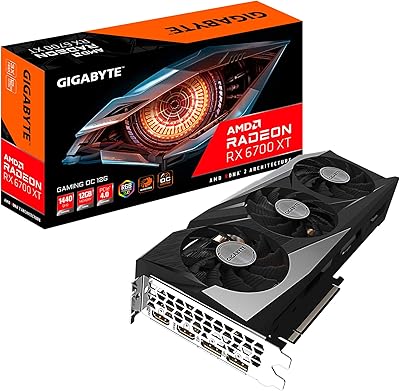
GIGABYTE Radeon RX 6700 XT Gaming OC 12GB Graphics Card
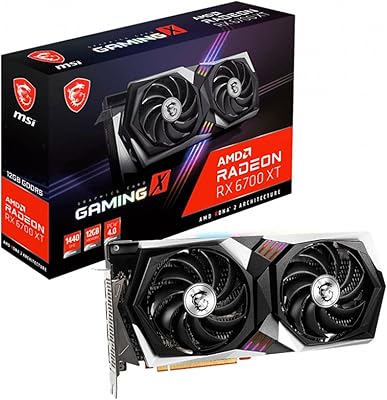
MSI RX 6700 XT Gaming X GPU
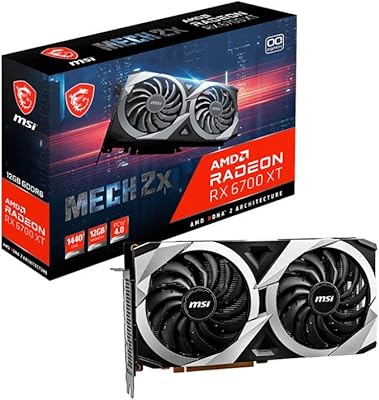
MSI 6700 XT MECH 12G OC GPU
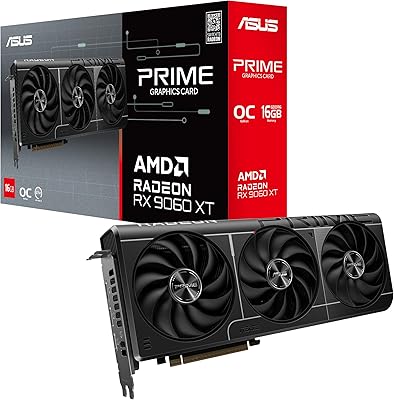
ASUS RX 9060 XT 16GB Graphics Card
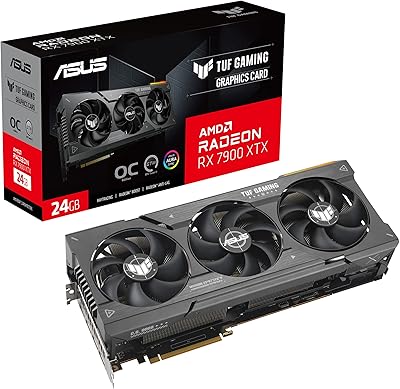
ASUS TUF RX 7900 XTX Graphics Card
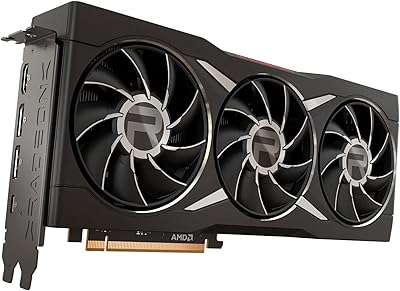
AMD Radeon RX 6950 XT Graphics Card
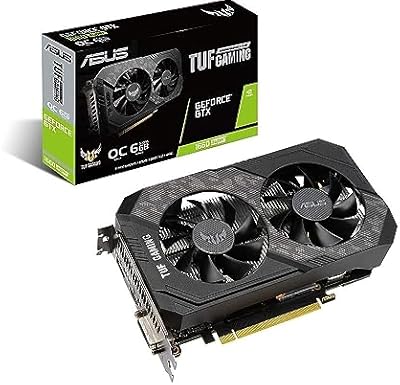
ASUS TUF GTX 1660 Super 6GB GPU
QTHREE Radeon RX 560 XT 8GB Graphics Card
Sapphire Radeon RX 7900 XT Graphics Card