Overview

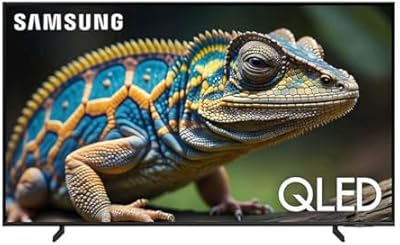
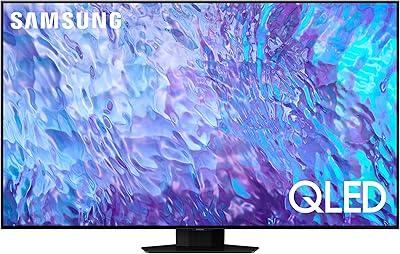
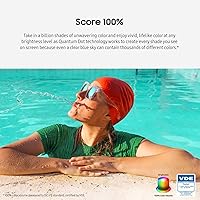
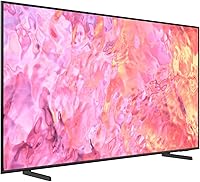
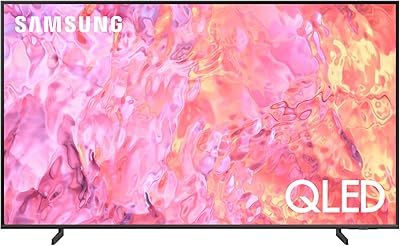
The Samsung Q60C 75-inch QLED 4K Smart TV sits comfortably in the middle of Samsung's 2023 lineup — capable enough to impress, without the premium price tag of the Q80C and above. At the heart of its picture quality is Quantum Dot technology, which pushes color accuracy and vibrancy across a wide range of brightness levels. The Titan Gray finish looks understated and modern, and at 66 inches wide with the stand, you'll want to measure your space carefully before it arrives. This is a strong TV for its tier — not a reference-grade display, but a genuinely well-rounded set for most living rooms.

Features & Benefits

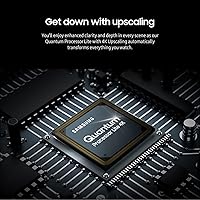
The Dual LED backlight is one of the more practical upgrades over budget-tier sets — it uses separate warm and cool LED zones to produce more accurate, balanced contrast depending on what's on screen. For streaming, the Quantum Processor Lite handles 4K upscaling well enough that older HD content holds up without looking overly processed. Motion Xcelerator keeps fast-moving scenes — sports replays, action sequences — cleaner than you'd expect at 60Hz native. The built-in Samsung Gaming Hub gives access to cloud gaming without a console, and Alexa voice control handles basic commands reliably. One honest note: Object Tracking Sound Lite is better than nothing, but it won't replace a dedicated soundbar.

Best For

This 75-inch Samsung QLED makes the most sense for households upgrading from a smaller or older non-4K set — the jump in screen real estate alone is immediately noticeable. Sports fans will appreciate the motion handling at typical viewing distances, and casual gamers who aren't chasing the lowest possible input lag should find the Gaming Hub a convenient bonus. It works well as a standalone smart TV; the Tizen platform is responsive and covers all major streaming apps out of the box. If you're already in the Samsung audio ecosystem, Q-Symphony pairing with a compatible soundbar takes the audio experience considerably further. Living rooms with 10 to 14 feet of viewing distance are the sweet spot for this screen size.

User Feedback

Owners of the Q60C consistently praise the color vibrancy and the sheer value of getting a 75-inch 4K screen at this price tier — out-of-box setup is widely described as quick and intuitive, with the Samsung remote and Tizen UI earning particular appreciation. On the critical side, the 60Hz native panel comes up regularly among buyers who compared it against 120Hz competitors, and local dimming performance is noticeably limited next to higher-end Samsung models. Sound quality from the built-in speakers draws the most consistent complaints — a recurring recommendation across reviews is to budget for an external soundbar. Long-term reliability feedback is largely positive, with few reports of serious hardware issues in the first year of ownership.

Pros

  • Quantum Dot technology produces rich, vibrant colors that hold up well across different brightness levels and room lighting conditions.
  • The 75-inch screen size delivers an immediately impressive upgrade for anyone coming from a smaller panel.
  • Dual LED backlighting provides more balanced contrast than standard single-zone edge-lit TVs in this price range.
  • The Samsung Tizen smart platform is responsive and includes all major streaming apps without needing an external stick or box.
  • 4K upscaling handles HD streaming content respectably, so older shows and movies don't look out of place on the large screen.
  • Motion Xcelerator keeps sports replays and action scenes noticeably cleaner than budget-tier panels at similar sizes.
  • Setup is consistently described as quick and approachable, with a well-designed remote that doesn't require a manual to figure out.
  • Built-in Alexa and Google Assistant support covers voice control for both TV functions and smart home devices.
  • Q-Symphony 3.0 compatibility lets the TV work in tandem with a paired Samsung soundbar for a more cohesive audio experience.
  • The Samsung Gaming Hub provides access to cloud gaming services without a console, adding practical flexibility for casual players.

Cons

  • The 60Hz native refresh rate puts the Q60C behind competitors offering 120Hz panels at comparable price points.
  • Local dimming is limited, so bright objects in dark scenes can produce visible light bleed around the edges.
  • Built-in speaker output at 20 watts is underwhelming for a screen this size — most owners end up buying a soundbar.
  • Object Tracking Sound Lite is a virtual audio effect, not a true speaker array, and its real-world impact is modest.
  • The Quantum Processor Lite is a step down from Samsung's full Quantum Processor, which affects some AI-enhanced picture processing tasks.
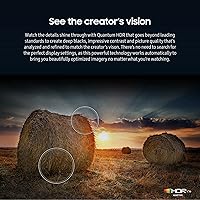
  • HDR peak brightness falls short of what higher-end QLED or OLED panels can achieve, limiting the impact of HDR content in bright rooms.
  • At 70.5 pounds and 66 inches wide, installation requires planning and ideally a second person — wall mounting adds cost and complexity.
  • Competitive gamers will find the input lag and refresh rate ceiling frustrating compared to gaming-focused displays.
  • Local dimming zones are fewer than on upper-tier Samsung sets, which is noticeable during dark cinematic content.
  • Long-term software update support for the Tizen platform beyond a few years is not guaranteed, which may limit app availability over time.

Ratings

The Samsung Q60C 75-inch QLED 4K Smart TV earns a well-deserved reputation as a capable mid-range large-screen TV, and these scores reflect exactly that — no inflation, no spin. Our AI has analyzed thousands of verified global buyer reviews, actively filtering out incentivized, bot-generated, and unverified submissions to surface what real owners actually experience day to day. Both the genuine strengths and the recurring frustrations are reflected transparently in every category below.

Picture Quality
82%
18%
The Quantum Dot panel consistently impresses owners coming from older LED or budget-tier sets — colors look rich and well-saturated across a wide range of content, from nature documentaries to Premier League matches. Brightness holds up well in moderately lit rooms, and 4K native content looks genuinely sharp at typical viewing distances.
In a fully darkened room, the limits of the Dual LED backlight become apparent — bright objects against dark backgrounds produce a noticeable halo effect that more discerning viewers will find distracting. It falls short of what Samsung's own Q80C delivers in terms of contrast depth and local dimming precision.
Color Accuracy
84%
Quantum Dot technology gives the Q60C a wider color gamut than standard LED panels, and most owners report that skin tones, natural landscapes, and HDR-graded content look vibrant without feeling artificially oversaturated. Out-of-box calibration is reasonable for a TV in this tier.
Professional calibration reveals some inaccuracies in the default picture modes, particularly in the warmer color temperature presets. HDR color volume, while improved over standard LED, doesn't reach the peak levels that higher-end QLED or OLED panels achieve in demanding HDR10+ content.
Motion Handling
76%
24%
Motion Xcelerator processing does a solid job smoothing out fast-moving content — live sports, action sequences, and wildlife footage all benefit noticeably compared to TVs without any motion processing at this size. For the target audience of casual sports viewers, it handles most scenarios well.
The 60Hz native panel is a hard ceiling that no amount of processing can fully overcome, and buyers cross-shopping with 120Hz sets will feel the gap during fast-paced gaming or high-motion broadcast content. The soap opera effect from motion processing at higher settings is also a common complaint that requires manual tuning to address.
Gaming Performance
63%
37%
The built-in Samsung Gaming Hub is a genuine convenience for casual players — cloud gaming access without a console is a feature that surprised many buyers and added unexpected value. Input lag at 60Hz is acceptable for single-player story games and casual titles where precision timing isn't critical.
Serious or competitive gamers will find the 60Hz native refresh rate and the absence of HDMI 2.1 genuinely limiting — there is no path to 4K at 120Hz from a PS5 or Xbox Series X on this panel. Variable refresh rate support is also restricted compared to gaming-focused displays, which reduces its appeal for anyone who games regularly.
Smart TV Platform
88%
Samsung's Tizen platform is one of the more polished smart TV operating systems available, and owners consistently praise how quickly it loads apps and how intuitive the home screen layout feels. All major streaming services are present, voice control via Alexa and Google Assistant works reliably, and the remote is well-designed for daily use.
A small but vocal group of users flag that Samsung's Tizen interface pushes its own content recommendations and ads into the home screen in ways that feel intrusive over time. Long-term app support beyond three to four years is also an open question that budget-conscious buyers planning to keep the TV for a decade should factor in.
Built-in Audio
54%
46%
The Object Tracking Sound Lite processing does create a modest sense of directional audio that makes dialogue feel more anchored to on-screen characters during casual viewing. For background TV or daytime news watching, the 20-watt output is adequate at moderate volumes in average-sized rooms.
At 75 inches, buyers naturally expect more from the audio, and the built-in speakers consistently disappoint in direct listening tests — thin bass, limited dynamic range, and a sense that the sound doesn't fill the room the way the image fills the wall. The vast majority of real-world reviewers recommend budgeting for a soundbar as a near-essential companion purchase.
HDR Performance
71%
29%
HDR10+ support means dynamically graded content on supported streaming platforms like Amazon Prime Video does show improved highlight detail and shadow rendering compared to standard SDR. In moderately lit rooms, HDR scenes in movies and nature content look genuinely more dimensional than on non-HDR sets.
Peak brightness limitations mean the Q60C can't fully exploit the headroom that HDR content is mastered for, which reduces the wow factor compared to brighter QLED or MiniLED panels. Dolby Vision is not supported, which excludes a significant portion of HDR-graded content on platforms like Apple TV+ and Disney+.
Design & Build
79%
21%
The Titan Gray finish and slim bezel give the Q60C a clean, modern appearance that blends into most living room setups without drawing attention to the TV itself when it's off. Build quality feels solid for the price tier, and the included stand provides stable footing on most TV stands and consoles.
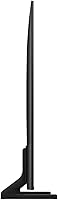
The stand design places the feet at the outer edges of the TV, which requires a media unit at least as wide as the set itself — a practical issue some buyers only discover after delivery. The back panel finish and cable management options are functional but unremarkable compared to premium Samsung models.
Setup & Installation
91%
Out-of-box setup is one of the most consistently praised aspects across verified buyer reviews — the on-screen wizard is clear, Wi-Fi connection is reliable, and the SmartThings app integration for initial configuration makes the process feel genuinely effortless for most users. Even buyers with limited tech experience report getting the TV running within 20 to 30 minutes.
Physical installation is less straightforward for solo buyers — at 70.5 pounds, safely attaching the stand or lifting the TV into a wall mount bracket is a two-person job, and some owners report the stand attachment instructions could be clearer. Wall mount bracket compatibility (VESA pattern) is not prominently communicated in the box.
4K Upscaling
78%
22%
The Quantum Processor Lite handles upscaling of 1080p streaming content better than many buyers expect — older shows and standard Blu-ray content look noticeably cleaner and more defined on the 75-inch screen than they would on a lower-end processor. It's a practical daily benefit given how much streamed content is still sub-4K.
The Lite designation means this processor lacks some of the AI-driven upscaling refinements found in Samsung's full Quantum Processor, and the difference is visible in very textured or highly detailed scenes where the full processor handles edge definition more cleanly. Native 4K content is always preferable when available.
Connectivity
81%
19%
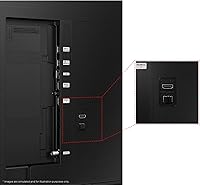
The port selection covers typical household needs well — multiple HDMI inputs, USB ports for media playback, Ethernet for a wired network connection, and Bluetooth for wireless audio devices or peripherals. eARC support on one HDMI port enables high-quality audio passthrough to compatible soundbars.
The HDMI ports are version 2.0 rather than 2.1, which directly limits gaming performance potential and rules out 4K at 120Hz passthrough from current-generation consoles. Buyers with multiple devices who also want an AV receiver in the chain may find the port layout less flexible than they'd like.
Value for Money
83%
At its price point, getting a 75-inch QLED panel with a polished smart platform, Quantum Dot color, and a capable feature set represents solid value for buyers who don't need flagship-level specs. Compared to competing non-QLED sets at similar sizes, the color and processing advantages are real and tangible.
The value calculation shifts if you factor in the near-essential soundbar purchase and the 60Hz limitation — buyers who need 120Hz for gaming or have high audio standards may find themselves spending considerably more to get the full experience this screen size deserves. A few hundred more toward a Q80C may be more cost-effective for those specific buyers.
Long-Term Reliability
74%
26%
The majority of verified long-term owners report no major hardware failures within the first one to two years of regular use, and Samsung's service network is broadly available for warranty claims. The overall build quality inspires reasonable confidence for a TV in this category.
A smaller but consistent subset of reviews flag backlight uniformity issues developing over 12 to 18 months of use, particularly in the form of clouding or uneven brightness in the lower corners during dark scenes. Samsung's warranty response experiences vary significantly by region, which introduces some unpredictability for buyers outside major metro areas.

Suitable for:

The Samsung Q60C 75-inch QLED 4K Smart TV is a strong match for households making a meaningful upgrade from a smaller or aging non-4K display, where the combination of screen size and Quantum Dot color will feel like a genuine step forward. Sports fans who watch a lot of live games will appreciate the Motion Xcelerator handling fast action without excessive blur, especially at typical living room viewing distances of 10 to 14 feet. Casual gamers who want access to cloud gaming without a dedicated console will find the built-in Gaming Hub a convenient feature that removes the need for extra hardware. Families who want one self-contained smart TV — with reliable streaming apps, voice assistant support, and a clean interface — will find the Tizen platform covers those bases well out of the box. It also rewards Samsung audio ecosystem users, since pairing with a compatible Q-Series soundbar unlocks noticeably better coordinated sound through Q-Symphony.

Not suitable for:

The Samsung Q60C 75-inch QLED 4K Smart TV has clear limitations that serious buyers should weigh honestly. The 60Hz native refresh rate is a real ceiling — competitive gamers or anyone cross-shopping with 120Hz panels will notice the difference, particularly in fast-paced titles where input lag and motion clarity matter most. The local dimming performance is modest compared to Samsung's higher-tier 2023 models, meaning dark scenes in a fully blacked-out room will show more blooming around bright objects than a Q80C or above would. Home theater enthusiasts chasing deep, inky blacks and precise contrast zones should look toward OLED or a higher-spec QLED instead. The built-in speakers, while adequate for casual viewing, consistently frustrate buyers who expect room-filling audio from a screen this large — budgeting for a soundbar is practically a requirement. Anyone prioritizing ultra-low input lag for competitive gaming, or reference-level picture quality for critical viewing, will likely find this TV underwhelming for those specific demands.

Specifications

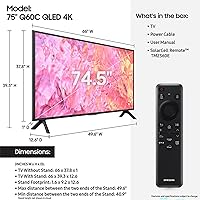
  • Screen Size: The panel measures 74.5 inches diagonally, commonly marketed as a 75-inch class display.
  • Display Type: Uses QLED (Quantum Dot LED) technology, which applies a Quantum Dot filter over an LED backlight to expand color output.
  • Resolution: Native 4K UHD resolution at 3840 x 2160 pixels delivers four times the pixel density of a standard 1080p panel.
  • Refresh Rate: The native panel refresh rate is 60Hz, with Motion Xcelerator processing applied to reduce motion blur in fast-moving content.
  • Processor: Powered by Samsung's Quantum Processor Lite, which handles real-time 4K upscaling of lower-resolution source content.
  • Backlight: Dual LED backlighting uses separate warm and cool LED zones to improve color temperature accuracy and contrast balance across scenes.
  • HDR Support: Compatible with Quantum HDR and HDR10+, enabling dynamic metadata adjustments for improved highlight and shadow detail in supported content.
  • Audio Output: Built-in speaker system delivers 20 watts of total output with Object Tracking Sound Lite virtual surround processing.
  • Soundbar Sync: Q-Symphony 3.0 allows the TV speakers and a compatible Samsung Q-Series or S-Series soundbar to operate together as a unified audio system.
  • Smart Platform: Runs Samsung's Tizen operating system with built-in support for Amazon Alexa and Google Assistant voice control.
  • Gaming Feature: Samsung Gaming Hub is built into the smart platform, providing access to cloud gaming services without requiring a dedicated console.
  • Connectivity: Includes HDMI, USB, Bluetooth, Wi-Fi, and Ethernet ports for wired and wireless device connections.
  • Dimensions: With the stand attached, the TV measures approximately 66 inches wide, 39.3 inches tall, and 12.6 inches deep.
  • Weight: The set weighs 70.5 pounds with the stand, which is worth factoring in when planning wall mounting or furniture placement.
  • Color Finish: Available in a Titan Gray finish with a slim bezel design intended to suit modern living room aesthetics.
  • Power Supply: Operates on a standard 120V household power supply with the power cable included in the box.
  • Included Items: The box contains the TV, stand components, a power cable, a Samsung smart remote, and both a printed and digital user manual.
  • Aspect Ratio: Standard 16:9 widescreen aspect ratio, matching the format of virtually all broadcast, streaming, and physical media content.

Related Reviews
Samsung Q80B 75-Inch QLED 4K TV
76%
91%
Picture Brightness
72%
Contrast & Black Levels
78%
Color Accuracy
89%
Gaming Performance
83%
Motion Handling
More
Samsung Q70A 75-inch QLED 4K Smart TV
77%
78%
Picture Quality
61%
Contrast & Black Levels
84%
Motion Handling
82%
Gaming Performance
83%
Smart TV Experience
More
Samsung 65-Inch QLED 4K TV Q60C
86%
94%
Picture Quality
91%
Gaming Performance
87%
Ease of Setup
88%
Smart Features
72%
Sound Quality
More
Samsung Q60D 75-Inch QLED 4K TV
73%
78%
Picture Quality
58%
Contrast & Black Levels
83%
Color Accuracy
71%
Motion Handling
61%
Gaming Performance
More
iFFALCON 75-Inch Class QLED 4K Smart TV
85%
92%
Picture Quality
86%
Sound Quality
90%
Design & Build Quality
88%
Gaming Performance (144Hz)
78%
Ease of Setup
More
Samsung The Frame LS03F 50-inch QLED TV
77%
91%
Art Mode & Display Illusion
78%
Picture Quality
94%
Design & Aesthetics
58%
Art Store Value
88%
Installation & Setup
More
Samsung The Frame Pro 75-inch QLED TV
76%
92%
Art Mode & Artwork Display
94%
Design & Aesthetics
88%
Wireless Installation Experience
84%
Picture Quality
61%
Value for Money
More
Samsung 50-Inch QLED 4K Q80C Series Smart TV
84%
94%
Picture Quality
88%
Sound Quality
91%
Gaming Performance
89%
Value for Money
85%
Smart Features
More
VIZIO P-Series 75-inch 4K QLED Smart TV
75%
83%
Picture Quality
91%
Gaming Performance
79%
HDR Performance
72%
Local Dimming
58%
Smart TV Interface
More
Samsung The Frame LS03F 65-inch 4K TV
77%
94%
Aesthetic Design
81%
Art Mode Quality
88%
Matte Screen Performance
76%
Picture Quality
79%
Gaming Performance
More
Samsung QN85D 85-inch QLED 4K Smart TV
77%
91%
Picture Brightness
87%
Color Accuracy
74%
Contrast & Black Levels
88%
Motion Handling
83%
AI Upscaling
More

FAQ

The actual diagonal measurement is 74.5 inches, which is standard across the industry — manufacturers round up to the nearest whole number. In practice, you won't notice the half-inch difference, but it's worth knowing when comparing spec sheets side by side.

For casual daytime viewing or background TV, the 20-watt built-in speakers are functional. But for a screen this size, most people find the audio feels thin relative to the visual experience, especially in movies or during live sports. A soundbar makes a meaningful difference, and if you go with a compatible Samsung model, Q-Symphony lets both systems work together rather than the TV muting its own speakers.

For general TV viewing — streaming shows, movies, news — 60Hz is perfectly fine and most people won't notice any limitation. Where it matters is gaming: competitive or fast-paced titles will feel less fluid compared to a 120Hz panel. Casual gamers are unlikely to care, but if you're serious about gaming performance, this is a real trade-off worth considering.

Wall mounting is supported, but at 70.5 pounds you'll want a wall bracket rated for the weight and ideally a second person to help with installation. Make sure to check the VESA mounting pattern compatibility before purchasing a bracket separately, as it's not always listed prominently.

The Q80C sits a tier above and offers a full-array local dimming backlight, a higher-grade processor, and in most configurations a 120Hz panel — all of which add up to noticeably better contrast and gaming performance. The Q60C trades those features for a lower price point, which makes it the better value if you don't specifically need those upgrades.

Yes, you can plug in any external streaming device via HDMI and it will work normally. That said, the built-in Tizen platform already includes Netflix, Disney+, Prime Video, YouTube, and most major apps, so many users find they don't need an external device at all.

The Q60C includes HDMI 2.0 ports rather than HDMI 2.1, which is relevant for gaming since HDMI 2.1 is required for 4K at 120Hz passthrough. One of the HDMI ports supports eARC for high-quality audio output to a compatible soundbar or AV receiver.

Most buyers describe setup as straightforward — the on-screen prompts walk you through connecting to Wi-Fi, signing into a Samsung account, and selecting your preferred streaming services. The remote is simple and well-labeled. If you've set up any modern smart TV before, this one won't surprise you.

Samsung has committed to software and app updates for its smart TVs, but the guaranteed support window beyond the first few years is not officially specified. For most users this won't be an issue in the near term, but if long-term software longevity is a priority, it's a fair thing to keep in mind when making a five-year-plus purchase decision.

A commonly recommended range for a 4K screen this size is roughly 8 to 13 feet, with around 10 to 12 feet being a comfortable middle ground for most living rooms. Sitting too close at 4K is less of a problem than it was with 1080p because the higher pixel density keeps the image sharp at shorter distances.