
Overview

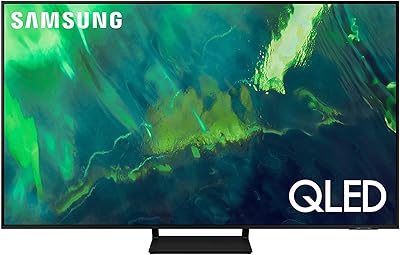
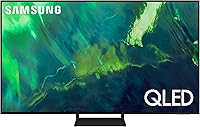
The Samsung Q70A 75-inch QLED 4K Smart TV sits comfortably in the mid-to-upper tier of Samsung’s 2021 lineup, offering Quantum Dot panel technology that genuinely separates it from conventional LED sets in terms of color richness and brightness. Where a standard LED TV struggles with washed-out hues under bright lighting, Quantum Dot technology pulls a noticeably wider palette. Tizen, Samsung’s smart platform, runs responsively and rarely gets in the way. Holding a 4.5-star rating and ranking among the top QLED options on Amazon, this 75-inch Samsung competes honestly — though buyers expecting OLED-level black depth at this price point should temper expectations accordingly.

Features & Benefits

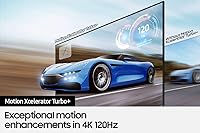
The Q70A’s Quantum Processor 4K handles AI-based upscaling well enough that streaming HD content rarely looks soft on this large a screen. The Dual LED backlight — using separate warm and cool LEDs — improves contrast over single-zone LED designs, though it doesn’t match the granular control of full-array local dimming found on pricier sets. Motion handling at 4K 120Hz is a real advantage for fast sports and console gaming, and four HDMI 2.1 ports means you won’t be swapping cables between devices. Color coverage hits 100% of the DCI-P3 space, which translates to vivid, accurate HDR in well-mastered movies and nature documentaries.

Best For

This Samsung QLED makes the most sense for households ready to move up to a genuinely large screen without crossing into premium OLED territory. Console gamers will appreciate the HDMI 2.1 bandwidth and 120Hz capability — enough to run a PS5 or Xbox Series X at full spec. Sports fans benefit too, since motion clarity holds up during fast cuts and on-field action. If your living room gets a lot of afternoon sunlight, QLED’s brightness advantage over OLED becomes meaningful. And for anyone already using Alexa-connected devices around the house, the built-in voice integration here works naturally rather than feeling bolted on.

User Feedback

Buyers consistently highlight color vibrancy and overall value as the Q70A’s strongest qualities — the screen’s sheer size combined with punchy Quantum Dot color makes a strong first impression. The Tizen interface also earns praise for being quick and well-organized. On the critical side, some users report visible blooming around highlights in dark scenes, a limitation tied to the Dual LED backlight’s relatively coarse dimming. Casual viewers rarely flag this, but home theater enthusiasts notice it. Remote quality draws mixed opinions, and Alexa’s responsiveness reportedly depends on network conditions. Gamers tend to rate the Q70A higher than movie purists do.

Pros

  • Quantum Dot technology delivers genuinely rich, saturated color that outperforms standard LED panels in brightness and vibrancy.
  • Four HDMI 2.1 ports give gamers enough connections for multiple next-gen consoles without juggling cables.
  • Native 120Hz refresh rate handles fast sports and gaming with minimal motion blur.
  • The Tizen smart platform is quick, well-organized, and rarely requires workarounds to find content.
  • AI-based 4K upscaling keeps HD streaming content looking respectable on a screen this large.
  • Alexa built-in works reliably for smart home control without needing a separate Echo device.
  • 100% DCI-P3 color volume makes HDR movies and nature documentaries look genuinely impressive.
  • At 75 inches, the Q70A offers a lot of screen real estate at a price point that undercuts comparable OLED options significantly.
  • The included Solar Cell remote is a practical, well-designed accessory that reduces battery waste.

Cons

  • Blooming around bright objects in dark scenes is noticeable and a consistent complaint among critical reviewers.
  • The Dual LED backlight lacks the dimming zone granularity of full-array local dimming sets in a similar price bracket.
  • Dark room contrast performance falls meaningfully short of what OLED or premium mini-LED TVs can achieve.
  • Alexa responsiveness can be inconsistent on slower or congested home networks.
  • At 73.6 pounds, installation is a two-person job and wall-mount planning needs to account for real structural load.
  • Some users find the remote’s layout unintuitive, particularly for those coming from other TV ecosystems.
  • HDR tone mapping can appear overly aggressive on certain streaming content, clipping highlight detail.
  • The 75-inch class size means this TV demands a room with adequate viewing distance — cramped spaces will feel overwhelming.

Ratings

The Samsung Q70A 75-inch QLED 4K Smart TV earns a strong overall position in our analysis, with AI-processed scores drawn from thousands of verified global buyer reviews — with spam, bot submissions, and incentivized feedback actively filtered out before scoring. This Q70A rating reflects where real owners consistently praised the set and where they ran into genuine frustrations, giving you an honest picture of both sides before you commit.

Picture Quality
78%
22%
Color vibrancy is the Q70A’s most celebrated trait — owners watching nature documentaries and HDR films regularly comment that the Quantum Dot palette feels noticeably richer than what they had on their previous LED sets. Bright, well-lit scenes in daytime viewing conditions look genuinely impressive at this screen size.
Dark scene performance exposes the Dual LED backlight’s limitations clearly. Blooming around streetlights, subtitles, and bright logos against dark backgrounds comes up consistently in critical reviews, and viewers who watch a lot of night scenes or late-night content feel this more acutely than daytime viewers.
Contrast & Black Levels
61%
39%
Compared to entry-level LED TVs, the Dual LED system does offer a step up in perceived contrast, and for casual viewers watching in normally lit rooms, shadow detail holds up acceptably across most mainstream content.
This is the Q70A’s weakest point relative to its price bracket. Without full-array local dimming, the TV cannot isolate bright and dark regions independently, leading to visible grey wash in shadow areas during dark scenes — a clear step behind competing mini-LED or OLED panels.
Motion Handling
84%
Sports fans consistently highlight how well the Q70A tracks fast movement — panning shots during football or basketball rarely show the smearing that plagued older 60Hz panels. The Motion Xcelerator Turbo+ processing keeps things looking natural without introducing the artificial soap-opera effect that aggressive motion smoothing often produces.
At higher motion smoothing settings, some viewers find the processing adds a slightly artificial quality to film content. Turning it down or off is easy enough, but out-of-the-box settings don’t suit every preference, and new users may not know to adjust it.
Gaming Performance
82%
18%
Four HDMI 2.1 ports capable of 4K at 120Hz is a meaningful advantage for households with multiple next-gen consoles. Input lag in game mode is low enough that fast-reaction gaming feels responsive, and ALLM automatically switches to game mode without manual input when a compatible console wakes up.
VRR support is limited to FreeSync Premium, which leaves Nvidia GPU users without certified variable refresh rate compatibility. The Q70A also does not support Dolby Vision gaming, which is a gap some premium console gamers will notice depending on their setup.
Smart TV Experience
83%
Tizen OS runs quickly and rarely stutters, which stands out in a category where slow, laggy smart platforms are a common complaint. The home screen layout is logical, app loading is fast, and all major streaming services are present and kept reasonably up to date.
Some users find Samsung’s Tizen interface pushes its own content recommendations and ad tiles a bit aggressively on the home screen. Those coming from Google TV or Fire TV ecosystems may need a brief adjustment period to feel at home with the navigation structure.
Voice Assistant Integration
74%
26%
Having Alexa built in means users already living in an Amazon smart home ecosystem can control lights, thermostats, and other devices directly from the TV remote without needing a separate Echo device. For those setups, it genuinely simplifies the living room experience.
Alexa responsiveness varies noticeably with network conditions — on slower or congested connections, voice commands lag or misfire. A handful of reviewers also note that Alexa’s TV-specific functions, like launching specific episodes or navigating menus, work less reliably than simple smart home commands.
HDR Performance
73%
27%
Quantum HDR does add visible pop to well-mastered HDR content — sunsets, fire, and neon signage in HDR movies look genuinely brighter and more saturated than SDR equivalents, which impresses casual viewers stepping up from older non-HDR sets.
Peak brightness, while not officially rated, falls short of what top-tier mini-LED competitors deliver in HDR highlights. The result is that HDR content looks good but rarely reaches the specular highlight impact that makes OLED or high-nit LED panels feel truly cinematic in a dark room.
Color Accuracy
81%
19%
Out of the box, color tuning is reasonably close for a consumer TV, and the DCI-P3 coverage means HDR films display with broadly accurate, cinema-aligned hues. Viewers watching color-rich content — animated films, wildlife documentaries — are consistently complimentary.
Out-of-box color temperature runs slightly cool for some users, and white balance can look bluish on certain picture presets. Calibration helps, but casual buyers who don’t dive into settings may live with a slightly off-white baseline without realizing it.
Audio Quality
62%
38%
For a built-in speaker system on a large panel TV, the Q70A’s audio is acceptable for daytime news, talk shows, and casual streaming where dialogue clarity matters more than depth. Object Tracking Sound Lite does create a modest sense of width across the screen.
Bass is thin and the speakers run out of headroom quickly at higher volumes, which makes action movies and music feel flat. Most buyers at this screen size end up pairing it with a soundbar within the first few weeks, which is an additional cost worth factoring in upfront.
Build & Design
79%
21%
The Q70A has a clean, modern look with slim bezels that suit large living room installations well. The Slim One Connect cable keeps the back of the TV tidy, and the overall fit and finish feels appropriate for a mid-to-upper Samsung tier product.
The stand design draws occasional criticism for requiring more desk depth than expected, and the plastic finish on the rear housing feels less premium than the front panel suggests. At 73.6 pounds, the physical handling experience during install is demanding.
Remote Control
71%
29%
The Solar Cell remote is a genuinely practical inclusion — charging from ambient light means most owners never touch a battery during normal use. The layout covers core functions without being cluttered, and the build quality feels solid in hand.
Some users find the button layout less intuitive when switching from other TV remotes, particularly around input selection and settings access. A small number of reviewers report inconsistent response distance, requiring them to point more directly at the TV than expected.
Connectivity
88%
Four HDMI 2.1 ports, USB inputs, Ethernet, Wi-Fi, Bluetooth, RF, and Miracast support cover virtually every connection scenario most households will ever need. Running out of ports is unlikely even in a complex home entertainment setup.
Bluetooth 4.2 is functional but not the latest standard, which occasionally causes pairing friction with newer Bluetooth audio accessories. Wi-Fi performance is reliable but a wired Ethernet connection is noticeably more stable for 4K streaming, especially on busy home networks.
Upscaling Quality
77%
23%
The Quantum Processor 4K handles HD-to-4K upscaling better than most buyers expect, keeping HD Netflix and cable content looking reasonably sharp on a 75-inch panel where lower-resolution sources can easily fall apart.
Standard definition content and heavily compressed cable channels show clear limitations that no processor can fully overcome at this screen size. Upscaling also adds a slight artificial sharpening edge that some viewers find distracting on close-up facial shots.
Value for Money
83%
At its price point, the Q70A delivers a 75-inch 4K QLED experience with genuinely competitive gaming specs and a capable smart platform — a combination that would have cost significantly more just two years earlier. For buyers who don’t need OLED contrast, the price-to-screen-size ratio is hard to argue with.
Buyers who later discover the contrast and dark-room limitations sometimes feel the premium over cheaper 75-inch competitors wasn’t fully justified by real-world picture differences. If your use case leans heavily toward dark-room viewing, the value case weakens considerably.

Suitable for:

The Samsung Q70A 75-inch QLED 4K Smart TV is a strong fit for households that want a genuinely large screen with vibrant, punchy color without stretching their budget to OLED territory. Console gamers with a PS5 or Xbox Series X will get real value from the four HDMI 2.1 ports and native 120Hz capability, which lets next-gen hardware run at full spec without compromise. Sports fans who care more about smooth, blur-free motion during fast-paced games than about absolute black levels will find the Q70A handles their primary needs well. Bright living rooms where sunlight or overhead lighting is a constant factor suit this TV particularly well, since QLED brightness holds up in ways that OLED panels struggle to match. Alexa users and those with existing Amazon smart home setups will also find the built-in voice integration genuinely useful rather than a novelty.

Not suitable for:

The Samsung Q70A 75-inch QLED 4K Smart TV is a harder sell for viewers who watch a lot of content in a darkened room and care deeply about contrast precision. The Dual LED backlight, while an improvement over basic single-zone LED designs, lacks the granular local dimming control found in full-array sets at higher price points, meaning blooming around bright objects against dark backgrounds is a real and recurring issue. Dedicated home theater enthusiasts who have experienced OLED black levels will likely find the Q70A’s shadow detail underwhelming by comparison. Buyers prioritizing a compact footprint should also note that at 73.6 pounds and over 66 inches wide, this TV demands a sturdy, well-planned installation. If your viewing is primarily late-night, lights-off movie watching, the contrast limitations will surface often enough to matter.

Specifications

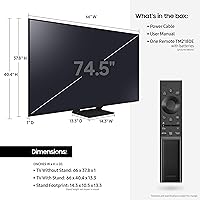
  • Screen Size: The panel measures 74.5 inches diagonally, sold as a 75-inch class display with a 16:9 aspect ratio.
  • Display Type: Uses QLED (Quantum Dot LED) technology, which layers Quantum Dot film over an LED backlight to expand color output beyond standard LED panels.
  • Resolution: Native 4K UHD resolution delivers approximately 8.3 million pixels across the panel for sharp detail at typical living room viewing distances.
  • Refresh Rate: Supports a native 120Hz refresh rate, enabling smoother motion during fast-action sports and full-speed next-gen console gaming.
  • Processor: The Quantum Processor 4K uses machine learning-based algorithms to upscale lower-resolution content toward 4K in real time.
  • Backlight: A Dual LED backlight system uses separate warm and cool LED arrays to adjust color temperature and improve contrast handling across different scene types.
  • HDR Support: Compatible with Quantum HDR, which expands the range of brightness and color compared to standard HDR, though peak nit output is not officially specified by Samsung for this model.
  • Color Volume: Achieves 100% color volume within the DCI-P3 color space, the standard used for cinema-grade HDR content and streaming.
  • Smart Platform: Runs Tizen OS, Samsung’s proprietary smart TV operating system, with access to major streaming apps and a customizable home screen.
  • Voice Assistants: Alexa is built directly into the TV, with additional support for other voice assistants accessible via the included remote’s mic button.
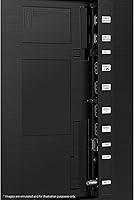
  • HDMI Ports: Equipped with four HDMI 2.1 ports, all capable of supporting 4K at 120Hz input for next-gen consoles and compatible PCs.
  • Connectivity: Wireless connectivity includes Wi-Fi and Bluetooth 4.2; wired options include Ethernet, USB, and RF antenna input.
  • Dimensions: Without stand, the unit measures approximately 66″ wide, 40.4″ tall, and 13.3″ deep; exact stand dimensions vary by configuration.
  • Weight: The TV weighs 73.6 pounds, which requires at minimum a two-person lift for safe installation or wall mounting.
  • Power Draw: Rated at 305 watts of power consumption under standard operating conditions, running on AC 110–120V at 50/60Hz.
  • Special Features: Includes Miracast wireless display mirroring and Motion Xcelerator Turbo+ for enhanced motion clarity during high-frame-rate content.
  • In the Box: Comes with a Solar Cell remote, Samsung Smart Control remote, Slim One Connect cable, power cable, and printed user manual.
  • Audio: Built-in speakers with Object Tracking Sound Lite, which attempts to match audio directionality to on-screen movement.

Related Reviews
Samsung 75-Inch QLED Q80B 4K UHD Smart TV
86%
94%
Picture Quality
91%
Gaming Performance
85%
Smart Features & Voice Control
72%
Sound Quality
88%
Ease of Setup
More
Samsung 65-Inch Q70A QLED 4K Smart TV
80%
83%
Picture Quality
91%
Gaming Performance
86%
Motion Handling
71%
HDR Performance
74%
Smart TV & Software
More
iFFALCON 75-Inch Class QLED 4K Smart TV
85%
92%
Picture Quality
86%
Sound Quality
90%
Design & Build Quality
88%
Gaming Performance (144Hz)
78%
Ease of Setup
More
Samsung Q60D 75-Inch QLED 4K TV
73%
78%
Picture Quality
58%
Contrast & Black Levels
83%
Color Accuracy
71%
Motion Handling
61%
Gaming Performance
More
Samsung The Frame LS03F 50-inch QLED TV
77%
91%
Art Mode & Display Illusion
78%
Picture Quality
94%
Design & Aesthetics
58%
Art Store Value
88%
Installation & Setup
More
VIZIO 75-Inch P-Series 4K QLED Smart TV
86%
91%
Picture Quality
88%
Gaming Performance
85%
Smart Features and Usability
92%
Value for Money
74%
Sound Quality
More
Samsung AU8000 75-inch 4K Smart TV
75%
76%
Picture Quality
58%
Contrast & Black Levels
81%
Color Accuracy
88%
Smart TV Platform
83%
Voice Control & AI Features
More
TCL Q6 75-Inch QLED 4K Smart TV
74%
78%
Picture Quality
58%
Contrast & Black Levels
81%
Color Accuracy
83%
Brightness
67%
Motion Handling
More
Samsung 75-Inch The Frame Pro 4K Neo QLED TV
89%
96%
Display Quality
94%
Art Mode Realism
89%
Gaming Performance
92%
Color Accuracy
85%
Connectivity Options
More
Samsung QN85D 85-inch QLED 4K Smart TV
77%
91%
Picture Brightness
87%
Color Accuracy
74%
Contrast & Black Levels
88%
Motion Handling
83%
AI Upscaling
More

FAQ

Yes, the Q70A supports Auto Low Latency Mode (ALLM), which automatically switches the TV into game mode when a compatible console is detected. It also supports FreeSync Premium for variable refresh rate, which reduces screen tearing during gaming. However, it does not support Nvidia G-Sync, so PC gamers on Nvidia hardware won’t get certified VRR compatibility.

It’s decent but not ideal for dedicated dark-room viewing. The Dual LED backlight improves contrast over basic LED designs, but it lacks the zone control of full-array local dimming, which means you’ll notice some blooming around bright objects against dark backgrounds. If dark-room movie watching is your primary use case, a full-array or OLED alternative would serve you better.

Setup out of the box is straightforward — Tizen walks you through Wi-Fi connection and app login during first boot. Wall mounting is a different matter: at 73.6 pounds, this is not a one-person job. You’ll need a VESA-compatible mount and a partner to safely lift and position the panel. Make sure your wall and mount are rated to handle the weight before you start.

Yes. All four HDMI ports on this TV are HDMI 2.1, which means each one can handle 4K at 120Hz input. Both the PS5 and Xbox Series X can run supported titles at full spec without any adapter or workaround. Just make sure to enable game mode on the TV for the lowest input lag.

The Quantum Processor 4K does a respectable job with upscaling. HD streaming content and cable broadcasts look better than you’d expect on a screen this large, though the results vary by source quality. Very compressed content or standard definition channels will still show their limitations, but typical HD streaming from Netflix or similar services comes across fairly well.

Yes, Alexa is built directly into the TV and works independently — no Echo or external device needed. You can control smart home devices, search for content, adjust volume, and switch inputs using your voice. For hands-free activation, you’ll need to enable that option in settings; otherwise, just hold the mic button on the remote.

Tizen supports all the major platforms — Netflix, Prime Video, Disney+, Apple TV, HBO Max, YouTube, and Hulu are all available out of the box or through the app store. The app selection is broad enough that most people won’t hit a gap, though niche or regional apps may not be present.

For a 4K display at 75 inches, a comfortable viewing distance is generally between 6 and 9.5 feet from the screen. Sitting closer than 6 feet can make the panel feel overwhelming in most average-sized living rooms, while sitting much further than 10 feet reduces the 4K resolution advantage. Around 8 feet tends to be a sweet spot for most setups.

It’s genuinely useful. The Solar Cell remote charges from both indoor light and sunlight, which means most people never need to change batteries. Samsung includes it specifically because constant remote battery replacement becomes an annoyance over the life of a TV. A few users mention it can feel slightly lighter than traditional remotes, but functionally it performs the same.

Yes. The Q70A offers multiple audio output options including HDMI ARC (via one of the HDMI ports) for connecting a soundbar or AV receiver with a single cable. Optical audio output and Bluetooth are also available if you prefer a wireless speaker setup. The built-in speakers are adequate for casual viewing, but most users with a TV this size find a dedicated soundbar worthwhile.