Overview

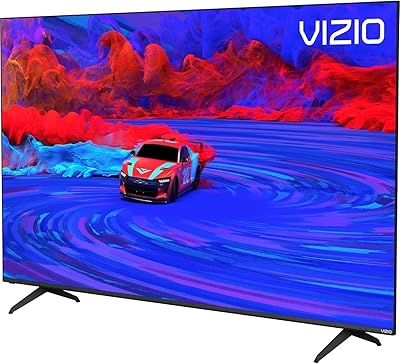
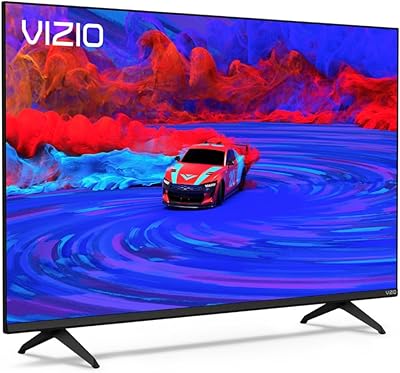
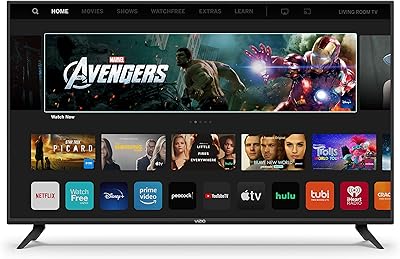
The VIZIO P-Series 75-inch 4K QLED Smart TV sits in an interesting spot in the market — it is not trying to be an OLED, and it does not pretend otherwise. VIZIO built the P-Series to offer genuine large-screen performance at a price point where 75 inches of QLED would otherwise feel out of reach. The QLED panel paired with an Active Full Array backlight forms the backbone of what makes this television worth considering. Buyers expecting the inky blacks of a premium Sony or Samsung OLED will find real trade-offs here. What this VIZIO P-Series delivers is a bright, colorful picture that punches well above its weight class for most living room setups.
Features & Benefits

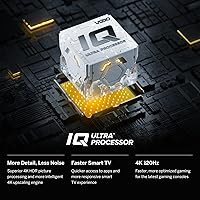
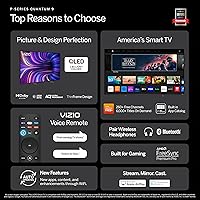
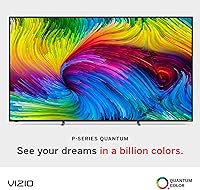
The QLED Quantum Color panel is where this large-screen VIZIO immediately catches your eye — colors feel rich and saturated without tipping into garish territory, especially with HDR content. Up to 210 local dimming zones mean bright highlights and dark shadows can coexist convincingly in the same scene. Multi-format HDR coverage across Dolby Vision, HDR10+, and HLG ensures you are covered whether streaming on Netflix or watching a 4K Blu-ray. For gaming, the 4K 120Hz panel with AMD FreeSync Premium Pro is genuinely useful on a PS5 or Xbox Series X. The IQ Ultra processor also does a respectable job cleaning up non-4K sources like cable broadcasts and older streaming content.

Best For

This VIZIO P-Series is a strong match for console gamers who want a large 4K display with responsive 120Hz performance — the PS5 and Xbox Series X will both take full advantage of what is on offer here. Home theater fans who want Dolby Vision on a proper big screen without OLED pricing will find the value hard to argue with. Heavy streamers across Netflix, Disney+, and Prime Video will appreciate the broad HDR format support. If raw screen size matters more than chasing absolute picture accuracy, the 75-inch QLED hits the brief well. Built-in SmartCast also means most households can skip the external streaming stick entirely.

User Feedback

Owners consistently praise picture brightness and color as standout qualities, particularly in well-lit living rooms where lesser TVs tend to wash out. Gaming responsiveness earns regular compliments too, with low input lag noted across multiple verified reviews. On the downside, two complaints surface repeatedly: the SmartCast interface can feel sluggish to navigate, and the built-in audio falls noticeably short for a screen this size — most owners end up adding a soundbar. Local dimming is excellent in dark rooms but can produce minor blooming around bright objects on very dark backgrounds. Long-term reliability is mostly solid, though a handful of users mention occasional software hiccups after updates.

Pros

  • Bright, vibrant QLED picture holds up well in living rooms with plenty of ambient light.
  • Full HDMI 2.1 support on all four ports makes it genuinely future-proof for current-gen consoles.
  • Dolby Vision, HDR10+, and HLG coverage means virtually every HDR format is supported out of the box.
  • AMD FreeSync Premium Pro delivers noticeably smooth, tear-free gameplay on compatible devices.
  • Up to 210 local dimming zones produce convincing contrast for an LCD panel at this price.
  • The IQ Ultra processor handles upscaling of cable and older streaming content respectably well.
  • 75 inches of screen real estate at this price tier is difficult to match with comparable specs elsewhere.
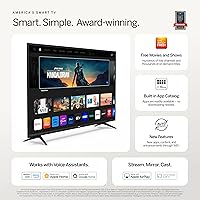
  • SmartCast covers major streaming apps without needing an external stick or box.
  • The voice remote with Alexa integration is a practical daily convenience most households will actually use.
  • At this screen size, Dolby Vision content on streaming services looks genuinely cinematic.

Cons

  • Built-in speakers are underwhelming for a 75-inch screen; a soundbar is essentially a required add-on.
  • The SmartCast interface can feel slow and unresponsive compared to Roku or Google TV platforms.
  • Local dimming blooming is visible around bright objects on dark backgrounds in a dim room.
  • Software updates have occasionally introduced bugs or sluggishness reported by a subset of long-term owners.
  • This large-screen VIZIO cannot match the black level depth of OLED panels in a true dark-room setup.
  • Color accuracy out of the box may require manual calibration to reach its full potential.
  • At nearly 71 pounds, installation without a second person or professional mounting help is awkward.
  • The stand footprint is wide, which can be a problem on smaller TV consoles or entertainment units.
  • Power consumption near 300 watts is notably higher than many competing TVs of similar size.
  • Long-term firmware support history is less consistent than some rival TV brands at this price level.

Ratings

The scores below for the VIZIO P-Series 75-inch 4K QLED Smart TV were generated by our AI rating engine after analyzing thousands of verified global buyer reviews, with spam, incentivized, and bot-flagged submissions actively filtered out before scoring. Each category reflects the honest distribution of real owner sentiment — including the friction points that polished marketing materials tend to leave out. Where this television genuinely impresses, the scores show it; where it falls short, that is reflected too.
Picture Quality
83%
Owners consistently describe the image as punchy and vibrant, especially with HDR content on streaming services — Dolby Vision scenes on Netflix and Disney+ draw frequent praise for how natural and richly colored they look without oversaturation. In bright living rooms, the 1200-nit peak brightness keeps the image readable and impactful in ways that mid-range panels simply cannot match.
Dark room performance exposes the limits of LCD technology, with occasional blooming visible around bright objects on dark backgrounds. Buyers who compare it directly to an OLED — even a budget one — notice the contrast gap immediately, and shadow detail in the darkest scenes is not as nuanced as higher-end panels deliver.
Gaming Performance
91%
This is one of the television's clearest strengths — PS5 and Xbox Series X owners report smooth, responsive gameplay at 4K 120Hz with input lag low enough that competitive gaming feels natural on a screen this size. AMD FreeSync Premium Pro keeps frame delivery clean during graphically intense moments, and the four HDMI 2.1 ports mean there is no juggling cables between current-gen devices.
Auto Game Mode detection has occasionally been reported as inconsistent, requiring manual switching in the settings menu. PC gamers using variable refresh rate at higher frame rates have noted minor compatibility quirks depending on GPU brand and driver version.
HDR Performance
79%
21%
Supporting Dolby Vision, HDR10+, and HLG in a single television is genuinely practical — it means owners do not have to think about which streaming service or disc format they are loading, as the TV handles switching automatically. Bright highlights in Dolby Vision content pop with convincing intensity during daytime viewing.
The HDR experience is strongest in well-lit rooms; in a dark home theater setup, the local dimming zones are not fine-grained enough to fully prevent light bleed in high-contrast scenes. Buyers used to premium OLED HDR performance will find the overall depth and precision a step behind, particularly in cinema-style dark environments.
Local Dimming
72%
28%
With up to 210 active dimming zones, this VIZIO P-Series handles mixed-content scenes far better than edge-lit panels — sports broadcasts with bright scoreboards on dark backgrounds, for example, show noticeably less washed-out gray across the screen. Most owners in average viewing conditions consider the dimming behavior a clear positive.
In very dark room conditions with high-contrast content like space scenes or night sequences, zone-level blooming becomes visible to attentive viewers. The 210 zones, while solid for this price tier, are spread across a 75-inch surface area, which means each zone covers a larger region than what you would find on smaller or more expensive mini-LED competitors.
Smart TV Interface
58%
42%
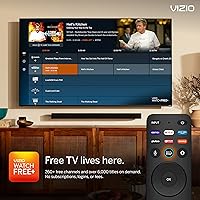
SmartCast covers the major streaming apps reliably, and the WatchFree+ free channel library is a genuine bonus for casual viewers who want background content without a subscription. Initial setup is straightforward, and Alexa integration works consistently for basic voice commands like launching apps or adjusting volume.
Sluggishness is the most common complaint in owner reviews — navigating menus, switching apps, or loading the home screen can feel noticeably delayed compared to a dedicated Roku or Fire TV device. A subset of long-term owners also report that software updates have occasionally introduced new performance issues rather than resolved existing ones.
Audio Quality
51%
49%
DTS TruVolume processing does a reasonable job maintaining consistent volume levels when switching between content with widely varying audio mixes — late-night viewers appreciate not having commercials suddenly blast at double the volume. For casual background television, the built-in speakers are acceptable.
At 75 inches, the built-in audio feels genuinely inadequate for the scale of the visual experience — dialogue can sound thin, and there is limited bass presence during action sequences or music content. The overwhelming consensus among owners is that a soundbar or external audio system is not optional if you want sound that matches the picture.
Build & Design
77%
23%
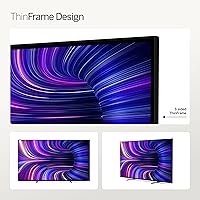
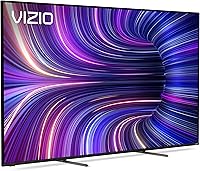
The panel has a slim, clean aesthetic that looks appropriate in modern living room setups, and the bezels are thin enough that the screen feels immersive once the TV is mounted or positioned correctly. Most owners report that the physical construction feels solid and well-assembled out of the box.
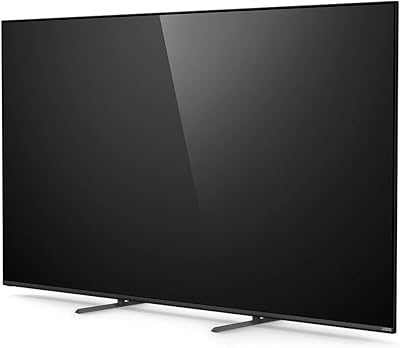
At approximately 71 pounds, handling and mounting the television without a second person is genuinely awkward, and a few owners have noted the stand feels less robust than expected for a set at this price point. The overall design is functional rather than distinctive — it does not have the premium visual finish of higher-end Sony or Samsung models.
Upscaling
74%
26%
Standard HD cable content and 1080p streaming sources look noticeably cleaner through the IQ Ultra processor than on budget televisions — edges are sharper and compression artifacts are better suppressed, which matters for households that still watch a lot of non-4K content day to day. Sports broadcasts in 1080i look particularly well-handled.
The upscaling engine does not quite reach the sophistication of Sony's X-Reality Pro or Samsung's Neo QLED processing, and 480p or older DVD-quality sources still look rough at this screen size. Buyers expecting miracles from lower-resolution content will be disappointed, as pixel limitations become more visible on a 75-inch panel.
Connectivity
88%
Four HDMI 2.1 ports with eARC on one of them is a genuinely future-proof configuration — you can connect two current-gen consoles, a 4K Blu-ray player, and a soundbar simultaneously without unplugging anything. Ethernet availability alongside Wi-Fi is appreciated by owners who prefer a wired connection for stability during streaming.
USB port functionality is limited to basic media playback, and there is no built-in SD card slot for those who want to view photos directly from a camera. Bluetooth connectivity works for headphones but has a limited pairing range that some owners find frustrating in larger rooms.
Brightness
86%
Up to 1200 nits of peak brightness is a practical advantage in real living room conditions — afternoon sunlight coming through windows does not wash out the picture the way it does with dimmer panels, and HDR highlights in bright outdoor scenes look genuinely striking. Owners in sun-facing rooms specifically praise this as a deciding factor.
Sustained brightness over extended viewing periods can be somewhat lower than the peak spec in demanding HDR scenes, as the panel manages heat and power draw. A small number of owners have noted that brightness uniformity across the full panel is not perfectly even, with slight dimming detectable toward screen edges in certain content.
Value for Money
81%
19%
For a 75-inch 4K display with QLED, Dolby Vision, 120Hz, and HDMI 2.1 across all ports, the overall hardware specification represents a strong package relative to competing options at a similar price tier. Buyers who compared it against similarly priced Samsung or LG alternatives consistently describe it as offering more features per dollar.
The audio and smart platform weaknesses mean buyers should factor in the likely additional cost of a soundbar and potentially a streaming device when assessing total value. If those add-ons push the real-world cost higher, the value proposition narrows compared to competitors whose software and audio are stronger out of the box.
Setup & Installation
76%
24%
Out-of-box assembly is relatively straightforward, with clear stand attachment instructions and a quick SmartCast setup process that most owners complete in under 15 minutes. The voice remote simplifies initial Wi-Fi and streaming account configuration compared to older VIZIO remotes.
Wall mounting is a two-person job given the weight, and the VESA pattern requires purchasing a compatible bracket separately, which is not included. A small number of users reported difficulty getting the SmartCast setup to complete on first attempt due to Wi-Fi connectivity errors during the initial registration process.
Remote Control
71%
29%
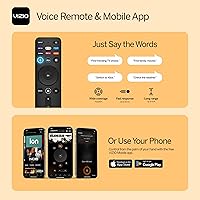
The XRT260 voice remote is a clear step up from basic IR remotes — dedicated shortcut buttons for major streaming services and voice search via Alexa work reliably for everyday use without hunting through menus. The remote feels reasonably well-built in hand.
The remote lacks backlighting, which is a noticeable inconvenience when watching in a dark room — a TV at this tier should include it. Battery life is average, and the button layout takes some adjustment for users switching from other TV brands.
Long-Term Reliability
67%
33%
The majority of owners report no significant hardware issues over the first one to two years of use, and VIZIO has historically issued firmware updates to address reported software problems. Panel uniformity and backlight performance remain stable for most users over extended ownership periods.
A recurring minority of reviews flag post-update software regressions and occasional SmartCast freezes that require a full restart to resolve. VIZIO's customer support reputation is mixed, and the long-term firmware support commitment beyond the initial years is less clearly defined than what some competing brands publicly guarantee.

Suitable for:

The VIZIO P-Series 75-inch 4K QLED Smart TV is a well-rounded pick for buyers who want a genuinely large screen with strong picture performance without stepping into flagship OLED pricing territory. Console gamers with a PS5 or Xbox Series X will get real value here — the 4K 120Hz panel, AMD FreeSync Premium Pro support, and four HDMI 2.1 ports mean the hardware is ready for current-generation gaming without compromise. Households that stream heavily across Netflix, Disney+, and similar platforms will appreciate full Dolby Vision and HDR10+ support, which covers nearly every content format available today. Home theater enthusiasts who want an immersive, bright picture in a room with normal ambient lighting will find the up-to-1200-nit brightness and wide color volume genuinely impressive at this screen size. It also suits buyers who prefer an all-in-one setup, since SmartCast handles most streaming needs without requiring a separate device.
Not suitable for:

The VIZIO P-Series 75-inch 4K QLED Smart TV is not the right call for buyers chasing the absolute best picture quality regardless of price. If near-perfect black levels and per-pixel contrast are non-negotiable — for example, for a dedicated dark home theater room — an OLED from Sony or LG will outperform this panel in ways that are clearly visible side by side. Videophiles who are highly sensitive to local dimming artifacts may notice occasional blooming around bright objects on dark backgrounds, which is a real limitation of LCD-based technology at this tier. The built-in audio is also a meaningful drawback; at 75 inches, the speakers feel undersized for the experience, and buyers who skip a soundbar will likely feel shortchanged on movie nights. Those who rely heavily on a smooth, responsive smart TV interface may also find the SmartCast platform sluggish compared to dedicated streaming devices or rival smart TV operating systems.
Specifications

  • Screen Size: The display measures 75 inches diagonally, making it well suited for large living rooms or dedicated home theater spaces.
  • Display Technology: The panel uses QLED technology with quantum dot enhancement for expanded color volume compared to standard LED-LCD displays.
  • Resolution: Native 4K UHD resolution delivers 3840 x 2160 pixels, providing four times the pixel count of a 1080p panel.
  • Refresh Rate: The panel runs at a native 120Hz refresh rate, supporting smoother motion in fast-moving content and compatible games.
  • HDR Formats: The TV supports Dolby Vision, HDR10+, and HLG, covering the three most widely used high dynamic range formats across streaming and broadcast sources.
  • Backlight Type: An Active Full Array LED backlight spans the full panel area rather than using edge-lit technology, allowing more precise brightness control across the screen.
  • Local Dimming: Up to 210 individual local dimming zones actively adjust brightness and darkness in different screen regions simultaneously.
  • Peak Brightness: The TV is rated at up to 1200 nits of peak brightness, which helps HDR highlights stand out in moderately lit viewing environments.
  • Processor: The IQ Ultra Display Processor handles picture processing tasks including 4K upscaling of lower-resolution content from cable, streaming, and other sources.
  • Variable Refresh Rate: AMD FreeSync Premium Pro support enables variable refresh rate output to reduce screen tearing during gameplay on compatible devices.
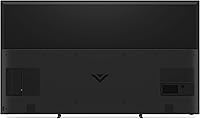
  • HDMI Ports: Four HDMI 2.1 ports are included, with one port supporting eARC for passing audio to compatible soundbars or AV receivers.
  • Connectivity: Wired and wireless connectivity options include Ethernet, Wi-Fi, and multiple USB ports for peripheral or media device connections.
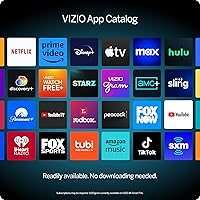
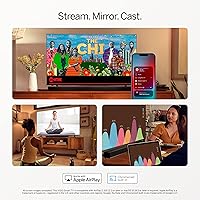
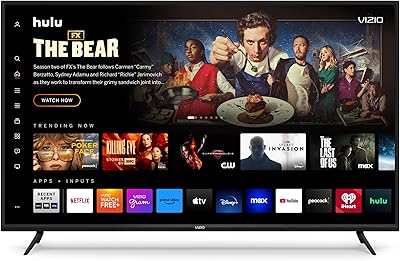
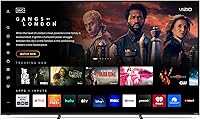
  • Smart Platform: VIZIO SmartCast provides access to major streaming apps including Netflix, Disney+, Apple TV+, and hundreds of free channels through WatchFree+.
  • Voice Control: The included XRT260 voice remote supports Alexa, and the TV is also compatible with Google Assistant through external smart home devices.
  • Audio System: Built-in speakers deliver sound with DTS TruVolume processing to maintain consistent volume levels across different content types and sources.
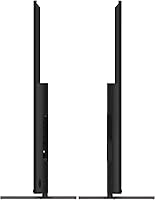
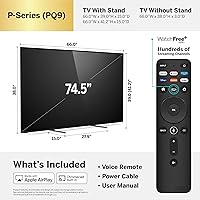
  • Dimensions: The TV measures 3″ deep, 66″ wide, and 38″ tall with the stand attached.
  • Weight: The set weighs approximately 71 pounds including the stand, which is typical for a 75-inch LCD television.
  • Power Consumption: Rated power consumption is approximately 299 watts under standard operating conditions.

Related Reviews

VIZIO M-Series 75-Inch QLED 4K Smart TV
71%
82%
Picture Quality
88%
Value for Money
67%
Gaming Performance
63%
Smart TV Platform
84%
HDR Performance
More
VIZIO MQX 75-inch 4K QLED Smart TV
71%
83%
Picture Quality
78%
HDR Performance
86%
Gaming Performance
54%
Smart TV Platform
88%
Value for Money
More
VIZIO M43Q6-J04 43-inch QLED Smart TV
74%
83%
Picture Quality
78%
Brightness & HDR Performance
76%
Gaming Performance
58%
Smart TV Platform
88%
Value for Money
More
VIZIO V755-J04 75-inch 4K LED Smart TV
73%
78%
Picture Quality
61%
Motion Handling
81%
HDR Performance
74%
Smart TV Platform
88%
Value for Money
More
VIZIO M43Q6M-K04 43-inch 4K QLED Smart TV
73%
83%
Picture Quality
79%
HDR Performance
58%
Smart TV Platform
88%
Value for Money
66%
Gaming Performance
More
INSIGNIA 75-inch QF Series QLED Smart TV
69%
91%
Value for Money
67%
Picture Quality
94%
Screen Size & Presence
58%
Smart TV Interface (Fire TV)
54%
Refresh Rate & Motion Handling
More
iFFALCON 75-Inch Class QLED 4K Smart TV
85%
92%
Picture Quality
86%
Sound Quality
90%
Design & Build Quality
88%
Gaming Performance (144Hz)
78%
Ease of Setup
More
Roku Pro Series 75-inch 4K QLED TV
83%
88%
Picture Quality
86%
HDR Performance
83%
Local Dimming
91%
Gaming Performance
93%
Smart TV & OS
More
Samsung Q60D 75-Inch QLED 4K TV
73%
78%
Picture Quality
58%
Contrast & Black Levels
83%
Color Accuracy
71%
Motion Handling
61%
Gaming Performance
More
VIZIO V-Series 43-inch 4K Smart TV
67%
74%
Picture Quality
61%
Smart Platform (SmartCast)
88%
AirPlay & Chromecast
82%
Value for Money
91%
Ease of Setup
More

FAQ

Yes, all four HDMI ports are HDMI 2.1, which means both the PS5 and Xbox Series X can run supported games at 4K resolution and 120 frames per second. AMD FreeSync Premium Pro is also active, so variable refresh rate works on Xbox Series X natively. PS5 currently supports VRR through its own implementation, and compatibility has been solid based on owner reports.

For most casual viewers, SmartCast covers the major apps well enough that a separate device is not strictly necessary. That said, the interface is noticeably slower than a dedicated Roku or Fire TV stick, and some users find navigation a bit clunky after extended use. If you already own a streaming device you like, plugging it in via HDMI will give you a snappier experience.

In a properly darkened room, the 210-zone local dimming does a good job controlling brightness across different parts of the screen. You will occasionally notice some blooming — a soft glow of light around bright objects against very dark backgrounds — but it is not severe by LCD standards. It is a meaningful step up from edge-lit panels, though it still cannot match the per-pixel precision of an OLED.

Honestly, yes — most owners end up adding one. The built-in speakers are not terrible, but at 75 inches the audio feels noticeably thin and underpowered relative to the screen size. For casual background TV watching it is fine, but for movies or gaming where immersive sound matters, a soundbar or external audio system makes a big difference.

The VIZIO P-Series 75-inch 4K QLED Smart TV supports Dolby Vision, HDR10+, and HLG, which covers virtually every major streaming service. Netflix, Disney+, Apple TV+, and Amazon Prime Video all deliver Dolby Vision content on this panel. HDR10+ is supported for services and discs that use that format, and HLG covers broadcast HDR sources.
Yes, the TV is wall-mountable. The VESA pattern for the P75Q9-J01 is 600 x 400mm, so you will need a mount rated for that pattern and capable of supporting at least 71 pounds. Given the size and weight, professional installation or at least two people handling the install is strongly recommended.

Yes, this large-screen VIZIO has Bluetooth headphone capability built in, so you can pair compatible wireless headphones directly to the TV without needing an external audio transmitter. This is particularly handy for late-night viewing without disturbing others.

The IQ Ultra processor handles upscaling reasonably well. Standard HD cable content and 1080p streaming look clean and detailed rather than soft or artificially sharpened. It is not the most sophisticated upscaling engine on the market, but for everyday TV watching it does its job without obvious artifacts.

A small but recurring pattern in owner reviews mentions occasional post-update sluggishness or minor bugs with the SmartCast interface. These have generally been resolved with subsequent patches, but it is worth knowing that the software experience is not always perfectly polished. VIZIO has continued pushing updates, though the long-term support window is not as clearly defined as some competing brands.

This is actually one of the 75-inch QLED's stronger points — the 1200-nit peak brightness and QLED color volume hold up well in rooms with natural light coming in. You will not be fighting a washed-out image the way you might with dimmer panels. It is a genuinely practical choice for daytime viewing in a typical living room setting.