Overview

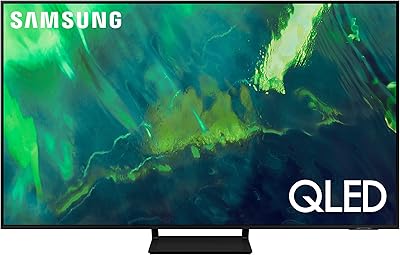
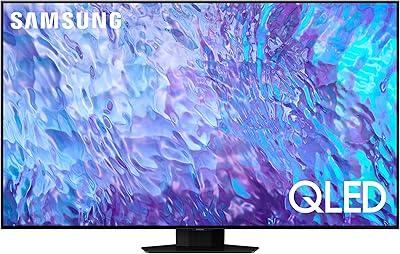
The Samsung Q80B 75-Inch QLED 4K TV occupies a smart position in Samsung's 2022 lineup — capable enough to satisfy serious viewers, but honest about where it stops short of the flagship tier. The 75-inch screen is the obvious headline; it fills a large living room wall the way smaller sets simply cannot. Underneath that panel, the Direct Full Array backlight is a genuine upgrade over the edge-lit designs common at this price range, giving the TV more precise control over brightness and shadow. The Quantum Processor 4K handles upscaling quietly in the background, making standard HD content look reasonably sharp. This is a strong all-rounder — not a reference display for calibration enthusiasts, but a very capable set for real-world use.
Features & Benefits

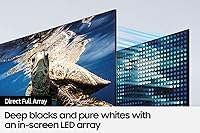
The Direct Full Array backlight is where the Q80B earns its keep. Local dimming zones allow the panel to crush blacks in dark scenes while keeping bright highlights genuinely bright — something edge-lit TVs consistently struggle with. In HDR content, the result is noticeably more dynamic than what you get from a standard panel. The native 120Hz refresh rate, combined with Motion Xcelerator Turbo+, keeps fast motion — sports, action films, first-person games — looking clean rather than smeared. For PC and console gamers, AMD FreeSync Premium eliminates screen tearing without requiring a separate monitor. The built-in audio handles Dolby Atmos decently for a flat panel, but most buyers at this level will eventually pair it with a soundbar.

Best For

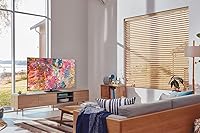
This 75-inch Samsung QLED is built for living rooms that do it all. If your household splits time between 4K streaming, weekend sports, and console gaming sessions, it handles the rotation without making obvious compromises. The high brightness output makes it particularly well-suited to rooms with large windows or ambient lighting that would wash out an OLED panel. Console gamers will appreciate the low input lag in game mode and reliable VRR behavior with both PS5 and Xbox Series X. That said, dedicated home cinema enthusiasts chasing absolute black levels will find OLED panels more satisfying. And if your room is smaller than mid-size, 75 inches is simply a lot of screen to manage.

User Feedback

Owners of this Samsung set consistently highlight picture brightness and sheer screen impact as the reasons they bought it. Gaming performance draws strong praise too — buyers note that it responds quickly in game mode and does not feel laggy in fast-paced titles. Where the criticism lands hardest is backlight blooming, particularly visible when watching dark content in a dim room; bright halos around subtitles or menu text are a real complaint, not an edge case. Some users also flag the out-of-box calibration as too punchy, and the smart TV software serves promotional content in ways that feel intrusive. The overall rating is strong, but weigh recent reviews for firmware or long-term reliability patterns.

Pros

  • Exceptional brightness makes it one of the better large-screen options for sun-filled living rooms.
  • Direct Full Array backlight delivers noticeably better contrast than edge-lit panels in the same price range.
  • Native 120Hz panel keeps sports and fast-motion content looking sharp without artificial processing artifacts.
  • Gaming mode input lag is low enough that competitive and casual console players will feel the difference.
  • AMD FreeSync Premium support is a genuine bonus for PC gamers who want a large-screen, tear-free setup.
  • All four HDMI ports support 2.1 bandwidth, so no juggling cables between next-gen consoles and other devices.
  • The Q80B handles 4K upscaling of HD content well enough that older shows and cable TV look respectable.
  • Built-in Dolby Atmos processing is above average for a flat panel, making it viable without an immediate soundbar purchase.
  • Three voice assistant options — Alexa, Google Assistant, and Bixby — give households flexibility without workarounds.
  • The 75-inch screen size delivers a genuinely cinematic presence in a medium-to-large living room.

Cons

  • Backlight blooming around bright objects in dark scenes is noticeable and cannot be fully eliminated through settings.
  • Out-of-box color calibration runs oversaturated and cool; most buyers will need to spend time in the picture menu.
  • Samsung's smart TV interface pushes sponsored content and app recommendations that feel intrusive without manual adjustment.
  • The included remote feels plasticky and lightweight relative to what buyers expect at this price tier.
  • Local dimming, while better than edge-lit alternatives, still trails what mini-LED or OLED panels achieve in the same class.
  • Panel uniformity inconsistencies — subtle brightness shifts across the screen — have been reported by a portion of buyers.
  • Long-term reliability data for this 2022 model is still limited, making it harder to assess durability with confidence.
  • The smart TV platform can slow down noticeably over time as firmware updates accumulate, a common Samsung complaint.
  • At nearly 90 pounds, installation is a two-person job and wall-mounting requires planning for stud placement.
  • Buyers in smaller rooms will likely find 75 inches creates viewing fatigue rather than comfort at close distances.

Ratings

The scores below were generated by AI after analyzing thousands of verified buyer reviews for the Samsung Q80B 75-Inch QLED 4K TV from global markets, with spam, bot activity, and incentivized feedback actively filtered out. Each category reflects the honest distribution of praise and frustration found across real ownership experiences — not a manufacturer summary. Where the Q80B genuinely delivers, the scores reflect that; where it falls short, that too is represented without softening.

Picture Brightness
91%
Owners in sun-drenched living rooms consistently highlight how well the Q80B holds up against ambient light — HDR content in particular looks vivid and punchy even during daytime viewing. The QLED panel's peak output is one of the most frequently praised attributes across markets, with many buyers noting it outperformed their previous TV significantly.
A smaller group of buyers found that maximum brightness in standard SDR content felt inconsistent depending on the picture mode selected out of the box. Some also noted that achieving the full brightness potential requires disabling certain power-saving defaults that Samsung enables automatically.
Contrast & Black Levels
72%
28%
The Direct Full Array backlight is a clear step up from the edge-lit sets many buyers upgraded from, and users watching sports or brightly lit dramas found the contrast handling impressive and natural-looking. In mixed-lighting scenes, the local dimming does a competent job of keeping shadow detail intact without crushing dark areas entirely.
Backlight blooming is the most cited complaint in dark-room viewing scenarios — bright subtitles, starfields, and menu overlays all produce a soft glow against black backgrounds that many users find distracting once noticed. Buyers who primarily watch films in a darkened room consistently rate this aspect lower, and no combination of settings fully resolves it.
Color Accuracy
78%
22%
Quantum Dot technology gives the Q80B a broad color gamut that makes streaming content, nature documentaries, and 4K Blu-ray look rich and saturated in a way that standard LCD panels cannot match. Users who took the time to calibrate the picture mode reported genuinely impressive results that rival more expensive sets.
The default out-of-box calibration is widely criticized for being oversaturated and running too cool in color temperature, making skin tones look slightly unnatural without adjustment. Buyers who are not comfortable digging into picture settings may never experience the panel at its actual best.
Gaming Performance
89%
In game mode, the Q80B drops to a low input lag class that PS5 and Xbox Series X owners describe as feeling genuinely immediate — fast-paced shooters and action games respond without any perceptible hesitation on a 75-inch screen. AMD FreeSync Premium keeps frame delivery smooth for PC users, and the four full-bandwidth HDMI ports mean no device gets left with a slower connection.
The auto game mode detection occasionally fails to activate automatically when switching inputs, requiring a manual toggle that some users find annoying during quick session changes. A handful of PC gamers also noted that ultra-wide resolution support is absent, limiting the set's appeal for those coming from a monitor-first setup.
Motion Handling
83%
Sports fans are among the most satisfied owners — live football, basketball, and motorsports content looks clean and stutter-free, with the 120Hz panel and Motion Xcelerator Turbo+ working together to prevent the judder that plagues lower refresh rate TVs. Fast camera pans in action films hold up well without obvious smearing.
The motion interpolation settings, when pushed to higher levels, introduce a noticeable soap opera effect that many buyers find deeply unpleasant and immediately switch off. Finding the right middle-ground setting takes experimentation, and Samsung's labeling of these modes is not always intuitive.
HDR Experience
81%
19%
When watching HDR10+ content from compatible streaming services, the Q80B produces highlight detail and tone mapping that buyers consistently describe as a clear improvement over their previous non-HDR or entry-level HDR sets. Bright highlights in outdoor scenes and explosions carry genuine impact without clipping into a washed-out white.
The absence of Dolby Vision support is a genuine limitation that frustrated a segment of buyers, particularly those who subscribe to services that stream Dolby Vision as their primary HDR format. HDR10+ content availability, while growing, still lags behind Dolby Vision on certain platforms.
Built-in Audio
67%
33%
For a flat panel, the 2.2.2-channel system with Dolby Atmos decoding produces fuller, more spatially aware sound than most buyers expected — dialogue clarity in particular draws positive mentions, and casual TV watching rarely feels like audio is a weak point.
At higher volumes, the built-in speakers lose composure and dynamics, struggling to fill a large living room with convincing bass or cinematic scale. Most buyers at this price tier eventually add a soundbar, and several noted they wished they had budgeted for one from the start.
Smart TV Software
63%
37%
Samsung's Tizen platform offers a wide app library, fast loading times for major streaming services, and genuinely useful integration with all three major voice assistants — buyers who lean on Alexa or Google Assistant find the experience responsive and reliable for everyday commands.
Sponsored content tiles on the home screen and persistent app recommendations are a recurring frustration, with many users describing the interface as feeling commercialized rather than user-first. Several buyers also flagged that privacy settings require deliberate navigation to lock down, and firmware updates have occasionally introduced new ad placements.
Voice Assistant Integration
77%
23%
Having Alexa, Google Assistant, and Bixby all available without additional hardware is a practical convenience that multi-device households genuinely appreciate — switching between smart home commands, search, and playback control works reliably across all three.
Bixby's capabilities remain noticeably narrower than Alexa or Google Assistant for general queries, and buyers who default to it out of habit report more frequent misunderstandings. The wake word sensitivity also occasionally triggers unintentionally during content dialogue.
Design & Build
74%
26%
The Titan Black bezel finish is slim and unobtrusive, and buyers consistently note that the TV looks appropriately premium on a stand or wall — it does not look out of place in a well-furnished room despite its size. The stand design is stable and provides adequate height for most media console setups.
The included remote draws consistent criticism for feeling plasticky and lightweight relative to the TV's overall positioning — several buyers describe it as the most budget-feeling component in the box. Cable management at the back of the set is also awkward given the depth of the stand base.
Ease of Setup
79%
21%
Most buyers report that the initial setup process is straightforward and guided clearly by on-screen prompts — connecting to Wi-Fi, signing into a Samsung account, and getting to the home screen takes under fifteen minutes for the majority of users.
The post-setup configuration required to disable ads, adjust privacy settings, and tune picture modes adds meaningful time that many buyers did not anticipate. At 88.8 pounds, physically positioning the TV before setup also requires planning and at minimum two people.
Upscaling Quality
82%
18%
Buyers who watch a lot of cable TV, older streaming content, or DVD-quality sources are consistently impressed by how much cleaner the Quantum Processor 4K makes lower-resolution material look — noise is suppressed and detail appears more defined without looking artificially sharpened.
Very compressed streaming sources, such as lower-bitrate cable broadcasts, can still look soft or block-heavy in fast-motion scenes despite the upscaling — the processor improves things meaningfully but cannot manufacture detail that was never in the source.
Value for Money
76%
24%
Buyers who compared the Q80B against similarly priced alternatives generally feel the combination of screen size, gaming specs, and backlight quality represents a fair exchange at the price paid — particularly for households that use multiple features rather than prioritizing one.
Those who discover the backlight blooming issue post-purchase frequently express that the value equation shifts once that limitation becomes apparent in daily use. A vocal group also notes that stepping up to a mini-LED or OLED alternative at a similar price tier would have delivered a more satisfying dark-room picture.
Panel Uniformity
61%
39%
The majority of buyers do not report uniformity issues in typical mixed-content viewing — bright scenes, sports, and daytime drama look consistent across the panel without obvious hotspots or dimming at the edges.
A notable minority of buyers have reported visible brightness inconsistencies across the panel, particularly on dark gray screens — a condition sometimes called dirty screen effect — which is especially visible during sports broadcasts with large areas of even-toned grass or court. Replacement outcomes through warranty have been mixed.
Long-term Reliability
69%
31%
In the ownership window covered by most reviews to date, the Q80B has shown a solid majority of trouble-free experiences — buyers report consistent performance without hardware failures, and Samsung's warranty support has resolved hardware defects for most who needed it.
As a 2022 model, the long-term reliability picture is still forming, and there are not yet enough multi-year ownership accounts to draw firm conclusions about panel longevity or software support timelines. A subset of buyers have reported firmware-related regressions after updates, which adds an element of uncertainty.

Suitable for:

The Samsung Q80B 75-Inch QLED 4K TV makes the most sense for households that treat their TV as a true centerpiece rather than background furniture. If your living room gets a lot of natural light during the day, the high peak brightness and strong anti-reflective coating give this set a real practical edge over OLED panels that wash out in sunlight. Mixed-use families — those who stream shows in the evening, watch weekend sports, and hand the remote to a teenager running a gaming console — will find it handles all three without obvious weak spots. Console gamers in particular get a lot of value here: the combination of native 120Hz, low input lag in game mode, and VRR support makes fast-paced play feel genuinely responsive on a screen large enough to be immersive. Those who want a capable smart TV ecosystem with multiple voice assistant options built in will also feel right at home.
Not suitable for:

The Samsung Q80B 75-Inch QLED 4K TV is not the right call for buyers whose primary concern is absolute picture fidelity in dark rooms. Backlight blooming — the visible glow that halos around bright objects against dark backgrounds — is a known and documented limitation of this panel, and it will bother anyone who watches a lot of dark-room cinema content. Dedicated home theater enthusiasts who have calibrated their expectations around OLED-level black depth will find the Q80B falls short, regardless of how good its other attributes are. Buyers working with smaller spaces should also think carefully — 75 inches is an imposing footprint, and in a room under roughly 10 feet of viewing distance, it can feel overwhelming rather than impressive. Finally, anyone sensitive to smart TV software intrusiveness should know upfront that Samsung's platform serves promotional content and requires deliberate settings management to keep the interface clean.
Specifications

  • Screen Size: The panel measures 74.5 inches diagonally, marketed as a 75-inch class display.
  • Display Type: QLED with Quantum Dot technology, delivering expanded color volume compared to standard LCD panels.
  • Resolution: Native 4K UHD resolution at 3840 x 2160 pixels for sharp detail across the full screen.
  • Backlight: Direct Full Array backlight with local dimming zones for improved contrast control versus edge-lit designs.
  • Refresh Rate: Native 120Hz panel, suitable for smooth motion in fast-moving sports, films, and games.
  • HDR Support: Supports Quantum HDR with up to 12x intensity range, providing expanded brightness headroom over standard HDR content.
  • Processor: Quantum Processor 4K handles real-time upscaling of lower-resolution content and picture optimization automatically.
  • Audio System: 2.2.2-channel speaker configuration with Dolby Atmos decoding and Object Tracking Sound for directional audio.
  • Gaming Features: Includes AMD FreeSync Premium, Motion Xcelerator Turbo+, and 4K at 120Hz support for next-gen console and PC gaming.
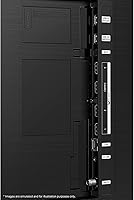
  • HDMI Ports: Four HDMI 2.1 ports support full 4K 120Hz bandwidth, eliminating the need to prioritize which device gets the high-speed port.
  • Connectivity: Wi-Fi, Bluetooth 5.2, Ethernet, USB, and RF inputs are all included for broad device and network compatibility.
  • Voice Assistants: Amazon Alexa, Google Assistant, and Samsung Bixby are all built in and ready to use without additional hardware.
  • Smart Platform: Runs Samsung's Tizen-based Smart TV platform, which includes the Gaming Hub and a broad library of streaming apps.
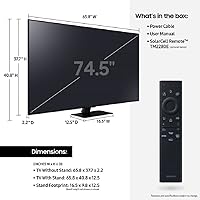
  • Dimensions: With the stand attached, the TV measures 65.8″ wide, 40.8″ tall, and 12.5″ deep.
  • Weight: The set weighs 88.8 pounds with the stand, so wall mounting or positioning requires at least two people.
  • Model Number: The official model identifier is QN75Q80BAFXZA, relevant for warranty registration and part lookups.
  • Color Finish: Ships in Titan Black, a dark matte bezel finish that blends into most room environments without drawing attention.
  • Release Year: This is a 2022 model, sitting in Samsung's Q80B series within that year's mid-to-upper QLED lineup.

Related Reviews
Samsung Q60D 75-Inch QLED 4K TV
73%
78%
Picture Quality
58%
Contrast & Black Levels
83%
Color Accuracy
71%
Motion Handling
61%
Gaming Performance
More
Samsung Q80B 65-inch QLED 4K TV
78%
88%
Picture Quality
91%
Gaming Performance
83%
HDR Performance
67%
Local Dimming
76%
Smart TV & Interface
More
Samsung The Frame Pro 75-inch QLED TV
76%
92%
Art Mode & Artwork Display
94%
Design & Aesthetics
88%
Wireless Installation Experience
84%
Picture Quality
61%
Value for Money
More
Samsung Q70A 75-inch QLED 4K Smart TV
77%
78%
Picture Quality
61%
Contrast & Black Levels
84%
Motion Handling
82%
Gaming Performance
83%
Smart TV Experience
More
Samsung Q60C 75-inch QLED 4K Smart TV
77%
82%
Picture Quality
84%
Color Accuracy
76%
Motion Handling
63%
Gaming Performance
88%
Smart TV Platform
More
Samsung 65-Inch QLED 4K TV Q60C
86%
94%
Picture Quality
91%
Gaming Performance
87%
Ease of Setup
88%
Smart Features
72%
Sound Quality
More
Samsung Q60D 55-inch QLED 4K TV
83%
88%
Picture Quality
91%
Color Accuracy
82%
HDR Performance
84%
Motion Handling
70%
Audio Performance
More
Samsung Q900 75-Inch 8K QLED TV
73%
91%
Picture Quality
84%
8K Upscaling Performance
31%
Native 8K Content Value
83%
HDR Performance
88%
Motion Handling
More
Samsung Q80C 75-inch QLED 4K Smart TV
77%
84%
Picture Quality
91%
Gaming Performance
73%
Contrast & Local Dimming
88%
Smart TV Platform
62%
Built-in Audio
More
Samsung The Serif 55-inch QLED 4K TV
79%
96%
Design & Aesthetics
78%
Picture Quality
91%
Anti-Glare Performance
88%
Stand & Placement Flexibility
74%
Smart Platform & App Support
More

FAQ

Yes, and this is one of the Q80B's more practical strengths. All four HDMI ports support 2.1 speeds, so you can plug in both consoles plus other devices and still get full 4K 120Hz performance on each input without shuffling cables.

It is a real issue, not an exaggerated complaint. If you watch a lot of dark-room content — space scenes, nighttime drama, horror films — you will notice a soft glow around bright objects against dark backgrounds. In a well-lit room or with bright content it is far less visible, but if dark-room cinema viewing is your main use case, it is worth factoring into your decision.

It handles bright rooms better than most alternatives in its class. The QLED panel produces high peak brightness, and the screen coating does a reasonable job of reducing glare from windows and overhead lights. OLED panels, by comparison, tend to wash out in these conditions, so this set has a practical edge there.

In game mode, the Q80B drops into a low input lag class that is well under 10 milliseconds at 4K 120Hz — fast enough that the vast majority of players will not feel any perceptible delay. It is not marketed as a dedicated gaming monitor, but for console play it performs at a level competitive gamers are genuinely comfortable with.

For casual streaming and daytime TV it holds its own — the 2.2.2-channel setup with Dolby Atmos processing is above average for a flat panel. But if you are watching action films or gaming with the volume up in a larger room, a soundbar will make a noticeable difference. Think of the built-in audio as a solid starting point, not the final destination.

It depends on your tolerance. Samsung's platform surfaces sponsored app recommendations and promotional tiles on the home screen, and some settings require a few menus of navigation to disable. Most users find a workable routine after initial setup, but it is not as clean out of the box as some competing platforms. A wired Ethernet connection also helps with overall responsiveness.

Yes, it is wall-mountable. The VESA pattern for the 75-inch Q80B is 600 x 400mm, so make sure any bracket you buy lists that pattern as compatible. At nearly 90 pounds, you will want to mount it into wall studs rather than drywall anchors, and plan for two people during installation.

No, it does not. Samsung has historically excluded Dolby Vision from its TVs, and the Q80B is no exception. It supports HDR10+ and its own Quantum HDR format instead. For most streaming content this is not a dealbreaker, but if Dolby Vision compatibility is important to you, it is worth knowing upfront.

The QN90B uses a more advanced mini-LED backlight with a higher number of local dimming zones, which translates to better black levels and less blooming than the Q80B. It also tends to get brighter in HDR. The Q80B is the more practical buy for most households, but if you are a dark-room viewer who wants noticeably tighter contrast control, the step up is meaningful.

For most buyers, yes. The core hardware — the panel, backlight design, gaming specs, and processor — holds up well and the price has generally come down from its original launch point. The main thing to factor in is that Samsung software updates will eventually taper off, and long-term reliability data is still accumulating. Check recent owner reviews before buying to catch any firmware issues that may have surfaced since launch.