Overview

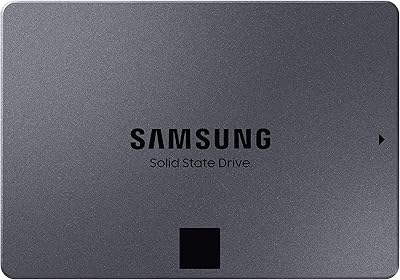
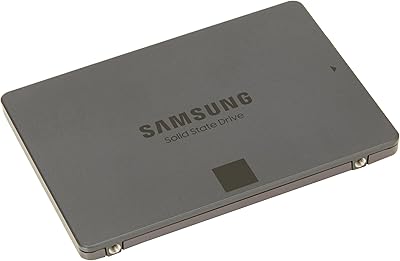
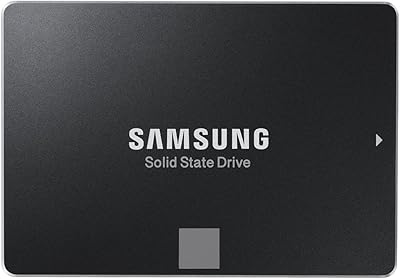
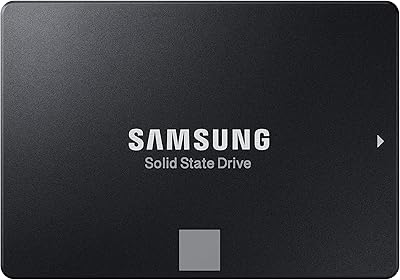
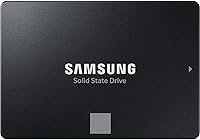
The Samsung 870 EVO 4TB Internal SATA SSD is Samsung's most refined take on the SATA storage format — a drive built for people who prioritize dependability and capacity over peak transfer speeds. If you're still running a mechanical hard drive, swapping in this Samsung drive is one of the most impactful upgrades you can make. Four terabytes of internal storage is genuinely rare at this price point for a solid-state option, and the 870 EVO fills that gap without asking you to compromise on brand trust or long-term reliability. Just know upfront: this is not NVMe. It's a mature, well-engineered SATA drive that excels in the right context.
Features & Benefits

Push the SATA III interface as far as it goes and the 870 EVO doesn't flinch — 560 MB/s sequential reads and 530 MB/s writes represent the practical ceiling for this interface, and the drive hits them consistently. What's particularly useful in real workloads is the Intelligent TurboWrite buffer, which sustains write speeds across larger file transfers instead of dropping off mid-copy the way lesser drives often do. Underneath, the MLC V-NAND architecture provides a meaningful endurance advantage, backed by a 2,400 TBW rating that rivals some enterprise-grade options. Hardware-level AES 256-bit encryption and TCG/Opal 2.0 support round out the feature set for users working with sensitive data.

Best For

This high-capacity SATA SSD is the obvious answer for anyone upgrading a laptop or desktop from a spinning hard drive who doesn't want to spend hours managing what fits where — four terabytes means you simply stop worrying about space. Creative professionals will find it equally compelling for media library storage: raw photo collections, video project files, and audio sample libraries all land here comfortably. It's also a strong fit for NAS enclosures or always-on home servers where SATA is the fixed interface and long-term write endurance matters more than burst speed. Older Mac users — think MacBook Pros or Mac Minis with SATA bays — can get a serious internal boost without replacing the whole machine.

User Feedback

Owners with tens of thousands of ratings behind the 870 EVO tell a consistent story: installation is quick, and the real-world difference over a hard drive is immediately noticeable — faster boot times, snappier app launches, and noticeably smoother file access. Long-term users report no meaningful slowdown after extended heavy use, which speaks to the drive's durability rather than just its out-of-box numbers. The honest caveat that surfaces often: if your system supports NVMe, a comparable NVMe drive will outpace this one significantly on peak transfer speeds. It's not a flaw — it's a SATA drive — but worth knowing. A small number of users mention Samsung's Magician utility as a helpful but optional add-on for health monitoring.

Pros

  • Four terabytes of solid-state storage in a single 2.5-inch drive is genuinely hard to find from a brand this reliable.
  • The 870 EVO hits the practical ceiling of SATA III with 560 MB/s reads and holds it consistently under real workloads.
  • A 2,400 TBW endurance rating means this drive is built to last years of heavy daily use without issue.
  • Intelligent TurboWrite prevents the write-speed drop-off that plagues cheaper drives during large file transfers.
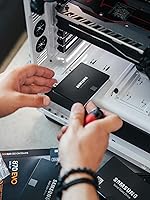
  • Installation is straightforward — most users report being up and running within minutes, no technical expertise required.
  • Broad compatibility across laptops, desktops, NAS devices, and older Macs makes it a genuinely versatile choice.
  • Hardware-level AES 256-bit encryption adds meaningful data security without any noticeable performance penalty.
  • Long-term owners report no measurable performance degradation, even after years of sustained heavy use.
  • Samsung's five-year warranty provides real peace of mind for a drive you're relying on for bulk storage.
  • MLC V-NAND flash offers better endurance and consistency compared to the TLC NAND found in many competing drives.

Cons

  • SATA III tops out well below what NVMe drives deliver — this is a hard physical limit, not a firmware fix.
  • Buyers with available M.2 slots are paying a premium for capacity when faster alternatives exist at similar price points.
  • The 2.5-inch form factor means it won't fit systems that only have M.2 slots and no SATA data or power connectors.
  • Samsung Magician software, while useful for monitoring drive health, has drawn occasional complaints about bloat and compatibility.
  • At four terabytes, this is overkill — and overpriced — for users who simply need a modest boot drive upgrade.
  • There is no included mounting hardware or adapter bracket, which can be an issue for desktop cases with only 3.5-inch bays.
  • For users on tight budgets, the per-gigabyte cost is higher than some comparable drives from lesser-known brands.
  • The drive generates no fanfare in benchmarks — if spec sheet numbers matter to you, this one won't impress on paper.

Ratings

The scores below reflect an AI-driven analysis of thousands of verified global user reviews for the Samsung 870 EVO 4TB Internal SATA SSD, with spam, bot-generated, and incentivized submissions actively filtered out to ensure the ratings represent genuine buyer experiences. Both the strengths that make this drive a top-seller and the honest frustrations real users have encountered are transparently factored into every score. The result is a balanced, category-by-category breakdown designed to help you decide whether this high-capacity SATA SSD is the right fit for your specific setup.

Read & Write Performance
83%
For a SATA drive, users consistently report that the 870 EVO feels fast in daily use — boot times drop sharply compared to hard drives, and large file transfers across the drive complete without the mid-transfer slowdowns that plague cheaper SSDs. The Intelligent TurboWrite buffer earns particular praise from users moving big media files.
Informed buyers are quick to note that NVMe drives at comparable price points outperform this one significantly on sequential speeds. For tasks like video editing with high-bitrate footage or OS-intensive workloads, the SATA ceiling becomes a tangible limitation rather than a theoretical footnote.
Long-Term Reliability
94%
This is where the 870 EVO genuinely separates itself from the competition. Long-term owners — some with two or three years of daily use — consistently report zero performance degradation, no unexpected failures, and steady health readings in monitoring tools. The MLC V-NAND architecture is widely credited for this consistency.
A small subset of users have reported early failure units, though this appears statistically rare given the volume of reviews. Samsung's warranty process is generally praised, but replacement turnaround times have drawn occasional criticism from users who depend on the drive for active work.
Storage Capacity
96%
Four terabytes of internal solid-state storage in a single 2.5-inch drive is genuinely difficult to find at this reliability tier, and users building out media libraries or replacing aging high-capacity hard drives consistently highlight this as the core reason they chose the 870 EVO over the alternatives.
The only real complaint here is that 4TB still isn't enough for some power users managing uncompressed video archives or massive sample libraries — but that's a use-case limitation, not a product flaw. A small number of buyers also note that the per-gigabyte cost is slightly higher than some off-brand alternatives.
Value for Money
78%
22%
Within the SATA SSD category specifically, users broadly agree the 870 EVO is fairly priced for the brand trust, endurance rating, and warranty it delivers. Buyers who frame their purchase as a capacity upgrade from a hard drive — rather than a speed upgrade — tend to feel the value proposition is solid.
Users who discover NVMe drives at similar or lower price points after their purchase frequently express some regret, particularly if they had available M.2 slots they weren't aware of. For buyers who don't specifically need SATA, the value case weakens considerably when faster options cost the same.
Installation & Setup
92%
Across a wide range of user skill levels — from first-time upgraders to experienced system builders — the installation process is described as painless. The drive is recognized immediately by Windows, macOS, and most NAS operating systems without any driver installation, and Samsung's data migration tool simplifies cloning from an old drive.
A minority of users in NAS or desktop setups encountered fitment issues due to missing 3.5-inch adapter brackets, which are not included in the box. A few Mac users also noted that cloning macOS required additional steps not covered in Samsung's documentation.
Endurance & TBW Rating
93%
The 2,400 TBW rating is among the highest you'll find in the consumer SATA category, and users running the drive in write-heavy environments — home servers, video recording rigs, NAS arrays — consistently note that SMART data shows healthy endurance reserves even after extended heavy use.
The TBW rating is difficult to validate independently without long-term testing, and a few technically sophisticated users point out that the rating assumes specific workload distributions. Real-world endurance may vary in environments with unusually high random write loads, such as database or caching use cases.
Compatibility
91%
Broad system compatibility is one of the most frequently praised aspects across user reviews. The drive works across Windows PCs, older Macs, a wide range of NAS enclosures, and video recording hardware without requiring any configuration changes — users simply install it and it works.
A handful of users with very old SATA II systems reported occasional instability that resolved after a firmware update, suggesting that backward compatibility, while generally solid, may require an extra step in edge cases. Compatibility with some older NAS firmware versions has also been flagged occasionally.
Sequential Write Sustained Speed
79%
21%
The Intelligent TurboWrite system makes a noticeable real-world difference for users regularly moving large batches of files — think backing up a photo shoot or transferring a video project — by preventing the write-speed cliff that makes cheaper drives feel inconsistent under sustained load.
Once the TurboWrite buffer fills on very large sequential writes — think transfers in the hundreds of gigabytes — write speeds drop to the underlying NAND rate, which some users find disappointing. This limitation surfaces mainly in bulk-transfer workflows and is less noticeable during everyday mixed-use tasks.
Data Security Features
82%
18%
Hardware-level AES 256-bit encryption with TCG/Opal 2.0 and Microsoft eDrive support is a feature set that most consumer drives omit entirely, and business users or security-conscious buyers consistently call it out as a meaningful differentiator — especially given that it adds zero performance overhead.
Configuring hardware encryption requires compatible software like BitLocker or a TCG-compliant management tool, and the setup process is not beginner-friendly. Users who enable encryption without understanding the key management implications have occasionally reported being locked out of their data after a system reinstall.
Software & Ecosystem
71%
29%
Samsung Magician provides a genuinely useful set of tools for users who want visibility into drive health, wear indicators, and available firmware updates. Users who install it tend to appreciate the peace of mind it offers, particularly for drives used in always-on or server-adjacent environments.
Magician has drawn a consistent stream of complaints about interface bloat, slow update cycles, and occasional compatibility issues on certain Windows configurations. Several users also note that it installs background services that run persistently, which is an annoyance for minimalist system setups.
Form Factor Versatility
76%
24%
The 2.5-inch form factor is genuinely versatile for its intended use cases — it fits the vast majority of laptops, desktop drive bays, and NAS enclosures without modification, and its slim 0.27-inch profile clears the height restrictions in most ultrabook-style laptop bays.
The growing reality is that many modern desktop motherboards and laptops are phasing out 2.5-inch SATA bays entirely in favor of M.2 slots, which limits this drive's long-term relevance for new builds. Buyers without an existing SATA infrastructure may find it a poor fit for forward-looking systems.
Brand Reputation & Trust
93%
Samsung's reputation in NAND flash storage carries real weight among users, and many buyers explicitly cite the brand as a deciding factor. The general sentiment is that with Samsung, you know what you're getting — consistent quality, accessible support, and firmware that gets maintained over the product's life.
A small number of users have expressed frustration with Samsung's customer support responsiveness during warranty claims, particularly outside North America. The brand premium also means that some budget-focused buyers feel they could get comparable performance from less established alternatives at a lower cost.
Noise & Heat
96%
Like all SSDs, the 870 EVO produces no audible noise and runs cool under normal workloads. Users migrating from hard drives consistently mention the silence as an unexpected but welcome quality-of-life improvement, particularly in quiet office or bedroom setups.
Under sustained heavy workloads — such as long sequential writes in a warm NAS enclosure — some users have noted slightly elevated temperatures compared to NVMe drives with thermal throttling controls. This is generally not an issue in well-ventilated environments but is worth noting for tightly packed enclosures.

Suitable for:

The Samsung 870 EVO 4TB Internal SATA SSD was built for a specific kind of buyer, and if you fit the profile, it's hard to argue against it. Anyone still running a mechanical hard drive in their desktop or laptop will experience an immediate and dramatic improvement — faster boots, snappier application loads, and far more responsive file access across the board. Four terabytes of solid-state storage is a rare find in the SATA category, making this drive especially appealing to creative professionals who need a permanent home for large photo libraries, video project files, or audio sample collections without managing external drives. It's equally well-suited for NAS enclosures, home servers, or secondary storage builds where the SATA interface is fixed and long-term reliability matters more than raw throughput. Mac users with older MacBook Pros or Mac Minis that still carry SATA bays will also find this a practical and cost-effective way to extend the useful life of aging hardware.
Not suitable for:

If your motherboard has an available M.2 slot and speed is a priority, the Samsung 870 EVO 4TB Internal SATA SSD is not the drive you should be buying — full stop. Modern NVMe drives operate at speeds several times higher than what SATA III can physically deliver, and for tasks like large video rendering, OS-intensive workloads, or gaming with fast load times, that gap is real and noticeable. This drive also won't satisfy builders putting together a high-performance new system from scratch, where there's simply no reason to choose SATA over NVMe unless cost or slot availability forces the decision. Buyers seeking a portable storage solution should look elsewhere entirely, as this is a strictly internal 2.5-inch drive with no external use case. And if you only need one or two terabytes, the value-per-dollar math may shift toward NVMe options at comparable price points, making the capacity advantage here less relevant.
Specifications

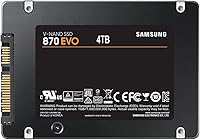
  • Capacity: The drive offers 4TB of usable solid-state storage, making it one of the largest single-drive SATA options available for internal installations.
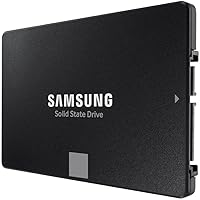
  • Form Factor: Built in the standard 2.5-inch form factor, it fits laptops, desktops, and NAS enclosures that support this size.
  • Interface: Uses the SATA III (6 Gb/s) interface, which is backward compatible with SATA II ports at reduced maximum speeds.
  • Read Speed: Sequential read speeds reach up to 560 MB/s, which represents the practical performance ceiling of the SATA III specification.
  • Write Speed: Sequential write speeds reach up to 530 MB/s under sustained conditions, supported by the Intelligent TurboWrite buffer system.
  • NAND Type: Utilizes Samsung's proprietary MLC V-NAND flash memory, which delivers better endurance and long-term consistency compared to TLC-based alternatives.
  • Endurance Rating: Rated at 2,400 TBW (terabytes written), placing this drive among the most durable consumer-grade SATA SSDs currently available.
  • Encryption: Supports AES 256-bit hardware encryption alongside TCG/Opal 2.0 and Microsoft eDrive (IEEE 1667) for advanced data security without CPU overhead.
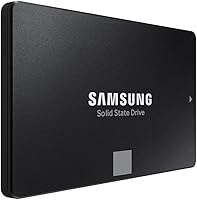
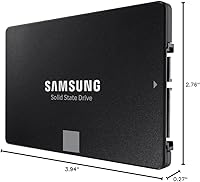
  • Dimensions: Measures 3.94 x 2.76 x 0.27 inches, conforming to the standard 2.5-inch slim drive profile used across most laptops and drive bays.
  • Weight: Weighs just 3.04 ounces, making it light enough to install without affecting the balance or portability of a laptop.
  • Shock Resistance: Rated to withstand shock up to 1,500 G at 0.5 ms (half sine), offering solid resilience against accidental drops or impacts during handling.
  • Compatible Devices: Officially tested and compatible with laptops, desktop PCs, Mac systems with SATA bays, NAS enclosures, and video recording devices.
  • Installation Type: Designed exclusively for internal installation; it requires a SATA data cable and a SATA power connector — no external housing is included.
  • Model Number: The official Samsung model number is MZ-77E4T0B/AM, which identifies the 4TB North American variant of the 870 EVO series.
  • Warranty: Covered by Samsung's standard five-year limited warranty, providing long-term protection for both consumer and light professional use cases.
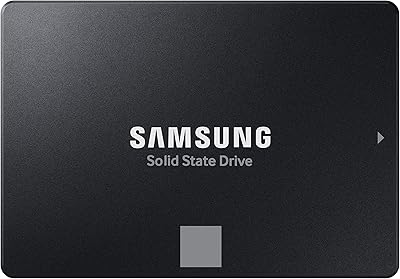
  • Color: The drive housing is finished in black and follows the same understated design as previous generations of Samsung's EVO lineup.
  • Manufacturer: Designed and manufactured by Samsung, a company with an established track record in NAND flash production and consumer storage hardware.
  • Software Support: Compatible with Samsung Magician software, which provides optional tools for drive health monitoring, benchmarking, and firmware updates.

Related Reviews

Samsung 870 EVO 500GB SATA SSD
85%
88%
Read/Write Performance
84%
Sustained Write Consistency
93%
Installation & Setup
91%
Long-Term Reliability
86%
Value for Money
More
Samsung 870 QVO 4TB Internal SSD
84%
88%
Everyday Performance
61%
Sustained Write Speed
93%
Storage Capacity Value
94%
Installation Experience
86%
Long-Term Reliability
More
Samsung 870 QVO 8TB SATA SSD
85%
85%
Performance
91%
Ease of Installation
96%
Storage Capacity
88%
Energy Efficiency
83%
Durability/Build Quality
More
Samsung Portable SSD T5 EVO 4TB
88%
92%
Performance
95%
Portability
90%
Build Quality
88%
Ease of Use
80%
Compatibility
More
Samsung 990 EVO Plus 4TB SSD
92%
98%
Sequential Read Speed
96%
Sequential Write Speed
91%
Thermal Management
94%
Reliability/Durability
89%
Compatibility with Systems
More
Samsung 870 QVO 2TB SATA III SSD
87%
91%
Value for Money
87%
Performance in Gaming
90%
Reliability & Durability
89%
Speed (Read/Write)
94%
Ease of Setup
More
Samsung 860 EVO 2TB SSD
88%
92%
Performance
90%
Reliability
88%
Ease of Installation
89%
Compatibility (Windows/Mac/Linux)
78%
Thermals (Heat Management)
More
ORICO S500PRO 4TB SATA SSD
86%
91%
Performance
88%
Build Quality
90%
Value for Money
89%
Installation Ease
75%
Reliability Under Load
More
Crucial BX500 4TB SATA SSD
82%
91%
Value for Money
74%
Read/Write Performance
93%
Installation & Compatibility
67%
Endurance & Longevity
83%
Build Quality & Form Factor
More
Samsung 9100 PRO 4TB M.2 SSD
85%
96%
Sequential Read/Write Speed
91%
Random I/O Performance
78%
Sustained Workload Stability
74%
Thermal Management
88%
Power Efficiency
More

FAQ

Yes, as long as your laptop has a 2.5-inch SATA drive bay, the 870 EVO will slot right in. It's backward compatible with SATA II ports too, though you'll see slightly lower maximum speeds on older connections. Most users find the upgrade process takes under 15 minutes.

Noticeably so, yes. Boot times drop dramatically, applications open much faster, and general file access feels far more responsive. The difference is especially stark if you've been using a mechanical hard drive for years — it's one of the most impactful hardware upgrades you can make on an older system.

No, Magician is completely optional. The drive works perfectly without it. That said, if you want to monitor drive health, check wear indicators, or update firmware, Magician is a free and useful tool to have installed alongside it.

Yes, the Samsung 870 EVO 4TB Internal SATA SSD has been compatibility-tested for NAS devices, and many users run it in this configuration without issues. Keep in mind that NAS workloads can be write-intensive over time, so the 2,400 TBW endurance rating is a meaningful reassurance here.
Mainly capacity and compatibility. If your system doesn't have an M.2 slot — or all your M.2 slots are already occupied — this drive gives you four terabytes of fast storage using a connection you already have. NVMe is faster in benchmarks, but for bulk storage and everyday use, the real-world difference is smaller than the spec sheets suggest.

Samsung Magician includes a data migration tool that handles cloning for most users. Alternatively, free third-party tools like Macrium Reflect work well. You'll need a USB-to-SATA adapter or a second SATA port to connect both drives simultaneously during the cloning process.

Probably, unless you also plan to store a lot of data on it. If all you need is a snappy system drive, a smaller capacity option would save you money. The 4TB version makes the most sense when you genuinely need the space — think media libraries, large project files, or replacing a high-capacity HDD.

Yes, older Mac systems with 2.5-inch SATA bays — like certain MacBook Pro models and Mac Minis — are compatible. Apple Silicon Macs and recent models with soldered storage won't work, as they don't have accessible drive bays. Always verify your specific Mac model supports user-replaceable storage before purchasing.

With a 2,400 TBW endurance rating and a five-year warranty, this high-capacity SATA SSD is built for the long haul. For typical home or prosumer use, most people won't come close to the TBW limit in the warranty period. Long-term owners in user reviews consistently report no performance degradation over years of regular use.

No — the AES 256-bit encryption is handled entirely by the drive's onboard hardware controller, so it doesn't consume CPU resources or reduce transfer speeds. It's effectively transparent during normal operation, and you only need to configure it if you're using compatible security management software like BitLocker with eDrive support.

Where to Buy