Overview

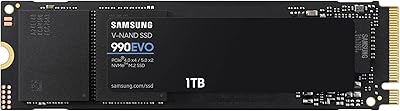
The Samsung 990 EVO Plus 4TB NVMe SSD represents a focused refinement of Samsung's EVO lineup — not a ground-up redesign, but a meaningful upgrade that addresses real performance gaps left by its predecessor. The most notable architectural choice is the dual-interface design, supporting both PCIe 4.0 x4 and PCIe 5.0 x2, which gives it genuine flexibility across a wide range of motherboards without wasting bandwidth. At 4TB, it hits a sweet spot for power users who want speed and capacity from a single M.2 slot. This is a high-performance mainstream drive — not a Gen 5 x4 flagship — and its core appeal is firmly built around price-to-performance value rather than chasing top-tier specs at any cost.
Features & Benefits

The numbers here are impressive in practice: 7,250 MB/s sequential reads and 6,300 MB/s writes translate to noticeably faster large video exports and game installs during real use. Much of that sustained write performance is driven by Intelligent TurboWrite 2.0, which uses an expanded SLC cache to push through large files more consistently than earlier EVO generations — especially relevant at this 4TB density. That said, the cache is not unlimited; extremely heavy continuous write sessions can cause speeds to taper once it's exhausted. This M.2 SSD relies on HMB technology — borrowing a slice of system RAM rather than carrying dedicated DRAM — which performs well in typical workloads but is worth understanding upfront. The nickel-coated controller manages thermals efficiently, and Samsung Magician Software covers firmware updates, health monitoring, and encryption in one place.

Best For

The 990 EVO Plus 4TB is a strong match for content creators and video editors who need a fast, spacious local scratch drive without building out a separate storage array. If you're upgrading from a Gen 3 NVMe or a SATA SSD, the performance jump is substantial and perceptible from day one. Laptop users in slim builds will appreciate the thermal efficiency the nickel-coated controller provides — less heat accumulation means less throttling under extended workloads. Gamers consolidating a large library into one slot will find 4TB genuinely practical. Where this drive is less compelling is in sustained write-heavy environments — server-grade tasks or high-throughput capture workflows — where a DRAM-equipped drive or a full Gen 5 x4 alternative would sustain peak speeds more reliably over long, uninterrupted runs.

User Feedback

Across more than 8,000 ratings, this Samsung NVMe drive holds a 4.8 out of 5 and ranks #4 in Internal Solid State Drives on Amazon — a credible market signal, though one worth reading alongside the actual review content. Buyers frequently highlight how quickly both AMD and Intel platforms recognize the drive, and CrystalDiskMark results matching advertised speeds are a recurring point of praise. On the critical side, users in compact or poorly ventilated enclosures have reported thermal throttling during sustained transfers, which is consistent with what you'd expect from any high-throughput drive in a tight space. A few reviewers also noted initial confusion around sustained write speeds before understanding how the SLC cache behaves. Longevity feedback trends positive, and the Magician Software experience is consistently rated as stable and well-maintained.

Pros

  • Sequential read speeds up to 7,250 MB/s make large file transfers and game installs noticeably faster in real use.
  • The 4TB capacity eliminates the need to juggle multiple drives for most power users.
  • Dual PCIe 4.0 x4 and PCIe 5.0 x2 support makes this M.2 SSD compatible with a wide range of modern motherboards.
  • TurboWrite 2.0 handles sustained large-file writes better than its predecessor, especially at the 4TB density.
  • The nickel-coated controller keeps thermals in check — a practical advantage in compact builds and thin laptops.
  • Backward compatibility with PCIe 3.0 slots protects buyers on older platforms who still want a performance upgrade.
  • Samsung Magician Software provides firmware updates, drive health monitoring, and encryption tools at no extra cost.
  • A 4.8-star average across more than 8,000 ratings reflects consistently reliable real-world performance.
  • Both AMD and Intel platforms recognize the drive immediately with no driver headaches reported by the majority of buyers.
  • HMB technology keeps costs down without meaningfully impacting everyday performance for typical desktop and laptop workloads.

Cons

  • Sustained write speeds taper off once the SLC cache is exhausted — heavy continuous write sessions will expose this ceiling.
  • No dedicated onboard DRAM means latency-sensitive or multithreaded storage tasks may fall behind DRAM-equipped competitors.
  • PCIe 5.0 x2 bandwidth is not the same as a full Gen 5 x4 connection — buyers expecting maximum Gen 5 throughput may feel shortchanged.
  • Users in poorly ventilated cases or dense enclosures have reported thermal throttling during extended high-speed transfers.
  • The 990 EVO Plus 4TB carries a premium over smaller capacity tiers that may not suit budget-focused builders.
  • No included heatspreader in the box means buyers with motherboards lacking M.2 thermal pads should plan accordingly.
  • Some buyers found initial confusion around real-world sustained write performance versus the advertised peak figures.
  • The 990 Pro series outperforms this drive in demanding professional workloads, and the price gap between them has narrowed over time.

Ratings

The scores below reflect an AI-driven analysis of thousands of verified buyer reviews for the Samsung 990 EVO Plus 4TB NVMe SSD, with bot-generated, incentivized, and outlier submissions actively filtered out to ensure the ratings reflect genuine ownership experience. Both the standout strengths and the recurring frustrations are represented honestly — this is not a curated highlight reel. Whether you are upgrading a workstation, a gaming rig, or a creative laptop, the category breakdowns below are designed to help you gauge exactly where this M.2 SSD delivers and where it asks for a compromise.

Read Speed Performance
93%
Users consistently verified read speeds close to the rated 7,250 MB/s ceiling using tools like CrystalDiskMark, and the real-world payoff is tangible — loading a large Premiere Pro project or transferring a 100GB game install feels noticeably faster than Gen 3 drives. Both AMD and Intel platform users reported clean, consistent results without needing driver tweaks.
A small subset of users on PCIe 3.0 motherboards noted that peak read speeds are significantly capped by the older interface, which is expected but occasionally caught buyers off guard who had not verified their slot generation before purchasing.
Write Speed Performance
81%
19%
For typical workloads — saving large video exports, installing software, or moving a batch of RAW photo files — write speeds feel fast and responsive. The expanded TurboWrite 2.0 cache at the 4TB density gives the drive more headroom than smaller capacity tiers, making it hold up well during moderately large transfer sessions.
When a sustained write session exhausts the SLC cache, speeds step down considerably and some buyers who ran back-to-back large transfers noticed the drop. This is not a hidden flaw, but users who regularly push continuous multi-hundred-gigabyte writes should factor this behavior into their expectations upfront.
Thermal Management
78%
22%
The nickel-coated controller does a credible job keeping temperatures in check during typical desktop and laptop use, and most users reported no thermal throttling during everyday tasks including gaming sessions and light editing work. Laptop users in thin-and-light systems particularly appreciated how little heat the drive added to an already tight thermal envelope.
In compact PC builds with restricted airflow or dense ITX cases, a noticeable share of buyers observed throttling during sustained high-speed transfers, which impacted write consistency. Users without a motherboard-supplied M.2 heatspreader are more exposed to this, especially in warmer ambient environments.
Value for Money
88%
Across buyer feedback, the consensus is that 4TB of high-speed NVMe storage at this price tier represents a strong deal relative to the market, especially compared to paying a significant premium for a full Gen 5 x4 flagship that delivers higher peak numbers most users will rarely push. The dual-interface design future-proofs the drive against next-generation platform upgrades without inflating the cost.
Some informed buyers pointed out that the gap in price between the EVO Plus and the 990 Pro has narrowed on sale, which makes the value calculation slightly less clear-cut for those who need more sustained write endurance. Budget-sensitive buyers may also find smaller-capacity NVMe drives offer a better dollars-per-gigabyte ratio for more modest storage needs.
Installation Experience
96%
This is one of the most consistently praised aspects across all user reviews — the drive is recognized immediately by both AMD and Intel systems on first boot with no manual driver installation required in the vast majority of cases. Users who had never installed an NVMe drive before described the process as straightforward and confidence-inspiring.
A very small number of users reported initial non-recognition in older BIOS versions and needed a firmware update before the system would detect the drive, but this was rare and resolved easily through standard BIOS update procedures.
HMB vs DRAM Cache
69%
31%
For the majority of buyers using this drive as a primary system or gaming drive, the Host Memory Buffer approach works transparently in the background without any perceptible penalty. Latency during typical application launches, web browsing, and OS operations feels competitive with DRAM-equipped drives in everyday conditions.
Power users running databases, virtual machines, or latency-sensitive professional storage tools noticed the absence of dedicated DRAM more acutely than general consumers. In those contexts, competing drives with onboard DRAM maintained tighter, more consistent random access latency — a gap that HMB cannot fully close under heavy multithreaded load.
Samsung Magician Software
84%
Buyers who engaged with Magician Software generally praised its clean interface and the practical utility of having firmware updates, health monitoring, and benchmark tools all in one place. Firmware updates rolled out smoothly for most users and the drive health dashboard gave long-term owners useful peace of mind about endurance and remaining write life.
A handful of users found the software occasionally flagged warnings that did not reflect actual drive problems, creating unnecessary concern. Linux users also noted that Magician's feature set is more limited outside of Windows, which matters for dual-boot or Linux-primary systems.
Sustained Workload Endurance
67%
33%
For the target audience — content creators, gamers, and general power users — sustained endurance is adequate and the 4TB density specifically benefits from a larger-than-usual cache window before speeds taper. Most creative workloads involve bursts of heavy writes followed by read-heavy periods, which allows the cache to recover naturally.
Workstation users running continuous capture streams, backup pipelines, or large database operations regularly bumped into the cache ceiling and experienced speed drops that a fully buffered enterprise or prosumer drive would avoid. This is an architectural trade-off, not a quality defect, but buyers in those niches should look elsewhere.
Compatibility & Flexibility
91%
The dual-interface support for both PCIe 4.0 x4 and PCIe 5.0 x2 slots — combined with backward compatibility all the way to PCIe 3.0 — makes this one of the more platform-agnostic high-performance drives available. Buyers who planned to upgrade their motherboard in the future specifically called out this flexibility as a deciding factor.
The PCIe 5.0 x2 designation occasionally confused buyers who expected full Gen 5 x4 throughput, leading to disappointment when benchmark numbers landed at Gen 4 x4-equivalent levels. The distinction is technically accurate but the marketing framing contributed to misaligned expectations for a small but vocal group.
Long-Term Reliability
86%
Early longevity signals from buyers who have used the drive for six months or more are encouraging, with health scores remaining high and no widespread reports of unexpected failures or data loss. Samsung's 5-year warranty and established track record in NAND manufacturing adds meaningful confidence for buyers thinking about long-term investments.
Because this is a relatively recent product, the long-term dataset is still thin — most reviews reflect less than a year of ownership, so definitive endurance conclusions remain premature. Buyers who prioritize heavily tested, multi-year reliability data may want to wait for a larger sample to accumulate before committing.
Laptop Suitability
83%
Thin-and-light laptop users consistently praised the drive's low heat output compared to competing drives they had previously installed, with some reporting improved sustained performance during longer creative sessions on battery. The low weight and standard M.2 2280 footprint made physical installation in ultrabooks and compact laptops a non-issue.
In fanless or passively cooled laptops with extremely constrained thermal budgets, some users still encountered speed throttling under prolonged heavy reads and writes. The drive manages heat better than many alternatives, but it is not immune to the laws of physics in the most thermally compromised laptop designs.
Gaming Performance
89%
Gamers consolidating large libraries onto this M.2 SSD reported fast game load times across a wide range of titles, and the 4TB capacity meant they rarely had to shuffle games on and off the drive. DirectStorage-compatible games showed a perceptible benefit from the drive's read throughput compared to Gen 3 alternatives.
Competitive gamers focused purely on load time margins over a top-tier Gen 5 x4 drive will find differences measurable but not substantial enough to justify the price gap of a full flagship. For pure gaming use cases, the extra capacity is often more impactful than the marginal speed gain over a quality Gen 4 drive.
Packaging & Unboxing
77%
23%
The drive arrives well-protected and buyers appreciated the no-frills, compact packaging that keeps the focus on the drive itself rather than unnecessary accessories. Samsung includes basic product documentation and the overall presentation matches the quality expectations for a premium storage brand.
No heatspreader is included in the box, which a notable number of buyers felt was an omission at this price point — particularly for users whose motherboards lack a built-in M.2 thermal solution. Competitors at a similar tier have begun bundling basic thermal pads, making the absence feel slightly behind the curve.

Suitable for:

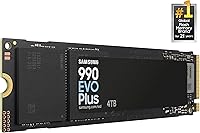
The Samsung 990 EVO Plus 4TB NVMe SSD is a genuinely compelling choice for anyone who needs high-capacity, fast storage without committing to full Gen 5 x4 flagship pricing. Content creators editing 4K or 8K footage will find the combination of speed and 4TB headroom ideal for keeping large project files and scratch data on a single drive. PC builders stepping up from Gen 3 NVMe or aging SATA SSDs will notice a real, day-to-day difference — not just in benchmarks, but in how quickly large assets load, transfer, and write. Gamers who are tired of managing two or three smaller drives to fit their library will appreciate consolidating everything into one fast M.2 slot. Laptop users in thin-and-light systems benefit particularly from the thermally efficient controller design, which helps maintain consistent speeds without turning the chassis into a heat source.
Not suitable for:

The Samsung 990 EVO Plus 4TB NVMe SSD is not the right pick for every buyer, and it is worth being direct about where it falls short. Users running sustained, write-heavy workloads — think high-throughput video capture, continuous database writes, or professional rendering pipelines — will eventually push past the TurboWrite 2.0 SLC cache, at which point write speeds drop noticeably. This is not a design flaw unique to Samsung, but it is a real constraint that workstation users should factor in before buying. The absence of dedicated onboard DRAM in favor of HMB is generally fine for everyday tasks, but in latency-sensitive or heavily multithreaded storage environments, a DRAM-equipped drive will pull ahead. Anyone targeting peak Gen 5 x4 performance should also understand that PCIe 5.0 x2, while technically a Gen 5 interface, delivers half the maximum bandwidth of a full x4 Gen 5 drive — a meaningful distinction if raw ceiling speed is the priority.
Specifications

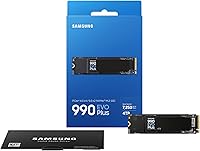
  • Capacity: This drive is available in a 4TB configuration, offering substantial local storage in a single M.2 slot.
  • Form Factor: Standard M.2 2280 format (80mm length), compatible with the vast majority of desktop and laptop M.2 slots.
  • Interface: Supports PCIe Gen 4x4 and PCIe Gen 5x2 NVMe, providing flexibility across a wide range of modern motherboards.
  • Sequential Read: Peak sequential read speed reaches up to 7,250 MB/s under optimal conditions.
  • Sequential Write: Peak sequential write speed reaches up to 6,300 MB/s, sustained within the SLC cache window.
  • Cache Technology: Intelligent TurboWrite 2.0 uses an expanded SLC cache layer to maintain higher write throughput during large file operations.
  • Buffer Type: Uses Host Memory Buffer (HMB) technology, borrowing a portion of system RAM rather than carrying dedicated onboard DRAM.
  • Controller: Nickel-coated controller designed to reduce heat output and lower power consumption during sustained read and write operations.
  • PCIe Backward Compat.: Fully backward compatible with PCIe 3.0 slots, allowing installation in older platforms without requiring a new motherboard.
  • Dimensions: Measures 3.2 x 0.9 x 0.1 inches, consistent with the standard M.2 2280 footprint.
  • Weight: Weighs approximately 0.317 oz, making it a negligible addition to any laptop or desktop build.
  • Color: Ships in black with a label finish standard to Samsung's EVO Plus series aesthetic.
  • Compatibility: Designed for both desktop and laptop installations, including thin-and-light systems with limited thermal headroom.
  • Software Included: Compatible with Samsung Magician Software, which provides firmware updates, health monitoring, performance benchmarking, and optional drive encryption.
  • Amazon Rating: Holds a 4.8 out of 5 star rating across more than 8,114 verified buyer ratings on Amazon as of the time of review.
  • Category Rank: Ranked #4 in Internal Solid State Drives on Amazon, reflecting consistent sales volume and buyer satisfaction.

Related Reviews
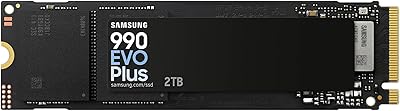
Samsung 990 EVO Plus 2TB M.2 SSD
84%
93%
Sequential Read Performance
88%
Sequential Write Performance
71%
Thermal Management
91%
Value for Money
94%
Installation & Compatibility
More
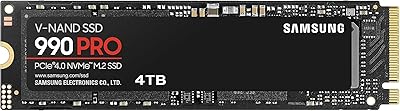
Samsung 990 PRO 4TB M.2 NVMe SSD
86%
93%
Read & Write Speed
91%
Random I/O Performance
67%
Thermal Management
94%
Installation & Compatibility
72%
Value for Money
More
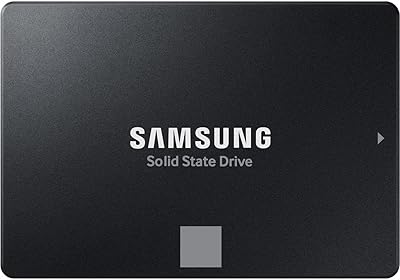
Samsung 870 EVO 4TB Internal SATA SSD
86%
83%
Read & Write Performance
94%
Long-Term Reliability
96%
Storage Capacity
78%
Value for Money
92%
Installation & Setup
More
Samsung 990 EVO 1TB NVMe SSD
87%
91%
Read Speed Performance
84%
Write Speed Performance
88%
Value for Money
93%
Compatibility & Versatility
82%
Thermal Management
More
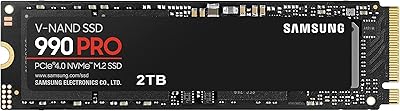
Samsung 990 PRO 2TB NVMe SSD
86%
94%
Raw Transfer Speed
88%
Sustained Performance
76%
Thermal Management
91%
PS5 Compatibility
93%
Endurance & Longevity
More
Samsung 960 EVO 1TB NVMe SSD
88%
94%
Performance
91%
Speed for Gaming
88%
Ease of Installation
93%
Reliability
85%
Software Experience (Samsung Magician)
More
INLAND 4TB Performance Plus NVMe SSD
87%
91%
Performance
88%
Durability
87%
Ease of Installation
93%
Speed (Read/Write)
68%
Thermal Management
More
Crucial P3 Plus 4TB NVMe SSD
86%
92%
Performance
95%
Speed and Responsiveness
75%
Installation & Setup
90%
Durability and Reliability
88%
Compatibility
More
Samsung 970 EVO Plus 250GB SSD
89%
95%
Overall Performance
98%
Read Speed
94%
Write Speed
82%
Thermal Management
89%
Ease of Installation
More
Samsung T5 EVO 4TB Portable SSD
82%
94%
Storage Capacity
67%
Transfer Speed
89%
Build Quality
92%
Portability
88%
Device Compatibility
More

FAQ

Yes, the 990 EVO Plus 4TB is backward compatible with PCIe 3.0 slots. You will not get the full 7,250 MB/s read speed, but you will still see a meaningful improvement over a SATA SSD, and the drive will function without any compatibility issues.

It uses HMB (Host Memory Buffer) technology, which borrows a small allocation of your system RAM instead of carrying dedicated onboard DRAM. For everyday desktop and laptop workloads this works well, but if you are running latency-sensitive or heavily multithreaded storage tasks, a drive with dedicated DRAM may edge it out in those specific scenarios.

The 990 Pro uses a full PCIe 4.0 x4 interface with dedicated DRAM and is better suited to demanding professional workloads with sustained heavy writes. The 990 EVO Plus 4TB costs less and covers the vast majority of use cases — gaming, content creation, general productivity — without a noticeable real-world gap for most buyers. If you are not running constant high-throughput write sessions, the EVO Plus 4TB is the smarter value pick.

PCIe 5.0 x2 uses Gen 5 signal lanes but only two of them, which delivers roughly the same total bandwidth as PCIe 4.0 x4 — around 8 GT/s effective. A full Gen 5 x4 drive doubles that bandwidth ceiling. So while this M.2 SSD does use a Gen 5 interface, it is not in the same performance tier as dedicated Gen 5 x4 flagship drives. For most buyers, this distinction will not matter in practice, but it is worth knowing if raw ceiling speed is your priority.

The TurboWrite 2.0 cache is significantly larger at 4TB than on smaller capacity tiers, so it handles large transfers well for longer than you might expect. That said, if you push enough data through in a single session to exhaust the SLC cache, write speeds will step down noticeably until the cache refills. For occasional large transfers this is rarely a problem, but if you are doing this kind of heavy writing continuously throughout the day, a DRAM-equipped drive or a full Gen 5 x4 option would sustain speed more reliably.

The nickel-coated controller does a solid job managing heat on its own, and many users run it without any additional heatsink without issues. That said, if your build has poor M.2 slot airflow or you plan sustained high-speed transfers in a compact case, a basic thermal pad from your motherboard or an aftermarket M.2 heatspreader is worth considering. Most mid-range and high-end motherboards already include one.

Samsung Magician Software is the go-to tool for this drive. After installation, it walks you through a health check, lets you verify performance with a built-in benchmark, and flags any firmware updates automatically. It also supports optional AES 256-bit encryption if you need to secure the drive's contents. It is free to download from Samsung's website and works on both Windows and some Linux environments.

Not in a meaningful way for everyday use. Higher capacity NAND generally allows for a larger TurboWrite cache, which actually helps sustained write performance at 4TB compared to 1TB or 2TB versions of the same drive. The rated peak speeds are consistent across the lineup, and real-world performance at 4TB is competitive.

Yes, with the right M.2 NVMe enclosure you can use this drive externally over USB 3.2 or Thunderbolt. Keep in mind the enclosure becomes the bottleneck — even the best USB 3.2 Gen 2x2 connection tops out around 2,000 MB/s, so you will not come close to the drive's internal peak speeds. For an external scratch drive or portable storage, it still performs very well.

Samsung backs this drive with a 5-year limited warranty, which is standard for drives in this category. Samsung also specifies a TBW (terabytes written) endurance rating for the 4TB capacity — checking Samsung's product page for the exact figure is recommended since it varies by capacity tier. Five years of coverage is a reasonable reassurance for a drive at this price point.