Overview

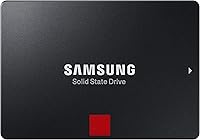
The Samsung 860 PRO 2TB Internal SSD occupies a well-earned position in the storage market — built for users who push their systems hard and expect drives to hold up over years, not just months. What separates the PRO tier from Samsung's more mainstream EVO line comes down to flash type: the PRO uses MLC V-NAND, which delivers higher write endurance and more consistent performance under sustained workloads. Two terabytes of that gives content-heavy users real breathing room. The 2.5-inch form factor means it drops straight into most laptops, desktops, and even a PS4 without adapters or compatibility headaches.
Features & Benefits

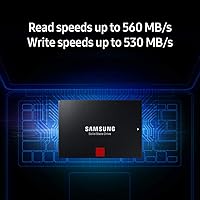
This PRO-series drive pulls sequential reads up to 560 MB/s and writes up to 530 MB/s over a SATA III 6 Gb/s connection — not the fastest numbers on the market today, but consistently delivered without throttling under load. That reliability traces back to the MLC flash architecture, which handles repeated write cycles far better than the TLC NAND found in budget alternatives. The drive also includes AES 256-bit encryption with TCG Opal and IEEE 1667 compliance, a genuinely useful feature for professionals protecting sensitive files rather than marketing padding. At 0.27 inches thick and 3.36 oz, it fits anywhere a standard 2.5-inch bay exists.

Best For

The 860 PRO 2TB makes the most sense for people who actually stress their storage. Video editors working with large raw files, photographers managing deep archives, and creative workstation users will appreciate the endurance headroom MLC NAND provides. Gamers upgrading a PS4 or a SATA-only laptop are a strong fit too — not because load times will blow past other SATA options, but because long-term reliability matters when hammering large libraries daily. Business users protecting sensitive data get real value from the built-in hardware encryption. Anyone upgrading from a spinning hard drive will notice an immediate, dramatic improvement in boot times and application response.

User Feedback

With a 4.7-star rating across more than 3,300 verified purchases, this Samsung SATA SSD has built a notably loyal following. Buyers repeatedly praise its long-term durability and the confidence that comes with knowing the drive won't degrade under heavy daily use. Build quality and steady real-world speeds get frequent mentions. The honest pushback centers on value: at this price tier, several NVMe options now offer significantly faster throughput. Most buyers frame this drive as a deliberate reliability investment rather than a budget pick, and the majority remain satisfied with that trade-off years after purchase. Few report meaningful real-world differences versus the EVO in typical daily tasks.

Pros

  • MLC V-NAND delivers exceptional write endurance, making this drive reliable over years of intensive daily use.
  • Hardware-level AES 256-bit encryption is a genuine differentiator for professionals protecting sensitive data.
  • Consistent sustained write speeds prevent the performance dips common in lower-tier TLC drives under load.
  • The slim 2.5-inch form factor fits virtually any laptop, desktop, or PS4 without adapters.
  • Compatible with Windows, macOS, and Linux, covering nearly every mainstream computing environment.
  • A 4.7-star rating across more than 3,300 buyers reflects unusually strong long-term owner satisfaction.
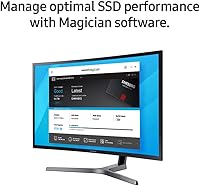
  • Samsung Magician software provides straightforward drive health monitoring and firmware management.
  • At 3.36 oz and 0.27 inches thick, this PRO-series drive adds negligible weight to any portable system.
  • The 2TB capacity gives creative professionals and power users substantial room without managing multiple drives.
  • Buyers consistently describe the 860 PRO 2TB as a long-term investment that holds its performance over time.

Cons

  • NVMe alternatives now offer significantly faster throughput, often at a lower or comparable price point.
  • Price-per-gigabyte is hard to justify for users who do not actually need MLC endurance levels.
  • SATA III bandwidth is a ceiling — no firmware update or configuration change can push speeds beyond the interface limit.
  • Everyday users in light workloads will notice no real-world difference compared to much cheaper SATA competitors.
  • The drive predates widespread NVMe adoption, and its long-term platform relevance will continue to shrink.
  • Some buyers report that real-world performance differences versus the EVO line are barely perceptible in typical use.
  • No included mounting bracket or adapter means additional purchases may be needed for desktop installations.
  • Users on tight budgets will find it difficult to justify the premium when capable alternatives exist at lower cost.

Ratings

The Samsung 860 PRO 2TB Internal SSD earned its strong reputation across thousands of verified global purchases, and these scores reflect an AI-driven analysis of that real-world feedback — with spam, incentivized reviews, and bot activity actively filtered out before scoring. Each category captures both what buyers consistently praised and where frustrations surfaced, giving you an honest, unvarnished picture of what ownership actually looks like.

Read Performance
88%
Users working with large project files — video timelines, RAW photo libraries, virtual machines — consistently reported fast, responsive load times that held steady even after months of heavy use. The drive rarely showed the kind of slowdown under repeated access that some cheaper SATA alternatives exhibit.
A handful of technically savvy buyers noted that real-world sequential reads, while strong, sit at the SATA ceiling and feel less impressive now that NVMe drives operating over PCIe have become the mainstream reference point for speed comparisons.
Write Endurance
93%
This is where the PRO-series drive genuinely separates itself from the competition. Video editors running continuous captures, developers compiling large codebases daily, and database administrators all praised the drive for maintaining consistent write speeds without the throttling that TLC-based drives often exhibit under sustained loads.
The endurance advantage is real, but buyers who use their systems for light tasks — browsing, streaming, office documents — will never meaningfully stress the drive enough to feel the difference, making this strength largely invisible for that segment of users.
Long-Term Reliability
94%
Multi-year owners are among the most vocal advocates for this drive. Buyers who installed the 860 PRO 2TB three or four years ago frequently returned to leave updated reviews confirming it still performs exactly as it did on day one, which is a genuinely rare signal in storage hardware feedback.
While failures are uncommon, a small number of buyers reported unexpected drive failures within the first year, which — given the price premium — was particularly frustrating. Samsung support responses in these cases appear to be mixed based on user accounts.
Value for Money
58%
42%
For users who specifically need MLC endurance and hardware encryption, the premium over TLC SATA alternatives feels justifiable. Professionals who view storage as critical infrastructure rather than a commodity component tend to rate the value favorably when amortized over several years of reliable use.
This is the category that generates the most friction in buyer feedback. With capable NVMe drives now available at competitive price points, the 860 PRO 2TB asks for a significant premium that is hard to defend for anyone whose workload does not specifically demand its endurance headroom.
Data Security Features
91%
IT administrators and security-conscious professionals singled out the hardware-based AES 256-bit encryption as a standout feature, particularly because it operates without any measurable performance penalty. TCG Opal and IEEE 1667 compliance made it compatible with enterprise security frameworks that software encryption tools cannot match.
For the average consumer buyer, the encryption capabilities are essentially invisible — most users never configure them at all. The value of this feature is highly context-dependent, and buyers without a clear security use case are paying for capability they will never activate.
Build Quality
89%
The drive feels dense and well-assembled in hand, with a metal enclosure that inspires confidence during installation. Users upgrading laptops and PS4 consoles frequently commented that the physical fit and finish felt significantly more premium than the budget SATA drives they were replacing.
The enclosure offers no visual indicator of drive activity, which some desktop users found inconvenient when troubleshooting. A small number of buyers also noted minor cosmetic scuffs on arrival, though functional defects on delivery were rarely reported.
Installation Experience
86%
The standard 2.5-inch form factor meant that most buyers completed installation without consulting a guide. PS4 upgrades and laptop swaps were the most common installation scenarios described, and the overwhelming majority described the process as straightforward and completed within minutes.
Desktop users occasionally needed a 3.5-inch adapter bracket that is not included in the box, requiring a separate purchase. A few buyers also noted that the drive sat slightly loose in thicker 9.5mm laptop bays, though this is a form factor issue rather than a defect.
Software & Ecosystem
78%
22%
Samsung Magician was consistently praised for being genuinely useful rather than bloated — buyers appreciated the clean health dashboard, the benchmark tool, and the straightforward firmware update process, which kept the drive current without requiring technical expertise.
Magician is Windows-centric, and macOS users reported limited functionality compared to the Windows version. Linux users received no official software support at all, which is a gap given the drive explicitly lists Linux compatibility as a selling point.
Thermal Performance
83%
Buyers running the drive in laptops and compact desktops noted that it ran cool even during extended workloads, which contributed to quiet, stable system temperatures. The slim metal enclosure appears to dissipate heat adequately without requiring active cooling.
A small subset of users running the drive in enclosed NAS enclosures or very tight chassis reported slightly higher idle temperatures than expected. This was not widespread feedback, but it is worth noting for anyone planning a thermally constrained deployment.
Compatibility
92%
Cross-platform support was a consistent positive across buyer segments. Windows users, Mac owners, and PS4 gamers all reported plug-and-play recognition with no driver installation required, and Linux users confirmed the drive worked natively across major distributions.
The listed Windows compatibility tops out at Windows 8 in official documentation, which is outdated — though buyers universally confirmed it works without issue on Windows 10 and 11. The spec sheet simply has not been updated to reflect modern OS versions.
Sustained Write Speed
87%
Content creators transferring large video project folders or photographers importing thousands of RAW files reported that write speeds stayed high throughout the entire transfer, without the mid-transfer slowdowns that indicate a drive has exhausted its SLC cache buffer.
Users comparing sequential write benchmarks against NVMe options found the SATA ceiling limiting when moving very large datasets rapidly. For workflows that involve moving hundreds of gigabytes in a single session, the interface limitation becomes a real bottleneck.
Noise & Vibration
96%
As a solid-state drive with no moving parts, it operates in complete silence regardless of workload intensity. Buyers upgrading from mechanical hard drives specifically called out the absence of clicking, spinning, and vibration as an immediately noticeable quality-of-life improvement.
There is genuinely little to criticize here, though buyers should note that complete silence also means there is no audible feedback to indicate whether the drive is actively reading or writing during long operations.
Gaming Load Times
74%
26%
PS4 and laptop gamers reported solid improvements in game load times compared to the mechanical drives they replaced. For a console or SATA-only gaming laptop, this PRO-series drive delivers a real and consistent upgrade over spinning storage.
Gamers comparing this drive to NVMe-equipped systems found load time differences to be noticeable in fast-loading modern titles. For PC gamers with NVMe-capable motherboards, the 860 PRO 2TB offers no meaningful advantage over a mid-range NVMe competitor at a lower price.
Packaging & Delivery
81%
19%
Most buyers described the retail packaging as clean and protective, with the drive arriving in good condition. The minimalist unboxing experience felt appropriate for a professional-tier component rather than a consumer gadget.
Several buyers noted the box contains little beyond the drive itself — no mounting hardware, no cloning cable, and no adapter bracket. Competitors at a similar price tier sometimes include basic accessories that make the out-of-box installation experience more complete.

Suitable for:

The Samsung 860 PRO 2TB Internal SSD was built with a specific kind of user in mind — one who writes a lot of data, writes it often, and needs the drive to hold up reliably over years of heavy use. Content creators, video editors, and photographers working with large uncompressed files will find the MLC V-NAND architecture genuinely valuable, since it sustains write performance far better than cheaper TLC-based alternatives under prolonged workloads. Business professionals who store sensitive client data or proprietary files also have a real reason to choose this drive over rivals, given its hardware-level AES 256-bit encryption and compliance with industry security standards. Gamers upgrading storage in a PS4 or a laptop locked to a SATA interface will get a fast, dependable drive without needing to replace the entire system. Anyone still running a hard disk drive and looking for a meaningful daily-use improvement will notice the difference immediately across boot times, file transfers, and application loading.

Not suitable for:

If raw speed is your primary concern, the Samsung 860 PRO 2TB Internal SSD is probably not the right choice for a system that supports NVMe. Modern M.2 NVMe drives — many of which now cost less per gigabyte — can deliver three to five times the sequential throughput over PCIe, and that gap is hard to justify ignoring if your motherboard or laptop supports it. Budget-focused buyers will also find the price-per-gigabyte harder to rationalize when compared to capable TLC-based SATA alternatives that perform nearly identically in everyday tasks. Users who only need storage for media consumption, web browsing, or light productivity work are effectively paying a durability premium they will never actually use. If you are building a new system from scratch, there is little reason in today's market to default to a SATA drive at this price tier unless the platform specifically demands it.
Specifications

  • Capacity: The drive offers 2TB of usable flash storage, suitable for large media libraries, project files, and operating system installations.
  • Form Factor: Built in the standard 2.5-inch form factor, it fits directly into most laptops, desktop drive bays, and PS4 consoles without modification.
  • Interface: It connects via SATA III at 6 Gb/s, the most widely supported storage interface across consumer and professional systems.
  • Sequential Read: Maximum sequential read speed reaches up to 560 MB/s under optimal conditions on a SATA III connection.
  • Sequential Write: Maximum sequential write speed reaches up to 530 MB/s, maintaining consistent throughput during sustained write operations.
  • Flash Type: The drive uses MLC (Multi-Level Cell) V-NAND flash, which stores two bits per cell for improved endurance and write consistency over TLC alternatives.
  • Encryption: Hardware-based AES 256-bit encryption is built into the controller, operating transparently without impacting drive performance.
  • Security Standards: The drive is compliant with TCG Opal 2.0 and IEEE 1667, enabling compatibility with enterprise security management platforms.
  • Dimensions: Physical dimensions measure 3.94 x 2.76 x 0.27 inches, making it one of the slimmer 2.5-inch drives available for tight laptop bays.
  • Weight: The drive weighs 3.36 oz, adding negligible mass to portable systems during installation.
  • OS Support: Compatible operating systems include Windows XP (SP2) through Windows 8, macOS X, and major Linux distributions.
  • Compatible Devices: Designed for use in PCs, Macs, laptops, and PlayStation 4 consoles with a standard 2.5-inch SATA drive bay.
  • Installation Type: This is an internal drive requiring physical installation inside a device; it is not a plug-and-play external solution.
  • Model Number: The official Samsung model number is MZ-76P2T0BW, useful for identifying the exact variant when purchasing or seeking support.
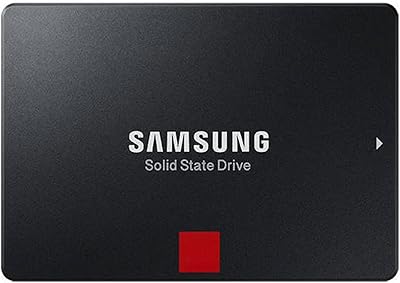
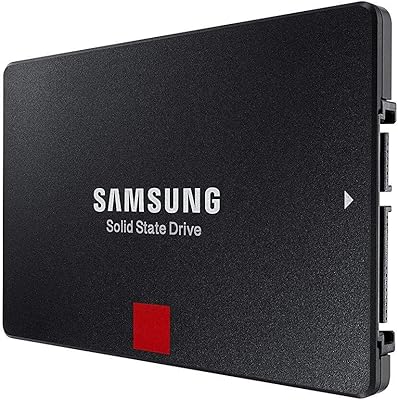
  • Color: The drive enclosure is finished in black with Samsung branding on the label face.
  • Software: Samsung Magician software is available as a free download and provides drive health monitoring, performance benchmarking, and firmware update management.
  • Manufacturer: Designed and manufactured by Samsung Electronics, a company with an established history in NAND flash production and SSD development.
  • Availability Date: The drive was first made available for purchase in January 2018 and remains in active production as of the latest listing data.

Related Reviews
Samsung 860 Pro 1TB Internal SSD
84%
88%
Read & Write Performance
93%
Endurance & Longevity
58%
Value for Money
91%
Build Quality
86%
Installation Ease
More
Samsung 860 Pro 512GB SSD
89%
94%
Performance
92%
Reliability
86%
Value for Money
95%
Ease of Installation
91%
Data Security
More
Samsung 860 EVO 2TB SSD
88%
92%
Performance
90%
Reliability
88%
Ease of Installation
89%
Compatibility (Windows/Mac/Linux)
78%
Thermals (Heat Management)
More
Samsung 860 PRO 4TB Internal SSD
84%
94%
Long-Term Reliability
92%
Write Endurance
88%
Sustained Performance
53%
Value for Money
83%
Read Speed
More
Samsung 980 PRO 2TB NVMe SSD
84%
93%
Sequential Read Performance
88%
Sequential Write Performance
91%
Real-World Gaming Load Times
72%
Thermal Management
96%
Installation & Compatibility
More
Samsung 990 PRO 2TB NVMe SSD
86%
94%
Raw Transfer Speed
88%
Sustained Performance
76%
Thermal Management
91%
PS5 Compatibility
93%
Endurance & Longevity
More
SAMSUNG 9100 PRO with Heatsink 2TB SSD
88%
94%
Performance
89%
Thermal Management
85%
Ease of Installation
96%
Read/Write Speeds
87%
Value for Money
More
Samsung 960 PRO 2TB NVMe M.2 SSD
81%
91%
Raw Read Performance
83%
Write Performance
93%
Long-Term Reliability
58%
Value for Money
62%
Thermal Management
More
SanDisk SSD Plus 2TB Internal SSD
82%
88%
Read Speed Performance
74%
Write Speed Performance
94%
Installation & Compatibility
91%
Value for Money
86%
Long-Term Durability & Reliability
More
Samsung 970 PRO SSD 1TB
88%
94%
Performance
92%
Speed & Data Transfer
90%
Reliability
88%
Thermal Management
87%
Ease of Setup
More

FAQ

Yes, the 860 PRO 2TB fits directly into both the PS4 and PS4 Pro, which use a standard 2.5-inch SATA bay. You will need to reinstall the PS4 system software via USB after swapping the drive, but the process is straightforward and well-documented by Sony.

The core difference is the type of NAND flash used. The PRO uses MLC flash, which stores two bits per cell and handles far more write cycles before degrading. The EVO uses TLC flash, which is cheaper to produce but less durable under sustained heavy workloads. For everyday use, most people will never notice a difference — but for video editing, database work, or any task involving constant large writes, the PRO holds up better over time.

Not directly out of the box. It is designed as an internal drive. However, you can purchase an inexpensive 2.5-inch SATA-to-USB enclosure and use it as an external drive if needed — it works well in that configuration too.

In most cases, just a small Phillips-head screwdriver is enough. If your laptop uses a 7mm drive bay and the drive fits a bit loosely, a thin foam spacer — sometimes included in the box — can secure it. No special cables or adapters are needed for standard SATA laptops.

No. The AES 256-bit encryption is handled entirely by the drive's hardware controller, so it runs transparently in the background without affecting read or write speeds. This is one of the practical advantages of hardware-based encryption over software solutions.

Honestly, not in most day-to-day use cases. Boot times, app launches, and file browsing will feel similar to other quality SATA drives. Where the PRO-series drive separates itself is under sustained, heavy workloads — think continuous large file writes over extended periods. If your usage is typical consumer work, the speed difference versus a good TLC SATA drive is minimal.

If your system supports NVMe, that is probably the stronger choice for a new build today. NVMe drives operating over PCIe can deliver several times the sequential throughput of any SATA drive, and many are now priced competitively. The 860 PRO makes the most sense when you are upgrading a system locked to SATA, or when long-term write endurance and hardware encryption are specific priorities.

Samsung offers a free utility called Magician that gives you a clear overview of drive health, temperature, remaining lifespan estimates, and firmware status. It is available for Windows and supports this drive natively. It is worth installing right after setup and checking periodically.

Yes. It works with macOS out of the box — no drivers needed. You can format it using Disk Utility in either APFS or HFS+ depending on your macOS version and use case. The encryption features are controller-level and function independently of the operating system.

Under typical consumer workloads, drives like this PRO-series model are built to last well beyond five years. The MLC NAND has a significantly higher rated write endurance than TLC alternatives, and owner reviews consistently report reliable operation over many years. For peace of mind, Samsung also backs the drive with a five-year limited warranty.

Where to Buy