Overview

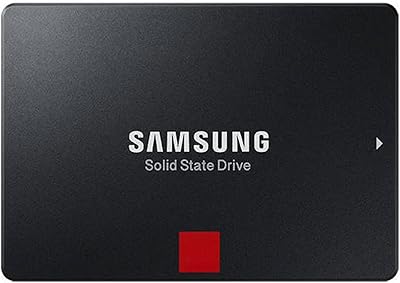
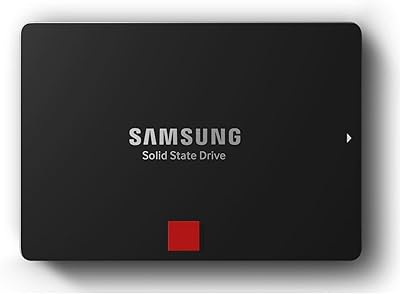
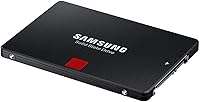
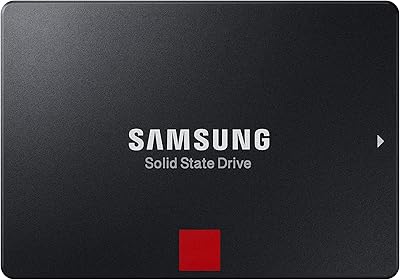
The Samsung 860 PRO 4TB Internal SSD sits at the top of Samsung's consumer SATA lineup — a drive built around endurance over speed rather than chasing headline throughput numbers. While the 860 EVO serves most everyday users just fine, the PRO steps up with MLC V-NAND architecture, a NAND type that delivers noticeably stronger write consistency and a longer rated lifespan than the TLC found in most competing drives. The 2.5-inch SATA III form factor means it drops straight into virtually any desktop or laptop with a standard drive bay — no adapter, no fuss. That said, the price reflects its professional positioning, so buyers should come in knowing they're paying for durability at scale, not raw throughput.

Features & Benefits

The choice of MLC NAND is where this high-endurance SATA drive genuinely earns its premium. Multi-level cell flash writes each cell with two bits instead of three, which translates to a much higher total bytes written rating over the drive's lifetime — meaningful for anyone constantly moving large files. Read speeds topping out around 560 MB/s mean a large video project folder or game library transfers in seconds rather than minutes. The dual-core controller paired with DDR SDRAM cache keeps performance steady under sustained workloads rather than throttling after a burst. And because it uses a standard SATA III connection, it works cleanly across Windows, macOS, and Linux with no special drivers required.

Best For

This Samsung flagship SSD is a natural fit for video editors and photographers who need a reliable local archive for project files — people for whom a drive failure mid-project is simply not an option. It also suits small business workstations handling constant read/write cycles, where the MLC endurance advantage pays off over years of heavy use. Gamers or enthusiasts building out a SATA-based rig will appreciate the full 4TB capacity in a single 2.5-inch slot. If your machine doesn't support NVMe or you're upgrading an older laptop or desktop, this drive squeezes the maximum usable storage out of a SATA connection without sacrificing long-term reliability.

User Feedback

Owners of the 860 PRO 4TB consistently point to long-term reliability as the standout quality — many report the drive running without issue years into heavy daily use. Sustained transfer performance during large file moves also draws praise, with users noting it holds its rated speeds without the slowdowns some cheaper drives show under pressure. The most common criticism, and it's a fair one, centers on price-per-gigabyte: newer NVMe options have closed the cost gap considerably, and for workloads that don't stress write endurance, the premium is harder to justify. A few buyers note the 860 EVO covers most tasks for less. Still, with a 4.7-star average across over three thousand reviews, owner confidence speaks for itself.

Pros

  • MLC V-NAND delivers significantly higher write endurance than TLC or QLC drives, making it built to last under heavy daily use.
  • Sustained transfer speeds hold steady during large file operations without the throttling common in budget SSDs.
  • The 2.5-inch SATA III form factor fits virtually every desktop and laptop with a standard drive bay.
  • Compatible with Windows, macOS, and Linux out of the box — no extra configuration needed for multi-OS setups.
  • Four terabytes of capacity in a single slim drive slot eliminates the need to juggle multiple smaller drives.
  • DDR SDRAM cache and a dual-core controller keep performance consistent under prolonged workloads.
  • Thousands of long-term owners report years of reliable operation with no performance degradation.
  • The 860 PRO 4TB earns strong praise specifically in endurance-heavy comparisons against Samsung's own EVO lineup.
  • Physical footprint is minimal — just over a quarter-inch thin — fitting easily into most laptop upgrade slots.

Cons

  • Price-per-gigabyte is noticeably higher than most NVMe and TLC SATA alternatives available today.
  • SATA III has a hard speed ceiling — NVMe drives can be several times faster for sequential workloads.
  • MLC endurance advantages go largely unused in light-use or general home computing scenarios.
  • For new system builds with M.2-only motherboards, a 2.5-inch drive requires an adapter or a dedicated SATA port.
  • The drive has been on the market since 2018, meaning newer competing options have caught up in value.
  • Buyers who don't push high write volumes are essentially overpaying for endurance headroom they will never use.
  • No included cloning software or mounting hardware in the box — users must source migration tools separately.

Ratings

The following scores for the Samsung 860 PRO 4TB Internal SSD were generated by AI after systematically analyzing thousands of verified global user reviews, with spam, bot-submitted, and incentivized feedback actively filtered out. Ratings reflect the full picture — not just the praise, but the recurring frustrations and trade-offs real buyers encountered over months and years of use. Every category score is weighted by how frequently and strongly that aspect was mentioned across the verified review pool.

Long-Term Reliability
94%
Owners who have run this high-endurance SATA drive through years of daily professional workloads consistently report zero failures and no measurable performance degradation. For video editors and workstation users who simply cannot afford unexpected drive failures mid-project, this track record is the single most cited reason they chose the PRO over cheaper alternatives.
A small number of users reported early failures within the first year, though these cases appear statistically rare given the volume of reviews. As with any storage device, reliability cannot be fully guaranteed regardless of endurance ratings, and a backup strategy remains essential.
Write Endurance
92%
The MLC V-NAND architecture gives this drive a substantially higher total bytes written rating than TLC-based drives at similar capacities, which translates directly to longer usable life for users constantly ingesting large files — daily camera dumps, continuous database writes, or iterative video renders. Long-term owners specifically call this out as the drive's core advantage over the 860 EVO.
The endurance benefit is most meaningful only for heavy, sustained write workloads. Users who primarily read data or write infrequently will likely never stress the drive enough to notice any practical difference between MLC and a well-rated TLC competitor, making this advantage invisible to a significant portion of buyers.
Sustained Performance
88%
Unlike budget SSDs that slow noticeably during extended transfers, the 860 PRO 4TB maintains steady throughput when moving large media folders or running prolonged backup jobs. Users transferring multi-gigabyte video libraries report speeds staying consistent from start to finish, which matters enormously when working against deadlines.
A handful of users noted that under extremely sustained mixed workloads — simultaneous heavy reads and writes over extended periods — performance could dip slightly from peak figures. This is not unique to this drive, but it is worth knowing if your workload is unusually punishing even by professional standards.
Value for Money
53%
47%
For buyers whose workflow genuinely demands MLC endurance at 4TB capacity, the drive delivers real long-term value — spreading its cost across years of reliable operation. Professionals who have replaced cheaper drives multiple times over appreciate not having to budget for replacements.
This is where the most consistent buyer frustration lives. The price-per-gigabyte sits noticeably higher than newer NVMe options that approach comparable capacities, and for users who do not stress write endurance, the premium is very difficult to justify. Many reviewers candidly stated they would not repurchase at current pricing given what NVMe drives now offer.
Read Speed
83%
Day-to-day read performance is strong and consistent — booting into Windows or macOS feels snappy, large Lightroom catalogs load without hesitation, and game load times on a SATA-constrained system are competitive. For anything short of moving hundreds of gigabytes sequentially, most users reported being fully satisfied.
The SATA III interface caps theoretical throughput in a way NVMe bypasses entirely, so users who benchmark obsessively or work with extremely large sequential transfers will see a clear ceiling. This is an architecture-level constraint, not a flaw in the drive itself, but buyers coming from NVMe systems may feel the difference.
Write Speed
81%
19%
Write speeds hold up well for professional SATA-class storage — ingesting raw footage, writing large project files, and running OS-level operations all feel fluid and uninterrupted. Users who edit directly from the drive rather than off a dedicated RAID noted comfortable performance without the stuttering associated with cheaper drives under load.
Again, SATA III sets the hard ceiling here, and users who specifically need top-tier sequential write throughput for ultra-high-bitrate workflows will find NVMe simply faster. The 860 PRO 4TB maximizes what SATA can offer, but it cannot exceed what the interface physically allows.
Compatibility
91%
The 2.5-inch SATA III form factor means this Samsung flagship SSD slides into an enormous range of devices without any fuss — older workstations, gaming desktops, and even many modern laptops with a dedicated 2.5-inch bay all accept it instantly. Multi-OS users running Windows, macOS, and Linux on the same machine reported seamless operation across all three environments.
Newer ultrabooks, mini-PCs, and systems with only M.2 slots cannot use this drive without an external enclosure, which changes the use case entirely. Buyers should confirm their target machine has a SATA data port and a 2.5-inch bay before purchasing, as assumptions here have led to a number of frustrated reviews.
Installation Ease
89%
Physical installation is as straightforward as any 2.5-inch SATA drive — four screws, one data cable, one power cable, and the system detects it immediately. Users with basic PC building experience reported the whole process taking under ten minutes, including formatting.
No mounting hardware or SATA cable is included in the box, which surprised some buyers expecting a more complete package at this price point. First-time builders who assumed everything needed was in the box had to place a secondary order, adding minor inconvenience to the setup process.
Software & Ecosystem
77%
23%
Samsung's Magician software, available as a free download, offers drive health monitoring, performance benchmarking, and firmware updates from a clean interface. Users who take drive maintenance seriously appreciated having a dedicated tool rather than relying on third-party utilities.
The migration software and Magician app are not included physically, requiring users to seek them out independently — something that is not clearly communicated at point of purchase. A few less technically experienced buyers found the download and setup process confusing, particularly when migrating from an older HDD.
Build Quality
88%
The drive feels solid and well-assembled, with a metal casing that inspires confidence when handling. Users who have installed and removed the drive multiple times during system rebuilds noted the housing shows no signs of flex or wear, which reflects well on its construction for a component that rarely gets seen once installed.
There is no visual indicator of drive activity on the unit itself, which is a minor but occasionally frustrating omission when diagnosing system behavior. The all-black casing is clean but unremarkable, and some buyers at this price tier expected slightly more premium physical packaging.
Thermal Performance
86%
Owners running this drive under continuous heavy workloads — including long encoding sessions and multi-hour backup jobs — consistently report cool operating temperatures without any thermal throttling. The drive sits comfortably within its rated 0 to 70 degree Celsius range even under demanding conditions.
Without active airflow in particularly tight or poorly ventilated enclosures, some users observed the drive running warmer than expected, though not hot enough to cause errors or slowdowns in any documented case. Passive cooling is sufficient for most builds, but dense configurations may benefit from minor airflow consideration.
Capacity Options
79%
21%
The availability of a true 4TB single-drive option in a 2.5-inch SATA form factor remains a practical advantage for users who want to maximize storage without filling multiple bays. For those consolidating several older drives into one, this capacity range genuinely simplifies their setup.
The pricing gap between the 1TB and 4TB variants is steep, and buyers who need something in between may find the jump difficult to stomach. Compared to NVMe drives where 2TB options are now very competitively priced, the 4TB SATA MLC tier remains expensive relative to the current market.
Noise & Vibration
97%
As a solid-state drive with no moving parts, it operates in complete silence and produces zero vibration — a meaningful upgrade for anyone coming from a mechanical hard drive whose noise became distracting during quiet work sessions or late-night editing.
There is nothing meaningful to criticize here by the nature of the technology. The only users who flagged this category at all were those who mistakenly expected audible confirmation of drive activity, which is simply not how SSDs operate.

Suitable for:

The Samsung 860 PRO 4TB Internal SSD was built for people who write to their drives constantly and need that drive to hold up for years, not just months. Video editors, photographers, and audio producers working with large local project libraries will appreciate the MLC V-NAND's superior endurance — the kind of reliability that matters when you're ingesting raw 4K footage daily or maintaining a working archive that never goes offline. Small business owners running workstations with heavy read/write cycles, or prosumers who treat their PC like a professional tool rather than a casual machine, will find the long-term durability worth the investment. It also makes strong sense for anyone upgrading an older desktop or laptop that lacks NVMe support — you get maximum storage capacity in a universally compatible 2.5-inch form factor without retrofitting your entire system. If your priority is a drive that keeps performing under pressure over a long lifespan rather than one that wins benchmark races, this high-endurance SATA drive is a well-matched choice.

Not suitable for:

The Samsung 860 PRO 4TB Internal SSD is a harder sell for buyers whose workflows don't actually stress drive endurance. If you're a general home user storing documents, streaming media, or even playing games without heavy asset loading cycles, the MLC premium is largely wasted — a quality TLC-based drive at a fraction of the cost will serve you just as well. Users building new systems around modern motherboards should seriously consider NVMe alternatives, which can deliver dramatically faster speeds at increasingly competitive price points; the SATA III interface has a hard throughput ceiling that no firmware update will ever raise. Budget-conscious buyers will also find the price-per-gigabyte difficult to justify compared to current-generation SSDs. And if your machine only has M.2 slots without SATA support, this 2.5-inch drive simply won't connect without an adapter, making it a non-starter for some compact or modern builds.

Specifications

  • Capacity: This high-endurance SATA drive offers 4TB of usable storage, suitable for large media libraries, project archives, and high-volume workstation use.
  • Form Factor: The 2.5-inch form factor fits standard desktop drive bays and most laptop upgrade slots without requiring any physical adapters.
  • Interface: It connects via SATA III at 6 Gb/s, offering broad compatibility with virtually any desktop or laptop motherboard produced in the last decade.
  • NAND Type: Samsung's proprietary MLC V-NAND stores two bits per cell, delivering superior write endurance and long-term consistency compared to TLC or QLC alternatives.
  • Sequential Read: Rated sequential read speeds reach up to 560 MB/s, enabling fast boot times and rapid loading of large files under typical workloads.
  • Sequential Write: Rated sequential write speeds reach up to 530 MB/s, keeping large file transfers and continuous write operations moving at a steady, predictable pace.
  • Controller: A dual-core controller manages data operations and workload distribution, contributing to stable sustained throughput during extended read/write sessions.
  • Cache Type: DDR SDRAM cache supports the controller in maintaining consistent performance during complex or heavy I/O tasks without significant speed drops.
  • Dimensions: The drive measures 3.94 x 2.76 x 0.27 inches, making it thin enough to fit even space-constrained laptop bays alongside a standard optical drive slot.
  • Weight: At 3.2 ounces, the drive adds negligible weight to any build and is well within the tolerance of standard drive mounting brackets.
  • OS Compatibility: It is compatible with Windows (7, 8, Vista SP1+, XP SP2+, Server 2003), macOS, and Linux without requiring proprietary drivers.
  • Installation Type: Designed as an internal drive, it requires mounting inside a host device and connecting to a SATA data and power cable.
  • Model Number: The official Samsung model number is MZ-76P4T0BW, which can be used to verify authenticity and locate firmware updates through Samsung's support site.
  • Color: The drive ships in a black casing, consistent with Samsung's standard 860 series aesthetic for internal storage products.
  • Release Date: The 860 PRO 4TB was first made available in January 2018 and has not been discontinued by the manufacturer as of the latest product data.
  • Manufacturer: Samsung Electronics, headquartered in South Korea, designed and manufactures this drive including its proprietary V-NAND flash memory.

Related Reviews
Samsung 9100 PRO 4TB M.2 SSD
85%
96%
Sequential Read/Write Speed
91%
Random I/O Performance
78%
Sustained Workload Stability
74%
Thermal Management
88%
Power Efficiency
More
Samsung 990 PRO 4TB M.2 NVMe SSD
86%
93%
Read & Write Speed
91%
Random I/O Performance
67%
Thermal Management
94%
Installation & Compatibility
72%
Value for Money
More
Samsung 860 PRO SSD 1TB
88%
93%
Performance Speed
91%
Reliability & Lifespan
89%
Data Security (Encryption)
85%
Power Efficiency
90%
Ease of Installation
More
Samsung 860 PRO 2TB SSD
87%
94%
Performance
89%
Value for Money
92%
Reliability & Durability
88%
Security Features
72%
Ease of Setup
More
Samsung 860 Pro 512GB SSD
89%
94%
Performance
92%
Reliability
86%
Value for Money
95%
Ease of Installation
91%
Data Security
More
Samsung 970 PRO SSD 1TB
88%
94%
Performance
92%
Speed & Data Transfer
90%
Reliability
88%
Thermal Management
87%
Ease of Setup
More
Samsung 850 PRO 512GB Internal SSD
80%
93%
Real-World Read Performance
88%
Sustained Write Throughput
96%
Long-Term Durability
57%
Value for Money
91%
Reliability & Failure Rate
More
Samsung T9 Portable SSD 4TB
87%
92%
Transfer Speed
89%
Build Quality
88%
Portability
90%
Compatibility
85%
Durability
More
Samsung 860 QVO 1TB SSD
83%
92%
Value for Money
85%
Performance for Everyday Use
90%
Ease of Installation
88%
Data Security Features
75%
Speed Compared to Premium SSDs
More
Samsung 860 EVO 2TB SSD
88%
92%
Performance
90%
Reliability
88%
Ease of Installation
89%
Compatibility (Windows/Mac/Linux)
78%
Thermals (Heat Management)
More

FAQ

Yes, that is actually one of its strengths. The 2.5-inch SATA III interface is backward-compatible with SATA II ports as well, so even older machines will recognize and use the drive — just at the lower port's maximum speed.

For most casual tasks you won't notice a dramatic difference over a good TLC drive. Where MLC earns its keep is in workloads involving constant, heavy writing — think daily video ingest, continuous backups, or database work. MLC cells handle far more write cycles before wear sets in, so the drive holds up longer under that kind of pressure.

Absolutely. The 860 PRO 4TB is fully capable of running as a primary OS drive. Boot times will be quick, and with 4TB available you can host your OS, applications, and a substantial working library all on one drive.

For most tasks — booting, opening applications, transferring typical files — the difference is not dramatic enough to feel in daily use. Where NVMe pulls clearly ahead is in sustained large sequential transfers, like moving hundreds of gigabytes at once. If that describes your regular workflow, NVMe is worth considering.

Samsung does offer a free migration tool called Samsung Data Migration, available as a download from their support site. It is not included in the box physically, but it is straightforward to use and handles most migration scenarios without needing third-party software.

Yes, it works with macOS out of the box. You can format it as APFS or HFS+ using Disk Utility after installation. It is a standard SATA drive, so the Mac will treat it like any other internal storage device.

Samsung covers this drive with a 5-year limited warranty, which is strong for a consumer-grade SSD and reflects the endurance-focused positioning of the PRO line. Keep your purchase receipt and register the product on Samsung's site if you want the process to go smoothly if you ever need to make a claim.

You can, but you will need a 2.5-inch to 3.5-inch drive bay adapter bracket, which is inexpensive and widely available. The drive itself is a standard 2.5-inch SATA unit, so once bracketed it connects identically to any other SATA storage device.

Honestly, yes. The MLC endurance advantage is most valuable for users who write large amounts of data every single day. For light home use, a quality TLC-based drive at lower cost would perform just as well in practice and save you a meaningful amount of money.

It runs cool by SSD standards. The 860 PRO series has a rated operating temperature range of 0 to 70 degrees Celsius, and real-world users report it staying well within comfortable thermal limits even during extended sustained workloads. No active cooling is required.

Where to Buy

ServerOrbit.com
In stock $795.15
ServerSupply.com
In stock $855.00
Hard Disk Direct
In stock $928.00