
Overview

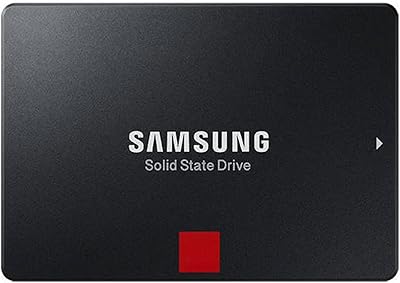
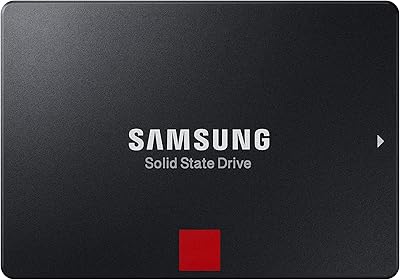
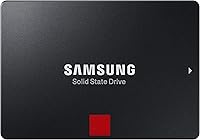
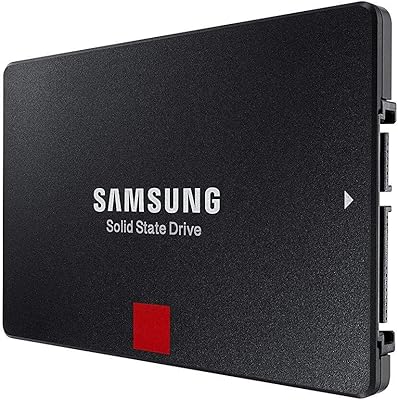
The Samsung 860 Pro 1TB Internal SSD sits at the top of Samsung's SATA lineup, built specifically for users who demand more from their storage than the average consumer drive can offer. Unlike the more common TLC-based drives, this MLC drive stores two bits per cell instead of three, which translates directly into better write endurance and long-term consistency. It fits the standard 2.5-inch SATA III form factor, so dropping it into a laptop, desktop, or server is straightforward. At 1TB, there is enough room for a full working environment without compromise. Just be clear on one thing: this is the best SATA can offer, not an NVMe competitor.

Features & Benefits

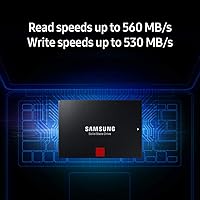
What sets the 860 Pro apart in practical use is its MLC V-NAND technology. Most consumer SSDs today use TLC or QLC NAND, which writes data faster but wears out sooner under heavy workloads. MLC cells are more durable by design, meaning this Samsung SSD handles repeated write cycles without degrading as quickly. Read speeds reach 560 MB/s and writes hit 530 MB/s — fast enough that applications launch almost instantly and large file transfers feel responsive rather than tedious. The drive also supports AES 256-bit encryption with TCG Opal compliance, making it a serious option for anyone handling sensitive data. At just 2.2W average draw, it will not tax a laptop battery either.

Best For

The 860 Pro genuinely shines for creative professionals who push storage hard — think video editors scrubbing through 4K timelines or 3D artists working with massive asset libraries. The endurance advantage of MLC NAND matters when you are writing gigabytes of data every single day. IT teams and small businesses handling sensitive files will also appreciate built-in encryption without needing extra software layers. If you are upgrading a laptop still running a spinning hard drive, this MLC drive will feel like a completely different machine. It also makes a reliable fit for NAS builds or servers requiring dependable 2.5-inch SATA drives, where long-term consistency matters more than raw peak speed.

User Feedback

With a 4.7-star average across over three thousand reviews, this Samsung SSD has clearly earned trust over time. Owners consistently mention how noticeably faster their systems feel post-installation, and many highlight the drive's build quality and overall reliability. Long-term users report no performance degradation after years of heavy use, which is exactly what you would hope to hear from an MLC drive. The main complaint — and it is a fair one — is the price. NVMe drives have closed the cost gap considerably, and some buyers feel the premium is harder to justify unless endurance and encryption are genuine priorities. Installation is widely reported as plug-and-play across Windows, macOS, and Linux systems.

Pros

  • MLC V-NAND cells offer significantly better write endurance than TLC or QLC alternatives under heavy daily workloads.
  • The 860 Pro maintains consistent read and write speeds even during sustained transfers, not just in short bursts.
  • Built-in AES 256-bit hardware encryption requires no third-party software and meets enterprise compliance standards.
  • A rated MTBF of 1.5 million hours gives real confidence for mission-critical or always-on use cases.
  • At just 2.2W average power draw, this MLC drive is genuinely laptop-friendly without compromising performance.
  • Standard 2.5-inch 7mm form factor means drop-in compatibility with virtually any desktop, laptop, or server bay.
  • Long-term owners consistently report no noticeable performance degradation after years of intensive use.
  • Works across Windows, macOS, and Linux without any driver headaches or compatibility surprises.
  • 1TB capacity comfortably handles full operating system installs, applications, and large working project files simultaneously.

Cons

  • The price premium is steep compared to NVMe drives that offer faster speeds at similar or lower cost.
  • SATA III bandwidth is a hard ceiling — no firmware update will push performance beyond the interface limit.
  • No M.2 or PCIe option exists in this lineup, locking out users with systems that lack a 2.5-inch bay.
  • The endurance advantage of MLC NAND is largely wasted on light home users who rarely stress their storage.
  • No bundled cloning software or mounting hardware is included, which adds friction for first-time upgraders.
  • Heavier workloads reveal the speed gap versus NVMe more noticeably than everyday tasks would suggest.
  • As a SATA drive, it cannot benefit from newer NVMe-specific features like lower latency command queuing.

Ratings

The scores below reflect AI-driven analysis of verified global user reviews for the Samsung 860 Pro 1TB Internal SSD, with spam, incentivized submissions, and bot activity actively filtered out before scoring. Each category captures both what real buyers praised and where genuine frustrations surfaced, giving you an honest picture rather than a polished highlight reel. Whether the 860 Pro earns its price tag depends heavily on your workload, and these ratings are designed to help you decide that with clarity.

Read & Write Performance
88%
Users working with large video files or batch photo exports consistently report that the 860 Pro holds its speed through sustained transfers without the stuttering some cheaper drives show once their cache is exhausted. Day-to-day, applications load quickly and the system feels noticeably more responsive compared to any mechanical drive replacement.
Against modern NVMe drives, the SATA III ceiling becomes apparent during tasks like compiling large codebases or moving multi-gigabyte files, where the bandwidth gap is impossible to ignore. Users who benchmark regularly note the scores are excellent for SATA but no longer class-leading in the broader SSD market.
Endurance & Longevity
93%
This is where the 860 Pro genuinely separates itself. Long-term owners — including video editors and server administrators writing hundreds of gigabytes daily — report no measurable performance degradation after years of heavy use, which is exactly the reliability MLC NAND promises over TLC alternatives.
For users with light workloads, the endurance advantage never really gets tested, making it a selling point they are paying for but may never practically need. A handful of reviewers noted that while the drive itself holds up, they had no easy way to monitor wear without installing Samsung Magician separately.
Value for Money
58%
42%
Users who specifically need MLC endurance and hardware encryption for professional or enterprise contexts feel the pricing is defensible, particularly when factoring in the longevity advantage over drives that may need replacing sooner under heavy write cycles.
The recurring pain point across thousands of reviews is cost. NVMe drives offering three to five times the throughput are available at comparable or lower prices, and even within the SATA category, TLC alternatives perform nearly identically for typical home or office use at a fraction of the price. This score reflects a real value gap for the average buyer.
Build Quality
91%
The drive feels solid and well-constructed, and users replacing aging hard drives in business laptops or workstations report that it installs cleanly and sits flush without any flex or rattle. Samsung's manufacturing consistency means units from different production batches behave identically, which matters to IT teams deploying multiples.
There is nothing overtly wrong with the build, but some buyers noted the lack of any bundled mounting hardware or adapter is frustrating given the price point. A 9.5mm spacer for thicker drive bays, for example, would have been a welcome inclusion.
Installation Ease
86%
The vast majority of users describe installation as straightforward — slot it in, connect the SATA cable, and boot. Compatibility issues across desktops, laptops, and servers are rare, and the drive is recognized immediately by Windows, macOS, and Linux without any driver installation required.
First-time upgraders occasionally struggle because no cloning software or data migration tool ships in the box. Samsung's free migration utility is available as a download, but users who did not know to look for it separately lost time troubleshooting what was actually a missing-software problem rather than a hardware one.
Hardware Encryption
89%
IT administrators and security-conscious professionals highlight this feature as a genuine differentiator from most consumer SSDs. AES 256-bit encryption runs entirely in hardware, meaning there is no CPU overhead, and TCG Opal compliance integrates cleanly with enterprise disk management tools already in use at most organizations.
For home users, activating and managing the encryption requires a compatible BIOS or third-party Opal management software, which adds a layer of complexity that is not well-documented in the included manual. Several reviewers noted they did not realize the feature required specific setup steps and assumed it was enabled by default.
Power Efficiency
84%
Laptop users report noticeably comfortable thermals and no meaningful battery drain attributable to the drive, even during extended editing sessions. At 2.2W average draw, the 860 Pro runs cool enough that it never became a heat concern in slim chassis where airflow is limited.
While the efficiency figures are solid, this advantage is largely invisible to desktop users who have no reason to care about a few watts. Some reviewers also pointed out that newer NVMe drives have closed the power efficiency gap considerably, so this is less of a differentiator than it once was.
Compatibility
87%
The standard 2.5-inch 7mm form factor means the 860 Pro drops into nearly any system that accepts a SATA drive, from decade-old laptops to current rack-mounted servers. OS compatibility across Windows, macOS, and Linux is broad and requires no special configuration.
Users with ultra-slim laptops that require a 5mm drive discovered the 7mm height was a problem that required research to uncover before purchasing. There is no mention of this limitation on the product page, and a small but consistent group of buyers returned the drive specifically for this reason.
Thermal Management
82%
18%
Under sustained workloads like long video renders or large backup jobs, the drive warms up slightly but stays well within safe operating temperatures without any active cooling. Users in compact NAS enclosures and small form factor desktops report no thermal throttling under normal professional use.
A few users running the drive in poorly ventilated enclosures or stacked NAS bays noted slightly elevated temperatures over extended periods, though none reported performance throttling or failure as a result. The drive has no built-in heatsink, which is standard for 2.5-inch SATA but worth noting for high-density deployments.
Software & Ecosystem
73%
27%
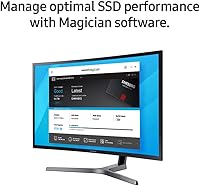
Samsung Magician, available as a free download, gives users access to health monitoring, firmware updates, performance benchmarking, and encryption management in one place. Users who discovered and installed it reported feeling much more confident about tracking the drive's long-term status.
The software is entirely optional and not mentioned prominently at purchase, meaning a meaningful portion of buyers never use it. Reviewers also noted that Magician's interface can feel clunky compared to competing tools, and it occasionally fails to detect the drive correctly after OS updates without a manual reinstall.
Noise & Vibration
96%
As a solid-state drive with no moving parts, the 860 Pro operates in complete silence under all conditions, which users upgrading from mechanical hard drives consistently mention as one of the most immediately noticeable quality-of-life improvements.
There is essentially nothing to criticize here from a noise standpoint. The only marginal note is that in very quiet environments, a small number of users reported subtle coil whine from surrounding components becoming more audible once the loud mechanical drive was removed — though this is a system-level issue, not attributable to the drive itself.
Long-Term Reliability
92%
Owners who have used the 860 Pro for three or more years under demanding conditions — including daily 4K video workflows and always-on server applications — report that the drive continues to perform identically to day one. The MLC endurance advantage is not just a spec claim; it shows up in real multi-year ownership data.
A small number of reviewers reported unexpected drive failures within the first year, which is statistically normal for any storage product at scale. Samsung's warranty process received mixed feedback, with some users describing a smooth RMA experience and others reporting slow response times depending on their region.
Packaging & Unboxing
71%
29%
The packaging is clean and professional, in line with Samsung's premium product tier, and the drive arrives well-protected. Nothing feels cheap or rushed about the presentation for buyers who are spending at this level.
Beyond the drive and a basic user manual, the box is empty. No mounting hardware, no screws, no adapter, and no cloning software voucher — inclusions that competing drives at lower price points sometimes manage to provide. For the asking price, buyers reasonably expect more in the box.

Suitable for:

The Samsung 860 Pro 1TB Internal SSD is purpose-built for users who put their storage through genuine punishment on a daily basis. Video editors scrubbing through 4K footage, 3D artists juggling massive scene files, and photographers batch-processing large RAW libraries will all benefit from the sustained write performance that MLC NAND provides over cheaper TLC alternatives. IT administrators and small business owners handling confidential data will find the built-in AES 256-bit hardware encryption — compliant with TCG Opal and IEEE 1667 — a practical, software-free solution for keeping sensitive files protected. It is also an excellent choice for anyone upgrading a laptop or desktop that still runs a mechanical hard drive, where the responsiveness improvement will be immediately obvious. Those building compact servers or NAS enclosures that require dependable 2.5-inch SATA drives will appreciate the drive's reliability credentials and broad OS compatibility across Windows, macOS, and Linux.

Not suitable for:

If raw speed is your primary goal and your system has an available M.2 slot, the Samsung 860 Pro 1TB Internal SSD is not the most competitive option on the market today. NVMe drives now routinely deliver three to five times higher sequential throughput at comparable or lower price points, making SATA a harder sell for anyone building a new system from scratch. Budget-conscious buyers who simply need storage for everyday tasks like web browsing, document editing, or media consumption will find the price premium difficult to justify when solid TLC-based alternatives perform nearly identically for those workloads. Gamers chasing faster load times in modern titles will see more tangible gains from an NVMe upgrade than from any SATA drive, regardless of brand. If your machine only supports older SATA II connections, you also will not be able to take full advantage of the drive's rated speeds.

Specifications

  • Capacity: The drive offers 1TB of usable storage, suitable for full OS installs, large application suites, and extensive working file libraries.
  • Form Factor: Built in the standard 2.5-inch format at 7mm height, fitting virtually all laptops, desktops, and servers with a SATA bay.
  • Interface: Uses SATA III running at 6 Gb/s, the fastest available SATA generation, though bandwidth is inherently capped by the interface.
  • NAND Type: Samsung's proprietary MLC V-NAND stores two bits per cell, delivering greater write endurance and long-term consistency than TLC or QLC alternatives.
  • Read Speed: Sequential read performance reaches up to 560 MB/s, making large file access and application loading noticeably responsive in daily use.
  • Write Speed: Sequential write performance reaches up to 530 MB/s, handling sustained data transfers and repeated write cycles without significant speed drop-off.
  • Encryption: Supports AES 256-bit hardware-based encryption compliant with TCG Opal and IEEE 1667 standards, enabling software-free data protection for enterprise and professional use.
  • Reliability: Rated at a mean time between failures of 1.5 million hours, reflecting the long-term durability expected from MLC-grade NAND flash.
  • Power Draw: Average operating power consumption is 2.2W, with a burst mode peak of 4.5W, keeping thermal output and battery impact minimal.
  • Weight: The drive weighs 2.12 ounces, light enough to add negligible mass to any laptop or portable workstation build.
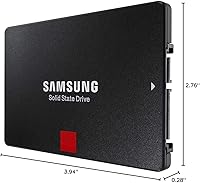
  • Dimensions: Physical dimensions measure 2.76 x 3.94 inches in footprint with a 0.28-inch profile, conforming to the standard 2.5-inch SATA specification.
  • OS Support: Compatible with Windows (XP SP2 and later), macOS, and Linux distributions, requiring no proprietary drivers for basic operation.
  • Installation: Designed for internal installation only; no external enclosure or USB adapter is included in the box.
  • Included Contents: The package contains the drive itself and a user manual; mounting brackets, screws, and data cables are not included.
  • Color: The drive ships in a matte black finish, consistent with Samsung's professional-tier SSD aesthetic.
  • Manufacturer: Designed and produced by Samsung Electronics, a company with an established track record in NAND flash manufacturing and consumer storage.
  • Model Number: The official model identifier is MZ-76P1T0BW, useful for warranty registration, driver lookup, and compatibility verification.

Related Reviews
Samsung 860 QVO 1TB SSD
83%
92%
Value for Money
85%
Performance for Everyday Use
90%
Ease of Installation
88%
Data Security Features
75%
Speed Compared to Premium SSDs
More
Samsung 860 Pro 512GB SSD
89%
94%
Performance
92%
Reliability
86%
Value for Money
95%
Ease of Installation
91%
Data Security
More
Samsung 860 PRO 2TB Internal SSD
85%
88%
Read Performance
93%
Write Endurance
94%
Long-Term Reliability
58%
Value for Money
91%
Data Security Features
More
Samsung 970 PRO SSD 1TB
88%
94%
Performance
92%
Speed & Data Transfer
90%
Reliability
88%
Thermal Management
87%
Ease of Setup
More
Samsung 860 PRO 4TB Internal SSD
84%
94%
Long-Term Reliability
92%
Write Endurance
88%
Sustained Performance
53%
Value for Money
83%
Read Speed
More
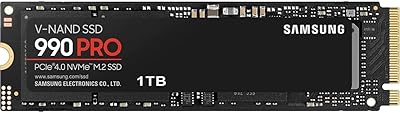
Samsung 990 Pro 1TB M.2 SSD
85%
93%
Raw Read/Write Speed
89%
Random IOPS Performance
71%
Thermal Management
84%
Gaming Performance
91%
Installation & Compatibility
More
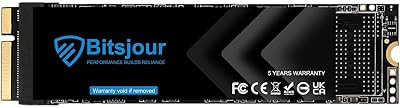
Bitsjour 1TB MacBook Pro A1425/A1398 Internal SSD
77%
72%
Compatibility Accuracy
88%
Installation Experience
83%
Pre-installed macOS
79%
Real-World Speed
81%
Value for Money
More
Samsung Galaxy Book4 Pro 16″ i7-1360P 1TB SSD 16GB RAM
85%
94%
Display Quality
91%
Performance for Multitasking
89%
Portability & Design
74%
Battery Life
90%
Build Quality
More
Samsung 980 PRO 1TB PCIe 4.0 NVMe M.2 SSD
91%
95%
Performance
88%
Thermal Management
90%
Ease of Installation
92%
Value for Money
89%
Durability
More
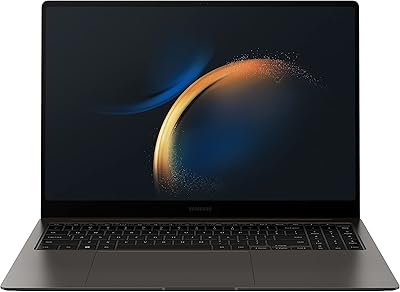
Samsung Galaxy Book3 Pro 16″ 1TB Laptop
75%
93%
Display Quality
88%
Portability
84%
Processing Performance
47%
Graphics Capability
91%
Multitasking & RAM
More

FAQ

In raw sequential speeds, the gap between the 860 Pro and a modern budget TLC SSD is not dramatic for everyday tasks. Where the 860 Pro pulls ahead is under sustained workloads — repeated large writes over time — where MLC NAND holds its performance better than cheaper alternatives that slow down as their cache fills up.

Yes, SATA III drives are backward compatible with SATA II ports. You just will not hit the full rated speeds since SATA II caps at around 3 Gb/s rather than 6 Gb/s. You will still see a massive improvement over any mechanical hard drive.

The 870 Evo uses TLC NAND with a pseudo-SLC cache layer, while the 860 Pro uses true MLC NAND throughout. For light to moderate use the difference is barely noticeable, but under sustained heavy writes the 860 Pro maintains consistent speeds longer. The 870 Evo is typically more affordable, making it the practical pick for most users unless raw endurance is a priority.

No. The AES 256-bit encryption is handled entirely in hardware, so there is nothing to install. You just need a compatible encryption management tool or BIOS that supports TCG Opal or IEEE 1667 to activate and manage it — which most business-grade systems already include.

Absolutely. It works perfectly as a primary boot drive. Connect it to any SATA III port on your motherboard, install your OS as normal, and you are done. Boot times on an MLC SSD like this are quick and stay that way over years of use.

Unfortunately no, the box only contains the drive and a manual. Samsung does offer a free data migration tool called Samsung Data Migration, which you can download from their website. It handles cloning your existing drive to the new one without needing a fresh OS install.

With an MTBF rating of 1.5 million hours and MLC NAND's inherent endurance advantage, this is a drive built to last well beyond the typical ownership window for most users. Video editors and IT professionals writing hundreds of gigabytes daily have reported no issues after several years of use, which aligns with what MLC NAND is designed to handle.

Most ultra-slim laptops that require a 5mm drive will not accept a 7mm unit without a spacer swap or chassis modification. Check your laptop's service manual before purchasing. Standard laptops, desktops, and servers designed for 2.5-inch drives will accommodate the 7mm height without any issue.

SSDs run significantly cooler than mechanical drives in general, and this Samsung SSD is no exception. During prolonged workloads it warms slightly but stays well within safe operating ranges. You do not need to worry about adding extra cooling for typical professional use cases.

Honestly, probably not. The MLC endurance advantage is most meaningful for users who write large amounts of data every single day. For lighter workloads like documents, spreadsheets, and web browsing, a quality TLC drive will perform nearly identically and cost noticeably less. The 860 Pro is genuinely worth its price to those who will actually push it.