Overview

The Rugged Radios H20 Racing Scanner Headset is built with one clear purpose: giving race fans a reliable way to follow scanner traffic without fighting racetrack noise. It weighs just 3.2 ounces and sits on your head with an adjustable headband, so wearing it through a 500-mile event does not become a chore. One thing to know upfront — this is a listen-only design, meaning no microphone is included. That is perfectly fine for its intended use, but buyers expecting two-way communication will need to look elsewhere. At its mid-range price, this track listening headset sits comfortably above flimsy budget earbuds without crossing into professional crew territory.
Features & Benefits

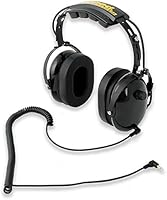
The standout convenience of this race scanner headset is how little setup it demands — plug the 3.5mm coil cord into your scanner and you are ready to go. The on-ear volume knob lets you dial audio up or down without taking your eyes off the track, which matters when things get chaotic in packed grandstands. A secondary audio input jack also lets you run a second source alongside your scanner feed if needed. The ear domes deliver genuine sound isolation, noticeably cutting the roar of engines and crowd noise compared to standard earbuds. Mono audio is the format for scanner communications, so stereo is not on the table here — that is simply the nature of the signal, not a flaw.

Best For

This track listening headset makes the most sense for fans who arrive at race weekends with a handheld scanner already in hand. If you have been getting by with foam earbuds jammed under ear defenders, the Rugged Radios headset is a real step up — one piece of gear handling both noise blocking and scanner audio cleanly. It is also a solid pick for anyone who dislikes Bluetooth: no pairing, no charging, no dropouts. The plug-and-play simplicity is genuinely useful when the environment is loud and chaotic. Fans who attend only once or twice a season may find it harder to justify, but regular race-goers will appreciate having purpose-built listening gear rather than improvising.

User Feedback

Fans who leave positive reviews consistently point to how clearly scanner voices cut through engine noise — the ear domes earn their keep in a real race environment. Long-session comfort also comes up often, with most buyers reporting no significant fatigue after several hours in the grandstands. On the critical side, some buyers found the coil cord length a touch short depending on where they clip their scanner, and a few arrived expecting stereo before realizing mono is simply how scanner audio works. Build quality is generally described as solid for the price, though nobody is mistaking the plastic shell for premium hardware. Overall, regular track attendees tend to feel this race scanner headset is worth the investment.

Pros

  • Sound-isolating ear domes make a real difference in loud grandstand and pit environments.
  • At 3.2 ounces, this track listening headset is light enough to forget you are wearing it mid-race.
  • The on-ear volume knob is a practical touch — adjust audio without ever touching your scanner.
  • Plug-and-play 3.5mm connection means zero setup time and no compatibility headaches.
  • A secondary audio input jack lets you run a second source alongside your scanner feed.
  • The coil cord stays tidy in crowded seating without snagging on armrests or neighbors.
  • Buyers consistently report clear, intelligible voice audio when monitoring scanner traffic.
  • The adjustable headband accommodates different head sizes without feeling flimsy.
  • No Bluetooth means no pairing failures, no dead batteries, and no signal dropouts at the track.
  • Ranked in the top 500 in its category, reflecting steady buyer confidence over multiple seasons.

Cons

  • The plastic build feels functional rather than premium, especially given the mid-range price.
  • Coil cord length has been flagged by some buyers as slightly short depending on scanner placement.
  • Mono-only audio limits usefulness outside of scanner and radio applications.
  • No carrying case or protective pouch is included, making track transport a minor hassle.
  • On-ear fit may not create a deep enough seal for fans in extremely loud infield areas.
  • The volume knob can be fiddly to operate with thick gloves on cold race days.
  • Only available in black, which limits options for fans who coordinate gear with team colors.
  • Occasional reports of the 3.5mm connector fitting loosely in certain scanner models.

Ratings

The scores below reflect AI-driven analysis of verified global buyer reviews for the Rugged Radios H20 Racing Scanner Headset, with spam, incentivized, and bot-generated feedback actively filtered out before scoring. Every category captures real experiences from fans who used this headset at live NASCAR and motorsport events across multiple seasons. Both the genuine strengths and the recurring frustrations are reflected transparently in each score.

Audio Clarity
83%
Buyers consistently report that scanner voices and team radio chatter come through cleanly, even when engines are screaming nearby. The dynamic driver handles the narrow frequency range of radio communications well, and most fans say they can follow conversations without straining to hear.
A handful of buyers found the overall volume ceiling lower than expected, particularly in the loudest sections of grandstands. Because the audio is mono, anyone accustomed to stereo headphones may find the listening experience flatter than they are used to.
Noise Isolation
78%
22%
The sound-isolating ear domes do a genuine job of reducing racetrack ambient noise passively, which is meaningful when you are sitting 30 feet from a wall of engines. Most fans describe a noticeable reduction in crowd roar compared to using standard foam earbuds.
Passive isolation has its limits — buyers in extremely loud infield or pit-adjacent areas found that significant engine noise still bleeds through at peak moments. There is no active noise cancellation, so the isolation is useful but not total.
Comfort & Fit
76%
24%
At 3.2 ounces the headset barely registers on your head, and the adjustable headband means most adult buyers found a workable fit within seconds of putting it on. Long-race wearers — those sitting through 400- to 600-mile events — generally report no major fatigue or pressure points.
The on-ear fit style means the ear domes rest against the ear rather than fully surrounding it, which some buyers found less comfortable than over-ear cups during multi-hour sessions. Buyers with larger heads have noted the headband feels slightly tight even at its widest setting.
Build Quality
67%
33%
The headset holds together well under normal race-day use — repeated weekly handling across a full season has not been a common source of complaints. Most buyers treating it as a dedicated track tool, kept in a bag between events, report no significant wear after multiple races.
The plastic construction is the most frequent point of criticism, with several buyers noting it feels functional rather than solid when handled. A couple of reviewers mentioned the headband creak or the connector showing wear sooner than expected, which is a concern given the mid-range price.
Value for Money
74%
26%
For fans who attend races regularly, the step up from cheap earbuds to this race scanner headset feels justified — the noise isolation and volume knob alone save real frustration during busy race sessions. Regular track-goers tend to frame it as a sensible investment for gear they use every season.
Casual fans who attend only once or twice a year will struggle to justify the price relative to a basic pair of earbuds that technically do the same job. A small number of buyers felt the plastic build quality did not match what they expected at this price tier.
Cable Design
71%
29%
The coil cord design is genuinely practical in packed grandstand seating — it stays neatly coiled when slack and stretches when you need to shift position without yanking your scanner. Most buyers appreciate not dealing with a loose, dangling cable across their lap during a race.
Cord length has come up repeatedly as a mild frustration, with some buyers finding it just short enough to be awkward when the scanner is clipped to a belt or stowed under the seat. The coil can also take a set over time, limiting how far it stretches after extended storage.
Volume Control
79%
21%
Having the volume knob directly on the ear dome means fans can adjust audio mid-race without taking their eyes off the track or digging for the scanner. Most buyers in normal conditions — light jacket, bare hands — find it easy to operate with a single finger.
Buyers attending cold-weather races or wearing heavier gloves have specifically flagged the knob as fiddly, since it is small and requires a degree of precision to turn accurately. The knob also lacks detents, so it is easy to overshoot the desired volume level with a clumsy adjustment.
Compatibility
88%
The standard 3.5mm connection works reliably with the vast majority of handheld racing scanners on the market, including popular Uniden and Whistler models used by NASCAR fans. Buyers almost universally report a plug-and-play experience with no adapters or workarounds needed.
A small number of buyers encountered a loose fit between the connector and their specific scanner model, leading to intermittent audio dropout. This appears to be scanner-dependent rather than a widespread defect, but it is worth testing before race day.
Setup & Ease of Use
93%
There is genuinely nothing to configure — plug the coil cord in and the headset works immediately, which is exactly what fans want when they are trying to get settled before the green flag drops. No Bluetooth pairing, no charging, no app required at any point.
The simplicity is also a ceiling: there are no presets, EQ adjustments, or any way to customize the audio experience beyond the single volume knob. Buyers who want more control over their listening setup will find the options limited by design.
Portability & Weight
86%
The 3.2-ounce weight makes this track listening headset easy to toss in a race-day bag without adding noticeable bulk, and the coil cord folds down compactly. Fans who walk the grounds before settling in rarely complain about carrying it around.
Without a carrying case included in the box, the headset and its connector are exposed to bag clutter that can scratch or stress the components over time. The lack of any storage solution feels like an oversight for a product aimed at fans who travel to multiple events per season.
Mono Audio Format
69%
31%
Mono is the correct format for scanner and radio communications — the signal itself is single-channel, so this headset reproduces it accurately without any engineering compromise. Buyers who understand scanner use find this a complete non-issue once they know what to expect.
A recurring theme in negative reviews is buyers who expected stereo audio and were caught off guard by the mono output. This is a buyer-education problem as much as a product limitation, but it does generate frustration among first-time scanner headset purchasers.
Durability Over Time
63%
37%
Buyers who handle the headset with reasonable care — storing it between races rather than leaving it loose in a truck bed — report it lasting through at least one or two full seasons without major functional issues. The coil cord in particular has held up well for most users.
Longer-term durability is where the plastic build catches up with the headset — a subset of buyers report the headband developing cracks or the ear dome connection loosening after a second or third season of regular use. For a product at this price point, multi-year reliability is a reasonable expectation that not all units meet.
Noise in Loud Environments
72%
28%
In standard grandstand seating, the combination of passive isolation and the volume knob gives fans enough control to follow radio chatter clearly through most of a race. The ear domes work noticeably better than foam earbuds at keeping ambient noise from masking the scanner signal.
Near the infield fence or in pit areas during active pit stops, the sheer volume of the environment overwhelms the passive isolation, requiring fans to crank the volume uncomfortably high to follow communications. Buyers in those extreme spots may still need supplemental ear protection layered over the headset.

Suitable for:

The Rugged Radios H20 Racing Scanner Headset is purpose-built for the fan who shows up to race weekends with a handheld scanner and wants to actually hear it over the roar of 40 cars. If you regularly sit in grandstands, walk pit road during fan events, or spend full race days trackside, this is the kind of dedicated gear that makes a genuine difference over improvised earbuds. The sound-isolating ear domes and on-ear volume knob are practical details that matter when you are surrounded by engine noise and crowd noise simultaneously. Fans who attend multiple races per season will get the most value here — the adjustable headband and lightweight build make it comfortable enough to wear for a 400-mile race without much complaint. It also suits anyone who values simplicity: plug it into any 3.5mm scanner jack and it works, no apps or charging cycles required.

Not suitable for:

The Rugged Radios H20 Racing Scanner Headset is not the right call if you need two-way communication — it is a listen-only headset with no microphone, full stop. Buyers expecting stereo audio will also be disappointed, though it is worth clarifying that scanner and radio signals are transmitted in mono, so stereo output is irrelevant to this use case rather than a flaw unique to this headset. Casual fans who attend one race every few years may find it harder to justify the mid-range cost over a cheaper single-use solution. Anyone planning to use it primarily as a music headset will find the mono-only format limiting, even though the secondary input jack does allow connecting a second audio source. If you need professional-grade durability for crew or media applications, the plastic construction here is not built to that standard.

Specifications

  • Model Number: The headset is identified by model number H20-BLK, manufactured by Rugged Radios.
  • Connection Type: Uses a wired 3.5mm mono jack connection compatible with most handheld scanners and two-way radios.
  • Cable Style: Includes a coil cord cable that stretches and retracts to minimize tangling in tight seating areas.
  • Secondary Input: A second 3.5mm music input jack is built into the headset, allowing a simultaneous second audio source to be connected.
  • Weight: The headset weighs 3.2 ounces, making it light enough for extended wear during full race-day events.
  • Form Factor: Over-ear, on-ear placement design with an adjustable headband to fit a range of adult head sizes.
  • Noise Control: Sound isolation ear domes are used to passively block ambient noise without requiring active noise cancellation technology.
  • Driver Type: Equipped with a dynamic audio driver optimized for clear voice reproduction from scanner and radio communications.
  • Volume Control: An on-ear volume control knob is mounted directly on the ear dome for quick, hands-free level adjustment.
  • Microphone: This is a listen-only headset with no built-in microphone; it does not support two-way voice communication.
  • Audio Format: Outputs mono audio, which is the standard format for scanner and two-way radio signal transmissions.
  • Material: The headset housing and headband are constructed from plastic materials suited for regular consumer use.
  • Compatibility: Designed for use with any device featuring a 3.5mm audio jack, including handheld racing scanners and portable radios.
  • Connectivity: Wired only; no Bluetooth, wireless pairing, or rechargeable battery components are included or required.
  • Package Contents: Each unit ships with one headset and one coil cord cable in standard retail packaging.
  • Package Dimensions: The retail package measures 9.6 x 9.6 x 4.2 inches, sized for standard shelf or online fulfillment packaging.
  • Color: Available in black only under the H20-BLK model designation.
  • Target User: Intended for adult consumers, specifically motorsport and NASCAR fans attending live racing events with a handheld scanner.
  • BSR Ranking: Holds a Best Sellers Rank of number 502 in the Two-Way Radio Headsets and Microphones category on Amazon.
  • Availability: The product has not been discontinued by the manufacturer and has been available since July 2018.

Related Reviews
Rugged Radios H41 Behind-the-Head Racing Headset
76%
83%
Build Quality
78%
Noise Isolation
71%
Microphone Performance
76%
Comfort During Extended Wear
88%
Compatibility & Connectivity
More
Rugged Air RA200 Aviation Pilot Headset
78%
91%
Value for Money
78%
Comfort & Fit
72%
Passive Noise Reduction
74%
Microphone Performance
81%
Audio Clarity
More
Uniden BearTracker 885 CB Radio Scanner
77%
91%
Dual-Mode Operation
67%
Scanner Sensitivity
86%
GPS Auto-Channel
88%
CB Radio Performance
83%
Microphone Quality
More
3M PELTOR WorkTunes Pro AM/FM Radio Headset
80%
91%
Hearing Protection Effectiveness
63%
Radio Reception Quality
78%
Audio Sound Quality
67%
All-Day Comfort
84%
Build Quality & Durability
More
Uniden BC365CRS 500-Channel Analog Desktop Scanner
76%
88%
Ease of Setup
79%
Analog Scanning Performance
51%
Analog-Only Limitation Transparency
72%
Reception Quality & Antenna Performance
83%
FM Radio Quality
More
Thrustmaster T.Racing Scuderia Ferrari Edition Gaming Headset
84%
88%
Sound Quality
80%
Comfort
92%
Design & Style
86%
Noise Cancellation
84%
Durability & Build Quality
More
Rugged Air RA900 Aviation Pilot Headset
77%
81%
Comfort & Fit
74%
Passive Noise Reduction
83%
Microphone Clarity
69%
Build Quality
88%
Value for Money
More
Eton Scorpion II Portable Emergency Weather Radio
74%
91%
Portability & Form Factor
83%
Hand Crank Functionality
88%
NOAA Weather Band Reception
79%
FM Radio Performance
58%
AM Radio Reception
More
Cisco Headset 561 Wireless On-Ear DECT Headset
75%
91%
Wireless Range & Reliability
84%
Call Audio Clarity
93%
Cisco Ecosystem Integration
82%
Battery Life
67%
Comfort During Extended Wear
More
VT VT6932 Mono QD Telephone Headset
75%
88%
Value for Money
83%
Call Audio Clarity
71%
Microphone Noise Cancellation
81%
Comfort During Extended Wear
67%
Build Quality & Durability
More

FAQ

Yes, as long as your scanner has a standard 3.5mm headphone output jack, this race scanner headset will plug right in and work without any adapters. Most popular handheld racing scanners use that same connection, so compatibility is rarely an issue.

No, it does not. This is a listen-only headset, which means you can hear everything coming through your scanner but cannot transmit or speak. If you need two-way communication, you would need a different headset with a built-in mic.

It is not broken. Scanner and radio communications are broadcast in mono, meaning the audio signal itself is single-channel. The headset is designed to match that format, so what you are hearing is exactly how the signal is intended to sound.

The coil cord stretches to a usable length for most seated positions, but a small number of buyers have found it slightly short when the scanner is clipped low on a belt or kept in a bag under the seat. If you tend to keep your scanner at hip level or lower while seated, it is worth keeping that in mind.

The secondary 3.5mm input jack is designed to let you feed a second audio source into the headset — for example, routing music in alongside your scanner feed. It is not a standard headphone output, so using it to share audio with another person would depend on your specific setup and cables.

Most buyers report it holds up well over long events. At 3.2 ounces it is genuinely light, and the adjustable headband helps dial in a secure but non-pinching fit. Comfort is always subjective, but the general feedback from regular track attendees is positive for multi-hour wear.

Absolutely. Any environment where you are monitoring a scanner or handheld radio and dealing with significant background noise is a reasonable fit for this track listening headset. Air shows, IndyCar, drag racing, and even some emergency services monitoring setups are all plausible use cases.

The main advantages are convenience and audio clarity in a single unit. Foam earbuds under ear defenders work, but managing two separate pieces of gear while also operating a scanner gets messy fast. The Rugged Radios headset consolidates everything and the ear domes provide passive noise reduction on their own.

It works, but a few buyers have noted it can be a little fiddly with thick gloves on. The knob itself is small, so fine adjustments take a bit more effort when your fingers are covered. Thin driving-style gloves are less of an issue than heavy winter gloves.

No carrying case is included in the box — you get the headset and the coil cord, and that is it. If you plan to toss it in a bag between race weekends, wrapping the cord loosely and keeping it in a soft pouch you already own would help protect the connector and ear domes over time.