Overview

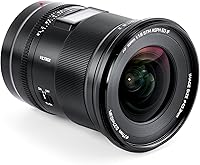
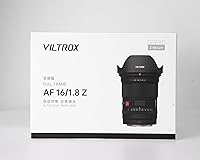
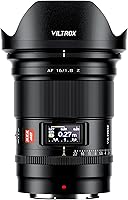
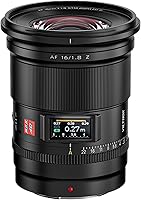
The Viltrox AF 16mm F1.8 Wide Angle Lens arrived in mid-2024 as a serious third-party alternative for Nikon Z shooters who want a fast wide prime without paying first-party prices. It covers both full-frame and APS-C sensors, making it compatible with a broad range of Z bodies — from the Z9 and Z8 down to the Z50 and Zfc. What really sets this wide-angle prime apart in its class is the built-in LCD panel on the barrel, a feature you simply don't find on most lenses at this price point. For a brand still building its reputation in Western markets, Viltrox has delivered something that deserves a genuine look.
Features & Benefits

The STM stepping motor combined with a lead screw gives the Viltrox 16mm notably quiet, controlled autofocus — the kind that doesn't draw attention during video recording. That f/1.8 maximum aperture does real work in low light, and with nine aperture blades, out-of-focus areas render smoothly. The optical formula — 15 elements in 12 groups, including three aspherical and four ED glass elements — keeps chromatic aberration well in check even at the edges of a full-frame frame. The clickless aperture ring is a genuine video asset, letting you roll exposure smoothly without audible clicks. Minimum focus distance sits at 0.27m, and the 77mm filter thread means your existing landscape glass fits without adapters.

Best For

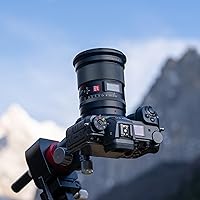
This wide-angle prime makes the most sense for Nikon Z shooters who've been priced out of native Nikon wide-angle options. Landscape and architectural photographers will appreciate the corner-to-corner clarity and the 77mm filter compatibility. Astrophotographers in particular get a lot of value from that f/1.8 aperture under dark skies. For vloggers and documentary-style filmmakers, the quiet AF and smooth aperture control make it a practical on-the-go choice. Travel photographers benefit from its full-frame and APS-C flexibility across the Z lineup. One honest caveat: at around 550g and 103mm in length, this Nikon Z lens can feel front-heavy on smaller bodies like the Zfc or Z30 — worth considering before committing.

User Feedback

Across verified reviews, the theme that comes up most consistently is image sharpness — buyers who expected decent quality from a third-party lens have come away genuinely impressed, even at wide-open apertures. The LCD display on the barrel gets repeated shoutouts for convenience, which is a detail that sounds gimmicky until you're actually shooting outdoors and need a quick settings check. On the downside, weight comes up regularly: at around 550g, the lens can unbalance smaller Z-series bodies. A handful of video shooters mention the autofocus occasionally hunts a beat longer than they'd like during fast-moving subject work. Slight vignetting wide open is noted, though it's typical for this class of lens and mostly correctable in post.

Pros

  • Image sharpness is consistently praised by real buyers, even when shooting wide open at f/1.8.
  • The built-in LCD display on the barrel is a genuinely useful feature that saves time during busy shoots.
  • Quiet STM autofocus makes this wide-angle prime a practical choice for video recording without distracting noise.
  • The clickless aperture ring allows smooth, silent exposure transitions — a real asset for run-and-gun filmmakers.
  • Covers both full-frame and APS-C Nikon Z bodies, offering flexibility across a wide range of camera bodies.
  • Four ED glass elements keep chromatic aberration well controlled across the frame.
  • The 77mm filter thread is a standard size, so most photographers can use filters they already own.
  • Minimal focus breathing makes cinematic focus pulls look clean without software correction.
  • Optical quality relative to price is the single most cited reason buyers feel confident in their purchase.
  • A 0.27m minimum focus distance adds versatility for close-up environmental and detail shots.

Cons

  • At around 550g, the lens feels front-heavy on compact Z bodies like the Zfc or Z30.
  • Some video shooters report autofocus hunting takes slightly longer to recover during fast or erratic subject movement.
  • Minor vignetting is visible at f/1.8, particularly toward the corners on full-frame bodies.
  • Viltrox's long-term firmware support and service infrastructure are less established than first-party Nikon options.
  • The physical size — 85.2mm in diameter and 103mm long — makes it a bulky companion for lightweight travel setups.
  • There is no weather sealing mentioned, which is a real concern for outdoor landscape and nature photographers.
  • Third-party lenses can occasionally exhibit compatibility quirks after Nikon firmware updates, requiring user attention.
  • The maximum magnification of 0.1x limits usefulness for any close-up or quasi-macro shooting needs.

Ratings

The scores below reflect an AI-driven analysis of verified global user reviews for the Viltrox AF 16mm F1.8 Wide Angle Lens, with spam, bot-generated, and incentivized feedback actively filtered out to ensure only genuine buyer experiences shape the results. Ratings span the full picture — from the aspects that consistently impress real-world shooters to the friction points that surface repeatedly across different use cases and camera bodies. Both strengths and honest trade-offs are reflected transparently so you can make a confident, informed decision.

Optical Sharpness
91%
Corner-to-corner sharpness is the most frequently praised attribute across verified reviews, with landscape and architecture shooters noting that even wide-open shots hold strong detail across the frame. The combination of aspherical and ED glass elements appears to genuinely deliver, not just on paper.
A small portion of reviewers note that extreme corners on full-frame bodies show slightly softer rendering at f/1.8, requiring a stop or two of closing down for critically sharp edge-to-edge results in demanding scenarios like astrophotography foregrounds.
Chromatic Aberration Control
84%
The four ED glass elements do meaningful work controlling color fringing, and most users shooting high-contrast scenes — bare branches against bright skies, architectural edges — report very little lateral chromatic aberration that requires correction in post.
Some users working with high-resolution bodies like the Z7II note that longitudinal chromatic aberration (color fringing in the bokeh transition zone) is visible at f/1.8 and benefits from manual correction, which adds a small step to the editing workflow.
Autofocus Performance
78%
22%
For stills photographers — street, travel, and landscape — the STM motor delivers fast, accurate locking that earns consistent praise. Subject acquisition in decent light is reliable, and face and eye detection handshakes with compatible Z bodies work as expected.
A recurring note from video users is that autofocus hunting recovery during transitions between subjects or during rack focus pulls can lag slightly, which is noticeable in continuous recording scenarios where smooth, confident tracking is critical.
Video Usability
83%
The clickless aperture ring, minimal focus breathing, and quiet STM motor combine to make this wide-angle prime genuinely video-friendly out of the box — not an afterthought. Vloggers and documentary shooters in particular find the overall package well-matched to their workflow without needing additional accessories.
The AF hunting issue noted by stills users is amplified in video mode, where momentary focus indecision is more visible and harder to conceal. Users shooting fast-paced or unpredictable subjects find they occasionally need to supplement with manual focus pulls.
LCD Display Utility
88%
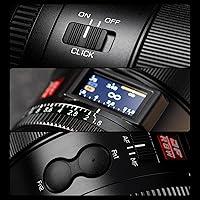
The barrel-mounted LCD showing live aperture and focus distance is consistently called out as a genuinely useful real-world feature — especially during tripod-mounted landscape sessions or studio setups where glancing at the camera screen is inconvenient. It is one of the few features that reviewers call a practical differentiator.
A handful of users point out that the LCD can be difficult to read in direct, bright sunlight due to reflections, and that in low-light shooting environments the display brightness is not always easy to adjust to a comfortable level.
Build Quality
76%
24%
Most buyers describe the build as solid and confidence-inspiring for a third-party lens, with a metal barrel that does not feel hollow or plasticky. The aperture ring action feels deliberate rather than loose, and the overall fit and finish hold up well under regular use.
Viltrox has not specified weather sealing, and several outdoor shooters flag this as a real limitation for fieldwork in rain or dusty environments. A small number of users also mention the clickless switch feels slightly imprecise to engage cleanly, requiring deliberate attention.
Ergonomics & Handling
67%
33%
On full-frame bodies like the Z8 or Z6III, the size and weight distribution feel well-matched, and extended handheld shooting sessions do not feel punishing. The control layout — aperture ring, AF/MF switch, and LCD — is logically arranged for quick adjustments.
At approximately 550g and 103mm in length, the lens creates a noticeable front-heavy imbalance on the smaller Zfc and Z30 bodies, and several users on compact setups report hand fatigue during longer sessions. This is one of the more common practical complaints from this buyer segment.
Low-Light Performance
89%
The f/1.8 maximum aperture delivers a meaningful real-world advantage for astrophotographers and low-light interior shooters alike. Users capturing Milky Way shots or shooting in dimly lit venues note that the light-gathering capability reduces the need to push ISO to noisy levels.
Wide-open corner performance in extreme low-light astro scenarios shows some coma — star points near the edges of the frame can appear slightly smeared — which is a known characteristic of fast wide-angle lenses but still surfaces as a mild complaint among astrophotography enthusiasts.
Vignetting
71%
29%
The level of light falloff at f/1.8 is well within the expected range for a fast wide-angle prime, and most users find it easy to correct with a single click in Lightroom or Capture NX-D using an available lens profile. For many, it simply becomes a non-issue in practice.
Users who shoot JPEGs straight from the camera without post-processing note that in-camera correction does not fully eliminate the vignetting, particularly in the extreme corners. Those who frequently share unedited files directly from the camera may find it more noticeable.
Focus Breathing
86%
For a wide prime at this price point, the focus breathing control is genuinely impressive — field-of-view shifts during focus pulls are subtle enough that most video users do not flag it as something requiring attention or digital correction in post.
Under very close-focus-to-infinity rack pulls in video mode, a small shift in framing is still perceptible to careful viewers, which means productions demanding zero breathing will still need to account for slight adjustments or use digital stabilization to compensate.
Bokeh Quality
79%
21%
Nine rounded aperture blades render out-of-focus backgrounds with smooth, circular highlights that are visibly pleasing for a wide-angle prime — a focal length where truly silky bokeh is inherently harder to achieve due to the wide depth of field characteristics.
At very close focus distances and wide apertures, some users observe slight geometric distortion in specular highlights near the edges of the frame, which is a minor optical quirk but noticeable to photographers who frequently shoot wide open against point-light backgrounds.
Value for Money
93%
The optical quality-to-price ratio is the single most repeated reason buyers say they feel good about the purchase. Compared to Nikon's native wide-angle options, the cost difference is significant, and for most users the real-world image results are close enough to justify it comfortably.
While the value case is strong, buyers who factor in the absence of weather sealing and the uncertainty of long-term third-party firmware support may feel the gap to first-party options narrows somewhat when total cost of ownership and risk tolerance are considered.
Filter Compatibility
91%
The 77mm filter thread is a standard size that a large proportion of enthusiast photographers already own filters for, removing the cost and hassle of step-up rings or new filter purchases. Landscape shooters in particular appreciate how straightforwardly their existing ND and polarizer setups transfer over.
At 85.2mm in diameter, some users find that larger filter holders or matte box systems do not mount cleanly without vignetting at 16mm, which is a known challenge across most ultra-wide lenses and not unique to this one, but worth flagging for video users with accessory rigs.
Firmware & Compatibility
74%
26%
Viltrox has demonstrated a willingness to release lens firmware updates via USB-C to address compatibility issues following Nikon camera body firmware changes, and most users across different Z bodies report stable day-to-day operation without significant glitches or communication errors.
A subset of users, particularly those who updated their Nikon bodies to the latest firmware shortly after the lens launched, reported temporary AF inconsistencies that required a lens firmware update to resolve — a reminder that third-party lens ownership occasionally demands more active maintenance than first-party alternatives.
AF/MF Switch Usability
81%
19%
The dedicated AF/MF switch on the barrel is well-positioned and easy to operate without removing the camera from shooting position, which matters when quickly transitioning from autofocus tracking to manual fine-tuning during landscape or astrophotography sessions.
A few users with larger hands mention the switch requires more deliberate actuation than they would prefer, and that the distance between the AF/MF switch and the aperture ring occasionally leads to accidental brushes against the ring during quick operational changes.

Suitable for:

The Viltrox AF 16mm F1.8 Wide Angle Lens is a strong fit for Nikon Z shooters who want a fast, capable wide prime without the premium price tag that comes with Nikon's own lineup. Landscape and architectural photographers will get real mileage out of the sharp optics and standard 77mm filter thread, which means existing circular polarizers and ND filters slot right in. Astrophotographers, in particular, stand to gain a lot — an f/1.8 aperture at 16mm pulls in serious light under dark skies, and the wide 105.6-degree viewing angle captures expansive night scenes in a single frame. Hybrid shooters and vloggers on the Z system will appreciate the quiet STM autofocus and the clickless aperture ring, both of which make the lens genuinely practical for video work without heavy post-production fixes. Travel photographers who move between full-frame and APS-C bodies within the Nikon Z ecosystem will also find the dual-format compatibility useful, removing the need to carry or budget for a second wide-angle option.
Not suitable for:

The Viltrox AF 16mm F1.8 Wide Angle Lens is harder to recommend for users who prioritize a lightweight, compact kit. At approximately 550g and 103mm in length, this wide-angle prime creates a noticeable front-heavy imbalance on smaller Z bodies like the Zfc or Z30, which can make extended handheld shooting genuinely uncomfortable. Shooters who demand the absolute fastest autofocus tracking for sports or wildlife will also find limitations — while AF performs well for stills in most situations, some video users report slightly sluggish hunting recovery when subjects move unpredictably. Those who prefer to avoid any vignetting at all, even in post, may find the wide-open performance at f/1.8 requires extra editing attention at the corners. Finally, buyers who place a high premium on long-term brand support, extensive local service networks, or a legacy of proven reliability may feel more comfortable sticking with a first-party Nikon option, given that Viltrox, while improving rapidly, is still a relatively young brand in the Western professional market.
Specifications

  • Focal Length: This lens has a fixed 16mm focal length, giving a wide 105.6-degree angle of view on full-frame Nikon Z bodies.
  • Maximum Aperture: The maximum aperture is f/1.8, enabling strong low-light performance and the ability to produce a shallow depth of field with natural background blur.
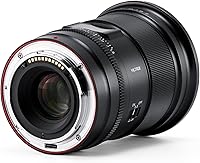
  • Lens Mount: Designed exclusively for the Nikon Z mount, it is not compatible with F-mount bodies without an adapter, and native Z-mount communication is fully supported.
  • Sensor Coverage: The optical design covers full-frame sensors and is also fully usable on APS-C Nikon Z bodies without any vignetting in crop mode.
  • Optical Formula: The lens uses 15 elements arranged in 12 groups, incorporating 3 aspherical elements and 4 ED (Extra-low Dispersion) glass elements.
  • Autofocus Motor: Autofocus is driven by an STM (Stepping Motor) combined with a lead screw mechanism, providing quiet and precise focusing suitable for both stills and video.
  • Aperture Blades: Nine rounded aperture blades contribute to smooth, circular bokeh at partially closed apertures.
  • Focus Distance: The minimum focus distance is 0.27m, with a maximum magnification ratio of 0.1x, making it suitable for environmental close-ups but not dedicated macro work.
  • Filter Thread: The front element accepts standard 77mm threaded filters, a common size compatible with most landscape and neutral density filter systems.
  • Weight: The lens weighs approximately 550g, which is a meaningful consideration when pairing it with lighter or more compact Nikon Z bodies.
  • Dimensions: Physical dimensions measure 85.2mm in diameter and 103mm in length, making it a moderately large prime lens for its focal length class.
  • LCD Display: A built-in LCD panel on the lens barrel displays current aperture value and focus distance, readable without accessing the camera menu or screen.
  • Aperture Ring: The aperture ring features a switchable click ON/OFF mechanism, allowing photographers to use clicked steps for stills or smooth, silent rotation for video work.
  • Focus Modes: The lens supports both autofocus (AF) and manual focus (MF) modes, switchable via a dedicated control on the barrel.
  • Focus Breathing: Focus breathing is designed to be minimal, which means the field of view stays consistent during focus pulls — a practical benefit for cinematic video work.
  • Internal Focusing: The lens uses an ultra-light internal focusing design, meaning the barrel length does not change during focusing and the front element does not rotate.
  • Viewing Angle: The full-frame viewing angle is 105.6 degrees, providing an expansive wide perspective well suited to landscape, architecture, and interior photography.
  • Compatibility: The lens is confirmed compatible with Nikon Z bodies including the Z7II, Z8, Z9, Zf, Z30, Z50, and Zfc, covering both professional and consumer tiers.

Related Reviews
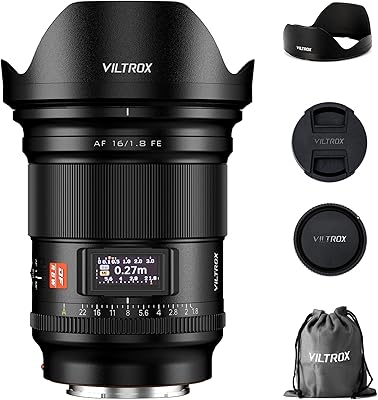
VILTROX 16mm F1.8 FE Lens for Sony E Mount
88%
89%
Image Quality
91%
Autofocus Speed and Accuracy
85%
Low-Light Performance
87%
Build Quality
93%
Portability
More
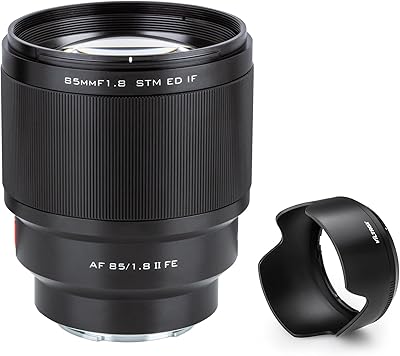
Viltrox AF 85mm F1.8 Mark II Lens
81%
86%
Autofocus Speed
91%
Autofocus Noise
88%
Center Sharpness
63%
Edge & Corner Sharpness
79%
Bokeh Quality
More
Sony E 11mm F1.8 APS-C Ultra-Wide-Angle Prime Lens
87%
93%
Autofocus Speed
91%
Image Quality
89%
Portability
74%
Low-Light Performance
88%
Build Quality
More
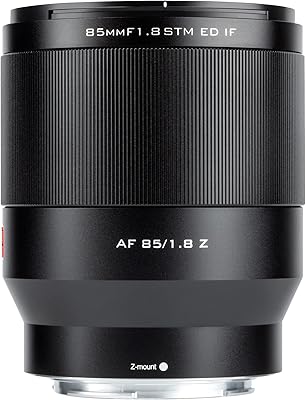
VILTROX 85mm F1.8 Z Portrait Lens
76%
78%
Autofocus Performance
83%
Image Sharpness
81%
Bokeh Quality
76%
Build Quality
86%
Value for Money
More
Rokinon AF 35mm F1.8 Wide Angle Lens
77%
83%
Autofocus Performance
81%
Sharpness & Clarity
78%
Bokeh Quality
79%
Build Quality
72%
Weather Sealing
More
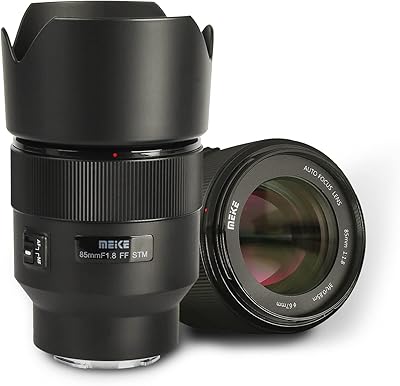
Meike 85mm F1.8 AF STM Sony E Mount Lens
85%
92%
Value for Money
88%
Autofocus Speed and Accuracy
90%
Image Quality
85%
Bokeh and Background Blur
78%
Low-Light Performance
More
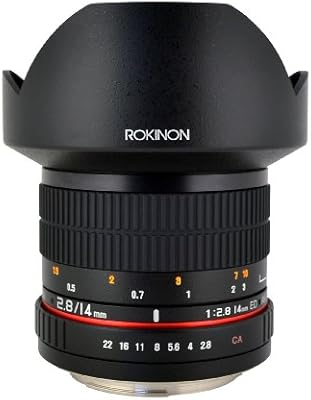
Rokinon 14mm F2.8 Wide Angle Lens
71%
83%
Optical Sharpness (Center Frame)
58%
Edge & Corner Sharpness
52%
Vignetting Control
61%
Chromatic Aberration
74%
Flare & Ghosting Resistance
More
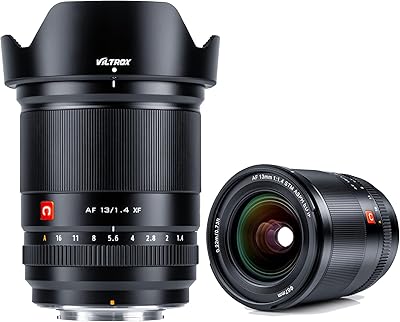
VILTROX AF 13mm F1.4 XF Lens for Fujifilm X-Mount
88%
92%
Image Quality
88%
Autofocus Speed
90%
Low-Light Performance
85%
Build Quality
93%
Portability
More
Sony FE 16-35mm F2.8 GM Zoom Lens
82%
94%
Optical Sharpness
91%
Aperture Consistency
89%
Autofocus Performance
88%
Build Quality & Weather Sealing
86%
Distortion Control
More
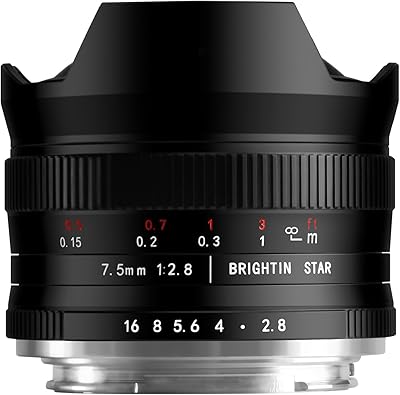
Brightin Star 7.5mm F2.8 III Fisheye Lens
75%
78%
Image Sharpness
88%
Value for Money
71%
Low-Light & Astrophotography Performance
82%
Build Quality & Construction
61%
Manual Focus Usability
More

FAQ

Yes, it mounts and communicates natively on both bodies. That said, at around 550g and 103mm long, it can feel front-heavy on the smaller, lighter Zfc and Z30 bodies, so it is worth handling the combination in person if ergonomics matter to you.

For street shooting and everyday stills, the STM motor handles focus acquisition well and most users are satisfied with the speed. For sports or fast-action subjects, it performs adequately but is not in the same league as higher-end telephoto AF systems — that is fairly typical for a wide prime in this category.

Yes, the front thread is a standard 77mm, so any circular polarizer, ND filter, or UV filter you already own in that size will fit directly without any step-up ring needed.

There is some light falloff in the corners when shooting wide open on a full-frame body, which is normal for fast wide-angle lenses. It is not severe and corrects well in Lightroom, Capture NX-D, or most other editing software with a single click.

It displays your current aperture value and focus distance readout. It is powered by the camera and stays visible without needing to glance at your camera screen or look through the viewfinder — a handy detail during studio work or tripod shooting where checking settings quickly matters.

No weather sealing is specified for this lens. If you regularly shoot in rain, heavy mist, or dusty outdoor environments, that is a meaningful limitation to factor into your decision. It is fine for typical outdoor use, but take reasonable precautions in genuinely harsh conditions.

Viltrox does release firmware updates for their lenses when compatibility issues arise, and historically they have been responsive to major Nikon body firmware changes. You can update the lens firmware via the Viltrox website using the USB-C port on the lens barrel. It is not something most users need to think about often, but the option is there.

There is a physical switch on the barrel that toggles the aperture ring between clicked and clickless modes. In clicked mode, you feel and hear distinct stops at each f-stop value, which is useful for stills. In clickless mode, the ring rotates smoothly and silently, which is what you want when pulling exposure during a video take.

As a primary portrait lens, 16mm introduces significant perspective distortion at close range, which is unflattering for faces. That said, some photographers intentionally use ultra-wide primes for environmental or group portraits where context matters more than precise facial rendering. For traditional headshots or close-up portraiture, a longer focal length will serve you better.

Nikon offers the Z 14-30mm f/4 S as its main native wide-angle zoom, which covers a wider range but at a slower aperture. The Viltrox 16mm gives you a full stop and a half more light at f/1.8, which is a real advantage for astro work or low-light shooting. The trade-off is the fixed focal length and the fact that it is a third-party product. On pure optical performance per dollar spent, the Viltrox 16mm holds up very well against the Nikon alternatives.

Where to Buy