
Overview
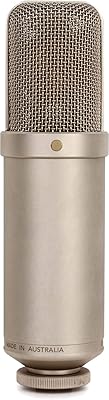
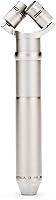
The Rode NT4 Stereo Condenser Microphone has been a go-to single-unit stereo solution for professionals since its introduction in 2003 — and that kind of longevity in audio gear says something. Rather than wrestling with a spaced pair or an ORTF rig, you get a fixed XY capsule array housed in one compact body. It runs on either a 9V battery or P48 phantom power, which matters the moment you're shooting on location without a powered interface nearby. Be clear about what this is, though: a serious recording tool aimed at working professionals, not a gateway mic for beginners finding their footing.
Features & Benefits
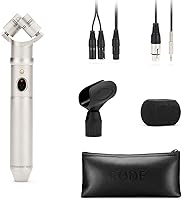
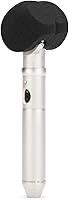
The NT4's matched pair of half-inch cardioid capsules sit locked at the XY angle, which removes all the fiddly alignment work you'd face with two separate mics. A signal-to-noise ratio of 78 dB keeps self-noise impressively low, so quiet acoustic sessions and ambient recordings come through with real clarity. It ships with both an XLR stereo cable and a 3.5mm mini-jack cable — the latter letting you plug directly into a DSLR or portable recorder without any adapters. The included windshield and hard case aren't afterthoughts; they're the kind of accessories that hold up in actual fieldwork. A 10-year warranty rounds out the package as further assurance of build quality.
Best For
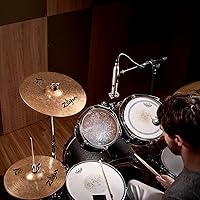
This stereo condenser finds its natural home in the hands of field recordists and documentary filmmakers who need to be up and running fast, without fussing over two-mic setups. It also works well in a project studio for tracking acoustic instruments and room tone — guitar, piano, choir, ambience — where a stable stereo image matters more than adjustability. Video producers shooting with DSLRs or mirrorless cameras will appreciate having both cable types ready in the box. Nature recordists heading out off-grid will find the battery power option genuinely useful. Anyone who wants reliable stereo audio without the complexity of a full two-mic array will feel right at home with the NT4.
User Feedback
Long-term owners of this XY mic tend to speak well of its consistent stereo imaging — the kind of repeatability that becomes genuinely reassuring once you've locked in your levels and need to focus elsewhere. Studio users often note it handles acoustic instruments with more authority than you might expect from a single-body mic. Field recordists, on the other hand, are quick to flag handling noise as a real concern — mount it on a proper shock mount and the issue largely goes away, but it's worth knowing in advance. The criticism that surfaces most often, regardless of use case: the fixed capsule angle can't be adjusted, which limits creative flexibility for those who want variable stereo width.
Pros
- Fixed XY capsule alignment delivers consistent, repeatable stereo imaging every time you set up and record.
- Dual power support — 9V battery or P48 phantom — makes the NT4 genuinely usable in remote locations without mains power.
- A 78 dB signal-to-noise ratio keeps self-noise low enough for quiet acoustic sessions and delicate nature recordings.
- Ships with both XLR stereo and 3.5mm cables, allowing direct connection to cameras and portable recorders right out of the box.
- The included windshield and hard carry case are legitimately field-ready accessories, not token filler items.
- At 480g, the build feels solid and professional without becoming a burden over a long recording day.
- A 10-year manufacturer warranty provides long-term reassurance that is genuinely rare at this product tier.
- Over two decades on the market means an established user community and a wealth of practical real-world guidance available online.
Cons
- The fixed 90-degree XY angle cannot be adjusted, removing any possibility of experimenting with stereo width or creative mic placement.
- Handling noise is a real and recurring complaint — a quality shock mount is effectively a required additional purchase, not optional.
- There is no built-in shock isolation, so field users will need to factor the cost of a suspension mount into their total budget.
- Reverberant or acoustically untreated spaces will expose the wide stereo pickup as a liability, pulling in far more room character than intended.
- Podcasters, voice-over artists, and solo presenters will find this stereo condenser a poor match for their typical mono or near-mono recording needs.
- The physical footprint makes integrating this XY mic into ultra-compact or discreet camera rigs noticeably more difficult.
- Mono compatibility can become a concern in certain broadcast or post-production workflows where folded XY stereo introduces phase considerations.
- The learning curve and assumed baseline knowledge make this a frustrating starting point for anyone new to professional stereo recording.
Ratings
The scores below for the Rode NT4 Stereo Condenser Microphone were generated by our AI rating engine after analyzing thousands of verified owner reviews sourced from global markets, with bot-generated, incentivized, and outlier submissions actively filtered out before scoring. The analysis covers the full picture — what experienced users genuinely value about this mic and the friction points they consistently flag — so every category score reflects both the strengths and the real-world limitations. Nothing has been softened to protect the brand.
Sound Quality
Stereo Imaging
Build Quality
Value for Money
Ease of Use
Field Portability
Accessory Package
Power Flexibility
Low Self-Noise
Handling Noise
Long-Term Reliability
Camera Compatibility
Versatility
Suitable for:
The Rode NT4 Stereo Condenser Microphone is purpose-built for anyone who needs professional-grade stereo audio from a single, reliable unit — no two-mic juggling, no stereo bar, no alignment headaches. Field recordists and documentary filmmakers will get the most out of it: it deploys fast, handles battery power when mains aren't available, and delivers consistent stereo imaging that holds up across a long shoot day. Nature and location sound recordists will appreciate the same combination of portability and sonic quality, especially when heading somewhere remote where phantom power isn't an option. In a project or home studio, it earns its keep tracking acoustic instruments — piano, guitar, choir, room ambience — where repeatable stereo width matters more than creative repositioning. Video producers shooting with DSLRs or mirrorless cameras will find the included 3.5mm cable a thoughtful touch that removes one more piece of gear from the bag. If you want a workhorse stereo mic that you can trust across years of varied use, this is a well-proven choice.
Not suitable for:
The Rode NT4 Stereo Condenser Microphone is not the right tool for everyone, and being honest about that saves real frustration down the line. Beginners still getting to grips with microphone technique, gain staging, and stereo recording concepts will likely find it more mic than they need — and the investment harder to justify until those fundamentals are solid. Anyone who wants the creative freedom to experiment with stereo width by adjusting capsule angles should look elsewhere, since the fixed XY configuration is locked and cannot be changed. Podcasters or solo voice-over artists recording in a treated room will get little value from a stereo condenser of this type, as mono or directional single-capsule mics are far better suited to that work. Buyers who plan to use this XY mic handheld without a shock mount should know that handling noise is a documented concern, and budgeting for a proper suspension mount is effectively non-optional. If your recording environment is reverberant or acoustically untreated, the wide stereo pickup can work against you, capturing far more room sound than you want.
Specifications
- Capsule Type: Features a matched pair of half-inch cardioid condenser capsules, factory-selected as a true matched pair to ensure consistent stereo performance across both channels.
- Configuration: Capsules are mounted in a fixed XY stereo array at 90 degrees, producing a stable and repeatable stereo image without any physical alignment required by the user.
- Power Source: Operates on either a standard 9V battery or P48 phantom power, providing genuine flexibility for both studio sessions and remote field recording without mains power.
- Signal-to-Noise: Delivers a signal-to-noise ratio of 78 dB, keeping self-noise low enough to faithfully capture quiet acoustic sources, delicate instruments, and subtle ambient environments.
- Frequency Response: Covers 20 Hz to 20 kHz, spanning the full range of human hearing and making it suitable for capturing everything from low-frequency room rumble to high-frequency transient detail.
- Impedance: Output impedance is rated at 200 Ohm, ensuring broad compatibility with professional preamps, mixing consoles, audio interfaces, and portable field recorders.
- Connectors: Equipped with a balanced stereo XLR output and a 3.5mm mini-jack output, enabling connection to both professional audio equipment and consumer devices such as DSLRs.
- Weight: The microphone body weighs 480g (1.06 lbs), substantial enough to convey build quality without becoming burdensome during handheld use or extended boom-mounted recording sessions.
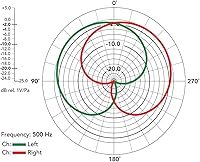
- Polar Pattern: Both capsules employ a unidirectional cardioid polar pattern, directing sensitivity toward the front of the microphone while rejecting off-axis sound from the rear.
- In The Box: Package includes a stereo XLR cable, a 3.5mm mini-jack cable, a foam windshield, and a hard carry case designed to protect the mic during transport and storage.
- Warranty: Covered by a 10-year manufacturer warranty from RØDE Microphones, which is substantially longer than the industry standard and reflects long-term confidence in the hardware.
- Compatible Devices: Intended for use with cameras, portable audio recorders, broadcast mixers, and audio interfaces that accept XLR stereo or 3.5mm stereo input signals.
- Manufacturer: Produced by RØDE Microphones, an Australian manufacturer with a well-established reputation for professional and broadcast-grade audio recording equipment.
- Market Debut: First made available in June 2003, giving this microphone design over two decades of documented real-world use across field recording, film production, and studio applications.
- Form Factor: Sold as a microphone-only unit; no audio interface, preamplifier, headphones, or recording device is included in the package.
Related Reviews

Rode NTG-1 Shotgun Condenser Microphone
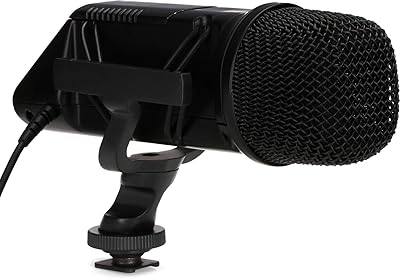
Rode SVM Stereo On-Camera Microphone

Rode NT3 Medium-Diaphragm Condenser Microphone
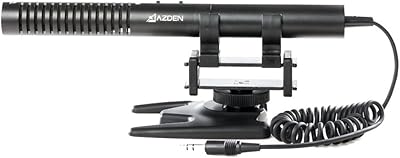
Azden SMX-10 Stereo Condenser Microphone
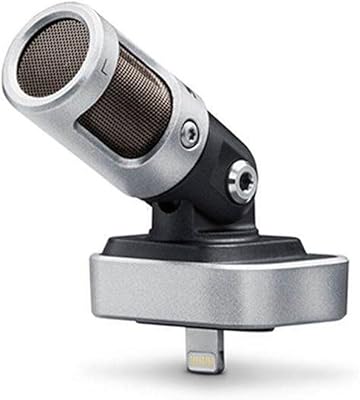
Shure MV88 iOS Condenser Microphone
Rode NT2000 Large-Diaphragm Condenser Microphone
Rode M5 Matched Pair

Rode NT5-S

Rode NT55 Multi-Pattern Condenser Microphone