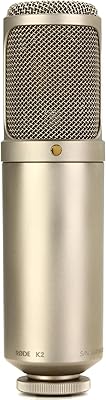

Overview
The Rode M3 Condenser Microphone has been quietly earning its place in recording bags and home studios since 2001 — a run that tells you something about how well it holds up against newer competition. Built by Rode, an Australian brand with a strong reputation for quality at accessible prices, the M3 is an end-address cardioid condenser aimed squarely at working musicians and home studio owners. It runs off a 9V battery or standard phantom power, which opens up a wide range of recording situations. It is not a boutique studio mic — but it was never trying to be. Think of it as a reliable workhorse that delivers honest performance without demanding a professional budget.
Features & Benefits
The all-metal body gives this Rode condenser a solidity you feel the moment you pick it up — nothing flimsy here. An internal capsule shock mount handles most handling noise before it ever reaches the signal chain. The three-stage PAD is genuinely useful: recording a loud acoustic amp or brass instrument means you can pad down by 10 or 20dB rather than wrestling with gain staging. A switchable high-pass filter takes care of low-frequency rumble on location. The 73dB signal-to-noise ratio keeps recordings clean, and the battery status LED — easy to overlook on paper — proves its worth every time you reach for the mic in a live bag. A windshield and stand mount are included, so you can record straight out of the box.
Best For
The M3 covers a lot of ground. It is a natural pick for anyone tracking acoustic instruments in a home or project studio — guitar, mandolin, drum overheads — where clean capture matters more than razor-thin transient detail. Because it runs on a 9V battery, it also travels well to field or location sessions where reliable phantom power is not guaranteed. Content creators and podcasters who want an XLR mic that will outlast a string of cheaper USB options will appreciate the build quality. Educators and small-venue sound engineers looking for a dependable all-rounder that handles different sources across different rooms will find it fits naturally into their kit.
User Feedback
Across more than 770 ratings, this end-address mic holds a 4.4-star average — after more than two decades on the market, that is not an accident. Owners consistently call out the build quality as punching above its price bracket, and many highlight how well it handles acoustic guitar and overhead drum recording. The criticisms are real but modest: a handful of users find the frequency response slightly colored on certain vocal tones, worth knowing if voice recording is your main focus. A few others mention the physical size being larger than expected for compact desktop rigs. Long-term owners, though, tend to report that it holds up reliably through years of regular use — which says something.
Pros
- All-metal construction feels genuinely durable and holds up well through years of regular use.
- Dual power options — 9V battery or phantom — give it real flexibility in the field.
- The three-stage PAD handles loud sources like amps and brass without distortion.
- A 73dB signal-to-noise ratio keeps recordings clean even in quieter home studio environments.
- The switchable high-pass filter is a practical tool for cutting rumble on location.
- Versatile enough to cover acoustic guitar, drum overheads, and instrument micing in a single mic.
- Battery status LED removes the guesswork when working away from a powered interface.
- Ships with a windshield and stand mount so you can record immediately out of the box.
- Strong long-term buyer satisfaction with a 4.4-star average across hundreds of real-world users.
- XLR connectivity makes it a proper investment that integrates into any growing studio setup.
Cons
- The frequency response can sound subtly colored on some vocal tones, limiting its appeal as a dedicated voice mic.
- Physical size is larger than many buyers expect, which can be awkward in compact desktop rigs.
- Requires an XLR interface to function, adding cost and complexity for total beginners.
- No USB connectivity means it is a non-starter for anyone without an audio interface.
- At this price tier, transient detail on fast acoustic sources does not match pricier condensers.
- The cardioid pattern, while effective, offers no polar pattern switching for those needing versatility there.
- Battery drain during extended sessions is a real concern if you rely on the 9V option regularly.
- Heavier than smaller pencil-style condensers, so boom arm or stand load should be considered.
Ratings
Our AI-generated scores for the Rode M3 Condenser Microphone are drawn from a deep analysis of verified global buyer reviews, with spam, bot submissions, and incentivized feedback actively filtered out before any scoring takes place. The ratings reflect the full picture — where the M3 genuinely impresses and where real users have run into frustrations — so you can make a confident, well-informed decision before buying.
Build Quality
Sound Quality
Versatility
Value for Money
Ease of Use
Power Flexibility
Noise Performance
Handling Noise
Off-Axis Rejection
Frequency Response Accuracy
Accessories Included
Durability Over Time
Size & Form Factor
Compatibility
Suitable for:
The Rode M3 Condenser Microphone is a strong match for home studio musicians, project studio owners, and semi-professional recordists who need a dependable XLR condenser that can handle a wide range of sources without constant tweaking. Acoustic instrument players — guitarists, mandolin players, anyone tracking live acoustic sessions — will appreciate the clean cardioid capture and the ability to pad down for louder sources. Because it runs happily on a 9V battery without needing phantom power, it also travels well for location and field recording, making it a practical choice for educators, documentary producers, or journalists who record on the go. Podcasters and content creators who are ready to move beyond USB mics and invest in something built to last will find the all-metal construction and clean signal chain a meaningful step up. The included windshield and stand mount mean you are ready to record without extra purchases on day one.
Not suitable for:
Buyers expecting the tonal character of a high-end large-diaphragm studio condenser will likely find the M3 falls short of that benchmark — it is a capable mid-range tool, but it is not designed to compete with flagship vocal mics at several times the price. Singers or voice-over artists who prioritize flattering, silky vocal reproduction above all else should audition it carefully, as some users note the frequency response can sound subtly colored on certain voice types. If your entire setup is compact — a small desktop rig, a minimal travel kit — the physical size of this end-address mic may be more than you bargained for. Producers who already own a reliable phantom-powered interface and never record away from their desk may find the battery power option redundant rather than useful. And if your workflow is strictly USB-based with no audio interface in the chain, the M3 is simply not the right fit, regardless of its other strengths.
Specifications
- Microphone Type: End-address cardioid condenser microphone designed for studio, location, and instrument recording applications.
- Polar Pattern: Unidirectional cardioid pattern focuses pickup on the front of the mic and naturally rejects off-axis sound sources.
- Connector: Standard XLR output, compatible with any audio interface, mixer, or preamp that accepts a balanced XLR connection.
- Power Options: Operates on a 9V battery for portable use or accepts 24–48V phantom power from a compatible interface or mixer.
- PAD Switch: Three-stage switchable PAD offers 0, -10dB, and -20dB settings to handle high sound pressure level sources without distortion.
- High-Pass Filter: Switchable high-pass filter reduces low-frequency rumble and handling noise, particularly useful during location and live recording.
- Signal-to-Noise Ratio: 73dB signal-to-noise ratio delivers a clean, low-noise signal floor suitable for quiet acoustic and studio recording environments.
- Frequency Response: Captures audio across a broad range extending up to 20kHz, covering the full spectrum of most acoustic instruments and voices.
- Impedance: Output impedance is rated at 200 Ohm, making it compatible with a wide range of standard professional audio equipment.
- Body Material: Heavy-duty all-metal construction provides robust protection for the internal capsule during regular studio and field use.
- Shock Mount: Internal capsule shock mount is built into the body to reduce mechanical vibration and low-frequency handling noise at the source.
- Weight: Weighs approximately 454g, which is on the heavier side for a small-diaphragm condenser and worth considering for boom arm load ratings.
- Battery Indicator: An integrated battery status LED allows quick visual confirmation of battery charge before and during a recording session.
- Included Accessories: Package includes a foam windshield for outdoor or breathy recording conditions and a standard mic stand mount adapter.
- Channel Count: Single-channel mono microphone; it captures one audio source per unit and outputs a single balanced mono signal.
- Market Rank: Ranked #55 in Vocal Condenser Microphones on Amazon, reflecting sustained buyer interest across more than two decades on the market.
Related Reviews
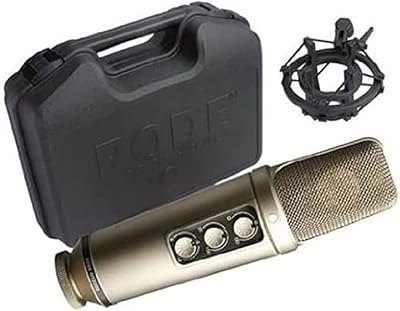
Rode NT2000 Large-Diaphragm Condenser Microphone

Rode NTG-1 Shotgun Condenser Microphone

Rode NT3 Medium-Diaphragm Condenser Microphone
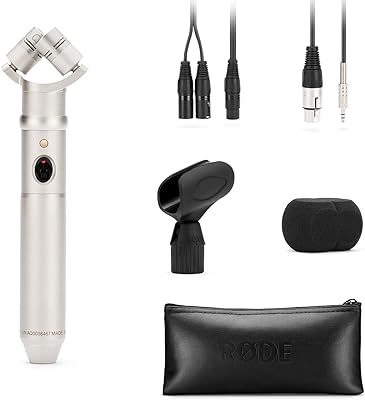
Rode NT4 Stereo Condenser Microphone

Rode NT5-S
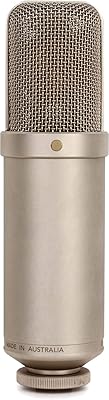
Rode NTK
Rode M5 Matched Pair

Rode NT55 Multi-Pattern Condenser Microphone
Rode NT1-A