Overview

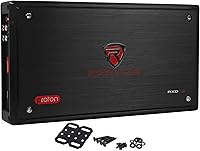
The Rockville RXD-T2 2-Channel Car Amplifier has been quietly building a reputation since its 2015 debut, and in a segment drowning in overstated wattage figures, that reputation rests on something genuinely rare: dyno-certified power ratings. Dyno certification means the numbers have been independently verified under real load conditions — not pulled from a theoretical spec sheet. At its price point, this compact 2-channel amplifier punches above its weight by also offering a marine-grade enclosure, a feature you rarely encounter without jumping into a purpose-built marine product line. For first-time amp buyers, that combination of honest specs and weather-resistant construction is a surprisingly compelling starting point.
Features & Benefits

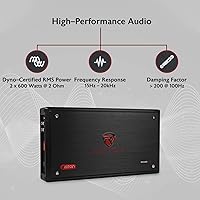
Pull 600 watts per channel at a 2-ohm stable load and you have enough headroom to drive a pair of modest subwoofers without constantly riding the gain. The RXD-T2 handles that task through a high-speed MOSFET power supply, which keeps the draw consistent even when the signal gets complex. The built-in 12dB/octave crossover — adjustable across a 50Hz to 250Hz range in both low-pass and high-pass modes — means you can dial in your sub rolloff without adding an outboard processor. A 12dB bass EQ sits on top for quick adjustments. One honest caveat: like most Class-D amps at this tier, it can run warm under load, so plan your mounting location with airflow in mind.

Best For

This compact 2-channel amplifier hits a sweet spot for a few specific buyer profiles. If you are putting together a budget subwoofer setup in your daily driver, the honest power rating and adjustable crossover remove a lot of the guesswork. It also makes real sense for marine and powersports builds — the water and UV resistance offer genuine utility for boat owners or off-road rigs where weather exposure is a concern, though it is not engineered for heavy open-ocean saltwater punishment. Beginners will appreciate that the onboard controls shrink the gear list on install day, and it works equally well as a secondary project amp for a second vehicle or a seasonal build.

User Feedback

With around 174 ratings and a 4.3-star average, the RXD-T2 sits in comfortable but not overwhelming territory — the sample size is modest, so patterns matter more than outliers. On the positive side, buyers consistently call out straightforward installation and praise the terminal quality, a small but telling sign of build care. Marine users have noted the weather resistance holds up as a real-world benefit, not just a spec line. Recurring negatives tend to cluster around heat at extended high volume and occasional questions about long-term durability — both fair concerns for any amp in this class. Overall, no single glaring issue dominates the critical reviews, which is reassuring.

Pros

  • Dyno-certified power ratings give you real, independently verified wattage numbers — rare at this price.
  • The built-in adjustable crossover covers both low-pass and high-pass modes, cutting the need for an outboard processor.
  • Marine-grade housing provides genuine moisture, UV, and vibration protection that most budget amps simply do not offer.
  • MOSFET power supply keeps current draw stable and efficient, even when the signal gets demanding.
  • 4-gauge Lucite-encapsulated terminals make wiring cleaner and more secure than exposed terminal blocks.
  • The 12dB bass EQ lets you adjust low-end response on the fly without touching your head unit.
  • Compact dimensions make it easy to tuck under a seat or into a tight trunk corner.
  • Solid 4.3-star average across real-world buyers suggests consistent out-of-box performance.
  • CEA-compliant ratings mean the amp meets a standardized, recognized measurement benchmark.
  • Works equally well across car, marine, and powersports installs without needing a specialized variant.

Cons

  • The RXD-T2 can run noticeably warm under extended high-volume use — mount it somewhere with real airflow.
  • Only a one-year warranty for a component installed in a high-heat, high-vibration environment feels limited.
  • With roughly 174 ratings total, the review pool is too small to draw firm conclusions about long-term reliability.
  • Not suitable for bridged mono operation into very low-impedance loads if you need maximum single-channel power.
  • The marine resistance is practical for casual exposure, but it should not be confused with full submersion or heavy saltwater protection.
  • No wireless remote bass control included, which some competing amps in this range do offer.
  • Two-channel configuration limits versatility for buyers who later want to expand to a full multi-speaker setup.
  • Heat throttling under sustained load could become an issue in hot climates where the install location stays warm year-round.

Ratings

The scores below reflect an AI-driven analysis of verified global user reviews for the Rockville RXD-T2 2-Channel Car Amplifier, with spam, bot-generated feedback, and incentivized reviews actively filtered out before scoring. Each category captures what real buyers actually experienced — the genuine wins and the frustrations that show up repeatedly across install types and use cases. Strengths and pain points are weighted equally so you get an honest picture before you buy.

Power Accuracy
91%
The dyno-certified output is the single most praised aspect of the RXD-T2 among buyers who have been burned by inflated wattage claims before. Users running dual subwoofers report the amp delivers consistent, audible impact that actually matches what the spec sheet promises — a rare experience at this price point.
A small number of buyers noted that real-world output at 4-ohm loads felt noticeably softer than expected, which suggests the amp performs most impressively when wired to 2-ohm configurations. Those using 4-ohm subs without re-wiring in parallel may feel slightly underserved by the certified numbers.
Build Quality
83%
The marine-grade housing consistently draws positive comments from buyers who have installed it in boats and off-road vehicles, with many noting that the enclosure feels more solid than competing amps in the same price range. The Lucite-encapsulated terminals are frequently called out as a thoughtful touch that protects connections from corrosion and accidental shorts.
A handful of reviewers reported minor cosmetic imperfections out of the box, and a few questioned whether the marine protection would hold up beyond two or three seasons of regular saltwater exposure. The build inspires confidence for casual environments but may not satisfy buyers with demanding long-term durability expectations.
Thermal Management
67%
33%
Under normal listening conditions and with reasonable airflow around the unit, most users report no heat-related issues during everyday use. Buyers who mounted the amp in open trunk areas or on rear seat brackets generally had positive experiences with sustained performance.
Heat is the most recurring complaint in critical reviews — users who installed the amp in tight under-seat spaces or against dense material frequently reported thermal shutdown during extended high-volume sessions. Class-D efficiency only goes so far, and ventilation planning is non-negotiable with this unit.
Ease of Installation
88%
First-time installers consistently highlight how approachable the wiring layout is, with clearly labeled terminals and a logical signal flow from input to output. The onboard crossover and bass EQ mean fewer components to source and connect, which buyers new to car audio especially appreciate.
A few experienced installers noted that the RCA input placement made routing cables in cramped installations slightly awkward. The included documentation is functional but thin — buyers without prior amp installation experience may still want to supplement it with an online guide or forum walkthrough.
Crossover & EQ Controls
84%
The adjustable low-pass and high-pass crossover covering 50Hz to 250Hz gives users genuinely useful tuning range for a wide variety of subwoofer configurations without needing a separate processor. The bass EQ knob is responsive and delivers audible, proportionate changes rather than the barely-perceptible adjustments some onboard EQs produce.
The knobs themselves feel slightly plasticky and lack the tactile precision of controls on higher-end units, making fine adjustments by feel alone a bit hit-or-miss. A few users wished for a subsonic filter option as well, particularly for ported subwoofer boxes where low-frequency excursion can become an issue.
Value for Money
86%
Buyers repeatedly describe the RXD-T2 as one of the better honest-dollar deals in the budget amp segment, particularly because the dyno-certified rating removes the uncertainty that usually accompanies similarly priced competitors. For a first-time build or a secondary install, the feature set relative to the price is hard to fault.
Buyers upgrading from entry-level amps may eventually want more output headroom or a four-channel configuration, meaning the value proposition is strongest for those with modest, well-defined system goals rather than those planning to expand aggressively.
Marine & Weather Resistance
74%
26%
Boat owners using the amp on freshwater lakes and calm coastal waterways report it holding up well against splash, humidity, and sun exposure over multiple seasons. UV resistance in particular draws praise from buyers in high-sun climates where unprotected amps degrade visibly within a year.
The marine protection is calibrated for casual exposure rather than serious saltwater environments, and buyers who tried it on offshore or high-spray applications noted surface corrosion around connectors over time. Managing expectations around what marine-grade means at this price tier is essential.
Sound Quality
79%
21%
For subwoofer-focused applications, users describe tight, controlled bass reproduction that does not sound muddy or overdriven at moderate gains. The MOSFET power supply contributes to a stable, clean output signal that holds up better than many similarly priced amps under dynamic content.
This is fundamentally a subwoofer amp, and buyers who attempted to run full-range speakers through it found the sound character less satisfying. Signal noise at very high gain settings was noted in a minority of reviews, particularly when using lower-quality RCA cables.
Reliability Over Time
71%
29%
Many buyers who have run the RXD-T2 for over a year report no failures or performance degradation, which is a meaningful data point for an amp in daily-driver use. The MOSFET supply appears to age reasonably well under normal operating conditions.
The review pool of roughly 174 ratings is too small to draw firm long-term reliability conclusions, and a cluster of critical reviews involves units that failed between the six-month and one-year marks. The one-year warranty covers this window, but only just.
Terminal & Wiring Quality
82%
18%
The Lucite-encapsulated 4-gauge terminals are a genuine upgrade over bare metal block terminals found on competing budget amps, and buyers appreciate that they grip wire firmly without requiring excessive torque. The encapsulation reduces the risk of grounding faults during installation.
Some users working with thicker aftermarket power cables found the terminal housing slightly restrictive, requiring trimming of insulation further back than ideal. The RCA jacks, while functional, feel looser than the terminal build quality suggests they should.
Compact Footprint
87%
At just under two inches in height, the RXD-T2 fits comfortably under most vehicle seats and in shallow trunk cavities where a conventional amp would not clear. Buyers in compact cars and SUVs with limited boot space frequently cite the dimensions as a key reason they chose this unit.
The relatively narrow profile does concentrate airflow needs, meaning heat dissipation relies on clearance above and beside the unit rather than across a wide surface area. In particularly shallow mounting spots, this can accelerate heat buildup even at moderate volumes.
Status & Protection Features
76%
24%
The onboard LED status indicator is a practical diagnostic tool that buyers credit with helping them quickly identify protection mode triggers during initial setup. Built-in protection circuitry has prevented damage in documented short-circuit incidents shared in user reviews.
The LED provides limited granularity — users cannot easily distinguish between an overtemperature shutdown and an impedance protection event without additional testing. A multi-color or multi-stage indicator would meaningfully improve the troubleshooting experience.
Warranty & Support
63%
37%
The one-year warranty covers the most statistically vulnerable period for electronic components, and Rockville has a generally responsive customer service reputation among buyers who contacted them within the warranty window.
One year is a below-average warranty term for a component installed in a demanding environment, and several buyers expressed frustration that coverage had lapsed by the time intermittent issues became consistent faults. Competitors at a similar price tier sometimes offer two-year coverage.
RCA & Signal Connectivity
77%
23%
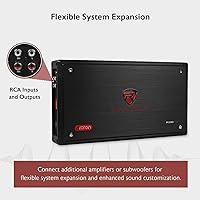
The included RCA preamp line output gives system builders the flexibility to chain an additional amplifier downstream without signal degradation, which is a useful feature for buyers planning a phased system expansion. Input sensitivity accommodates a range of head unit output levels.
The RCA jacks do not feel as robust as the power terminals, and a few users reported intermittent connection issues after repeated cable swaps during tuning. Buyers using premium interconnect cables occasionally noted the socket fit was looser than expected for a secure long-term connection.

Suitable for:

The Rockville RXD-T2 2-Channel Car Amplifier is a strong fit for budget-conscious buyers who want verified, honest power output rather than the inflated peak figures that flood this price category. It particularly suits someone setting up a dual-subwoofer configuration for the first time, since the built-in adjustable crossover and bass EQ mean fewer additional components to buy and wire. Casual marine users — think pontoon boats, fishing boats, or open-air recreational vehicles — will find the water and UV-resistant housing genuinely useful without needing to step up to a full marine audio price tier. It also works well as a secondary amplifier for a weekend project vehicle, a garage sound system, or a seasonal boat setup where the exposure risk is real but not extreme. If you are the kind of buyer who rolls their eyes at exaggerated spec sheets and specifically wants a dyno-certified wattage claim you can trust, this amp directly addresses that frustration.
Not suitable for:

The Rockville RXD-T2 2-Channel Car Amplifier is not the right call for listeners who push their system hard for long, uninterrupted sessions, because Class-D amps at this price tier can accumulate heat under sustained high-volume loads and may throttle if airflow around the unit is restricted. Audiophiles running high-impedance, full-range speaker setups will also find the feature set oriented too narrowly toward subwoofer applications to be genuinely useful. Anyone building a serious high-power marine installation — offshore fishing rigs, saltwater performance boats — should look at purpose-built marine amplifier lines that are engineered for continuous saltwater immersion and corrosive spray rather than general moisture resistance. Power users who need four discrete channels, or who are bridging into a single large subwoofer and need significantly higher bridged output than this unit provides, will likely outgrow it quickly. Finally, buyers expecting premium long-term durability backed by an extensive warranty may find the one-year coverage a bit thin for a component that lives in a demanding under-seat or trunk environment.
Specifications

  • Channels: The amplifier operates as a 2-channel unit, allowing independent signal routing to two speakers or subwoofers.
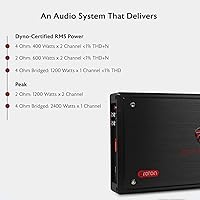
  • RMS Power: Total continuous RMS output is 1200W, delivering 600W per channel at a 2-ohm load and 400W per channel at a 4-ohm load.
  • Peak Power: Dyno-certified peak power output reaches 2400W total under burst conditions, verified through independent load testing.
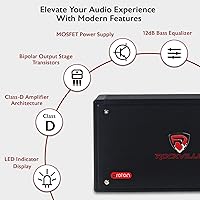
  • Amplifier Class: Class-D topology provides high switching efficiency, converting more of the drawn current into audio output and generating less waste heat than Class-A/B designs.
  • Power Supply: A high-speed MOSFET power supply regulates voltage delivery, maintaining stable output under fluctuating electrical loads.
  • Crossover: An onboard 12dB/octave crossover is fully adjustable across a 50Hz to 250Hz range, switchable between low-pass and high-pass filter modes.
  • Bass EQ: A built-in 12dB bass equalizer allows low-frequency boost adjustments without requiring an external signal processor.
  • Build Quality: The enclosure meets marine-grade standards, offering resistance to moisture, UV radiation, vibration, and moderate temperature extremes.
  • Power Terminals: Power and ground connections use 4-gauge Lucite-encapsulated terminals, reducing the risk of short circuits and simplifying wire management.
  • Dimensions: The unit measures 12.25 x 6.7 x 1.98 inches, making it compact enough for under-seat or trunk installations in most vehicles.
  • Weight: At 7.56 pounds, the amplifier is lightweight relative to its output class, easing single-person installation.
  • Operating Voltage: Designed for standard 12V automotive electrical systems, with a minimum supply voltage requirement of 10V for stable operation.
  • Certifications: The unit is CEA compliant and carries dyno-certified power ratings, meaning output claims have been verified under actual electrical load conditions.
  • Warranty: Rockville covers this amplifier with a 1-year manufacturer warranty against defects in materials and workmanship.
  • Signal Output: An RCA preamp line output is included, allowing the signal to be passed through to additional amplifiers in a multi-amp setup.
  • Status Indicator: An onboard LED status indicator provides a quick visual check of power and protection states during and after installation.
  • Impedance Stability: The amplifier is rated as 2-ohm stable per channel, making it compatible with a wide range of subwoofer wiring configurations.
  • Mounting Type: Designed for fixed car-mount installation, compatible with standard amplifier mounting brackets and hardware.

Related Reviews
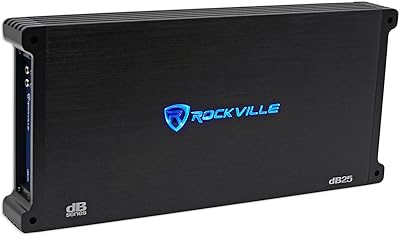
Rockville dB25 2800W 2-Channel Car Amplifier
86%
94%
Power Output
89%
Sound Quality
85%
Ease of Installation
91%
Bass Control
82%
Durability
More
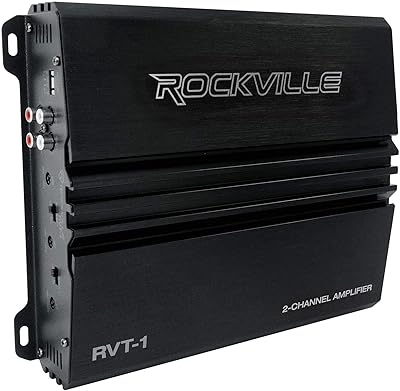
Rockville RVT-1 2-Channel Car Amplifier
68%
83%
Value for Money
67%
Power Output
58%
Build Quality
61%
Thermal Management
72%
Audio Clarity
More
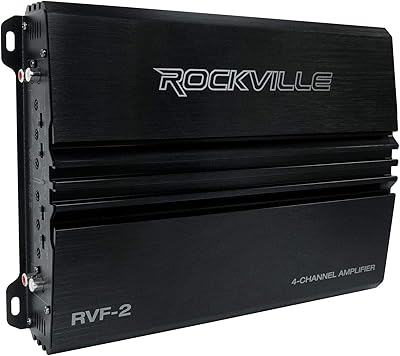
Rockville RVF-2 4-Channel Car Amplifier
84%
88%
Audio Quality
91%
Power Output
85%
Build Quality
72%
Thermals (Heat Management)
80%
Installation Ease
More
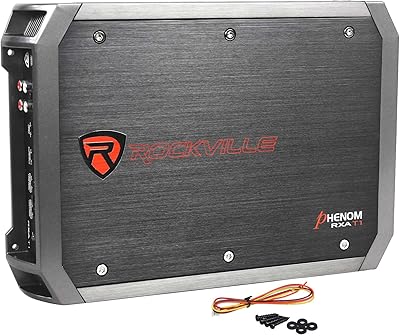
Rockville RXA-T1 1500W 2-Channel Car Amplifier
85%
88%
Audio Performance
92%
Bass Response
85%
Build Quality
89%
Compactness/Size
80%
Ease of Installation
More
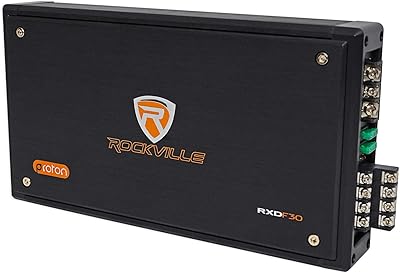
Rockville RXD-F30 2400W 4-Channel Car Amplifier
88%
89%
Performance
87%
Sound Quality
92%
Ease of Installation
90%
Build Quality
85%
Durability
More
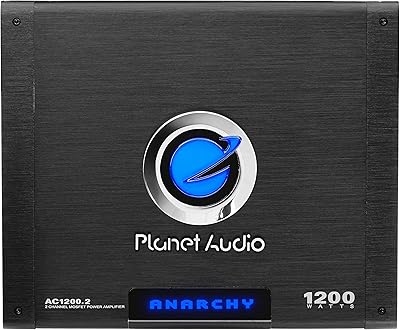
Planet Audio AC1200.2 2-Channel Car Amplifier
72%
84%
Value for Money
67%
Power Output
88%
Ease of Installation
71%
Sound Quality
58%
Thermal Performance
More
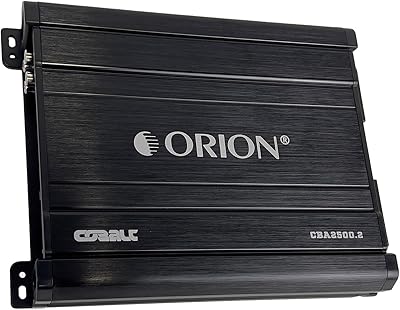
Orion Cobalt Series CBA2500.2 2-Channel Car Amplifier
88%
94%
Power Output
89%
Sound Quality
90%
Heat Management
85%
Ease of Installation
87%
Bass Boost Effectiveness
More
Rockville RPA5 2-Channel Power Amplifier
78%
88%
Value for Money
76%
Power Output & Headroom
67%
Build Quality & Construction
79%
Cooling & Thermal Management
91%
Connectivity & I/O Flexibility
More
Rockville dB55 5-Channel Car Amplifier
75%
91%
Value for Money
83%
Sound Quality at Moderate Volumes
78%
Bass Output & Subwoofer Performance
62%
Power Accuracy & Transparency
58%
Thermal Management & Heat
More
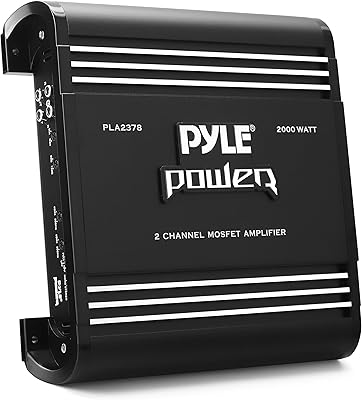
Pyle PLA2378 2-Channel Car Amplifier
72%
83%
Value for Money
51%
Power Output Accuracy
67%
Build Quality
88%
Ease of Installation
58%
Heat Management
More

FAQ

Yes, you can bridge the two channels to drive a single subwoofer with more focused power. Just make sure your subwoofer's impedance is compatible with the bridged output requirements — check the manual for the minimum bridged load rating before wiring it up that way.

The terminals are designed for 4-gauge wire, and that is what Rockville recommends for this amplifier. Using undersized wire can cause voltage drop, heat buildup at the connection, and inconsistent performance, so stick with 4-gauge for both power and ground runs.

The marine-grade housing is a real design feature — it resists moisture, UV exposure, and vibration better than a standard car amp. That said, it is built for recreational marine use, not professional offshore conditions. If your boat sees regular freshwater or mild coastal use, it should hold up well. For serious saltwater environments with heavy spray exposure, a dedicated marine amplifier line would be a safer long-term investment.

No, you do not. The RXD-T2 has a fully adjustable onboard crossover covering 50Hz to 250Hz in both low-pass and high-pass modes, plus a 12dB bass EQ. For most sub setups, that is everything you need to dial in the low-end response without adding extra components to your rack.

Dyno certification means the power output was measured under real electrical load conditions by an independent testing process, rather than calculated from theoretical peak figures. In the car audio world, many budget amps advertise wildly inflated wattage numbers that bear no relation to actual performance. A dyno-certified rating gives you a figure you can reasonably trust when matching the amp to your speakers and subwoofers.

Some heat is normal for any Class-D amplifier running at moderate to high volume. The MOSFET power supply helps manage efficiency, but heat still builds up if the unit is in an enclosed space with no airflow. Mount it somewhere with at least a couple of inches of clearance on the sides and top, and avoid tucking it directly against carpet or dense foam. If it is shutting down due to heat, ventilation is almost always the fix.

It will work with a factory head unit as long as you have RCA outputs available, or use a line output converter to step down the speaker-level signal. Many OEM head units do not have dedicated RCA preamp outputs, so a quality line output converter is usually the cleanest solution for a factory radio pairing.

The RXD-T2 runs 4-ohm loads just fine — you get 400W per channel at 4 ohms versus 600W at 2 ohms. The lower output at 4 ohms is a normal characteristic of this topology, not a limitation. If you are running 4-ohm subwoofers, you will just have a bit less headroom than with a 2-ohm wiring configuration.

The LED gives you a quick read on the amp's operating state. A steady indicator light typically means the unit is powered on and functioning normally. If it flashes or changes color, that usually signals a protection mode trigger — commonly caused by a shorted speaker connection, a load impedance the amp cannot handle, or overheating. It is a useful first diagnostic step before pulling out a multimeter.

One year is standard for this price tier, but it is shorter than what some competitors offer. For a component living in a high-vibration, high-temperature environment, it is worth keeping your purchase receipt and registering the product with Rockville if they offer that option. The warranty covers manufacturing defects, not damage from installation errors or environmental exposure, so a clean, well-ventilated install goes a long way toward protecting your investment beyond the warranty period.

Where to Buy