Overview

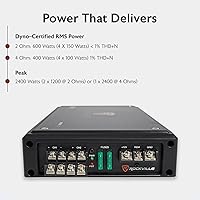
The Rockville RXD-F30 4-Channel Car Amplifier sits in an interesting spot — compact enough to tuck under a seat, yet capable enough to drive a full four-speaker setup with verified, tested power. Rockville is a brand that leans hard on impressive wattage numbers, so it is worth cutting through the marketing early: the 2400W figure is peak power under ideal conditions, while the more meaningful 800W RMS rating is what you will actually see in sustained real-world use. That works out to 200W per channel at 2 ohms, which is respectable for the price tier. The RXD-F30 has been on the market since 2016, giving the review pool time to mature. Notably, it is also rated for marine use, a genuine differentiator at this price point.
Features & Benefits

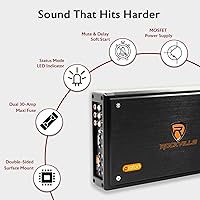
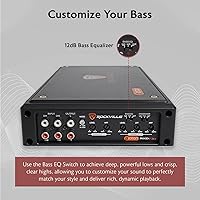
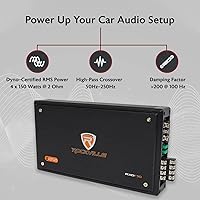
What makes this Rockville 4-channel amp worth examining starts with its CEA-2006 certification, which means the power output was verified on actual test equipment rather than simply stated on a box. The MOSFET power supply contributes real thermal stability, translating to cleaner output during extended listening sessions and better long-term reliability. The fully adjustable crossover — covering high-pass and low-pass from 50 to 250Hz — paired with a selectable bass boost of +6 or +12dB gives you meaningful tuning flexibility without a separate processor. For drivers keeping their factory head unit, the high-level input with smart auto turn-on lets you tap directly into existing speaker wiring. The RCA preamp output is also a practical addition if you ever want to expand the system down the line.

Best For

The RXD-F30 makes the most sense for a few specific buyer profiles. If you are a DIY car audio builder looking to run four full-range speakers off a single amp without a large budget, this micro car amplifier checks the right boxes. It is also a solid pick for anyone retaining a factory head unit, since the high-level input removes the need for a new stereo before adding amplification. The water-resistant construction meaningfully expands the audience — Jeep owners, UTV riders, and anyone running an open-cab or marine setup will appreciate the moisture-protected circuit board. Physical size matters too; at just over 16 inches long, it fits comfortably in spaces where full-size 4-channel amps simply would not.

User Feedback

Sitting at 4.1 out of 5 stars across 203 ratings, this Rockville 4-channel amp has a stable enough track record to draw real patterns from. Installation ease and the compact footprint come up repeatedly in positive reviews, with buyers noting how cleanly it powers speakers at everyday listening levels. The most consistent criticism centers on power expectations — buyers anticipating the headline 2400W to translate into dramatic output are going to be let down, and that gap is more a marketing issue than a product flaw. A meaningful group of marine and ATV users report solid durability after months in tough conditions, which is encouraging. That said, a long-term reliability concern surfaces in a handful of reviews describing failures after a year or more of regular use.

Pros

  • CEA-2006 dyno-certified output means the rated power was actually measured, not just printed on a box.
  • MOSFET power supply keeps the RXD-F30 running cooler and more consistently than older transformer-based designs.
  • High-level inputs let you tap directly into factory speaker wiring without replacing the head unit first.
  • The conformal-coated circuit board holds up well in marine, ATV, and open-cab environments where moisture is a real factor.
  • At roughly 16 inches long, this micro car amplifier fits under seats and in tight spaces many competitors cannot.
  • Separate high-pass and low-pass crossover controls from 50 to 250Hz give genuine tuning flexibility without extra gear.
  • Smart auto turn-on removes one of the most frustrating wiring complications in a budget amplifier install.
  • RCA preamp output makes adding a subwoofer or expanding the system later a straightforward task.
  • A rating history stretching back to 2016 gives buyers a meaningful, seasoned feedback pool to evaluate.
  • The selectable bass EQ lets you add low-end body without needing a separate processor in the signal chain.

Cons

  • The 2400W headline is peak power only — total sustained RMS output across all four channels is 800W.
  • A notable share of buyers report unit failures after extended regular use, raising legitimate long-term durability concerns.
  • Rockville sits below well-established audio brands in reputation, which affects resale value and perceived build confidence.
  • Customer support and warranty resolution experiences with Rockville are inconsistently reported across verified purchasers.
  • The bass EQ offers only two fixed boost levels rather than a continuously sweepable frequency adjustment, limiting fine-tuning.
  • No bridging configuration is specified, which limits future reconfiguration for users wanting to consolidate to mono output.
  • The amp requires a minimum 8V DC supply, which could be a concern in older vehicles with weaker or aging electrical systems.
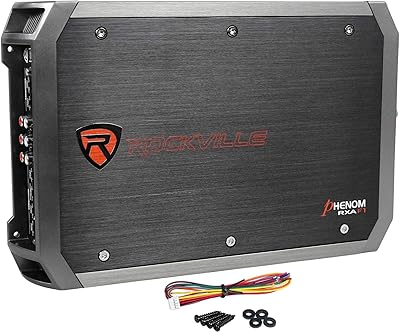
  • Wiring hardware is not included in the package, adding upfront cost and extra planning for first-time installers.
  • Sound quality at higher volume levels is reported as acceptable rather than impressive by listeners with critical ears.
  • Surface-mount installation means repositioning the unit after the initial setup involves more disassembly than most buyers anticipate.

Ratings

The scores below were generated by AI after analyzing verified real-world reviews for the Rockville RXD-F30 4-Channel Car Amplifier from buyers worldwide, with bot submissions, incentivized feedback, and statistical outliers actively filtered before any category was scored. Each rating reflects consistent patterns drawn from hundreds of genuine installation experiences — across daily drivers, marine vessels, and powersports builds — rather than a handful of headline opinions. Both the standout strengths and the documented pain points are honestly represented in every number you see here.
Sound Quality
74%
26%
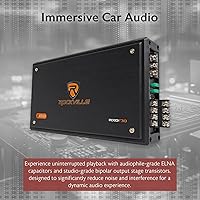
At everyday listening volumes, buyers consistently describe the output as clean and well-defined, particularly in the midrange. Commuters running this Rockville 4-channel amp with component speakers report noticeably more presence and clarity compared to a head unit driving speakers unaided. The MOSFET circuit contributes to a stable, relatively distortion-free signal at moderate power demands.
Push the volume past two-thirds of its range and the cleanliness starts to soften, with some harshness appearing at the upper frequency edges. This amp is not aimed at critical listeners — those wanting studio-grade fidelity at high output levels will find it falls short of more refined, higher-priced competitors.
Power Accuracy
81%
19%
The CEA-2006 certification and dyno-tested power figures are a genuine mark of honesty that separates the RXD-F30 from many value-tier competitors that simply print impressive numbers without third-party verification. Buyers who understand RMS ratings report that the 200W per channel at 2 ohms performs in line with what the spec sheet actually promises.
The 2400W peak headline has caused real frustration among buyers who expected transformational output and received respectable but far more modest continuous power. Rockville's aggressive peak marketing actively works against buyer trust — the gap between the headline figure and actual sustained output is wide enough to feel misleading to first-time amp buyers.
Installation Ease
88%
Ease of setup is the single most consistently praised aspect across hundreds of real-world installs. The high-level input with smart auto turn-on lets factory head unit owners get running without sourcing a remote wire or replacing their stereo, and the clearly labeled terminals reduce guesswork significantly for first-timers.
The amp ships without any wiring hardware, which catches first-time installers off guard and adds unplanned cost to the project. Surface mounting means choosing a location carefully upfront — repositioning after an initial install requires unfastening and re-drilling, which a handful of buyers discovered the hard way.
Build Quality
67%
33%
The physical construction feels appropriate for a value-tier amp — the chassis is solid enough, and the Lucite-encapsulated power terminals are a noticeably better detail than the bare metal connections found on comparable budget units. The conformal-coated PCB adds a layer of environmental protection that is more than cosmetic.
Extended daily use reveals where corners were cut — casing flex and internal component choices are consistent with the price point rather than built for hard, sustained abuse. Some buyers handling the unit out of the box note it feels lighter and thinner than the power specs alone might suggest.
Value for Money
82%
18%
For buyers who go in with accurate expectations about RMS versus peak power, the RXD-F30 delivers a competitive feature set well below the cost of many comparable four-channel amps. The combination of CEA-2006 certification, a moisture-resistant board, adjustable crossovers, and high-level inputs at this price tier is genuinely hard to argue with.
The value equation weakens considerably if the unit fails after a year of regular use, as a meaningful number of buyers have reported. Factor in replacement cost and the initial price advantage shrinks fast — the long-term cost-per-year of ownership is less favorable than the sticker price alone implies.
Thermal Performance
79%
21%
The MOSFET power supply design produces less waste heat than older class AB implementations at comparable power levels, and buyers running the amp in under-seat installs during summer months report it staying manageable rather than running dangerously hot. The amp does not appear to throttle or cut out under normal daily listening conditions.
Install the amp in a fully enclosed space with no airflow and heat becomes a more active concern, particularly in warmer climates. A small number of buyers attribute premature unit failures to inadequate ventilation, suggesting that mounting location planning matters more than the compact size might initially imply.
Water & Weather Resistance
83%
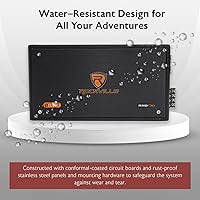
The conformal coating on the circuit board is one of the few features that genuinely overdelivers at this price point. Marine buyers and Jeep owners with the top off report the amp holding up through sustained humidity, light splash, and UV exposure over multiple seasons without electrical issues or visible corrosion appearing on the board.
The water resistance is protection against moisture exposure, not submersion — and that distinction matters for buyers picturing it surviving a direct soaking. The amp housing is not sealed, so prolonged exposure to heavy spray without additional physical shielding around the unit remains a real risk worth managing through careful placement.
Crossover & Tuning
77%
23%
Having both high-pass and low-pass filters continuously adjustable across the same 50 to 250Hz range in a single compact unit offers more flexibility than most competing value-tier amps provide. Real-world users appreciate setting crossover points to match their specific speakers rather than relying on fixed filter settings that may not suit their system.
The bass equalizer is limited to two fixed boost levels — +6dB or +12dB — rather than a continuously sweepable control, forcing compromise for users whose ideal lift falls somewhere in between. Experienced installers accustomed to DSP-style tuning will find the onboard controls too blunt for precise system calibration.
Head Unit Compatibility
91%
The high-level input with smart auto turn-on is the most practically useful feature on this micro car amplifier for the average buyer. Connecting directly to existing speaker wiring and having the amp power on automatically with the ignition removes two of the most common friction points in a first-time amplifier installation.
The auto turn-on circuit has occasionally been reported to trigger from residual voltage in speaker lines rather than a clean ignition signal, causing unexpected power-on behavior in certain vehicle wiring configurations. Buyers in vehicles with complex factory audio electronics should test the auto turn-on behavior carefully before finalizing the install location.
Physical Footprint
93%
At just over 16 inches long and under 4 inches tall, the RXD-F30 fits installation spaces a full-size four-channel amp simply cannot reach. Buyers consistently cite the compact form factor as a decisive advantage in smaller vehicles where under-seat real estate is limited and trunk space is not available for a larger unit.
The micro footprint comes with physical trade-offs — the smaller chassis leaves less room for internal heat dissipation, and the compact terminal area feels cramped when routing thicker gauge power cables during installation. Buyers with larger hands and stiffer 4-gauge wire report that the terminal block requires real patience to work in cleanly.
Long-term Reliability
58%
42%
Buyers who use the amp for casual, moderate-volume listening in a well-ventilated location report solid operation through the first year or more without issues. Marine and powersports users — arguably the toughest environment — report comparatively positive durability outcomes, likely because the moisture protection keeps the board stable under environmental stress.
A consistent pattern in reviews documents unit failures in the 12 to 18 month range for buyers running the amp under heavier daily use or in high-heat installs. For a component expected to function as a permanent part of a vehicle audio system, that failure timeline is a legitimate red flag that prospective buyers should weigh honestly.
Bass Performance
72%
28%
With the onboard bass EQ engaged at +12dB, the RXD-F30 adds a noticeable low-end presence that works well for hip-hop and electronic music without requiring a dedicated subwoofer in every setup. Buyers running 6x9 full-range speakers in rear deck positions report the bass boost filling out the low end adequately at moderate volume.
The fixed +6dB and +12dB boost steps mean there is no middle ground — +6dB can feel underwhelming for bass-forward listeners while +12dB occasionally pushes smaller speakers into audible distortion at higher volumes. Buyers expecting deep subwoofer-quality bass from four-channel speakers alone will consistently find the result disappointing regardless of EQ setting.
Channel Separation
71%
29%
At moderate listening volumes, the four channels produce adequately distinct stereo imaging with minimal crosstalk between left and right sides, keeping the soundstage reasonably defined for a value-tier amp. Buyers using component speaker setups report cleaner separation than most entry-level head units produce on their own without amplification.
At higher output levels, stereo imaging narrows and frequency bleed between adjacent channels becomes more audible — a known trade-off at this price tier. Listeners who prioritize a wide, accurate soundstage at high volume levels will notice the limitation clearly compared to more expensive, tightly engineered amplifiers.
Wiring & Terminals
78%
22%
The 4-gauge Lucite-encapsulated power and ground terminals protect connections from corrosion and accidental contact, which is genuinely useful in marine installs or any debris-prone environment. Buyers with prior amp experience notice immediately that the terminal block feels more considered than the bare-metal alternatives found on cheaper units at similar price points.
The terminal area is compact relative to 4-gauge wiring, making it physically awkward to route and secure thick power cables during installation. No wiring kit is included in the package, leaving first-time installers to source compatible hardware separately — a detail that should factor into total installation budget planning from the outset.
Marine & Powersports Fit
84%
Among all real-world use cases reported, marine and powersports applications generate some of the most consistently positive feedback in the entire review pool. Boat owners and UTV riders specifically highlight that the conformal-coated board has held up through saltwater humidity, vibration, and UV exposure across multiple seasons without corrosion or electrical degradation.
The amp housing itself offers no physical weatherproofing beyond the board coating — there is no sealed enclosure protecting internal components from direct water intrusion. Buyers mounting it in truly exposed positions on a boat or open-cab vehicle should still plan for physical shielding to complement the board-level moisture protection.

Suitable for:

The Rockville RXD-F30 4-Channel Car Amplifier is a strong match for budget-conscious DIY installers who want to drive a complete four-speaker system from a single, space-efficient unit without jumping into premium brand pricing. Its high-level input with smart auto turn-on is particularly practical for anyone holding onto a factory head unit, since it eliminates the need to replace the entire dash stereo just to add amplification. Marine enthusiasts, Jeep owners, and UTV riders will find the conformal-coated, moisture-resistant circuit board genuinely useful rather than a paper spec, especially in humid or splash-prone environments. Anyone upgrading from a single-channel amp who wants to feed all four speakers properly in one move will appreciate how straightforward the transition is with this micro car amplifier. It also suits installers dealing with tight physical constraints — under-seat cavities, compact trunk corners, or custom enclosures where a full-size four-channel amp simply will not fit.
Not suitable for:

Buyers chasing serious, sustained high-output performance should pump the brakes before purchasing — the Rockville RXD-F30 4-Channel Car Amplifier delivers a respectable 200W per channel at 2 ohms, but anyone anchoring their expectations to the 2400W peak headline will find the real-world figure considerably more modest. Audiophiles who prioritize top-tier sound fidelity over value efficiency may find the output quality acceptable but not competitive with more established audio brands operating at a higher price point. The RXD-F30 is also not ideal for buyers planning a dedicated subwoofer build, since a purpose-built mono block will serve that use case far better than a four-channel unit. Long-term reliability is worth factoring in too — a visible portion of real-world reviewers have documented failures after a year or more of regular use, which makes this a harder sell for anyone needing an amp to perform under heavy daily load for the long haul. If you require robust brand-level customer support or have specific warranty expectations, Rockville's after-sale service record is uneven enough to give pause.
Specifications

  • Channels: This amplifier operates across 4 independent channels, allowing a full set of front and rear speakers to be powered from a single unit.
  • Peak Power: Total peak power output is rated at 2400W, measured under momentary test conditions rather than sustained listening use.
  • RMS Power: Total continuous RMS power output is 800W across all four channels, which represents the reliable, real-world performance figure buyers should plan around.
  • Per-Channel Output: Each channel delivers 200W RMS at a 2-ohm load or 100W RMS at a 4-ohm load, giving flexibility across common speaker impedance ratings.
  • Power Supply: A high-speed MOSFET power supply design provides improved thermal efficiency and more stable output compared to conventional transformer-based amplifier circuits.
  • Crossover Type: The built-in crossover is a fully adjustable 12dB-per-octave design, offering steeper slope filtering than basic 6dB options found in lower-tier amplifiers.
  • HPF Range: The high-pass filter is continuously adjustable from 50Hz to 250Hz, allowing users to roll off low frequencies from full-range speakers to reduce distortion.
  • LPF Range: The low-pass filter covers the same 50Hz to 250Hz range, suitable for directing bass frequencies toward dedicated woofers or subwoofer channels.
  • Bass EQ: A selectable bass equalizer provides either a +6dB or +12dB boost, giving users two fixed levels of low-end reinforcement without requiring an external processor.
  • Water Resistance: The circuit board is protected with a conformal coating that resists moisture, saltwater exposure, UV light, vibration, and temperature extremes.
  • Input Type: High-level speaker inputs with smart auto turn-on allow the amplifier to connect directly to factory or aftermarket head units without requiring a separate remote turn-on wire in many installations.
  • Signal Output: An RCA preamp line output is included, enabling a downstream component such as a powered subwoofer or signal processor to be added to the system later.
  • Power Terminals: Power and ground connections use 4-gauge terminals encased in Lucite, providing a secure, corrosion-resistant connection point for the main power wiring.
  • Dimensions: The amplifier body measures 16.1 x 8.8 x 3.9 inches, a compact micro footprint that fits under seats and in confined installation spaces.
  • Weight: Shipping weight is approximately 7.15 pounds, making the unit easy to handle and position during installation without additional lifting assistance.
  • Min Supply Voltage: The amplifier requires a minimum supply voltage of 8V DC, which is standard for 12V vehicle electrical systems but worth confirming in older or heavily loaded vehicles.
  • Mounting Type: The unit is designed for surface mounting, secured via brackets or direct mounting points to a flat surface inside the vehicle or marine vessel.
  • Certification: Output power figures are CEA-2006 compliant and dyno-certified, meaning they were verified on actual test equipment rather than estimated or self-reported by the manufacturer.
  • Market Debut: This amplifier was first made available for purchase in March 2016, giving it a multi-year field history and a seasoned pool of real-world user feedback to draw from.

Related Reviews
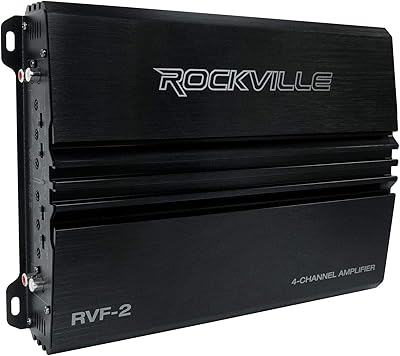
Rockville RVF-2 4-Channel Car Amplifier
84%
88%
Audio Quality
91%
Power Output
85%
Build Quality
72%
Thermals (Heat Management)
80%
Installation Ease
More
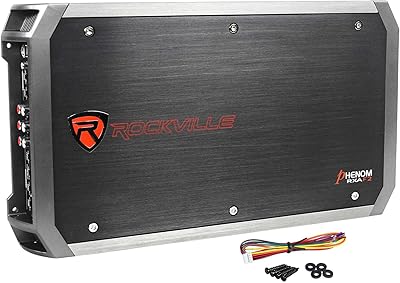
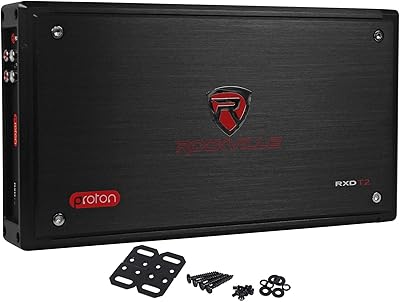
Rockville RXA-F2 2400W 4-Channel Car Amplifier
85%
94%
Power Output
89%
Sound Clarity
88%
Ease of Installation
90%
Bass Performance
85%
Compatibility with Factory Systems
More
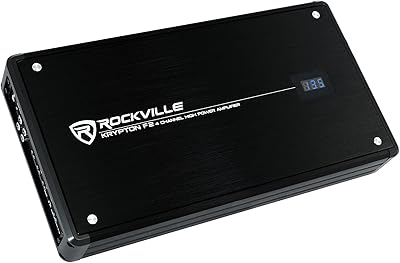
Rockville KRYPTON F2 4-Channel Car Amplifier
73%
88%
Verified Power Output
84%
Value for Money
82%
Ease of Installation
79%
Crossover & Filter Flexibility
71%
Thermal Management
More
Rockville RXD-T2 2-Channel Car Amplifier
79%
91%
Power Accuracy
83%
Build Quality
67%
Thermal Management
88%
Ease of Installation
84%
Crossover & EQ Controls
More
Rockville RXA-F1 1600W 4-Channel Car Amplifier
82%
88%
Sound Quality
93%
Power Output
84%
Ease of Installation
92%
Value for Money
79%
Durability
More
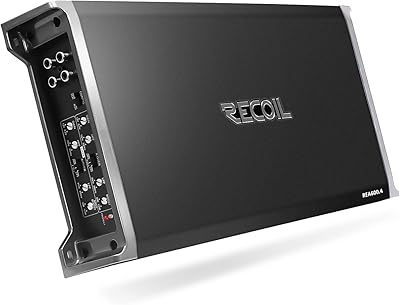
Recoil REA600.4 4-Channel Car Audio Amplifier
84%
89%
Audio Performance
91%
Ease of Installation
85%
Sound Quality at High Volumes
62%
Heat Management
90%
Power Output
More
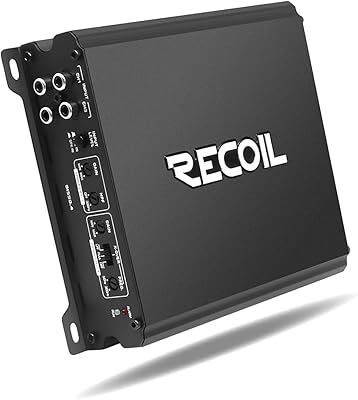
Planet Audio PL1600.4 4-Channel Car Amplifier
72%
88%
Value for Money
84%
Ease of Installation
74%
Sound Quality
58%
Power Output (Real-World)
61%
Build Quality
More
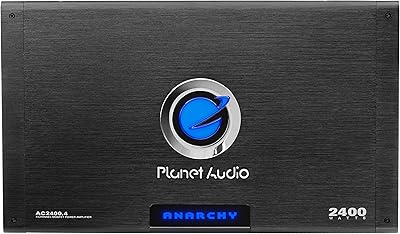
Planet Audio AC2400.4 4-Channel Car Amplifier
84%
95%
Power Output
89%
Sound Clarity
87%
Bass Performance
82%
Ease of Installation
65%
Thermals/Heat Management
More
Recoil DI800.4 4-Channel Car Amplifier
75%
88%
Value for Money
51%
Power Accuracy
63%
Build Quality
79%
Thermal Management
86%
Ease of Installation
More
Recoil DI550.4 4-Channel Car Audio Amplifier
74%
91%
Value for Money
78%
Power Output
86%
Ease of Installation
74%
Sound Quality
67%
Build Quality
More

FAQ

You can use it with a factory head unit without replacing anything. The high-level input on the RXD-F30 connects directly to your existing speaker wires, and the smart auto turn-on circuit detects the signal and powers the amp on automatically. It is one of the more practical features for anyone who wants more power without tearing apart the dashboard.

The 2400W figure is peak power, which is a momentary measurement under ideal test conditions. The number that matters for everyday listening is the RMS rating, which is 800W total across all four channels — or 200W per channel at 2 ohms. That is still a solid output for a compact four-channel amp at this price, but it is worth going in with accurate expectations rather than assuming 2400W of continuous power.

Yes, and this is one area where the RXD-F30 genuinely earns its place. The circuit board is coated with a conformal layer that shields against moisture, saltwater, UV exposure, and vibration. A meaningful number of real-world buyers use it specifically in marine and open-cab powersports applications and report positive results. It is not fully waterproof, so you would not want it submerged, but it handles splash and humidity better than a standard car amp with no protection.

The package only includes the amplifier itself. You will need to source your own wiring kit separately, which should include 4-gauge power and ground wire, an in-line fuse holder, RCA cables, and a turn-on wire if you are not using the high-level input. Budget for a wiring kit when you are pricing out the total installation cost.

It works with both, though the output numbers differ. At 2 ohms you get 200W per channel, while 4-ohm speakers receive 100W per channel. Most aftermarket car speakers are 4-ohm, so 100W per channel is what most buyers will actually see in a standard setup. Running 2-ohm component speakers or wiring pairs in parallel will get you closer to the higher output figure.

Bridging capability is not officially specified in the product documentation, so it is not something you should plan on. If a dedicated subwoofer is part of your system build, you would be better served adding a separate mono block amp for that duty rather than relying on bridging this four-channel unit.

For full-range door or dash speakers, you would engage the high-pass filter and set the cutoff point somewhere between 80Hz and 100Hz as a starting point. This tells the amp to stop sending bass frequencies to your speakers, which reduces strain and keeps them sounding cleaner at volume. The 12dB-per-octave slope gives a reasonably clean roll-off. From there, tune by ear or with a multimeter if you want to get more precise about it.

The MOSFET design does run more efficiently and cooler than older amplifier topologies, so heat is less of a concern than with some budget competitors. That said, any amplifier needs adequate airflow around it, so avoid enclosing it in a sealed box or burying it under carpet with no ventilation gap. Surface mounting with some breathing room around the unit is the right approach.

Buyers consistently describe the installation as one of the easier amp setups they have done, particularly when using the high-level inputs to avoid dealing with RCA cable routing from the head unit. The labeled terminals, status LED, and auto turn-on circuit all reduce the guesswork. If you are comfortable with basic vehicle wiring and can follow an instruction guide, this is a reasonable first amplifier install.

Long-term reliability is a fair concern to raise. The majority of buyers report solid performance in the short to medium term, but a visible portion of reviewers — not a majority, but enough to notice — describe failures after a year or more of regular daily use. This is a value-tier amplifier, and the durability trade-offs that come with that price bracket are real. If you are running this amp hard every day in a hot environment, it is worth keeping that context in mind when setting expectations for how long it will hold up.