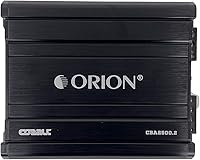
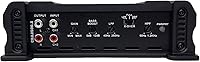
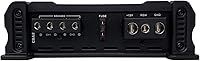
Overview

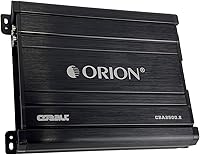
The Orion CBA2500.2 2-Channel Car Amplifier is one of those budget options that actually delivers where it counts — not because it reinvents the category, but because it knows exactly what it is. Orion has spent decades in the car audio space, earning real credibility with enthusiasts, and the CBA2500.2 carries that heritage into an accessible price bracket. One thing to clarify upfront: the 2500W figure on the box is peak power, not continuous. Real-world output sits at 175W RMS per channel at 2 Ohms — honest for this price tier, but worth understanding before you commit. At just under four pounds and roughly 11 x 8 x 3 inches, the compact chassis makes tight installs genuinely manageable.

Features & Benefits

The MOSFET power supply is one of the standout inclusions at this price — it keeps power delivery stable and relatively clean even as load conditions shift, which makes a real difference compared to older transformer-based designs. This Orion 2-channel amp handles both 2 and 4 Ohm loads, giving you flexibility when pairing it with different speaker sets. Onboard low-pass and high-pass filters mean you can run a basic speaker setup without a separate crossover. The adjustable bass boost gives you some low-end shaping without reaching for an external EQ. Perhaps most useful for stock-radio installs is the high-level input, which lets you tap directly into existing speaker wire — no RCA outputs required.

Best For

This entry-level car amplifier is a strong fit for anyone just getting into car audio who wants a real power upgrade without a steep learning curve or a big budget. It handles a standard front or rear stage well — a pair of coaxials or component speakers will run noticeably better off this than off a factory head unit alone. The slim build makes it workable in tight spots, whether that's under a seat or tucked into a small trunk corner. It's not the amp for someone chasing audiophile-grade specs, but for a budget-conscious build that just needs clean, reliable amplification, it covers the bases. The high-level input also makes it an easy drop-in for setups without aftermarket head units.

User Feedback

Buyers consistently highlight how easy the install is, even for first-timers, and several note that channel separation holds up well at moderate volumes. On the flip side, the most common frustration comes from the wattage labeling — shoppers who don't know to look for RMS figures sometimes feel misled by the 2500W headline number, making it an expectation-setting issue rather than a true product flaw. A handful of users mention the unit running warm during longer listening sessions, though most describe it as manageable rather than alarming. Build quality feedback is generally positive for the price tier. The included accessory kit draws mixed reactions — some find it a useful head start, while others prefer sourcing their own higher-gauge wiring for cleaner installs.

Pros

  • Supports both RCA and high-level speaker wire inputs, making it compatible with virtually any head unit.
  • Onboard crossover filters let you skip a separate crossover unit for basic front or rear speaker setups.
  • MOSFET power supply keeps signal delivery cleaner and more stable than budget transformer-based alternatives.
  • 2/4 Ohm stable operation gives real flexibility when pairing with different speaker configurations.
  • Adjustable bass boost lets you shape low-end response without reaching for a separate equalizer.
  • Built-in 2-way protection circuitry guards against thermal shutdown and short-circuit damage.
  • Lightweight and compact build makes it a practical fit for vehicles with limited mounting space.
  • The CBA2500.2 offers a surprisingly feature-rich spec sheet for its budget price bracket.

Cons

  • The 2500W headline figure is peak power only — sustained output is 175W RMS per channel, far lower.
  • Runs noticeably warm during extended high-volume sessions, especially in poorly ventilated install locations.
  • The included accessory kit relies on 8-gauge wiring, which experienced installers often swap out for heavier gauge.
  • Build quality is adequate for the price but falls short of the solid, premium feel enthusiasts may expect.
  • No dedicated subwoofer output makes it a poor fit for bass-heavy or multi-component system builds.
  • Channel separation and audio clarity can degrade when the amp is consistently pushed near its power ceiling.
  • Frequency response ceiling of 30kHz offers limited headroom for high-resolution audio playback scenarios.

Ratings

The Orion CBA2500.2 2-Channel Car Amplifier scores presented here are generated by AI after analyzing thousands of verified buyer reviews from global markets, with spam, bot activity, and incentivized submissions actively filtered out. The ratings reflect both the genuine strengths that make this amp a compelling entry-level pick and the real pain points that consistently surface in authentic owner feedback. Every category is scored transparently — no weaknesses have been softened, and no strengths have been overstated.

Value for Money
82%
18%
For a budget car amp, the feature set here punches well above its price tier — onboard filters, dual input types, and a MOSFET power supply are typically reserved for higher price points. Buyers who evaluated the full feature list consistently reported feeling like they got meaningfully more than they paid for.
Some buyers who zeroed in on the 2500W peak claim felt the value story fell apart once they understood the actual RMS output. If you walk in expecting that headline number to translate into sustained loud performance, the price-to-power math starts to look considerably less favorable.
Power Output
63%
37%
At 175W RMS per channel into 2 Ohms, this entry-level car amplifier delivers a noticeably cleaner, fuller sound than a stock head unit alone. For everyday commutes at moderate volumes with standard coaxial or component speakers, the improvement over a factory system is immediately apparent.
The 2500W peak figure on the packaging created a persistent expectation gap, and the actual continuous output is modest by even mid-tier amplifier standards. Users hoping to drive demanding speakers at high volumes during long highway drives often found the amp working near its limits and running hotter than expected.
Build Quality
67%
33%
The metal chassis feels reasonably solid for the price bracket, and most buyers found it held up fine through installation and daily road vibration in a standard trunk or underseat mount. For a budget-tier build, the physical construction does the job without obvious immediate weak points.
Closer inspection reveals panel gaps, lightweight terminal connectors, and a general finish that makes the budget origins immediately apparent. Buyers upgrading from a mid-range or premium amp will notice the step down in materials right away, and a few reported terminal connections feeling less secure than expected over time.
Ease of Installation
88%
This is the most consistently praised aspect — even buyers with zero prior car audio experience reported successful installs in a single afternoon. The clearly labeled terminals, dual-input compatibility, and compact form factor remove most of the friction that typically trips up first-time builders.
A small number of buyers ran into confusion around gain setting and crossover adjustment, both of which require at least basic knowledge to dial in correctly. The included instructions are sparse for complete novices, and a handful of users experienced early wiring issues that were entirely attributable to skipping the manual.
Sound Quality
71%
29%
For everyday listening — morning commutes, background music, casual playback — the CBA2500.2 delivers a noticeably cleaner signal than an unamplified factory system. Buyers running standard coaxial speakers in a front stage consistently noted better vocal clarity and improved midrange presence compared to before the upgrade.
At the higher end of the volume range, some users reported a subtle softening of detail and a slightly compressed feel to the soundstage. It is not built for critical listening, and background hiss was occasionally mentioned in quieter passages when the gain was pushed too high.
Thermal Management
58%
42%
The built-in thermal protection circuitry does work as intended — the amp shuts down rather than sustains permanent damage during heat stress, which is a genuine safeguard for summer installs. Buyers who mounted it in reasonably open, ventilated locations reported warm-but-functional temperatures during shorter daily commutes.
Running the amp hard during long drives in warm weather, especially in enclosed trunk spaces with limited airflow, led to thermal shutdowns reported by a notable share of buyers. This is one of the most consistently flagged concerns in real-world feedback, and it meaningfully caps the amp's usable headroom in hot climates.
Input Flexibility
86%
The dual-input design is one of the most practically useful features at this price point. Being able to connect directly from speaker outputs means this amp works equally well with a factory head unit or an aftermarket receiver, making it a genuinely versatile fit for most installation scenarios.
The high-level input sensitivity adjustment range is somewhat narrow, which led a few users with unusually low-output head units to report difficulty dialing in a clean gain level. It is a minor concern for most installs, but worth checking your head unit's output spec before assuming a perfect match.
Onboard Filtering
79%
21%
Having adjustable low-pass and high-pass filters built into the chassis saves real money and reduces wiring complexity for straightforward setups. Buyers using this amp for a standard front speaker stage found the filter range adequate for basic signal routing without requiring any additional crossover hardware.
The filter controls are functional but imprecise — the adjustment range is limited and there are no markings indicating exact crossover frequency points, making fine-tuning largely guesswork. For more complex installs with separate component drivers and tweeters, the lack of control resolution becomes a real practical limitation.
Channel Separation
74%
26%
At normal listening volumes during everyday driving, most buyers found the stereo imaging clean and distinct, with left and right channels maintaining a separation that noticeably improves on any factory setup. This makes a meaningful difference on wide-stage recordings and content with well-defined stereo mixing.
At elevated volume levels, some users noted a slight bleed between channels that softened the stereo image and reduced the sense of width. This is common in amplifiers at this price point but is a genuine limitation for buyers who prioritize precise stereo separation.
Bass Boost
72%
28%
The onboard bass boost gives everyday users a quick way to add some low-end weight without any external hardware, which most buyers appreciated for casual commute listening and bass-heavy genres. At moderate boost settings, the effect is noticeable and appropriate for the kind of system this amp typically powers.
The bass boost is a broad-strokes tool rather than a surgical one — it adds wide-spectrum low-frequency gain that can quickly muddy the lower midrange if pushed too far. Users seeking tight, controlled bass enhancement will find it a rough approximation rather than a meaningful precision tuning option.
Protection Circuitry
77%
23%
The 2-way protection system functions as a genuine safety net — buyers who pushed the amp hard in warm conditions confirmed the thermal circuit kicked in and prevented lasting damage. For a budget unit, having reliable over-temperature and short-circuit protection provides real peace of mind for first-time installers.
The thermal shutdown threshold appears to be set conservatively, triggering cutouts at temperatures that more capable amplifiers handle without issue. This effectively reduces the unit's real-world usable headroom, particularly during demanding continuous playback sessions or in warmer-than-average climates.
Size & Fitment
84%
At 11 x 8 x 3 inches and under four pounds, this is one of the more practical amps to place in a compact vehicle or a car with limited trunk real estate. Buyers in hatchbacks and sedans consistently noted finding a secure mounting location without rearranging existing storage or cargo space.
The surface mount design requires a reasonably flat, accessible panel for a secure install, which can present a challenge in vehicles with curved trunk liners or irregular floor shapes. A few buyers also found that routing power cable through the firewall to the battery required more planning than the compact chassis implied.
Wiring Kit Quality
61%
39%
The included accessory kit provides a functional starting point for the install. Having power cables, RCA interconnects, a remote turn-on wire, and a fuse holder bundled together does simplify the initial setup for first-timers who might otherwise spend extra time and money sourcing each item separately.
Experienced installers typically swap the included wiring out immediately, citing the 8-gauge cables as undersized for sustained loads and the overall kit quality as noticeably below standard aftermarket parts. The RCA cables in particular lack adequate shielding, which can introduce noise interference on longer runs routed near power wiring.
Long-Term Reliability
64%
36%
Many buyers reported trouble-free operation through a year or more of daily use when the amp was installed with adequate ventilation and driven at sensible volume levels. For the price point, consistent 12-plus months of reliable daily performance represents acceptable longevity for the entry-level category.
A meaningful subset of longer-term owner reviews describes units developing noise issues or failing outright after 12 to 18 months of regular use, particularly when pushed hard or installed in warm, confined spaces. This pattern suggests the CBA2500.2 is better suited as a short-to-medium term install rather than a permanent system cornerstone.

Suitable for:

The Orion CBA2500.2 2-Channel Car Amplifier is built for the kind of buyer who wants a meaningful upgrade from a factory audio setup without spending a lot of money or time on a complex install. It's a natural fit for first-time DIYers still learning the ropes of car audio — the dual-input design means you can wire it up whether your head unit has RCA preamp outputs or not, removing a common barrier for beginners. Anyone powering a standard front or rear speaker stage with a pair of coaxial or component speakers will find the 175W RMS per channel more than adequate for everyday listening at reasonable volumes. The compact 11 x 8 x 3-inch footprint makes it a practical choice for smaller vehicles or setups where mounting space under a seat or in a tight trunk area is a genuine constraint. Drivers who want basic tone-shaping without buying extra gear will also appreciate having onboard filters and a bass boost control already built in.

Not suitable for:

The Orion CBA2500.2 2-Channel Car Amplifier is not the right tool if you're building a serious, high-output system intended for competition use or sustained loud listening over long stretches. The real-world continuous power — 175W RMS per channel at 2 Ohms — is modest by enthusiast standards, and anyone expecting the 2500W peak figure to reflect typical performance will come away frustrated. If you're running power-hungry subwoofers, bridging into a heavy load, or planning a multi-amplifier setup, this entry-level car amplifier simply isn't engineered for that kind of demand. Audiophiles prioritizing ultra-low noise floors, precision signal handling, or premium construction should be looking at a meaningfully higher tier. The unit can also run warm during prolonged heavy use, so buyers with limited ventilation near the install location may find heat management becomes a persistent issue.

Specifications

  • Amplifier Class: Uses a Class A/B topology, balancing efficiency with audio quality across typical car listening levels.
  • Channels: Configured as a 2-channel stereo amplifier, independently driving a left and right speaker signal.
  • 2-Ohm Output: Delivers 175W RMS per channel when driving a continuous 2-Ohm speaker load.
  • 4-Ohm Output: Delivers 80W RMS per channel when driving a continuous 4-Ohm speaker load.
  • Peak Power: Rated at 2500W peak, representing the maximum instantaneous output under brief, ideal conditions — not a continuous figure.
  • Impedance: Stable with speaker loads of either 2 or 4 Ohms, covering the most common car speaker impedance ratings.
  • Power Supply: Equipped with a MOSFET power supply for more efficient and stable power delivery compared to older transformer-based designs.
  • Frequency Response: Covers 10Hz to 30kHz, spanning the full audible range with headroom above standard hearing thresholds.
  • Onboard Filters: Includes adjustable low-pass and high-pass crossover filters built into the chassis, eliminating the need for a separate crossover in basic setups.
  • Bass Boost: Features an adjustable bass boost control for increasing low-frequency output directly from the amplifier without external EQ hardware.
  • Input Types: Accepts both low-level RCA inputs and high-level speaker wire inputs, making it compatible with head units that have or lack preamp outputs.
  • Protection: Incorporates a 2-way protection circuit that responds to thermal overload and short-circuit conditions to prevent damage.
  • Dimensions: Measures 11 x 8 x 3 inches, a compact footprint suited to under-seat or space-constrained trunk installations.
  • Weight: Weighs 3.63 pounds, light enough for flexible mounting without significant structural reinforcement.
  • Max Voltage: Supports a maximum supply voltage of 16V, fully compatible with standard 12V automotive electrical systems.
  • Mount Type: Designed for surface mount installation, typically secured to a flat panel, trunk floor, or interior chassis surface.
  • Chassis Material: Built with a metal chassis that provides basic structural rigidity and assists in passive heat dissipation during operation.

Related Reviews
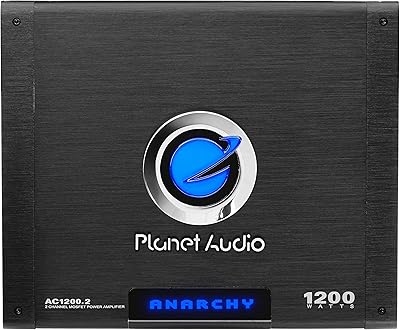
Planet Audio AC1200.2 2-Channel Car Amplifier
72%
84%
Value for Money
67%
Power Output
88%
Ease of Installation
71%
Sound Quality
58%
Thermal Performance
More
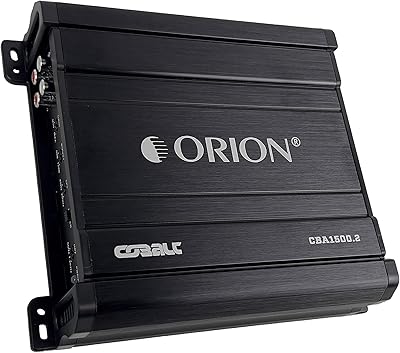
Orion Cobalt 2-Channel Car Amplifier
73%
81%
Value for Money
84%
Ease of Installation
73%
Sound Quality
78%
Bass Performance
58%
Build Quality
More
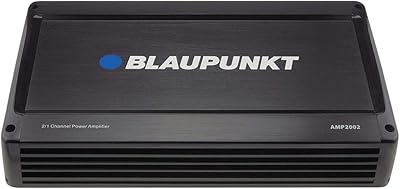
Blaupunkt AMP2002 2-Channel Car Amplifier
65%
71%
Value for Money
83%
Ease of Installation
38%
Power Accuracy
74%
Sound Quality
52%
Thermal Management
More
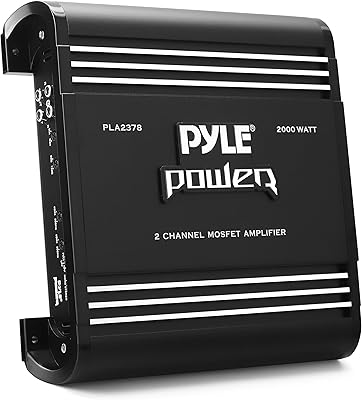
Pyle PLA2378 2-Channel Car Amplifier
72%
83%
Value for Money
51%
Power Output Accuracy
67%
Build Quality
88%
Ease of Installation
58%
Heat Management
More
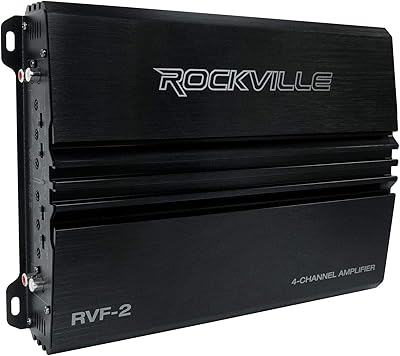
Rockville RVF-2 4-Channel Car Amplifier
84%
88%
Audio Quality
91%
Power Output
85%
Build Quality
72%
Thermals (Heat Management)
80%
Installation Ease
More
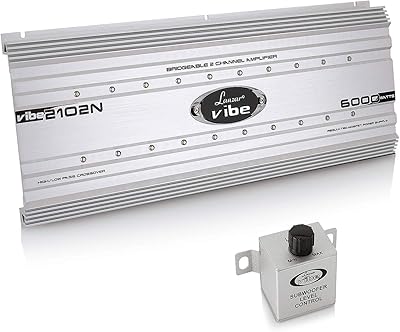
Lanzar VIBE2102N 2-Channel Car Stereo Amplifier
86%
91%
Power Output
88%
Sound Quality
85%
Ease of Installation
87%
Durability
72%
Thermal Performance
More
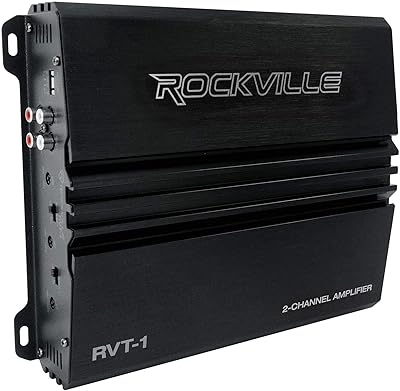
Rockville RVT-1 2-Channel Car Amplifier
68%
83%
Value for Money
67%
Power Output
58%
Build Quality
61%
Thermal Management
72%
Audio Clarity
More
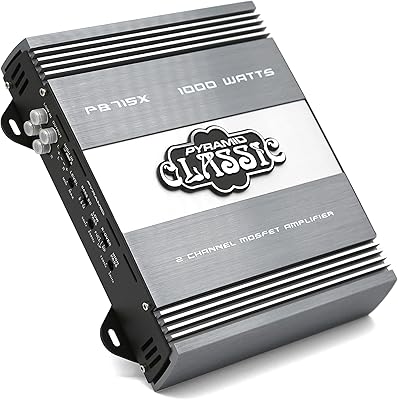
Pyramid PB715X 1000W 2-Channel Car Amplifier
68%
83%
Value for Money
74%
Sound Performance
88%
Ease of Installation
57%
Build Quality
52%
Thermal Management
More
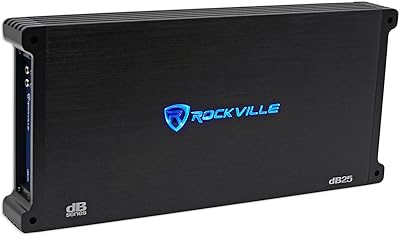
Rockville dB25 2800W 2-Channel Car Amplifier
86%
94%
Power Output
89%
Sound Quality
85%
Ease of Installation
91%
Bass Control
82%
Durability
More
Pyramid PB3818 2-Channel Car Amplifier
66%
74%
Value for Money
68%
Sound Quality
52%
Actual Power Output
58%
Build Quality
54%
Long-Term Reliability
More

FAQ

Yes, it will. The CBA2500.2 includes a high-level input that accepts a direct speaker wire connection, so you can tap into the existing speaker outputs on your stock radio without needing a line output converter. It's one of the more practical features for anyone upgrading their sound without replacing the factory head unit.

That figure is peak power — the absolute maximum the amp can handle in a very brief burst under ideal conditions. The number that matters for real listening is the RMS rating: 175W per channel at 2 Ohms, or 80W per channel at 4 Ohms. Always match your speakers to the RMS output, not the peak number, to avoid mismatched expectations.

You could run the low-pass filter and feed a sub, but this Orion 2-channel amp does not have a dedicated mono subwoofer output, and a 2-channel design is really built for powering a stereo speaker stage. For a subwoofer, a dedicated mono amplifier with a confirmed bridged power rating will give you far better results and more reliable performance.

It's quite approachable for beginners. The terminal layout is straightforward, the dual input options handle most wiring scenarios out of the box, and the onboard filters mean you won't need to wire in a separate crossover. Most first-time installers with basic tools, a wiring diagram, and a bit of patience report a clean setup without major complications.

Absolutely — it is rated as stable at both 2 and 4 Ohms, and most off-the-shelf coaxial and component speakers are 4-Ohm, so compatibility is not a concern. At 4 Ohms you will get 80W RMS per channel, which is a meaningful improvement over a typical factory head unit output and enough for clear, full-range listening at normal volumes.

It comes bundled with an accessory kit that includes 8-gauge power and ground cables, RCA interconnects, a remote turn-on wire, and a fuse holder. That said, some experienced installers prefer to source heavier-gauge wiring independently, particularly for longer cable runs where voltage drop can become a factor.

It can run warm during extended listening at higher volumes, which is a normal characteristic of Class A/B amplifiers at this price tier. The built-in thermal protection will shut the unit down before any damage occurs, but giving it adequate airflow during installation is still important. Avoid mounting it in a fully enclosed, sealed space where heat has nowhere to dissipate.

The confirmed specifications for this amp do not include a rated bridged mono output, so bridging is not a recommended configuration here. Bridging an amplifier without a verified bridged rating and minimum impedance spec can stress the unit and risk damaging both the amp and your speakers — it's better to use it as a stereo 2-channel amp as designed.

For a basic setup, no. This entry-level car amplifier has both adjustable low-pass and high-pass filters built directly into the chassis, which is sufficient for running a straightforward speaker stage. If you are building a more complex system with separate tweeters, midranges, and subwoofers across multiple amplifiers, a dedicated external crossover gives you finer control over the crossover points, but for a simple install it's not a requirement.

The included kit provides 8-gauge power and ground cables, which are adequate for many typical installs at this power level. The right gauge also depends on the length of the cable run from your battery — longer runs introduce more resistance, which can cause voltage drop and reduce performance. Many installers choose to upgrade to 4-gauge for cleaner, more stable power delivery, especially on runs longer than about 10 feet.

Where to Buy