Overview

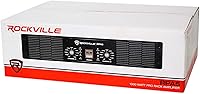
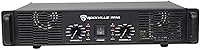
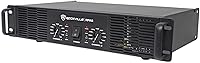
The Rockville RPA5 2-Channel Power Amplifier has been a steady fixture in the budget-to-mid-tier pro audio market since its debut in 2017 — and that staying power says something real. Rockville built its reputation by offering accessible gear to working DJs and small venue operators who need dependable performance without flagship pricing. This rack-mount amplifier fits neatly into a standard 2U rack space, making it a practical choice for mobile rigs where space and portability both matter. It runs in stereo or can be bridged to mono for pushing a single sub harder, which adds meaningful flexibility for different gig configurations.
Features & Benefits

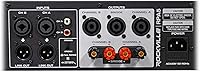
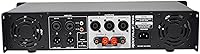
The RPA5 delivers 200W RMS per channel at 4 ohms — honest, continuous power that is enough to drive a solid pair of full-range cabinets at a small venue. Bridge it to mono and you get 400W RMS into 8 ohms, which is genuinely useful for subwoofer duty. The onboard crossover means you do not have to buy a separate unit to split your signal for a two-way setup. Input options include combo XLR/quarter-inch jacks and RCA, while the outputs cover banana posts, Speakon, and XLR — so compatibility with different speakers is rarely an issue. Dual cooling fans and IC protection circuitry keep thermals in check during long sets, and the per-channel clipping LEDs help you manage your gain structure in real time.

Best For

This Rockville amp makes the most sense for mobile DJs who need a rack-friendly solution they can load into a road case and rely on night after night. It is also a solid fit for fixed installs in bars, small rehearsal spaces, or houses of worship where budgets need to stretch. The built-in crossover opens the door for bi-amped setups, making it a worthwhile pick for anyone running a dedicated subwoofer channel alongside full-range tops. Home studio users who need a straightforward way to power passive monitor or PA cabinets will find it equally practical. It suits those stepping up from all-in-one powered mixers who want dedicated amplification without a steep investment.

User Feedback

Owners consistently highlight value for the power on offer as the standout reason to buy — you get a lot of amplifier here. Rack integration tends to go smoothly, and most report the unit running cool and stable over extended sessions. That said, fan noise comes up regularly; while many find it acceptable for live use, those in quieter environments like recording rooms or acoustic performances may notice it more. A handful of long-term users have raised concerns about input jack durability after heavy road use over several years. The peak wattage figure also draws some skepticism — real-world output tracks closer to the RMS spec, which is still adequate for the intended applications but worth understanding before you buy.

Pros

  • Broad I/O compatibility — XLR, quarter-inch, RCA inputs and Speakon, banana, and XLR outputs — covers virtually any gear pairing.
  • Bridges to 400W RMS mono, making it a versatile single-unit solution for subwoofer applications.
  • The built-in crossover removes the need for a separate outboard unit in two-way setups.
  • IC-based protection circuitry has saved equipment for multiple users during impedance mismatches or accidental overloads.
  • Standard 2U rack mount with included ears and handles makes installation and transport genuinely straightforward.
  • Per-channel clipping LEDs help operators catch gain-staging issues before distortion becomes audible.
  • The RPA5 has maintained consistent availability and positive reception since 2017, which reflects real-world durability for moderate use.
  • Stereo/mono switching on the front panel adds useful configuration flexibility without rewiring.
  • For fixed installs in bars or small venues, long-term owners report stable, low-maintenance operation over multiple years.

Cons

  • Cooling fan noise is audible at low volumes, making the amp a poor choice for quiet or acoustically sensitive environments.
  • Input and output terminals — particularly XLR jacks and binding posts — show wear and loosening after sustained road use.
  • The peak wattage spec is misleading for buyers unfamiliar with the RMS versus peak distinction.
  • Crossover adjustment range is too limited for users who need precise frequency tuning for specific speaker systems.
  • The stereo/mono switch lacks an indicator light, making it easy to lose track of the current mode in dim venue conditions.
  • RCA inputs can introduce background hiss, especially when connected to sensitive speakers at lower output levels.
  • At nearly 19 inches deep, the unit may not fit shallower road cases without removing the handles.
  • Multi-year durability becomes inconsistent for users who load in and out weekly under real touring conditions.
  • No visual confirmation of protection circuit status means mid-show shutdowns can catch operators off guard.

Ratings

The Rockville RPA5 2-Channel Power Amplifier has been put through its paces by hundreds of verified buyers worldwide — working DJs, venue installers, and home studio operators among them — and our AI-driven scoring model has analyzed that feedback in depth, actively filtering out incentivized and bot-generated reviews to surface what real users actually experience. Scores reflect both where this rack-mount amplifier consistently earns praise and where it falls short of expectations, with no glossing over the rough edges.
Value for Money
88%
For the level of amplification on offer — genuine stereo power with a built-in crossover and a full suite of I/O options — most buyers feel they are getting considerably more than they paid for. DJs running weekend gigs or small venue installs repeatedly describe it as punching well above its market tier.
A small but vocal segment of long-term users feels that the build quality of certain components does not quite live up to the overall value promise, particularly after a year or two of regular road use. If you are comparing against similarly priced competitors, the gap is narrower than it first appears.
Power Output & Headroom
76%
24%
The 200W RMS per channel rating is honest and workable for driving passive cabinets in rooms up to a few hundred people. Bridged into mono, it handles a single subwoofer confidently, giving the amp real flexibility for small PA setups without needing a second unit.
The 1000W peak figure on the spec sheet confuses some buyers who expect wall-shaking output at high volumes. Real-world perceived loudness tracks closely to the RMS figure, and those coming from higher-end Class D amps may find the headroom tighter than expected at outdoor or larger indoor events.
Build Quality & Construction
67%
33%
The chassis feels solid enough for a mid-tier unit — the rack ears are sturdy, the handles are genuinely useful for transport, and the front panel does not feel flimsy under daily handling. For a stationary install or occasional mobile use, most owners report no structural issues.
The input and output terminals are where complaints concentrate. Several users noted XLR jacks and binding posts that loosened or became intermittent after sustained road use. For gigging professionals who pack and unpack weekly, this is a legitimate durability concern that cannot be dismissed.
Cooling & Thermal Management
79%
21%
The dual-fan cooling system keeps the RPA5 running at safe temperatures even through multi-hour sets in warm environments. The IC-based protection circuitry has kept more than a few units from going down mid-event, and the fans do ramp up proportionally rather than blasting at full speed constantly.
Fan noise is the most commonly cited nuisance across user reviews. At lower volumes or during quieter passages, the fans are audible, which creates a problem in acoustic-sensitive environments like small churches, intimate live music settings, or home studios used for recording.
Connectivity & I/O Flexibility
91%
The combination of XLR/quarter-inch combo inputs, RCA inputs, and three output formats — banana binding posts, Speakon, and XLR direct — means this amp connects cleanly to nearly any source or speaker without adapters. Users integrating it into mixed-gear rigs consistently praise this breadth of compatibility.
RCA inputs, while appreciated for versatility, are not ideally suited for pro-level signal chains and can introduce noise in certain setups. A few users also noted that the RCA jacks feel less robustly mounted than the XLR combo inputs, suggesting a slight quality disparity between input types.
Ease of Setup & Integration
86%
Sliding the RPA5 into an existing rack takes minutes, and the front-panel layout is logical enough that most users have it dialed in without reading the manual. Mobile DJs especially appreciate how quickly it fits into a standard road case alongside a mixer and other 2U gear.
First-time power amp users occasionally find the gain structure and crossover settings less intuitive without prior experience. The manual provides basic guidance but does not walk through real-world use cases like bi-amping or mono bridging in enough detail for beginners.
Built-in Crossover
77%
23%
Having an onboard crossover removes the need for a standalone unit in two-way setups, which saves both rack space and cost. Users running tops and a sub from a single amp find it genuinely convenient for quick gig deployment where simplicity is a priority.
The crossover is functional but not highly configurable — the frequency adjustment range is limited compared to a dedicated outboard unit. Enthusiasts who want precise tuning for their specific speaker pairs will likely find it too basic and end up using an external processor anyway.
Stereo/Mono Switching
83%
The front-panel stereo/mono toggle is a practical feature that most comparable amps at this tier omit. Being able to flip the unit into bridged mono for subwoofer duty on the fly — without rewiring or reconfiguring a rack — saves meaningful time during setup changes at a multi-act event.
The switch itself feels a touch lightweight given how often it may be toggled. There is no labeling illumination or LED indicator to confirm the current mode at a glance in a dark venue, which is a small but annoying oversight for a live-use product.
Clipping Indicators
74%
26%
The per-channel clipping LEDs give you a real-time read on whether you are pushing the amp into distortion, which is genuinely useful when gain-staging a system you are unfamiliar with. For newer operators still learning to set levels by ear, this visual feedback is a practical safety net.
The LEDs are relatively small and positioned toward the center of the front panel, making them harder to read at a distance or in bright stage lighting. More experienced engineers tend to find them adequate, but they are not as prominent as on higher-end amplifiers designed for fast visual monitoring.
Noise Floor & Signal Clarity
71%
29%
At moderate volumes through passive speakers, the RPA5 presents a clean enough signal for DJ and live sound applications. Users running it with quality mixer outputs generally report no noticeable hiss or hum that would distract from the mix.
At lower output levels or when connected via RCA, a background hiss becomes more perceptible — particularly through sensitive speakers in quiet rooms. This is not unusual for the price tier but is worth knowing if your use case involves anything requiring a very low noise floor.
Long-term Reliability
63%
37%
A meaningful portion of buyers have run the RPA5 regularly for two or three years without significant issues, which speaks to the amp holding up adequately under moderate use. Fixed installs in venues like bars or small clubs tend to report the most stable long-term performance.
The picture changes for heavy touring and frequent loading and unloading. Multi-year owners report a higher rate of issues — primarily around connector integrity and fan degradation — than comparable units from brands with stronger component sourcing. It is dependable for moderate use, not built for abuse.
Weight & Portability
72%
28%
At just under 17 pounds, the RPA5 is manageable for a single person to carry or slide into a rack. The integrated handles make moving it between a vehicle and a venue less cumbersome than you might expect from a 2U rack unit.
For DJs doing frequent solo load-ins with a full rack, it adds up alongside other gear. It is not a particularly heavy amp for its class, but it is also not a featherweight, and those used to lightweight Class D alternatives may notice the difference on a long carry.
Protection Circuitry
81%
19%
The IC-controlled protection system has earned consistent credit from users who have inadvertently overloaded the amp or experienced speaker impedance mismatches. Several buyers report that the unit cut out safely rather than failing outright, protecting both the amp and connected speakers.
Some users report that the protection circuit can be overly sensitive in certain setups, triggering shutdowns at output levels that should be within safe operating range. This typically requires rechecking gain structure and speaker impedance, but it can be disruptive mid-performance if not anticipated.
Rack Mounting & Form Factor
87%
The 2U rack-mount design with included ears fits cleanly into standard road cases and equipment racks. The proportions are well thought out — it does not overhang or create ventilation problems in a tightly packed rack, assuming adequate spacing above and below for the fans.
The depth of nearly 19 inches means shallower road cases may not fit it without the handles removed. Not a dealbreaker for most, but worth measuring before purchasing a new rack case specifically to house this unit alongside shallower components.

Suitable for:

The Rockville RPA5 2-Channel Power Amplifier is a strong fit for mobile DJs who need a dependable, rack-friendly amp they can load into a road case and count on across weekly gigs without committing to a high-end budget. Small venue operators — think bars, rehearsal studios, community halls, or houses of worship — will find it covers their amplification needs cleanly without overcomplicating the signal chain. Its onboard crossover makes it particularly useful for anyone running a bi-amped setup with separate tops and a subwoofer, effectively eliminating the need for an additional outboard device. Users who are stepping up from all-in-one powered mixers and want their first taste of dedicated rack amplification will find the learning curve manageable and the feature set rewarding. Home studio owners who need a straightforward way to power passive monitor or PA cabinets will also get real utility out of this rack-mount amplifier, especially given how broadly it connects to different gear via its range of input and output formats.
Not suitable for:

The Rockville RPA5 2-Channel Power Amplifier is not the right call for audio professionals operating in acoustically sensitive environments — the cooling fans produce an audible background noise that becomes a real nuisance in quiet recording spaces, intimate acoustic performances, or small chapel settings where silence between passages matters. Engineers or touring sound technicians who need an amp that can absorb heavy, consistent road abuse week after week should look elsewhere; long-term durability of the connectors and terminals is a recurring concern among users who pack and unpack frequently. Those chasing large outdoor events or filling rooms beyond a few hundred people will likely find the output headroom insufficient — the RPA5 is designed for controlled, smaller environments, not festival-scale applications. Buyers who have been drawn in by the peak wattage figure should recalibrate expectations; real-world performance aligns with the RMS spec, which is honest and capable for its intended use cases, but not a substitute for a more powerful amplifier when genuine headroom is required. If you want precision crossover control for carefully tuned speaker systems, the onboard crossover will feel limited compared to a dedicated processor.
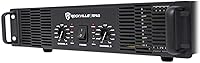
Specifications

  • Power Output: Delivers 200W RMS per channel at 4 ohms in stereo mode, or 400W RMS at 8 ohms when bridged to mono.
  • Peak Output: Rated at 1000W peak, though real-world continuous performance aligns with the RMS figures under typical operating conditions.
  • Channels: Two-channel design supports independent stereo operation or combined mono bridged configuration via a front-panel switch.
  • Inputs: Accepts signal via combo XLR/quarter-inch jacks on each channel, with RCA inputs also available for consumer-level sources.
  • Outputs: Offers three output formats per channel: banana binding posts, Speakon connectors, and XLR direct outputs for broad speaker compatibility.
  • Built-in Crossover: Onboard crossover allows frequency splitting for two-way speaker setups without requiring an external processor unit.
  • Cooling System: Dual variable-speed cooling fans combined with IC-controlled protection circuitry regulate internal temperature during extended operation.
  • Clipping Indicators: Individual LED clipping indicators for channel A and channel B provide real-time visual feedback on signal headroom and overdrive.
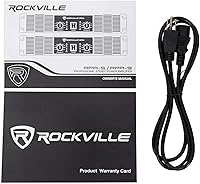
  • Form Factor: Designed as a 2U rack-mountable unit with heavy-duty rack ears and integrated carry handles included in the box.
  • Dimensions: Measures 18.97″ long by 11.02″ wide by 3.54″ tall, fitting standard 19-inch equipment racks.
  • Weight: Unit weighs 16.87 pounds, manageable for solo transport but worth accounting for in a fully loaded rack case.
  • Stereo/Mono Switch: Front-panel toggle allows the operator to switch between stereo two-channel mode and bridged mono operation without rewiring.
  • Certifications: Meets UL and CSA safety standards, confirming compliance with North American electrical and safety requirements.
  • Voltage: Operates at 250V, consistent with standard North American and international power supply configurations.
  • Brand & Model: Manufactured by Rockville under model designation RPA5, with the product first made available in March 2017.

Related Reviews

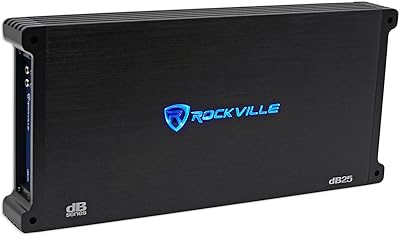
Rockville dB25 2800W 2-Channel Car Amplifier
86%
94%
Power Output
89%
Sound Quality
85%
Ease of Installation
91%
Bass Control
82%
Durability
More
Pyle PTA1000BT 2-Channel Bluetooth Power Amplifier
73%
82%
Value for Money
51%
Power Output Accuracy
58%
Build Quality
89%
Ease of Setup
71%
Bluetooth Performance
More
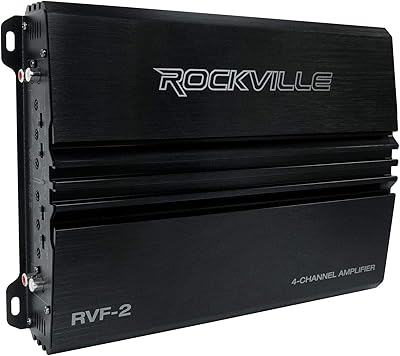
Rockville RVF-2 4-Channel Car Amplifier
84%
88%
Audio Quality
91%
Power Output
85%
Build Quality
72%
Thermals (Heat Management)
80%
Installation Ease
More
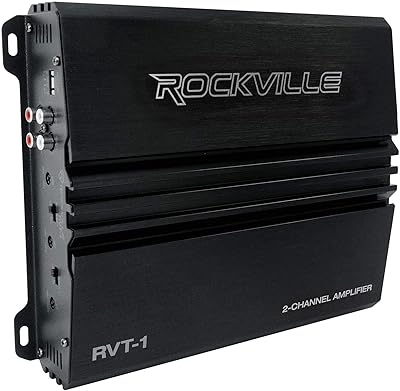
Rockville RVT-1 2-Channel Car Amplifier
68%
83%
Value for Money
67%
Power Output
58%
Build Quality
61%
Thermal Management
72%
Audio Clarity
More
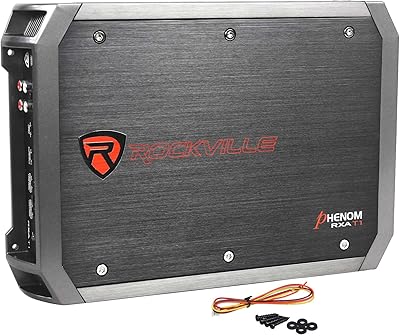
Rockville RXA-T1 1500W 2-Channel Car Amplifier
85%
88%
Audio Performance
92%
Bass Response
85%
Build Quality
89%
Compactness/Size
80%
Ease of Installation
More
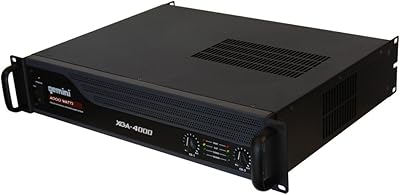
Gemini XGA-4000 4000W 2-Channel Power Amplifier
85%
94%
Power Output
88%
Build Quality
91%
Cooling Performance
85%
Setup & Installation
87%
Connectivity & Compatibility
More
Rockville RXD-T2 2-Channel Car Amplifier
79%
91%
Power Accuracy
83%
Build Quality
67%
Thermal Management
88%
Ease of Installation
84%
Crossover & EQ Controls
More
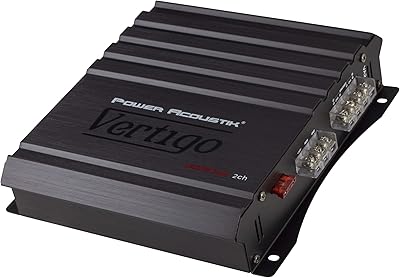
Power Acoustik VA2-1400D Vertigo Series 1,400-Watt 2-Channel Amplifier
83%
91%
Value for Money
88%
Power Output
85%
Ease of Installation
92%
Size and Portability
81%
Build Quality
More
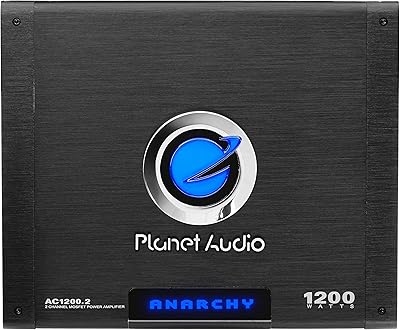
Planet Audio AC1200.2 2-Channel Car Amplifier
72%
84%
Value for Money
67%
Power Output
88%
Ease of Installation
71%
Sound Quality
58%
Thermal Performance
More
Orion Cobalt Series CBA2500.2 2-Channel Car Amplifier
88%
94%
Power Output
89%
Sound Quality
90%
Heat Management
85%
Ease of Installation
87%
Bass Boost Effectiveness
More

FAQ

Yes, and it is actually one of the more practical use cases for the RPA5. You can bridge the two channels into mono and drive a single subwoofer with 400W RMS at 8 ohms, and the onboard crossover lets you set the frequency split without needing a separate processor. It is a tidy solution for a compact bi-amp rig.

Noticeable, but not overwhelming in a live sound context. At a gig or rehearsal, you will not think twice about them. In quieter settings — a recording session, a small chapel service, or a home studio — you may hear a steady background hum that could be distracting. If low fan noise is a priority, factor that into your decision before buying.

The output options are quite broad — banana binding posts, Speakon connectors, and XLR direct outputs — so most passive PA speakers, studio monitors, and subwoofer cabinets will connect without adapters. Just make sure your speaker impedance is compatible: 4 ohms or higher per channel in stereo, or 8 ohms minimum when running bridged mono.

No, and this is a distinction worth understanding before you buy. The Rockville RPA5 2-Channel Power Amplifier is rated at 200W RMS per channel, which is the continuous, real-world power figure. The 1000W peak refers to brief instantaneous output and is not a reliable measure of sustained loudness. Your listening experience will track the RMS number, not the peak.
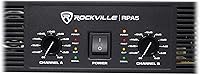
Yes on both counts. The RPA5 occupies two rack units of space in a standard 19-inch rack, and the mounting ears and handles come included in the box. It slides in cleanly, though keep in mind the unit is nearly 19 inches deep, so double-check your rack case depth before assuming it will fit.

It holds up well in fixed installation scenarios. Users who have mounted the RPA5 in a bar or community space and left it running on a regular schedule tend to report stable, low-maintenance performance over multiple years. The demands are lighter than touring use, which plays to the amp's strengths.

Absolutely. The combo XLR/quarter-inch inputs accept the balanced XLR or quarter-inch outputs that most DJ mixers provide, and the signal chain is straightforward. Set your mixer output level conservatively, watch the clipping LEDs on the amp, and work your gain staging from there.

The crossover splits the signal at a selectable frequency point, sending lower frequencies to one output and higher frequencies to another — useful for running tops and a sub from a single amp. That said, the adjustment range is fairly limited compared to a dedicated outboard crossover or DSP unit. For simple setups it works well; for precise tuning of specific speaker systems, you may eventually want something more configurable.

The IC-based protection system is designed to shut the amp down before damage propagates to your speakers or the unit itself. Several users have reported that the protection triggered during impedance mismatches or accidental overloads and saved their equipment. It can occasionally be sensitive — triggering at output levels that are technically within range — but erring on the side of caution is generally preferable to the alternative.

It is reliable for moderate road use, but sustained weekly pack-and-unpack cycles over multiple years have led some touring users to experience issues with the input jacks and output terminals loosening over time. If you are doing light-to-moderate gigging, most owners report no serious problems. For heavy touring workloads, the connector durability may become a concern before the amp itself gives out.

Where to Buy