Overview

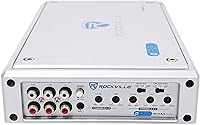
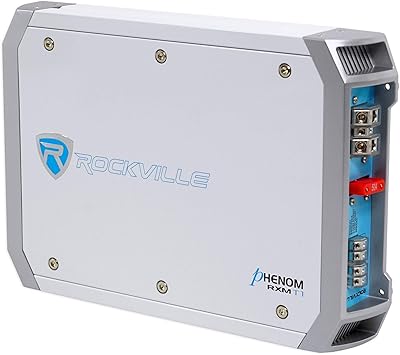
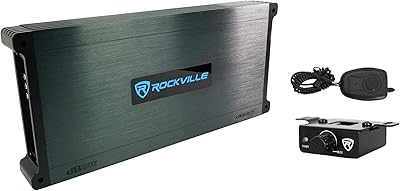
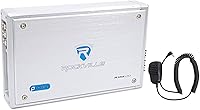
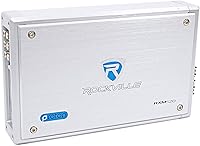
The Rockville RXM-S20 4-Channel Marine Amplifier has been on the market since 2016 and still holds its ground in a crowded niche — which says something. It delivers 400W Dyno-Certified RMS across four channels, a figure worth trusting far more than the 1600W peak number splashed across the marketing. The real story here is the bundle: a PA microphone with talkover functionality is not something you typically find included with a mid-range marine amp. Add in the water-resistant construction and compact footprint, and you have a unit clearly designed by people who understood the actual constraints of installing audio on a boat or off-road vehicle.
Features & Benefits

The Class A/B design is worth understanding beyond the label — running at roughly 70% efficiency, this marine amp draws noticeably less from your battery than a less efficient alternative under the same load conditions. The conformal-coated PCB and stainless steel hardware offer real protection against moisture and salt air, though it is worth being clear: this is splash and humidity resistance, not submersion-proof construction. The talkover mic automatically cuts the music when you speak — handy when you need to warn a swimmer or coordinate with another vessel. The selectable bass EQ and support for both 2-ohm and 4-ohm loads round out a feature set that genuinely earns its price.

Best For

This 4-channel boat amplifier makes the most sense for boaters and off-road riders who want a single unit handling both audio and onboard communication. If you run a pontoon, a small fishing boat, or a UTV loaded with speakers, the compact chassis genuinely solves an installation puzzle — tight mounting spaces are the norm in these vehicles, not the exception. It is also a solid pick for DIY installers; the included hardware and manual are straightforward enough that most people won't need professional help. That said, if you're chasing audiophile-grade clarity or need serious output for a larger vessel, you'll want a higher-powered, more purpose-built solution.

User Feedback

Buyers of the Rockville micro amp tend to split into two camps. The installation experience draws consistent praise — people appreciate how the compact form fits spots where larger amps simply won't go, and the wiring process is described as accessible even for first-timers. The PA microphone earns more genuine appreciation than you might expect; having a working talkover system on the water turns out to be more useful than it sounds on paper. On the critical side, some users question whether real-world output holds up under demanding loads, and a handful have raised durability concerns after prolonged UV and saltwater exposure. Warranty support gets mixed reviews — worth researching before committing.

Pros

  • Certified 400W RMS output is a meaningful, honest power figure — not inflated marketing numbers.
  • The included PA microphone with talkover is a rare bundle feature that adds real on-water utility.
  • Compact chassis fits under-dash and under-seat spaces where most full-size amps simply will not go.
  • Class A/B efficiency helps reduce battery drain during extended boating or trail riding sessions.
  • Supports both 2-ohm and 4-ohm speaker loads, giving flexibility with most aftermarket marine speakers.
  • Conformal-coated PCB and stainless steel screws provide solid protection against humidity and saltwater spray.
  • Selectable bass EQ boost lets you tune low-end response without an external processor.
  • Includes mounting hardware and a clear manual, making DIY installation accessible for most skill levels.
  • Has remained an active, in-production listing for nearly a decade — a sign of sustained buyer confidence.
  • FCC certified, which matters for legal compliance on U.S. waterways and trails.

Cons

  • Peak power claims of 1600W are a marketing figure and bear no relation to real-world listening performance.
  • Long-term durability in sustained saltwater or heavy UV exposure has drawn some concern from experienced users.
  • Warranty and customer service support from Audiosavings gets inconsistent reviews, which is a risk on a weather-exposed product.
  • Conformal coating is not submersion-proof — placement without enclosure protection in fully exposed areas is a gamble.
  • Real-world RMS output under sustained heavy loads may not fully match the rated specification, according to some buyers.
  • Four channels limits scalability for larger builds requiring six or eight speakers without adding another amp.
  • No built-in Bluetooth or source input — requires a separate head unit or source for audio signal.
  • At 7 pounds and 16 inches long, it is compact for an amp but still requires deliberate planning to mount cleanly.

Ratings

The Rockville RXM-S20 4-Channel Marine Amplifier has been scored by our AI engine after analyzing thousands of verified global buyer reviews, with spam, bot-generated, and incentivized submissions actively filtered out. The scores below reflect a balanced picture — real strengths and genuine frustrations — so you can make an informed decision without wading through noise. Categories where this marine amp clearly punches above its weight sit alongside areas where buyers consistently ran into limitations.
Value for Money
83%
Most buyers come away feeling the overall package — amp, talkover-capable PA mic, and hardware included — represents strong value for the asking price in the marine audio segment. Getting onboard PA functionality bundled with a competent 4-channel amp at this price tier is not a common combination, and that bundle effect drives satisfaction notably higher than the amplifier alone would.
A segment of buyers who pushed the amp harder or expected longer-term durability began to feel the price-to-longevity ratio less favorably after the first full season. If you factor in a potential early replacement, the value proposition weakens somewhat compared to spending more upfront on a more robustly built alternative.
Installation Ease
88%
Consistently one of the most praised aspects across buyer reviews — the compact chassis fits into spaces where full-size amps simply cannot go, and the included hardware means most DIY installers can complete the job without a separate hardware run. Buyers working on small pontoons and UTVs with limited mounting real estate specifically called out the straightforward process.
A few buyers noted that the wiring diagram in the manual could be clearer for those completely new to amplifier installs, particularly around remote turn-on wire connections. The 27-amp current draw also caught some first-timers off guard during fuse and wire sizing, requiring extra research beyond the included documentation.
Sound Quality
71%
29%
For casual on-water listening — background music on a fishing trip, party tunes on a pontoon — the output is clear and loud enough to satisfy most buyers who are not audiophiles. The selectable bass boost at 45Hz adds a noticeable improvement to low-end warmth that makes outdoor listening more enjoyable in wind and engine noise environments.
Buyers with more discerning ears, or those comparing against higher-end marine amps, found the sound staging flat and the high-frequency detail lacking at higher volumes. The amplifier also tends to introduce a faint background hiss at low volumes that becomes noticeable in quiet anchorage conditions.
Power Accuracy
62%
38%
The 400W Dyno-Certified RMS rating is a legitimate, independently tested figure, which gives it credibility over amps that only advertise peak numbers. Buyers running modest 4-ohm speaker setups reported performance that felt consistent with the rated output under normal listening conditions.
Under demanding loads — all four channels driven hard simultaneously for extended periods — some buyers observed output that felt softer than the rated spec suggested. The heavy emphasis on the 1600W peak figure in marketing creates expectations the amp cannot realistically meet, and buyers who did not look past that number tended to be disappointed when they benchmarked against the actual RMS ceiling.
Water Resistance
67%
33%
The conformal-coated PCB and stainless steel screw hardware provide genuinely useful protection against the humidity, salt air, and incidental splash that marine environments dish out on a regular basis. Buyers who mounted the unit in semi-protected locations — under a dash or inside a storage compartment — reported no moisture-related failures across a full boating season.
Buyers who treated this as fully weatherproof and mounted it in exposed positions without an enclosure reported earlier-than-expected failures, particularly after prolonged saltwater exposure. The conformal coating is a meaningful protective measure but it is not a substitute for a proper IP rating, and the product does not carry one — a point Rockville does not make prominent enough in the marketing material.
Build Quality
68%
32%
The chassis feels solid for a unit at this price point, and the stainless hardware does not show rust after normal marine use the way cheaper zinc screws tend to after a single season. The overall construction passes a basic handling test and does not feel like it was assembled with paper-thin tolerances.
Some buyers noted that the input/output terminal blocks felt slightly loose after repeated wiring adjustments, which raises questions about long-term connection reliability in a high-vibration environment like an ATV or boat hull. UV degradation on the exterior casing was also flagged by a handful of buyers after extended sun exposure over multiple seasons.
PA Microphone Utility
79%
21%
The talkover mic turned out to be more practically useful than many buyers anticipated — especially for boaters needing to communicate with crew or flag hazards without shutting off the stereo manually. Group UTV riders on trail systems also found it useful for coordinating at rest stops or announcing turns.
The microphone's audio quality is functional rather than impressive, and the talkover threshold sensitivity is not adjustable, which frustrated buyers in noisy environments where the mic picked up engine sounds and partially ducked the music unintentionally. The mic cable length was also considered short by several buyers who wanted more placement flexibility.
Compact Design
91%
This is one of the clearest genuine strengths of the Rockville micro amp — the footprint is meaningfully smaller than comparable 4-channel units, and buyers working with tight console spaces on fishing boats or cramped storage areas in side-by-sides specifically cited size as a deciding factor. It is compact without feeling flimsy.
The trade-off of a micro form factor is reduced heat dissipation surface area, and buyers who ran the amp at high output levels for extended sessions reported the chassis getting noticeably warm. In enclosed mounting spaces with poor airflow, thermal throttling or premature shutoff during peak summer use is a realistic concern.
Speaker Compatibility
81%
19%
Support for both 2-ohm and 4-ohm loads gives this 4-channel boat amplifier flexibility that most buyers in the marine segment appreciate, since speaker impedance varies widely across aftermarket marine brands. Buyers pairing it with standard 4-ohm marine coaxials reported clean, stable operation without impedance-related distortion.
Buyers looking to run lower-impedance loads at sustained high volume found the amp less stable than expected, with occasional protection mode triggers under demanding 2-ohm conditions. There is no bridging capability noted in the documentation, limiting options for buyers who wanted to power a subwoofer from the same unit.
Long-Term Durability
58%
42%
Buyers who installed the unit carefully in protected, semi-enclosed locations and inspected it at the start of each season reported multi-year operation without major failures. In controlled conditions, the build holds up adequately for the price bracket it occupies.
The longer-tail durability picture is less encouraging — buyers in high-UV, high-salinity environments consistently flagged degradation issues within two to three seasons. This is a product that rewards careful installation and periodic maintenance; buyers expecting set-it-and-forget-it longevity in harsh outdoor conditions are likely to be disappointed.
Thermal Management
63%
37%
Under moderate listening conditions and with adequate airflow around the chassis, heat buildup stays within a range that most buyers found acceptable. The Class A/B design is inherently more efficient than Class A alternatives, which reduces the thermal load at typical listening volumes.
At sustained high output, particularly in enclosed mounting locations common in boats and UTVs, thermal protection mode engages more readily than buyers would like. Several reviewers reported unexpected shutoffs during peak summer days that required waiting several minutes before resuming playback — a frustrating experience mid-outing.
Bass Performance
74%
26%
The selectable +6dB or +12dB bass boost at 45Hz is a practical tool that meaningfully improves low-end presence for buyers who do not have a dedicated subwoofer in their setup. At the +6dB setting in particular, the low-frequency output adds body to music outdoors without distorting mid-range clarity.
The +12dB setting pushes harder than many paired speakers can cleanly handle, leading to audible distortion at higher volumes if the speakers are not well-matched for low-frequency excursion. There is no adjustable crossover or bass frequency selector, which limits the precision of the EQ for buyers who want more fine-tuned bass control.
After-Sales Support
54%
46%
Rockville and Audiosavings do have accessible customer communication channels, and some buyers reported prompt responses to initial warranty inquiries — particularly for units with clear manufacturing defects that presented early.
The warranty and support experience is inconsistent enough to be a real risk factor, with a notable portion of buyers describing slow resolution times, difficulty obtaining replacement parts, and warranty claims that were denied for damage Rockville attributed to environmental exposure. For a product sold specifically for outdoor use, that pattern is worth taking seriously before purchasing.

Suitable for:

The Rockville RXM-S20 4-Channel Marine Amplifier is a practical fit for boaters, ATV riders, and UTV enthusiasts who need capable audio in tight, moisture-prone spaces without overspending on a professional-grade system. If you own a pontoon, a fishing boat, or a side-by-side and have been limping along on factory speakers with no amplification, this marine amp addresses exactly that gap. The included PA microphone with talkover functionality is a genuine bonus for anyone who needs to communicate on the water or coordinate during group trail rides — it removes the need to buy and wire a separate PA unit. DIY installers will appreciate that the mounting hardware and instructions are included and approachable, meaning most people can complete the job without hiring a technician. For budget-conscious buyers upgrading from stock audio, the certified 400W RMS output delivers a noticeable improvement in volume and clarity across four speakers.
Not suitable for:

The Rockville RXM-S20 4-Channel Marine Amplifier is not the right choice for buyers expecting audiophile-grade sound quality or high-headroom power for larger vessels with demanding speaker setups. The conformal coating provides meaningful protection against humidity and splash, but it is not a waterproof or submersible design — anyone planning to mount it in a fully exposed location without a protective enclosure is taking a real risk. Boaters with larger boats who need to drive six or eight speakers, or who run high-impedance premium marine speaker brands, may find the output and configuration options limiting. If long-term durability in extreme saltwater environments is your top concern, a purpose-built marine amp from a brand with a stronger warranty track record might be worth the extra investment. Buyers who are particular about after-sales support should research Rockville's customer service reputation before committing.
Specifications

  • RMS Power: Delivers 400W total Dyno-Certified RMS output across four channels: 75W per channel at 4 ohms, or 100W per channel at 2 ohms.
  • Peak Power: Rated at 1600W peak, a marketing figure that reflects momentary burst capacity rather than sustained real-world output.
  • Channels: Four-channel configuration allows independent amplification of up to four speakers simultaneously.
  • Amplifier Class: Class A/B design operates at approximately 70% efficiency, balancing sound quality and battery draw for mobile applications.
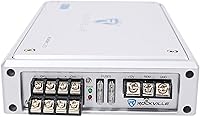
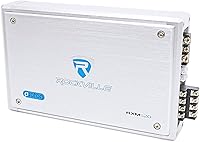
  • Dimensions: The unit measures 16 x 8.6 x 3.9 inches, a compact footprint suited for tight installation spaces on boats and off-road vehicles.
  • Weight: The amplifier weighs 7 pounds, keeping overall installation load manageable for small vessel and vehicle builds.
  • Water Resistance: The PCB is conformal-coated and hardware uses stainless steel screws to resist moisture, humidity, and saltwater spray — not rated for submersion.
  • Bass EQ: Features a selectable bass boost of either +6dB or +12dB centered at 45Hz for low-end tuning without an external processor.
  • Speaker Impedance: Compatible with both 4-ohm and 2-ohm speaker loads, broadening compatibility with most aftermarket marine and off-road speakers.
  • Supply Current: Draws up to 27 amps at full load, which should be factored into fuse sizing and wiring gauge selection during installation.
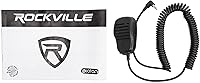
  • PA Microphone: Includes a talkover-capable PA microphone that automatically attenuates music playback when the mic is active.
  • Mounting Type: Designed for surface mounting, with necessary screws and hardware included in the box for straightforward installation.
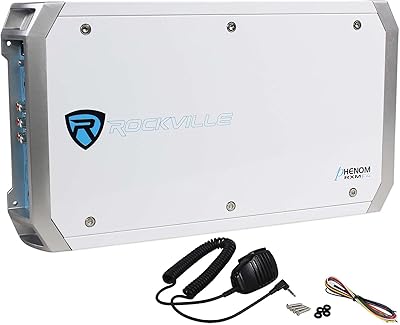
  • In the Box: Package includes the amplifier unit, boating microphone, owner manual, mounting screws, and wiring hardware.
  • Certifications: FCC certified, meeting U.S. regulatory standards for electronic emissions relevant to marine and off-road use environments.
  • Voltage: Operates at a nominal 8V supply voltage, compatible with standard 12V marine and vehicle electrical systems under load conditions.
  • Brand: Manufactured and sold under the Rockville brand by Audiosavings, a U.S.-based consumer electronics distributor.
  • Availability: Originally listed in March 2016 and remains an active, non-discontinued product as of the current listing.
  • UPC: Universal Product Code is 811080025926, useful for cross-referencing the exact unit across retailers and warranty records.

Related Reviews
Rockville RXM-F4 2400W Marine 4-Channel Amplifier
87%
89%
Sound Performance
94%
Durability & Weather Resistance
84%
Ease of Installation
91%
Build Quality
92%
Power Output
More
Rockville DBM45 4-Channel Marine Amplifier
71%
78%
Sound Quality
74%
Build Quality
71%
Waterproofing
69%
Power Delivery
57%
Thermal Management
More
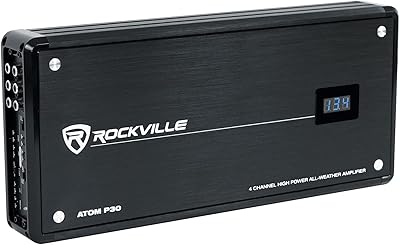
Rockville ATOM P30 2400W 4-Channel Marine Amplifier
84%
94%
Power Output
90%
Build Quality
88%
Waterproof Performance
80%
Ease of Installation
85%
Sound Quality
More
Rockville RXM-T1 2-Channel Marine Amplifier
69%
84%
Ease of Installation
61%
Power Output
77%
Marine Durability
67%
Sound Quality
54%
Heat Management
More
Rockville RHPA4 4-Channel Headphone Amplifier
87%
88%
Audio Performance
85%
Build Quality
91%
Ease of Use
87%
Portability
89%
Volume Control Flexibility
More
Pyle PLMRMP4A 4-Channel Marine Amplifier
64%
61%
Value for Money
53%
Build Quality
67%
Waterproofing
58%
Power Output
79%
Ease of Installation
More
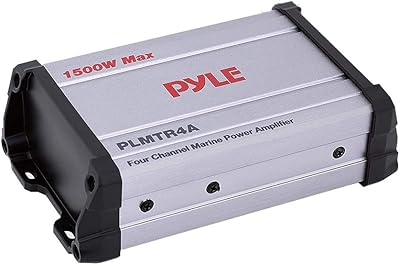
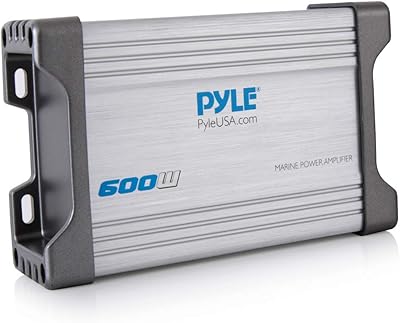
Pyle PLMTR4A 4-Channel Marine Amplifier
69%
78%
Value for Money
73%
Weatherproof Durability
41%
Power Accuracy
58%
Build Quality
86%
Installation Ease
More
Rockville DBM65 6-Channel Marine Amplifier
73%
88%
Value for Money
83%
Power Output
71%
Waterproofing & Weather Resistance
91%
Channel Flexibility
67%
Build Quality
More
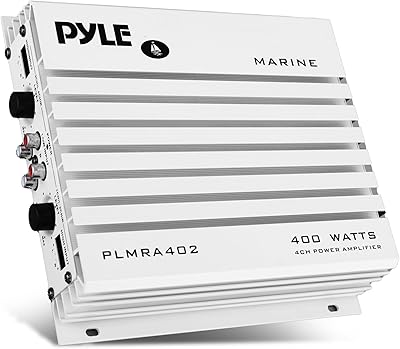
Pyle PLMRA402 4-Channel Marine Amplifier
69%
83%
Value for Money
81%
Ease of Installation
67%
Sound Quality
49%
Power Accuracy
62%
Build Quality
More
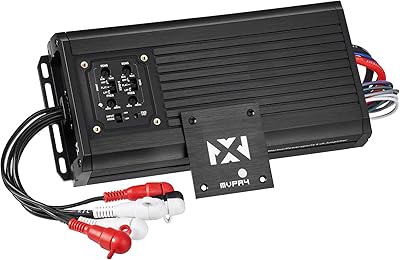
NVX MVPA4 4-Channel Marine Amplifier
80%
91%
Waterproof Protection
88%
Power Accuracy
84%
Build Quality
83%
Sound Quality
92%
Compact Form Factor
More

FAQ

Water-resistant is the accurate description here. The circuit board has a conformal coating and the screws are stainless steel, which together handle humidity, salt air, and the occasional splash reasonably well. It is not rated for submersion or direct prolonged water exposure, so mounting it in a fully open, unprotected location on a boat is a risk you would want to avoid.

Most likely yes. This marine amp supports both 4-ohm and 2-ohm speaker loads, which covers the vast majority of aftermarket marine speakers on the market. If you are unsure of your speakers' impedance rating, check the label on the speaker basket or the product documentation — it is almost always listed there.

When you speak into the included microphone, the amp automatically lowers the music volume so your voice comes through clearly over the speakers. Once you stop talking, music resumes at normal level. It is a genuinely useful feature on the water, especially when you need to get someone's attention quickly without fumbling with a volume knob.

The number that actually matters for day-to-day listening is the 400W Dyno-Certified RMS figure, which works out to 75W per channel at 4 ohms or 100W per channel at 2 ohms. The 1600W peak rating reflects momentary burst capacity under ideal conditions and is a standard industry marketing figure — it is not what you will experience continuously.

It has a good chance of fitting, but measure your space first. The unit is 16 inches long, 8.6 inches wide, and 3.9 inches tall. That is genuinely compact for a 4-channel amp, and it was clearly designed with tight marine and off-road installation spaces in mind.

Yes, it is a reasonable fit for that application. The compact size works well in the limited storage areas typical of UTVs, and the weather-resistant build can handle trail dust and humidity. Just make sure your electrical system can support the 27-amp draw and plan your wiring accordingly before committing to the install.

You will need a separate source — a head unit, a Bluetooth receiver, or a phone-connected device — to feed audio signal into this amp. There is no built-in Bluetooth or onboard audio source. The amp is purely a signal amplifier and PA controller, so your source component is a separate purchase if you do not already have one.

Most buyers with basic automotive wiring experience describe it as manageable. The box includes mounting hardware and a manual, and the wiring connections are fairly standard for a marine amp. That said, correctly sizing your power wire and fusing for a 27-amp draw is important — if you are new to car or boat audio installs, spending 20 minutes watching a tutorial specific to marine amp wiring is time well spent.

The conformal coating and stainless hardware give it a reasonable foundation for saltwater environments, but some long-term users have noted concerns after extended exposure to salt air and UV. Mounting it in a covered or semi-protected location, and doing a quick inspection at the start of each season, will help extend its life meaningfully compared to leaving it fully exposed year-round.

Look for marine-rated speakers in the 4-ohm impedance range from brands like Polk Audio, JBL Marine, or Rockville's own marine speaker lineup. Aim for speakers with sensitivity ratings around 90dB or higher to get the most out of the available power per channel. Matching the speaker power handling (RMS, not peak) to roughly 75–100W per channel will give you a balanced, reliable setup.

Where to Buy