Overview

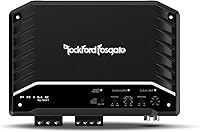
The Rockford Fosgate R2-750X5 5-Channel Car Amplifier sits squarely in Rockford Fosgate's Prime lineup — a range built for people who want real performance without going all-in on the flagship Power series. What makes this 5-channel amp worth a look is simple: one box handles both your full-range door speakers and your subwoofer, cutting wiring complexity and saving precious trunk real estate. At roughly 11 inches long and under 2 inches tall, it slides into tight spaces where bulkier amps simply won't go. With 750 watts RMS on tap, it's enough to wake up a system that a factory head unit has been quietly strangling for years.
Features & Benefits

The R2-750X5's most underrated tool is the C.L.E.A.N. circuit — an on-board gain-setting assistant that takes the guesswork out of matching the amp to your source signal. Set the gain wrong and you either clip the audio into distortion or leave half the amp's potential sitting unused; the C.L.E.A.N. system helps you avoid both. Being Class D, this Rockford Fosgate unit runs cooler and draws significantly less current than older A/B designs, which matters if your vehicle's alternator is already working hard. The P.O.W.E.R. supply scales output as voltage rises, so the sound stays consistent rather than dipping at idle. Punch EQ adds targeted bass correction for the acoustics of a car cabin, not just brute volume. Fully adjustable high and low-pass crossovers let you control exactly where each speaker takes over.

Best For

This 5-channel amp is a natural fit for anyone who wants to build a complete system — front and rear speakers plus a subwoofer — without routing wire to two or three separate amplifiers. If you're short on installation space, the low-profile chassis is a genuine advantage; it can tuck under a seat or fit in a side panel where most multi-channel amps won't. People keeping a factory head unit will appreciate the high-level inputs, which let you tap directly into the speaker wires without needing a line output converter. The on-board gain tools also make this a strong pick for DIY installers who want to get the calibration right the first time without investing in external equipment.

User Feedback

Across a broad pool of buyers, the R2-750X5 earns its 4.4-star average largely on sound clarity and solid build quality — two things people in this category tend to weigh heavily. Installation is a common highlight too, especially among those who appreciate the labeled controls and accessible terminals. Where opinions split is on heat: a handful of users report that the amp runs warmer than expected in tight enclosures without adequate airflow, so ventilation planning matters. A few also note the manual could do a better job guiding first-timers through gain calibration. Long-term reliability looks solid for most, though warranty support experiences are mixed. Against similarly priced 5-channel competitors, buyers generally feel this Rockford Fosgate unit holds its own on output and features.

Pros

  • Powers four full-range speakers and a subwoofer from a single unit, cutting wiring complexity significantly.
  • The C.L.E.A.N. gain circuit makes accurate calibration accessible for DIY installers who lack professional test equipment.
  • Class D topology keeps heat output and current draw low, reducing strain on the vehicle's electrical system.
  • At roughly 11 inches long and under 2 inches tall, it fits in spaces most multi-channel amps cannot.
  • High-level inputs allow direct connection to factory speaker wiring without needing an external line output converter.
  • Punch EQ targets bass correction for car cabin acoustics, adding real depth rather than just raw volume.
  • Fully adjustable high and low-pass crossovers give genuine control over how the speakers and subwoofer blend.
  • The P.O.W.E.R. supply maintains consistent output even when vehicle voltage dips, such as at idle.
  • Build quality earns consistent praise from buyers, with the chassis feeling solid and well-finished for its price tier.
  • RCA pass-through outputs let you expand the system later by daisy-chaining an additional amplifier.

Cons

  • Per-channel power on the full-range channels is modest — not enough for inefficient speakers or high-volume use.
  • The included owner's manual is considered thin by many buyers, offering limited help for first-time installers.
  • Without proper airflow, the amp runs warm enough to raise concerns in sealed or cramped mounting locations.
  • Warranty coverage tops out at one year, which is shorter than what several competing brands offer at this price.
  • Output figures can feel optimistic to buyers expecting all five channels to perform at peak levels simultaneously.
  • No remote bass knob is included — adjusting the Punch EQ on the fly requires a separate accessory purchase.
  • The auto turn-on circuit can occasionally behave erratically depending on the signal characteristics of the head unit.
  • Buyers stepping down from a dedicated monoblock subwoofer amp may find the sub channel underwhelming by comparison.
  • Locking all five channels into one unit reduces flexibility if your system design changes significantly down the road.

Ratings

The Rockford Fosgate R2-750X5 5-Channel Car Amplifier has been evaluated by our AI rating system after a thorough analysis of verified buyer reviews from global markets, with spam, incentivized, and bot-generated feedback actively filtered out. The scores below reflect real-world ownership experiences — from first-time DIY installers to seasoned car audio enthusiasts — and are calibrated to show both where this 5-channel amp genuinely delivers and where it falls short. You'll find the ratings balanced and specific, because honest trade-offs help you make a smarter buying decision.

Sound Quality
83%
Buyers consistently report a noticeable jump in clarity and detail compared to driving speakers directly from a factory head unit. The amp keeps the signal clean across all five channels, with no muddiness at moderate volumes. For daily commutes and weekend road trips, the overall sonic improvement feels substantial.
At the 50-watt-per-channel mark, the full-range output starts to feel constrained when you push the volume hard, especially with speakers that have lower sensitivity ratings. Dedicated audiophiles comparing this to a high-current 2-channel amp on a front stage will notice the difference in resolution and control.
Build Quality
86%
The chassis feels genuinely solid — no flexing, no rattling components, and the terminal connections sit firmly once tightened. Several buyers noted the amp looks and feels more premium than its price tier suggests, which builds confidence during installation and long-term use.
A handful of buyers reported cosmetic finish inconsistencies out of the box, such as minor scuff marks or uneven labeling. Nothing that affects performance, but at this price point the expectation for a flawless presentation is reasonable.
Value for Money
76%
24%
For buyers consolidating a full 5-channel system into a single box, the cost efficiency is hard to argue with — buying a 4-channel amp and a monoblock separately would typically cost more and require additional wiring. The feature set, including on-board gain tools and Punch EQ, adds real value without upcharging.
Buyers who compare the per-channel power figures against dedicated single-purpose amps in the same price bracket may feel the R2-750X5 gives ground on raw output for the money. If you don't need all five channels, the value proposition weakens considerably.
Installation Experience
81%
19%
The top-mounted controls and clearly labeled terminals make physical installation more approachable than most multi-channel amps, and the compact footprint opens up mounting locations that larger units simply can't use. DIY installers frequently cite the intuitive layout as a genuine time-saver during the build.
The included documentation is a consistent weak point — the manual is sparse enough that first-time installers often find themselves searching online forums for guidance on gain setup and crossover adjustment. A more detailed, step-by-step printed guide would make a real difference for the target audience.
Power Output
71%
29%
The 750 watts of total RMS across five channels is enough to give a typical stock system a convincing upgrade in clarity and presence. The sub channel in particular has useful headroom, delivering up to 350 watts at 2 ohms, which handles a single subwoofer with solid authority for everyday bass-heavy listening.
The full-range channels at 50 watts RMS each at 4 ohms underperform expectations for some buyers, particularly those who assumed a 750-watt amp would deliver substantially more per speaker. Those expecting room-filling output at every seat will likely be disappointed without pairing this with very efficient speakers.
Gain Setting & Tuning
88%
The C.L.E.A.N. circuit is one of the features buyers mention most positively, especially those without dedicated test equipment. The LED feedback system lets you dial in the gain accurately during a real music playback session rather than guessing, which protects both the amp and connected speakers from clipping damage.
Experienced installers who prefer working with a multimeter or oscilloscope may find the C.L.E.A.N. circuit redundant rather than helpful. It also adds a calibration step that some buyers, expecting a simpler plug-and-play setup, found unexpectedly time-consuming on their first attempt.
Thermal Management
67%
33%
Class D efficiency means this amp runs noticeably cooler under typical listening conditions than an A/B amp of comparable output, which reduces the risk of thermal shutdowns during normal daily use. In well-ventilated mounting locations, buyers report the unit staying warm but stable even during longer drives.
Mounting in a sealed or restricted space — such as inside a tight under-seat bracket or behind a door panel — can cause the amp to run uncomfortably hot, and a few buyers have reported the thermal protection circuit engaging at sustained high volumes. Airflow around the chassis is genuinely non-optional.
Channel Versatility
84%
Having four full-range channels and a dedicated sub channel in a single unit gives builders real flexibility in system design. You can run a complete front-rear-sub setup with one set of power and ground cables, which simplifies the electrical build considerably. For someone wiring their first full audio system, that consolidation is a genuine stress-reducer.
The fixed 5-channel topology limits how you can adapt the amp if your system needs change later. If you decide to add a second subwoofer or go active on the front stage, you'll outgrow the design fairly quickly and need a different amplifier setup entirely.
Input Flexibility
87%
The combination of balanced differential RCA inputs, RCA pass-through outputs, and high-level speaker inputs gives this amp compatibility with practically any source — from a factory OEM radio to a high-end aftermarket deck. That breadth of compatibility is rare at this price and eliminates the need for additional adaptors.
The RCA pass-through is convenient but introduces an additional connection point in the signal chain, which can become a source of noise interference if the cables aren't shielded or routed carefully away from power wires. Some buyers did report minor ground loop issues tied to this configuration.
Crossover Performance
82%
18%
The adjustable Butterworth crossovers give you real control over the frequency handoff between your door speakers and subwoofer, which is critical for a clean, well-integrated sound. Buyers who took the time to dial them in correctly reported a noticeably tighter, more cohesive bass response throughout the cabin.
The crossover adjustment points are physically small and positioned closely together on the chassis, making fine-tuning tricky without a small screwdriver and good lighting. There is also no visual indication of the current crossover frequency setting, so landing on a precise value requires patient trial and error.
Bass Performance
77%
23%
The built-in Punch EQ does a good job of adding low-end presence without simply making everything louder and muddier. It targets the frequencies that car cabins tend to absorb most, which is a smarter approach than a generic bass boost switch. Buyers who set it conservatively reported a fuller, rounder sound that works well across most music genres.
At its higher settings, the Punch EQ can make bass feel bloated rather than punchy, especially in smaller vehicles where cabin resonance is already an issue. Without a remote knob, adjusting it while driving means pulling over and reaching for a small trim pot on the chassis.
Electrical Efficiency
89%
As a Class D design, this amp draws considerably less current from the vehicle's electrical system than a comparable A/B unit. That efficiency translates to less strain on the alternator and battery, which matters most in vehicles with modest charging systems or those already running multiple powered accessories simultaneously. Buyers with factory alternators report stable performance at typical listening volumes.
While Class D is efficient by amp standards, a 750-watt total RMS unit still demands a properly sized power and ground installation to function cleanly. Buyers who underestimated the wiring requirements reported voltage drops and noise artifacts that the amp's internal design alone couldn't compensate for.
Documentation & Support
58%
42%
The physical controls are labeled well enough that an experienced installer can work through the setup intuitively. Rockford Fosgate's website offers supplementary resources including wiring diagrams for the R2 series that go further than what ships in the box. Buyers who found and used those online materials reported a noticeably smoother calibration experience.
The printed manual is widely criticized as inadequate for beginners — it covers the basics but leaves out meaningful guidance on gain calibration, crossover frequency selection, and OEM head unit integration. Warranty support experiences have been inconsistent, with some buyers reporting slow resolution times for defective units.
Long-Term Reliability
74%
26%
The majority of buyers who have owned this amp for a year or more report it still performing as expected, with no channel dropout or noise floor issues developing over time. The build quality of the chassis and internal components appears to hold up well under typical daily driving use.
A minority of buyers have reported failures in the 12 to 18 month range, often tied to heat-related stress from inadequate ventilation rather than outright manufacturing defects. The one-year warranty window is tight enough that units failing just outside that period leave owners with no straightforward path to recourse.
Form Factor
91%
At just under 2 inches tall and roughly 11 inches long, this is one of the more compact 5-channel amps available, opening up mounting locations that most multi-channel units simply can't access. Buyers frequently cite the slim profile as a deciding factor, particularly in hatchbacks and sedans where trunk real estate is at a premium.
The compact footprint limits the surface area available for thermal dissipation, which contributes to heat buildup when the amp is installed in tight spaces without adequate clearance. A few buyers also noted that the terminal block positioning makes clean cable management slightly awkward in very confined mounting environments.

Suitable for:

The Rockford Fosgate R2-750X5 5-Channel Car Amplifier is purpose-built for anyone tackling a full car audio overhaul who wants to keep the installation clean and manageable. If your goal is to power four cabin speakers and a subwoofer from a single unit — without cramming multiple amplifiers into your trunk — this is exactly the kind of build that makes that possible without a complicated wiring nightmare. Its low-profile chassis slides under seats or into tight side panels where a standard amp simply won't fit, making it practical for compact cars, daily drivers, and anyone who values a tidy finished install. Drivers keeping a factory head unit will find the high-level inputs genuinely useful, since they allow direct connection to existing speaker wiring without needing an add-on converter. DIY installers in particular benefit from the on-board C.L.E.A.N. gain-setting circuit, which helps prevent the kind of miscalibration that quietly damages speakers and degrades sound quality over time.

Not suitable for:

The Rockford Fosgate R2-750X5 5-Channel Car Amplifier is not the right fit for anyone chasing serious per-channel output numbers. At 50 watts per channel into a 4-ohm load on the full-range channels, it will not satisfy listeners who push their systems hard or run inefficient speakers that demand more headroom. Audiophiles who prefer a dedicated two-channel front stage amp paired with a separate high-powered monoblock for the subwoofer will find the all-in-one design too limiting for that approach. The amp also runs warm in poorly ventilated spaces, so anyone planning to bury it inside a sealed cavity with no airflow should reconsider the mounting plan before purchasing. If you already own capable separate amplifiers, consolidating into this 5-channel unit will likely mean trading down on raw output — and that trade-off rarely feels worth it.
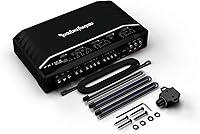
Specifications

  • Total RMS Power: This amplifier delivers 750 watts of combined RMS power across all five channels, representing continuous real-world output rather than peak marketing figures.
  • Channel Config: Configured as a true 5-channel design with four full-range speaker channels and one dedicated subwoofer channel, all in a single chassis.
  • Power at 4Ω: Each full-range channel produces 50 watts RMS at 4 ohms, while the dedicated sub channel outputs 200 watts RMS at 4 ohms.
  • Power at 2Ω: Dropping to a 2-ohm load raises the full-range channels to 100 watts RMS each and pushes the sub channel to 350 watts RMS.
  • Bridged Output: The front and rear channel pairs can each be bridged to mono, delivering 200 watts RMS into a 4-ohm load per bridged pair.
  • Circuit Topology: Built on Class D amplification, which achieves higher efficiency and lower heat output compared to conventional Class A/B designs.
  • Dimensions: The chassis measures 1.9″ tall x 6.8″ wide x 11.2″ long, giving it a genuinely low-profile footprint for a full 5-channel unit.
  • Weight: The unit weighs 7.5 lbs, light enough for a straightforward single-person mounting job in most installations.
  • Operating Voltage: Rated to operate between 9V and 12V DC, making it fully compatible with standard 12-volt automotive electrical systems.
  • Crossovers: Features fully adjustable 12 dB/octave high-pass and low-pass Butterworth crossovers for dialing in the handoff between full-range speakers and the subwoofer.
  • Signal Inputs: Accepts balanced differential RCA inputs with RCA pass-through outputs, allowing the signal to be looped to an additional downstream amplifier.
  • High-Level Input: Includes high-level speaker wire inputs so the amp can connect directly to a factory head unit without requiring an external line output converter.
  • Gain Setting: Equipped with the C.L.E.A.N. circuit, an on-board gain calibration assistant that uses LED feedback to help set accurate input levels without test equipment.
  • Bass Boost: The integrated Punch EQ delivers up to 3x bass boost, tuned to compensate for the acoustic shortcomings of a typical car cabin environment.
  • Auto Turn-On: Includes a defeatable auto turn-on circuit that wakes the amp from the source signal, with the option to disable it if it causes issues with certain head units.
  • Warranty: Backed by a 1-year manufacturer warranty from Rockford Fosgate covering defects in materials and workmanship.

Related Reviews
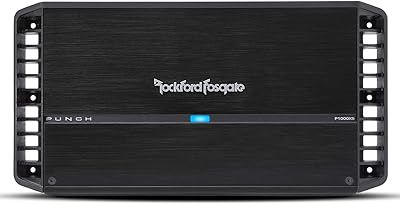
Rockford Fosgate P1000X5 5-Channel Car Amplifier
82%
91%
Sound Quality
88%
Bass Performance
93%
Build Quality
86%
Power Output Accuracy
67%
Installation Experience
More
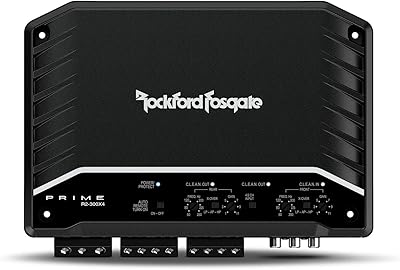
Rockford Fosgate R2-300X4 4-Channel Amplifier
82%
86%
Sound Quality
83%
Build Quality
79%
Power Output
91%
Ease of Installation
62%
Thermal Management
More
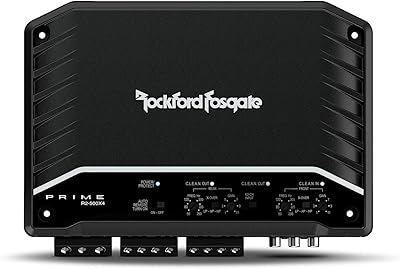
Rockford Fosgate R2-500X4 4-Channel Car Amplifier
80%
86%
Sound Quality
78%
Power Output
88%
Installation Ease
83%
Build Quality
67%
Thermal Management
More
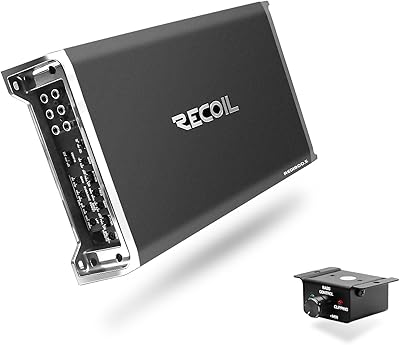
Recoil RED1800.5 5-Channel Car Amplifier
77%
91%
Value for Money
88%
Mono Channel Power
86%
Installation Experience
63%
Gain Calibration Ease
74%
Full-Range Channel Performance
More
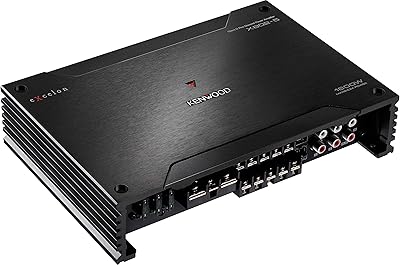
Kenwood X802-5 eXcelon 5 Channel Car Audio Amplifier
88%
92%
Sound Quality
85%
Installation Ease
88%
Build Quality
90%
Performance at High Volume
87%
Bass Enhancement
More
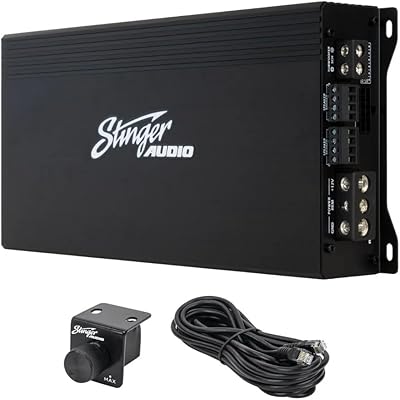
Stinger MT-1000.5 5-Channel Car Amplifier
75%
81%
Value for Money
84%
Ease of Installation
58%
Real-World Power Output
63%
Thermal Management
88%
Built-in Crossover Filters
More
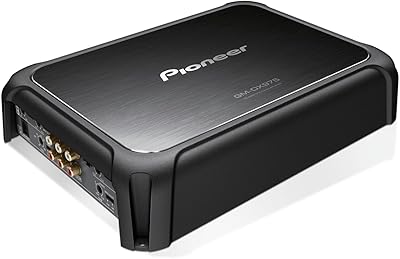
Pioneer GM-DX975 5-Channel Car Amplifier
81%
88%
Sound Quality
83%
Power Delivery
81%
Build Quality
71%
Thermal Management
74%
Ease of Installation
More
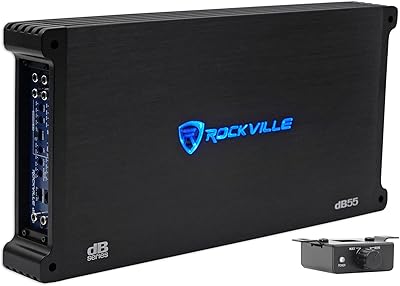
Rockville dB55 5-Channel Car Amplifier
75%
91%
Value for Money
83%
Sound Quality at Moderate Volumes
78%
Bass Output & Subwoofer Performance
62%
Power Accuracy & Transparency
58%
Thermal Management & Heat
More
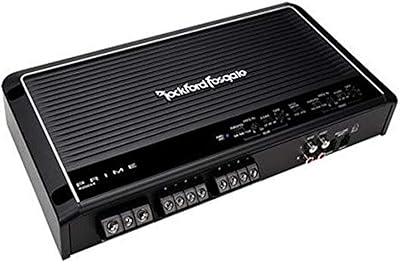
Rockford Fosgate R300X4 Prime 4-Channel Amplifier
87%
88%
Performance
91%
Ease of Installation
85%
Build Quality
87%
Thermal Management
84%
Sound Output
More
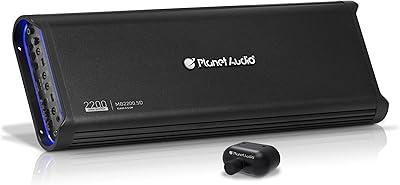
Planet Audio MB2200.5D 5-Channel Car Amplifier
71%
83%
Value for Money
81%
Ease of Installation
86%
Channel Configuration
54%
Power Output (Real-World)
77%
Thermal Management
More

FAQ

Yes, the R2-750X5 includes high-level inputs that connect directly to your existing speaker wires, so you don't need to replace your factory radio or buy a separate line output converter. Just tap into the speaker outputs from your OEM head unit and you're set.

For an amp pulling this much current, most experienced installers recommend a minimum 4-gauge power wire run from the battery with an inline fuse rated in the 60 to 80 ampere range. Always verify the exact recommendation in the amp's manual before buying a wiring kit, since it depends on wire run length as well.

Yes, the sub channel is stable at 2 ohms and steps up to 350 watts RMS in that configuration — a meaningful increase over the 200 watts you'd get at 4 ohms. Just make sure your subwoofer's continuous RMS rating is rated to handle that output level before wiring it up.

That's exactly what the C.L.E.A.N. circuit is built for. It uses an LED indicator to show when the input signal starts clipping, so you can back the gain off to a clean, distortion-free level without any external test gear. For a DIY installer, it's one of the most practically useful features on this amp.

For a typical daily driver at normal to moderately high listening volumes, yes — 50 watts per channel will make a well-chosen set of door speakers sound dramatically better than a factory radio ever could. If you're after very high output or running speakers with low sensitivity ratings, you'd need a higher-powered dedicated amp for the front stage.

No, a remote bass level controller is not included in the box. If you want to adjust the Punch EQ boost from the driver's seat while on the road, you'll need to purchase a compatible Rockford Fosgate remote knob accessory separately.

It can run warm, especially in a confined space with limited airflow, which is a known caveat from real-world buyers. Class D runs cooler than older amp designs, but you still want clearance around the chassis for heat to dissipate. Leave some breathing room on the sides and avoid covering the amp with carpet or padding.

Technically yes — the front channel pair can be bridged to mono for 200 watts into a 4-ohm load, which could drive a second sub. Keep in mind that doing so sacrifices your front speaker output from those channels, so it's really a trade-off that only makes sense in specific system builds where you've planned for it.

The main advantages of the 5-channel approach are a simpler install, less wiring, and a smaller physical footprint. The trade-off is that a dedicated monoblock for the sub will almost always deliver more headroom and cleaner bass at higher volumes than a sub channel built into a multi-channel amp. If subwoofer performance is your top priority, the two-amp route has the edge; if a clean, compact build matters more, the 5-channel wins.

The majority of owners report that this Rockford Fosgate unit holds up well over time, with build quality being one of the most consistently praised aspects. A smaller number of buyers have reported mixed experiences with warranty support if something does go wrong, so it's worth keeping your purchase receipt and registering the product with the manufacturer right away.

Where to Buy