Overview

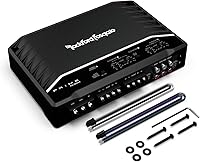
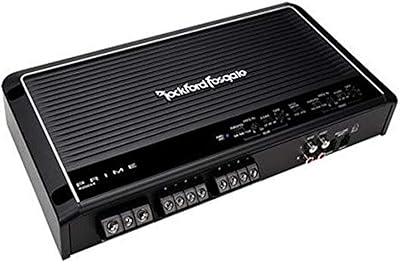
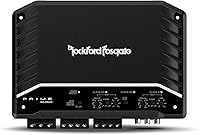
The Rockford Fosgate R2-300X4 4-Channel Amplifier sits comfortably in the mid-range of the car audio market, backed by a brand that enthusiasts have trusted for decades. What stands out immediately is how much power this Rockford Fosgate amp squeezes into a chassis measuring just under 11 inches long — compact enough to tuck behind a seat or under a cargo floor without major surgery. It targets drivers who are done tolerating the thin, distorted output of a factory head unit and want a meaningful upgrade without going full competition-build. Solid, capable, and honest about what it is — no more, no less.
Features & Benefits

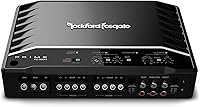
Class D amplification is often misunderstood as a compromise, but in this context it is simply the smarter choice — it runs cooler, draws less current, and lets the R2-300X4 deliver its 300 watts of RMS power without hammering your vehicle’s charging system. The C.L.E.A.N. gain tool is genuinely useful for anyone who has struggled with setting gains by ear; it guides you to the right level without guesswork or a separate oscilloscope. The built-in Punch EQ adds a targeted bass boost that compensates for acoustic shortcomings in typical car cabins, and the adjustable Butterworth crossovers let you tune high and low pass filtering independently for coaxials or components. The RCA pass-through is a quiet hero — connect a subwoofer amp downstream without extra signal splitters.

Best For

This 4-channel amplifier is the right call if you are swapping out all four factory speakers for aftermarket coaxials or a component set up front. It also works exceptionally well as part of a two-amp system — run the four channels to your speakers, then feed a dedicated subwoofer amp off the pass-through outputs. Space-constrained installs benefit too, since the slim profile fits behind seats or in tight trunk corners. Beginners will appreciate not needing a DMM or audio tools to dial in the gain correctly. And if brand credibility matters — if you want something you can confidently bring to an installer — this Rockford Fosgate amp checks that box.

User Feedback

Owners of this 4-channel amplifier generally praise its clean output at everyday listening volumes and how straightforward the install process is compared to less-documented competitors. The gain tool earns consistent positive mentions from first-time amp buyers who expected more trial and error. On the downside, a notable portion of users flag that the unit runs warm during sustained high-volume use — not dangerously so, but worth ensuring adequate airflow when mounting. A few quality-control complaints surface occasionally, though they appear isolated rather than systematic. Build quality is generally rated above what the price tier might suggest, but the one-year warranty is shorter than some rivals offer at this level, which is worth factoring in.

Pros

  • Class D efficiency puts minimal strain on the vehicle electrical system, reducing the need for major power upgrades.
  • The C.L.E.A.N. gain circuit takes the guesswork out of setup, making correct calibration accessible to first-time installers.
  • RCA pass-through outputs allow a second subwoofer amp to be added downstream without signal splitters.
  • Adjustable Butterworth crossovers work equally well with coaxial or component speaker configurations.
  • High-level inputs mean this 4-channel amplifier can be installed even without RCA outputs on the head unit.
  • Punch EQ adds targeted bass correction that genuinely compensates for the acoustic limitations of typical vehicle cabins.
  • Compact dimensions make under-seat or tight-trunk mounting practical in most vehicles.
  • Build quality consistently earns praise from buyers as punching above its market tier.
  • Defeatable auto turn-on circuit adds installation flexibility for non-standard head unit setups.
  • Rockford Fosgate brand support and documentation make troubleshooting easier than with generic alternatives.

Cons

  • The unit runs noticeably warm under sustained high-volume use, requiring careful attention to ventilation during mounting.
  • Warranty coverage is limited to one year, shorter than several direct competitors at this price level.
  • Per-channel RMS output is modest, which may leave drivers of less-efficient speakers wanting more headroom.
  • Bridged mode reduces the amp to two channels, a trade-off that beginners often overlook when planning multi-speaker installs.
  • No built-in bass remote or bass level control knob is included, requiring a separate purchase for on-the-fly adjustment.
  • Occasional isolated quality-control reports in user feedback suggest unit-to-unit consistency is not perfect.
  • Vehicles with factory DSP-based audio systems may require additional signal processing hardware before this amp can be properly integrated.
  • The through-hole mounting design may require more precise pre-drilling compared to surface-mount alternatives.

Ratings

The scores below reflect our AI-driven analysis of verified global buyer reviews for the Rockford Fosgate R2-300X4 4-Channel Amplifier, with spam, bot-generated, and incentivized submissions actively filtered out before scoring. Each category is graded on real-world performance patterns — not marketing claims — so both the genuine strengths and the recurring frustrations are represented honestly. Buyers shopping this tier of car amplifier will find the ratings useful for calibrating expectations before committing.

Sound Quality
86%
Owners consistently describe the audio output as clean and well-defined at moderate to high listening volumes, with a notably low noise floor for a Class D unit. Daily commuters who upgraded from factory head unit power report a meaningful improvement in clarity and stereo separation across the front soundstage.
At the absolute top of the volume range, some listeners detect a slight thinning of the midrange, particularly with less efficient speakers. It does not match the sonic refinement of higher-tier amplifiers, which matters to more discerning listeners.
Build Quality
83%
The chassis feels robust for its market position, with solid heatsinking and a layout that suggests genuine engineering attention rather than cost-cutting. Multiple buyers noted that the R2-300X4 feels noticeably more substantial than comparably priced alternatives they had owned previously.
A small but consistent subset of users reports early failures or cosmetic inconsistencies, pointing to some unit-to-unit variation in quality control at the manufacturing level. It is not a widespread problem, but it surfaces often enough to temper a higher score.
Power Output
79%
21%
For a 4-channel amp in this class, 300 watts total RMS is delivered reliably and the figures hold up in real installations rather than only under ideal lab conditions. Users running moderately efficient aftermarket coaxials found the headroom more than adequate for everyday listening at satisfying volumes.
Drivers using less efficient speakers or expecting competition-level dynamics will hit the ceiling of what this amplifier can comfortably deliver. Bridging to 150 watts per side is helpful for mid-bass applications, but leaves no fallback for full four-speaker operation simultaneously at that power level.
Ease of Installation
91%
The C.L.E.A.N. gain-setting circuit is one of the most praised aspects across the user base, allowing first-time installers to calibrate input sensitivity without external test equipment. The high-level input compatibility and defeatable auto turn-on also reduce the wiring complexity for a wide range of vehicle types.
The through-hole mounting design requires more precise pre-drilling than surface-mount alternatives, which tripped up a handful of less experienced DIY installers. The manual, while adequate, leaves some ambiguity around bridging configurations that beginners found confusing.
Thermal Management
62%
38%
Under typical daily listening conditions — moderate volumes, varied music, reasonable ambient temperatures — the amp handles heat without triggering protection mode. The Class D design does draw less current and generate less waste heat than equivalent Class A/B units, which is a genuine advantage in tighter enclosures.
Sustained high-volume use, especially in warm climates or enclosed mounting locations, pushes the unit into uncomfortable territory. Multiple users report the heatsink becoming very hot to the touch after extended sessions, and at least some protection shutdowns have been attributed to inadequate ventilation rather than product defects.
Value for Money
84%
Buyers frequently compare this Rockford Fosgate amp favorably against more expensive alternatives, noting that the feature set — crossovers, pass-through outputs, the C.L.E.A.N. tool — would cost considerably more from premium brands. The brand credibility and dealer support network add meaningful real-world value beyond the hardware itself.
It occupies a crowded price segment where lesser-known brands sometimes offer higher raw wattage for less outlay. Buyers focused purely on power-per-dollar may find the Rockford Fosgate brand premium a harder sell without weighing the intangible benefits.
Crossover Flexibility
88%
The adjustable 12 dB per octave Butterworth crossovers cover a wide enough frequency range to suit both coaxial and component speaker builds without requiring an external processor. Installers running a component set up front and coaxials in the rear found the independent high and low pass controls genuinely useful for tailoring the blend.
The crossovers are functional and well-implemented but not exceptional — enthusiasts building more complex systems with multiple driver types will eventually want a dedicated DSP for finer control. The slope at 12 dB per octave is adequate but not as steep as the 24 dB options found on higher-end amplifiers.
Compatibility
89%
High-level inputs and a defeatable auto turn-on make this 4-channel amplifier unusually adaptable across factory, aftermarket, and hybrid head unit configurations. Users in older vehicles or those retaining OEM radios specifically praised how few additional adapters or converters the installation required.
Integration with premium factory DSP systems — Bose, Harman, Bang and Olufsen — typically requires a separate line output converter or processor, a limitation that applies broadly to amplifiers in this class rather than being unique to this model.
RCA & Signal Handling
85%
Balanced differential RCA inputs do a credible job of rejecting ground noise and interference, and several users noted a cleaner signal compared to their previous single-ended setups. The pass-through outputs are a practical addition that allows a second amplifier to be added to the system without signal degradation or additional Y-adapters.
The RCA inputs max out at a relatively modest voltage sensitivity ceiling, which can limit the dynamic range when paired with high-output head units running at full preamp voltage. A small number of users reported faint but audible interference after installation that required grounding attention to resolve.
Warranty & Support
67%
33%
Rockford Fosgate has an accessible and generally responsive support operation, and warranty claims through authorized channels tend to be processed without excessive friction. The brand’s established dealer network means local in-person support is an option in many regions.
The one-year warranty period is noticeably shorter than several direct competitors offering two or three years at a similar price point. Buyers who experienced issues just outside the coverage window expressed frustration, and the limited duration does weigh on long-term confidence.
Compact Footprint
92%
At under 11 inches in length and less than 2 inches tall, this amplifier fits in locations that larger units simply cannot reach — under front seats, along the side walls of cargo areas, or behind factory panels. Installers working with space-constrained vehicles consistently rated the form factor as a decisive advantage.
The slim profile, while useful for installation flexibility, does limit the heatsink surface area available for thermal dissipation, which feeds directly into the thermal management concerns noted by high-volume users. Compact size and extended high-power operation are inherently in tension with each other.
Bass Performance
81%
19%
The Punch EQ feature delivers a noticeable and musically useful low-frequency lift that compensates well for the bass-absorbing characteristics of typical car interiors. Drivers who stream bass-heavy genres on daily commutes found the added weight and warmth rewarding without pushing into one-note boom territory at moderate settings.
At maximum Punch EQ settings, the bass enhancement can tip from flattering into excessive, particularly in smaller vehicle cabins with less acoustic volume to absorb it. The control lacks the precision of a parametric EQ, so dialing it in for more complex musical material requires patience.
Channel Configuration
78%
22%
Four discrete channels with independent crossover control give installers genuine flexibility to design a front and rear speaker layout, or to allocate bridged pairs for dedicated mid-bass duties. Users who reconfigured mid-install to a 2-channel bridged setup for a passive sub appreciated not needing a separate amplifier.
Bridging cuts the usable channel count in half, which creates a planning constraint for buyers who later decide to expand their system beyond two amplified zones. Some buyers also initially misunderstood the bridged impedance requirements, connecting 2-ohm loads in bridged mode — a configuration this amp does not support and that caused protection trips.
Noise Floor
82%
18%
With a properly grounded installation, the R2-300X4 operates with a low enough noise floor to satisfy most everyday listeners, even in quieter musical passages or spoken-word content. The balanced differential inputs play a meaningful role here, helping reject common-mode noise picked up along longer RCA cable runs.
Installations in electrically noisy vehicles — older trucks, diesels, cars with heavy accessory loads — sometimes require additional grounding and filtering work to achieve the same quiet background. Users who skipped the grounding best practices during install were more likely to report audible hiss or alternator whine.

Suitable for:

The Rockford Fosgate R2-300X4 4-Channel Amplifier is a strong match for everyday drivers who are tired of the flat, lifeless sound that factory head units produce and want a real upgrade without overcomplicating their install. It fits particularly well in builds where all four cabin speakers are being replaced with aftermarket coaxials or a front component set, since the amp has enough channels and crossover flexibility to handle either configuration cleanly. Drivers planning a two-amp setup will appreciate the RCA pass-through, which lets a dedicated subwoofer amp tap off the same signal chain without additional splitters or signal processors. The compact chassis makes it a practical choice for vehicles where under-seat or tight trunk mounting is the only option. Beginners and intermediate installers benefit most from the C.L.E.A.N. gain tool, which removes one of the most frustrating guesswork elements of a DIY car audio build. Anyone prioritizing brand accountability over chasing the lowest possible price will also find this Rockford Fosgate amp a comfortable, well-supported choice.
Not suitable for:

The Rockford Fosgate R2-300X4 4-Channel Amplifier is not the right tool for anyone building a competition-level or high-SPL system, where per-channel power demands routinely exceed what this tier of amplifier can sustain cleanly. Drivers who run their audio at consistently high volumes for extended periods should be aware that the unit generates meaningful heat, and without deliberate attention to airflow during mounting, thermal management can become a real concern over time. The one-year warranty is notably shorter than what several competing brands offer at a similar price point, which may give pause to buyers who prioritize long-term coverage. If your vehicle already has a premium factory audio system with digital signal processing baked in — such as a Bose or Harman system — the high-level inputs alone may not be sufficient without an additional line output converter or processor. Audiophiles chasing the last degree of sonic transparency at reference listening levels will likely find this amp satisfying but not exceptional, and should consider stepping into a higher product tier.
Specifications

  • Brand: Manufactured by Rockford Fosgate, a well-established American car audio brand with decades of industry presence.
  • Model: The unit carries the model designation R2-300X4, part of the Rockford Fosgate Prime (R2) amplifier series.
  • Channels: This amplifier provides 4 full-range channels, which can also be operated in 2-channel bridged mode.
  • Total RMS Power: The amplifier delivers a total of 300 watts RMS across all channels under rated conditions.
  • Power at 4Ω: In standard 4-channel operation, the unit outputs 50 watts RMS per channel into a 4-ohm load.
  • Power at 2Ω: Load impedance can be dropped to 2 ohms per channel, raising output to 75 watts RMS per channel.
  • Bridged Power: When two channels are bridged into one, the amp delivers 150 watts RMS into a 4-ohm mono load.
  • Circuit Class: Class D topology is used throughout, prioritizing electrical efficiency and reduced heat generation versus Class A/B designs.
  • Dimensions: The chassis measures 1.9″ tall by 6.8″ wide by 10.1″ long, making it suitable for under-seat or compact trunk installs.
  • Supply Voltage: The amplifier operates within a supply voltage range of 9V DC minimum to 16V DC maximum.
  • Mounting Type: Installation uses a through-hole mounting configuration, requiring pre-drilled fastener points on the mounting surface.
  • Crossover: Onboard fully adjustable 12 dB per octave high-pass and low-pass Butterworth crossovers are included for speaker-level tuning.
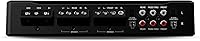
  • Signal Inputs: Balanced differential RCA inputs are provided, along with RCA pass-through outputs for chaining an additional amplifier.
  • High-Level Input: A high-level speaker wire input is included, enabling connection to head units that lack dedicated RCA preamp outputs.
  • Auto Turn-On: The auto turn-on circuit is defeatable, giving installers flexibility in non-standard or OEM integration scenarios.
  • Gain Tool: Rockford Fosgate’s proprietary C.L.E.A.N. circuit is integrated to assist with accurate, distortion-free gain calibration.
  • Bass Control: The Punch EQ feature provides integrated bass enhancement, capable of delivering up to three times the low-frequency output versus flat settings.
  • Warranty: Rockford Fosgate covers this amplifier with a limited 1-year manufacturer warranty from the date of purchase.

Related Reviews
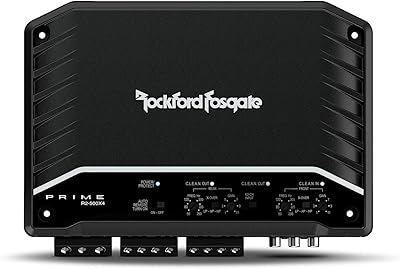
Rockford Fosgate R2-500X4 4-Channel Car Amplifier
80%
86%
Sound Quality
78%
Power Output
88%
Installation Ease
83%
Build Quality
67%
Thermal Management
More
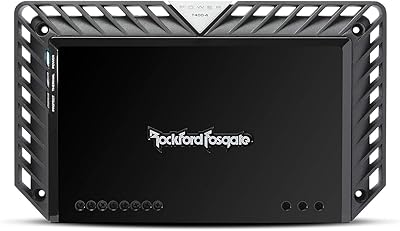
Rockford Fosgate Power T400-4 400-Watt 4-Channel Amplifier
87%
91%
Performance
89%
Sound Quality
94%
Ease of Installation
88%
Durability
90%
Build Quality
More
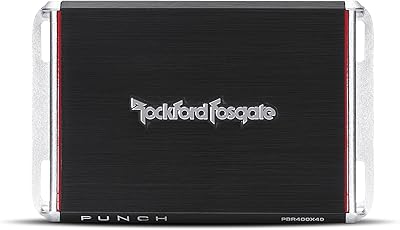
Rockford Fosgate R300X4 Prime 4-Channel Amplifier
87%
88%
Performance
91%
Ease of Installation
85%
Build Quality
87%
Thermal Management
84%
Sound Output
More
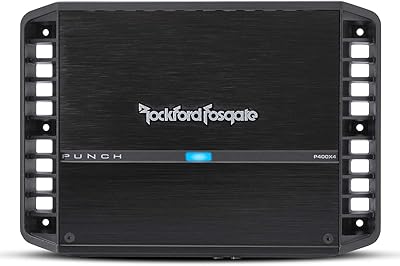
Rockford Fosgate P400X4 Punch 4-Channel Amplifier
83%
88%
Sound Quality
91%
Value for Money
83%
Ease of Installation
86%
Build Quality
67%
Thermal Management
More
Rockford Fosgate PBR400X4D 4-Channel Car Amplifier
80%
96%
Size & Form Factor
81%
Power Output
78%
Installation Experience
83%
Sound Quality
89%
Heat Management
More
Rockford Fosgate PBR300X4 4-Channel Car Amplifier
79%
84%
Sound Quality
93%
Form Factor and Size
87%
Installation Ease
76%
Power Delivery
82%
Value for Money
More
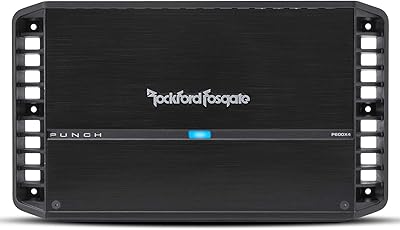
Rockford Fosgate Punch P600X4 4-Channel Amplifier
87%
93%
Sound Clarity
91%
Build Quality
88%
Power Output
89%
Installation Experience
71%
Value for Money
More
Rockford Fosgate TM400X4ad Marine 4-Channel Amplifier
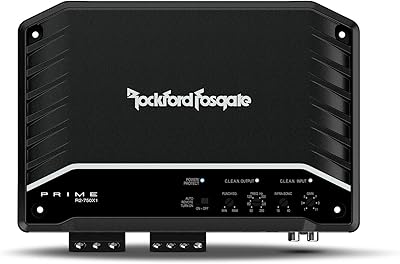
81%
91%
Build Quality
78%
Weather & Corrosion Resistance
88%
Sound Quality
86%
Power Output & Accuracy
72%
Heat Management
More
Rockford Fosgate R2-750X5 5-Channel Car Amplifier
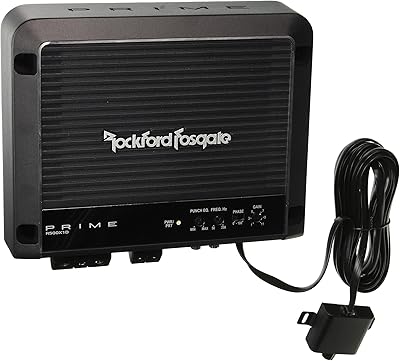
80%
83%
Sound Quality
86%
Build Quality
76%
Value for Money
81%
Installation Experience
71%
Power Output
More
Rockford Fosgate R2-250X1 Prime 250-Watt Mono Amplifier
87%
88%
Bass Performance
85%
Power Output
91%
Ease of Installation
87%
Build Quality
84%
Sound Clarity
More

FAQ

Yes, that is exactly what this 4-channel amplifier is designed for. Each of the four channels drives one speaker independently, so you can run a full set of door and dash speakers from a single unit without bridging anything.

Not necessarily. The R2-300X4 includes high-level inputs, which means you can wire it directly to the speaker outputs from your factory or aftermarket head unit. It is a convenient option if your radio does not have dedicated preamp outputs.

Bridging combines two channels into one, which roughly doubles the power output on that single channel. On this amp, bridging a pair of channels gives you 150 watts into a 4-ohm load, which is useful if you want to dedicate more power to a single subwoofer or a high-powered mid-bass driver. Just keep in mind that bridging reduces your total channel count from four to two.

It is one of the more beginner-friendly options at this power level. The C.L.E.A.N. gain setting circuit walks you through calibrating your input sensitivity without needing an oscilloscope or audio test equipment. Most installers with basic wiring experience can get it running in a few hours.

Yes, the RCA pass-through outputs make this straightforward. You run your RCA signal into this 4-channel amplifier, and a second set of outputs carries that same signal out to a subwoofer amp downstream. No signal splitters or Y-adapters required.

Class D amps run cooler than older Class A/B designs, but this Rockford Fosgate amp does generate noticeable warmth if you push it hard for extended periods. Make sure you mount it somewhere with reasonable airflow — avoid completely enclosed spaces with no ventilation. Under a seat with a small gap is usually fine; sealed inside a trunk wall panel without breathing room is not ideal.

For a standard coaxial speaker setup, most installers set the high-pass crossover somewhere between 60 and 80 Hz, which rolls off low bass frequencies that coaxials handle poorly anyway. The onboard Butterworth crossovers are adjustable, so you can dial this in to suit your specific speakers and listening preferences.

It depends on how far you push it. At moderate settings, the Punch EQ adds warmth and body that genuinely helps compensate for the acoustic shortcomings of most car interiors. At its maximum setting, it can sound heavy, so treat it like a seasoning rather than a main ingredient and find a level that complements your music rather than dominating it.

It is on the shorter side compared to some competitors who offer 2 or even 3-year coverage. Rockford Fosgate is a reputable brand with accessible customer support, so warranty claims are generally handled without excessive friction, but if long-term coverage is a deciding factor for you it is worth noting the limitation before buying.

Yes, the amplifier is rated to handle 2-ohm loads per channel, which raises per-channel output to 75 watts RMS. Running all four channels at 2 ohms simultaneously is within spec, though the amp will run warmer under that configuration, so ventilation becomes even more important.

Where to Buy