Overview

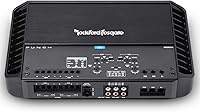
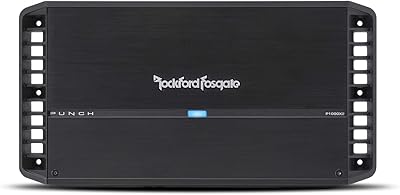
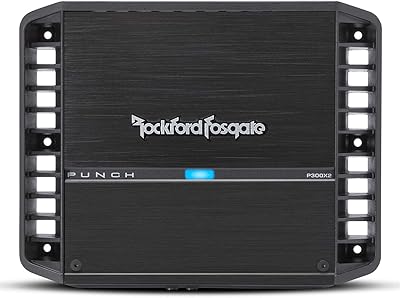
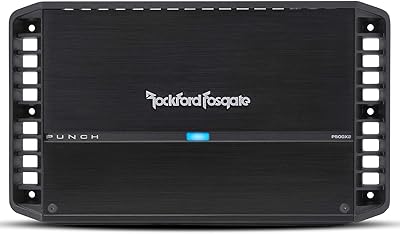
The Rockford Fosgate Punch P600X4 4-Channel Amplifier sits confidently in the mid-to-upper tier of Rockford's Punch lineup, built for enthusiasts who want real performance rather than just numbers on a box. At under 2.5 inches tall, it fits where bulkier amps simply won't, making trunk and under-seat installs far more manageable. The Class A/B topology matters here — it delivers the kind of warmth and dynamic accuracy that cheaper Class D designs rarely match at any volume. If you're cross-shopping against JL Audio or Kicker at this price tier, this amp belongs in that same conversation. It's serious hardware, and it's priced accordingly.
Features & Benefits

The P600X4 packs a lot of practical thinking into its design. The power configuration scales with your setup — run all four channels at standard impedance for a clean full-range system, drop to 2-ohm loads for more headroom, or bridge two channels to drive a subwoofer hard. What genuinely helps OEM installs is the Hi/Lo RCA input, which accepts signals directly from a factory head unit without a separate adapter. The on-board Punch EQ adds low-end weight at 45Hz, variable Butterworth crossovers let you tune each channel pair independently, and the C.L.E.A.N. setup system takes the guesswork out of gain matching — a feature that actively protects your speakers from clipping damage.

Best For

This Rockford Fosgate amplifier makes the most sense for builders tackling a serious multi-channel install — think tweeter, midrange, and woofer up front with a dedicated sub channel in the rear. It's also a strong fit for anyone upgrading from a stock head unit who wants clean amplification without buying a pile of extra adapters and converters. The slim chassis is a genuine advantage in compact vehicles where space is genuinely limited. If you research deeply before buying and want an amp backed by decades of proven installs, this Punch 4-channel amp fits that mindset well. Casual listeners on a tight budget will likely find better value elsewhere.

User Feedback

With over 500 ratings averaging 4.6 stars, the P600X4 has earned its standing through real-world installs. Owners consistently highlight sound clarity at volume — where budget amps compress and distort, this one holds steady. Installation feedback is broadly positive, with the high/low input flexibility drawing particular praise from those working around factory systems. The price does generate debate, though. Some buyers feel competitors offer comparable wattage figures for considerably less, and that's a fair concern worth weighing. One practical note: like all Class A/B designs, this amp runs warmer than a Class D equivalent, so airflow during installation is worth planning. Long-term owners, however, repeatedly describe it as genuinely built to last.

Pros

  • Class A/B topology delivers noticeably cleaner, warmer audio at high volumes compared to budget Class D alternatives.
  • High-level RCA inputs allow direct connection to a factory head unit without buying an additional signal converter.
  • Flexible power configurations support 4-ohm, 2-ohm, and bridged operation, adapting to a wide range of speaker setups.
  • The C.L.E.A.N. gain-setting system actively helps prevent clipping, protecting your speakers during the setup process.
  • At under 2.5 inches tall, the P600X4 fits in tight mounting locations where most competing amps simply won't go.
  • On-board Punch EQ adds real low-end weight without requiring a separate equalizer in the signal chain.
  • RCA pass-through outputs make daisy-chaining a dedicated subwoofer amp straightforward and clean.
  • Over 500 verified buyers rate it 4.6 stars, reflecting broad satisfaction across very different vehicle and system configurations.
  • Long-term owners repeatedly report that this Rockford Fosgate amplifier holds up reliably through years of regular use.
  • Variable Butterworth crossovers on each channel pair give precise tuning control that cheaper amps simply don't offer.

Cons

  • The price sits at a premium tier, and buyers comparing raw wattage specs alone will find less expensive options that look competitive on paper.
  • Class A/B operation runs warmer than Class D, so installation in sealed, unventilated spaces can create thermal management issues.
  • The one-year warranty is short for a premium-priced amplifier, especially when competitors at similar price points sometimes offer longer coverage.
  • Setting up the crossovers and gain structure properly requires real research; first-time amp installers may feel overwhelmed by the options.
  • At 3.3 pounds with a 13-inch footprint, it demands a dedicated mounting surface and isn't as discreet as ultra-compact mini-amps.
  • Convection cooling with no fan means heat dissipation depends entirely on placement quality, which punishes careless installs.
  • The 100A fuse requirement means wiring costs add up; budget installs can't cut corners on the power cable gauge without risking performance issues.

Ratings

Our AI rating system analyzed verified global buyer reviews for the Rockford Fosgate Punch P600X4 4-Channel Amplifier, actively filtering out incentivized, duplicate, and bot-generated feedback to surface what real owners genuinely experience. The scores below reflect both the standout strengths and the honest frustrations that emerge across hundreds of real-world installs in diverse vehicle types and system configurations. Nothing has been softened — where buyers consistently flag a concern, the score reflects it.

Sound Clarity
93%
Owners consistently describe the audio as noticeably cleaner and more detailed than what they had before, particularly at higher listening volumes where distortion from cheaper amps becomes obvious. Drivers running component sets report improved stereo imaging and vocal clarity on everyday commutes that they did not expect from a car audio upgrade.
A small number of reviewers note that the sound character leans slightly warm, which suits rock and hip-hop listeners well but may feel colored to audiophiles who prefer a completely neutral reference presentation. This is largely a Class A/B trait rather than a defect, but it is worth knowing before committing.
Build Quality
91%
The aluminum chassis feels dense and well-finished straight out of the box, and long-term owners repeatedly comment that the unit looks and functions the same after several years as it did on day one. The fit of connectors and the quality of the PCB components inside match what you would expect from a brand at this price tier.
A handful of buyers noted minor cosmetic inconsistencies on the end caps, and the included hardware for mounting felt modest relative to the overall price point. These are minor complaints but they do occasionally surface in reviews from detail-oriented installers.
Power Output
88%
The rated power figures hold up under real-world conditions, which is not always the case with car amplifiers that inflate peak or max numbers. Buyers running moderately efficient speakers report plenty of headroom before the amp is pushed hard, and bridged output is genuinely useful for a modest subwoofer without needing a second amp.
At 4-ohm loads, 75 watts per channel is on the conservative side if your speakers are inefficient or your vehicle is particularly large. Buyers expecting to feel genuinely loud in an SUV or full-size truck may want more total output than this amp provides at standard impedance.
Installation Experience
89%
The high-level input capability genuinely simplifies installs for anyone retaining a factory head unit, and multiple reviewers mention completing the wiring in a single afternoon without professional help. Clear labeling on the terminal block and logical control layout make the setup process less intimidating than comparable amps in this class.
The gain-setting process, even with C.L.E.A.N. assistance, still requires patience and a basic understanding of signal levels that first-time installers may not have. A few buyers reported spending several hours troubleshooting noise issues before realizing grounding placement was the root cause.
Value for Money
71%
29%
For buyers who prioritize verified engineering quality and long-term reliability over raw spec comparisons, the price reflects a genuine premium product with a track record that off-brand alternatives simply cannot match. Owners who have burned through cheaper amps often describe this Rockford Fosgate amplifier as the last amp they plan to buy for a while.
The sticker price is the most consistently cited concern in negative reviews, and it is hard to dismiss entirely when competitors advertise similar wattage figures at significantly lower cost. Buyers who do not dig into the differences between Class A/B and Class D topologies often feel they overpaid when comparing spec sheets side by side.
Thermal Performance
74%
26%
Under typical daily listening conditions — moderate volumes, reasonable ambient temperatures — the amp stays warm but not concerning, and the aluminum chassis does a reasonable job of spreading heat passively. Most owners report no issues at all when the amp is mounted with adequate clearance on both sides.
Extended high-volume sessions in warm climates or enclosed mounting positions cause noticeable heat buildup, which is an inherent trait of Class A/B designs and not unique to this unit but still a practical concern. Buyers who mount in sealed under-seat enclosures without airflow planning have reported thermal protection activation cutting audio during aggressive listening.
Crossover Flexibility
87%
The variable Butterworth crossovers give genuine control over how each channel pair handles frequency content, which is critical for anyone running a 3-way front stage where tweeters need protection from low frequencies. Reviewers with multi-speaker setups consistently praise the ability to tune each pair independently without adding an external processor.
The crossover controls are small rotary knobs without detents or clear graduated markings, which makes repeatable fine-tuning feel more like approximating than dialing in. Installers who want precise crossover frequency settings typically end up using an RTA or test tones to verify what the knob position is actually doing.
OEM Integration
92%
The Hi/Lo input design is a genuine differentiator for buyers upgrading a factory system, since it eliminates the cost and complexity of adding a line output converter to the signal chain. Multiple reviewers specifically bought this amp over competitors because of this feature after dealing with converter-related noise issues on previous builds.
While the high-level input works well, there is no built-in signal sensing for automatic turn-on, so vehicles without a dedicated remote wire from the head unit still require a workaround such as a voltage-sensing module. This is a minor gap but it does add a step for some OEM integration scenarios.
Compact Footprint
86%
At under 2.5 inches tall, the P600X4 fits under many factory seats and in shallow trunk panels where taller amps would simply not work, and reviewers in compact cars frequently mention the slim profile as a deciding factor in choosing this unit. The weight is low enough that a single installer can position and secure it without assistance.
The 13-inch length is not trivial, and under-seat mounting in smaller vehicles sometimes requires removing or relocating seat hardware to achieve a clean result. A few buyers in compact hatchbacks noted that the length was more of a challenge than the height during their specific installs.
Channel Versatility
91%
The ability to run the amp as a 4-channel full-range system, a 3-way front stage with bridged sub, or various hybrid configurations makes it genuinely adaptable as a system evolves over time without requiring an amplifier replacement. Experienced builders appreciate that one unit can serve multiple build strategies depending on how the system grows.
Bridged operation locks two channels together, which removes independent control over those outputs and limits certain advanced staging configurations. Buyers who want completely independent four-channel control for a complex active crossover setup may find this limiting compared to higher-end separates.
Gain Setup Accuracy
83%
The C.L.E.A.N. system provides a practical visual reference that genuinely reduces the risk of running the amp in clipping, which is the most common cause of tweeter failure in upgraded car audio systems. Reviewers who used it properly report confidence in their gain settings and no speaker failures after extended use.
The system indicates clipping onset but does not quantify how far above or below the threshold you are, so it functions as a pass/fail indicator rather than a precision tool. Buyers who want to match gains across multiple amplifiers to a specific voltage output will still need an oscilloscope or multimeter for accurate results.
Long-Term Reliability
94%
Among the most consistent themes in long-term ownership reviews is that the amp continues to perform without degradation after two, three, and even four or more years of regular use, which is not guaranteed at any price point in car audio. The brand's reputation for standing behind its products adds a layer of confidence that newer market entrants cannot offer.
The one-year warranty is the weakest point of the ownership experience given the price, and several long-term reviewers note that this coverage period feels short for an amp expected to serve a vehicle for many years. Buyers who want extended peace of mind will need to rely on retailer protection plans rather than the manufacturer.
Noise Floor
86%
When properly grounded and installed away from ignition noise sources, the P600X4 is quiet between tracks and during low-level passages, which is a meaningful test of an amplifier's internal shielding and power supply design. Reviewers using sensitive component tweeters report an acceptably low noise floor that does not intrude during quiet listening.
Alternator whine and ground loop hiss are reported by a subset of buyers, though careful investigation in most cases reveals grounding or routing errors rather than a fault with the amp itself. Noise issues are rarely inherent to the unit but the troubleshooting process can be frustrating for installers who are newer to amp integration.

Suitable for:

The Rockford Fosgate Punch P600X4 4-Channel Amplifier is built for car audio enthusiasts who are done compromising and want a single, capable amp to power a complete system properly. It fits especially well in builds where a 3-way front stage — tweeter, midrange, and woofer — needs to run alongside a dedicated subwoofer channel, all from one unit. Installers working in vehicles with limited mounting space will appreciate the slim profile, which opens up under-seat and compact trunk locations that would reject a taller amp outright. It also solves a real headache for anyone upgrading from a stock head unit, since the high-level input acceptance means no signal converter is needed to get clean audio from a factory source. Buyers who care about long-term reliability and have had bad experiences with cheaper amps failing within a year will find the build quality and track record here genuinely reassuring.
Not suitable for:

Budget-conscious buyers who are primarily comparing wattage figures across brands should probably look elsewhere, because the Rockford Fosgate Punch P600X4 4-Channel Amplifier is priced at a tier where you are paying for engineering quality and consistency, not just raw output numbers. If your system is modest — a couple of coaxial speakers running off a decent aftermarket head unit — this amp is more hardware than the setup realistically needs, and the investment won't be justified by the listening results. Drivers who plan to mount the amp in an enclosed, poorly ventilated space should also think carefully, since Class A/B designs generate more heat than Class D alternatives and need adequate airflow to perform reliably over time. Those expecting plug-and-play simplicity without any research into gain structure, crossover settings, or impedance matching will find the on-board controls more demanding than they anticipated. And if you're working with a tight install budget overall, spending heavily on the amp alone often means cutting corners on speakers or wiring, which defeats the purpose entirely.
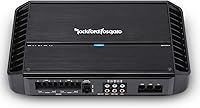
Specifications

  • Total RMS Power: The amp delivers 600 watts total RMS output across its four channels, providing substantial headroom for demanding speaker configurations.
  • Power at 4-Ohm: Each channel produces 75 watts RMS when driving a 4-ohm load, suitable for most standard aftermarket speakers.
  • Power at 2-Ohm: Output increases to 150 watts RMS per channel at 2-ohm impedance, allowing more dynamic range from compatible speakers.
  • Bridged Power: When bridged, the amp delivers 300 watts RMS into a 4-ohm load across two channels, useful for powering a subwoofer.
  • Channels: The unit features four independent amplifier channels, configurable for full-range, 3-way, or bridged subwoofer applications.
  • Circuit Topology: Class A/B topology is used throughout, prioritizing audio accuracy and low distortion over the energy efficiency of Class D designs.
  • Dimensions: The chassis measures 13.3 x 7.8 x 2.4 inches (L x W x H), keeping the profile low enough for under-seat or compact trunk mounting.
  • Weight: The unit weighs 3.3 pounds, making it manageable for a single installer to position and secure without assistance.
  • Input Types: Both high-level (speaker-level) and low-level (RCA) inputs are supported, enabling direct integration with factory or aftermarket head units.
  • Crossover: Variable 12 dB/oct Butterworth crossovers are included on each channel pair, allowing independent high-pass and low-pass filtering adjustments.
  • On-Board EQ: A Punch EQ circuit provides up to +18dB of boost centered at 45Hz, adding low-frequency emphasis without an external equalizer.
  • Gain Setup: The C.L.E.A.N. (Circuit Level Evaluation Amplifier Node) system provides a reference point for accurate gain setting and clipping prevention.
  • RCA Outputs: Pass-through RCA outputs are included, allowing a secondary amplifier such as a subwoofer amp to be connected in the signal chain.
  • Cooling Method: Convection cooling is used with no active fan, relying on the aluminum chassis and adequate airflow around the unit for heat dissipation.
  • Recommended Fuse: A 100-amp external fuse is recommended (not included) to protect the vehicle's electrical system during peak demand.
  • Operating Voltage: The amplifier operates on a standard 12-volt DC supply, compatible with all conventional 12V automotive electrical systems.
  • Material: The enclosure is constructed from aluminum, which aids in heat transfer and contributes to the unit's durability and rigidity.
  • Certifications: The P600X4 carries CE, FCC, RoHS, and WEEE certifications, confirming compliance with major international safety and environmental standards.
  • Warranty: Rockford Fosgate covers this amplifier with a one-year limited manufacturer warranty against defects in materials and workmanship.
  • Mounting Type: The amplifier is designed for surface mounting, with standard hardware provisions for securing it to a flat panel or mounting bracket.

Related Reviews
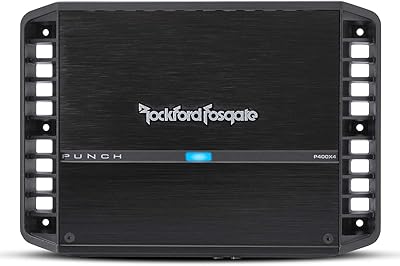
Rockford Fosgate PBR400X4D 4-Channel Car Amplifier
80%
96%
Size & Form Factor
81%
Power Output
78%
Installation Experience
83%
Sound Quality
89%
Heat Management
More
Rockford Fosgate PBR300X4 Punch 300-Watt 4-Channel Amplifier
87%
88%
Power Output
91%
Installation Ease
84%
Sound Quality
92%
Compact Design
87%
Energy Efficiency
More
Rockford Fosgate P400X4 Punch 400-Watt 4-Channel Amplifier
85%
89%
Power Output
91%
Bass Enhancement (Punch EQ)
88%
Installation Ease
85%
Sound Clarity and Performance
87%
Build Quality
More
Rockford Fosgate Power T400-4 400-Watt 4-Channel Amplifier
87%
91%
Performance
89%
Sound Quality
94%
Ease of Installation
88%
Durability
90%
Build Quality
More
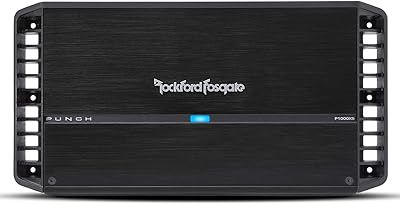
Rockford Fosgate R300X4 Prime 4-Channel Amplifier
87%
88%
Performance
91%
Ease of Installation
85%
Build Quality
87%
Thermal Management
84%
Sound Output
More
Rockford Fosgate Punch P1000X2 1000-Watt 2-Channel Amplifier
86%
93%
Sound Performance
91%
Power Output
88%
Installation Ease
72%
Thermal Management
89%
Durability and Build Quality
More
Rockford Fosgate P500X2 2-Channel Car Amplifier
80%
88%
Audio Output Quality
91%
Build Quality
86%
Versatility & Configuration Options
74%
Ease of Installation
79%
Gain Calibration System
More
Rockford Fosgate P1000X5 5-Channel Car Amplifier
82%
91%
Sound Quality
88%
Bass Performance
93%
Build Quality
86%
Power Output Accuracy
67%
Installation Experience
More
Rockford Fosgate P300X2 Punch 300 Watt 2-Channel Amplifier
85%
89%
Sound Performance
91%
Bass Response
85%
Build Quality
87%
Ease of Installation
92%
Value for Money
More
Rockford Fosgate R2-300X4 Prime 300-Watt 4-Channel Amplifier
86%
89%
Sound Quality
91%
Power Output
84%
Ease of Installation
87%
Bass Performance
82%
Build Quality
More

FAQ

You can connect it directly to a factory head unit without replacing anything. The high-level input on this Punch 4-channel amp accepts the speaker-level signal straight from your OEM stereo, so there is no need for a separate line output converter. It is one of the more practical aspects of the design for anyone keeping a stock head unit.

For most quality 4-ohm aftermarket speakers, 75 watts RMS per channel is genuinely sufficient for loud, clean playback in a passenger vehicle. The key is that this is a true RMS figure from a Class A/B circuit, which means the amp is not padding the numbers with peak claims. Properly gain-matched, most mid-range component or coaxial speakers will perform very well at that power level.

Class A/B amplifiers run warmer than Class D alternatives by nature, and the P600X4 is no exception. During extended high-volume sessions it will get noticeably warm to the touch. Convection cooling means it depends entirely on ambient airflow, so you should avoid boxing it into a fully sealed enclosure. Leave a few inches of clearance around the unit and you will be fine in most real-world installs.

Yes, bridging channels 3 and 4 gives you 300 watts RMS into a 4-ohm subwoofer load, which is a solid amount of power for a single 10-inch or 12-inch sub. Just make sure your subwoofer is rated for 4 ohms when bridged, since the amp will not handle a 2-ohm bridged load stably. Many builders use this exact configuration to run a full 3-way front stage on channels 1 and 2 with a subwoofer bridged on the rear pair.

For a 600-watt Class A/B amplifier with a 100-amp fuse recommendation, 4-gauge OFC (oxygen-free copper) wiring is the standard choice and will handle the current draw comfortably under most conditions. Some installers prefer stepping up to 0-gauge if the run from the battery is particularly long, but 4-gauge is appropriate for the majority of typical installs. Do not cut corners on wire quality here — undersized wiring causes voltage drop and heat buildup.

No, the amplifier ships without a wiring kit. You will need to purchase a separate install kit covering the power cable, ground cable, remote turn-on wire, RCA cables, and speaker wire. A 4-gauge or 0-gauge amp kit from a reputable brand is the right pairing for this unit's power level.

C.L.E.A.N. stands for Circuit Level Evaluation Amplifier Node, and it is essentially a built-in LED indicator that lights up when the amp detects clipping in the signal. To use it, you play a test tone or music, turn up the source volume until the LED begins flashing, then back it down slightly and set your gain at that point. No special tools are required — it is a visual reference system designed to replace the guesswork that leads to blown tweeters and damaged voice coils.

Yes, the amp is rated and stable at 2-ohm loads per channel, producing 150 watts RMS in that configuration. Many quality component speaker sets have impedance curves that dip toward 2 ohms at certain frequencies, and the P600X4 handles that without issue. Just avoid wiring configurations that push below 2 ohms per channel, as that is outside the rated operating range.

The Punch EQ is technically a shelving or boost filter centered at 45Hz, which adds low-frequency emphasis at the subwoofer range rather than boosting all bass frequencies equally. Whether you should use it depends on your system — if you are running a subwoofer on bridged channels, you may not need it at all since the sub handles that range. For full-range systems without a dedicated sub, a modest boost can add body to the low end, but cranking it to maximum will stress your speakers and introduce distortion faster than clean power alone.

At this price tier, all three brands are building serious hardware with legitimate engineering behind them, so the honest answer is that you are unlikely to be disappointed by any of them. Rockford Fosgate tends to offer a slightly warmer tonal character and very straightforward installation features like the Hi/Lo inputs. JL Audio is often praised for extremely refined sound staging. Kicker typically offers aggressive output and competitive pricing. The best choice usually comes down to which brand's feature set matches your specific install scenario most closely.

Where to Buy