Overview

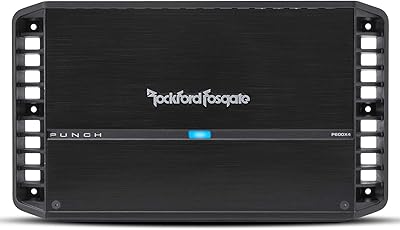
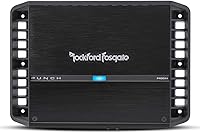
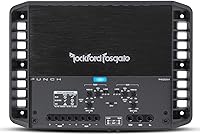
The Rockford Fosgate P400X4 Punch 4-Channel Amplifier sits comfortably in the middle of Rockford Fosgate's Punch lineup — not a budget throwaway, not a flagship splurge, but a reliable workhorse that has earned its place in car audio circles since 2013. That kind of longevity says something real about a product. At 400 watts total RMS spread across four channels, it covers a lot of ground without asking you to sacrifice your trunk space — the compact 11 x 7.8 x 2.4-inch chassis fits in spots where larger amps simply won't. If you want honest performance at a fair entry point, value-to-performance is where this amp consistently delivers.
Features & Benefits

What separates the P400X4 from cheaper alternatives isn't just output — it's how thoughtfully the feature set is configured. The Class A/B topology means cleaner signal reproduction with less distortion, a trade-off that costs some efficiency versus Class D designs but pays off noticeably in audio clarity at higher volumes. The Hi/Lo RCA inputs are a practical win for anyone upgrading from a stock head unit, removing the need for a separate line output converter. Add variable Butterworth crossovers, an on-board bass EQ with a meaningful 45Hz boost, and Rockford's C.L.E.A.N. setup system for dialing in gain without specialized equipment, and this becomes a surprisingly complete package.

Best For

This Punch 4-channel amp makes the most sense for builders who want one amp to handle a complete system. Running a 4-way full-range speaker setup? It's purpose-built for that. Doing a 3-way front stage with a subwoofer off the bridged rear channels? That configuration works well too. It's also a strong fit for anyone stuck with a factory head unit, since the Hi-level inputs handle the signal without extra hardware. The compact dimensions make it viable for smaller cars and trucks where mounting space is genuinely tight. If bleeding-edge specs are the priority, look elsewhere — but if dependability matters more, this Rockford Fosgate amp is difficult to argue against.

User Feedback

Across more than 500 owner ratings, the P400X4 holds a 4.6-star average — for an amp on the market over a decade, that reflects more than launch-day excitement. Buyers consistently highlight clean, distortion-free output at moderate volumes and a straightforward installation experience as the top positives. The bridged subwoofer performance tends to surprise people; many didn't expect that much low-end authority at this level. On the downside, heat management is worth planning around — the amp runs noticeably warm during extended high-volume sessions, so airflow at the mounting location matters. A handful of first-time installers also found the included manual thin on detail, which is worth knowing before you start pulling panels.

Pros

  • Class A/B design delivers noticeably cleaner, lower-distortion audio compared to many Class D competitors at this tier.
  • Hi and Lo level RCA inputs make connecting to a factory head unit straightforward, with no extra hardware needed.
  • Flexible bridging and impedance options let you reconfigure the power output to match different speaker setups.
  • The C.L.E.A.N. gain-setting system helps non-professional installers get the calibration right without special tools.
  • On-board bass EQ with a 45Hz boost adds real low-end presence without requiring a separate equalizer.
  • The compact footprint opens up install locations that larger amps simply cannot fit.
  • A 4.6-star rating across hundreds of long-term owners reflects consistent real-world satisfaction.
  • Bridged subwoofer performance regularly impresses owners who did not expect that level of output at this price tier.
  • Rockford Fosgate’s brand reputation and parts availability offer meaningful peace of mind over the long haul.
  • Variable Butterworth crossovers on each channel give experienced installers precise frequency shaping control.

Cons

  • Convection-only cooling means the amp runs noticeably warm during extended high-volume listening sessions.
  • Mounting location must allow adequate airflow — poor ventilation planning leads to thermal throttling.
  • The included installation manual is sparse and may frustrate less experienced DIY installers.
  • No wireless remote means bass level adjustments require reaching the amp directly or adding an aftermarket control.
  • At sustained high loads, the P400X4 is not the most power-efficient option compared to Class D designs.
  • Not well-suited as a standalone solution for high-demand subwoofer builds requiring serious dedicated wattage.
  • The one-year warranty is shorter than some competing amps in the same price bracket.
  • Convection cooling requires deliberate spacing around the amp, which can complicate installs in very tight spots.

Ratings

The scores below for the Rockford Fosgate P400X4 Punch 4-Channel Amplifier were generated by our AI engine after analyzing verified owner reviews from global marketplaces, with spam, bot-submitted, and incentivized feedback actively filtered out. The result is an honest, data-grounded picture of where this amp genuinely excels and where real buyers have run into friction — no spin, no cherry-picking.
Sound Quality
88%
Owners consistently describe the audio output as clean and well-defined, particularly at moderate to high volumes during daily commutes and longer highway drives. The Class A/B design earns repeated praise for producing a warmer, more natural soundstage compared to Class D alternatives in the same price bracket.
At the absolute limits of its output, a small number of listeners detect a slight softening in the upper midrange, which becomes noticeable on recordings with complex layering. Those upgrading from high-end head units with built-in DSP may find the P400X4 slightly less refined without additional tuning.
Value for Money
91%
For a mid-range amp with this feature density — bridgeable channels, built-in crossovers, Hi/Lo inputs, and a gain-calibration tool — owners widely agree the pricing feels justified rather than inflated. The long product lifespan since 2013 reinforces the sense that buyers are getting a proven, mature design rather than an unvalidated newcomer.
A handful of buyers who cross-shopped Class D competitors noted they could get higher raw wattage per dollar elsewhere, even if the audio character differed. Those on a tight budget who need minimal features may find simpler, cheaper alternatives harder to dismiss.
Ease of Installation
83%
The clearly labeled input and output terminals, combined with the Hi-level input capability, make this one of the more approachable amps for enthusiasts tackling a first install without professional help. The C.L.E.A.N. gain-setting system removes one of the most error-prone steps for new installers, reducing the risk of clipping and speaker damage.
The printed manual that ships with the unit is widely criticized for being too sparse, leaving first-timers to search online forums and video guides to fill in the gaps. Wiring the bridged configuration can also confuse buyers who are unfamiliar with amplifier topology, despite the process itself being straightforward once understood.
Build Quality
86%
The chassis feels solid and well-constructed for its weight class, with no reports of flex, loose terminals, or rattling components even after years of in-car vibration. Rockford Fosgate’s manufacturing reputation holds up here — the fit of the heatsink fins and the quality of the binding posts are noticeably above budget-tier alternatives.
The outer casing, while sturdy, is not particularly scratch-resistant, and surface marks from installation contact or tools are common. A small number of users have noted that the protective film over the label can lift in high-humidity environments over time.
Thermal Management
67%
33%
Under normal driving conditions with reasonable volume levels, the amp maintains acceptable operating temperatures without any thermal protection triggering. Owners who planned their installs with adequate airflow clearance — mounting under a seat with open sides, for example — report no heat-related issues over extended ownership.
Sustained high-volume listening, particularly during summer months or in poorly ventilated trunks, regularly causes the unit to run noticeably warm to the touch. Several owners report that the amp’s thermal protection circuit has activated during aggressive, extended listening sessions, temporarily cutting output until the unit cools — a frustrating experience when it happens unexpectedly.
Power Accuracy
82%
18%
Real-world output measurements from enthusiasts who bench-tested the P400X4 confirm the rated figures are honest and achievable, which is not always the case in this segment. The consistent power delivery across all four channels simultaneously is a genuine differentiator compared to some competitors whose ratings only hold for a single channel at a time.
The 4-ohm per-channel rating of 50 watts is modest for those coming from inflated peak-watt marketing figures on cheaper amps, and some buyers feel underwhelmed before properly calibrating and comparing. Bridged output, while solid, tops out at 200 watts per pair — sufficient for most builds but limiting for those planning aggressive subwoofer applications.
Crossover Flexibility
84%
The variable Butterworth crossovers on each channel give installers meaningful control over frequency allocation without adding an external processor, which is a real cost and complexity saving in multi-speaker builds. Users who run a 3-way front stage report that the crossover precision is sufficient to achieve clean integration between tweeters, midranges, and a bridged subwoofer.
Experienced installers looking for steeper crossover slopes or parametric control will find the 12 dB per octave Butterworth implementation limiting compared to amps with digital signal processing on board. There is no independent time alignment or phase adjustment, which matters more as builds become more ambitious.
Bass EQ Performance
79%
21%
The on-board Punch EQ centered at 45 Hz adds a useful, audible low-end lift that makes a tangible difference in perceived bass impact through full-range speakers, particularly in vehicles with poor acoustic characteristics. Owners who do not run a dedicated subwoofer find it especially valuable for adding body and warmth to music genres like hip-hop and electronic.
The single-frequency fixed boost is a blunt instrument compared to a parametric equalizer, and dialing it too aggressively without a subwoofer can introduce port noise or speaker overexcursion at high volumes. It offers no cut capability, which limits its usefulness for corrective tuning rather than simple enhancement.
Input Compatibility
93%
The dual Hi/Lo RCA input design is one of the most consistently praised practical features among buyers upgrading from factory systems, eliminating a component that many did not realize they needed until they started shopping. Signal quality through the Hi-level inputs is reported as clean and free from noticeable ground noise when the install is properly grounded.
The RCA inputs do not support balanced or differential signaling, which is only relevant to buyers coming from high-end source units. In extremely noisy electrical environments — older vehicles with marginal grounding — a small number of users have reported a faint alternator whine requiring additional noise filtering.
C.L.E.A.N. Gain Setup
87%
Buyers who used the C.L.E.A.N. system for the first time consistently describe the experience as confidence-building — the LED feedback loop demystifies gain calibration and produces results that are measurably close to what a professional with a test scope would achieve. It is particularly appreciated by intermediate installers who understand the importance of correct gain but lack the equipment to do it precisely.
The system requires a specific test tone process that the sparse manual does not explain well, meaning many users only discover it works properly after consulting Rockford Fosgate’s online documentation. Experienced installers who own a DMM or oscilloscope tend to skip it entirely, viewing it as training-wheels functionality rather than a tool they would rely on.
Compact Form Factor
89%
At just over 11 inches long and under 2.5 inches tall, the P400X4 fits in mounting locations that rule out larger amps entirely — under front seats, inside shallow side panels, or in sub-enclosure deadspace. Owners of compact vehicles and hatchbacks in particular call out the dimensions as a decisive factor in their purchase.
The relatively narrow chassis means the terminal block areas feel slightly crowded during wiring, especially when using thicker gauge power cable. Installers with larger hands have noted that tightening terminal screws in confined mounting locations requires patience and occasionally the right-angle screwdriver that most kits do not include.
Bridged Subwoofer Output
81%
19%
Owners who bridge the rear channels to run a single subwoofer frequently express surprise at how authoritative the low-frequency output is relative to what the spec sheet implies — real-world bass performance at this power level is regularly described as punchy and satisfying for casual listening. It makes the P400X4 genuinely capable as a one-amp solution for moderate full-range systems.
At 200 watts bridged into 4 ohms, the output ceiling is modest for anyone serious about subwoofer performance, and enthusiasts who want to rattle panels will outgrow it quickly. The bridged configuration also increases thermal load, making proper ventilation even more critical than it is in standard 4-channel use.
Long-Term Reliability
88%
The amp’s decade-plus commercial lifespan and consistently high ratings across hundreds of verified purchases paint a reliable picture of longevity, with relatively few reports of premature failure under normal operating conditions. Buyers who purchased the P400X4 several years ago and follow up in reviews frequently mention it is still running without issue.
The one-year manufacturer warranty is shorter than some competitors offer in the same category, which is a reasonable concern given that amplifier failures — when they do occur — often appear after the first year of use. Post-warranty repair support can also vary depending on region and authorized service availability.
Documentation & Support
58%
42%
Rockford Fosgate’s broader online ecosystem — including downloadable manuals, wiring diagrams, and an active brand community — helps fill in the gaps left by the physical documentation. For buyers willing to do a small amount of independent research, support resources are available and generally accurate.
The printed manual bundled with the unit is consistently singled out as inadequate, particularly for first-time installers who expect step-by-step guidance rather than a condensed spec summary. Several buyers note that basic wiring diagrams for bridged and multi-speaker configurations are absent from the packaging entirely, which feels like an oversight for a product at this price point.

Suitable for:

The Rockford Fosgate P400X4 Punch 4-Channel Amplifier is an excellent fit for car audio enthusiasts who want a single, capable amp to power a complete speaker system without overcomplicating the install. It works particularly well for anyone building a 4-way full-range setup — four speakers, one amp, clean output — or for those running a 3-way front stage with the rear channels bridged down to a subwoofer. Upgraders coming from a stock head unit will appreciate the Hi/Lo RCA inputs, which connect directly to factory audio systems without requiring an extra signal converter. The compact chassis also makes it a practical choice for smaller vehicles like hatchbacks, compact SUVs, or trucks where mounting real estate is limited. Buyers who value long-term brand reliability and a proven track record over chasing the latest spec sheet will feel right at home with this amp.

Not suitable for:

The Rockford Fosgate P400X4 Punch 4-Channel Amplifier is not the right choice for builders chasing maximum raw power output or running demanding, low-impedance speaker loads at sustained high volumes. Audiophiles who want fanless, ultra-efficient operation in sealed enclosures should be aware that Class A/B topology generates more heat than Class D alternatives — and the P400X4 relies on convection cooling alone, which requires careful planning around ventilation during installation. It does not include a wireless remote, which may matter to anyone who wants dynamic bass control from the driver's seat. Those planning to power a dedicated high-wattage subwoofer setup as the amp's primary job would be better served by a purpose-built mono block. First-time DIY installers who depend heavily on detailed printed documentation may also find the included manual frustratingly thin.
Specifications

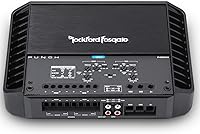
  • Total RMS Output: The amplifier delivers 400 watts total RMS power across all four channels under rated conditions.
  • Channels: Four independent channels allow full-range speaker configurations or bridged subwoofer operation.
  • Power at 4-Ohm: Each channel produces 50 watts RMS when driving a 4-ohm load.
  • Power at 2-Ohm: Each channel produces 100 watts RMS when driving a 2-ohm load.
  • Bridged Power: Pairs of channels can be bridged to deliver 200 watts RMS into a single 4-ohm load.
  • Circuit Class: Class A/B topology is used, prioritizing audio fidelity and low distortion over raw power efficiency.
  • Dimensions: The unit measures 11 x 7.8 x 2.4 inches (L x W x H), enabling installation in space-constrained locations.
  • Weight: The amplifier weighs 6.93 pounds, making it manageable for single-person installation.
  • Input Type: Both Hi-level and Lo-level RCA inputs are supported, allowing direct connection to factory or aftermarket head units.
  • Crossover: Variable 12 dB per octave Butterworth crossovers are included on each channel for flexible frequency management.
  • Bass EQ: An on-board Punch EQ provides up to +18 dB of boost centered at 45 Hz for enhanced low-frequency output.
  • Recommended Fuse: A 60-amp external fuse is recommended to protect the amplifier and vehicle wiring during operation.
  • Cooling Method: The amplifier uses passive convection cooling with no internal fan, requiring adequate clearance around the unit.
  • Operating Voltage: Designed to operate on a standard 12-volt DC vehicle electrical system.
  • RCA Pass-Through: RCA pass-through outputs are included, allowing daisy-chaining to additional amplifiers in multi-amp systems.
  • Gain Setup: Rockford Fosgate’s C.L.E.A.N. system is built in to assist with accurate gain calibration without external test equipment.
  • Bridgeable: The amplifier is fully bridgeable, allowing channel pairs to be combined for higher single-channel output.
  • Wireless Remote: No wireless remote control is included or supported by the amplifier.
  • Warranty: Rockford Fosgate covers the amplifier with a one-year limited manufacturer warranty.
  • Mounting Type: The unit is designed for car mounting and includes provisions for standard surface or under-seat installation.

Related Reviews
Rockford Fosgate PBR300X4 4-Channel Car Amplifier
79%
84%
Sound Quality
93%
Form Factor and Size
87%
Installation Ease
76%
Power Delivery
82%
Value for Money
More
Rockford Fosgate PBR400X4D 4-Channel Car Amplifier
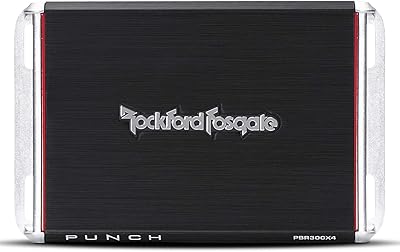
80%
96%
Size & Form Factor
81%
Power Output
78%
Installation Experience
83%
Sound Quality
89%
Heat Management
More
Rockford Fosgate Punch P600X4 4-Channel Amplifier
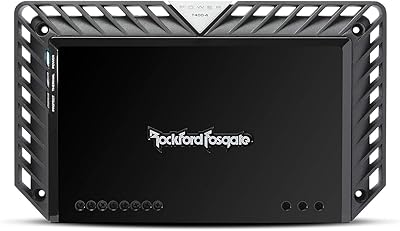
87%
93%
Sound Clarity
91%
Build Quality
88%
Power Output
89%
Installation Experience
71%
Value for Money
More
Rockford Fosgate Power T400-4 400-Watt 4-Channel Amplifier
87%
91%
Performance
89%
Sound Quality
94%
Ease of Installation
88%
Durability
90%
Build Quality
More
Rockford Fosgate R300X4 Prime 4-Channel Amplifier
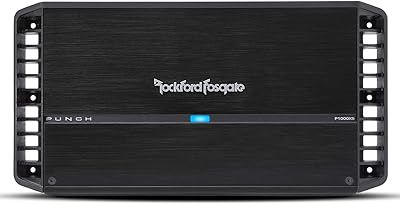
87%
88%
Performance
91%
Ease of Installation
85%
Build Quality
87%
Thermal Management
84%
Sound Output
More
Rockford Fosgate P1000X5 5-Channel Car Amplifier
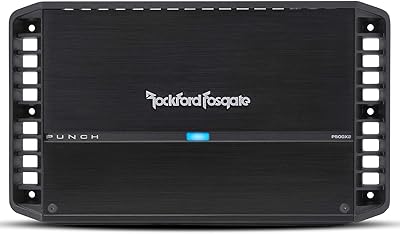
82%
91%
Sound Quality
88%
Bass Performance
93%
Build Quality
86%
Power Output Accuracy
67%
Installation Experience
More
Rockford Fosgate P500X2 2-Channel Car Amplifier
80%
88%
Audio Output Quality
91%
Build Quality
86%
Versatility & Configuration Options
74%
Ease of Installation
79%
Gain Calibration System
More
Rockford Fosgate P300X2 Punch 300 Watt 2-Channel Amplifier
85%
89%
Sound Performance
91%
Bass Response
85%
Build Quality
87%
Ease of Installation
92%
Value for Money
More
Rockford Fosgate Punch P1000X2 1000-Watt 2-Channel Amplifier
86%
93%
Sound Performance
91%
Power Output
88%
Installation Ease
72%
Thermal Management
89%
Durability and Build Quality
More
Rockford Fosgate R2-300X4 4-Channel Amplifier
82%
86%
Sound Quality
83%
Build Quality
79%
Power Output
91%
Ease of Installation
62%
Thermal Management
More

FAQ

Yes, and this is one of the more practical things about the P400X4. The Hi-level inputs let you tap directly into the speaker outputs of a stock head unit, so you skip the cost and wiring complexity of a separate line output converter. Just make sure your signal levels are set conservatively during initial setup to avoid clipping.

Bridging combines a pair of channels into a single higher-output channel. On the P400X4, you connect your subwoofer to the positive terminal of one channel and the negative terminal of the adjacent channel, then set the amp to bridged mode using the onboard switch. The result is 200 watts RMS into a 4-ohm sub — a meaningful step up from running the channels independently.

Yes, that’s expected behavior with Class A/B amplifiers — they run warmer than Class D by design, and the P400X4 relies entirely on convection cooling with no fan. It’s not a defect, but it does mean you need to be deliberate about where you mount it. Leave at least a couple of inches of clearance on the sides and top, and avoid fully enclosed spaces like sealed compartments with no air movement.

It’s a built-in gain-setting tool that uses a series of LED indicators to help you calibrate the input sensitivity correctly. The idea is to eliminate guesswork — instead of estimating the gain by ear or using an oscilloscope, you follow the LED feedback to find the right setting. For most home installers, it genuinely reduces the risk of running a clipped signal, which is a common cause of speaker damage.

It handles a full 4-speaker setup well — that’s essentially the primary use case. Four channels, four speakers, one amp. Whether you’re running component sets up front and coaxials in the rear, or a full component system throughout, the power delivery at each channel is consistent and clean enough for most builds. Pair it with efficient speakers and you’ll have plenty of headroom.

It’s manageable for a first-timer, but go in prepared. The C.L.E.A.N. gain system takes some of the intimidation out of calibration, and the wiring connections are clearly labeled. That said, the printed manual is pretty bare-bones, so budget time to consult Rockford Fosgate’s online resources or installation guides from the car audio community before you start pulling panels.

Yes, each channel is stable down to 2 ohms and puts out 100 watts RMS at that load. Just be aware that lower impedance draws more current and generates more heat, so ventilation becomes even more important if you’re running 2-ohm loads for extended periods.

No, the amplifier ships without installation accessories like RCA cables, power wire, ground wire, or speaker wire. You’ll need to source those separately based on the cable runs in your specific vehicle. A 60-amp inline fuse for the power line is also required and not included.

The Punch EQ adds up to +18 dB of boost at 45 Hz, which is in the midbass and upper-bass range. It’s primarily aimed at improving punch and impact through your full-range speakers rather than replacing a dedicated subwoofer. If you’re running a complete system with a sub, you can use the EQ on the front channels for midrange warmth and manage the sub separately. It’s a useful tool, not a mandatory one.

Class D amps are more efficient and run cooler, which makes them easier to place and lighter on your electrical system. Class A/B, which this Rockford Fosgate amp uses, tends to produce a warmer, slightly more refined sound that many enthusiasts prefer for full-range speaker duty. Neither is objectively better — it depends on your priorities. If efficiency and heat are concerns, Class D is worth considering. If audio quality for music listening is the main goal, the Class A/B design here holds its own well.

Where to Buy