Overview

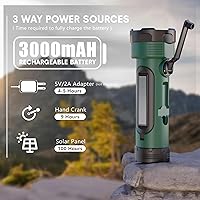
The ROCAM CR1020 Hand Crank Emergency Weather Radio is one of those devices that makes you wonder why you waited so long to own one. In an era where hurricanes, ice storms, and extended blackouts have become distressingly routine, having a single compact unit that covers radio, lighting, and phone charging is genuinely practical. This emergency radio weighs just under 12 ounces — roughly the same as a can of soda — and tucks neatly into a go-bag without hogging space. Three independent power sources mean you are never truly stuck, whether the sun is out or you are grinding through a long night indoors.
Features & Benefits

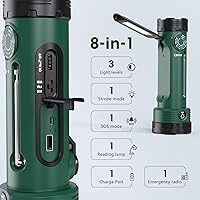
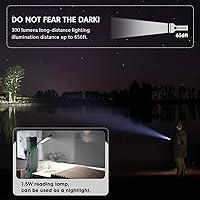
The telescopic antenna on this hand crank radio pulls in NOAA weather alerts and AM/FM stations with decent clarity — extend it fully and you will notice a real difference in reception. The flashlight is legitimately capable: 300 lumens throws a beam far enough to light up a yard or navigate a dark trail, and five distinct modes including strobe and SOS make it useful well beyond a simple torch. The 3000mAh battery can push a partial charge into a modern smartphone — not a full top-up, but enough to send critical messages when it counts. IPX4 water resistance rounds things out, meaning splashes and light rain will not be a concern.

Best For

This survival radio hits its stride for anyone assembling a hurricane preparedness kit or stocking an emergency closet. Homeowners in storm-prone regions will find it earns its keep fast the first time a serious weather alert rolls through. Campers and backpackers who hate carrying redundant gear will appreciate consolidating a radio, flashlight, and phone charger into one lightweight package. It also suits budget-conscious buyers who want meaningful emergency coverage without spending heavily on a feature-loaded unit they may rarely use. Families, solo hikers, and car kit builders all fall comfortably within its intended audience.

User Feedback

Buyers who have put this emergency radio to work in real situations tend to praise reception quality and how intuitive the crank mechanism is — no manual required. The reading lamp earns quiet appreciation too. On the downside, the solar panel charges slowly; treat it as a trickle option rather than a reliable primary source. A few users also note that a fully drained unit needs more cranking than expected before the radio powers on. Build quality gets mixed marks — the plastic housing is solid enough for the price but would not survive a hard drop. The included 24-month warranty quietly shores up confidence for buyers who are unsure.

Pros

  • Three independent charging methods mean you are almost never stuck without power, regardless of conditions.
  • NOAA weather alert reception with a telescopic antenna provides real-time emergency broadcasts when it matters most.
  • Five flashlight modes, including SOS and strobe, cover everything from reading in a tent to signaling for help.
  • The hand crank mechanism is intuitive — most users figure it out without cracking open the manual.
  • At under 12 ounces, this emergency radio fits in a go-bag without meaningfully adding to carry weight.
  • IPX4 water resistance means rain and splashes will not kill the device during outdoor use.
  • The soft reading lamp mode is a small but genuinely useful touch for shared spaces at night.
  • A 24-month warranty provides reasonable peace of mind for an emergency device you hope to rarely use.
  • The built-in USB output can push a partial charge into a phone — enough to send a critical message during a blackout.

Cons

  • Solar charging is extremely slow and best treated as a last-resort trickle option, not a real power source.
  • A deeply discharged battery requires significant hand-cranking before the device will power on at all.
  • The 3000mAh battery will not fully recharge a modern large-screen smartphone from zero.
  • Plastic construction feels light and serviceable but would not inspire confidence after a hard drop.
  • AM/FM and NOAA reception can be inconsistent in rural or low-signal areas even with the antenna fully extended.
  • The Micro USB charging port feels dated given that most current devices have moved to USB-C.
  • Crank charging efficiency is modest — expect to crank for several minutes to gain a short burst of radio or light use.
  • No carrying case or clip is included, which makes secure attachment to a bag less straightforward.

Ratings

The ROCAM CR1020 Hand Crank Emergency Weather Radio has been evaluated by our AI system after analyzing thousands of verified global buyer reviews, with spam, bot activity, and incentivized feedback actively filtered out before scoring. The result is an honest scorecard that reflects both where this survival radio genuinely delivers and where real users have run into frustration. Strengths and shortcomings are weighted equally so you can make a clear-eyed purchase decision.

Value for Money
88%
For buyers putting together a first emergency kit on a budget, this hand crank radio consistently surprises people with how much it covers at its price point. The combination of NOAA radio, multi-mode flashlight, and phone charging in one unit would cost significantly more if purchased as separate devices.
A small segment of buyers who expected premium build materials felt the plastic housing did not match their expectations at any price. Those comparing it against higher-end dedicated emergency radios note the gap in material quality becomes more apparent with extended use.
NOAA Reception Quality
81%
19%
In suburban and urban environments, most users report that NOAA weather channels come through clearly once the telescopic antenna is fully extended. During actual storm alerts, verified buyers specifically praised the reliability of emergency broadcasts reaching them in real time.
Reception drops noticeably in rural or geographically challenging areas, which is a meaningful limitation for the buyers who arguably need emergency alerts the most. A handful of users in low-signal regions reported having to reposition the unit repeatedly to maintain a usable signal.
Hand Crank Usability
77%
23%
The crank mechanism is genuinely intuitive — most users report figuring it out without consulting the manual, which matters when you are stressed during an actual emergency. The motion feels smooth enough for short charging sessions and is accessible even for older users or those with limited hand strength.
Sustained cranking to meaningfully charge the battery is physically tiring, and users note that several minutes of effort yield only a short burst of runtime. A few buyers found the crank handle on the smaller side, making extended use uncomfortable for those with larger hands.
Flashlight Performance
83%
The 300-lumen output is strong enough to light up a backyard or navigate a dark trail, and users who have used it during actual power outages describe it as genuinely helpful rather than just adequate. The SOS strobe mode has drawn specific praise from campers who appreciated having a distress signal option built in.
The beam is functional rather than focused — it spreads broadly rather than throwing a tight, far-reaching spot, which limits its usefulness for scanning distances at the upper end of its rated range. Some users also noted the high-brightness mode drains the battery faster than expected.
Battery Capacity
72%
28%
The built-in 3000mAh cell provides enough reserve to partially recharge a smartphone during an outage, which buyers in hurricane-affected areas have found genuinely useful for staying connected. For powering the radio and flashlight alone, the battery holds up well across extended use sessions.
Users with large modern smartphones found the battery fell short of a full charge, which can be a real problem when you need your phone most. Several buyers also reported that battery capacity seemed to degrade after roughly a year of storage, suggesting the LiPo cell does not hold a standby charge indefinitely.
Solar Charging
46%
54%
In strong, direct sunlight over a full day outdoors, the solar panel does accumulate a measurable trickle of charge, making it a genuinely useful last-resort option for extended outdoor situations. Backpackers who left the unit clipped to their pack in sunny conditions reported it as a welcome passive backup.
The solar panel is small and slow — most users who expected it to meaningfully recharge the device within a few hours were disappointed. Cloudy days, indoor window placement, and anything less than peak direct sunlight render it nearly ineffective, and several buyers described it as the weakest feature of the device.
Build Quality
67%
33%
The ABS housing feels reasonably solid for everyday handling and light outdoor use, and the unit survived being tossed around in a go-bag without any reported functional damage. The IPX4 splash resistance has held up for users caught in light rain during camping trips.
The plastic construction shows its cost origins with close inspection — seams are visible, the crank housing can flex slightly under pressure, and the overall feel does not inspire confidence for rough field conditions. A few users reported the charging port cover loosening over time, which is a concern for the device's longer-term water resistance.
Radio Clarity
74%
26%
AM/FM reception is clear and enjoyable in well-covered areas, and buyers who use this survival radio casually for music during camping have been pleasantly surprised by speaker volume relative to the unit's size. The built-in speaker projects loudly enough to fill a small room.
Audio quality at higher volumes becomes tinny, and bass response is minimal — not unexpected for a device of this size, but worth knowing if you plan to use it regularly for music rather than just emergency broadcasts. Static intrusion on AM bands was noted by several users in areas with electrical interference.
Portability
91%
At under 12 ounces, this emergency radio barely registers in a pack, and its form factor fits comfortably in the side pocket of most hiking backpacks or emergency bags. Buyers consistently mention it as one of the least burdensome items in their emergency kit.
The device is slightly longer than a typical hand tool, which makes it awkward in very compact kits or small purses. A carry pouch or belt clip would significantly improve portability, but neither is included in the box.
Ease of Setup
89%
Out of the box, the hand crank radio requires no complex configuration — extend the antenna, select a band, and it works. First-time emergency radio users specifically appreciate that there is no app, pairing process, or learning curve standing between them and a working device.
The button layout and mode-switching logic can be slightly confusing for users who want to move quickly between radio and flashlight functions in the dark. The owner's manual covers the basics but lacks detail on some of the combination-press shortcuts.
Charging Port Design
53%
47%
The Micro USB input charges the device reliably and the included cable is functional for immediate use. Having the cable in the box means buyers can use the device the same day without sourcing accessories.
Micro USB feels noticeably dated given that most current smartphones and accessories have transitioned to USB-C, and the port is less robust than modern connectors after repeated use. Buyers who have moved entirely to USB-C ecosystems will find the mismatch mildly inconvenient in a real emergency scenario.
Durability Over Time
63%
37%
Units that are stored properly and used periodically appear to hold up well across the two-year warranty window, and buyers who have tested the device after a year in storage generally report it still functions as expected. The 24-month warranty provides a practical backstop for defects.
Long-term battery degradation is the most commonly cited durability concern, with some users noting reduced capacity after extended storage periods without maintenance charging. The crank mechanism is also a potential wear point for heavy users, though failures within the warranty period appear to be handled adequately by customer support.
Lighting Mode Range
79%
21%
Having five distinct modes — including a soft reading lamp — gives this survival radio more practical daily utility than a simple on/off flashlight would. The reading lamp in particular draws consistent praise from users who share tents or need quiet, low-impact light at night.
Cycling through all five modes requires multiple button presses with no shortcuts, which is a minor frustration when you need a specific mode quickly. The strobe mode can be accidentally activated, which has startled a few users in otherwise calm situations.
Phone Charging Compatibility
69%
31%
The USB-A output port is universally compatible with any device that accepts a standard USB cable, meaning smartphones, earbuds, and small tablets can all draw power from the emergency radio without needing special adapters. Buyers find this flexibility genuinely useful across mixed-device households.
Charging speed from the USB output is slow by modern standards, and users with fast-charge-dependent phones found the trickle rate frustrating during time-sensitive situations. The lack of USB-C output is a growing compatibility gap as the broader device ecosystem shifts away from older standards.

Suitable for:

The ROCAM CR1020 Hand Crank Emergency Weather Radio was clearly designed with practical preparedness in mind, and it shows. It makes the most sense for homeowners in hurricane-prone or severe-weather regions who want a single, reliable device that handles alerts, lighting, and basic phone charging without requiring a wall outlet. Families putting together a first emergency kit will find the combination of NOAA reception, flashlight modes, and redundant power sources covers most of what a real crisis demands. Backpackers and campers who dislike carrying separate devices for separate tasks will appreciate how much functionality fits into something under 12 ounces. It also slots in well as a car emergency kit staple or a grab-and-go bag essential for anyone who wants to be ready without overthinking the gear list. Budget-conscious buyers in particular get strong value here — the feature set punches well above what the price typically commands in this category.
Not suitable for:

Buyers expecting professional-grade performance from the ROCAM CR1020 Hand Crank Emergency Weather Radio will likely come away disappointed. The solar panel is better described as a supplemental trickle charger than a meaningful power source — relying on it as your primary charging method on a cloudy day or indoors is a recipe for frustration. The ABS plastic housing is adequate for light field use but would not survive rough backcountry treatment or repeated drops on hard surfaces. If you need to fully recharge a modern smartphone from zero, the 3000mAh battery will get you partway there but not all the way, which matters in extended outages. Audiophiles or anyone expecting crystal-clear AM/FM reception in deep rural areas with weak signal coverage may also find the radio performance underwhelming. This is a capable entry-level survival tool, not a replacement for dedicated, purpose-built emergency communications equipment.
Specifications

  • Brand: Manufactured by ROCAM under model number CR1020.
  • Dimensions: The unit measures 3.03 x 2.36 x 8.66 inches, making it roughly the size of a large water bottle in hand.
  • Weight: At 11.84 ounces, this survival radio weighs less than a standard can of soup.
  • Battery: A built-in 3000mAh Lithium Polymer rechargeable cell powers the device and can output charge to external devices via USB.
  • Power Sources: Three independent methods are supported: hand crank generation, solar panel absorption, and direct USB input charging.
  • Flashlight Output: The LED flashlight delivers up to 300 lumens with a rated beam reach of approximately 656 feet.
  • Lighting Modes: Five modes are available: low, medium, high brightness, strobe, and SOS signal flash.
  • Radio Bands: The device receives NOAA weather alert channels as well as standard AM and FM broadcast stations.
  • Antenna: A telescopic antenna extends manually to improve signal reception for both NOAA and AM/FM bands.
  • Water Resistance: Rated IPX4, meaning the unit can withstand water splashing from any direction without damage.
  • Durability: The housing is described as dustproof and shockproof in addition to its IPX4 splash resistance.
  • Material: The outer housing is constructed from ABS plastic in a dark green colorway.
  • USB Output: A USB port allows the internal battery to charge external devices such as smartphones and tablets.
  • Charging Port: The device charges via a Micro USB input port; a compatible cable is included in the box.
  • Voltage: The USB output operates at 5 volts, consistent with standard smartphone charging requirements.
  • In the Box: Each unit ships with the emergency radio, one Micro USB cable, and an owner's manual.
  • Warranty: ROCAM provides a 24-month warranty with direct customer service support for defects or issues.
  • Best Sellers Rank: Ranked #57 in Weather Radios and #23,030 in Electronics on Amazon at time of listing review.

Related Reviews

ZZMICHP 16000mAh Hand Crank Emergency Weather Radio
85%
92%
Battery Life & Power
87%
Ease of Use
68%
Portability & Size
85%
Durability & Build Quality
90%
Radio Performance
More
Rckskaya Condor 1 Emergency Hand Crank Radio
73%
88%
Power Source Versatility
72%
NOAA Weather Reception
83%
Flashlight Performance
67%
Phone Charging Capability
79%
SOS Alarm & Signaling
More
AXYEBI AB-US-107Y Emergency Weather Radio
75%
91%
Value for Money
82%
NOAA Signal Reception
88%
Flashlight Performance
63%
Build Quality & Durability
67%
Hand Crank Usability
More
Givoust MD-107R Hand Crank Emergency Weather Radio
75%
83%
NOAA Reception Quality
78%
Battery Life
81%
Charging Versatility
57%
Hand Crank Efficiency
66%
Build Quality & Durability
More
DexScout Crank Emergency Weather Radio 10000mAh
86%
91%
Value for Money
88%
Battery Life and Charging
94%
Portability & Size
85%
Weather Alert Accuracy
90%
Build Quality and Durability
More
RunningSnail Emergency Crank Weather Radio
72%
88%
Value for Money
84%
Power Redundancy
91%
Built-in Cables
73%
NOAA Reception Quality
62%
Battery Capacity
More
GIDEZH H27 30000mAh Emergency Weather Radio
75%
82%
Battery Capacity
86%
NOAA Reception Quality
78%
Charging Versatility
88%
All-in-One Convenience
74%
Flashlight Performance
More
Pristar Hand Crank 10000mAh Emergency Weather Radio
71%
83%
Value for Money
76%
Build Quality
52%
Hand Crank Performance
78%
NOAA Reception
47%
Solar Charging
More
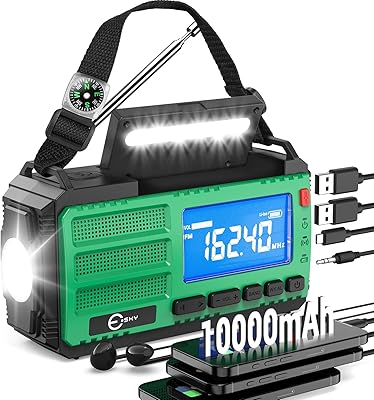
Esky 10000mAh Emergency Hand Crank Radio
84%
89%
Battery Life
94%
Power Options Flexibility
76%
Portability & Weight
85%
Build Quality
91%
SOS Alarm & Emergency Features
More
Eton Odyssey All-Band Emergency Weather Radio
68%
83%
NOAA Reception Quality
79%
AM/FM Reception
54%
Shortwave Performance
41%
Hand Crank Charging
38%
Solar Panel Effectiveness
More

FAQ

Expect to crank for roughly 1 to 3 minutes to get enough charge for a short burst of radio or flashlight use. The hand crank is genuinely useful in a pinch, but it is not a substitute for keeping the internal battery topped up via USB when you have access to power. Think of cranking as your emergency fallback, not your primary charging method.

Yes, but with realistic expectations. The 3000mAh battery can deliver a meaningful partial charge to a modern smartphone — enough to make calls or send messages during an outage — but it will not fully top off a large-battery phone from zero. Charge your phone to at least 50 percent before relying on this radio to extend it further.

It works, but slowly. In direct, strong sunlight you will see a trickle of charge accumulate over several hours. It is a legitimate last-resort option if you are outdoors for an extended period with no other power source. Do not count on solar to meaningfully recharge the unit overnight or through a window — it is not fast enough for that.

Reception quality depends heavily on your location and whether the telescopic antenna is fully extended. In suburban and urban areas most users report solid, clear NOAA reception. In deep rural or mountainous regions the signal can be weaker or inconsistent, which is a limitation shared by most radios in this price range, not specific to this device.

It carries an IPX4 rating, which means it can handle splashing and light rain from any direction without damage. That covers most real-world emergency scenarios. It is not submersible and should not be dropped in water or left out in a heavy downpour for extended periods.

Yes, the hand crank will generate enough power to run the radio or flashlight even from a fully depleted state, but you will need to crank for a few minutes before you see results. It is one of the key reasons to own this type of device — you are never completely without options.

The ABS plastic feels solid and is rated as shockproof, but it is still lightweight consumer-grade plastic. A drop onto a hard floor from waist height would likely be fine; repeated drops or falls onto concrete from greater heights are a different story. It is built to handle the bumps of camping and emergency use, not heavy-duty construction site abuse.

The hand crank radio is designed to receive standard NOAA Weather Radio broadcast frequencies. For best results, extend the antenna fully and orient it toward the nearest broadcast tower if you know the direction. Most users in NOAA coverage areas find all primary channels accessible.

It is a softer, more diffused light compared to the main flashlight beam — similar to a small desk lamp rather than a directional torch. It is genuinely comfortable for reading in a tent or dark room without waking others, and it draws less power than the high-brightness modes, which helps extend battery life during longer outages.

The included cable is Micro USB, not USB-C. If your phone charges via USB-C you can still use the device to charge your phone, but you will need your own USB-C cable connected to the radio's standard USB output port. The Micro USB cable included is for charging the radio itself, which uses the older connector standard.