
Overview

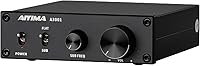
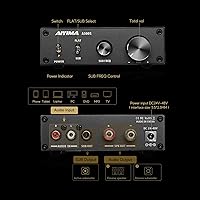
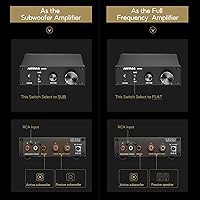
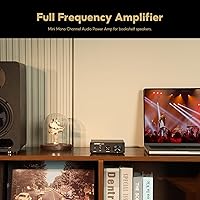
The AIYIMA A3001 is a compact mono Class D amplifier that punches above its price point, built around the TPA3255D2 chip for efficient, cool-running performance. It ships ready to use — a 36V 6A power adapter is included in the box, so there's no hunting for compatible supplies on day one. The aluminum chassis keeps things light at just 2.2 pounds, and the unit stays surprisingly cool even during extended sessions. What makes this mono subwoofer amp stand out at this price tier is its dual-mode switching — run it as a dedicated subwoofer driver or flip it into full-frequency mono mode depending on your setup.

Features & Benefits

The TPA3255D2 chip at the heart of this compact Class D amp delivers impressively clean output — distortion sits at just 0.03% at 1W, and the signal-to-noise ratio clears 106dB, which is genuinely quiet for a unit at this price. The adjustable low-pass filter covers 40 to 300Hz with a -12dB/octave slope, giving you real control over where the bass rolls off rather than a fixed cutoff. RCA inputs and dual output options — standard RCA plus a dedicated subwoofer out — make it easy to slot into an existing system. The voltage range runs from 24V to 48V DC, so upgrading to a beefier external power supply later is a genuine, supported option.

Best For

This mono subwoofer amp is squarely aimed at a specific type of buyer, and it is worth being clear about that. If you need a dedicated subwoofer driver for a home theater or want to add bass reinforcement to a desktop PC rig without buying a full receiver, the A3001 is hard to beat at this price. DIY speaker builders will appreciate the flexible voltage input and switchable modes. It also works well as a single-channel amp for a bedroom or secondary room where you just need one speaker running clean. It is not a stereo solution — buyers expecting two-channel output should look elsewhere.

User Feedback

Buyers consistently rate this compact Class D amp well, with most praise focused on how quietly it runs, how straightforward the setup is, and how much performance it delivers relative to cost. The power output numbers do generate discussion, though. The headline 300W figure requires a 48V 10A supply and a 4Ω load — not the included 36V adapter — and some buyers feel that is not communicated clearly enough upfront. Real-world output at the included supply is closer to 150W at 4Ω, still substantial for most home setups. The included adapter gets mixed reviews; some find it adequate while others upgrade early. Build quality is generally solid, though a few note the knobs feel slightly light.

Pros

  • Ships with a working 36V power adapter — most buyers are up and running in under ten minutes.
  • The TPA3255D2 chip keeps distortion exceptionally low, producing a clean, quiet background noise floor.
  • Switchable between subwoofer bass mode and full-frequency mono output — one unit covers two use cases.
  • The adjustable low-pass filter spans 40 to 300Hz, giving real crossover flexibility without extra hardware.
  • Aluminum chassis stays cool during extended listening sessions without needing a fan.
  • Voltage input supports 24V to 48V DC, so upgrading the power supply for more headroom is straightforward.
  • Compatible with both passive and active subwoofers, plus standard 4 to 8Ω passive speakers.
  • Signal-to-noise ratio exceeds 106dB — noticeably quieter than most budget amp boards in this price range.
  • Compact footprint fits easily behind a monitor, inside a cabinet, or beside a subwoofer enclosure.
  • RCA inputs work with virtually any consumer source — TV, DAC, PC sound card, or streaming preamp.

Cons

  • The 300W power claim requires a 48V 10A supply not included in the box — real output at 36V is significantly lower.
  • The low-pass filter dial has no numeric markings, making it hard to repeat a preferred crossover setting.
  • Input and output knobs feel lightweight and plasticky relative to the solid aluminum chassis.
  • The included manual is minimal and skips practical guidance like crossover tuning or power supply upgrade advice.
  • RCA jacks feel slightly loose, raising durability questions for setups that involve frequent cable swapping.
  • No balanced XLR input limits integration with semi-professional or studio-grade source equipment.
  • Mode switching leaves no clear visual confirmation of the active setting, which can cause accidental changes.
  • In poorly ventilated spaces or warmer climates, the chassis runs hotter than buyers in temperate environments report.
  • Mono-only output surprises buyers who skim the listing and assume stereo capability at this price point.
  • Official customer support is limited — troubleshooting largely depends on community forums rather than direct manufacturer guidance.

Ratings

The AIYIMA A3001 holds a 4.4-star average across hundreds of verified global purchases, and these scores were generated by AI after analyzing that real-world buyer feedback — actively filtering out incentivized reviews, bot submissions, and outlier noise. What emerges is an honest picture of a niche but capable unit: strong where it counts for subwoofer and mono speaker use, with a few practical limitations that serious buyers should weigh before purchasing.

Value for Money
91%
For buyers who just need a clean, dedicated mono amp to drive a passive subwoofer or a single speaker, the price-to-performance ratio is difficult to argue with at this tier. Most buyers report getting noticeably better bass clarity than the built-in amplification on TVs, receivers, or PC soundbars they were replacing.
The value calculation shifts if you need to buy a better power supply separately to reach useful output levels — that adds to the real cost. Buyers who misread the product as a general stereo amp feel the value drops sharply once they realize the mono-only limitation.
Audio Performance
84%
The TPA3255D2 chip delivers impressively low distortion and a noise floor that stays quiet even at moderate listening volumes, which is exactly what you want when using this compact Class D amp as a subwoofer driver in a quiet home theater room. Background hiss is rarely mentioned in buyer feedback, which speaks well of the NE5532 op-amp pairing.
At the included 36V supply, the real-world headroom is more modest than the marketing headline implies — pushing the amp hard on inefficient 8Ω speakers reveals compression earlier than some buyers expect. Audiophiles with high-sensitivity reference setups may find the sonic ceiling limiting.
Power Output Accuracy
53%
47%
The underlying chip is genuinely capable, and buyers who understand the voltage-to-power relationship appreciate that upgrading to a 48V supply meaningfully increases output. The RMS figures at 36V — around 150W into 4Ω — are still workable for most home subwoofer applications.
The 300W headline figure requires a 48V 10A supply and a 4Ω load, neither of which ships with the unit. A notable number of buyers feel misled by the marketing, and the fine-print disclaimer is easy to miss. This single issue generates more negative feedback than any other aspect of the A3001.
Ease of Setup
93%
Plug in the included adapter, connect an RCA source, wire up your speaker, and you are running — most buyers report the whole process taking under ten minutes. The mode switch for toggling between subwoofer and full-frequency output is straightforward enough that first-time amp users rarely struggle with it.
A small number of buyers report initial confusion about which mode to use when connecting an active versus passive subwoofer, since the labeling on the unit is minimal. The manual is sparse and does not walk through real-world connection scenarios in much detail.
Low-Pass Filter Usability
79%
21%
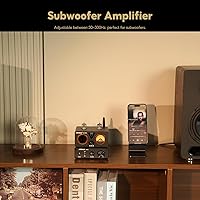
The tunable crossover range of 40 to 300Hz is genuinely wide for a unit at this price, letting users dial in a natural blend between a subwoofer and satellite speakers without needing an external crossover. Buyers using this mono subwoofer amp in desktop setups appreciate being able to set a high crossover point and run it with bookshelf speakers.
The filter adjustment knob feels imprecise — small turns produce larger-than-expected frequency shifts, making it tricky to land on an exact crossover point by ear. There is no numeric indicator on the dial, so repeating a known setting after power cycling requires guesswork.
Build Quality
71%
29%
The aluminum chassis feels appropriately solid for the price point, and the unit does not rattle or flex when handled. Heat dissipation through the metal body works well — buyers running extended listening sessions report the case gets warm but never uncomfortably hot.
The input and output knobs feel noticeably light and plasticky relative to the chassis itself, which creates a slightly mismatched tactile impression. A few buyers also note that the RCA jacks feel looser than expected, raising minor long-term durability questions with frequent cable swapping.
Included Power Adapter
61%
39%
The 36V 6A adapter ships in the box and works fine for moderate listening levels and efficient speakers, which means most casual buyers never feel compelled to replace it. For a bedroom or desktop setup running at reasonable volumes, it covers the use case adequately.
Buyers who push the amp harder or pair it with less efficient speakers frequently hit the ceiling of the included supply and report audible compression. A meaningful portion of user reviews specifically recommend budgeting for a 48V upgrade supply to get the most out of the hardware.
Mode Switching Functionality
76%
24%
The ability to toggle between full-frequency mono and dedicated subwoofer bass output genuinely expands the use cases for this amp, and buyers who understand the distinction find it works as described. Switching between a passive bookshelf speaker setup and a subwoofer-only configuration is handled cleanly.
The physical switch itself offers no tactile confirmation of which mode is active without looking closely at the label, which can lead to brief confusion in dark equipment racks. A handful of buyers report needing to re-read the manual to understand why the sound changed after accidentally toggling the switch.
Connectivity & Compatibility
82%
18%
RCA inputs are universal enough to connect to virtually any consumer source — TVs, preamps, DACs, PC sound cards, and streaming devices all work without adapters in most setups. Having both standard RCA and a dedicated subwoofer output on the same unit gives useful routing flexibility.
The mono-only architecture means buyers cannot use this compact Class D amp to drive a stereo pair without a second unit, which surprises those who skim the listing. There is no balanced XLR input option, which limits integration into more professional signal chains.
Noise Floor & Hum
87%
One of the most consistently praised aspects across buyer reviews is how quiet this amp runs at idle and low volumes. Users coming from noisy budget amp boards or cheap integrated amp stages notice the absence of background hiss immediately, particularly in near-field desktop listening environments.
A small percentage of buyers report a faint hum that correlates with the quality of their source component or grounding situation rather than the amp itself — but it does occur. Switching power supplies in the vicinity can also introduce minor interference that the amp does not fully reject.
Size & Form Factor
89%
At roughly 10 inches by 8.5 inches and just over 2 pounds, this mono subwoofer amp tucks neatly behind a monitor, inside a media cabinet, or alongside a subwoofer cabinet without demanding dedicated shelf space. Buyers building compact home theater setups consistently cite the footprint as a meaningful advantage.
The form factor, while compact for a standalone amp, is still larger than some buyers anticipate based on product photos. For truly space-constrained installs — inside a subwoofer enclosure, for example — it may be a tighter fit than expected.
Thermal Management
86%
Class D efficiency means the A3001 converts far less power to heat than an equivalent Class A or AB design, and buyers confirm it runs noticeably cooler than older amp boards they have used. Extended two-to-three hour listening sessions rarely produce more than a warm-to-the-touch chassis.
Without active cooling, sustained high-output sessions in enclosed or poorly ventilated spaces can cause the chassis to become quite warm. A few buyers in warmer climates mention the unit running hotter than expected during summer use in non-air-conditioned rooms.
Documentation & Support
48%
52%
Basic setup is intuitive enough that most buyers get running without consulting the manual at all, which partly compensates for its limitations. AIYIMA has a reasonable online presence and community of users who share setup tips across audio forums.
The included documentation is thin — a single small sheet that covers connections but skips over practical guidance like crossover tuning recommendations or power supply upgrade paths. Buyers who encounter issues have limited official support to turn to, which generates frustration in the reviews.
Signal-to-Noise Ratio
88%
A measured SNR clearing 106dB is strong for this price tier and translates directly to a black, quiet background between musical passages — something buyers upgrading from entry-level integrated amps notice right away. This contributes heavily to the perception that the A3001 punches above its weight class.
The SNR figure is a best-case measurement under controlled conditions; real-world results depend heavily on source quality and cable shielding. Buyers using unshielded RCA cables or placing the unit near switching power supplies occasionally report a noisier experience than the spec suggests.

Suitable for:

The AIYIMA A3001 is a strong fit for anyone who needs a dedicated mono amplifier to drive a passive subwoofer in a home theater or living room setup without investing in a full AV receiver. Desktop audio enthusiasts who want to add real bass reinforcement to a PC-based listening rig will find the compact footprint and RCA connectivity slot in cleanly alongside a DAC or sound card. DIY speaker builders working on budget HiFi projects will appreciate the wide voltage input range, which leaves room to scale power output later by simply swapping the supply. It also works well as a secondary room amp — a bedroom, garage workshop, or home office speaker setup where one clean, efficient channel is all you need. If your current bass output feels thin or compressed and you want a meaningful improvement without a complicated installation, this mono subwoofer amp delivers exactly that.

Not suitable for:

The AIYIMA A3001 is not the right choice for anyone expecting a stereo amplifier — it outputs a single mono channel, and buyers who overlook that detail will be disappointed regardless of the audio quality. If you need to drive two separate speakers independently, you will need a second unit or an entirely different product. Buyers chasing the full 300W headline figure should also know upfront that achieving it requires a 48V 10A power supply and a 4Ω load — neither of which ships in the box — so if maximum output is the priority, budget for that upgrade or recalibrate expectations. Audiophiles with high-end reference speakers, balanced signal chains, or XLR-based source components will quickly run into the connectivity ceiling this compact Class D amp operates within. And if you want hands-on manufacturer support or thorough documentation to guide a complex installation, the sparse manual and limited official support channels may frustrate you.

Specifications

  • Amplifier Chip: Built around the Texas Instruments TPA3255D2, a high-efficiency Class D amplifier IC known for low distortion and cool operation.
  • Op-Amp: Uses the NE5532 dual op-amp for signal conditioning, contributing to the unit's low noise floor and clean frequency response.
  • Channels: Single-channel mono output only — not a stereo amplifier.
  • RMS Power Output: Delivers approximately 150W RMS into a 4Ω load and 120W RMS into an 8Ω load when powered by the included 36V 6A adapter.
  • Peak Power: Rated at 300W peak output, achievable only with a separately purchased 48V 10A power supply at a 4Ω speaker impedance.
  • Distortion (THD): Total harmonic distortion measures 0.03% at 1W output, indicating very clean amplification at moderate listening levels.
  • Signal-to-Noise: Signal-to-noise ratio is rated at 106dB or better, producing a near-silent background in typical home listening environments.
  • Frequency Response: Full-frequency mode covers 20Hz to 20kHz within ±3dB, suitable for driving a single full-range passive speaker.
  • Low-Pass Filter: Onboard adjustable low-pass filter spans 40Hz to 300Hz with a -12dB per octave slope for subwoofer crossover tuning.
  • Input Voltage: Accepts DC power supplies ranging from 24V to 48V, allowing users to upgrade beyond the included adapter for greater output headroom.
  • Included Supply: Ships with a 36V 6A DC power adapter, providing sufficient power for most moderate home subwoofer and speaker applications.
  • Speaker Impedance: Compatible with speakers rated at 4Ω to 8Ω impedance; lower impedance loads at higher voltages yield greater output power.
  • Audio Input: Single stereo RCA input accepts standard line-level signals from TVs, DACs, preamps, PC sound cards, and streaming devices.
  • Audio Output: Provides both a standard RCA output and a dedicated subwoofer terminal output for direct passive speaker wiring.
  • Operating Mode: Features a physical toggle switch to select between full-frequency mono amplifier mode and dedicated subwoofer bass output mode.
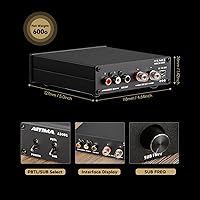
  • Dimensions: Measures 10.08″ x 8.5″ x 2.52″, compact enough for placement behind a monitor or inside a media cabinet.
  • Weight: Weighs 2.2 pounds, making it easy to reposition or mount without requiring additional support hardware.
  • Chassis Material: Encased in an aluminum alloy shell that passively dissipates heat without requiring a cooling fan.
  • Certifications: Carries FCC and IC certifications, confirming compliance with North American electromagnetic interference standards.
  • AC Compatibility: The included power adapter accepts AC input from 110V to 240V, making it compatible with standard wall outlets in North America and most international markets.

Related Reviews
AIYIMA T3 PRO Phono Preamp
87%
88%
Sound Quality
91%
Build Quality
85%
Ease of Use
90%
Setup & Installation
89%
Gain Control Functionality
More
AIYIMA A70
AIYIMA A70
82%
88%
Sound Quality
86%
PFFB Implementation
82%
Build Quality
91%
XLR Balanced Input
83%
Subwoofer Output & 2.1 Integration
More
AIYIMA T1 PRO Tube Preamp
86%
94%
Sound Quality
89%
Bluetooth Performance
86%
Build Quality
88%
Ease of Use
91%
Connectivity Options
More
AIYIMA T9
AIYIMA T9
77%
83%
Sound Quality
88%
Value for Money
91%
Connectivity & Input Variety
67%
Bluetooth Performance
74%
Build Quality & Materials
More
AIYIMA T8 6N3 Digital Tube Preamplifier
85%
91%
Sound Quality
88%
Bluetooth Connectivity
85%
Build Quality
94%
Ease of Setup
87%
Versatility of Inputs
More
AIYIMA DAC-A2
AIYIMA DAC-A2
77%
83%
Sound Clarity Improvement
79%
Tone Controls (Bass & Treble)
86%
Input Versatility
74%
Headphone Amplifier Performance
53%
Build Quality & Materials
More
AIYIMA A01 100W + 100W TPA3116 Stereo Amplifier
85%
88%
Sound Quality
91%
Ease of Setup
93%
Value for Money
85%
Bass Performance
87%
Treble Clarity
More
AIYIMA S400 Bookshelf Speakers
74%
72%
Sound Quality
54%
Bass Performance
67%
Treble & High-Frequency Response
88%
Connectivity & Input Options
79%
Bluetooth Performance
More

FAQ

It ships with a 36V 6A DC power adapter, so you can connect it to your source and speaker right out of the box. For most bedroom, desktop, or moderate home theater subwoofer uses, that included supply is perfectly adequate. If you plan to push it hard or want to approach the upper power limits, a separately purchased 48V supply will give you noticeably more headroom.

It is technically achievable, but only under specific conditions — a 48V 10A power supply and a 4Ω speaker load, neither of which ships with the unit. With the included 36V adapter, real-world output is closer to 150W into 4Ω. That is still plenty for most home subwoofer setups, but it is worth knowing the headline figure requires an upgrade supply to reach.

No — the AIYIMA A3001 outputs a single mono channel only. If you need stereo, you would need either a stereo amplifier or two of these units running independently. This amp is purpose-built for subwoofer driving or single-speaker mono applications.

Use a standard RCA cable from your TV's audio output (or a 3.5mm to RCA adapter from a PC headphone jack or sound card) into the amp's RCA input. From there, wire your passive subwoofer or speaker directly to the speaker output terminals. The whole setup typically takes under ten minutes.

The switch toggles between two operating modes: full-frequency mono, which passes the complete audio signal to a single speaker across 20Hz to 20kHz, and subwoofer mode, which applies the low-pass filter and rolls off everything above your selected crossover frequency. Use subwoofer mode when driving a dedicated bass cabinet, and full-frequency mode when running a single passive bookshelf or floor-standing speaker.

Yes, the amp is fully compatible with 4Ω to 8Ω speakers. At 8Ω with the included 36V supply, you get around 120W RMS — more than enough for a bookshelf speaker in a bedroom or secondary room. Just make sure you are using it in full-frequency mode rather than subwoofer mode if you want the complete audio range.

Quiet operation is one of the most consistently praised aspects of this compact Class D amp across buyer reviews. The TPA3255D2 chip and NE5532 op-amp combination produces a very low noise floor — most buyers coming from budget integrated amps or board-level amp modules notice the improvement immediately. That said, a faint hum can occasionally appear if your source component has grounding issues or if you are using low-quality unshielded RCA cables.

Both work, though in different ways. For a passive subwoofer, wire the speaker directly to the output terminals. For an active subwoofer that has its own built-in amplifier, use the RCA output and connect it to the subwoofer's line-level input. In that case, the mono amp acts as a preamp and crossover stage rather than a power driver.

Class D amplifiers are far more efficient than Class A or AB designs, so heat is much less of a concern here. Extended sessions of two to three hours typically leave the aluminum chassis warm to the touch but not uncomfortably hot. In well-ventilated spaces, most buyers have no issues running it continuously. If it lives in a sealed cabinet or a particularly warm room, leaving some airflow around it is a sensible precaution.

Yes, and this is something many buyers eventually do. The amp accepts DC input from 24V up to 48V, so upgrading to a quality 48V 10A supply is a straightforward way to unlock noticeably higher output. Just make sure any replacement supply is regulated and stays within the 48V ceiling — exceeding that risks damaging the unit.