Overview

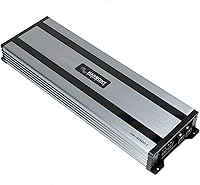
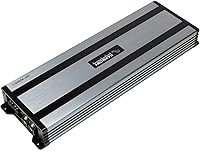
The Harmony Audio HA-A1500.1 Mono Subwoofer Amplifier sits comfortably in the mid-range of the car audio market, built for enthusiasts who want serious bass output without spending boutique-brand money. Its Class D design runs efficiently, which matters in a vehicle where heat and current draw are real concerns. Being 1-ohm stable is a notable spec at this price point — it gives you wiring flexibility that cheaper amps simply can't offer. A bass remote is included, letting you dial in levels from the driver's seat. Harmony Audio isn't a household name, but this subwoofer amplifier delivers solid value for the build cost.
Features & Benefits

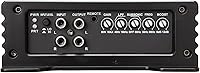
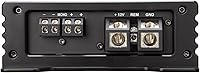
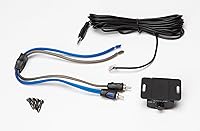
The headline spec is 3000 watts, but that figure represents peak power — the actual continuous RMS output is what drives your subwoofer day to day, so temper expectations accordingly. The 1-ohm stability means you can wire two 2-ohm subs in parallel and get maximum power transfer without stressing the amp. A particularly useful touch is the Smart Power Control, which accepts a DC voltage offset signal in addition to a traditional 12V remote wire — handy when your head unit lacks a dedicated remote output. There's also a secondary 12V output terminal that acts as a switched trigger for a second amp or accessory, no relay required. The bass remote covers a 0–12 dB boost range with an LED confirmation light.

Best For

This mono amp is a strong fit for anyone building a budget bass system around one or two subwoofers. If you're running a low-impedance wiring setup — say, dual subs wired to a 1-ohm load — this amplifier handles it without issue, which isn't always true of amps in this class. It's also a smart pick if your head unit doesn't have a dedicated remote turn-on wire, since the DC offset feature eliminates that headache entirely. The daisy-chain terminal is a real advantage for system builders who plan to add a second amplifier down the road. Daily drivers who simply want convenient bass control from their seat will also appreciate the included remote.

User Feedback

With a 4.1 out of 5 rating across 143 reviews, the HA-A1500.1 earns generally positive marks. Buyers consistently praise the output for the price, noting that bass impact exceeded what they expected from a lesser-known brand. Installation also gets good marks, with the Smart Power Control helping users who couldn't find a remote turn-on wire. On the downside, a handful of reviews flag noise floor issues, typically traced back to grounding problems rather than the amp itself. A few DOA reports suggest QC consistency can vary, pointing more to shipping handling than design flaws. Heat during sustained high-volume use is mentioned occasionally, so plan your mounting location with airflow in mind.

Pros

  • 1-ohm stability lets you wire multiple subwoofers in parallel for maximum power without stressing the amp.
  • Class D design runs efficiently, reducing unnecessary heat and current draw in your vehicle.
  • The Smart Power Control handles installs where no dedicated remote wire is available — a real time-saver.
  • Daisy-chain output allows you to trigger a second amp or accessory without buying additional hardware.
  • The included bass remote gives you a 0–12 dB boost range and a clear LED indicator right from your seat.
  • Competitive pricing puts 1-ohm stability and a bass remote in reach for budget-conscious builders.
  • Broad frequency response from 10Hz to 180Hz covers the entire working range of most subwoofers.
  • 95dB signal-to-noise ratio is respectable for this price bracket and keeps background noise manageable.
  • User reviews consistently praise strong, impactful bass output relative to the cost of the unit.

Cons

  • The 3000W rating is peak power — actual continuous RMS output is significantly lower and rarely disclosed clearly.
  • Brand recognition is limited, making long-term warranty support and customer service harder to predict.
  • QC inconsistencies appear in buyer feedback, with a small but notable number of DOA units reported.
  • This mono amp can run warm during prolonged high-volume sessions, requiring a well-ventilated mounting location.
  • Some users report noise floor interference, which typically points to grounding issues during installation.
  • Requires 1/0 gauge wiring, meaning additional wiring kit costs if you are starting from scratch.
  • No published RMS wattage spec in product listings makes accurate system matching difficult without third-party testing.
  • At 11 pounds and nearly 24 inches long, fitment in compact vehicles or smaller enclosures may be challenging.

Ratings

Our AI-powered scoring for the Harmony Audio HA-A1500.1 Mono Subwoofer Amplifier was built by analyzing verified buyer reviews from multiple global markets, with spam, incentivized, and bot-generated feedback actively filtered out before any scores were calculated. The ratings below reflect genuine ownership experiences — including the aspects buyers consistently praised and the friction points that surfaced repeatedly across different install scenarios. Both sides of the picture are represented here, so you can make a well-informed call before buying.
Value for Money
86%
Most buyers feel they got more amplifier than the price tag suggested, particularly when comparing the 1-ohm stability and included bass remote against competing units at similar price points. For budget builders who need real bass impact from a single sub, the cost-to-output ratio lands in a sweet spot that is hard to argue with.
The value equation hinges on honest expectations about wattage — buyers who took the 3000W peak figure at face value and specced their system around it felt let down. Factor in the 1/0 gauge wiring kit you will need to purchase separately, and the total outlay climbs a bit higher than the sticker price implies.
Power Output
72%
28%
Buyers running a single 12-inch or 15-inch subwoofer in a typical daily-driver setup consistently reported strong, satisfying bass impact — the kind that moves air and pressurizes the cabin without needing to push the amp hard. At moderate listening levels, the output feels punchy and controlled.
The absence of a published RMS rating is a genuine problem for anyone trying to match this subwoofer amplifier to a specific driver. The 3000W peak number has led to real frustration for buyers who expected that figure to translate into sustained output, which it does not — continuous real-world power is substantially lower.
Installation Ease
83%
The Smart Power Control feature earned consistent praise from buyers doing their first or second car audio install, particularly those working with factory head units that lack a remote turn-on wire. The terminal labeling is clear, and most users reported a straightforward wiring experience with no need for professional help.
The 1/0 gauge power requirement adds complexity for less experienced installers who may not have the right crimping tools or lugs on hand. A handful of buyers also noted that the RCA input sensitivity adjustment could use a more detailed explanation in the manual to avoid noise issues during initial setup.
1-Ohm Stability
91%
This is one of the most praised technical aspects among buyers who actually understood what it meant — running dual subs wired in parallel to a 1-ohm load without the amp clipping, shutting down, or running hot is exactly what they got. For builders trying to extract maximum power from a two-subwoofer configuration, this feature performs reliably.
A small number of buyers reported thermal protection triggering during extended high-volume sessions at 1 ohm, suggesting the amp is working near its thermal limits under those conditions. Mounting location and ambient enclosure temperature appear to be contributing factors in these cases.
Thermal Management
61%
39%
Under normal daily listening conditions — moderate volume, single subwoofer load, adequate ventilation — most users report no heat-related issues whatsoever. The Class D design inherently runs more efficiently than older amp classes, which gives this mono amp a reasonable baseline thermal profile for typical use.
Push this subwoofer amplifier hard in a sealed or carpeted trunk install with restricted airflow, and heat becomes a real variable. Several buyers experienced thermal shutdowns during extended sessions at high volume, and a couple reported chassis temperatures that felt uncomfortable to the touch — a meaningful concern for any enclosed mounting scenario.
Bass Remote Quality
78%
22%
The included bass remote was consistently flagged as a practical bonus rather than a throwaway accessory — buyers appreciated being able to adjust bass boost from the driver's seat without touching the head unit. The blue LED is bright enough to confirm amp status at a glance, even in a lit cabin.
The cable length works for some installs but falls short for others depending on where the amp is mounted relative to the dash. A few buyers also noted that the remote knob feels plasticky compared to the amp itself, and one or two reported connectivity issues with the remote port over time.
Build Quality
67%
33%
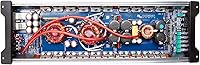
The chassis feels solid enough for the price point, and the heatsink design is practical rather than decorative. For a budget-tier mono block, the physical construction is adequate and holds up fine under normal installation stress — screws, terminals, and binding posts all feel acceptably robust.
Compared to established brand amplifiers at two or three times the price, the fit and finish shows its cost tier. The plastic end caps and overall chassis rigidity drew mild but recurring criticism, and a few buyers noted that the build quality makes them less confident about long-term durability in environments with vibration or temperature swings.
Noise Floor
63%
37%
When properly grounded and installed with clean RCA cables, most buyers report a quiet signal that does not introduce audible hiss or hum into the system. The 95dB signal-to-noise ratio holds up reasonably well in practice for buyers who take care with their ground connection.
Noise complaints appear in a meaningful portion of negative reviews, though the root cause is almost always a suboptimal ground path rather than a fault in the amp itself. The problem is that the manual does not do enough to guide new installers toward proper grounding technique, so the same issue surfaces repeatedly among less experienced buyers.
Daisy-Chain Feature
81%
19%
Buyers who understood and used the secondary 12V output terminal found it genuinely useful — triggering a second amp or a powered accessory without running a separate relay saves wiring time and cleans up the install. It is a thoughtful inclusion that sets this subwoofer amplifier apart from comparable budget units.
The feature is not well-explained in the included documentation, and a number of buyers either did not know it existed or were unsure how to use it safely. Clearer labeling on the terminal itself and a brief wiring diagram in the manual would make this feature more accessible to the buyers most likely to benefit from it.
Reliability Over Time
69%
31%
The majority of buyers who reviewed this mono amp after extended ownership — several months to over a year — reported that it continued performing as expected with no degradation in output or functionality. Long-term failure rates do not appear notably elevated compared to other value-tier amplifiers in this category.
A cluster of one-star reviews specifically describe units that arrived non-functional or failed within the first few weeks, pointing to QC inconsistency at the manufacturing or shipping stage. While these cases appear to be a minority, the pattern is consistent enough to suggest that incoming inspection before full installation is worth doing.
Frequency Accuracy
74%
26%
The 10Hz to 180Hz operating range covers everything a subwoofer channel needs, and buyers running dedicated bass enclosures with the low-pass crossover set around 80Hz reported clean, well-defined low-frequency reproduction that did not sound bloated or one-note at typical listening volumes.
At the extreme low end — sub-20Hz infrasonic content — the output rolls off in a way that SPL-oriented users noticed, though this is common across all amplifiers in this class. The onboard crossover controls are functional but not as finely adjustable as what you would find on higher-end units.
Brand Reputation
54%
46%
Harmony Audio has built a modest but genuine following among budget-conscious car audio builders who have had positive experiences with their products. Within its target audience, the brand is recognized as a credible value option rather than a generic import with no accountability.
Outside dedicated car audio communities, Harmony Audio carries little brand recognition — and that gap matters when it comes to warranty support, customer service responsiveness, and long-term parts availability. Buyers who prioritize brand trust or plan to resell their build will find the lack of pedigree a real drawback.
Wiring Compatibility
77%
23%
The dual remote turn-on options — DC offset and traditional 12V switched lead — give this mono amp broader compatibility than most units in its price range. Buyers coming from a wide variety of head unit brands, including factory OEM systems, have been able to get it running without aftermarket adapters.
The 1/0 gauge power requirement is non-negotiable for safe operation, but it creates a compatibility gap for buyers who already own a wiring kit in a smaller gauge. Retrofitting an existing install to accommodate the heavier wire adds cost and effort that some first-time buyers did not anticipate when ordering.

Suitable for:

The Harmony Audio HA-A1500.1 Mono Subwoofer Amplifier is built for car audio enthusiasts who want real bass performance without pushing into premium pricing territory. It works especially well for builders running a single high-output subwoofer or a pair of subs wired to a 1-ohm load, where the stable impedance rating pays real dividends in power delivery. If your head unit lacks a dedicated remote turn-on wire — common in factory stereos and budget aftermarket units — the DC offset Smart Power Control removes what would otherwise be a frustrating installation obstacle. System builders who anticipate adding a second amplifier later will also find the daisy-chain output terminal genuinely useful, since it provides a switched 12V trigger without needing a relay or splitter. Daily drivers who want quick, on-the-fly bass adjustments from the driver's seat will appreciate the included remote.
Not suitable for:

Buyers expecting audiophile-grade build quality or the kind of long-term reliability track record that established brands carry should look elsewhere — the Harmony Audio HA-A1500.1 Mono Subwoofer Amplifier is a value-tier product, and that shows in its brand pedigree and QC consistency. The 3000W figure on the box is a peak rating, so anyone dimensioning their electrical system around that number will likely be disappointed; continuous RMS output is considerably lower, and your alternator and wiring need to be planned accordingly. This subwoofer amplifier also runs warm under sustained high-volume use, so installations in tight, poorly ventilated enclosures are asking for thermal shutdowns. Serious competitors or SPL builds where verified RMS figures and robust thermal management are non-negotiable will be better served by spending more on a name-brand option. Those sensitive to noise floor issues in their system should also note that some users have reported interference, though proper grounding typically resolves it.
Specifications

  • Peak Power: This mono amp delivers a maximum peak power output of 3000 watts under optimal, instantaneous conditions.
  • Channels: Single-channel (mono) configuration, designed exclusively for driving subwoofers.
  • Amplifier Class: Class D topology ensures high electrical efficiency, reducing heat generation and current draw compared to Class A/B designs.
  • Impedance: Stable down to 1 ohm, allowing low-impedance wiring configurations including dual subwoofers wired in parallel.
  • Frequency Response: Operates across a 10Hz to 180Hz range, covering the full working bandwidth of virtually all subwoofer drivers.
  • Signal-to-Noise: Rated at 95dB signal-to-noise ratio, providing a reasonably clean audio signal at this price tier.
  • Operating Voltage: Designed to run at standard automotive DC voltages between 12V and 14.4V.
  • Power Wiring: Manufacturer recommends 1/0 gauge cable for both the power and ground connections to support adequate current delivery.
  • Remote Turn-On: Accepts either a traditional 12V switched remote lead or a DC voltage offset signal for vehicles without a dedicated remote wire.
  • Daisy-Chain: Features a secondary 12V switched output terminal that can trigger a second amplifier or low-amperage accessory without a relay.
  • Bass Remote: Includes a wired bass remote controller offering a 0 to 12dB boost range and a blue LED power status indicator.
  • Dimensions: Measures 19-5/8″ in width, 6-1/8″ in depth, and 2″ in height, suitable for most trunk or under-seat installations.
  • Weight: The unit weighs 11.05 pounds, which is typical for a full-size mono block amplifier in this output class.
  • Model Number: Official model designation is HA-A1500.1, manufactured and sold under the Harmony Audio brand.
  • First Available: This amplifier was first listed for sale in July 2020 and remains an active product in Harmony Audio's lineup.

Related Reviews
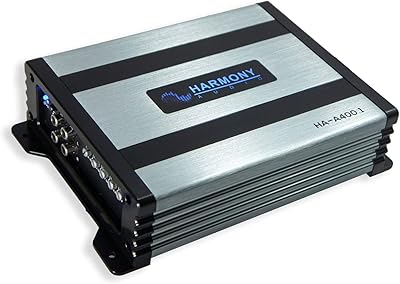
Harmony Audio HA-A400.1 800W Mono Subwoofer Amplifier
86%
91%
Bass Performance
88%
Ease of Use
84%
Build Quality
87%
Reliability
92%
Power Handling
More
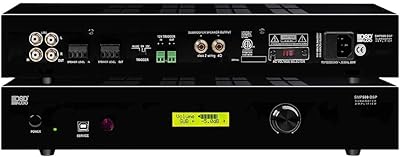
OSD Audio SMP500 800W Mono-Channel Subwoofer Amplifier
86%
88%
Performance
90%
Bass Enhancement
81%
Ease of Installation
93%
Heat Management
85%
Power Output
More
Harmony Audio HA-BV1X12E 12″ Vented Port Subwoofer Enclosure
87%
88%
Sound Quality
91%
Bass Performance
85%
Build Quality
89%
Installation Ease
87%
Size & Fit
More
Recoil RED1200-1 Mono Subwoofer Amplifier
75%
88%
Value for Money
83%
Bass Output
61%
Power Accuracy
91%
1-Ohm Stability
63%
Thermal Management
More
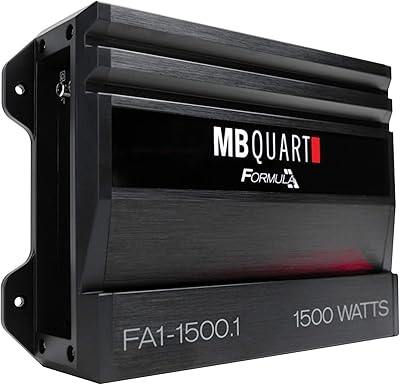
MB Quart FA1-1500.1 Mono Channel Car Audio Amplifier
84%
91%
Sound Quality
88%
Power Delivery
87%
Durability & Build Quality
85%
Ease of Setup & Installation
65%
Thermals (Heat Management)
More
MB Quart FA1-1000.1 Mono Car Amplifier
78%
88%
Installation Ease
81%
Bass Output Quality
62%
Power Accuracy
67%
Thermal Performance
84%
Crossover Flexibility
More
Kicker CXA400.1 Mono Car Amplifier
79%
86%
Sound Clarity
71%
Power Output Accuracy
91%
Installation Ease
67%
Build Quality
78%
Thermal Performance
More
Romicta 4.1-Channel Bluetooth Mini Amplifier
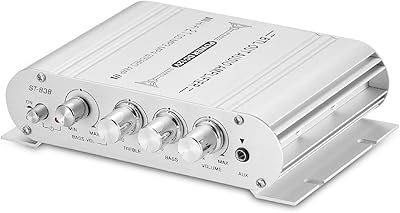
75%
81%
Value for Money
74%
Audio Quality
67%
Bluetooth Performance
72%
Subwoofer Integration
88%
Ease of Setup
More
Douk Audio OK013 Mini 2.1 Channel HiFi Stereo Amplifier
75%
83%
Value for Money
71%
Sound Output & Power
77%
Build Quality
88%
Ease of Installation
58%
Thermal Management
More
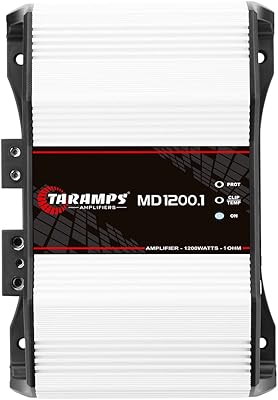
Taramp's MD 1200.1 1-Channel 1200W RMS Car Audio Amplifier
86%
93%
Power Output
89%
Sound Quality
91%
Installation Ease
85%
Build Quality
65%
Thermal Performance
More

FAQ

Harmony Audio does not publish a verified continuous RMS wattage in their official product listing, which is a real gap. The 3000W figure is peak power — a brief, instantaneous maximum. For practical system planning, treat the usable continuous output as considerably lower, and size your subwoofer and electrical system accordingly rather than building around the peak number.

Yes, as long as you wire them so the combined impedance presented to the amplifier is at or above 1 ohm. Two 2-ohm subwoofers wired in parallel will give you a 1-ohm load, which this subwoofer amplifier handles stably. Wiring below 1 ohm is not supported and risks damaging the unit.

It will. The Smart Power Control feature is specifically designed for this situation — it can detect a DC voltage offset on the RCA signal lines and power the amp on automatically. This is common with factory head units and budget aftermarket decks, so it's a genuinely useful feature to have built in.

Think of it as a pass-through switched 12V output. When this mono amp powers on, that terminal also sends a 12V signal that can turn on a second amplifier or any other accessory that accepts a low-amperage trigger — like a powered subwoofer enclosure or a signal processor. It saves you from running a separate relay or splitter to control additional components.

Class D amplifiers are generally efficient and run cooler than older Class A/B designs, but this unit does get warm under sustained high-volume use. A few buyers have mentioned thermal shutdowns in tight enclosures. Mount it somewhere with reasonable airflow — avoid sealing it inside a carpeted box with no ventilation.

Harmony Audio recommends 1/0 gauge for both power and ground cables. That's a heavy-duty run, so if you're starting from scratch, factor in the cost of a proper wiring kit. Using undersized wire is one of the most common causes of amp underperformance and overheating.

The included remote is a simple rotary knob that boosts bass by up to 12dB — you mount it somewhere within reach of the driver's seat. The blue LED lights up to confirm the amp is on. Harmony Audio doesn't publish an exact cable length, so if the included cable falls short for your install, most universal bass remote extensions are compatible.

Yes, this subwoofer amplifier accepts standard RCA preamp inputs, so it will work with virtually any head unit that has RCA pre-outs. If your deck only has speaker-level outputs, you'll need a line output converter — that's an inexpensive add-on but worth budgeting for if your current setup requires it.

The most common issues in negative reviews fall into two categories: a small number of DOA units that arrived non-functional, and occasional noise or hum that typically traces back to a poor ground connection rather than the amp itself. Long-term reliability complaints are relatively rare, which suggests the unit holds up reasonably well once it's properly installed.

It can feel like overkill for a modest build, but it reflects the amp's current appetite at higher output levels. If you're running a single subwoofer at moderate levels, 4 gauge may work in practice, but running the recommended 1/0 gauge is the safest way to avoid voltage drop, overheating wire, and nuisance fuse blows — especially if you ever push the system hard.