Overview

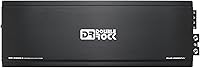
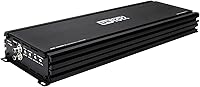
The DR Double Rock DR-2000.1 Monoblock Car Amplifier enters a crowded budget segment with a headline 2000W RMS rating that will catch the eye of subwoofer enthusiasts shopping on a tight budget. DR Double Rock isn’t a household name — that’s worth saying plainly. They’re a newer, lesser-known label carving out space among value-tier options, competing against more established brands on sheer wattage per dollar. The unit measures just under 19 inches long, making installation manageable even in snug trunk setups. That said, this is not a boutique or audiophile-grade amp, and anyone expecting premium build quality at this price point should adjust their expectations before purchasing.
Features & Benefits

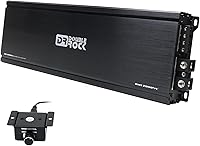
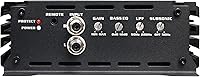
Class D topology is the right choice for a dedicated subwoofer amp — it runs cooler and draws less current than Class AB designs, which matters when you’re pushing heavy bass in a car. The DR-2000.1 pairs that with a MOSFET power supply, helping maintain stable output even at 1-ohm impedance, where many budget amps struggle or shut down. Tuning options are practical: the low-pass filter sweeps 50Hz to 220Hz, a subsonic filter protects your sub from damaging low-frequency excursion, and the bass boost goes up to 12dB. The multi-protection circuit handles overheating, short-circuit, and under-voltage scenarios automatically. The included remote knob with a 5-meter cable rounds things out nicely — being able to adjust bass from the driver’s seat is more useful than it sounds.

Best For

This Class D subwoofer amp is built for a specific kind of buyer: someone who wants high-wattage output without stretching the budget into premium territory. It makes the most sense for a single subwoofer build running at 1 ohm, where the stable impedance handling actually gets put to work. First-time car audio builders will appreciate how straightforward the setup is — 0-gauge power terminals, clear connections, and that remote knob ready out of the box. It also fits well as a secondary system amp or a build for a demo vehicle where you want impact without financial risk. Before buying, verify your subwoofer’s RMS rating and whether your alternator can sustain the 200A fuse demand this amp draws.

User Feedback

With a 4.2 out of 5 rating across 97 reviews, the DR-2000.1 sits in reasonable-but-not-remarkable territory — and 97 ratings isn’t a large enough sample to draw firm conclusions about long-term reliability. Buyers consistently praise the output for the price, noting that the bass hits hard and wiring is made easy by the large terminals. The remote knob gets positive mentions too. On the flip side, skepticism around wattage claims is common — budget amp makers often lead with peak figures, and real-world RMS delivery can fall short of what’s printed on the box. A few buyers also raise concerns about the brand’s limited track record. If you do install one, reviewers suggest solid grounding and correct fuse sizing to keep things running reliably.

Pros

  • Impressive rated wattage for the price makes it one of the more competitive value options in its class.
  • Class D topology keeps heat output low and electrical efficiency high — important in tight car installs.
  • Stable at 1 ohm, which is exactly what single high-demand subwoofer builds need from a monoblock.
  • The remote bass knob ships in the box with a 5-meter cable, saving buyers an extra purchase.
  • 0-gauge power input terminals support maximum current flow and simplify wiring for first-time builders.
  • Built-in protection circuits guard against overheating, short-circuits, and under-voltage without manual intervention.
  • Low-pass filter, subsonic filter, and bass boost controls offer meaningful tuning flexibility for the price.
  • Compact dimensions for a 2000W-class amp make it easier to fit in smaller trunk or enclosure spaces.
  • FCC certification provides at least a baseline level of verified compliance for a lesser-known brand.
  • At 11.53 pounds, it’s light enough to mount and position without much hassle during installation.

Cons

  • DR Double Rock is a largely unknown brand with a short track record, making long-term reliability hard to predict.
  • Advertised wattage almost certainly reflects peak figures; real sustained RMS output is likely lower than claimed.
  • Only 97 customer reviews means there’s not enough data yet to draw firm conclusions about durability over time.
  • A 200A fuse requirement puts real strain on stock vehicle electrical systems not built for high-current audio.
  • No independent lab testing or third-party wattage verification exists for this amp at the time of writing.
  • Customer support infrastructure for DR Double Rock is thin compared to established car audio brands.
  • Build materials and internal component quality are not documented, leaving buyers to guess at construction standards.
  • The 6-volt minimum supply voltage listing in product specs appears to be a documentation error, which raises questions about listing accuracy overall.

Ratings

Our AI-generated scores for the DR Double Rock DR-2000.1 Monoblock Car Amplifier were produced by analyzing verified purchaser reviews from multiple global markets, with spam, bot-submitted, and incentivized feedback actively filtered out before scoring. Each category reflects the honest balance of real praise and real frustration found across that review pool — nothing is glossed over. Where buyers were divided, the scores show it.
Value for Money
83%
For buyers who measured what they were getting against what they paid, this monoblock amp repeatedly earned positive mentions. The combination of high advertised wattage, included remote knob, and 0-gauge terminals at this price tier made a strong impression on first-time builders and budget-focused hobbyists alike.
A portion of buyers felt the value calculation shifted once they started questioning whether the wattage claims held up under real conditions. If the actual sustained output is meaningfully lower than advertised, the price-to-performance ratio looks considerably less attractive.
Power Output
71%
29%
Buyers running a single subwoofer at 1 ohm reported noticeably strong bass output that held up well during sustained listening sessions. For a budget Class D monoblock, the real-world punch impressed users who had previously run lower-wattage amps and wanted a meaningful step up.
The gap between the advertised 2000W RMS and what buyers experienced in practice is a recurring point of friction. Without independent testing, it is impossible to verify the claimed figures, and several users suspected the numbers leaned heavily on peak rather than continuous output.
Installation Ease
86%
The DR-2000.1 drew consistent praise for how straightforward the wiring process was, particularly from first-time installers. The 0-gauge power terminals are clearly labeled and generously sized, and the overall layout does not require advanced knowledge to get up and running correctly.
A small number of users reported that the included documentation was minimal, leaving some uncertainty around gain setting and filter configuration for those without prior car audio experience. The 200A fuse requirement also caught a few buyers off guard if they had not pre-planned their electrical setup.
Build Quality
62%
38%
The chassis feels solid enough for a budget-tier unit, and the heatsink design is functional rather than merely decorative. Several users noted the amp did not feel cheap or flimsy upon unboxing, which exceeded expectations at this price point.
Reviewers with experience handling higher-end amps pointed out that the internal components and casing materials are clearly value-grade. Concerns about how the unit holds up after extended high-volume use or in hot climates are legitimate given the brand’s limited reliability history.
Thermal Management
74%
26%
Class D efficiency means this amp generates significantly less heat than an equivalent Class AB design, which buyers in warmer climates or tight enclosure spaces appreciated. Most users reported no thermal shutdowns during normal listening, even during longer drives.
A handful of users in hot environments or with poor ventilation around the amp did encounter thermal protection activations during extended high-volume sessions. The heatsink, while adequate, does not offer the same thermal headroom as amps in a higher price bracket.
Remote Bass Knob
88%
The included remote knob was one of the most consistently praised accessories across the review pool. Being able to dial bass up or down from the driver’s seat without reaching into the trunk made a real practical difference during daily driving, especially when switching between music genres.
A few users noted that the knob’s build quality felt somewhat lightweight compared to aftermarket alternatives, and there were isolated reports of the cable connection becoming intermittent after extended use. It’s functional, but it is not a premium piece of hardware.
Tuning Flexibility
79%
21%
The onboard controls cover the essentials well — a sweepable low-pass filter, subsonic filter, and up to 12dB of bass boost give users enough range to tailor the output to different subwoofer types and enclosure styles without needing an external processor.
Experienced installers noted the absence of phase control and any form of input level display, which limits precision tuning compared to mid-tier competitors. Setting gain correctly without additional tools also requires some prior knowledge that the product’s documentation does not adequately provide.
1-Ohm Stability
76%
24%
Users running a single 1-ohm subwoofer load reported stable operation without frequent protection shutdowns under normal conditions, which is the primary use case this amp is designed around. That stability at low impedance is genuinely important for getting full output from a single high-demand sub.
The confidence in true 1-ohm stability is tempered by the lack of third-party verification and the modest review sample size. A few buyers reported protection circuit activation under sustained 1-ohm loads, suggesting the amp may be less comfortable at that impedance during extended, high-powered listening.
Long-Term Reliability
54%
46%
A portion of buyers reported the amp functioning without issues over several months of regular use, which is encouraging for a brand at this price tier. Those who installed it correctly, with proper grounding and adequate ventilation, tended to have the most positive long-term experiences.
DR Double Rock’s limited track record is the central concern here. With only 97 reviews and the brand being relatively new to market, there simply is not enough longitudinal data to assess durability with confidence. Buyers who pushed the amp hard at high volumes reported the most uncertainty about its lifespan.
Wiring & Terminal Quality
81%
19%
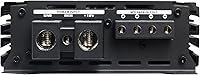
The 0-gauge power input terminals were a genuine highlight for installers, making it easier to run high-current wiring cleanly without adapters or workarounds. The speaker terminal accommodating 8-gauge wire is also well-suited to the output demands of a dedicated subwoofer amp.
While the terminal design is practical, a few users noted that the terminal screws required firmer torque than expected to seat wiring securely. There were also occasional reports of terminal labeling that could have been clearer, which caused brief confusion during initial installation.
Protection Circuits
77%
23%
The multi-protection circuit covering overheating, short-circuits, and under-voltage events added a layer of confidence for buyers who were pairing this amp with powerful subwoofers in demanding conditions. Several users specifically credited the protection system for saving the amp during an accidental wiring error.
On the other side, a few users experienced the protection circuit triggering during what they considered normal listening conditions, which may point to conservative threshold settings or marginal performance headroom at demanding loads. Repeated protection trips are always a warning sign worth taking seriously.
Brand Confidence
49%
51%
Some buyers approached DR Double Rock as a calculated risk at a budget price, and several reported being pleasantly surprised by the initial performance. For those with realistic expectations about the brand tier, there were few outright disappointments in the short term.
The brand’s relative obscurity and absence of a well-documented customer support infrastructure weighed on buyer confidence throughout the review pool. Unlike established names in car audio, DR Double Rock offers little reassurance in terms of warranty follow-through, replacement parts, or community reputation built over time.
Subwoofer Compatibility
78%
22%
The amp’s broad input sensitivity range from 0.2V to 6V makes it compatible with a wide variety of head units, including both low-level preamp outputs and high-level connections. Buyers paired it successfully with a range of popular subwoofer brands without significant matching issues.
Compatibility concerns arose primarily around impedance matching — users unfamiliar with dual voice coil wiring occasionally ran into load configurations that pushed the amp into protection mode. The product documentation does not provide enough guidance on this topic to help less experienced buyers avoid the issue.
Packaging & Accessories
72%
28%
The unboxing experience was generally positive, with buyers noting that the amp arrived well-protected and that the remote knob, cable, and basic hardware were included without needing a separate purchase. This out-of-the-box completeness was particularly appreciated by first-time buyers.
The included instruction manual was described as thin and in some cases difficult to follow, with several users resorting to online forums or video guides to complete their installation. A more thorough setup guide would meaningfully reduce the friction for newer installers working with this amp.

Suitable for:

The DR Double Rock DR-2000.1 Monoblock Car Amplifier is a strong fit for budget-conscious car audio enthusiasts who want serious subwoofer output without committing to a premium price point. It makes the most practical sense for builds centered on a single subwoofer wired at 1 ohm, where the amp’s stable impedance handling can be fully utilized. First-time installers will appreciate the straightforward wiring layout and the included remote bass knob, which removes the need to source additional accessories. Hobbyists putting together a secondary vehicle system or a demo build — where cost control matters more than brand prestige — will find the value proposition hard to beat at this tier. If your priority is maximizing wattage per dollar spent and you have a healthy alternator and proper grounding already in place, this Class D subwoofer amp deserves a serious look.
Not suitable for:

Buyers expecting certified, independently verified RMS output figures should approach the DR-2000.1 with caution — as with most budget-tier amps, the advertised wattage numbers likely reflect peak or theoretical maximums rather than sustained real-world delivery. Audiophiles or experienced builders who prioritize long-term reliability, premium component quality, or a proven brand with strong customer support will find this amp falls short of those expectations. The limited review sample and DR Double Rock’s relatively short market history make it difficult to assess how the unit holds up after extended, high-demand use. Anyone running a complex multi-subwoofer setup or a high-powered competition build should look at more established, independently tested amplifiers in a higher price bracket. Vehicles with modest stock electrical systems may also struggle to safely support the 200A fuse demand this amp requires.

Specifications

  • RMS Power: Rated at 2000 watts RMS at 1 ohm, representing the continuous power output under sustained operating conditions.
  • Peak Power: Advertised peak power reaches 3800 watts at 1 ohm, reflecting maximum momentary output rather than sustained delivery.
  • Topology: Class D monoblock design prioritizes high efficiency and reduced heat generation, making it well-suited for dedicated subwoofer use.
  • Power Supply: MOSFET-based power supply helps maintain stable current delivery, particularly important when driving low-impedance loads.
  • Impedance: Stable operation is rated down to 1 ohm, allowing it to drive high-demand single-subwoofer configurations without shutting down.
  • Channels: Single-channel (monoblock) output, designed exclusively for driving subwoofers rather than full-range speakers.
  • Frequency Response: Operates across a 20Hz to 250Hz range, covering the full bass and sub-bass spectrum relevant to subwoofer reproduction.
  • Low-Pass Filter: Adjustable low-pass filter sweeps continuously from 50Hz to 220Hz, letting you tailor the crossover point to your subwoofer and enclosure.
  • Subsonic Filter: Switchable subsonic filter ranges from off to 50Hz, protecting subwoofer cones from damaging ultra-low frequency excursion.
  • Bass Boost: Onboard bass boost is adjustable between 6dB and 12dB, providing driver-selectable low-frequency emphasis without external processing.
  • Input Sensitivity: Input sensitivity range spans 0.2V to 6V, accommodating both low-level preamp outputs and high-level source connections.
  • Fuse Rating: Requires a 200A fuse, which places significant demand on the vehicle’s electrical system and wiring infrastructure.
  • Power Terminal: Power and ground input terminals accept 0-gauge wiring, supporting maximum current flow for high-wattage operation.
  • Speaker Terminal: Speaker output uses an 8-gauge terminal connector, sized appropriately for subwoofer-level current demands.
  • Remote Knob: A remote subwoofer level control knob is included with a 5-meter cable, allowing bass adjustment from the driver’s seat.
  • Dimensions: The unit measures 18.90 x 6.10 x 2.17 inches (L x W x H), a relatively compact footprint for a 2000W-class monoblock amplifier.
  • Weight: Weighs 11.53 pounds, light enough for straightforward mounting in a trunk or under a seat without specialized rigging.
  • Certifications: Carries FCC certification, indicating it meets federal standards for radio frequency emissions in the United States.
  • Protection Circuits: Integrated multi-protection system automatically responds to overheating, short-circuit faults, and under-voltage conditions to prevent damage.
  • Mounting Type: Designed for surface mounting, typically secured to a flat panel or amplifier rack inside the vehicle’s cargo area.

Related Reviews

CT Sounds CT-2000.1D Monoblock Amplifier
77%
88%
Value for Money
74%
Power Output
71%
Build Quality
69%
Thermal Management
86%
Ease of Installation
More
Taramp's MD 1200.1 1-Channel 1200W RMS Car Audio Amplifier
86%
93%
Power Output
89%
Sound Quality
91%
Installation Ease
85%
Build Quality
65%
Thermal Performance
More
Rockville RVA600.1 Mono Car Amplifier
74%
83%
Value for Money
74%
Sound Quality
88%
Ease of Installation
52%
Power Accuracy
67%
Build Quality
More
Audiozerone ZE1000.1 Monoblock Car Amplifier
75%
91%
Value for Money
88%
Bass Output
74%
Thermal Management
83%
1-Ohm Stability
63%
Build Quality
More
LKC PHF450D Car Audio Monoblock Amplifier
88%
91%
Power Output (2 Ohms)
87%
Power Output (4 Ohms)
93%
Heat Dissipation
88%
Build Quality
85%
Ease of Integration
More
Belva BB200ABv2 Monoblock Car Amplifier
76%
88%
Value for Money
79%
Bass Output Quality
91%
Ease of Installation
61%
Thermal Management
67%
Build Quality
More
Taramps Bass 8K Monoblock Car Amplifier
73%
88%
Power Output Accuracy
91%
Bass Performance
63%
Thermal Management
79%
Build Quality
83%
Onboard Filter Controls
More
Taramp's Bass 800 1-Ohm Monoblock Amplifier
80%
91%
Real-World Power Accuracy
88%
1-Ohm Load Stability
86%
Tuning & Filter Controls
84%
Installation Ease
71%
Thermal Management
More
Planet Audio AC1500.1M Monoblock Car Amplifier
75%
91%
Value for Money
78%
Bass Output Quality
86%
Ease of Installation
61%
Thermal Management
67%
Build Quality
More
BOSS Audio R1600M Monoblock Car Amplifier
72%
83%
Value for Money
88%
Ease of Installation
79%
Bass Output
61%
Build Quality
86%
Signal Flexibility
More

FAQ

This is one of the most important questions to ask about any budget amplifier. The DR Double Rock DR-2000.1 Monoblock Car Amplifier lists 2000W as its RMS figure at 1 ohm, but without independent lab verification, treat that number with some skepticism. Budget amp manufacturers sometimes blur the line between sustained RMS and peak output in their marketing. Real-world delivery will depend heavily on your vehicle’s electrical system, wiring quality, and impedance load.
The amp’s power and ground terminals are designed for 0-gauge wiring, which is what you should use for the main power run from your battery and the ground connection to the chassis. The speaker output uses 8-gauge terminals. Skimping on wire gauge at this power level is one of the most common installation mistakes — undersized wiring creates resistance, heat, and can cause the amp to shut down or underperform.

That depends on your specific vehicle, and it’s worth checking before you buy. The DR-2000.1 requires a 200A fuse, which is a significant current draw. Most factory alternators in daily-driver vehicles produce 80A to 150A, meaning you may need a high-output alternator, a secondary battery, or a capacitor bank to support sustained high-volume listening without voltage sag. If your headlights dim noticeably when the bass hits, your electrical system is struggling.

You can wire two subwoofers to this monoblock amp, but the impedance math has to work out. If each sub has a 2-ohm dual voice coil, you could wire them to present a 1-ohm final load, which is within spec. The amp is not rated for loads below 1 ohm, so be careful with your wiring configuration. If you’re new to impedance wiring, there are plenty of free online calculators that make this straightforward.

The included remote bass knob connects directly to the amp via the included cable, which measures 5 meters — roughly 16 feet. That’s usually more than enough to route from the trunk to the center console or dashboard in most vehicles. It lets you raise or lower the subwoofer output level on the fly without touching the amp itself, which is genuinely useful for adjusting bass to suit different music or passengers.

The amp is designed to perform best at 1 ohm, so a subwoofer or wiring configuration that presents a 1-ohm load is the sweet spot. A 2-ohm load will also work and may be a safer long-term choice for a budget amp, though you’ll see somewhat less output. Running it above 2 ohms isn’t damaging, but you’ll leave significant power on the table.

Class D amplifiers like this one run considerably cooler than Class AB designs, which is one of their main practical advantages. That said, any high-powered amp needs breathing room. Leave at least a few inches of clearance around the unit and avoid mounting it inside sealed enclosures. The built-in thermal protection will shut the amp down if it overheats, but repeated thermal shutdowns aren’t good for long-term reliability.

The subsonic filter cuts frequencies below a set threshold — in this case, adjustable up to 50Hz — before they reach your subwoofer. Frequencies below 20Hz or so are largely inaudible but can cause your sub’s cone to over-excrete, leading to damage over time. If you’re running a ported enclosure, enabling the subsonic filter around 25Hz to 35Hz is generally good practice. Sealed box users can often leave it off or set it very low.

That’s a fair concern. DR Double Rock is a relatively new name in the car audio market and doesn’t have the track record of brands like Rockford Fosgate, Skar, or Sundown. The limited number of customer reviews makes it hard to assess long-term durability with confidence. If you’re building a system you plan to use hard for years, a more established brand might offer better peace of mind. For a budget secondary build or a short-term project, the risk-reward trade-off may be acceptable.

Gain is not a volume knob — it’s an input sensitivity control, and setting it too high is one of the fastest ways to blow a subwoofer. Start with your head unit at about 75 to 80 percent of its maximum clean volume, then slowly raise the amp’s gain until you hear distortion in the bass, then back it off slightly. For a more precise setup, an oscilloscope or a DMM with a signal generator is the proper tool, but the ears-and-hands method works fine for most everyday builds.