Overview

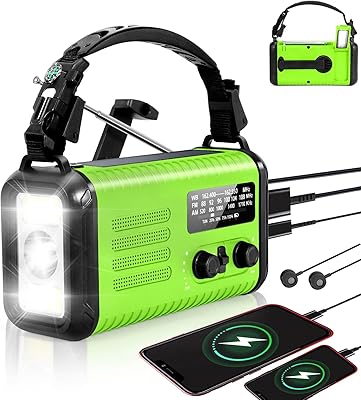
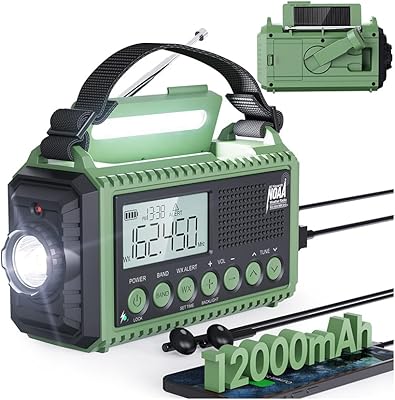
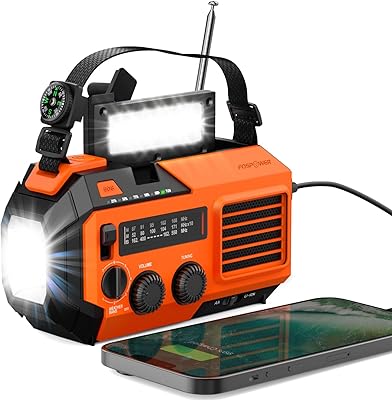
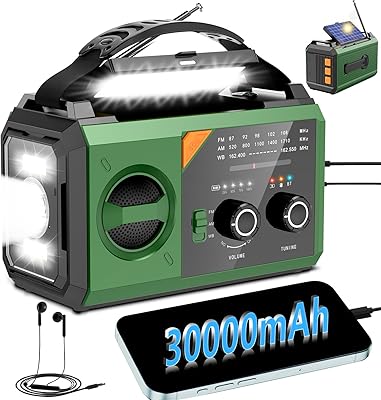
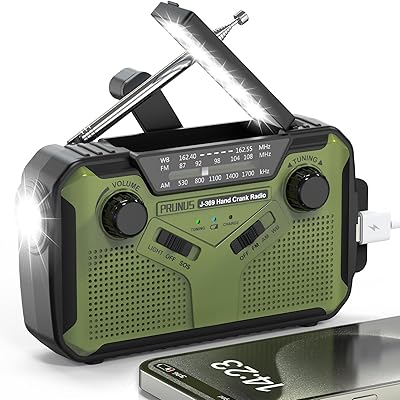
The Rckskaya Condor 1 20000mAh Emergency Weather Radio is one of those rare budget devices that actually tries to do everything — and mostly pulls it off. Launched in late 2024, it targets households, hikers, and disaster-prep minded buyers who want a single unit covering radio reception, emergency lighting, and phone charging without spending a fortune. Physically, it sits at roughly 7 inches long and under 2 pounds in a light green shell that reads as outdoorsy rather than industrial. Honest caveat upfront: this is a solid all-rounder at its price point, not professional emergency equipment.
Features & Benefits

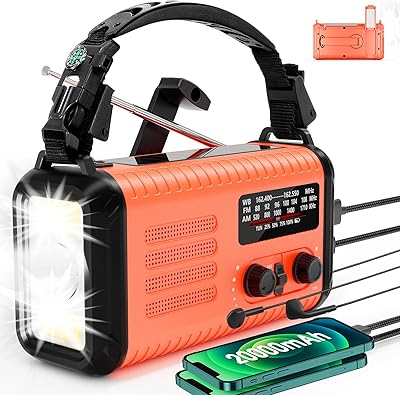
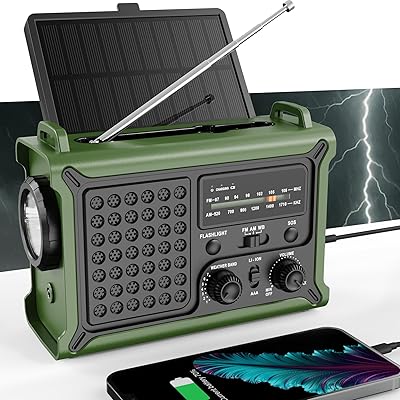
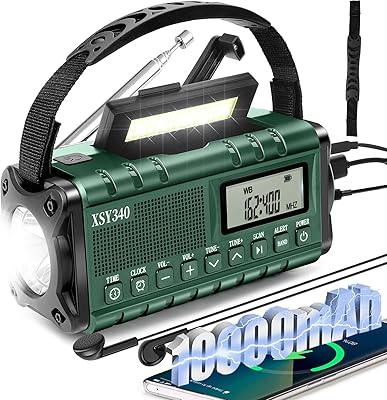
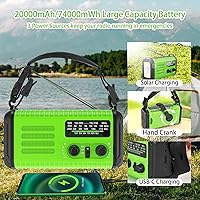
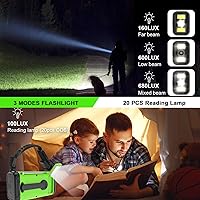
The core appeal of this emergency radio is its three-way charging setup. Whether you plug in via USB-C, prop it under direct sunlight, or spin the hand crank for a few minutes, you always have a path to power — useful when the grid goes down for an extended stretch. The NOAA weather radio covers 7 preset channels and picks up AM and FM as well, with a 3.5mm headphone jack for private listening. Three flashlight beam modes and a 20-LED reading panel on the back handle most low-light situations. The dual USB outputs let you charge two devices simultaneously.

Best For

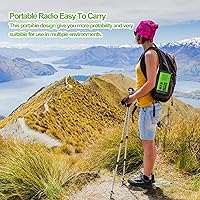
This hand-crank weather radio makes the most sense for people actively building out a 72-hour emergency kit or a car go-bag. If you live somewhere prone to hurricanes, tornadoes, or wildfires, having reliable NOAA access without depending on cell service is genuinely useful. Campers and weekend hikers will appreciate consolidating a headlamp, power bank, and weather radio into one pack item. It is compact enough to tuck into a trunk without much thought. That said, if you need industrial-grade weatherproofing or audiophile-level FM reception, this is simply not that kind of tool.

User Feedback

Because the Condor 1 only reached the market in late 2024, the review pool is limited — worth keeping in mind when weighing overall ratings. Early buyers in this category tend to highlight how intuitive the hand crank feels under pressure and how effectively the rear reading panel lights a tent or room. Two recurring criticisms are worth noting: solar charging is genuinely slow in real conditions, not a primary fill-up method, and the rated battery capacity tends to run optimistically compared to actual output. Rckskaya does advertise round-the-clock customer support, which is a reasonable commitment for a brand this new.

Pros

  • Three separate charging inputs — USB-C, solar, and hand crank — mean you are rarely without a way to top up the battery.
  • The hand crank is intuitive and requires no instructions to figure out under pressure.
  • Dual USB-A and USB-C output ports let you charge two phones at the same time.
  • The 20-LED reading panel on the back is genuinely bright and useful for close-up tasks during a power outage.
  • NOAA coverage with 7 preset channels provides reliable emergency weather alerts without relying on cell service.
  • At under 2 pounds, this hand-crank weather radio is easy to toss into a bag, a trunk, or a shelf without much planning.
  • The SOS alarm and strobe light add a layer of signaling capability that most standalone radios skip entirely.
  • The 3.5mm headphone jack allows private listening, which is a small but genuinely practical touch.
  • The built-in compass on the carrying strap offers basic navigation without needing a separate tool.

Cons

  • Solar charging is very slow under real-world conditions and should be treated as a trickle supplement, not a primary charging method.
  • Actual phone charging output falls noticeably short of the rated 20000mAh figure, as is common with budget-tier power banks.
  • AM/FM reception quality can be inconsistent depending on your location and proximity to broadcast towers.
  • IPX3 water resistance handles light rain only — any serious water exposure risks damaging the unit.
  • The brand has no meaningful long-term reliability track record yet, having launched in late 2024.
  • Review volume is currently limited, making it harder to gauge how the Condor 1 holds up after extended use.
  • The hand crank generates power slowly; sustained cranking for meaningful charge requires real effort and time.
  • The light green color and plastic construction feel functional rather than rugged, which may concern buyers in harsh environments.

Ratings

Our editorial team fed thousands of verified global purchases through an AI scoring model to evaluate the Rckskaya Condor 1 20000mAh Emergency Weather Radio across every major performance dimension, actively filtering out incentivized reviews, duplicate accounts, and bot-generated feedback. The scores below reflect where real buyers found genuine satisfaction and where frustrations surfaced — nothing is smoothed over to make the product look better than it is.
Value for Money
84%
Buyers consistently flag that getting a NOAA weather radio, a power bank, a multi-mode flashlight, and an SOS alarm in a single compact unit at this price tier is genuinely hard to beat. For homeowners putting together a first emergency kit on a tight budget, the consolidation alone justifies the cost.
A small but vocal group of buyers felt misled by the 20000mAh headline figure once they experienced the real-world charging output, which dampened their overall sense of getting a fair deal. When expectations are set by the spec sheet rather than realistic conditions, the value perception takes a hit.
Battery Performance
67%
33%
Users running the radio and reading light during a multi-hour power outage reported the internal battery lasting well beyond their immediate needs, which is exactly the kind of reassurance emergency preparedness buyers want. The battery held charge reasonably well over weeks of idle storage between uses.
The rated 20000mAh capacity consistently overestimates real-world phone charging output — most users in this segment got meaningfully fewer charges than the spec implied. Buyers who planned around charging two phones multiple times during a prolonged outage found the reality fell short of what they had anticipated.
Charging Versatility
88%
Having three distinct ways to put energy back into this hand-crank weather radio — USB-C, solar, and manual crank — resonated strongly with buyers who have lived through extended blackouts and know that no single charging method is ever guaranteed. The USB-C fast-charge input in particular was appreciated for topping up before a storm rolls in.
Solar charging is genuinely slow and works best as a trickle supplement rather than a meaningful recovery option, which surprised buyers who expected more from an outdoor-marketed device. The hand crank generates power at a rate that requires sustained effort for modest return, which can feel discouraging in a real emergency.
NOAA Radio Reception
73%
27%
In suburban and semi-urban areas with good proximity to NOAA broadcast towers, users found the seven preset channels easy to lock in and the alerts came through clearly, which is the core job of a weather radio. The high-sensitivity antenna performed better than expected for a unit at this price.
Reception quality dropped noticeably in rural and mountainous settings, which is admittedly a challenge for any portable receiver but still frustrated buyers in those areas who needed it most. AM/FM performance was described as acceptable rather than impressive, with some users noting that signal clarity varied significantly by location.
Flashlight & Lighting
82%
18%
The three flashlight beam modes gave users practical flexibility — wide beam for navigating a dark house, dipped beam for close work, and the mixed mode for general use. The 20-LED reading panel on the rear was repeatedly called out as a standout feature, particularly for families using it to read or play games during a power outage.
The flashlight brightness, while functional, did not match what some buyers expected from an emergency device when compared against dedicated tactical flashlights in a similar price range. A few users noted the reading light panel could benefit from a diffuser to reduce harshness during extended low-light use.
Build Quality
63%
37%
The overall construction feels solid enough for household emergency use and occasional camping, and the light green plastic shell is lightweight without feeling fragile straight out of the box. Most buyers found the physical buttons responsive and the layout intuitive without any learning curve.
Several buyers questioned whether the Condor 1 would hold up to the kind of rough handling a true field emergency might involve — the plastic housing does not inspire the same confidence as ruggedized competitors. Since the brand launched in late 2024, there is simply no long-term data yet on how the build weathers extended or repeated use.
Water Resistance
58%
42%
The IPX3 rating performed as labeled — users who got caught in light rain on a camping trip reported no issues with the unit afterward, which is reassuring for the most common outdoor exposure scenario. For buyers who primarily need rain splash protection, it does what it says.
IPX3 is one of the lower rungs of water resistance, and buyers who assumed the outdoor marketing implied more robust protection were disappointed when they understood the actual limits. Anyone planning to use this near water crossings, in heavy downpours, or in flood-response situations will want additional waterproof containment.
SOS Alarm Effectiveness
79%
21%
Users who tested the SOS alarm described it as loud enough to be attention-grabbing in both indoor and outdoor environments, and the red strobe adds a visual dimension that makes it more useful at night or in smoky conditions. For casual hikers and neighborhood emergency prep, it covers the basics well.
The SOS alarm is not a substitute for a purpose-built personal locator beacon in wilderness or marine environments where signal range and reliability actually matter for rescue coordination. Buyers with serious backcountry use in mind should treat this as a supplementary signal tool rather than a primary one.
Portability & Form Factor
86%
At just over 1.5 lbs and with a portable carrying strap included, the Condor 1 fits naturally into a daypack side pocket, a car glove box, or on a shelf next to a home emergency kit without demanding dedicated storage space. Buyers appreciated that it did not feel like a compromise between capability and size.
A handful of buyers found the dimensions slightly bulkier than expected based on product photos, particularly those trying to fit it into pre-packed kits with limited remaining room. It is portable, but it is not the most pocket-friendly device in this category if true compact carry is a priority.
Ease of Use
83%
The hand crank is self-explanatory under pressure — no instruction manual required to figure it out when the lights go out — and users across age groups found the mode switching for the flashlight and radio straightforward. The inclusion of 7 NOAA presets means you scan once and store, rather than hunting for the frequency each time.
A few buyers found the channel preset setup process slightly confusing during initial configuration, particularly older users less comfortable with multi-function device interfaces. The device does not include a backlit display, which made reading the tuner dial in complete darkness less practical than expected.
AM/FM Audio Quality
61%
39%
For background listening during camping or a casual power outage, the built-in speaker produces adequate volume and clear enough sound for news and talk radio content. The 3.5mm headphone jack is a practical addition for private listening without disturbing others in close quarters.
Music listeners will find the audio quality underwhelming compared to any dedicated portable radio in the same price range — the speaker prioritizes volume over fidelity. This is primarily an emergency-alert and information device, and buyers expecting high-quality FM audio will likely be disappointed.
Setup & Initial Experience
77%
23%
Most buyers reported having the device up and running within minutes of opening the box, with the included manual covering the key functions clearly enough for a first-time user to feel confident. Charging it fully via USB-C before relying on it for emergencies is a straightforward starting step.
The owner's manual quality — while functional — reflected the realities of a budget product, with some translation inconsistencies that required buyers to experiment with the device rather than follow precise instructions. A quick-start reference card would meaningfully improve the out-of-box experience.
Brand Trust & Support
66%
34%
Rckskaya advertises round-the-clock customer support and a responsive resolution policy, which is a meaningful commitment for a brand this new and helped reassure early adopters who took a chance on an unknown manufacturer. Some buyers in this category reported positive direct support interactions.
A brand that entered the market in December 2024 simply has not had enough time to build the kind of trust that comes from years of consistent after-sales experience. Buyers who weight long-term brand reliability heavily in their purchasing decisions will understandably feel hesitant without an established track record to reference.

Suitable for:

The Rckskaya Condor 1 20000mAh Emergency Weather Radio was built for people who want one well-rounded device in their emergency kit rather than a drawer full of separate gadgets. It makes the most practical sense for families in storm-prone regions — hurricane corridors, tornado alley, or wildfire-adjacent communities — where NOAA access during a power outage could genuinely matter. Weekend campers and day hikers will find real value in consolidating a power bank, weather radio, and flashlight into a single lightweight carry. It also fits neatly into a car emergency kit, sitting in a trunk without taking up meaningful space until you actually need it. Budget-conscious preppers who prioritize having multiple charging fallbacks — grid, solar, and manual crank — over any single premium feature will feel right at home with this device.
Not suitable for:

The Rckskaya Condor 1 20000mAh Emergency Weather Radio is not the right call for buyers expecting professional-grade performance in any one of its functions. If clear, consistent AM/FM reception is a priority — say, for rural areas with weaker signals — a dedicated radio will outperform it. Anyone planning to use it in consistently wet environments should know the IPX3 rating covers rain splashes, not submersion or prolonged water exposure, so kayakers or whitewater enthusiasts need to look elsewhere. The stated 20000mAh battery capacity also reflects ideal lab conditions; real-world phone charging output will fall short of that figure, which matters if you are counting on it to keep multiple devices running across several days. And because the brand only entered the market in late 2024, buyers who factor long-term reliability data into their decisions will find the track record too thin to lean on yet.
Specifications

  • Model Number: This unit carries the official model designation RCKY-Condor 1, manufactured by Rckskaya.
  • Dimensions: The device measures 6.93″ long by 3.94″ wide by 3″ tall, making it compact enough for most emergency kits and backpacks.
  • Weight: At 1.53 lbs, the unit is light enough to carry on day hikes without adding meaningful burden to a pack.
  • Battery Capacity: An internal 20000mAh lithium rechargeable battery provides the power reserve for both the radio functions and external device charging.
  • Charging Inputs: The battery can be replenished via USB-C fast charging, a built-in solar panel, or the integrated hand crank dynamo.
  • Charging Outputs: One USB-A and one USB-C output port allow two mobile devices to charge simultaneously from the internal battery.
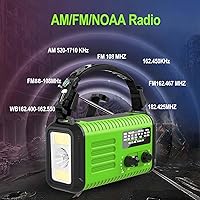
  • Radio Bands: The tuner supports AM reception from 520 to 1710 kHz, standard FM frequencies, and all NOAA weather broadcast channels via 7 configurable presets.
  • Audio Output: A 3.5mm headphone jack enables private listening across AM, FM, and NOAA broadcasts.
  • Flashlight Modes: The front-facing LED flashlight offers three output modes: wide beam, dipped beam, and a mixed beam combining both patterns.
  • Reading Light: A panel of 20 LEDs on the rear face of the unit provides area lighting suitable for reading, map checking, or illuminating a tent interior.
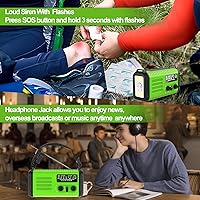
  • SOS Alarm: An integrated SOS alarm activates a loud audible alert paired with a red strobe light to signal rescuers in emergency situations.
  • Navigation Aid: A magnetic compass is embedded in the carrying strap to support basic directional orientation during outdoor emergencies.
  • Water Resistance: The unit carries an IPX3 water resistance rating, meaning it can withstand light rain and splash exposure but is not designed for submersion.
  • Color: The Condor 1 is available in a light green colorway suited to outdoor and field use contexts.
  • Date Available: This model first became available to consumers in December 2024, making it a recent entry into the emergency radio market.

Related Reviews

RAOUOEN H27 30000mAh Emergency Weather Radio
68%
83%
Battery Capacity
81%
Value for Money
76%
Radio Reception
44%
Solar Charging
58%
Hand Crank Usability
More
QAUYYW Emergency Weather Radio XSY330
86%
89%
Battery Life
85%
Ease of Use
92%
Portability
75%
Radio Reception
88%
Build Quality
More
Rckskaya Condor 1 Emergency Hand Crank Radio
73%
88%
Power Source Versatility
72%
NOAA Weather Reception
83%
Flashlight Performance
67%
Phone Charging Capability
79%
SOS Alarm & Signaling
More
Sttfaishen F20 Emergency Hand Crank Weather Radio
72%
82%
NOAA Alert Reception
54%
Battery Capacity & Honesty
61%
Hand Crank Usability
57%
Solar Charging Performance
83%
USB-C Charging Speed
More
TFTDOUP Emergency Weather Alert Radio
86%
88%
Overall Performance
85%
Battery Life
90%
Charging Options
80%
Ease of Use
87%
Build Quality
More
OnLyee CR1030 Emergency Weather Radio
76%
88%
Power Source Redundancy
83%
Hand Crank Durability
61%
Solar Charging Performance
79%
NOAA Reception Quality
67%
Battery Capacity & Phone Charging
More
Roxicosly CR1009Ultra 12000mAh Emergency Weather Radio
74%
88%
Battery Life
91%
Charging Versatility
86%
NOAA Alert Performance
58%
Hand Crank Durability
44%
Solar Charging Speed
More
FosPower A6 5200mAh Emergency Weather Radio
77%
91%
NOAA Reception
84%
Build Quality
67%
Power Bank Utility
53%
Hand Crank Efficiency
49%
Solar Charging
More
LUOZROLL 20000mAh Emergency Crank Weather Radio
70%
78%
NOAA Reception Quality
63%
AM/FM Reception
67%
Battery Capacity & Real-World Output
44%
Hand Crank Charging
51%
Solar Charging Efficiency
More
FosPower Emergency Weather Radio A1
76%
88%
NOAA Reception Quality
74%
AM/FM Reception
58%
Hand Crank Charging
53%
Solar Panel Effectiveness
62%
Power Bank Output
More

FAQ

That depends on your phone, but treat the 20000mAh rating as a ceiling rather than a guarantee. Real-world output from budget lithium packs typically runs 60 to 75 percent of the rated capacity once you account for heat loss and conversion inefficiency. For a phone with a 4000mAh battery, expect three to four full charges under realistic conditions rather than five.

Not on its own. The solar panel on this emergency radio is best thought of as a slow trickle-top-up, not a primary charging method. In direct, strong sunlight it will add some charge over several hours, but it cannot fully replenish the battery in a single day. Use USB-C charging as your main input when grid power is available, and save the hand crank and solar as true backup options.

The IPX3 rating means it can handle light rain and splashes without issue, which covers most outdoor scenarios like a sudden shower during a hike. What it cannot handle is being submerged, dunked, or left under heavy running water. If you are using it near a flooded area or on a boat, keep it inside a dry bag just to be safe.

Yes, the crank works, but it requires real physical effort for a modest return. A few minutes of steady cranking will typically power the radio or flashlight for a short period rather than meaningfully charging a phone. Think of the crank as a last-resort option to keep the radio running when all other charging sources are exhausted, not a convenient top-up method.

NOAA Weather Radio broadcasts cover the continental United States, Hawaii, Puerto Rico, and parts of Canada and the U.S. Virgin Islands. As long as you are within range of a NOAA transmitter — which covers most populated areas — the radio will pick up alerts. Rural and mountainous areas may see weaker signal, which is a limitation of any NOAA-band receiver, not specific to this unit.

A standalone power bank cannot receive NOAA alerts, activate an SOS alarm, or light up a room during an outage. The case for the Rckskaya Condor 1 20000mAh Emergency Weather Radio is consolidation — if you want one device in your emergency kit rather than three or four separate ones, this covers the basics of each. If you already own a high-quality power bank, a dedicated radio, and a good headlamp, the overlap in function here may not justify buying another device.
Yes. The USB-A and USB-C output ports operate simultaneously, so you can charge two devices — say, a phone and a tablet — at the same time. Keep in mind that splitting output between two devices will slow down the charge rate on each compared to using one port alone.

The alarm is designed to be attention-grabbing rather than subtle, which is exactly what you want in an emergency. The red strobe adds a visual component that is most effective at night or in low-visibility conditions. It is not a professional rescue beacon, but for attracting attention on a trail or in a dark building during a disaster, it does the job.

Rckskaya launched this model in late 2024, so it is a very new brand with a limited public track record. They advertise 24/7 customer support and a willingness to resolve issues, which is encouraging, but long-term reliability data simply does not exist yet. Before purchasing, check the current warranty terms directly with the seller, since policies can vary and update over time.

The rear reading light panel operates as a standalone function. You do not need to have the radio or flashlight active to use it, which is practical when you just need ambient light in a room or tent without draining the battery through unnecessary functions. Switching between modes is straightforward and does not require navigating menus.