Overview

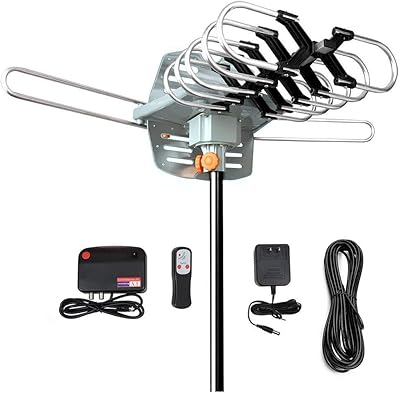
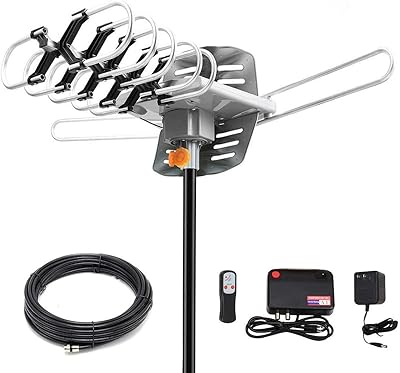
The PIBIDI UHD-8903 Outdoor TV Antenna occupies a practical middle ground in the OTA market — priced above entry-level indoor models but well below premium motorized units. It targets rural and suburban households tired of monthly cable bills, promising dual VHF/UHF reception and a headline-grabbing 200-mile range. That range figure deserves honest scrutiny. Real-world performance depends heavily on your distance from broadcast towers, local terrain, and how many trees or structures stand between you and the signal. Think of 200 miles as a theoretical ceiling, not a number you should bank on without checking your specific location first.
Features & Benefits

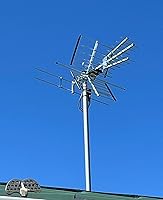
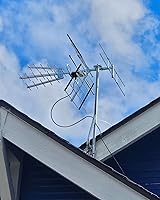
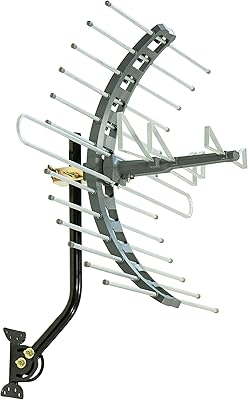
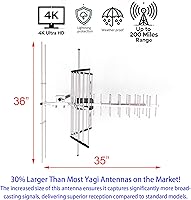
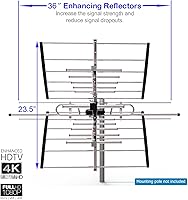
What distinguishes this outdoor antenna from cheaper alternatives is the size of its receiving elements — longer elements generally capture signals more reliably, especially for VHF band channels like PBS and independent locals that compact antennas often miss entirely. It covers VHF 170–230 MHz and UHF 470–860 MHz, giving you access to the full broadcast spectrum for free 4K and 1080p content. The housing is built for year-round outdoor exposure, with lightning protection and grounding support built in — a genuinely useful detail in storm-prone climates. Most assembly is handled out of the box, which meaningfully lowers the frustration of getting it up and running.

Best For

This OTA antenna makes the most practical sense for households sitting roughly 50 to 150 miles from their nearest broadcast towers, especially those who have already exhausted indoor antenna options. Homeowners with a clear rooftop or unobstructed attic are in the best position to get real results from it. Urban apartment dwellers with limited mounting access will likely find it awkward and impractical. It suits budget-conscious cord-cutters who want dependable access to local news, live network sports, and primetime television without any monthly fee. Just know that while you don't need to hire an installer, roof mounting still takes planning and some physical effort.

User Feedback

Buyer sentiment around the PIBIDI rooftop antenna leans positive overall, with rural users frequently noting noticeable signal improvements over the indoor antennas they replaced. The mostly pre-assembled design draws consistent appreciation — people genuinely like not needing to find tools mid-setup. On the downside, buyers in heavily wooded or hilly areas report uneven results, especially on VHF channels, which are inherently harder to capture at long distances regardless of antenna brand. A few reviewers flag that the included mounting hardware feels somewhat light for a permanent outdoor setup. Customer support is generally described as responsive, which counts for something when signal performance is hard to predict in advance.

Pros

  • Dual VHF and UHF coverage captures the full broadcast spectrum, including harder-to-reach VHF locals that flat antennas miss.
  • Rural buyers up to 100 miles from towers report picking up channels they had completely given up on.
  • Built-in lightning protection and grounding support add meaningful safety for permanent outdoor installations.
  • Weather-resistant housing holds up through rain, wind, and temperature swings without performance degradation.
  • Mostly pre-assembled out of the box, so physical antenna setup takes minutes rather than hours.
  • Free 4K and 1080p reception means zero monthly cost for network TV, local news, and live sports.
  • At just over four pounds, the antenna is light enough for solo rooftop installation without a second pair of hands.
  • Customer support is generally responsive and provides useful guidance for post-install troubleshooting.
  • UHF channel performance is consistently strong in open terrain, delivering clean and stable HD picture quality.
  • Ranked in the top 120 TV antennas on Amazon with hundreds of verified reviews, indicating broad real-world validation.

Cons

  • The 200-mile range claim is a theoretical maximum; wooded or hilly terrain can cut effective range by more than half.
  • Included mounting hardware feels noticeably cheaper than the antenna itself and may corrode or loosen after one winter.
  • Grounding instructions are vague enough that first-time installers frequently skip the step entirely.
  • VHF reception becomes inconsistent beyond 80 miles, especially during weather changes or atmospheric shifts.
  • The antenna is directional, so splitting reception between two broadcast markets requires a separate motorized rotor.
  • Written installation documentation is sparse and poorly suited for buyers without prior antenna experience.
  • Freeze-thaw cycling in harsh northern winters has caused stress fractures at element joints for some long-term users.
  • Channel counts in low-density broadcast areas often land between 15 and 30, well short of the advertised 100-channel figure.
  • Multi-path interference in suburban environments can cause unexpected UHF dropouts even at moderate distances from towers.

Ratings

The PIBIDI UHD-8903 Outdoor TV Antenna scores below are generated by AI after analyzing verified buyer reviews worldwide, with spam, bot-submitted, and incentivized feedback actively filtered out. Across hundreds of real-world installations — from open farmland to suburban rooftops — both the genuine strengths and the recurring frustrations of this OTA antenna are reflected transparently in every category.
Signal Range & Reception
73%
27%
Rural buyers situated 60 to 120 miles from their nearest towers report meaningful improvements over indoor antennas, often picking up channels they had completely given up on. In open terrain with a clear rooftop mount, the extended receiving elements deliver noticeably stable lock on both network and independent broadcast stations.
The advertised 200-mile figure creates expectations that the antenna rarely meets in practice. Users in hilly, wooded, or obstructed environments frequently report that real-world performance lands closer to 60 or 80 miles before signal quality degrades meaningfully.
VHF Band Performance
67%
33%
Compared to compact flat indoor antennas, this OTA antenna handles VHF channels considerably better thanks to its larger physical element length. Buyers who specifically needed PBS, CW affiliates, or regional independents on VHF bands appreciated the broader frequency coverage.
VHF reception remains the weakest link for many buyers, particularly those more than 80 miles from transmitters. A recurring complaint involves inconsistent lock on lower VHF channels during weather changes, which is a known limitation of directional outdoor antennas at extended distances.
UHF Band Performance
84%
UHF signal acquisition is where this antenna genuinely earns its keep. Most buyers report clean, stable 1080p reception on major network affiliates — ABC, CBS, NBC, Fox — without the pixelation or dropouts they experienced with smaller alternatives. Clear-sky UHF performance in the 470 to 860 MHz range is reliably strong.
Multi-path interference from nearby buildings or terrain features can cause UHF dropout in suburban environments. A small number of buyers noted that UHF performance dropped unexpectedly when wind shifted the antenna's aim, suggesting the mounting hardware may not hold alignment as firmly as needed.
Build Quality & Durability
78%
22%
The antenna housing itself feels solid for its price tier, and buyers in high-wind regions report that the main structure holds up through storms without cracking or deforming. The weather-resistant finish shows no obvious signs of UV degradation after a full year of outdoor exposure according to longer-term reviewers.
The mounting hardware is the weak link. Multiple buyers flagged that the included brackets and clamps feel noticeably cheaper than the antenna itself, with some reporting corrosion or loosening after a single winter season. Anyone planning a permanent installation should budget for aftermarket mounting hardware.
Lightning & Grounding Protection
81%
19%
Having lightning protection and grounding support built into the design is a meaningful differentiator at this price point. Buyers in storm-prone areas specifically called out the grounding capability as a reason they chose this antenna over ungrounded alternatives, and none reported surge-related damage in their reviews.
The documentation for proper grounding is sparse. Several buyers noted that the instructions assume some prior knowledge of antenna grounding, which means first-time installers may skip this step entirely — negating the protection the design is meant to provide.
Ease of Assembly
82%
18%
The mostly pre-assembled format genuinely reduces the out-of-box frustration that plagues many outdoor antenna kits. Buyers consistently praised the fact that only a handful of elements need to be connected, making the physical antenna assembly itself quick and approachable for non-technical homeowners.
Assembly and installation are two different things, and reviews conflate them at buyers' peril. Getting the antenna onto a roof or into an attic still requires ladder access, cable routing, and directional aiming — none of which is addressed well in the included documentation. First-timers often spend more time on placement than on the antenna itself.
Installation Experience
69%
31%
For users who have installed an outdoor antenna before, the process is relatively straightforward. The pre-assembled elements mean less fumbling with small parts at height, and the antenna's weight — just over four pounds — makes solo roof installation manageable for most adults.
Instruction clarity is a common complaint. The written guide lacks detail on optimal aiming techniques, coaxial grounding block placement, and what to do when channels are missing post-install. Buyers without prior antenna experience frequently had to consult third-party resources to complete a proper setup.
4K & HD Picture Quality
86%
When signal lock is achieved, the picture quality through this OTA antenna is exactly what free broadcast HD should look like — clean, sharp, and uncompressed. Several buyers coming from cable noted that network channels actually looked better over the air than through their previous subscription service.
Picture quality is entirely dependent on signal consistency. In marginal reception zones, buyers describe intermittent pixelation and audio dropout on channels that technically scan as available. This is an OTA limitation broadly, but it affects this antenna more than premium alternatives with amplification options.
Channel Count
74%
26%
In signal-rich suburban markets, buyers report scanning 40 to 70 accessible channels, including shopping, foreign language, and secondary sub-channels they had no idea were broadcasting for free. The dual-band coverage ensures neither VHF nor UHF stations are systematically excluded from scans.
The 100-channel figure is a ceiling number tied to theoretical local availability, not guaranteed delivery. Rural buyers in low-density broadcast areas often find their actual scanned channel count falls between 15 and 30, which can feel underwhelming relative to the marketing framing.
Weather Resistance
79%
21%
Buyers in rain-heavy climates note that the antenna continues performing through downpours without the water ingress or connector corrosion issues that plague cheaper models. The sealed housing design holds up reasonably well across temperature extremes based on multi-season user reports.
Extended exposure to ice and freezing rain presents more of a challenge. A handful of buyers in northern climates reported physical stress fractures at element joints after a harsh winter, suggesting the materials handle heat and rain better than repeated freeze-thaw cycles.
Value for Money
77%
23%
For buyers who successfully eliminate a cable or satellite bill, the antenna pays for itself within a single month. The combination of outdoor-rated construction, dual-band coverage, and lightning protection at this price tier represents a fair value proposition compared to similarly specified competitors.
Buyers who purchase based on the 200-mile range claim and live in challenging terrain often feel the price is hard to justify when real-world performance is closer to a less expensive competitor. The value equation is highly location-dependent, which the product packaging does not communicate clearly enough.
Customer Support
71%
29%
PIBIDI's customer service team receives above-average marks for response speed. Buyers who reached out with post-installation questions generally received replies within a reasonable timeframe, and a few reviews mention that support staff provided useful channel-scanning tips proactively.
Support quality becomes inconsistent when technical issues go beyond basic troubleshooting. Buyers dealing with persistent signal problems in difficult terrain report that support responses can be generic and not particularly tailored to their specific geography or setup configuration.
Packaging & Unboxing
75%
25%
The antenna arrives well-protected, with foam inserts that prevent element damage during shipping. Buyers report receiving all listed components intact, and the organized packaging makes it easy to inventory parts before heading up to the installation point.
The packaging is functional but not particularly informative. There is no quick-start diagram on the box itself, and the included paper instructions are printed small enough that several buyers mentioned needing reading glasses or a phone camera to work through them comfortably.
Compatibility & Versatility
80%
20%
This OTA antenna works with any TV that has a coaxial input, including older sets with a converter box and modern smart TVs alike. Buyers appreciate that there are no apps, accounts, or firmware updates involved — it simply connects and scans, which is exactly what the cord-cutting use case calls for.
The antenna is directional, which means households trying to pull signals from towers in multiple compass directions will need a rotor — sold separately. Buyers who discover this limitation post-purchase, especially those in between two broadcast markets, are among the most vocal sources of negative feedback.

Suitable for:

The PIBIDI UHD-8903 Outdoor TV Antenna is built for a specific kind of buyer, and when it matches that buyer, it genuinely delivers. Rural and suburban homeowners situated roughly 50 to 150 miles from their nearest broadcast towers are the sweet spot — particularly those who have already tried indoor antennas and been disappointed by weak or inconsistent signal. If you have rooftop access or a clear attic space with a straight shot toward your local towers, this OTA antenna has the physical element length and dual-band coverage to pull in channels that compact alternatives simply cannot reach. It also makes strong practical sense for committed cord-cutters who want to watch local news, live sports, and primetime network programming in uncompressed HD without paying a monthly fee. Homeowners in open terrain — flat farmland, low-tree suburbs, elevated hillside properties — will get the most out of what this antenna is designed to do.
Not suitable for:

The PIBIDI UHD-8903 Outdoor TV Antenna is a poor fit for a meaningful segment of buyers who might be tempted by its range claims. If you live in an apartment, a dense urban building, or anywhere that lacks a practical outdoor or attic mounting point, this antenna becomes awkward and largely impractical — it is a rooftop tool, not a windowsill solution. Buyers in heavily wooded areas, deep valleys, or locations with significant multi-path interference from surrounding structures should approach the 200-mile range figure with serious skepticism, because those environmental factors can reduce effective range to a fraction of what is advertised. It is also not the right choice if you need to capture signals from broadcast towers located in two different compass directions, since this is a directional antenna and reorienting it means losing channels on the other side — a motorized rotor antenna would serve that use case far better. Finally, anyone expecting a truly plug-and-play experience with zero planning involved should recalibrate: getting this antenna properly mounted, aimed, and grounded takes real effort regardless of how straightforward the element assembly itself may be.

Specifications

  • Brand: This antenna is manufactured and sold by PIBIDI, a brand specializing in over-the-air reception products.
  • Model: The specific model designation is UHD-8903, which identifies this variant within the PIBIDI outdoor antenna lineup.
  • Antenna Type: This is a directional outdoor OTA (over-the-air) antenna designed for rooftop or elevated exterior mounting.
  • Frequency Range: The antenna receives VHF signals from 170 to 230 MHz and UHF signals from 470 to 860 MHz, covering the full broadcast television spectrum.
  • Claimed Range: PIBIDI rates the maximum reception range at 200 miles under ideal, unobstructed line-of-sight conditions.
  • Signal Support: The antenna supports free over-the-air reception of 4K UHD and 1080p HD broadcast signals without any subscription or decoder required.
  • Channel Capacity: Up to 100 channels may be accessible depending entirely on local broadcast tower density and geographic availability in the installation area.
  • Dimensions: The packaged unit measures 17.58 × 13.11 × 4.38 inches, reflecting the extended element length that contributes to its long-range reception capability.
  • Weight: The complete antenna unit weighs 4.09 pounds, making solo rooftop installation manageable for most adults without assistance.
  • Lightning Protection: Built-in lightning protection is included in the antenna design, providing a layer of surge safety for permanent outdoor installations.
  • Grounding Support: The antenna supports external grounding connections, allowing installers to complete a full grounding setup for added electrical safety compliance.
  • Weather Resistance: The housing and elements are constructed to withstand outdoor exposure year-round, including rain, wind, and moderate temperature extremes.
  • Installation: The antenna arrives mostly pre-assembled from the factory, with only a small number of elements requiring manual connection before mounting.
  • Tools Required: No tools are required for the antenna assembly itself, though standard tools may be needed for the physical mounting process depending on the chosen location.
  • Coax Connector: The antenna uses a standard coaxial output connection, compatible with RG-6 or RG-59 coaxial cable for connection to a TV or splitter.
  • Best Sellers Rank: As of the most recent data available, this antenna holds a rank of approximately 117 in the TV Antennas category on Amazon.
  • Availability Date: The PIBIDI UHD-8903 was first listed for sale in September 2022, giving it several years of real-world installation feedback to draw from.
  • Included Items: The package contains the antenna unit along with access to PIBIDI customer service and technical support for post-installation assistance.

Related Reviews
PIBIDI UHD-3942 Outdoor TV Antenna
74%
72%
Signal Reception
78%
Motorized Rotation
81%
Amplifier Performance
69%
Build Quality
86%
Ease of Installation
More
McDuory UHD-3968 Outdoor Yagi TV Antenna
73%
78%
Signal Reception
51%
Range Accuracy
88%
Ease of Assembly
74%
Build Quality
81%
Value for Money
More
UltraPro Outdoor 70-Mile HD TV Antenna
76%
73%
Signal Reception
61%
Range Accuracy
82%
Installation Ease
78%
Build Quality
81%
Weather Resistance
More
iGENJUN ANT-CS8218 Amplified Indoor Outdoor TV Antenna
72%
73%
Signal Reception Quality
67%
Amplifier Performance
88%
Ease of Installation
48%
Range Accuracy vs. Claimed Specs
71%
Build Quality & Materials
More
GE 29884 Outdoor Long-Range TV Antenna
79%
83%
Signal Reception Strength
88%
Ease of Installation
86%
Build Quality & Durability
79%
Channel Count & Variety
84%
Value for Money
More
MATIS FBA08D Outdoor TV Antenna
73%
71%
Signal Reception
88%
Ease of Setup
84%
Dual TV Output
76%
Motorized Rotation
73%
Weather Resistance
More
Antop AT-414BG Omni-Directional Outdoor TV Antenna
85%
90%
Reception Quality
88%
Ease of Installation
86%
Durability in Outdoor Conditions
92%
Value for Money
87%
Signal Range
More
PBD WA-2608 Motorized Outdoor TV Antenna
74%
82%
Signal Reception Quality
78%
Motorized Rotation
84%
Installation Experience
74%
Dual TV Output
71%
Build Quality & Durability
More
1byone 360° Omni-Directional Outdoor TV Antenna
73%
74%
Signal Reception
91%
Ease of Installation
72%
Build Quality
68%
Amplifier Performance
63%
4G LTE Filtering
More
SYLVOX 43-Inch Outdoor Smart TV QLED 4K UHD
85%
93%
Display Quality
89%
Weather Resistance
74%
Ease of Setup
78%
Sound Quality
87%
Voice Control (Google Assistant)
More

FAQ

Honestly, treat 200 miles as an absolute best-case ceiling rather than a reliable expectation. That figure assumes flat, open terrain with zero obstructions between your antenna and the broadcast tower. In practice, most buyers in moderately obstructed environments — trees, hills, buildings — find that effective range lands somewhere between 50 and 100 miles before signal quality starts to suffer. Before buying any long-range antenna, check a site like AntennaWeb or TVFool to see which towers are actually reachable from your address.

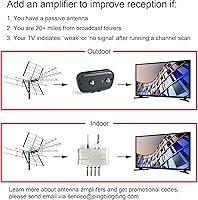
Not necessarily, but it depends on your situation. This OTA antenna is a passive design, meaning it relies entirely on its physical element size for gain rather than electronic amplification. If you are running a long coaxial cable run — say, 50 feet or more — or splitting the signal to multiple TVs, adding an inline amplifier can help recover signal loss. For a single TV with a short cable run in a good signal area, you likely will not need one.

Yes, attic installation is a popular option and can work well if your roof does not have a significant amount of metal foil insulation, which blocks RF signals. An attic mount gives you weather protection for the antenna while still putting it higher than an indoor placement. Just be aware that any roofing material between the antenna and the sky will reduce the effective range somewhat compared to a full outdoor rooftop installation.

It will, but you will need an external digital tuner or converter box between the antenna and the TV. Any television with a built-in ATSC tuner — which includes virtually all TVs sold in the US after 2007 — connects directly via coaxial cable with no extra equipment. If your set predates the digital transition or lacks a coax input entirely, a standalone ATSC converter box solves the problem inexpensively.

The most reliable method is to use a free online tool like AntennaWeb, TVFool, or RabbitEars — enter your address and they will show you which direction each broadcast tower sits relative to your home, along with signal strength estimates. Since this is a directional antenna, pointing it toward the largest cluster of towers in your area typically yields the best overall channel count. If your towers are spread across multiple directions, you may need a rotor or a second antenna.

Not technically, but the physical mounting process is more involved than the antenna assembly itself. Connecting the antenna elements takes only a few minutes with no tools. Getting it onto a roof, feeding the coaxial cable through to your TV, and completing the grounding connection is where most people spend real time and effort. Comfortable DIYers handle it without issue, but if heights or electrical grounding are not your strong suit, a local installer is worth the cost.

Yes, a coaxial splitter lets you distribute the signal to multiple TVs. Keep in mind that each split reduces signal strength — a two-way split costs roughly 3.5 dB of signal, which is noticeable in marginal reception areas. If you plan to feed three or four TVs, a distribution amplifier placed before the splitter helps compensate for that loss and keeps picture quality consistent across all sets.

Rain itself has minimal effect on VHF and UHF broadcast frequencies at the ranges involved here — unlike satellite dishes, OTA antennas are not meaningfully disrupted by rainfall. Lightning is a different matter, which is why the built-in lightning protection and grounding support on this antenna are worth using properly. A correctly grounded antenna installation significantly reduces — though cannot entirely eliminate — the risk of surge damage during nearby lightning strikes.

Not simultaneously, since this is a directional antenna designed to focus reception in one direction for maximum gain. If your broadcast markets split significantly — say, one city to the north and another to the east — you have a couple of options. A motorized antenna rotor lets you remotely repoint the antenna toward different towers, or you can combine two directional antennas aimed in different directions using a combiner. Either approach adds cost and complexity but solves the problem effectively.

The housing and main structure generally fare well through cold temperatures, and rain and wind resistance is solid based on multi-season user reports. The area to watch is the element joints and mounting hardware. A handful of buyers in regions with repeated freeze-thaw cycles report stress at connection points after a year or two, and the included mounting clamps can show corrosion over time. Using weatherproof coax fittings and upgrading the mounting hardware for permanent installations extends the useful lifespan considerably.