Overview

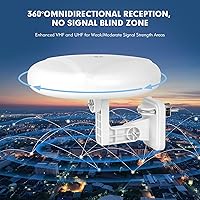
The 1byone 360° Omni-Directional Outdoor TV Antenna is one of those purchases that makes sense the moment you stop and think about how much you're spending on cable every month. Unlike traditional directional antennas that need to be pointed precisely toward a broadcast tower, this outdoor antenna picks up signals from every direction without any manual adjustment. It works on a rooftop, tucked in an attic, or strapped to an RV — which gives it a flexibility most antennas at this price point simply don't offer. That said, tower proximity matters more than any spec on the box, so check your local broadcast coverage before assuming it'll pull in every channel you want.
Features & Benefits

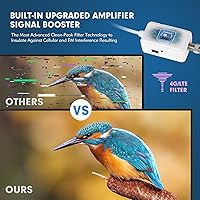
The omni-directional design is the headline feature here, but the built-in pre-amplifier does a lot of quiet work behind the scenes. It boosts signal strength right at the antenna itself, which helps offset signal loss from long cable runs — and the included 39ft RG6 coaxial cable gives you real flexibility in choosing where to mount it. The 4G LTE filter is a practical touch that blocks cellular interference, which can be surprisingly disruptive in urban and suburban areas. Both UHF and VHF bands are supported, so you're covered for the full range of over-the-air broadcasts including 4K and HD channels. The housing is moisture-proof and flame-retardant, built to handle outdoor exposure without babying.

Best For

This rooftop antenna is a solid fit for cord-cutters in suburban areas who are within a reasonable distance of their local broadcast towers — not fringe-reception territory, but not necessarily city-center close either. RV owners will appreciate not needing to reorient the antenna every time they park somewhere new. It's also a practical choice for homeowners who want an attic installation to avoid drilling through exterior walls or dealing with weathering on an exposed mount. One thing to flag upfront: this is a single-TV setup. If you run a splitter to feed multiple televisions, expect signal degradation. For single-screen households, though, it does the job without needing an external amplifier.

User Feedback

Buyers consistently mention how refreshingly easy the installation is — no tools, no frustration, just mounting hardware and a coaxial cable to connect. The omni-directional convenience gets a lot of praise too, particularly from RV users who no longer have to fiddle with antenna orientation. On the flip side, fringe-area performance is where this antenna draws honest criticism. People who live at the edge of broadcast range often find the amplifier can't compensate fully, and several note that mounting it higher — rather than at eave level — made a real difference. 4G filtering gets mixed marks; it helps in some areas but falls short in others.

Pros

  • No need to aim or rotate — the omni-directional design pulls in channels from every direction automatically.
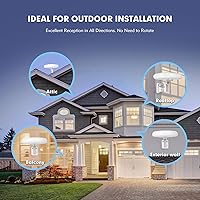
  • Attic and rooftop installation are both viable, giving homeowners real flexibility in placement.
  • The built-in amplifier handles long cable runs without requiring a separate external booster.
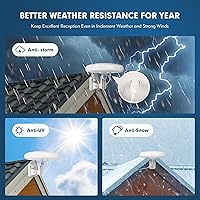
  • Moisture-proof and flame-retardant housing holds up well after extended outdoor exposure.
  • Tool-free setup means most people can get it mounted and connected in under an hour.
  • The 39ft RG6 coaxial cable included in the box is a generous length for most residential installs.
  • Supports both UHF and VHF bands, covering the full spectrum of free over-the-air channels.
  • RV users consistently report that parking and tuning in channels feels much less fiddly than with directional antennas.
  • At its price point, this rooftop antenna competes well against pricier branded alternatives for moderate-signal areas.
  • 4G LTE filtering actively reduces cellular interference that often disrupts reception in suburban environments.

Cons

  • Performance drops off significantly for buyers who live far from broadcast towers.
  • Splitting the signal to feed more than one TV causes noticeable channel loss — this is a real limitation for multi-TV homes.
  • The amplifier can sometimes over-boost strong nearby signals, causing pixelation or channel dropouts.
  • Mounting height matters more than the instructions suggest — eave-level placement often underperforms a higher roof mount.
  • 4G filtering is inconsistent in areas with very dense cellular infrastructure.
  • The compact form factor, while convenient, means it captures less raw signal than larger traditional antenna arrays.
  • No weatherproofing on the coaxial connector end — buyers in wet climates may need to seal it themselves.
  • Channel counts can vary wildly depending on location, despite the 200-channel figure cited in the marketing.
  • Some buyers report the mounting hardware feels lightweight and may need reinforcing in high-wind areas.
  • There is no remote or app control, so signal troubleshooting requires physically repositioning the antenna.

Ratings

Our AI rating system analyzed thousands of verified global buyer reviews for the 1byone 360° Omni-Directional Outdoor TV Antenna, actively filtering out incentivized, duplicate, and bot-generated feedback to surface what real users actually experienced. The scores below reflect both the genuine strengths that keep buyers satisfied and the friction points that led others to return or leave critical feedback. Nothing has been softened — the ratings tell the full story.

Signal Reception
74%
26%
In suburban locations with reasonable tower proximity, buyers consistently report pulling in a strong lineup of local HD channels without any antenna aiming. RV users especially appreciate how the omni-directional pattern handles changing locations without manual adjustment between stops.
Reception quality drops noticeably for users living in fringe areas or hilly terrain where the amplifier alone cannot compensate for a weak incoming signal. Several buyers who expected strong performance in rural areas were disappointed when channel counts came in lower than anticipated.
Ease of Installation
91%
The tool-free setup is one of the most consistently praised aspects across buyer feedback — most people report getting the antenna mounted, cabled, and scanning for channels within an hour. The included 39ft coaxial cable removes the need for an immediate hardware run, which is a small but genuinely appreciated convenience.
A handful of buyers found the mounting hardware felt lightweight for high-wind environments and reinforced it themselves with additional brackets. Instructions, while adequate, leave some guesswork around optimal placement height for first-time antenna users.
Build Quality
72%
28%
The moisture-proof, flame-retardant housing holds up well through rain and temperature swings, with many buyers noting the unit still looked and performed reliably after a full year outdoors. The compact, enclosed form factor avoids the fragility problems that plague older open-element antenna designs.
The coaxial connector junction on the unit is not factory-sealed, which can allow moisture ingress over time in wet climates — a few buyers in coastal or high-rain regions reported corrosion-related signal degradation. Some users also found the plastic housing felt less substantial than expected at this price tier.
Amplifier Performance
68%
32%
For homes with long cable runs between the rooftop and the TV, the built-in pre-amplifier meaningfully reduces signal loss and prevents channel dropout that would otherwise occur without it. Buyers upgrading from passive indoor antennas typically see a clear improvement in channel count and signal stability.
Over-amplification is a real issue for people who live very close to broadcast towers — the amplifier can actually cause pixelation or lock-out on nearby channels in high-signal environments. Amplifier effectiveness varies more than buyers expect, and a few noted no measurable improvement after switching from their previous setup.
4G LTE Filtering
63%
37%
In suburban areas with moderate cellular tower density, the LTE filter does help reduce the kind of interference that causes blocky picture artifacts and dropped channels. Buyers who previously struggled with 4G bleedover in newer spectrum bands found the filter provided a noticeable reduction in disruptions.
In dense urban environments surrounded by heavy 4G and 5G infrastructure, the filter proves insufficient for a meaningful number of users who still experience interference-related issues. The filtering is passive and fixed — there is no adjustable gain or frequency selection, which limits its usefulness in the most demanding cellular environments.
Channel Count
71%
29%
Most suburban buyers in good signal zones report channel counts well into the double digits, covering all major network affiliates plus a solid selection of secondary digital subchannels. For households cutting cable for the first time, the free channel lineup available through this rooftop antenna tends to genuinely surprise in a positive way.
Channel counts are highly location-dependent and the 200-channel figure cited in marketing represents a theoretical maximum under ideal conditions rather than a realistic expectation for most users. Buyers in smaller broadcast markets or rural areas frequently report channel totals far below what the packaging implies.
Weather Durability
77%
23%
The enclosed housing design and weather-resistant materials mean the antenna handles seasonal rain, UV exposure, and moderate wind loading without performance degradation over time. Several long-term buyers confirmed the unit still performs comparably to day one after two-plus years of outdoor mounting.
Sustained high-wind conditions can stress the lightweight mounting hardware more than the antenna body itself, with some buyers reporting the mount loosening over a single winter season. The coaxial connection point remains the unit's most weather-vulnerable spot and benefits from self-applied weatherproofing tape.
Value for Money
78%
22%
At its mid-range price point, this outdoor antenna offers a combination of omni-directional reception, a built-in amplifier, and a long coaxial cable that would cost more to assemble separately in competing configurations. Cord-cutters who have been relying on a cheap indoor antenna will likely recoup the cost difference in a single month of eliminated cable fees.
Buyers who live in fringe reception areas or need to serve multiple TVs often find themselves spending additional money on distribution amplifiers or upgraded antennas, which erodes the initial value proposition. A small number of users felt the price was slightly high given the build quality of the housing and mounting hardware.
Omni-Directional Design
83%
Not having to aim the antenna is a bigger quality-of-life improvement than it sounds, particularly for RV users and attic installations where physical access for adjustments is inconvenient. Buyers who previously dealt with the frustration of traditional directional antennas repeatedly reference the set-and-forget nature of this design as a key satisfaction driver.
The omni-directional trade-off is that the antenna captures interference from all directions too, not just the signal you want, which can introduce noise that a well-aimed directional antenna would avoid. In areas where all towers are clustered in one direction, a directional antenna would likely outperform this design at a comparable range.
RV Compatibility
81%
19%
The compact dimensions and included mounting hardware make this rooftop antenna a practical fit for RV roof installations without requiring custom brackets or professional help. The omni-directional pattern is genuinely well-suited to mobile use, where pointing a directional antenna becomes impractical as your parking orientation changes daily.
RV-specific vibration and road movement over time can work on mounting hardware that was initially installed with static residential use in mind, so periodic tightening checks are advisable. Channel availability while traveling is entirely tower-dependent, so expectations need to be calibrated by location rather than by the antenna's capabilities.
Cable Quality
69%
31%
RG6 coaxial cable is the correct specification for this type of antenna run, and including a 39ft length in the box covers the distance needs of most residential attic or rooftop installations without requiring a separate cable purchase. The cable feels flexible enough to route around corners without excessive stiffness.
Several buyers noted that the included cable connector fittings felt less precisely machined than aftermarket RG6 cable connectors, with a couple reporting signal issues that were resolved only after replacing the included cable with a higher-quality alternative. The cable length, while generous, may still fall short for two-story homes with a long interior run to the television.
Attic Performance
66%
34%
Attic installations are a clean, hidden alternative to exterior rooftop mounting, and this outdoor antenna handles the enclosed environment reasonably well in homes without radiant barrier insulation. Multiple buyers report satisfactory channel counts from an attic mount, making it a practical compromise for homeowners who want to avoid exterior drilling.
Homes with radiant barrier roof decking or metal-backed insulation can significantly attenuate the incoming signal before it even reaches the antenna, which is a location-specific limitation that catches some attic installers off guard. Results vary more in attic installations than rooftop ones, making it harder to predict performance in advance.
Setup Documentation
61%
39%
The physical installation steps are straightforward enough that most buyers complete the process without consulting the instructions beyond confirming cable orientation. The tool-free design reduces the number of steps that could go wrong during mounting.
The included documentation does not address signal optimization strategies like optimal mounting height, how to use a channel scan correctly, or how to identify whether the amplifier is causing over-amplification issues — information that would significantly help first-time antenna buyers. Several buyers only resolved reception issues after researching online rather than consulting the included guide.

Suitable for:

The 1byone 360° Omni-Directional Outdoor TV Antenna is a strong match for cord-cutters who live in suburban or semi-rural areas and are within a reasonable distance of local broadcast towers. If you've been relying on a basic indoor antenna and keep running into dropped signals or limited channel counts, stepping up to an amplified outdoor unit like this one makes a genuine difference. RV travelers and full-timers will find particular value here — the omni-directional design means you don't have to re-aim every time you park in a new spot, which removes a real daily frustration. It's also well-suited for homeowners who want to mount in an attic rather than on a rooftop, since the included 39ft cable gives you enough run to reach a solid signal zone without drilling through exterior walls. Single-TV households get the most out of it, since the antenna is designed to feed one screen cleanly without the signal loss that comes from splitting.
Not suitable for:

The 1byone 360° Omni-Directional Outdoor TV Antenna is not the right tool for everyone, and it's worth being clear about where it falls short before you commit. If you live in a fringe reception area — far from broadcast towers or in a region with heavy terrain interference — no amplifier on a unit at this price tier is going to fully compensate for a weak incoming signal. Households with multiple televisions should also look elsewhere or budget for a quality distribution amplifier, because running a splitter off this antenna will noticeably degrade the signal on each connected screen. Urban buyers surrounded by dense 4G infrastructure may find the LTE filter helpful but not always sufficient, depending on the concentration of nearby cell towers. And if you need a directional antenna aimed at a specific distant tower cluster, a purpose-built yagi-style antenna will outperform an omni-directional unit at equivalent range every time.
Specifications

  • Brand: Manufactured by 1byone, model number 6-501NA004-UP.
  • Reception Pattern: 360-degree omni-directional design receives signals from all directions without manual rotation.
  • Signal Bands: Supports both UHF and VHF frequency bands for full over-the-air broadcast coverage.
  • Resolution Support: Compatible with 4K Ultra HD and standard HDTV broadcasts.
  • Amplifier: Built-in pre-amplifier boosts incoming signal strength directly at the antenna to reduce cable-run loss.
  • LTE Filter: Integrated 4G LTE filter actively reduces interference from nearby cellular tower signals.
  • Included Cable: Comes with a 39ft RG6 coaxial cable for extended placement flexibility.
  • Impedance: Operates at 75 Ohm impedance, the standard for residential TV antenna and coaxial systems.
  • TV Output: Designed for single TV output; using a splitter will reduce signal strength to each connected screen.
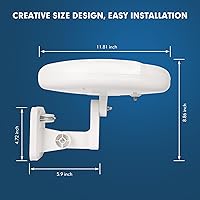
  • Dimensions: Antenna unit measures 11.81″ in length, 11.81″ in width, and 8.86″ in height.
  • Weight: The antenna unit weighs 3.85 pounds, making it manageable for solo installation.
  • Housing Material: Outer housing is moisture-proof and flame-retardant, built to withstand prolonged outdoor exposure.
  • Installation: Tool-free installation is supported using the included mounting hardware and accessories.
  • Compatible Uses: Suitable for outdoor rooftop, attic, RV, and marine antenna installations.
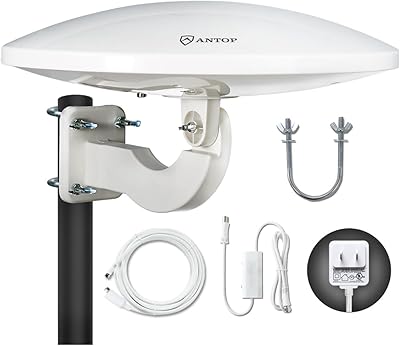
  • Package Contents: Includes the antenna unit, 39ft RG6 coaxial cable, mounting hardware, and installation accessories.

Related Reviews

Antop AT-414BG Omni-Directional Outdoor TV Antenna
85%
90%
Reception Quality
88%
Ease of Installation
86%
Durability in Outdoor Conditions
92%
Value for Money
87%
Signal Range
More
ANTOP AT-415B UFO Dual Omni-Directional Outdoor HDTV Antenna
84%
90%
Signal Reception
88%
Ease of Setup
85%
4K UHD Performance
82%
Build Quality
84%
Range (65 Miles)
More
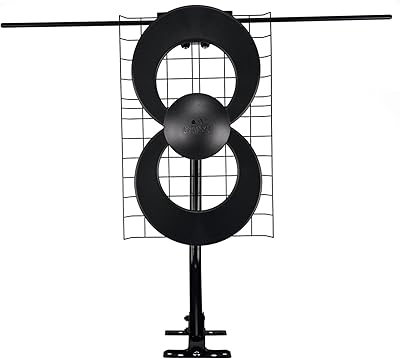
Antennas Direct ClearStream 2MAX TV Antenna
76%
83%
Signal Reception Quality
67%
Range Accuracy
88%
Ease of Installation
84%
Build Quality
79%
Multi-Directional Performance
More
Antennas Direct ClearStream 2V TV Antenna
83%
88%
Signal Reception
91%
VHF Channel Coverage
84%
Build Quality
82%
Ease of Installation
79%
Value for Money
More
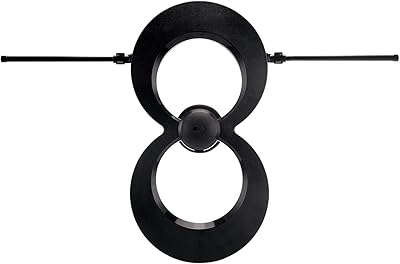
Antennas Direct ClearStream 4MAX TV Antenna
86%
88%
Performance in Rural Areas
93%
Ease of Installation
85%
Signal Strength
91%
Build Quality
89%
Indoor/Outdoor Versatility
More
Antennas Direct ClearStream 4V TV Antenna
74%
88%
Signal Reception
84%
Build Quality
81%
Multi-Directional Performance
67%
Ease of Installation
74%
Value for Money
More
Antennas Direct ClearStream MAX-V TV Antenna
76%
78%
Signal Reception
61%
Range Accuracy
84%
Installation Ease
82%
Build Quality
79%
Value for Money
More
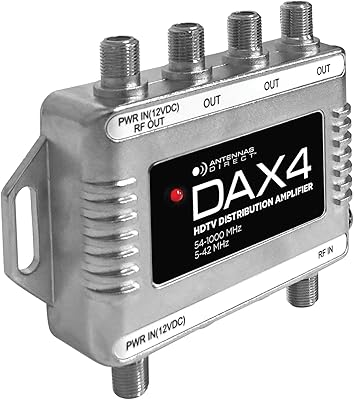
Antennas Direct DAX4 4-Output TV Antenna Distribution Amplifier
86%
87%
Signal Quality & Performance
91%
Ease of Installation
85%
Build Quality & Durability
92%
Value for Money
78%
Weather Resistance
More
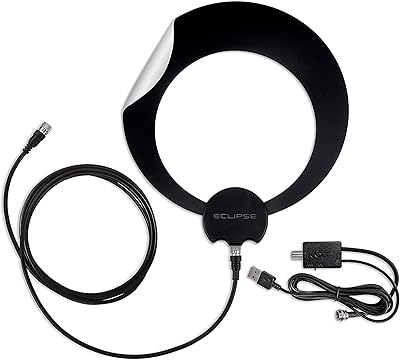
Antennas Direct ClearStream Eclipse Indoor TV Antenna
77%
74%
Signal Reception
67%
Amplifier Performance
93%
Design & Profile
91%
Ease of Setup
62%
Cable Length
More
Antennas Direct DB8e Outdoor TV Antenna
73%
83%
Signal Reception
88%
Build Quality
86%
Weather Durability
58%
Ease of Installation
71%
Value for Money
More

FAQ

No, that is actually the main advantage of this design. The omni-directional pattern means it receives signals from all directions at once, so there is no aiming or rotating required. You just mount it, connect the cable, and run a channel scan.

This is where honest expectations matter. The antenna performs best when you are within a moderate distance of your local towers — generally speaking, closer suburban locations tend to see the strongest results. If you are in a fringe reception area or surrounded by heavy terrain, the amplifier helps but has limits. Use a site like AntennaWeb or TV Fool to check your specific tower distances before purchasing.

Technically yes, but it comes with a real trade-off. Every time you split the signal, you lose a portion of it, which can mean fewer channels or a weaker picture on each TV. This antenna is genuinely optimized for a single television. If you need to run multiple screens, you would want a distribution amplifier in addition to the splitter, and even then results will vary.

The housing is rated as moisture-proof and flame-retardant, which means it is built to handle rain, humidity, and heat exposure over time. Most buyers report it holding up well through multiple seasons. One area worth sealing yourself is the coaxial connector junction, which is not factory-sealed and can let moisture in over time in very wet climates.

It works well in an attic and that is actually a popular installation choice for people who want to avoid exterior mounting. Just keep in mind that roofing materials — especially those with radiant barriers or metal components — can block or reduce signal. If attic reception disappoints, moving it to an exterior mount typically improves results.

Yes, the built-in pre-amplifier requires power to operate. The unit typically uses a power inserter that connects inline with the coaxial cable and plugs into a standard wall outlet. Make sure you have an accessible outlet or extension cable near your installation point.

This outdoor antenna is popular among RV users specifically because the omni-directional design removes the need to reorient every time you park somewhere new. Setup is the same as a home installation — mount it securely, run the coaxial cable to your TV, and scan for channels. Channel availability will vary by location depending on which broadcast towers are nearby.

The filter is built into the amplifier circuit and works by blocking the frequency ranges used by cellular networks, which can bleed into TV signal bands and cause pixelation or dropped channels. If you live near a lot of cell towers, it helps. In more rural areas with less cellular congestion, you may not notice much difference either way, but it does not hurt to have it.

Higher is almost always better with outdoor antennas. Mounting at eave level is convenient but often underperforms compared to a rooftop peak installation. Getting the antenna above surrounding obstructions — trees, neighboring rooftops, walls — makes a meaningful difference in how many channels it pulls in reliably.

For a standard single-TV installation, the box includes everything you need: the antenna, 39ft of RG6 coaxial cable, and mounting hardware. No tools are required. If your TV does not have a built-in tuner, you would need a separate digital tuner box, but for any modern flat-panel TV that is not an issue.