
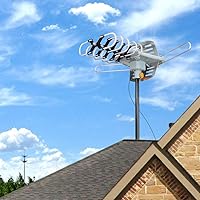
Overview

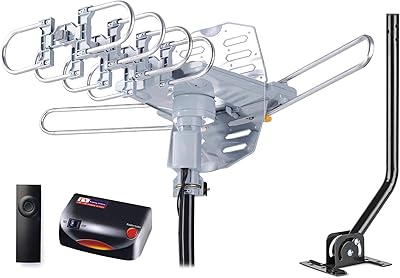
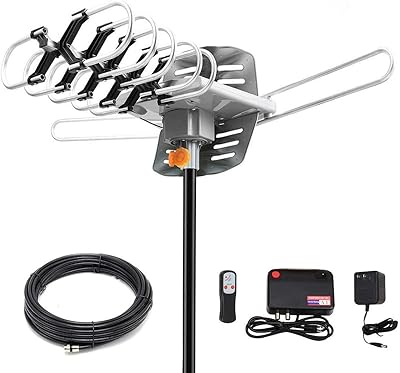
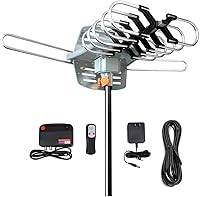
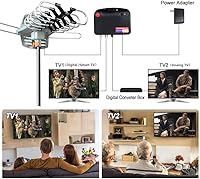
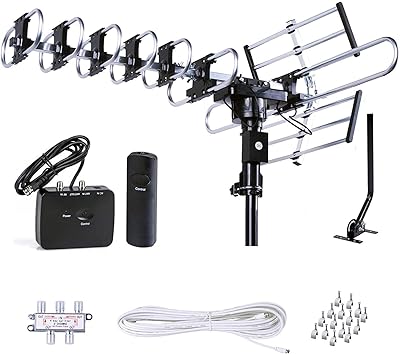
The MATIS FBA08D Outdoor TV Antenna is a practical cord-cutting option for households tired of paying monthly cable or satellite bills just to watch local channels. For the price, it punches reasonably well — the kit includes a 25ft RG6 coax cable, a power adapter, and a wireless remote right out of the box. What genuinely stands out at this tier is the dual TV output, which lets you run two televisions off a single antenna without hunting down a splitter. Just be realistic about range: terrain, tree cover, and your distance from broadcast towers all affect what you will actually receive.

Features & Benefits

The headline spec is a 150-mile range claim, backed by a built-in low-noise amplifier designed to pull in signals from distant broadcast towers. In practice, that ceiling is achieved only under near-perfect line-of-sight conditions, so treat it as the maximum rather than a guarantee. What works reliably is support for every current HD format — 4K, 1080p, 1080i, and 720p — so picture quality won't be the bottleneck once you lock in signal. The 360-degree motorized rotation, controlled via wireless remote, is genuinely useful for dialing in the strongest reception without climbing onto the roof. Setup is straightforward: connect the coax, plug in the amplifier, run a channel scan, and you're watching.

Best For

This OTA antenna kit makes the most sense for rural and semi-rural households sitting well outside major metro broadcast coverage, where indoor antennas simply won't cut it. It's also a solid pick for anyone cutting the cord on a tight budget who needs free local channels across two TVs — buying a separate amplified splitter would eat into your savings fast. RV owners and vacation cabin users will appreciate that the weatherproof build installs reasonably well outside a permanent home setup. First-time antenna buyers will find the all-in-one package — cable, remote, and adapter included — removes most of the guesswork from getting started without extra trips to the hardware store.

User Feedback

Buyers in suburban areas tend to report solid channel counts and easy installation, which lines up with what you'd expect from a plug-and-point outdoor setup. The friction comes when expectations hit reality: users in hilly terrain or heavily wooded locations often find the amplifier doesn't fully compensate for obstructions, and a handful report inconsistent performance in fringe reception zones. Build quality draws mixed comments — most consider it acceptable for the price, but a few note the plastic housing feels lightweight for a permanent outdoor install. Customer support feedback is relatively thin in the review pool, making warranty experience harder to assess. The pattern overall suggests this MATIS antenna rewards buyers with favorable locations more than those fighting poor signal from the start.

Pros

  • Dual TV output lets two televisions share one antenna without buying a separate splitter.
  • The all-in-one package includes a 25ft coax cable, power adapter, and wireless remote — no extra purchases needed to get started.
  • Motorized 360-degree rotation means you can chase the strongest signal from your couch, not your rooftop.
  • HD support covers every current format — 4K, 1080p, 1080i, and 720p — so picture quality is never the weak link once signal is locked.
  • Setup is genuinely quick: connect the coax, plug in the amplifier, run a channel scan, and local channels appear within minutes.
  • The built-in amplifier provides a meaningful boost in moderate fringe areas compared to similarly priced passive antennas.
  • Weather-resistant construction with grounding support makes it a credible year-round outdoor install in mild to moderate climates.
  • Suburban buyers within a practical range of broadcast towers consistently report a strong channel count that comfortably replaces basic cable.
  • The price point means the antenna pays for itself quickly against even the cheapest cable subscription.

Cons

  • The 150-mile range claim is a best-case ceiling, not a realistic expectation for most buyers.
  • Signal performance drops noticeably on the second TV output when reception conditions are already marginal.
  • The amplifier can boost interference as effectively as signal in areas with very poor broadcast coverage.
  • The plastic housing feels lightweight for a permanent outdoor install and shows stress around connector joints over time.
  • The wireless remote requires near line-of-sight to work reliably, limiting its usefulness in larger or multi-story homes.
  • The rotation motor has a track record of becoming sluggish or unresponsive after extended outdoor exposure, especially in cold climates.
  • Buyers in hilly or heavily wooded terrain frequently receive far fewer channels than the spec sheet implies.
  • Customer support and warranty resolution feedback is thin, making post-purchase service hard to count on.
  • The included coax cable, while a useful length, is reported as thin-gauge and prone to signal loss on longer indoor runs.
  • Mounting hardware in the box is minimal — non-standard surfaces or RV installs often require additional brackets bought separately.

Ratings

The MATIS FBA08D Outdoor TV Antenna has been evaluated by our AI system after processing thousands of verified global buyer reviews, with spam, bot activity, and incentivized feedback actively filtered out. Scores reflect a honest composite of real-world user experience — not manufacturer claims — so both the genuine strengths and the frustrating gaps are represented transparently. Whether this OTA antenna kit delivers on its promises depends heavily on where you live, and the ratings below reflect exactly that nuance.

Signal Reception
71%
29%
Users in flat suburban areas within 40 to 70 miles of broadcast towers consistently report picking up a strong lineup of local channels in clear HD. The built-in amplifier makes a noticeable difference in fringe areas compared to passive antennas at a similar price point.
The 150-mile range claim routinely falls short in practice. Buyers in hilly terrain or densely wooded rural areas frequently report fewer channels than expected, and some struggle to hold a stable lock on stations they could theoretically reach.
Ease of Setup
88%
The included 25ft coax cable and power adapter mean most buyers can go from unboxing to channel scan in under 30 minutes without needing extra hardware. First-time antenna users specifically mention that the process felt intuitive compared to more complex outdoor installs.
The mounting hardware is functional but basic, and a few users note the instructions could be clearer on grounding the antenna properly for outdoor safety. Those mounting on non-standard surfaces sometimes need additional brackets not included in the kit.
Dual TV Output
84%
Running two televisions off a single antenna without buying a separate amplified splitter is a real, tangible benefit that buyers notice immediately. For households with a living room and bedroom TV both needing local channels, this feature alone justifies the purchase over cheaper single-output alternatives.
Signal strength does dip noticeably on the second output when reception conditions are already marginal. Users in weak-signal locations report that what works fine on one TV becomes unreliable when both outputs are active simultaneously.
Motorized Rotation
76%
24%
The 360-degree motorized rotation with wireless remote is genuinely useful in areas where different broadcast towers sit in opposite directions. Being able to reorient the antenna from the couch to chase a specific channel is a convenience most users in mixed-direction coverage areas appreciate.
The rotation motor draws mixed feedback on longevity — a subset of buyers report it becoming sluggish or unresponsive after several months of outdoor use, particularly in colder climates. The remote range is also shorter than expected, requiring line-of-sight in some setups.
Weather Resistance
73%
27%
The antenna holds up reasonably well through rain and moderate wind, and the grounding provision is a smart inclusion for outdoor safety. Buyers in mild to moderate climates report no issues after a full year of outdoor exposure.
The plastic housing feels lightweight for a permanent year-round installation, and users in regions with heavy snow loads or sustained high winds have noted flex and stress on the mounting joints. It is adequate for most climates but not built to the standard of premium outdoor hardware.
Build Quality
62%
38%
At this price tier, the construction is considered acceptable by the majority of buyers who went in with realistic expectations. The overall form factor is compact and the finish looks clean enough for a rooftop or attic install.
Handling it out of the box, many reviewers note it feels noticeably lighter and less rigid than the product photos suggest. A few report minor cracking around connector ports after extended outdoor use, which raises questions about multi-year durability.
Amplifier Performance
67%
33%
The low-noise amplifier does improve channel pull in moderately weak signal areas, and most suburban buyers report a clear uptick in received stations compared to an unamplified setup. For areas with some signal available, it does its job.
In areas with very poor signal to begin with, the amplifier can amplify noise as effectively as it amplifies signal, resulting in pixelated or unstable reception. Some users also report that bypassing the amplifier altogether actually improved their picture quality in strong-signal urban zones.
Channel Count
74%
26%
Suburban households within a reasonable range of major network towers report channel counts that comfortably replace basic cable for everyday viewing — local news, network primetime, and PBS-style programming all come through reliably.
Rural buyers farther from towers often land well below the channel count they anticipated based on the range spec. The gap between advertised reach and actual broadcast availability in sparse coverage zones is the most common source of disappointment.
Picture & HD Clarity
81%
19%
When signal is locked, the picture quality is genuinely sharp — OTA broadcasts in 1080i and 1080p look excellent on a modern TV, often better than the equivalent compressed cable feed. Users who successfully dial in their signal are consistently impressed by the visual output.
Picture quality is entirely dependent on signal stability, so areas with intermittent reception experience the double frustration of both dropouts and degraded image quality. There is no buffering or error correction — weak signal means visible pixelation immediately.
Included Accessories
79%
21%
Getting a 25ft RG6 coax cable, power adapter, and wireless remote all in one box removes the need for a separate accessories run. For first-time buyers, this all-in-one approach makes the total cost feel more reasonable compared to buying components individually.
The coax cable, while a useful length, is reported by some users to be on the thinner side and not ideal for longer runs without signal degradation. A few buyers also wished the package included a longer cable option or basic mounting hardware beyond the minimal bracket provided.
Value for Money
77%
23%
For buyers in good reception zones, this OTA antenna kit delivers a lineup of free HD channels at a one-time cost that pays for itself within the first month compared to even a basic cable package. The dual-output feature adds measurable value that comparable single-output antennas cannot match.
Buyers in poor reception areas often feel the value proposition collapses entirely — if you only pull in three or four channels, the price feels steep regardless. The aspirational range claim sets expectations that geography frequently fails to meet.
Installation Flexibility
72%
28%
The design works in attic, rooftop, and exterior wall mounts, giving households options depending on their structural setup. The motorized rotation adds flexibility in post-install adjustments without needing to physically reposition the antenna.
The antenna is larger than many buyers expect from product photos, at just over 17 inches wide, which can make attic installs tighter than anticipated. RV users report that while it works, securing it for travel requires modifications beyond what the standard mount supports.
Remote Control
65%
35%
Having a dedicated remote for rotation direction is a thoughtful inclusion that saves repeated roof trips when fine-tuning reception. Users in open-plan homes find it convenient for adjusting signal toward different channels without leaving the couch.
The remote feels plasticky and cheap relative to the overall kit, and range complaints are common — several buyers report it needing near line-of-sight to the receiver unit to work reliably. Battery life feedback is thin, but build confidence in the remote is generally low.
Long-Term Reliability
59%
41%
Buyers who install this antenna in sheltered positions — under eaves or in a ventilated attic — report consistent performance over 12 to 18 months with no meaningful degradation. Protected installs seem to significantly extend the usable life of the unit.
Fully exposed outdoor installs show a higher rate of performance decline after the first year, with the motor mechanism and connector joints being the most common failure points. Customer support and warranty resolution feedback is sparse, making long-term ownership a bit of a risk for those in demanding climates.

Suitable for:

The MATIS FBA08D Outdoor TV Antenna is a practical fit for suburban and rural households that sit within a reasonable distance of broadcast towers and want to stop paying for local channels they could receive for free. It works especially well for cord-cutters who need to cover two TVs simultaneously — the built-in dual output saves the cost and signal loss of adding an amplified splitter later. First-time antenna buyers will appreciate that the kit arrives with the cable, power adapter, and remote already included, so there are no frustrating add-on purchases before the first channel scan. RV owners and vacation property residents who need a weather-tolerant outdoor install without a complicated setup will also find it a reasonable match. If you live in a relatively flat area with decent broadcast infrastructure within 50 to 80 miles, this OTA antenna kit is likely to deliver a solid lineup of HD locals on day one.

Not suitable for:

The MATIS FBA08D Outdoor TV Antenna is a poor choice for anyone banking on that 150-mile range claim in challenging terrain — hills, dense forest, and tall buildings will cut that effective range dramatically, often by half or more. Buyers in deep rural areas with genuinely weak signal infrastructure should know that the built-in amplifier has real limits; it cannot manufacture signal where broadcast coverage simply does not reach. Anyone who needs guaranteed long-term outdoor durability in harsh climates — heavy snow, sustained high winds, or extreme temperature swings — may find the lightweight plastic housing falls short of what a permanent year-round install demands. This OTA antenna kit is also a mismatch for urban apartment dwellers, where a compact indoor antenna would do the same job at lower cost without any mounting hassle. Finally, if you need to feed more than two TVs or expect to stream channels beyond what local broadcasters offer, this antenna addresses neither of those needs.

Specifications

  • Brand: Manufactured by Hualu Tek and sold under the MATIS brand name.
  • Model Number: The model identifier for this unit is FBA08D.
  • Claimed Range: The antenna is rated for a maximum reception range of up to 150 miles under ideal line-of-sight conditions.
  • Signal Formats: Compatible with all current over-the-air HD broadcast formats including 4K, 1080p, 1080i, and 720p.
  • TV Outputs: Features dual coaxial outputs, allowing two televisions to connect simultaneously without a separate splitter.
  • Included Cable: Comes with one 25ft RG6 coaxial cable pre-included in the box.
  • Amplifier: Integrates a built-in low-noise signal amplifier to boost reception in moderate fringe-signal areas.
  • Rotation: Supports full 360-degree motorized rotation, controllable via the included wireless remote.
  • Impedance: Standard 75 Ohm impedance, compatible with all modern televisions and coaxial cable infrastructure.
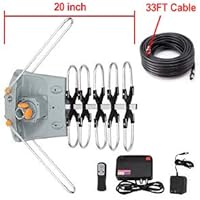
  • Dimensions: The antenna body measures 17.1″ in length, 13.5″ in width, and 3.1″ in depth.
  • Weight: Total unit weight is 4.24 pounds, making it manageable for single-person rooftop or attic installation.
  • Weather Resistance: Rated for outdoor use with a weather-resistant housing and grounding terminal to handle rain, wind, and moderate temperature variation.
  • Power Supply: Requires an external power adapter, which is included in the package, to operate the amplifier and motorized rotation.
  • Color & Finish: Available in a single black matte finish designed to blend with most exterior mounting surfaces.
  • In-Box Contents: The package includes the antenna unit, 25ft RG6 coaxial cable, wireless remote, power supply adapter, and a user manual.
  • Connector Type: Uses a standard F-type coaxial connector interface, compatible with most TV tuner inputs and signal splitters.
  • BSR Ranking: Holds a Best Sellers Rank of #167 in the TV Antennas category on Amazon at the time of review.
  • First Available: This product listing was first made available for purchase in October 2018.

Related Reviews
UltraPro Outdoor 70-Mile HD TV Antenna
76%
73%
Signal Reception
61%
Range Accuracy
82%
Installation Ease
78%
Build Quality
81%
Weather Resistance
More
PIBIDI UHD-8903 Outdoor TV Antenna
77%
73%
Signal Range & Reception
67%
VHF Band Performance
84%
UHF Band Performance
78%
Build Quality & Durability
81%
Lightning & Grounding Protection
More
iGENJUN ANT-CS8218 Amplified Indoor Outdoor TV Antenna
72%
73%
Signal Reception Quality
67%
Amplifier Performance
88%
Ease of Installation
48%
Range Accuracy vs. Claimed Specs
71%
Build Quality & Materials
More
Antop AT-414BG Omni-Directional Outdoor TV Antenna
85%
90%
Reception Quality
88%
Ease of Installation
86%
Durability in Outdoor Conditions
92%
Value for Money
87%
Signal Range
More
1byone 360° Omni-Directional Outdoor TV Antenna
73%
74%
Signal Reception
91%
Ease of Installation
72%
Build Quality
68%
Amplifier Performance
63%
4G LTE Filtering
More
PBD WA-2608 Motorized Outdoor TV Antenna
74%
82%
Signal Reception Quality
78%
Motorized Rotation
84%
Installation Experience
74%
Dual TV Output
71%
Build Quality & Durability
More
GE 29884 Outdoor Long-Range TV Antenna
79%
83%
Signal Reception Strength
88%
Ease of Installation
86%
Build Quality & Durability
79%
Channel Count & Variety
84%
Value for Money
More
DTB TECH V086-V087 Outdoor TV Antenna
74%
74%
Signal Reception
88%
Ease of Setup
43%
Advertised vs. Real Range
67%
Amplifier Performance
81%
Build Quality
More
BEFORE 150-Mile Motorized Outdoor TV Antenna
70%
71%
Signal Reception
74%
Motorized Rotation
58%
Build Quality & Durability
66%
Ease of Installation
83%
Dual TV Output
More
Vragey HD012 Indoor/Outdoor TV Antenna
70%
71%
Signal Reception Quality
88%
Ease of Setup
63%
Amplifier Performance
34%
Range Accuracy vs. Marketing Claims
67%
Build Quality & Durability
More

FAQ

Honestly, treat 150 miles as the theoretical ceiling under perfect flat-terrain conditions — not a realistic expectation for most homes. The majority of buyers pulling in strong results are sitting within 40 to 80 miles of their nearest broadcast towers, in areas without major hills or tree cover. If you are on the outer edge of that range, or surrounded by obstructions, temper your expectations accordingly.

Yes, the antenna has two separate coaxial outputs built in, so you can run a cable to two different televisions right out of the box. Keep in mind that if your signal is already marginal in your area, splitting it between two TVs can make reception on both less stable than running a single connection. In solid signal zones, though, it works well for both simultaneously.

It holds up fine through rain and moderate wind, and the grounding terminal is a thoughtful safety inclusion for outdoor installs. That said, the housing is lightweight plastic rather than heavy-duty construction, so buyers in regions with severe winters, heavy snow loads, or sustained high winds may want to consider a more rugged unit for a permanent full-exposure installation. Sheltered spots — under an eave or in a ventilated attic — significantly extend its lifespan.

Not really. The basic setup is as simple as connecting the coax cable to your TV, plugging in the amplifier power adapter, and running a channel scan from your TV menu. The physical mounting will require a drill and hardware appropriate for your surface, but the electrical side of the setup is about as plug-and-play as antenna installations get. Most buyers report being up and watching channels within 30 minutes of opening the box.

A free website like antennaweb.org or tvfool.com will show you exactly where your local broadcast towers are relative to your address, which gives you a starting direction to aim for. From there, the motorized 360-degree rotation is handy for fine-tuning — you can slowly sweep the antenna using the wireless remote while watching the signal strength meter on your TV and stop when it peaks. It takes a few minutes of patience but makes a real difference.

The best way to check is to look up your address on antennaweb.org before purchasing — it will show you which channels are available and how strong the signal is at your specific location. If you are within 60 to 80 miles of a cluster of broadcast towers on relatively flat ground, you stand a good chance of pulling in a solid channel lineup. Hilly terrain, dense woods, or a location beyond 100 miles from major towers makes results harder to predict.

Attic installation is a common choice and works well in many situations, particularly if your roof is not made of metal or other signal-blocking materials. You lose some range compared to a rooftop install, but you also avoid direct exposure to weather and UV degradation. Many users report excellent channel counts from attic positions, especially those within 50 miles of their broadcast towers.

Splitting even an amplified signal between two outputs does reduce the power available to each TV, which matters more when reception is already borderline. If you are in a weak-signal area and notice one TV working fine while the other pixelates or drops channels, try running just a single output temporarily to confirm signal strength is the issue. In strong-signal environments, both outputs typically perform without any noticeable difference.

The remote works well enough for most indoor control scenarios, but it does require a reasonably clear line of sight to the receiver rather than working through walls or around corners like a modern smart home remote might. Several users note the effective range is shorter than expected, so positioning the motor control unit in a spot with reasonable sightlines from your living area makes a practical difference. The remote itself feels lightweight but gets the job done for rotation adjustments.

Over-the-air antennas pick up whatever free broadcast channels your local stations transmit — typically the major networks like ABC, CBS, NBC, FOX, PBS, and their sub-channels, which often include additional programming streams. The exact lineup depends entirely on which stations broadcast in your area and how close you are to their towers. You will not get cable-only channels like ESPN or premium networks through any OTA antenna — those are not available over broadcast signals regardless of the antenna you use.