Overview

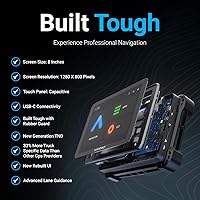
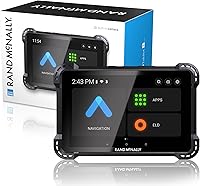
The Rand McNally RANDTAB8 8-inch GPS Truck Navigator is built from the ground up for professional commercial drivers, not casual road-trippers. Running on the updated Rand Navigation 2.0 platform with 2025 map data, it represents a meaningful step forward from earlier Rand McNally hardware. The 8-inch touchscreen strikes a practical balance — large enough to read at a glance from the driver's seat without dominating the dash. There's also a built-in camera, a relatively rare feature on dedicated truck GPS units, though its role is more about documentation than continuous recording. If you're expecting a consumer-grade navigation experience, this isn't that device.
Features & Benefits

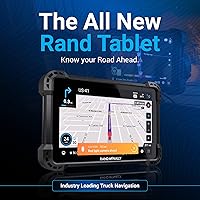
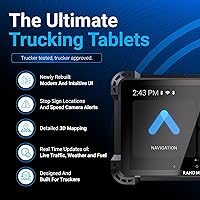
The core of this truck navigator is its Rand Road IQ routing engine, which builds paths around your specific rig — trailer length, axle count, total weight, and cargo type including HazMat classifications like flammables and oxidizers. That level of specificity matters when a wrong turn means a bridge violation or a DOT fine. On top of routing, the unit layers in real-time data overlays for traffic, weather, and fuel pricing, plus alerts for weigh stations, low clearances, engine brake zones, and speed cameras. The powered magnetic mount handles dual power inputs — USB-C and barrel connector — so the unit stays locked in and charged through the roughest roads without cable stress.

Best For

This dedicated trucking GPS earns its price tag for a specific type of driver. Owner-operators hauling HazMat loads or oversized freight will get the most out of the trailer-aware routing — being able to dial in a 53-ft trailer with a specific axle configuration and HazMat class before hitting the road is genuinely useful. The same goes for fleet drivers running USA and Canada corridors who need consistent compliance without second-guessing every route. It's also a solid upgrade for drivers still working off printed routes or phone apps — dedicated hardware with professional-grade data is a meaningful improvement. If you drive a passenger vehicle or a light-duty pickup, this unit is overkill.

User Feedback

Drivers who use the Rand McNally unit regularly tend to praise its routing accuracy on truck-restricted roads — getting correctly steered away from low bridges and weight-limited routes is where it earns real credibility. Screen legibility in direct sunlight also gets consistent positive mentions. That said, two friction points come up often: running on Android 8 is a noticeable limitation, with some users concerned about long-term software support, and opinions on the mount and power cables are mixed — some find them rock-solid, others report wear from daily vibration. When drivers compare alternatives, the Garmin dezl series comes up most frequently. Both are legitimate choices; this unit tends to win on routing depth, Garmin on interface polish.

Pros

  • Trailer-aware routing handles configurations from straight trucks to triple-axle rigs with genuine specificity.
  • HazMat cargo classification support covers a wide range of regulated materials, reducing compliance risk on every run.
  • Real-time overlays for traffic, fuel pricing, and weather add practical value on long-haul routes, not just novelty.
  • The 8-inch touchscreen is easy to read at a glance, including in direct sunlight according to consistent user reports.
  • Powered magnetic mount with dual power inputs holds up well in the vibrating, rough-road environment of a working cab.
  • Weigh station alerts and low-clearance warnings are baked into the navigation layer, not bolted on as an afterthought.
  • WiFi-based map updates keep 2025 map data current without requiring a laptop or manual cable connection.
  • The Rand McNally unit ranks in the top 20 dedicated in-dash GPS units on Amazon, reflecting strong market credibility.
  • Built-in camera offers a useful documentation option for owner-operators dealing with delivery confirmations or incident records.
  • Covering both USA and Canada in a single device removes the hassle of cross-border route planning workarounds.

Cons

  • Android 8 is a dated OS that raises legitimate questions about long-term software support and app compatibility.
  • The built-in camera captures still images only — drivers expecting dashcam-style video recording will need a separate device.
  • At its price point, some users report inconsistency in power cable durability under continuous daily vibration.
  • Map update experience via WiFi has drawn mixed feedback, with some drivers finding the process slower or less intuitive than expected.
  • The interface lacks the visual polish of competing units in the Garmin dezl lineup, which some drivers find frustrating in daily use.
  • Customer support and warranty resolution experiences appear inconsistent based on user-reported patterns online.
  • The device is heavy enough in software focus that first-time digital navigation users may face a noticeable learning curve.
  • No cellular connectivity means real-time data depends on WiFi or Bluetooth tethering, which can be unreliable in remote areas.

Ratings

The scores below reflect an AI-driven analysis of verified global user reviews for the Rand McNally RANDTAB8 8-inch GPS Truck Navigator, with spam, incentivized feedback, and bot activity actively filtered out to ensure the results represent genuine buyer experiences. Ratings cover everything from routing accuracy and hardware durability to software age and customer support — both the strengths and the friction points are represented honestly. Whether this unit earns its place in your cab depends heavily on your specific hauling needs, and these scores are designed to help you make that call clearly.

Routing Accuracy
88%
Drivers consistently report that the Rand Road IQ engine keeps trucks on legally compliant roads with a high degree of reliability, correctly avoiding low bridges, weight-restricted corridors, and HazMat-restricted tunnels without requiring manual overrides. For long-haul runs where a single wrong turn can mean a DOT violation or a stuck rig, this level of routing specificity is where the unit earns its keep.
A minority of users note occasional discrepancies in rural or recently rerouted areas where map data lags behind actual road conditions, requiring driver intervention. No truck GPS is infallible on unpaved or newly constructed routes, and this unit is no exception.
HazMat & Load Configuration
91%
The depth of load configuration available — covering trailer types from straight trucks to triples, axle counts from 2 to 15, and HazMat classes including flammables, oxidizers, and explosives — is genuinely comprehensive and among the strongest implementations in a dedicated GPS unit. Owner-operators hauling regulated cargo specifically call this out as a primary reason they chose this unit over competitors.
Setting up complex load profiles for the first time can feel unintuitive, particularly for drivers new to digital navigation tools. A few users wished the interface guided them through configuration more clearly rather than assuming familiarity with the parameter structure.
Screen Readability
86%
The 8-inch display earns strong praise for visibility in direct sunlight, which matters significantly for drivers working through afternoon sun glare on open highway stretches. Text and map elements are rendered crisply enough that most drivers can read them at a glance without taking eyes off the road for extended periods.
Some users operating in particularly bright environments or with aged screen protectors report that glare can still be an issue at certain angles. The touchscreen sensitivity under work gloves has also drawn occasional complaints from drivers in colder climates.
POI Database Quality
83%
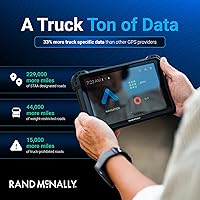
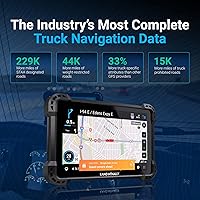
The trucking-specific POI coverage — including weigh stations, truck parking, fuel stops, engine brake restriction zones, and low clearance warnings — is more thorough than what general-purpose GPS units offer. Drivers on unfamiliar routes report genuine utility in being able to spot truck-friendly services without consulting a separate app or printed guide.
POI data currency can vary by region, with some users finding that specific truck stops or weigh station statuses are outdated compared to ground-level reality. In fast-changing areas like newly developed logistics corridors, the database occasionally lags.
Mount & Physical Stability
79%
21%
The powered magnetic mount is well-regarded for keeping the unit locked in place even on rough interstate surfaces and gravel access roads, eliminating the wobble that plagues suction-cup competitors. Drivers appreciate that power delivery through the mount removes one cable from the equation.
Long-term durability of the power cables — both USB-C and barrel connector — is a recurring concern among high-mileage drivers who report wear and intermittent connectivity after extended daily use. The mount mechanism itself holds up better than the cables that accompany it.
Software & Interface
67%
33%
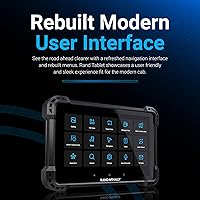
Rand Navigation 2.0 delivers a clear, functional layout that prioritizes the information a truck driver actually needs while on a run — route data, alerts, and POIs are accessible without deep menu navigation. For drivers who want a purpose-built interface rather than a smartphone-style experience, the layout philosophy is well-suited to the use case.
Running on Android 8 is a meaningful limitation that experienced tech users notice immediately — the OS is several generations behind current Android releases, third-party app support is effectively absent, and future OS-level updates are not a realistic expectation. Compared to the Garmin dezl lineup, the interface also feels less refined in its visual execution.
Real-Time Data Reliability
74%
26%
Traffic overlays, weather alerts, and fuel price data add measurable value on long-haul routes where conditions change mid-run, and drivers on well-connected corridors report that the real-time layer performs reliably when data connectivity is available. Speed and red-light camera alerts also register positively in user feedback from drivers running urban delivery segments.
Real-time functionality depends on an active data connection, and in remote or low-coverage areas — exactly where some truck drivers spend significant time — the live data layer becomes unavailable. Users who regularly run off-highway or rural routes may find the real-time features less consistently useful than the marketing suggests.
Map Update Process
71%
29%
WiFi-based map updates are a practical improvement over older models that required a laptop connection, and drivers who update regularly while parked report that the 2025 map data is accurate and current for major truck routes across the USA and Canada. The update mechanism itself requires no technical knowledge to initiate.
Update download times draw consistent criticism, with some users reporting lengthy waits even on fast WiFi connections. A handful of drivers also note that the update notification system is not proactive enough, meaning it is easy to run on outdated maps without realizing it.
Built-in Camera Utility
58%
42%
For owner-operators who need to document delivery conditions, load states, or minor incidents without carrying a separate device, the built-in still-image camera adds a layer of practical utility that competing dedicated GPS units typically omit entirely. It works as a lightweight documentation tool without adding bulk or cost.
The camera captures still images only — there is no video recording capability — which significantly limits its usefulness compared to a proper dashcam. Drivers who assumed the camera would function as continuous recording hardware have expressed clear disappointment, and the image quality itself is functional rather than impressive.
Value for Money
69%
31%
For professional commercial drivers who rely on HazMat routing, trailer-aware navigation, and compliance-focused POI data daily, the price is defensible — this is specialized hardware doing a specialized job, and the depth of trucking features justifies the investment for the right buyer. Drivers who upgraded from a general-purpose GPS report a meaningful improvement in route compliance and peace of mind.
At its price point, the aging Android 8 OS and mixed cable durability reports are harder to accept without frustration, particularly when competing units at similar prices offer more modern software foundations. Drivers outside professional commercial trucking will find the value case difficult to make given how niche the feature set is.
Ease of Initial Setup
76%
24%
Most drivers report getting the unit mounted, powered, and routing within a reasonable timeframe out of the box, with the included accessories covering the essentials without requiring aftermarket additions. The magnetic mount in particular makes physical installation fast and repeatable when moving between vehicles.
Configuring truck-specific parameters — trailer dimensions, axle counts, HazMat classes — requires time and attention to get right the first time, and the unit offers limited guided assistance through that process. Drivers unfamiliar with the terminology or who are setting up complex load profiles may need to consult the manual or online resources.
Audio & Voice Guidance
72%
28%
Turn-by-turn voice prompts are clear and appropriately timed for highway speeds, giving drivers enough advance notice to position correctly without the audio being intrusive during stretches where no action is needed. The 3.5mm audio output allows connection to cab speaker systems for drivers who prefer external audio.
Voice guidance volume and clarity have drawn some criticism from drivers operating in louder cab environments, particularly those with diesel engines or auxiliary equipment running. The 3.5mm output works but feels like a dated connectivity choice compared to Bluetooth audio options available on competing units.
Bluetooth & Connectivity
73%
27%
WiFi and Bluetooth connectivity cover the practical bases — map updates download over WiFi without a laptop, and Bluetooth enables peripheral pairing for drivers who want wireless audio or device tethering. For a device that lives in a truck cab, having both options without dongles or adapters is a genuine convenience.
Bluetooth functionality is relatively basic compared to what modern connected devices offer, and some users have reported pairing inconsistencies with certain devices. The barrel connector power input, while durable, is an older standard that requires a proprietary cable rather than the more universally available USB-C format that users are increasingly accustomed to.
Durability & Build Quality
77%
23%
The physical unit itself — the tablet body and screen — holds up well under the daily vibration, temperature swings, and handling that come with a working cab environment. Most drivers who have used the unit for an extended period report no structural failures with the device itself.
The accessories, particularly the power cables, are the weak link in the durability picture — multiple users across review platforms mention cable wear as the first point of failure rather than the unit itself. This suggests the unit body is built to a higher standard than the included cabling, which is a common frustration at this price tier.
Customer Support Experience
54%
46%
Some users report satisfactory resolution of warranty claims and technical support tickets, particularly for clear hardware defects within the warranty period. Rand McNally's brand recognition in the trucking space does provide some confidence that the company will be reachable when issues arise.
Customer support consistency is a recurring pain point in user feedback, with reports of slow response times, difficulty reaching human support agents, and inconsistent outcomes on warranty claims. For a premium-priced device used in a professional context, the support experience appears to fall short of expectations more often than it should.

Suitable for:

The Rand McNally RANDTAB8 8-inch GPS Truck Navigator is built for one audience: professional commercial drivers who need routing they can actually trust with their livelihood on the line. Owner-operators hauling HazMat cargo — whether flammables, oxidizers, or compressed gases — will find the ability to specify their exact cargo class and have the route adjust accordingly to be a genuine operational advantage, not a gimmick. Drivers running 48-ft or 53-ft trailers, doubles, or triples across USA and Canada corridors benefit from trailer-aware routing that accounts for weight limits, low clearances, and restricted roads before the truck is already committed to a wrong turn. Fleet drivers focused on DOT compliance will appreciate weigh station alerts and engine brake restriction warnings built directly into the navigation layer. If you are still routing from printed sheets, a binder of regulations, or a general-purpose phone app, this dedicated trucking GPS represents a meaningful upgrade in both accuracy and peace of mind.
Not suitable for:

The Rand McNally RANDTAB8 8-inch GPS Truck Navigator is a poor fit for anyone outside professional commercial trucking — full stop. Passenger vehicle drivers, RV owners, or light-duty pickup drivers looking for a quality GPS will find the feature set overcomplicated and the price difficult to justify when far more affordable options exist. The unit runs on Android 8, which is an aging OS, and buyers who want a device with a modern software ecosystem, broad app compatibility, or assured long-term update support should think carefully before committing. Drivers who prefer the Garmin dezl interface or who prioritize a more polished touchscreen experience over routing depth may find this unit less satisfying in day-to-day use. The built-in camera is also worth understanding clearly — it captures still images for documentation purposes, not continuous video like a true dashcam, so anyone expecting a dual-purpose recording device will be disappointed.
Specifications

  • Screen Size: The unit features an 8-inch touchscreen display designed for high visibility and easy interaction from the driver's seat.
  • Operating System: Runs on Android 8, which powers the Rand Navigation 2.0 software platform and the underlying routing engine.
  • Map Coverage: Includes 2025-edition maps covering the contiguous United States and Canada, preloaded on the device.
  • Routing Engine: The Rand Road IQ engine calculates truck-specific routes based on vehicle dimensions, trailer type, axle count, and cargo classification.
  • Trailer Support: Compatible with Straight, 48-ft, and 53-ft trailers as well as Double and Triple trailer configurations.
  • Axle Range: Supports axle configurations ranging from 2 to 15 axles for precise load and route compliance settings.
  • HazMat Classes: Drivers can specify HazMat cargo types including Gases, Explosives, Flammables, and Oxidizers to influence route calculations accordingly.
  • Connectivity: Equipped with WiFi, Bluetooth, USB, and a barrel connector for power and data connectivity in a working cab environment.
  • Power Inputs: Accepts power via both a USB-C port and a barrel connector, providing flexibility for different cab power setups.
  • Mount Type: Ships with a powered magnetic mount that secures the device firmly and delivers power simultaneously without a separate cable run.
  • Battery Life: The internal lithium-ion battery provides approximately 5 hours of operation when disconnected from external power.
  • Audio Output: Outputs turn-by-turn audio and alerts through a 3.5mm headphone jack for connection to external speakers or headsets.
  • Built-in Camera: Includes an integrated camera designed for still image capture, useful for documentation purposes rather than continuous video recording.
  • Dimensions: The unit measures 8 x 0.75 x 5.13 inches, keeping the profile slim enough to avoid significant windshield obstruction.
  • Weight: Weighs 1 pound, making it light enough for easy repositioning without stressing the magnetic mount over time.
  • In-Box Contents: Package includes the tablet unit, a powered magnetic mount, a truck charger, a USB-C cable, and an internal lithium-ion battery.
  • POI Categories: The onboard POI database covers weigh stations, truck stops, parking areas, low-clearance warnings, engine brake restriction zones, and fuel services.
  • Real-Time Data: Supports live overlays for traffic conditions, weather, fuel pricing, and speed and red-light camera alerts via connected data sources.
  • Amazon Ranking: Holds a position of No. 16 in Car In-Dash Navigation GPS Units on Amazon, reflecting sustained market demand among professional drivers.
  • Included Battery: Contains a lithium-ion battery as a built-in component; one battery is included and required for operation.

Related Reviews
Rand McNally RandTab6 6-inch GPS Truck Navigator
84%
94%
Route Customization
91%
Real-Time Traffic Updates
75%
Battery Life
89%
Screen Clarity & Touchscreen Usability
85%
Ease of Setup & Installation
More
Rand McNally TND730 IntelliRoute GPS Truck Navigator
82%
91%
Navigation Accuracy
87%
Ease of Use
88%
Lane Guidance
83%
Map Update Frequency
85%
Route Planning Reliability
More
Rand McNally TND 740 IntelliRoute Truck Navigation GPS
83%
88%
Routing Accuracy
91%
Ease of Use
85%
Display Quality
76%
Real-Time Traffic Updates
83%
Wi-Fi & USB Connectivity
More
Garmin dezl OTR810 8-inch GPS Navigator
87%
94%
Routing Accuracy
91%
Display Clarity
88%
Ease of Use
89%
Truck-Specific Features
85%
PrePass Integration
More
LOVPOI A9 9-inch Truck GPS Navigator
65%
78%
Truck-Specific Routing
81%
Screen Readability
76%
Voice Alert System
71%
Map Coverage & Accuracy
83%
Ease of Setup & Mounting
More
Garmin RV 895 RV GPS Navigator 8-inch
85%
93%
Custom Routing for RVs
88%
Touchscreen Display
67%
Battery Life
90%
Satellite Imagery
85%
Ease of Use
More
Garmin Dezl OTR500 5.5-inch Truck GPS Navigator
75%
91%
Truck Routing Accuracy
88%
Display Quality
74%
PrePass Integration
72%
Load-to-Dock Guidance
69%
Ease of Setup
More
Glaury J701 7-inch Car GPS Navigator
70%
71%
Navigation Accuracy
83%
Screen Clarity & Readability
74%
Voice Guidance Quality
67%
Map Coverage & Freshness
79%
Vehicle Profile Customization
More
Garmin dēzlCam OTR710 7” GPS Truck Navigator
82%
78%
Routing Accuracy
90%
Ease of Use
88%
Display Quality
85%
Dash Cam Functionality
70%
GPS Performance in Remote Areas
More
Garmin RV 795 7-Inch GPS Navigator
75%
91%
Screen Clarity
83%
RV-Specific Routing
86%
Campground Database
72%
Value for Money
84%
Ease of Setup
More

FAQ

The Rand Road IQ engine is specifically built to factor in your truck's height, weight, and trailer configuration before plotting a route, so low bridges and weight-restricted roads are accounted for automatically. That said, no GPS is a substitute for driver judgment — always verify when local signage conflicts with what the unit shows, especially in areas with recent construction or road changes.

Yes, this dedicated trucking GPS lets you specify your HazMat cargo class directly in the route settings, covering categories like flammables, gases, explosives, and oxidizers. Once set, the routing engine will avoid roads and tunnels that restrict those cargo types. It is one of the more thorough implementations of HazMat routing available on a dedicated GPS unit.

Both are serious, purpose-built trucking GPS units and the honest answer is that neither is universally better. The Rand McNally unit tends to win on routing depth and trucking-specific data like weigh station alerts and HazMat support, while the Garmin dezl units are often praised for a cleaner, more intuitive interface and a more modern software feel. If routing accuracy and compliance data are your top priorities, this unit holds its own; if day-to-day interface polish matters more, the dezl is worth considering.

It is a fair concern and worth being clear-eyed about. Android 8 is several versions behind current Android releases, which means third-party app support is limited and future OS-level updates are unlikely. The Rand Navigation 2.0 software itself can still receive updates via WiFi, but if you are hoping to install additional apps or expect the underlying OS to stay current, that is not what this device is designed for. For drivers who use it purely as a dedicated navigation tool, the aging OS is less of a practical issue.

No, it is not a dashcam and should not be treated as one. The camera captures still images rather than recording continuous video, making it useful for documenting deliveries, load conditions, or incident scenes rather than providing ongoing footage. If you need a dashcam, you will want a separate dedicated device mounted alongside this unit.

User feedback on the mount is generally positive, with most drivers finding it holds the unit securely even on rougher surfaces. The powered magnetic design means the device stays charged while mounted without a separate cable connection. Where some drivers have noted wear over time is with the power cables themselves rather than the mount mechanism, so it is worth checking cable connections periodically if you run particularly rough routes daily.

Yes, map updates are delivered over WiFi through the Rand McNally update system. The process works without needing to connect the device to a computer, which is convenient. Some users report that updates can take a while depending on file size and connection speed, so it is worth running updates when the unit is parked and connected to a reliable network rather than trying to squeeze one in during a short break.

Coverage for both the United States and Canada is included with the preloaded 2025 maps, so no additional purchase is needed for cross-border routes. This is particularly useful for drivers running regular USA-Canada corridors who do not want to manage separate map subscriptions or devices.

The internal lithium-ion battery gives you roughly 5 hours of use off-power, which is enough for short breaks or moving the unit between vehicles without losing functionality. In normal trucking use, the unit will be powered through the mount continuously, so battery life is more of a backup consideration than a primary one.

It is genuinely optimized for commercial trucking rather than RV travel. The routing logic, POI database, and load configuration options are all built around commercial vehicle compliance and cargo management. RV drivers would find many of the features irrelevant and the overall experience less intuitive compared to GPS units designed specifically for recreational vehicles. If you drive a motorhome or fifth wheel, a dedicated RV GPS will serve you better at a lower price point.