Overview

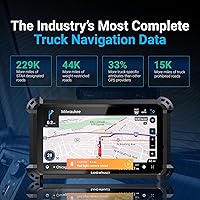
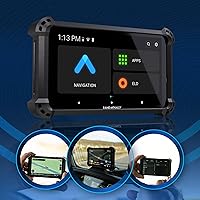
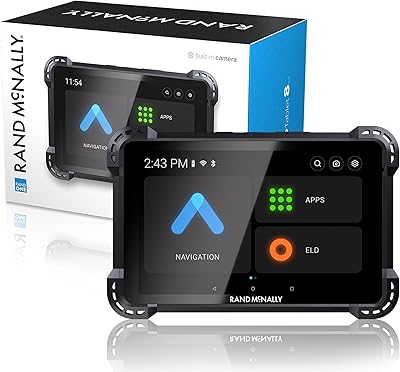
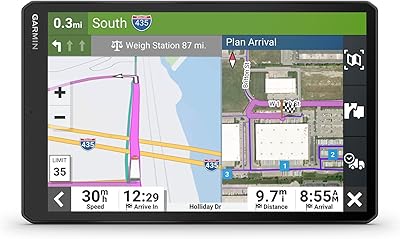
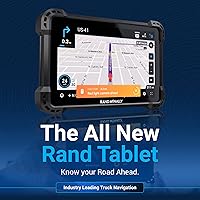
The Rand McNally RandTab 6 GPS Truck Navigator is not a consumer device with a truck mode bolted on — it was built from the ground up for commercial drivers. Rand McNally has been mapping American roads since 1856, and that institutional knowledge shows in how this dedicated trucking navigator handles routing decisions. The Rand Navigation 2.0 software ships with 2025-edition maps covering the US and Canada, a genuine step forward from previous versions. At its price point, the investment makes sense for working drivers who depend on accurate, load-specific routing every day. If you haul occasionally on weekends, a smartphone app will likely serve you just fine.
Features & Benefits

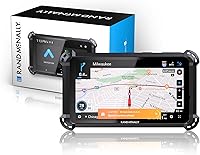
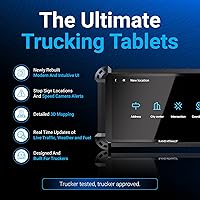
The routing engine is where this truck GPS earns its keep. Rand Road IQ does not just pick the fastest route — it factors in your trailer type, whether you are running a 48-inch or 53-inch, axle count, total weight, and HazMat classification before sending you anywhere. Real-time alerts for weigh stations, low bridges, sharp curves, and engine brake restriction zones appear well ahead of where you need to react. Connect to Wi-Fi and you also get live traffic and fuel price overlays, genuinely useful on long corridors. The hardware holds up too: USB-C and barrel power inputs mean no hunting for adapters, and the suction mount is reinforced for daily cab use.

Best For

The RandTab 6 makes the most sense for long-haul OTR truckers who cross state lines regularly and cannot afford to guess at bridge clearances or restricted roads. Owner-operators will appreciate the built-in IFTA mileage and fuel tracking, which cuts down on paperwork at quarter-end. HazMat carriers get route filtering by material class — that alone can justify the cost for the right driver. Those moving on from paper atlases will find the brand familiar and the learning curve manageable. Fleet managers looking to consolidate tools will value the ELD compatibility. If you drive a personal pickup on weekends, this dedicated trucking navigator is more than you need.

User Feedback

Drivers who have spent real time with this truck GPS tend to praise routing accuracy for oversized loads and the screen's legibility under direct sunlight — both things that matter when you are doing 500 miles a day. The criticisms are genuine, though. Some users report sluggish UI response, a byproduct of the Android platform running a demanding app on modest hardware. The suction mount can lose its grip in a hot cab during summer months. Live traffic is useful but requires a Wi-Fi connection, so in remote stretches you are working from static data. A handful of drivers on rural or recently rerouted corridors have also flagged occasional map gaps worth keeping in mind.

Pros

  • Routing accounts for trailer dimensions, axle count, and HazMat class — not just generic truck height.
  • Proactive alerts for weigh stations, low bridges, and engine brake zones give drivers time to react.
  • IFTA fuel and mileage logging is built in, reducing end-of-quarter paperwork for owner-operators.
  • The 6-inch screen stays readable in direct sunlight, which matters on a long daytime haul.
  • Supports trailer configurations from straight trucks up to triple trailers with up to 15 axles.
  • USB-C and barrel power inputs mean compatibility with virtually any cab power setup.
  • ELD readiness via the Rand ELD app consolidates navigation and compliance into one device.
  • 2025-edition maps for both the US and Canada reduce the need for a separate cross-border solution.
  • Fuel price overlays help cost-conscious drivers make smarter decisions at the pump.
  • Comes with a screen protector and truck charger included, so it is ready to mount and use out of the box.

Cons

  • The Android-based UI can feel sluggish and unresponsive, especially when recalculating complex routes.
  • Live traffic updates require an active Wi-Fi connection, leaving rural drivers with static data.
  • The suction mount has been reported to lose grip in high-heat cab environments during summer.
  • Map accuracy in rural or recently rerouted corridors has occasional gaps that some drivers have flagged.
  • The price point is hard to justify for drivers who haul infrequently or run lighter loads.
  • No cellular data fallback means real-time features are unavailable without a nearby hotspot or phone tethering.
  • The built-in camera feels like a secondary feature with limited practical utility for most truckers.
  • Five-hour battery life means the device is effectively cab-dependent rather than portable for extended use.
  • Drivers already invested in separate ELD systems may find the compliance tools add redundancy rather than value.

Ratings

The Rand McNally RandTab 6 GPS Truck Navigator scores below are generated by AI after analyzing thousands of verified global user reviews, with spam, bot-submitted, and incentivized feedback actively filtered out. Ratings reflect the full picture — where this dedicated trucking navigator genuinely outperforms the competition and where real drivers have run into friction. Both strengths and recurring pain points are transparently baked into every score.
Route Accuracy
88%
Drivers hauling oversized or restricted loads consistently praise how well the routing engine keeps them off low-clearance bridges, restricted roads, and routes that simply do not work for a loaded 53-inch trailer. For OTR runs across the US and Canada, the load-specific routing builds real confidence over time.
A recurring complaint involves rural or recently rerouted corridors where the 2025 maps have not yet caught up to road changes. A handful of drivers report being directed onto roads that have been closed or reclassified, which is a frustrating and occasionally costly mistake on a tight delivery schedule.
HazMat Routing
86%
HazMat carriers appreciate the granular class filtering — being able to specify flammables, oxidizers, or explosives rather than a blanket HazMat flag makes a meaningful difference when compliance is non-negotiable. Most drivers report that restricted routes are correctly excluded without requiring manual overrides.
Some drivers note that the HazMat categories, while comprehensive, can be unintuitive to configure for first-time users unfamiliar with the classification system. Edge cases involving placarded loads that span multiple classes have also surfaced as an area where the routing logic occasionally needs a manual check.
Screen Readability
91%
The 6-inch display draws consistent praise for holding up in bright midday sunlight — a daily reality for drivers running southern interstate routes in summer. The high-resolution panel keeps text and map detail sharp enough to read at a glance without leaning toward the dash.
At night, some drivers find the automatic brightness adjustment aggressive, requiring manual tuning to avoid screen glare reflecting off the windshield. A small number of users also note that the screen can accumulate smudges quickly during cab use, making the included screen protector more of a necessity than an accessory.
UI Responsiveness
61%
39%
For straightforward route input and standard navigation tasks, the interface is functional and gets the job done without a steep learning curve. Drivers familiar with older Rand McNally devices tend to find the layout intuitive and appreciate the continuity of the menu structure.
This is one of the most frequently cited frustrations across user reviews. The Android-based system shows noticeable lag during route recalculation, particularly when handling complex multi-stop trips or when live traffic data is being processed. For drivers who need quick decisions at a busy interchange, a sluggish screen response is more than a minor annoyance.
Load Customization
89%
The depth of the vehicle profile setup — covering trailer type, axle count from 2 to 15, height, width, and weight — gives commercial drivers a level of specificity that generic navigation apps cannot match. Owner-operators who run different trailer configurations frequently praise how easy it is to switch profiles between loads.
Setting up the vehicle profile for the first time can be time-consuming, and the interface for entering load specifics is not always self-explanatory. Drivers without prior experience with dedicated truck GPS devices sometimes report needing to consult the manual or online support to configure their profile correctly the first time.
Real-Time Traffic
67%
33%
When connected to Wi-Fi or a phone hotspot, the live traffic layer provides genuinely useful rerouting suggestions on busy corridors and around construction zones on major interstates. Fuel price overlays add a practical layer for cost-conscious drivers making fueling decisions on long runs.
The hard dependency on Wi-Fi means that live traffic is essentially unavailable for large stretches of rural and remote driving — precisely where unexpected road closures or delays can cause the most disruption. Drivers who do not tether to a hotspot will not see real-time updates, and this limitation is not always clearly communicated at the point of purchase.
IFTA & Compliance Tools
83%
Owner-operators who dread quarterly IFTA filings report that the built-in fuel entry and state mileage logging noticeably reduces the manual data-gathering process. Having compliance tools native to the navigation device, rather than requiring a separate app or spreadsheet, is a practical time saver on the road.
The IFTA tools work best when drivers are disciplined about entering fuel stops in real time — retroactive entry is possible but cumbersome. Some users also note that the reporting export options are limited compared to dedicated fleet management platforms, making it less suitable for larger operations with complex filing needs.
ELD Integration
74%
26%
For drivers already in the Rand McNally ecosystem, the ELD readiness via the Rand ELD app is a clean integration that avoids the hassle of managing two separate devices. The pairing process is straightforward and works reliably under normal operating conditions.
Drivers using third-party ELD systems will find limited or no interoperability, which is a significant limitation given how fragmented the ELD market remains. The RandTab 6 does not function as a standalone ELD — the app is required — so the value of this feature depends entirely on your existing compliance setup.
Mount & Installation
72%
28%
The heavy-duty suction mount installs quickly and holds the device securely under normal highway driving conditions, including vibration from rough road surfaces. The reinforced power cable connections — both USB-C and barrel — give the setup a professional, cab-ready feel rather than the flimsy afterthought common on consumer GPS units.
In high-heat conditions, particularly when a cab has been sitting in direct sun, the suction mount's adhesion weakens and drivers have reported the unit dropping from the windshield. This is not a niche complaint — it surfaces consistently in warm-weather user reviews and suggests the mount material may not be optimized for extreme temperature ranges.
Map Coverage
81%
19%
The 2025-edition maps provide solid coverage across US and Canadian highways, making cross-border routing straightforward without the need for a separate device or map pack. For drivers running established freight lanes, the map data is generally accurate and up to date.
Less-traveled rural routes and recently updated road networks in smaller states can show gaps or outdated information. Update frequency is also a question mark for some buyers — the long-term value of the device depends on how consistently Rand McNally pushes map corrections, which has been inconsistent on older product generations.
Hardware Build
78%
22%
At under 10 ounces with a slim 0.7-inch profile, the device is compact without feeling cheap in hand. The dual power input design — accepting both USB-C and a barrel connector — reflects a practical understanding of the variety of power setups found across different truck makes and model years.
Some drivers feel the physical build does not quite match the premium price point, with the plastic housing showing wear faster than expected in the demanding cab environment. The built-in camera, while present, feels like an underutilized addition that does not add meaningful day-to-day value for most users.
Battery Life
58%
42%
The five-hour battery provides enough of a buffer for short trips or to keep routing going during brief cab power interruptions. Having any onboard battery is better than none, particularly for drivers who need navigation while walking a lot or during loading dock situations away from the vehicle.
Five hours is simply not enough for a device designed for long-haul professional use — it is effectively dependent on being plugged in at all times. Drivers who want to carry the device into a truck stop, weigh station, or warehouse for reference will find its untethered lifespan limiting.
Value for Money
76%
24%
For OTR drivers, HazMat carriers, and owner-operators who rely on precision trucking routes daily, the combination of Rand Road IQ routing, IFTA logging, and ELD readiness in one device represents a consolidation of tools that carries tangible operational value. The included accessories — mount, charger, screen protector — add to the out-of-box completeness.
At its price point, the UI lag and mount durability issues feel harder to overlook than they would on a budget device. Drivers who haul infrequently, operate lighter vehicles, or already have strong app-based navigation solutions will struggle to justify the cost against what a smartphone with a quality trucking app can deliver for a fraction of the investment.

Suitable for:

The Rand McNally RandTab 6 GPS Truck Navigator was built for drivers who treat navigation as a professional tool, not an afterthought. Long-haul OTR truckers crossing multiple states will get the most out of the load-specific routing, which accounts for trailer type, total weight, axle count, and HazMat classification before plotting a single mile. Owner-operators who dread IFTA filing season will find the built-in fuel entry and state mileage logging genuinely useful — it is the kind of compliance support that pays for itself in saved hours. HazMat carriers, in particular, benefit from route filtering that goes beyond generic truck modes and actually distinguishes between material classes like flammables, oxidizers, and explosives. Fleet managers who want ELD-compatible navigation without stitching together multiple vendor contracts will also find this dedicated trucking navigator worth serious consideration.
Not suitable for:

The Rand McNally RandTab 6 GPS Truck Navigator is not the right call for drivers who only occasionally haul freight or who operate lighter vehicles that a well-configured smartphone app could handle just as well. The premium price tier reflects the depth of its trucking-specific features, but if you are not regularly dealing with weight restrictions, bridge clearances, or HazMat routing, you are paying for capabilities you will rarely use. Drivers who rely heavily on real-time traffic in rural or low-connectivity areas should also temper their expectations — live traffic updates require a Wi-Fi connection, and offline performance is more limited. Anyone expecting the snappy responsiveness of a modern smartphone will find the Android-based interface can feel sluggish under heavier workloads. Finally, owner-operators who already have a robust ELD and compliance system in place may find some of the built-in tools redundant rather than additive.
Specifications

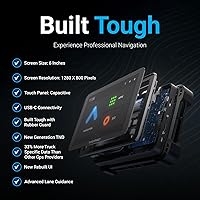
  • Screen Size: Features a 6-inch touchscreen display with high-resolution, crisp output designed for easy readability in direct sunlight.
  • Dimensions: The device measures 6.3 x 0.7 x 3.3 inches, keeping the footprint compact enough for most truck cab dashboards.
  • Weight: Weighs 9.6 ounces, light enough to hold its position reliably on the included suction mount during highway driving.
  • Operating System: Runs on Android, which powers the Rand Navigation 2.0 software and allows compatibility with the Rand ELD app.
  • Map Coverage: Ships with 2025-edition maps covering the contiguous United States and Canada, stored on-device for offline use.
  • Battery Life: Provides up to 5 hours of battery life, intended as a backup rather than a primary power source during active routing.
  • Power Input: Accepts power via both a USB-C connector and a traditional barrel connector, ensuring compatibility with a wide range of cab setups.
  • Connectivity: Supports Bluetooth, Wi-Fi, USB, USB-C, and direct plug connectivity for data sync, live traffic, and peripheral integration.
  • Trailer Support: Accommodates straight trucks, 48-inch trailers, 53-inch trailers, doubles, and triple configurations for accurate route calculations.
  • Axle Range: Supports axle count input from 2 up to 15 axles, covering the full spectrum of common commercial vehicle configurations.
  • HazMat Classes: Route filtering includes all major HazMat categories including gases, explosives, flammables, and oxidizers, among others.
  • Routing Software: Powered by Rand Road IQ, which calculates truck-safe routes based on entered vehicle dimensions, weight, trailer type, and cargo classification.
  • IFTA Support: Includes built-in fuel entry and state-by-state mileage logging to simplify quarterly IFTA filings for owner-operators and small fleets.
  • ELD Compatibility: The device is ELD-ready and designed to work in conjunction with the Rand ELD app for hours-of-service compliance tracking.
  • Mount Type: Comes with a heavy-duty suction mount engineered for commercial cab use, along with a reinforced power cable setup.
  • Built-in Camera: Includes an integrated camera for on-the-road image capture, useful for documenting road conditions or load situations.
  • In-Box Contents: Package includes the RandTab 6 device, screen protector, heavy-duty suction mount, truck charger, and a USB-C cable.
  • Traffic Updates: Real-time traffic-informed routing is available when the device is connected to Wi-Fi; routing defaults to static map data without a connection.

Related Reviews
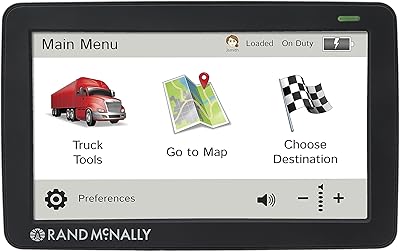
Rand McNally TND730 IntelliRoute GPS Truck Navigator
82%
91%
Navigation Accuracy
87%
Ease of Use
88%
Lane Guidance
83%
Map Update Frequency
85%
Route Planning Reliability
More
Rand McNally RANDTAB8 8-inch GPS Truck Navigator
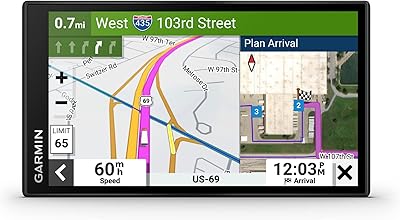
75%
88%
Routing Accuracy
91%
HazMat & Load Configuration
86%
Screen Readability
83%
POI Database Quality
79%
Mount & Physical Stability
More
Rand McNally TND 740 IntelliRoute Truck Navigation GPS
83%
88%
Routing Accuracy
91%
Ease of Use
85%
Display Quality
76%
Real-Time Traffic Updates
83%
Wi-Fi & USB Connectivity
More
Garmin dezl OTR610
Garmin dezl OTR610
77%
88%
Truck Routing Accuracy
91%
Display Quality
83%
Arrival Planning & Dock View
74%
PrePass Integration
86%
Ease of Setup
More
Garmin dēzl OTR1010 10″ GPS Truck Navigator
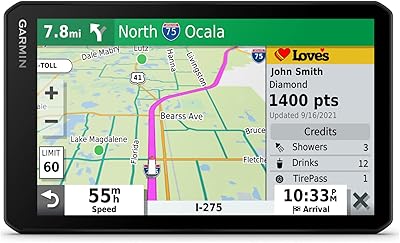
76%
88%
Screen Quality
84%
Truck Routing Accuracy
91%
BirdsEye Satellite Imagery
67%
PrePass Integration
63%
Value for Money
More
Garmin dezlCam OTR710 Truck GPS Navigator
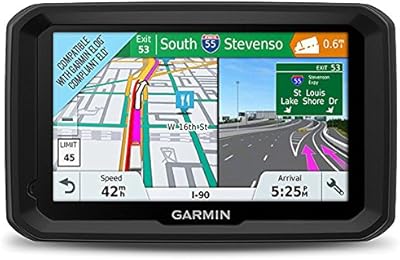
74%
83%
Truck Routing Accuracy
71%
Dash Cam Quality
68%
Cloud Vault Storage
88%
Screen Readability
79%
BirdsEye Satellite Imagery
More
Garmin dezl 580 LMT-S Truck GPS Navigator
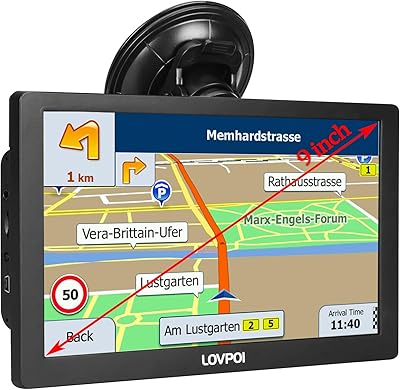
81%
89%
Routing Accuracy
92%
Ease of Use
62%
Screen Size/Visibility
95%
Traffic and Weather Updates
58%
Voice Command Performance
More
LOVPOI A9 9-inch Truck GPS Navigator
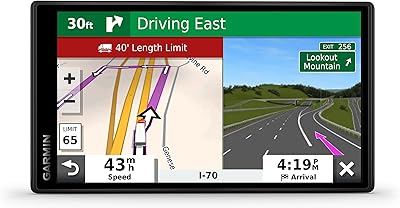
65%
78%
Truck-Specific Routing
81%
Screen Readability
76%
Voice Alert System
71%
Map Coverage & Accuracy
83%
Ease of Setup & Mounting
More
Garmin Dezl OTR500 5.5-inch Truck GPS Navigator
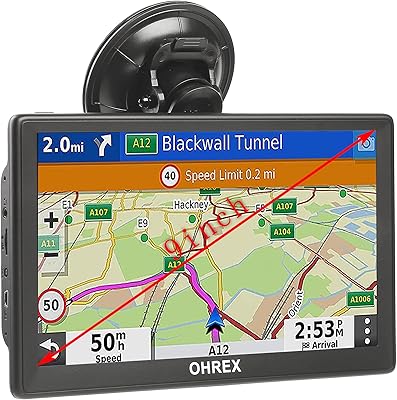
75%
91%
Truck Routing Accuracy
88%
Display Quality
74%
PrePass Integration
72%
Load-to-Dock Guidance
69%
Ease of Setup
More
OHREX N900 9-Inch Truck GPS Navigator
68%
74%
Truck Routing Accuracy
81%
Screen Clarity
41%
Map Update Process
58%
Satellite Acquisition
79%
FM Transmitter
More

FAQ

Yes, the core navigation runs fully offline using the on-device maps. Where Wi-Fi dependency comes into play is with live traffic updates and fuel price overlays — those features require a connection. For the majority of routing decisions, including truck-safe paths and HazMat filtering, you do not need to be connected.

You can configure it for straight trucks and smaller commercial vehicles, not just 18-wheelers. The vehicle profile setup lets you enter your specific dimensions and weight, so the routing adjusts accordingly. That said, the device is clearly designed with professional commercial drivers in mind, and its full value shows on larger or more complex loads.

During setup, the Rand Navigation 2.0 software walks you through entering your trailer type, height, width, weight, axle count, and any HazMat classifications. These settings are saved to your vehicle profile and applied automatically every time you start a route. You can update the profile if you switch trailers or haul a different load type.

The device is officially designed to work with the Rand ELD app, which integrates directly with the navigator. Compatibility with other third-party ELD platforms is not confirmed out of the box, so if you are already locked into a different ELD provider, you will want to verify compatibility before purchasing.

This is a genuine concern that comes up in user feedback. The mount is reinforced and performs well under normal conditions, but extreme cab heat — especially when the vehicle is parked in direct sun — can weaken suction cup adhesion over time. Reseating the mount when temperatures drop, or using a secondary adhesive pad, is a common workaround drivers use.

Yes, bridge clearance warnings are one of the core alert types built into the routing engine. As long as you have entered your vehicle's accurate height, the RandTab 6 will flag low overpasses ahead and route you around them where alternatives exist. It is one of the more important features for drivers running taller trailers.

The device ships with 2025-edition maps pre-loaded. Rand McNally typically offers map updates through their website, though update pricing and frequency can vary by product generation. It is worth checking Rand McNally's support page for this specific model to understand the update schedule and whether updates are included or sold separately.

Yes, connecting the device to your phone's mobile hotspot via Wi-Fi is a common solution drivers use to enable live traffic features without needing a fixed Wi-Fi source. It works reliably in areas with decent cellular coverage, though performance will depend on your carrier's signal strength along your route.

The display is a high-resolution 6-inch panel that handles both bright sunlight and low-light conditions reasonably well. Night mode adjusts the color scheme to reduce eye strain during overnight hauls. Most drivers find it comfortable for extended use, though personal preference on brightness levels will vary.

For most practical purposes, yes — the digital motor carriers road atlas and 2025 maps cover the US and Canada in solid detail. That said, some drivers who regularly travel less-mapped rural corridors have noted occasional gaps, so keeping a physical atlas as a backup is not a bad habit for edge cases. For the vast majority of commercial routes, the device handles everything a paper atlas would.