Overview

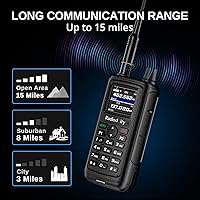
The Radioddity GM-30 Plus GMRS Handheld Radio arrived in mid-2024 as a surprisingly capable device packed into a price bracket that typically delivers bare-bones functionality. This GMRS radio brings GPS tracking, multi-band scanning, and repeater capability to outdoor communicators who've outgrown basic walkie-talkies but aren't ready to commit to a full amateur radio setup. One thing worth knowing upfront: GMRS transmission requires an FCC license — a straightforward process, but a legal requirement many buyers miss. The advertised 15-mile range is line-of-sight under ideal conditions; in real terrain with hills, trees, and buildings, expect considerably less. It's a promising unit still building its track record.
Features & Benefits

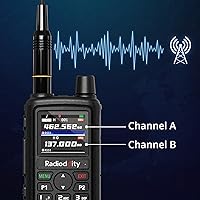
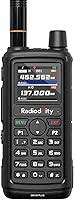
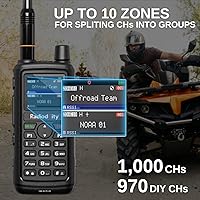
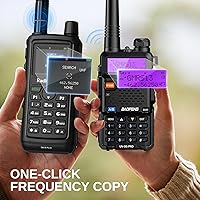
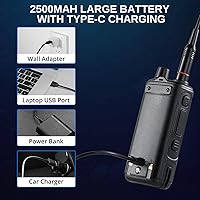
The GM-30 Plus packs a lot of radio functionality into a compact 5.6 x 2.5 x 1.6-inch body. It covers 8 receiving bands — GMRS, FM, UHF, VHF, Airband, NOAA weather, 1.25M, and 1M — which is genuinely unusual at this price tier. The 1,000-channel capacity across 10 zones includes 30 preset GMRS channels and 970 slots you can program to your own needs. Setting up multiple radios is simplified by the one-click frequency copy feature via the SK2 button. The built-in GPS displays coordinates and straight-line distance to contacts, which is legitimately useful for group hikes or vehicle convoys. The 2,500mAh battery charges via USB-C — a small but welcome detail that most competing radios here still haven't adopted.

Best For

This handheld scanner and communicator is a natural fit for outdoor recreation groups — overlanders, hiking parties, and campers who need something more capable than basic FRS radios but don't want to wade into full amateur radio licensing. GMRS hobbyists upgrading from simpler hardware will appreciate having GPS and a multi-band scanner folded into one device. Emergency preparedness households will find real value in the NOAA weather monitoring and broad receive coverage. That said, if you want something you can hand to a friend and use immediately, this probably isn't it. The programming depth is a strength for enthusiasts but a legitimate friction point for casual users. Budget some time with the manual before your first trip.

User Feedback

With a 4.5-star average across 258 ratings, the GM-30 Plus has earned a solid early reception — though the review pool is still relatively small for firm long-term durability conclusions. Buyers frequently highlight clear audio quality, USB-C charging convenience, and GPS as standout advantages over similarly priced competitors. The more common complaints center on the learning curve: the included manual is dense, and first-time programming can feel overwhelming without prior radio experience. A few users have flagged that GPS altitude readings can deviate — something Radioddity openly acknowledges in the specs, so it isn't a hidden flaw. Build quality and battery endurance consistently earn praise relative to what you're paying.

Pros

  • Eight receiving bands in one device — GMRS, FM, UHF, VHF, Airband, NOAA, 1.25M, and 1M — is rare at this price point.
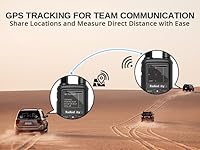
  • Built-in GPS displays contact coordinates and straight-line distance, a practical advantage for group outdoor activities.
  • USB-C charging is a genuine convenience that most competing radios in this category still haven't adopted.
  • The 2,500mAh battery delivers strong standby times, earning consistent praise from buyers on extended trips.
  • Repeater-capable design means effective range can be extended significantly with the right infrastructure in place.
  • One-click frequency copy simplifies setting up multiple units for a group without tedious manual programming.
  • Audio clarity is frequently highlighted in user feedback as notably clean for a radio at this price tier.
  • 970 fully customizable channels across 10 zones gives power users serious flexibility in how they organize frequencies.
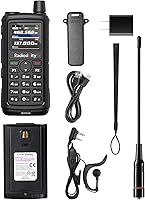
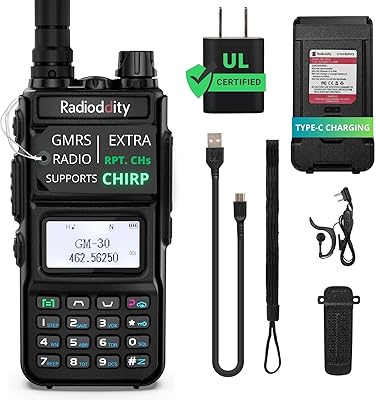
  • The included headset, belt clip, and USB-C cable make the out-of-box package reasonably complete.
  • An 18-month warranty provides reasonable coverage for a newer product still establishing its reliability track record.

Cons

  • The included manual is dense and poorly suited to users without prior radio programming experience.
  • Initial setup can be time-consuming and confusing, especially when programming custom channels from scratch.
  • Real-world range falls well short of the 15-mile spec in anything other than flat, open, line-of-sight conditions.
  • GPS altitude readings can deviate — acknowledged by the manufacturer, but worth factoring in for elevation-sensitive use cases.
  • Water resistance is limited; this is not a radio you want exposed to sustained rain or any submersion.
  • GMRS transmission requires a paid FCC license — a legal step that adds friction and cost for first-time buyers.
  • With a relatively small review base at the time of writing, long-term durability in harsh conditions remains unproven.
  • The 2-pin Kenwood earpiece jack limits accessory compatibility compared to more universally adopted connector standards.

Ratings

The scores below for the Radioddity GM-30 Plus GMRS Handheld Radio were generated by our AI engine after systematically analyzing verified global buyer reviews, actively filtering out incentivized, duplicate, and bot-generated feedback to surface only authentic user experiences. Each category reflects both the genuine strengths enthusiasts praise and the real frustrations that surface once buyers spend time in the field. Nothing has been smoothed over — the ratings tell the full story.
Feature Set Depth
93%
Buyers consistently describe the GM-30 Plus as punching well above its weight class in terms of what it actually does. Eight receiving bands, built-in GPS, repeater capability, and 1,000 programmable channels in a single handheld is a combination that competing radios at this tier simply don't offer — and experienced GMRS users notice immediately.
The sheer breadth of features can feel overwhelming at first, and some buyers note that not every band is equally polished in execution. Airband and 1.25M receive in VFO-only mode, which limits usability for those hoping to store those frequencies as named channels.
Audio Clarity
88%
Received audio is repeatedly singled out in user feedback as clean and easy to understand even at distance, which matters enormously when you're coordinating across a hiking group spread over a ridgeline. Transmitted audio is similarly well-regarded, with contacts reporting clear voice reproduction under typical outdoor conditions.
A handful of users note that audio quality degrades noticeably at the edge of effective range, which is expected but can feel abrupt. In high-wind environments, the built-in microphone picks up more ambient noise than some competing units.
GPS Functionality
79%
21%
For overlanders and hiking groups, knowing a teammate's coordinates and straight-line distance without pulling out a separate device is a genuine practical advantage. Users who've used it for vehicle convoys and group trail runs describe it as one of the most useful differentiators compared to similarly priced radios.
Altitude readings are acknowledged by the manufacturer to carry deviations, which limits GPS utility in elevation-sensitive navigation. The GPS data display is functional but not particularly intuitive — new users often need several field sessions before reading it quickly under pressure.
Battery Life
86%
The 2,500mAh Li-Ion cell provides enough runtime for a full day of mixed transmit and receive use without anxiety about finding a charge. Buyers on multi-day camping trips appreciate that the USB-C charging port means one cable handles the radio alongside phones and other modern gear.
Cold weather noticeably reduces effective battery capacity, as is typical for Li-Ion chemistry — winter hikers report shorter runtime than expected when temperatures drop below freezing. Heavy transmission use throughout the day will drain the battery faster than the standby-oriented spec figures suggest.
Ease of Setup
54%
46%
For users with prior GMRS or amateur radio experience, the menu structure is navigable and the one-click frequency copy feature makes deploying multiple radios for a group significantly faster than manual entry. The Kenwood-standard jack also means experienced users can swap in accessories they already own.
First-time radio owners describe the initial programming experience as genuinely frustrating — the included manual is dense, poorly indexed, and light on worked examples. Several buyers specifically recommend using Radioddity's PC programming software as a workaround, which adds a step that shouldn't be necessary for basic setup.
Build Quality
82%
18%
The housing feels solid in hand with no noticeable flex or rattling components, and users who've carried it clipped to a pack or harness through rough terrain report it holds up well to the daily abuse of outdoor use. At 10.5 oz with the battery, it has a substantial feel that reads as durable rather than heavy.
The water resistance rating covers light splashes but nothing approaching submersion or sustained rain, which is a real limitation for serious backcountry use. Long-term durability data is still thin given the mid-2024 launch date — most user reviews reflect weeks or months of use rather than years.
Value for Money
91%
The feature-to-price ratio is where the GM-30 Plus earns its strongest across-the-board praise — GPS, multi-band scanning, repeater capability, and USB-C charging at this price point is a combination buyers describe as difficult to match from competing brands. Enthusiasts who've compared it against pricier alternatives frequently conclude it delivers more practical functionality per dollar.
Value perception drops for buyers who don't end up using the advanced features — if you only need basic GMRS comms, you're paying for capabilities you won't touch. The added cost of an FCC GMRS license, while modest, is an invisible line item that budget-focused buyers don't always factor in upfront.
NOAA Weather Reception
77%
23%
Receiving NOAA weather broadcasts directly on the radio is a meaningful safety feature for campers and overlanders who may not have cell service, and buyers in storm-prone regions specifically call it out as a deciding factor in their purchase. Coverage across all seven NOAA weather channels is supported.
The radio does not appear to support fully automatic NOAA weather alerting that activates from standby in the way dedicated weather radios do, which reduces its value as a passive safety monitor. Users expecting automatic emergency alerts may be disappointed if they don't configure the scanning behavior manually.
Repeater Compatibility
83%
Users who've set up or have access to local GMRS repeater infrastructure describe the range extension as transformative — terrain that would otherwise block direct radio-to-radio communication becomes manageable. The GM-30 Plus correctly handles the offset and tone settings needed to access repeaters without requiring workarounds.
Repeater utility is entirely dependent on whether GMRS repeaters exist in your area — rural users in regions with sparse repeater networks get no practical benefit from this capability. First-time GMRS users are sometimes unaware that repeater access may require separate coordination or membership with a local repeater operator.
Channel Management
74%
26%
Having 970 fully programmable channels organized across 10 zones gives power users meaningful flexibility — field testers who run mixed GMRS and monitoring setups appreciate being able to keep different band groups in separate zones for quick navigation. The 155 available privacy codes add another layer of practical channel organization.
Managing channels through the radio's front panel alone becomes tedious beyond basic configurations, and the zone-based organization is not intuitive without reading the manual closely. Users upgrading from simpler radios often find the channel architecture more complex than they anticipated.
Size & Portability
81%
19%
At 5.6 x 2.5 x 1.6 inches, the radio fits naturally in a jacket pocket, clips securely to a pack strap, and doesn't create the bulk fatigue that larger units do on full-day hikes. The included belt clip and wrist strap add carry options without requiring additional accessories.
It's noticeably heavier than basic FRS radios when you're comparing options side by side, which matters for ultralight hikers tracking every ounce. The form factor, while reasonable, isn't pocketable in the way a compact FRS blister-pack radio would be.
Documentation Quality
41%
59%
The manual does cover the full feature set comprehensively — everything the radio can do is technically documented, and buyers who work through it methodically do eventually get where they need to go. Some users find that Radioddity's online support resources and community forums supplement the manual adequately.
The included manual is consistently described as one of the weakest aspects of the overall package — dense, poorly structured, and written in translation English that obscures rather than clarifies. The gap between what the radio can do and how clearly the documentation explains it is wide enough that many buyers turn to YouTube tutorials before completing basic setup.
Frequency Copy Feature
84%
The one-click SK2 frequency copy function earns consistent praise from group users deploying several radios at once — cloning frequency and tone settings between units in the field without a laptop or programming cable is a genuine time-saver during trail head setup or pre-trip coordination.
The feature only works between compatible Radioddity units, limiting its usefulness for groups that run mixed-brand radio setups. Users also note that the copy process requires both radios to be in a specific mode simultaneously, which takes some practice to coordinate smoothly.
Long-term Reliability
67%
33%
Early feedback on build consistency is positive — users report units arriving without defects and performing as described through the first several months of regular outdoor use. The 18-month warranty provides reasonable coverage for a product in this category.
The mid-2024 launch date means the review pool primarily reflects short-to-medium-term ownership, and multi-year reliability data simply doesn't exist yet for this model. Buyers making a purchase decision based on long-term durability are working with limited information — a real and honest caveat worth keeping in mind.

Suitable for:

The Radioddity GM-30 Plus GMRS Handheld Radio is built for people who spend serious time outdoors and need communication tools that can keep up with them. Hiking groups, overlanding crews, and backcountry campers will get the most out of it — especially teams that benefit from knowing each other's GPS coordinates in real time rather than relying on shouted landmarks. It also makes a strong case for emergency-preparedness households: NOAA weather monitoring across multiple bands means you get more situational awareness than any single-purpose weather radio. GMRS hobbyists ready to move past entry-level FRS hardware will find the 970 customizable channels and repeater compatibility genuinely useful for expanding their setup. Just keep in mind that GMRS transmission legally requires an FCC license — the process is straightforward and relatively affordable, but it's a required step before you key up.
Not suitable for:

If you want to hand a radio to a family member and have it work immediately, the Radioddity GM-30 Plus GMRS Handheld Radio is probably not the right tool. The depth of features that makes it attractive to enthusiasts is the same thing that frustrates buyers who expect plug-and-play simplicity — the manual is dense, and initial channel programming has a real learning curve. Buyers who have no interest in obtaining a GMRS license should also look elsewhere, since operating without one is illegal regardless of the radio's capabilities. It's water resistant, not waterproof, so heavy rain or submersion scenarios present a risk that ruggedized alternatives handle better. Finally, if long-term reliability data matters to your decision, it's worth knowing the unit has only been on the market since mid-2024, and the review pool is still relatively small.
Specifications

  • TX Bands: The radio transmits exclusively on GMRS frequencies, which requires a valid FCC GMRS license to operate legally.
  • RX Bands: Receive-only coverage spans FM, UHF, VHF, Airband, NOAA weather, 1.25M, and 1M bands in addition to GMRS.
  • Channel Capacity: Supports up to 1,000 channels organized across 10 zones, with 30 preset GMRS channels and 970 fully programmable slots.
  • Private Codes: Includes 155 privacy codes — 50 CTCSS tones and 105 DCS codes — to reduce interference on shared frequencies.
  • Battery: Powered by a 7.4V / 2,500mAh Li-Ion battery that charges via a USB-C port for broad compatibility with modern chargers.
  • Dimensions: The radio body measures 5.6 x 2.5 x 1.6 inches, sized to fit comfortably in a hand or clip onto a pack strap.
  • Weight: With the battery installed, the unit weighs 10.5 oz — substantial enough to feel solid, light enough for all-day carry.
  • Display: Features an LCD screen that shows channel data, GPS coordinates, and frequency information during operation.
  • GPS: Built-in GPS provides longitude, latitude, and straight-line distance to contacts; altitude readings may show minor deviations per manufacturer specs.
  • Stated Range: Maximum advertised transmission range is 15 miles, measured under ideal line-of-sight conditions without obstructions.
  • Earpiece Jack: Uses a 2-pin Kenwood-compatible jack, which is compatible with a wide range of third-party earpieces and speaker-mics.
  • Channel Spacing: Supports both 25.0 kHz and 12.5 kHz channel spacing to accommodate different frequency coordination requirements.
  • Operating Temp: Rated for operation between 14°F and 140°F, covering most outdoor conditions from cold-weather camping to hot desert environments.
  • Water Resistance: Carries a water-resistant rating suitable for light moisture exposure but is not rated for submersion or sustained heavy rain.
  • Repeater Support: The radio is repeater-capable, allowing it to connect through GMRS repeater infrastructure to significantly extend its effective communication range.
  • Warranty: Backed by an 18-month manufacturer warranty covering defects in materials and workmanship from the date of purchase.
  • FCC ID: Certified under FCC ID 2AN62-GM30PLUS, confirming regulatory approval for sale and use in the United States.
  • In the Box: Package includes the radio, headset, belt clip, wrist strap, Li-Ion battery, USB-C charging cable with adapter, and a user manual.

Related Reviews

Radioddity GM-30 GMRS Handheld Two-Way Radio
81%
91%
Value for Money
88%
Audio Clarity
67%
Range Performance
74%
Ease of Use
83%
Build Quality
More
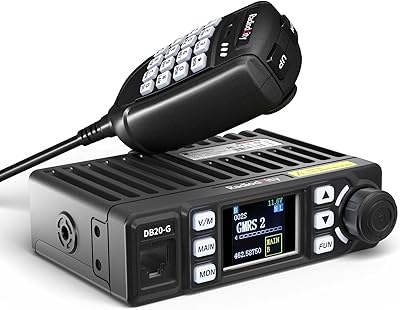
Radioddity DB20-G GMRS Mobile Radio
78%
93%
Ease of Installation
88%
Audio Clarity
71%
Transmit Range
82%
Repeater Access
84%
Display & Interface
More
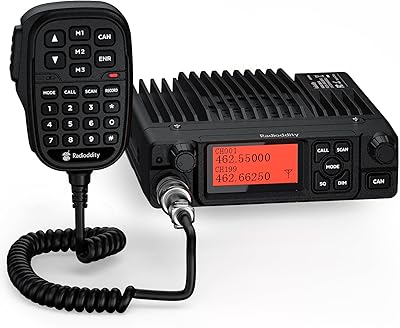
Radioddity DB40-G GMRS Mobile Radio
73%
78%
Transmit Power & Range
84%
Audio Clarity
81%
Repeater Capability
62%
Channel Flexibility & Programming
76%
Build Quality & Durability
More
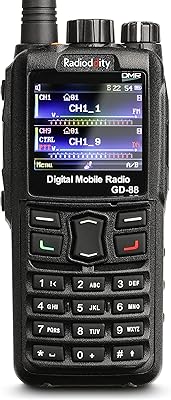
Radioddity GD-88 DMR Dual Band Ham Radio
75%
93%
Feature Depth
88%
GPS and APRS Performance
51%
Programming Experience
82%
Build Quality
63%
Audio Quality
More
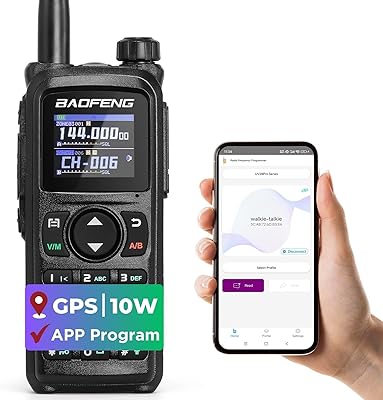
BAOFENG UV-28 Plus Ham Radio Handheld
75%
86%
App Programming Experience
91%
Value for Money
67%
GPS Functionality
78%
Transmission Audio Clarity
83%
Receiver Coverage
More
BTECH GMRS-V2 5W 200-Channel GMRS Radio
83%
91%
Build Quality
88%
Ease of Use
94%
Weather Resistance
75%
Range Performance
85%
Programming with CHIRP
More
BTECH GMRS-PRO GMRS Two-Way Radio
78%
91%
Build Quality & Durability
88%
GPS Accuracy & Location Sharing
84%
Bluetooth Performance
72%
Range & Signal Clarity
63%
App & Channel Programming
More
Retevis RA25 GMRS Mobile Radio
82%
91%
Audio Clarity
89%
Transmission Range
87%
Channel Versatility
84%
Ease of Installation
79%
Build Quality
More
Radioddity CS-47 40-Channel CB Radio
77%
83%
Audio Clarity
71%
Build Quality
88%
Ease of Installation
86%
Display Readability
62%
VOX Performance
More
Uniden PRO401HH 40-Channel Handheld CB Radio
77%
86%
Audio Clarity
67%
Range Performance
61%
Battery Life & System
79%
Build Quality
91%
Ease of Use
More

FAQ

Yes — GMRS requires an FCC license for any transmission. The good news is it covers your entire household, doesn't require a test, and is valid for 10 years. You can apply directly through the FCC website. Receiving-only use across the other bands doesn't require a license, but the moment you transmit on GMRS, you need one.

Only in near-perfect conditions — think flat open water or an unobstructed hilltop. In typical terrain with trees, buildings, or rolling hills, real-world range is closer to 1 to 3 miles for most users. If extending range matters to you, pairing it with a GMRS repeater is the most effective solution.

It depends heavily on your prior radio experience. Users familiar with GMRS or amateur radio will find the menu system manageable, if not especially intuitive. Complete beginners report a steep initial learning curve, and the included manual is dense. Many users recommend using Radioddity's programming software on a PC, which makes the process considerably more approachable.

The GPS is useful for general group coordination — knowing a teammate's rough coordinates or straight-line distance is genuinely helpful on a trail or in a vehicle convoy. That said, the manufacturer openly notes that altitude readings can deviate, so don't rely on it as a substitute for a dedicated GPS device in technical navigation situations.

Yes, the Radioddity GM-30 Plus GMRS Handheld Radio includes Airband receive capability, so you can monitor air traffic control and aviation frequencies in VFO mode. This is receive-only — you cannot and should not transmit on Airband frequencies with this radio.
If your accessories use a 2-pin Kenwood-style connector, they should work directly. This is one of the more common connector standards in the GMRS and amateur radio space, so compatible third-party options are widely available. Double-check the connector type on your existing accessories before assuming compatibility.

The rated operating range goes down to 14°F, which covers most winter camping and cold-weather outdoor scenarios. Li-Ion batteries do lose capacity in freezing temperatures, so expect somewhat shorter battery life in the cold even if the radio itself continues to function normally.

It's water resistant, which means it can handle light splashes and brief exposure to moisture without issue. It is not waterproof or submersion-rated, so sustained heavy rain or accidental drops in water are genuine risks. If you routinely operate in wet conditions, a protective case or a fully waterproof radio would be a safer choice.

The GM-30 Plus can receive NOAA weather broadcasts, and you can scan or lock onto weather channels manually. Whether it supports fully automatic weather alerting that wakes the radio from standby depends on your configuration — check the manual's NOAA scanning section for the specific setup steps.

When you have two GM-30 Plus radios and want them on the same frequency without manually entering settings, you press the SK2 button on the source radio while the receiving radio is in copy mode — it clones the frequency and any CTCSS or DCS tones across. It's a practical shortcut when adding a new unit to a group that's already set up and in the field.

Where to Buy