Overview

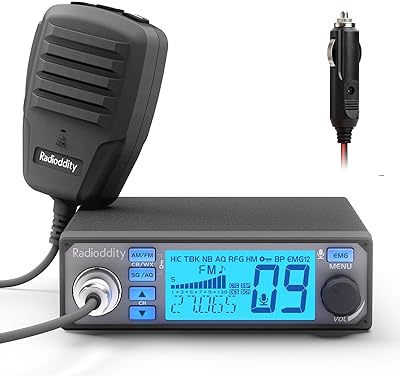
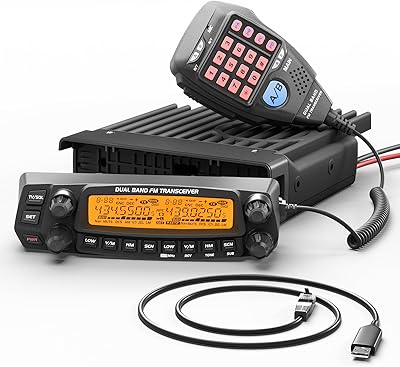
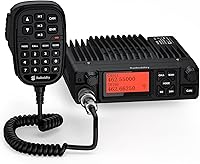
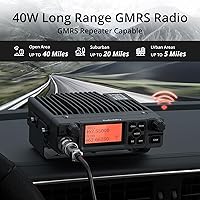
The Radioddity DB40-G GMRS Mobile Radio entered the market in early 2024, positioning itself as a mid-range option for off-road convoy drivers and overlanders who need more range than a handheld can provide. One important note upfront: GMRS operation requires an FCC license, so if you're new to the band, factor that in before ordering. What sets this mobile rig apart is its repeater-capable design — it can link into established repeater networks, dramatically extending your effective communication radius. Just keep expectations realistic: the advertised 40-mile range is a line-of-sight best-case figure, and hilly or wooded terrain will cut that down noticeably.
Features & Benefits

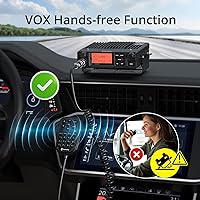
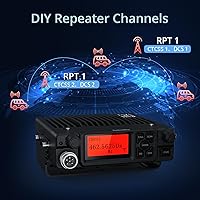
The DB40-G delivers up to 40 watts on high power — enough to reach distant repeaters even from challenging terrain — with selectable mid (~20W) and low (~5W) modes for less demanding situations. Its 169 customizable channels include dedicated GMRS repeater slots, and the UHF receive window spanning 400–480 MHz means it can pick up more than just standard GMRS traffic. The DIY repeater channel feature, which lets you toggle CTCSS/DCS codes on the same frequency, is genuinely useful when moving through different coverage zones on a long trip. A dual display lets you track two channels simultaneously, and the VOX function keeps you transmitting without touching a button while you drive.

Best For

This GMRS mobile radio is purpose-built for off-road convoy groups running multiple vehicles through areas with no cell coverage. It is also a strong match for overlanders who want to tap into GMRS repeater networks for backcountry range extension without pursuing an amateur radio license. Drivers upgrading from handheld FRS or GMRS units will feel an immediate difference in how reliably their voice carries. Road-trip crews coordinating across several vehicles will appreciate being able to monitor two channels at once — useful for keeping an ear on emergency frequencies. And for buyers watching their budget, this mobile rig delivers near-premium output power without the price tag of more established brands.

User Feedback

With roughly 130 ratings and a 4.2-star average, the DB40-G has earned a solid if not definitive reputation. Buyers most often praise the audio clarity and build quality relative to the price — mounting the unit is also consistently described as painless. Where things get more complicated is programming: the menu navigation has a real learning curve, and the manual does not always walk you through it clearly. Some users note the real-world range falls well short of 40 miles in anything but flat, open country, which is expected but worth knowing going in. Radioddity backs the unit with an 18-month warranty, and most buyers report adequate if occasionally slow customer support.

Pros

  • 40W of transmit power puts this mobile rig well above any handheld GMRS radio in its price range.
  • Repeater-capable design lets you tap into GMRS repeater networks for dramatically extended coverage on long trips.
  • 169 customizable channel slots with UHF receive support give experienced operators serious flexibility.
  • Dual watch lets you monitor two channels simultaneously — useful for convoy coordination and emergency awareness.
  • VOX function enables genuine hands-free communication, a real safety benefit on technical off-road trails.
  • Installation is consistently praised as straightforward, with a solid mounting bracket kit included in the box.
  • Received audio quality is clear and easy to understand even at highway speeds with background road noise.
  • An 18-month warranty provides more hardware coverage than most competitors in this category offer.
  • The DB40-G includes a programming cable, making bulk channel setup via PC a realistic option for technical users.
  • Three selectable power levels let you conserve vehicle battery draw when maximum range is not needed.

Cons

  • Front-panel programming is genuinely difficult to learn, with a menu structure that frustrates new users.
  • The included manual is widely criticized as poorly translated and inadequate for repeater channel setup.
  • PC programming software feels outdated and can be unstable on newer operating systems like Windows 11.
  • The 40-mile range claim is best-case line-of-sight only — wooded or hilly terrain cuts this dramatically.
  • VOX sensitivity struggles in louder vehicles, occasionally triggering unintended transmissions from engine or road noise.
  • Customer support response times can be slow, especially for software and compatibility questions.
  • The display font is small enough to be difficult to read quickly when the unit is mounted low in the dash.
  • Handheld microphone buttons lack strong tactile feedback, making confident operation tricky when wearing gloves.
  • With only 132 ratings at time of review, the long-term reliability track record is still relatively limited.
  • No IP-rated water resistance certification means fully exposed outdoor mounting carries some weather-related risk.

Ratings

The Radioddity DB40-G GMRS Mobile Radio has been evaluated by our AI system after analyzing verified buyer reviews from global sources, with spam, bot-generated, and incentivized feedback actively filtered out. Scores reflect the honest spread of real-world experiences — where this mobile rig genuinely impresses and where it still has room to grow. Both strengths and recurring frustrations are weighted transparently in every category below.
Transmit Power & Range
78%
22%
Running at full 40W, the DB40-G pushes a noticeably stronger signal than typical handheld GMRS units — convoy drivers in open desert or flat highway runs report clean, reliable contact well beyond what a 5W handheld could manage. The three power levels give real flexibility for saving draw when range demands are low.
The advertised 40-mile figure is a best-case, line-of-sight number that very few buyers will ever hit in practice. In wooded trails, hilly terrain, or dense suburban environments, expect realistic ranges closer to 5–15 miles, which is still respectable but can feel misleading to first-time GMRS buyers.
Audio Clarity
84%
Received audio on the DB40-G is consistently described as clean and easy to understand, even at speed with road noise present. The 16 dB microphone gain captures voice well without requiring users to shout into the mic, which matters a lot when you are coordinating a convoy mid-drive.
A handful of users note that transmitted audio can sound slightly compressed or tinny on the receiving end, particularly on narrowband channel settings. It is not a dealbreaker, but buyers coming from higher-end mobile rigs may notice the difference in voice fidelity during extended group use.
Repeater Capability
81%
19%
The DIY repeater channel setup is one of the most practical features on this mobile rig — being able to program CTCSS and DCS codes independently for the same frequency lets travelers hop between repeater coverage zones without re-programming from scratch. For overlanders crossing state lines, this is a genuine operational advantage.
Setting up repeater channels requires a reasonable understanding of GMRS repeater networks and tone codes, which trips up newer users who expected a more guided process. The manual does not walk through repeater configuration in enough detail, and several buyers resorted to online community guides to get it working correctly.
Channel Flexibility & Programming
62%
38%
Having 169 customizable channel slots with support for multiple channel spacings — including 6.25 kHz narrowband — gives experienced operators a lot of room to tailor the radio for their specific use area. The included programming cable and software access mean deep customization is possible without paying extra.
Programming via the front panel is widely criticized as unintuitive, with a menu structure that demands patience and repeated reference to a manual that many buyers describe as poorly translated. Even using the PC software, the workflow is not beginner-friendly, and first-time GMRS users report spending hours just getting basic channel sets loaded correctly.
Build Quality & Durability
76%
24%
The chassis feels solid and purposeful for the price point — buyers report it holds up well through dusty off-road days and hot vehicle interiors without rattling loose or showing heat-related warping. The water-resistant construction adds a layer of confidence for outdoor mounting scenarios.
It does not have the tight-tolerance, premium feel of more established brands at higher price points, and a few users noticed minor cosmetic inconsistencies in panel finish. Water resistance is noted but not rated to any IP standard, so mounting in fully exposed positions during heavy rain carries some risk.
Mounting & Installation
83%
The included bracket kit with mounting screws, gasket, and pads covers most standard vehicle dash and roll bar installations cleanly. Buyers frequently call out installation as one of the easier parts of the experience — the bracket is sturdy and the radio sits securely even on rough trails.
The mounting hardware selection is adequate but not exhaustive — buyers with non-standard or tight mounting locations sometimes need supplementary hardware. A few users noted the bracket finish does not match premium aftermarket interiors particularly well, though this is a cosmetic concern rather than a functional one.
Dual Display & Dual Watch
79%
21%
The ability to watch two channels simultaneously is a practical feature for anyone running a convoy while keeping an ear on a GMRS calling channel or emergency frequency. The dual display is bright enough to read at a glance while driving, which reduces the need to interact with the radio directly.
The display font and layout, while functional, feel dated compared to newer mobile radio designs. Some users with older eyes find the character size a bit small in bright daylight conditions, particularly when mounted lower in the vehicle dash area.
VOX & Hands-Free Operation
73%
27%
VOX works reliably in most in-cab environments, letting drivers communicate without touching the microphone — a real safety benefit on technical trails where both hands need to stay on the wheel. Sensitivity adjustability helps dial it in for different background noise levels.
In louder vehicles — particularly open-cab off-roaders or trucks with aggressive exhausts — VOX sensitivity calibration becomes tricky, with road and engine noise occasionally triggering unintended transmissions. Users in quieter vehicles report far fewer issues, but it is worth testing before heading into the field.
UHF Receive Coverage
77%
23%
The wide UHF receive window from 400 to 480 MHz lets this mobile rig pick up signals beyond the standard GMRS transmit band, which is useful for monitoring local public safety or business frequencies in areas where that overlap is relevant. It adds genuine utility for users who want broader situational awareness.
Receive-only coverage outside the GMRS transmit band is a listen-only capability — users sometimes misread the specs and expect full two-way operation across the entire UHF range, which is not the case. Clarifying this early saves post-purchase confusion, particularly for buyers new to the distinction.
Microphone & Controls
74%
26%
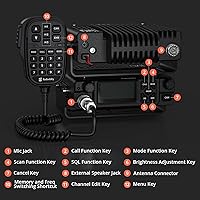
The handheld microphone with inline buttons covers channel change and essential radio functions without requiring you to reach for the main unit, which is genuinely convenient during convoy coordination. The coiled cable has good length and the microphone bracket keeps it within easy reach on the dash.
Button tactile feedback on the microphone is softer than some users prefer — it can be hard to confirm a button press by feel alone when wearing gloves on a winter trail run. A small number of buyers also report the coiled cable developing kinks with heavy daily use over several months.
Value for Money
82%
18%
For a 40W repeater-capable GMRS mobile with dual display, VOX, and a wide UHF receive window, the DB40-G delivers a feature set that would cost meaningfully more from more established radio brands. Buyers consistently note that the performance-to-price ratio is one of the strongest arguments for choosing this mobile rig.
The value proposition only holds if buyers are comfortable investing time in the programming learning curve and community resources. If you factor in the hours some users spend troubleshooting the software and manual, the effective cost of ownership rises — something budget-driven buyers should weigh honestly before purchasing.
User Manual & Documentation
47%
53%
The manual does cover the full feature set and includes a channel frequency reference that saves time during initial setup. The included programming cable and reference to CHIRP compatibility gives technically inclined users a clear path to bypassing the manual entirely for channel loading.
The translation quality is a persistent complaint across reviews — instructions are frequently ambiguous, and critical steps like repeater channel setup or CTCSS/DCS programming are explained too briefly for new users to follow confidently. Many buyers end up relying on YouTube tutorials and GMRS community forums to fill in the gaps.
Software & PC Programming
58%
42%
PC programming via the included cable removes the tedium of front-panel menu navigation and makes bulk channel editing practical. Compatibility with community tools like CHIRP — though sometimes requiring workarounds — gives more experienced users a familiar and flexible programming environment.
The proprietary software has been described as clunky and occasionally unstable on modern operating systems, with driver installation for the programming cable causing issues for some Windows 11 users. Community support exists but buyers should expect a non-trivial setup process the first time they attempt PC-based programming.
Warranty & Customer Support
66%
34%
An 18-month warranty is above average for this product category and signals that Radioddity is willing to back the hardware beyond the typical one-year window. Buyers who have submitted warranty claims generally report that legitimate hardware defects are addressed without significant pushback.
Response times from Radioddity support can be slow, particularly for buyers outside North America, and email communication is sometimes described as unclear. Buyers dealing with software or compatibility questions — rather than hardware failures — report less satisfying support interactions overall.

Suitable for:

The Radioddity DB40-G GMRS Mobile Radio is built for people who spend real time operating vehicles in areas where cell coverage is unreliable or nonexistent. Off-road convoy groups will get the most out of it — coordinating a group of four-wheelers or overlanding rigs across a trail system is exactly the scenario this mobile rig was designed for. Travelers who have already obtained their FCC GMRS license and want to step up from a handheld radio will find the jump to 40W of mobile power immediately noticeable in terms of how consistently their signal gets through. The repeater-capable design is a significant draw for anyone who plans routes through areas with established GMRS repeater networks, since tapping into those networks can push effective communication range well beyond what the radio alone can do vehicle-to-vehicle. Road trip groups coordinating multiple cars on long highway drives will also appreciate the dual watch function, which lets you keep one channel locked on the group while monitoring a second for emergencies or local traffic. Budget-conscious buyers who want near-premium power output without paying flagship brand prices will find the value proposition here genuinely competitive.
Not suitable for:

The Radioddity DB40-G GMRS Mobile Radio is a poor fit for anyone who expects a plug-and-play experience straight out of the box. If you are new to GMRS entirely and have not yet obtained your FCC license, you cannot legally transmit on this radio in the United States — that is a hard prerequisite, not a technicality to overlook. Casual users who just want a simple way to stay in touch on a weekend camping trip would be better served by a pair of handheld GMRS radios that require no installation and far less setup. Anyone who is not willing to invest time in learning the programming interface — either through the front panel or via PC software — will likely end up frustrated, since the manual is widely regarded as inadequate for walking beginners through the configuration process. The advertised 40-mile range will also disappoint buyers who take it at face value: in mountainous, forested, or urban terrain, real-world performance is a fraction of that figure. And buyers who need a radio for marine, aviation, or amateur radio use will find this mobile rig simply does not cover those bands.

Specifications

  • Transmit Power: Output power is selectable across three levels: High (≥40W), Mid (~20W), and Low (~5W), allowing users to balance range against current draw.
  • TX Frequency: Transmits on standard GMRS frequencies as allocated by the FCC, requiring a valid GMRS license for legal operation in the United States.
  • RX Frequency: Receives across a broad UHF window spanning 400–480 MHz, extending monitoring capability beyond the GMRS transmit band.
  • Channel Capacity: Supports up to 169 fully customizable channels, including dedicated GMRS repeater channel slots for network-assisted long-range communication.
  • Private Codes: Offers 154 total privacy codes comprising 50 CTCSS tones and 104 DCS codes, enabling selective squelch to reduce interference on shared frequencies.
  • Channel Spacing: Compatible with channel spacings of 5 kHz, 6.25 kHz, 12.5 kHz, and 25 kHz to match narrowband and wideband channel plans.
  • Supply Voltage: Operates at 13.8V DC with a ±15% tolerance, making it compatible with standard 12V vehicle electrical systems.
  • Current Draw: Maximum dissipation current is rated at ≤10A, which should be accounted for when planning the vehicle fuse and wiring installation.
  • Microphone Gain: Microphone gain is set at 16 dB, providing clear voice pickup without requiring the operator to raise their voice in normal in-cab environments.
  • Audio Distortion: Audio harmonic distortion is specified at ≤7%, keeping transmitted voice audio clean and intelligible across supported channel configurations.
  • Sensitivity: Receiver reference sensitivity is ≤0.30 µV in the 400–420 MHz range and ≤0.25 µV in the 420–470 MHz range, indicating solid weak-signal reception.
  • Freq Tolerance: Carrier frequency tolerance is ≤2.5 PPM, ensuring stable on-channel operation across varying temperature and environmental conditions.
  • Display: Features a dual-display layout with dual watch functionality, allowing simultaneous monitoring of two independent channels without switching back and forth.
  • VOX: Integrated VOX (voice-activated transmit) function enables hands-free transmission, with adjustable sensitivity to suit different in-vehicle noise environments.
  • Water Resistance: The unit is described as water resistant, though no specific IP rating is provided, so fully exposed or submerged mounting is not recommended.
  • Weight: The radio unit weighs 4.2 pounds, which is typical for a 40W mobile rig and should be considered when planning dashboard or roll bar mounting.
  • Dimensions: Package dimensions are 13.9 × 9.69 × 2.8 inches, with the radio itself being compact enough for most standard in-vehicle mounting locations.
  • Warranty: Covered by an 18-month manufacturer warranty from Radioddity, which exceeds the one-year coverage offered by many competing products in this category.
  • In the Box: Includes the radio unit, handheld microphone with bracket, power cable with fuse tube, mounting bracket with hardware, spare fuse, programming cable, and user manual.
  • FCC ID: FCC ID is 2AN62-DB40G, confirming the unit has passed federal radio frequency certification requirements for sale and use in the United States.

Related Reviews

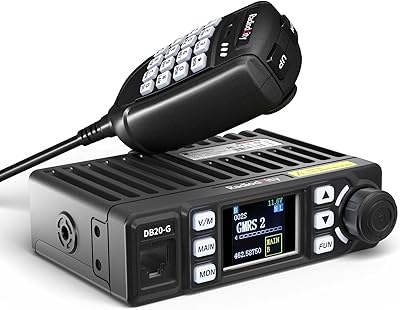
Radioddity DB20-G GMRS Mobile Radio
78%
93%
Ease of Installation
88%
Audio Clarity
71%
Transmit Range
82%
Repeater Access
84%
Display & Interface
More
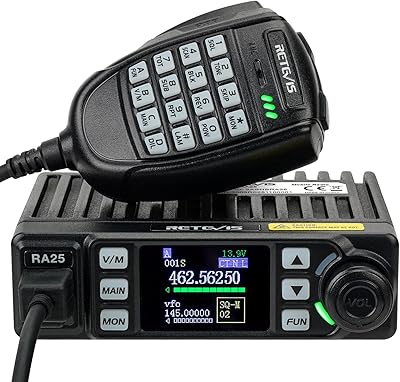
Retevis RA25 GMRS Mobile Radio
82%
91%
Audio Clarity
89%
Transmission Range
87%
Channel Versatility
84%
Ease of Installation
79%
Build Quality
More
Retevis RA86 GMRS Mobile Radio
85%
88%
Performance
91%
Audio Clarity
85%
Ease of Use
93%
NOAA Weather Alerts
65%
Installation Complexity
More
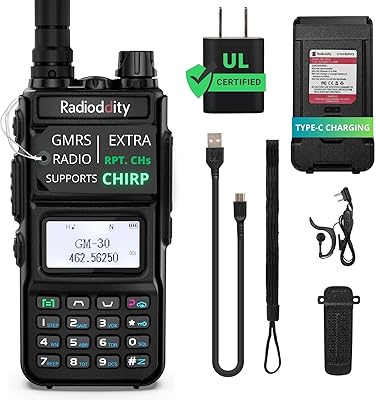
Radioddity GM-30 GMRS Handheld Two-Way Radio
81%
91%
Value for Money
88%
Audio Clarity
67%
Range Performance
74%
Ease of Use
83%
Build Quality
More
Retevis RA87 GMRS Mobile Radio
78%
88%
Transmit Power
84%
Repeater Channel Support
86%
Audio Clarity
83%
Ease of Installation
81%
CHIRP Compatibility
More
BTECH GMRS-50V2 50W Mobile GMRS Radio
80%
91%
Transmit Power & Signal Consistency
88%
Channel Customization & Flexibility
57%
Programming Software & Setup Experience
86%
Audio Clarity & Receiver Quality
89%
Repeater Compatibility
More
Radioddity DB50 Dual Band Mobile Radio Transceiver
79%
88%
Transmit Power & Range
91%
Receiver Coverage
86%
Audio Clarity
84%
Channel Management
89%
Chirp Compatibility
More
Radioddity GM-30 Plus GMRS Handheld Radio
84%
88%
Range
91%
Battery Life
84%
Ease of Use
89%
Durability
75%
GPS Accuracy
More
Radioddity CB-500 CB Radio Mobile Transceiver
79%
88%
Audio Clarity
86%
Noise Reduction Performance
67%
Transmission Range
83%
Ease of Installation
63%
Menu Navigation & Usability
More
BTECH GMRS-20V2 20W Mobile Two-Way Radio
83%
91%
Performance & Range
93%
Durability & Waterproofing
74%
Ease of Use
70%
Setup & Programming
82%
Battery Life
More

FAQ

Yes, absolutely. The Radioddity DB40-G GMRS Mobile Radio operates on GMRS frequencies, which require an FCC GMRS license for legal use in the United States. The good news is the license covers your entire immediate family, costs a modest fee, and does not require a test — but you do need to apply before transmitting.
In practice, that 40-mile figure is a best-case, line-of-sight number achieved under near-ideal conditions — think flat desert or open water. In the real world, forests, hills, and buildings will reduce your range considerably, often to somewhere between 5 and 15 miles vehicle-to-vehicle. If you need more range, connecting to a GMRS repeater network is a far more reliable strategy than chasing the spec sheet number.

You have two options: program directly through the front panel using the menu system, or use the included programming cable and PC software to load channels in bulk. Most users find front-panel programming tedious for anything beyond a few channels, so the PC software route is recommended for setting up a full channel list. The software has a learning curve of its own, but community guides and CHIRP compatibility workarounds are available online.

CHIRP compatibility with the DB40-G has been reported by users in online communities, but it may require using an experimental driver or a workaround rather than a plug-and-play setup. Check the CHIRP radio support database before assuming it will work out of the box, since GMRS mobile radios from newer brands are not always immediately added to the stable release.

Yes — as long as your handheld radios operate on the same GMRS frequencies and you match the channel, privacy code, and bandwidth settings on both devices. The DB40-G is not brand-locked, so it can communicate with any FCC-certified GMRS radio from any manufacturer once the frequencies and tone codes align.

To use a repeater, you will need to program the repeater's input frequency as your transmit frequency and its output frequency as your receive frequency, along with the correct CTCSS or DCS tone the repeater requires. The DB40-G supports DIY repeater channel setup, meaning you can store this configuration as a dedicated channel so you do not have to reprogram it each time. Finding your local repeater details is usually done through the MyGMRS.com directory.

The radio draws up to 10A at maximum output power, so you should use at minimum 14 AWG wire for the power run, though 12 AWG is safer if your cable run is longer than a few feet. Always wire directly to the battery through the provided fuse tube, and keep the fuse as close to the battery terminal as practical — this protects the vehicle wiring if the radio cable is ever damaged.

Yes, VOX is optional and can be disabled through the menu, letting you use the push-to-talk button on the microphone exclusively. Many users in noisy vehicles prefer PTT operation anyway, since engine and wind noise can trigger VOX unintentionally. Switching between the two modes is straightforward once you know where the setting lives in the menu.

Based on user feedback, the included bracket holds up well for typical trail use — buyers who run technical off-road routes report the radio staying firmly in place without unusual vibration or loosening over time. If you are mounting to a roll bar or somewhere with heavy vibration, adding a dab of thread-locking compound on the mounting screws is a common precaution users recommend.

Start by contacting Radioddity directly through their official support channels — the 18-month warranty covers hardware defects, and most legitimate failure claims are handled without major pushback. For software and programming questions, the official support response can be slower, so checking Radioddity community forums or GMRS enthusiast groups online often gets you a faster practical answer. Keep your purchase receipt and order details handy when reaching out.

Where to Buy