Overview

The Retevis RT55 Handheld Marine Radio sits in a practical sweet spot for recreational boaters, kayakers, and weekend anglers who need dependable VHF communication without the complexity of a professional-grade unit. What sets it apart right away is the combination of IP67 waterproofing and a floating body design — two features that actually matter when you're out on the water and things go sideways. It currently ranks among the top three bestsellers in its Amazon category, which suggests buyers are voting with their wallets for this kind of no-nonsense approach. This isn't a DSC-equipped vessel radio; it's a capable, practical companion for day trips and near-shore adventures.

Features & Benefits

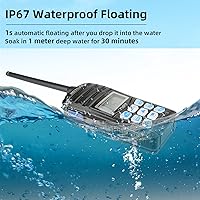
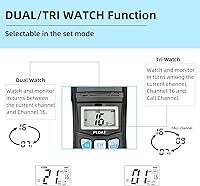
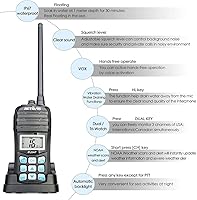
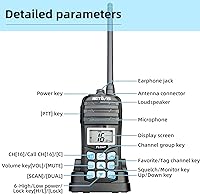
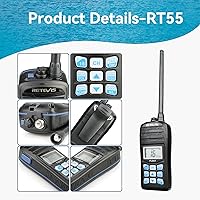
The RT55's floating body design is genuinely useful — if the radio slips over the side of a kayak or a wet deck, it bobs on the surface rather than sinking. That pairs well with IP67 certification, which means the unit can handle a 1-meter submersion for up to 30 minutes; splash resistance is one thing, but surviving a full drop overboard is another. A vibration drainage system actively clears water from the speaker grill, so audio stays clear even in rough conditions. The NOAA weather scanning runs automatically across channels, and the Dual/Tri-Watch function keeps Channel 16 monitored at all times. USB charging and a backlit LCD round out a practical feature set.

Best For

This floating VHF radio makes the most sense for casual recreational users — think weekend sailors, kayak tourers, and shore fishermen rather than commercial vessel operators. If you want broad channel coverage across US, Canadian, and international frequencies without studying a thick manual, this fits that bill. The USB charging is a real advantage for multi-day paddling trips where a proprietary dock charger would be a liability. Beginners to marine VHF will appreciate the relatively straightforward interface, and those who already own a fixed-mount unit will find the RT55 works well as a portable backup radio. Just keep expectations realistic on range — manufacturer figures assume open water and ideal conditions.

User Feedback

With a 4.5-star average across over 180 ratings, this handheld marine radio earns consistent praise for its build quality and audio, with many buyers specifically calling out the float feature as something they've actually tested in the field. The 2-year warranty on the radio body and a 30-day return window add genuine confidence to the purchase. On the critical side, some users note that battery life shortens noticeably under heavy transmission use, and a handful find the menu navigation less intuitive than expected. Range claims also draw scrutiny — real-world performance in sheltered waterways or around obstacles falls well short of the 15 km manufacturer figure. Compared to the Retevis RA26, buyers tend to favor this model for its float design and overall feel in hand.

Pros

  • The floating body design works as advertised — drop it in the water and it stays on the surface where you can actually retrieve it.
  • IP67 certification means the unit can survive a brief full submersion, not just light splashes.
  • NOAA weather alert scanning runs automatically, giving you real-time severe weather warnings without manual input.
  • Dual and Tri-Watch functions keep Channel 16 active in the background at all times, which matters for safety.
  • USB charging is a genuine convenience advantage over radios that require proprietary dock chargers.
  • The vibration drainage system keeps speaker audio clear even after the radio gets dunked.
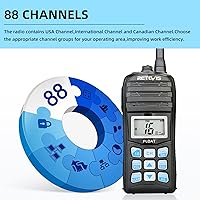
  • Coverage spans all USA, Canadian, and international marine channels out of the box.
  • A 2-year warranty on the radio body and 30-day return window offer solid purchase confidence for the price tier.
  • The backlit LCD adjusts brightness automatically, making it readable in both direct sunlight and low light.
  • At roughly 9.9 ounces, the RT55 is light enough to carry all day without fatigue.

Cons

  • Battery life shortens noticeably under heavy transmission use, which can be a problem on longer outings.
  • No built-in DSC or GPS means this radio cannot send a distress signal with position data — a real limitation for offshore use.
  • The 15 km range claim is manufacturer-stated under ideal conditions; real-world performance in sheltered or obstructed water is considerably shorter.
  • Menu navigation has a learning curve that some users find unintuitive compared to pricier competitors.
  • No dedicated distress button reduces its usefulness as a standalone safety device in an emergency.
  • The 1200mAh battery capacity is on the smaller side compared to some competing models in the same category.
  • No external speaker jack limits audio options in noisy environments like open powerboats.
  • Accessory warranty coverage drops to one year, which may be a concern if the charging cable or antenna needs replacement.

Ratings

The Retevis RT55 Handheld Marine Radio earned its scores through AI-assisted analysis of verified buyer reviews collected globally, with spam, incentivized feedback, and bot-generated ratings actively filtered out before scoring. Every category below reflects what real recreational boaters, kayakers, and anglers actually reported after using this floating VHF radio in the field — the strengths as well as the frustrations. Nothing has been smoothed over to make the numbers look better than the evidence supports.

Waterproof Performance
88%
Buyers consistently confirm the IP67 rating holds up in real conditions — wave splash, rain, and brief accidental submersions all handled without issue. Kayakers in particular praise the confidence it gives them knowing the radio survives a capsize scenario rather than just light drizzle.
A handful of users note that the IP67 certification applies to controlled submersion conditions, not prolonged or deep immersion, and a few reported issues after extended exposure beyond the rated limits. Managing those expectations upfront would prevent some disappointment.
Float Functionality
91%
This is arguably the feature that seals the deal for most buyers, and the real-world reports back it up — the radio genuinely stays on the surface when dropped in water, face-up and visible. Multiple buyers specifically tested this intentionally and came back to confirm it works exactly as advertised.
A small number of users noted the radio can drift quickly in moving water or strong current, so retrieval still requires prompt action. There is no lanyard loop sturdy enough for high-activity use according to a few paddlers, which is worth knowing before heading out.
Audio Clarity
83%
Most buyers report clean, intelligible audio in normal boating conditions, and the vibration drainage system earns specific praise for keeping the speaker clear after the radio gets wet. Users operating in moderate wind and engine noise found the volume levels adequate for close-range communication.
In high-wind or open-ocean conditions, some users find the speaker output could be louder, and a few noted audio quality degrades slightly when the drainage system has not fully cleared moisture from the grill. The absence of an external speaker jack is a limitation for powerboat users in noisy cockpits.
Battery Life
62%
38%
For casual day-use — primarily listening and scanning with occasional transmissions — the 1200mAh battery holds up reasonably well across a standard outing. Users who keep the radio mostly on standby report getting through a full day on the water without a mid-trip charge.
Under heavier transmission use, battery drain accelerates noticeably, and several buyers flagged this as a real limitation on multi-day trips or when using the radio as a primary communication device. The battery capacity is on the smaller side compared to competing models at a similar price point, and USB charging, while convenient, is not a fast solution mid-outing.
Build Quality
84%
The overall construction feels solid and purposeful for the price tier — buttons have decent tactile feedback, the housing feels impact-resistant, and buyers report it surviving routine drops onto hard boat decks without cosmetic or functional damage. The fit and finish impressed buyers who expected something cheaper-feeling at this price.
A few users noted the belt clip feels slightly plasticky and less confidence-inspiring than the radio body itself, with one or two reports of it cracking under regular use. The antenna connection, while functional, has received occasional feedback about feeling less robust than professional-grade alternatives.
NOAA Weather Alerts
86%
The automatic NOAA channel scanning works reliably and interrupts whatever channel you are on when a severe weather alert is broadcast — buyers appreciate not having to manually check conditions while focused on navigating or fishing. Coastal users in storm-prone regions specifically call this out as one of the most valuable day-to-day features.
A small number of buyers in areas with weaker NOAA signal coverage noted the alerts could be delayed or missed, though this is more a function of geography than the radio itself. The alert tone volume is not adjustable on all settings, which some users found either too jarring or too easy to miss depending on ambient noise levels.
Channel Coverage
87%
Having USA, Canadian, and international marine channels covered out of the box is genuinely useful for boaters who cross between jurisdictions — Great Lakes users and coastal cruisers heading into Canadian waters particularly appreciated not needing to reprogram anything. The 88-channel range covers everything a recreational user is realistically going to need.
A few more technically minded users noted the channel selection menu takes more button presses than it should to navigate efficiently, which is a minor but real friction point. There is no direct channel entry via keypad, so scrolling through to less-common channels can be tedious.
Ease of Use
71%
29%
For core functions — power on, channel scan, weather alert activation, and volume adjustment — the RT55 is approachable enough for complete beginners to figure out without the manual. Most casual buyers report being operational within a few minutes of unboxing.
The menu system for secondary settings like squelch adjustment, scan settings, and watch mode configuration has a steeper learning curve, and the manual has been described as thin on clear explanations by several buyers. Users upgrading from simpler radios found the multi-function button layout initially confusing.
Value for Money
79%
21%
For the combination of IP67 waterproofing, a genuine float design, NOAA alerts, and 88-channel coverage, most buyers feel the pricing is fair for a recreational-grade handheld. It competes favorably against higher-priced alternatives when assessed purely on features relevant to casual boating and paddling.
Buyers who compare it directly against the Retevis RA26 or similar competing models note that certain competitors offer more battery capacity or a headphone jack at a comparable or slightly lower price point. The value equation weakens somewhat for users who push the radio hard and find the battery the first thing they wish was better.
Range Performance
58%
42%
In genuinely open water between two vessels, buyers report workable communication at distances that comfortably cover typical recreational boating scenarios — marina-to-marina, shore-to-boat, or group-to-group communication within a harbor or bay is reliable.
The 15 km manufacturer range claim generates consistent skepticism in user reviews, with real-world performance in sheltered bays, inlets, and around landmasses often falling well short of that figure. This is a category-wide VHF reality, but some buyers felt the marketing set unrealistic expectations, which affected their overall satisfaction.
Charging Convenience
82%
18%
USB charging is a standout practical advantage — being able to charge from a power bank, a 12V USB adapter on the boat, or a standard wall plug without a proprietary dock makes this radio genuinely multi-environment friendly. Paddlers and backpackers who also carry USB power banks specifically appreciate this compatibility.
There is no rapid charge support, so if the battery runs low mid-trip, topping it up takes meaningful time. A few buyers also noted the USB port cover can be slightly fiddly to reseal correctly, which matters when you want to maintain waterproof integrity before heading back out.
Display Readability
77%
23%
The auto-brightness backlit LCD performs well across most lighting conditions — transitioning from bright sunlight to a shaded cabin without manual brightness adjustment is a minor but appreciated convenience. Text and channel numbers are legible at a glance during normal operation.
In very harsh direct sunlight, a small number of buyers found the display contrast less sharp than ideal, requiring them to shade the screen to read clearly. The display size itself is modest, and users with any vision limitations noted the font size could be larger for at-a-glance readability.
Warranty and Support
74%
26%
A 2-year support period on the radio body is a meaningful commitment at this price tier and gives buyers a reasonable safety net beyond the typical one-year standard. The 30-day return window reduces the risk of a purchase that turns out to be a poor fit.
Accessory coverage dropping to one year means the battery and charger — the components most likely to degrade first — are less protected. A few buyers also noted that navigating warranty support with a manufacturer based overseas added some friction, though most reported acceptable resolution outcomes.

Suitable for:

The Retevis RT55 Handheld Marine Radio is a strong fit for recreational users who spend time on the water in situations where dropping or dunking a radio is a real possibility rather than a theoretical one. Kayakers and paddlers are probably the most natural audience here — the floating body design directly addresses one of the most common fears when carrying electronics on a kayak, and the compact form factor tucks away easily in a PFD pocket. Weekend boaters and day-trippers who want NOAA weather alerts and Channel 16 monitoring without the cost or complexity of a fixed-mount installation will also find a lot to like. Anglers fishing from small craft, particularly in coastal or inshore environments, benefit from the waterproofing and auto-scanning weather alerts. If you are new to marine VHF radio and want broad channel coverage across US, Canadian, and international frequencies from day one, this floating VHF radio offers a low-friction entry point with USB charging as a practical bonus.

Not suitable for:

The Retevis RT55 Handheld Marine Radio is not the right tool for boaters who need a radio capable of Digital Selective Calling or built-in GPS for distress signaling — it has neither, and those are meaningful safety gaps for offshore or open-ocean passages. Anyone relying on a single handheld as their only onboard communication device for extended bluewater trips should look toward more capable units with dedicated DSC functionality. The 1200mAh battery, while convenient to charge via USB, will tax out faster than expected under conditions requiring heavy transmission, which is a real concern on multi-day expeditions. The 15 km range figure is manufacturer-stated under ideal open-water conditions; in sheltered bays, around terrain, or near interference, real-world performance will be noticeably shorter, so buyers expecting consistent long-range performance may come away disappointed. Commercial operators or anyone requiring a radio that meets stricter vessel licensing requirements should look elsewhere.

Specifications

  • Waterproof Rating: The radio carries an IP67 certification, meaning it can withstand submersion in 1 meter of water for up to 30 minutes under controlled conditions.
  • Float Design: The housing is buoyant by design, so the unit will remain on the water surface if accidentally dropped overboard rather than sinking.
  • Battery: A 1200mAh rechargeable lithium-ion battery is included in the box and is rated at 7.4 volts output.
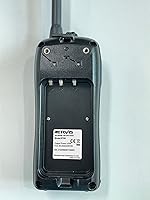
  • Charging: The radio charges via a standard USB connection, eliminating the need for a proprietary charging dock.
  • Display: A backlit LCD screen with automatic brightness adjustment provides readable output in both direct sunlight and low-light conditions.
  • Channels: The unit covers 88 channels in total, spanning USA, international, and Canadian marine frequency allocations.
  • Frequency Range: Transmit and receive frequencies span 156.025–157.425 MHz, covering the standard marine VHF band.
  • Stated Range: Retevis lists a maximum talking range of 15 km, which is a manufacturer figure measured under ideal open-water conditions.
  • Weather Alerts: Built-in NOAA weather alert functionality automatically scans all available NOAA channels and alerts the user to severe weather broadcasts.
  • Watch Function: Dual-Watch and Tri-Watch modes allow the radio to monitor Channel 16 alongside one or two additional channels simultaneously.
  • Drainage System: A vibration-based water-draining mechanism is built into the speaker grill to expel water and maintain audio clarity after submersion.
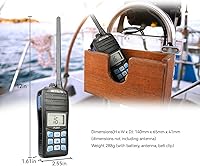
  • Weight: The unit weighs 9.9 ounces, making it light enough for all-day carry on a PFD or belt clip.
  • Dimensions: Physical dimensions measure 2.95″ deep by 9.69″ wide by 9.72″ tall with the antenna attached.
  • GPS and DSC: The RT55 does not include built-in GPS or Digital Selective Calling functionality.
  • Distress Button: There is no dedicated one-touch distress button on this unit.
  • Warranty: Retevis provides a 2-year support period for the radio body and a 1-year support period for accessories including the battery and charger.
  • Return Policy: A 30-day no-questions-asked return window is offered directly through the manufacturer.
  • Headphone Jack: The unit does not include a headphone or external speaker jack based on available product specifications.

Related Reviews
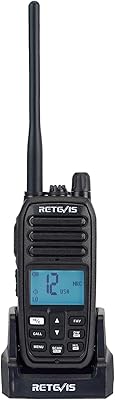
Retevis RM21 Handheld Marine VHF Radio
81%
86%
Audio Clarity
83%
Waterproofing & Durability
91%
Floating & Overboard Detection
88%
Battery Life
82%
Noise Cancellation
More
Retevis RM01 Handheld Marine Two-Way Radio
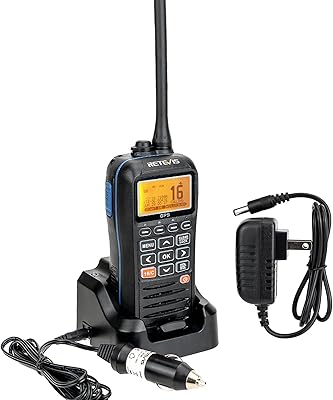
74%
83%
Waterproofing & Water Resistance
91%
Floating Ability
58%
Battery Life & Power System
74%
Audio Clarity & Receive Quality
81%
NOAA Weather Alert Reception
More
Retevis RM40 GPS Marine Handheld Radio
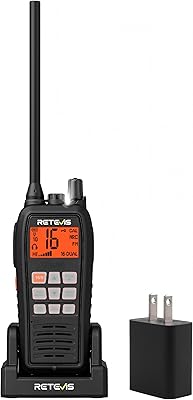
77%
88%
Safety Features
79%
GPS Performance
83%
Waterproofing
86%
Floating Design
61%
Ease of Setup
More
Retevis RM15 Handheld VHF Marine Radio
79%
87%
Waterproof Protection
91%
Floating and Recovery
74%
Audio Clarity
88%
Battery Life
78%
Build Quality
More
Uniden Atlantis 155 Handheld VHF Marine Radio
80%
91%
Waterproof Performance
88%
Buoyancy & Drop Safety
89%
Ease of Use
61%
Transmit Power & Range
86%
NOAA Weather Alerts
More
Uniden Atlantis 275 Handheld VHF Marine Radio
81%
93%
Waterproof Performance
88%
Display Quality
79%
Transmit Power & Range
82%
Battery Life
76%
Build Quality
More
Retevis RA27 Fixed Mount Marine Radio
77%
88%
Value for Money
83%
DSC & Emergency Performance
76%
GPS Accuracy
87%
Ease of Installation
67%
Audio Clarity
More
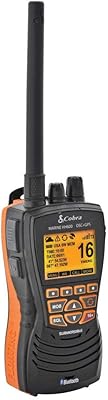
Cobra MR HH600FLTBTGPS Handheld Floating VHF Marine Radio
85%
93%
Waterproof & Durability
88%
Ease of Use
83%
Battery Life
91%
Bluetooth Connectivity
87%
GPS Accuracy & Safety Features
More
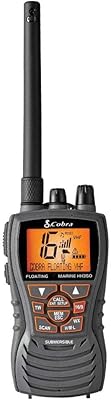
Cobra MR HH350 FLT Floating Marine Radio
82%
93%
Water Resistance & Floatability
88%
Audio Clarity & Microphone Performance
79%
Range & Signal Performance
61%
Battery Life
82%
Ease of Use & Interface
More
Retevis RT3S Dual Band DMR Ham Radio
72%
83%
Build Quality
88%
GPS Accuracy
91%
OpenGD77 Compatibility
41%
Ease of Setup
67%
Audio Quality
More

FAQ

It genuinely floats. The RT55 is designed with a buoyant housing, so if you drop it over the side of a kayak or boat, it will stay on the surface face-up. Several buyers have confirmed this in real-world use, not just lab tests. That said, you still want to retrieve it quickly — IP67 waterproofing has time and depth limits.

IP67 means the radio is rated to survive submersion in 1 meter of water for up to 30 minutes — so yes, rain and wave splash are no problem at all. The distinction worth knowing is that IP67 is not unlimited submersion protection; it's a tested standard under controlled conditions. For normal recreational boating and kayaking use, it comfortably covers anything you're likely to encounter.

A standard USB cable works fine for charging. This is one of the more practical aspects of the RT55 — you can top it up from a power bank, a boat's USB port, or a standard wall adapter. No proprietary dock required, which makes it a lot easier to keep charged on multi-day trips.

It covers all USA, Canadian, and international marine VHF channels, so cross-border use is not an issue. If you're boating in the Great Lakes region or along coastal Canada, the channel coverage has you covered without any manual reprogramming.

Take it as a best-case figure rather than an everyday expectation. VHF range is heavily influenced by antenna height, terrain, and interference — open ocean between two vessels with elevated antennas might get close to that figure, but in a sheltered bay or around islands, you'll likely see something closer to 3 to 8 km. That's normal for any handheld VHF, not a flaw specific to this radio.

For day trips on inland waters, coastal bays, or near-shore fishing, it works well as a primary radio. If you're doing offshore passages or extended bluewater sailing, the lack of DSC and GPS means you'd want a fixed-mount DSC-capable radio as your primary, with this floating VHF radio serving as a reliable backup. Context matters a lot here.

No manual tuning needed. The radio automatically scans NOAA weather channels in the background and interrupts to alert you when a severe weather broadcast is detected. It's a set-and-forget feature, which is genuinely useful when you're focused on navigation or fishing rather than monitoring the radio constantly.

Dual-Watch lets the radio monitor Channel 16 — the international distress and calling channel — while you're also listening on another working channel. Tri-Watch extends that to two additional channels at once. In practice, this means you never miss a coast guard call or emergency traffic even while using a different channel for communication with your group. It's a useful safety feature worth keeping active.

Under normal use — which means mostly listening with occasional transmissions — the 1200mAh battery handles a full day on the water reasonably well. If you're transmitting frequently, expect noticeably shorter run time. A few buyers have flagged this as a limitation on long trips, so carrying a USB power bank as a backup charge source is a smart precaution.

Yes, it's a reasonable starting point. The interface is fairly straightforward for basic operations like scanning channels, monitoring Channel 16, and receiving NOAA alerts. The menu system has a bit of a learning curve for advanced settings, but most casual users won't need to go deep into those. If you're brand new to marine radio, spending a few minutes with the manual before your first trip out will save a lot of on-water confusion.