Overview

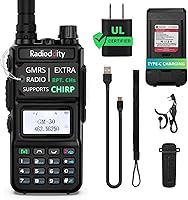
The Radioddity GM-30 GMRS Handheld Two-Way Radio enters a crowded market and makes a solid case for itself right out of the box — 30 pre-loaded GMRS channels mean you can hand one to a family member and start talking immediately. It sits comfortably in the budget-to-mid-range tier, but the inclusion of repeater capability is what separates it from the cheap bubble-pack radios at big-box stores. The USB-C charging port is a small but genuinely appreciated touch that most competitors at this price still haven't adopted. Worth noting: operating on GMRS frequencies in the US requires an FCC license.
Features & Benefits

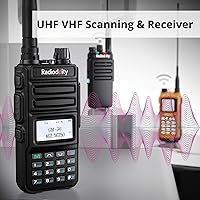
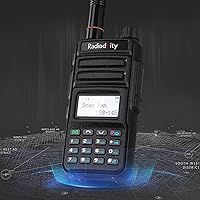
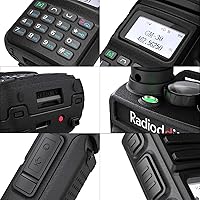
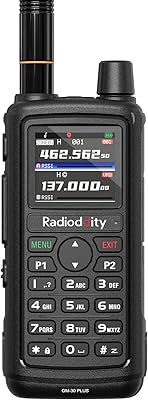
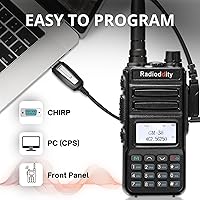
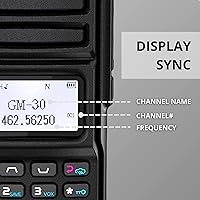
At 5 watts, the GM-30 has enough output to reach a GMRS repeater and extend your talking distance well past what line-of-sight normally allows — though be realistic, five miles is an open-field best case, not a wooded campground reality. Dual-band scanning across UHF and VHF lets you monitor frequencies beyond the standard GMRS channels, which is handy if you want to keep an ear on other traffic. The Display Sync feature shows channel name and frequency at the same time, so there's no guessing which channel you're on. NOAA weather scanning, VOX, an SOS alarm, and CHIRP compatibility for easy programming round things out nicely.

Best For

This two-way radio clicks best for families who want something more capable than toy-grade walkie-talkies without paying professional-grade prices. Overlanding and off-road groups will appreciate the repeater support for keeping convoy communication alive across hilly terrain. It's also a strong pick for emergency preparedness households — the NOAA scanning alone makes it worth having around during storm season. New GMRS users will find the default channel setup approachable, and anyone upgrading from basic FRS radios will immediately notice the difference in range and flexibility. If you're comfortable with CHIRP, channel programming becomes genuinely quick and painless.

User Feedback

Across more than 1,600 ratings and a 4.6-star average, owners are broadly happy — and the praise tends to focus on audio clarity and build quality that feels above the price point. Experienced GMRS operators specifically call out the repeater functionality as working reliably. On the flip side, a handful of buyers mention the menu navigation has a learning curve if you dive in without reading the manual, and the 5-mile range gets reality-checked pretty fast in dense forest or hilly terrain. A few users also flagged the manual as thin. Nothing dealbreaking, but worth setting expectations before you head into the backcountry.

Pros

  • Ships with 30 GMRS channels pre-loaded, so you can start using it immediately out of the box.
  • Repeater capability gives this GMRS handheld a meaningful range advantage over standard FRS radios.
  • USB-C charging means one less proprietary cable to carry on a trip.
  • NOAA weather scanning adds genuine safety value for outdoor and emergency preparedness use.
  • CHIRP software support makes bulk programming fast and easy for technical users.
  • Audio clarity holds up well in the field, even at moderate distances.
  • 250 total channels with 260 private codes provides strong flexibility for group communication.
  • The 2-pin Kenwood jack opens up a wide range of affordable aftermarket accessories.
  • Solid build quality that feels durable relative to the price point.
  • An 18-month warranty with lifetime technical support offers reassurance for first-time GMRS buyers.

Cons

  • Real-world range in wooded or hilly terrain falls well short of the advertised five-mile maximum.
  • The included manual is thin and leaves many menu functions unexplained.
  • Water resistance is not waterproof — sustained rain or wet conditions are a genuine risk.
  • No wall adapter is included in the box, only a charging cable.
  • The belt clip feels noticeably cheaper than the rest of the hardware and loosens over time.
  • Menu navigation has a steep learning curve for users who want to go beyond factory defaults.
  • The stock antenna underperforms for range, and many owners end up buying an aftermarket replacement.
  • Battery life under heavy 5W use drains faster than casual buyers expect on longer outings.

Ratings

The Radioddity GM-30 GMRS Handheld Two-Way Radio has been scored by our AI system after analyzing verified buyer reviews from global markets, with spam, bot-generated, and incentivized feedback actively filtered out. The scores below reflect a balanced picture — real strengths alongside the friction points that actual owners ran into. Whether you're a first-time GMRS user or an experienced overlander, these ratings are meant to help you decide with confidence.
Value for Money
91%
For the price, buyers consistently feel they're getting hardware that punches above its tier. The combination of repeater capability, dual-band scanning, and USB-C charging at this cost level is genuinely hard to match among competing radios in the same bracket.
A small number of buyers felt the included antenna underperforms for the price and recommend budgeting for an aftermarket upgrade to fully realize the radio's range potential.
Audio Clarity
88%
Owners across camping trips and overlanding convoys report crisp, easy-to-understand audio even at moderate distances. The squelch tail elimination keeps background static from becoming an annoyance during long communication sessions on the trail.
A few users noted that received audio can sound slightly tinny at maximum volume, and in high-wind outdoor conditions the built-in speaker struggles to cut through ambient noise without an earpiece.
Range Performance
67%
33%
With repeater access, the GM-30 can extend communication meaningfully beyond what standard FRS radios manage, which overlanding groups using local GMRS repeaters found genuinely useful during multi-vehicle runs across open terrain.
The advertised 5-mile figure is a clear-sky, flat-field maximum that most real-world users won't hit. In wooded campgrounds or hilly terrain, practical range drops considerably, and buyers who expected otherwise were disappointed.
Ease of Use
74%
26%
Out of the box setup is straightforward — the 30 pre-loaded GMRS channels mean families can start communicating within minutes. The large LCD display with Display Sync makes it easy to confirm which channel you're on without digging through menus.
The menu system has a notable learning curve when you want to go beyond default settings. Multiple buyers mentioned needing to consult third-party guides because the included manual doesn't cover edge cases clearly enough.
Build Quality
83%
The housing feels solid and purposeful for the price range — not fragile plastic toy territory. Buyers who've taken the GM-30 on multi-day trail runs report it surviving drops and dust without issue, which matters when you're far from a retailer.
It's water resistant rather than waterproof, so heavy rain exposure makes some owners nervous. A few long-term users noted the belt clip feels like the weakest physical component and can loosen with regular use.
Battery Life
79%
21%
The 1500mAh lithium-ion battery holds up well across a full day of moderate use at 5W output. Campers report getting through a weekend trip without needing a mid-trip recharge when using the 0.5W low-power mode for short-range coordination.
Heavy users running the radio at full power with frequent transmissions will notice the battery draining faster than expected. The battery isn't user-swappable in the field without a spare pack, which is a limitation on longer off-grid trips.
Charging Convenience
86%
The USB-C port is a legitimately practical upgrade that buyers appreciate — most people already carry USB-C cables for phones and laptops, so charging on a road trip or at a campsite with a power bank is completely hassle-free.
The radio doesn't include a wall adapter in the box, only a charging cable, which caught a few buyers off guard. It's a minor inconvenience but worth knowing before your first trip.
CHIRP Compatibility
89%
For users comfortable with CHIRP software, programming custom channel lists takes minutes rather than the tedious keypad-by-keypad process. Overlanding communities especially praised this, since shared channel configs can be cloned across a whole group's radios quickly.
CHIRP is only useful if you own a compatible programming cable and have a PC handy. Buyers who aren't technically inclined found the software confusing without a guided walkthrough, and the manual offers minimal help here.
NOAA Weather Scanning
82%
18%
Having NOAA weather alerts built in adds real safety value for outdoor use — campers and overlanders found it reassuring to monitor incoming storm alerts without carrying a separate weather radio during multi-day trips.
The NOAA function is receive-only and scan-based rather than alert-triggered, so you need to actively tune in rather than getting an automatic alarm. Users expecting push-style emergency alerts were mildly let down.
Channel Capacity & Flexibility
81%
19%
250 total channels with 30 default GMRS channels pre-loaded and 24 repeater channels gives the GM-30 far more flexibility than entry-level FRS radios. More advanced users appreciated being able to assign custom channel names for organized group communication.
The sheer number of channels can feel overwhelming to new users who just want a simple setup. Without proper programming, a lot of the channel capacity sits unused, which isn't an issue but can create confusion during initial setup.
Display & Interface
77%
23%
The LCD display is large and readable in most lighting conditions. The Display Sync feature showing both channel name and frequency simultaneously is a small but genuinely useful detail that prevents the common trail confusion of losing track of active channels.
Sunlight readability in bright outdoor conditions is average at best — the display can wash out without a backlight in direct sun. The button layout also takes a few sessions to memorize, especially for users switching between this and other radios.
Repeater Capability
84%
For buyers in areas with active GMRS repeater networks, this feature alone justifies the purchase. Experienced operators gave it consistent praise for working reliably and allowing communication across distances that would be impossible with a standard FRS radio.
Repeater utility is entirely dependent on local repeater infrastructure, which varies widely by region. Rural buyers in areas without nearby GMRS repeaters get no practical benefit from this feature, making it a location-dependent value-add.
Accessory Compatibility
78%
22%
The standard 2-pin Kenwood jack means a wide range of aftermarket earpieces, speaker mics, and programming cables work without adapters. This is a meaningful advantage over radios using proprietary connectors that lock you into expensive first-party accessories.
The included antenna is functional but widely considered a baseline performer. Several users upgraded to a higher-gain aftermarket antenna fairly quickly, which suggests Radioddity could have included a better stock antenna without dramatically affecting cost.
Warranty & Support
72%
28%
An 18-month warranty with lifetime technical support is a reassuring commitment at this price point. Several buyers mentioned Radioddity's customer service responded promptly to issues, which builds trust for a brand not everyone knows before purchasing.
A handful of users reported slow warranty resolution times during peak periods. The lifetime support claim also appears to apply primarily to technical questions rather than physical replacements, so buyers should read the warranty terms carefully before assuming full coverage.

Suitable for:

The Radioddity GM-30 GMRS Handheld Two-Way Radio is a strong fit for families who want a meaningful upgrade from the flimsy bubble-pack walkie-talkies sold at toy stores — it ships ready to go with no programming required, making it approachable for anyone who just wants to talk across a campground or hiking trail without fuss. Overlanding and off-road groups will find particular value here, especially those operating in areas with active GMRS repeater networks, where the repeater capability turns a short-range radio into something genuinely useful across longer trail distances. Emergency preparedness households benefit from the built-in NOAA weather scanning, which adds real safety value without requiring a separate device. New GMRS users who plan to grow into more advanced programming will also appreciate CHIRP compatibility as their confidence builds. Just keep in mind that operating on GMRS frequencies in the United States requires an FCC license — it is inexpensive and straightforward to obtain, but it is not optional.
Not suitable for:

Buyers expecting the Radioddity GM-30 GMRS Handheld Two-Way Radio to reliably deliver five-mile communication ranges in typical real-world environments will likely be disappointed — that figure assumes flat, open terrain with no obstructions, and wooded or hilly conditions cut range considerably. If you need genuinely waterproof hardware for kayaking, heavy rain exposure, or wet environments, the water-resistant rating here is not enough and you should look at radios with a proper IP67 or IP68 certification. Professional users — search and rescue volunteers, commercial site coordinators, or anyone needing a radio that can handle sustained daily punishment — will outgrow this two-way radio quickly and are better served by a purpose-built commercial-grade unit. Similarly, buyers who have no interest in learning CHIRP software or navigating a multi-level menu system may find the setup experience frustrating beyond the default channels. And if you are in a rural area with no nearby GMRS repeater infrastructure, the repeater capability that makes this radio stand out simply will not come into play.
Specifications

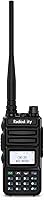
  • Output Power: Selectable between 0.5W (low) and 5W (high) to balance range needs with battery conservation.
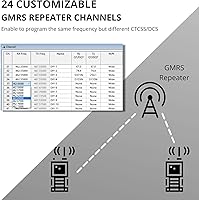
  • Total Channels: Supports up to 250 programmable channels, including 30 default GMRS channels and 24 repeater channels pre-loaded.
  • TX Frequency Range: Transmits across 462.5625–467.7125 MHz, covering the full licensed GMRS band.
  • RX Frequency Range: Receives across UHF, VHF, and NOAA weather frequencies in both channel and VFO modes.
  • Private Codes: Includes 260 privacy codes total — 50 CTCSS tones and 210 DCS codes — for filtering unwanted traffic on shared channels.
  • Battery: Powered by an included 1500mAh, 7.4V lithium-ion rechargeable battery pack.
  • Charging Port: Equipped with a USB Type-C port for charging the radio directly or the battery pack separately.
  • Display: Large LCD screen with Display Sync, showing both channel name and frequency simultaneously in single-watch mode.
  • Dimensions: Measures 1″D x 2″W x 7″H, making it a standard full-size handheld form factor.
  • Weight: Weighs 1.01 pounds with battery installed, which is typical for a 5W GMRS handheld radio.
  • Water Resistance: Rated water resistant, providing protection against light splashes but not suitable for submersion or sustained heavy rain.
  • Accessory Jack: Uses a standard 2-pin Kenwood-style jack, compatible with a wide range of third-party earpieces, speaker mics, and programming cables.
  • CHIRP Support: Fully compatible with CHIRP open-source programming software for fast, bulk channel configuration from a PC.
  • NOAA Reception: Includes a dedicated NOAA weather channel receiver and scan function covering all standard US weather broadcast frequencies.
  • Scanning Modes: Supports frequency range scanning, channel scanning, and CTCSS/DCS scanning with an editable scan list.
  • VOX Function: Built-in VOX (voice-activated transmission) with adjustable sensitivity for hands-free operation in the field.
  • Extra Features: Includes an SOS alarm, built-in LED flashlight, squelch tail elimination, time-out timer (TOT), and power-save mode.
  • Warranty: Covered by an 18-month manufacturer warranty with lifetime technical support provided by Radioddity.

Related Reviews

Radioddity GM-30 Plus GMRS Handheld Radio
84%
88%
Range
91%
Battery Life
84%
Ease of Use
89%
Durability
75%
GPS Accuracy
More
Wouxun KG-805G GMRS Two Way Radio
81%
88%
Battery Life
91%
Water Resistance
75%
Communication Range
85%
Portability
70%
Ease of Use
More
Midland MXT115VP3 GMRS MicroMobile Radio
76%
78%
Transmission Range
84%
Audio Clarity
81%
Repeater Functionality
76%
Ease of Installation
79%
Build Quality
More
BTECH GMRS-20V2 20W Mobile Two-Way Radio
83%
91%
Performance & Range
93%
Durability & Waterproofing
74%
Ease of Use
70%
Setup & Programming
82%
Battery Life
More
Garmin Rino 700 Handheld GPS and Two-Way Radio
83%
87%
Battery Life
91%
Communication Range
84%
GPS Accuracy
90%
Durability
88%
Ease of Use
More
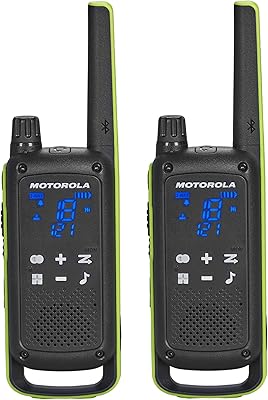
Motorola T803 Two-Way Radio
83%
84%
Range Performance
88%
Battery Life
78%
Bluetooth Functionality
90%
Build Quality & Durability
85%
Ease of Use
More
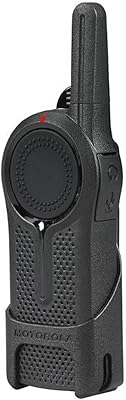
Motorola DLR1060 Business Two Way Radios
85%
92%
Battery Life
88%
Ease of Use
75%
Range
87%
Build Quality
90%
Portability
More
Baofeng AR-5RM Handheld Ham Radio
77%
93%
Value for Money
78%
Ease of Use
61%
Transmission Range
67%
Build Quality
74%
Battery Life
More
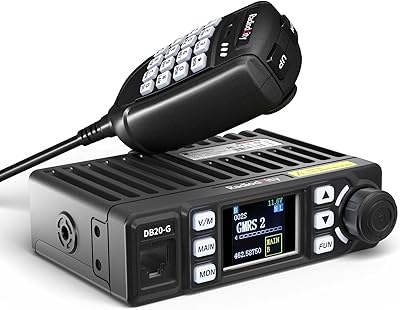
Radioddity DB40-G GMRS Mobile Radio
73%
78%
Transmit Power & Range
84%
Audio Clarity
81%
Repeater Capability
62%
Channel Flexibility & Programming
76%
Build Quality & Durability
More
Motorola T470 Talkabout Two Way Radios
84%
88%
Range Performance
91%
Ease of Use
85%
Build Quality & Durability
83%
Weather Resistance
80%
Battery Life
More

FAQ

Yes, GMRS (General Mobile Radio Service) requires an FCC license for all users in the US. The good news is that a single license covers your entire immediate family, costs a modest fee, and is valid for 10 years — no exam required. You can apply directly through the FCC website. Skipping the license is technically illegal and not worth the risk.

It works immediately out of the box. The Radioddity GM-30 GMRS Handheld Two-Way Radio ships with 30 GMRS channels pre-loaded, so you can hand one to a family member and start communicating without touching a single setting. Programming is only necessary if you want to add custom channels, use repeaters, or set up channel names — and even then, CHIRP software makes that process pretty painless.
Yes, as long as both radios are on the same GMRS channel and using the same privacy code (or no privacy code at all). GMRS is a standardized service, so the GM-30 is fully interoperable with other GMRS radios regardless of brand — Midland, Wouxun, BaoFeng, and others included.

Honestly, not for most environments. Five miles is a best-case figure measured in open, flat terrain with no obstacles — think an empty field or a calm lake. In a forested campground, hilly terrain, or a suburban neighborhood, expect something closer to half a mile to two miles depending on conditions. If extended range is your priority, using a local GMRS repeater is the most reliable way to stretch performance.

Channels 31 through 54 are pre-loaded as repeater channels, so the basic offset is already set. However, to actually connect to a specific local repeater, you'll need to know that repeater's input frequency, output frequency, and any required CTCSS tone, then program those details in. Sites like MyGMRS.com maintain a directory of repeaters by location. CHIRP makes the programming side much easier if you're not comfortable with keypad entry.

Yes, the USB-C port means any USB-C cable and a standard USB power adapter or power bank will charge it fine. Just note that a wall adapter is not included in the box — only the cable — so make sure you have one handy before your first trip.

The GM-30 is a capable scanner for receive purposes — it can monitor UHF and VHF frequencies well beyond the GMRS band in both channel and VFO modes. You can set precise frequency ranges, scan a channel list, or scan by CTCSS/DCS code. It won't replace a dedicated scanner, but for casual monitoring it does a solid job.

Any accessory with a standard 2-pin Kenwood-style connector will work — that includes a huge range of aftermarket earpieces, surveillance-style audio kits, shoulder speaker mics, and programming cables. This is one of the more practical aspects of this two-way radio, since Kenwood-jack accessories are widely available and inexpensive.

On low power (0.5W) with normal use, the 1500mAh battery comfortably covers a full day of activity. Running at full 5W output with frequent transmissions will drain it faster — heavy users on all-day trail runs might want a spare battery pack on hand. The power-save mode also helps extend standby time significantly when you're not actively transmitting.

It has a learning curve, especially if you want to go beyond the default settings. The included manual is fairly minimal, so many users end up supplementing it with YouTube tutorials or community guides from GMRS forums. That said, for basic day-to-day use on the pre-loaded channels, most people get comfortable within a session or two.

Where to Buy