
Overview

The Raddy RF919 Multi-Band Shortwave Radio sits in an interesting corner of the portable radio market — part nostalgia, part serious tool. It targets hobbyists, preppers, and dedicated listeners who are tired of juggling multiple devices. The army green chassis and chunky dual-knob design telegraph a rugged, field-ready identity, yet underneath that retro shell you get Bluetooth connectivity and smartphone app control. That combination is genuinely rare at this price tier. Be clear going in: this isn't a casual bedroom FM radio. It rewards people who know what they're doing, or who are ready to learn.

Features & Benefits

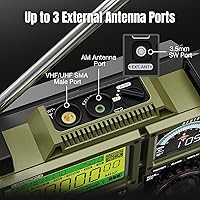
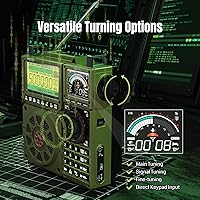
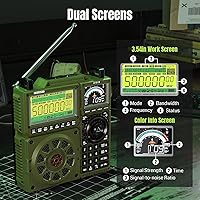
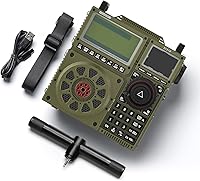
Nine bands sounds impressive on paper, but what actually matters is what you can do with them. SSB reception lets you pull in single-sideband ham conversations and maritime traffic that a standard AM/FM radio would never catch. The AIR band opens up passive aviation monitoring, and WB keeps you locked into NOAA weather alerts when a storm rolls through. Tuning feels tactile — dual knobs with a satisfying retro-click, plus number-pad entry when you want to land on a frequency fast. Three external antenna ports and a built-in antenna tuner mean you can optimize reception without hunting for adapters. The 5000mAh battery, split across two cells and charged via USB-C, offers genuinely useful runtime in the field.

Best For

The RF919 makes the most sense for listeners who already have some radio background — someone who understands the difference between scanning AIR band traffic and tuning SW broadcasts. Ham radio hobbyists and shortwave enthusiasts will appreciate the SSB support without needing a separate dedicated receiver. Emergency preparedness households get real value from the weather band and battery independence from the grid. Travelers who move between ITU regions will find the multi-band flexibility genuinely useful. There is also a quieter audience here: the retro radio collector who still wants modern Bluetooth integration. Casual listeners who just want a kitchen FM radio should look elsewhere — this device rewards those who want to explore the full spectrum.

User Feedback

Early buyers rate this shortwave receiver around 4.2 out of 5, which is a solid but measured endorsement. The praise tends to cluster around build feel, dual-screen readability in low light, and the surprisingly loud, room-filling audio from the onboard speaker — though a 20W rating in a cabinet this size deserves some context; it punches above its weight for a portable, not for a home stereo. Where things get more mixed is the learning curve. New users frequently mention that the manual leaves gaps and the menu structure takes time to internalize. The Radio-CT app is hit or miss — some owners swear by it for hands-free control, while others report inconsistent Bluetooth pairing. Given the product launched in mid-2024, the review pool is still maturing, so a few rough edges are not surprising.

Pros

  • Nine-band coverage — including SSB, AIR, and CB — makes this one of the most versatile portable receivers at this price point.
  • SSB reception lets you monitor ham, maritime, and utility transmissions that most consumer radios simply cannot decode.
  • Three dedicated external antenna ports plus a built-in tuner give serious listeners real flexibility for improving signal quality.
  • The 5000mAh battery with USB-C charging means fewer worries about runtime during extended field use or power outages.
  • Dual-knob tuning with tactile retro-click feedback offers a satisfying, hands-on experience that digital-only radios lack.
  • NOAA weather band support makes this shortwave receiver a credible emergency-preparedness device, not just a hobby toy.
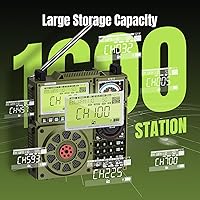
  • Stores up to 1600 channels across bands, reducing the need to manually retune frequently visited frequencies.
  • Bluetooth 5.1 and SD card playback turn the unit into a standalone audio player when you are not actively monitoring.
  • The dual-screen layout keeps signal strength, time, and reception status visible without digging into menus.
  • Multi-ITU region support means the radio travels well internationally without requiring a separate device.

Cons

  • The learning curve is steep — navigating nine bands, tuning modes, and 1600 channel slots takes real time investment.
  • The included manual has been widely criticized for leaving gaps that frustrate new users trying to get started quickly.
  • The Radio-CT companion app receives mixed reliability feedback, with some users reporting inconsistent Bluetooth pairing.
  • At roughly 2.4 lbs with batteries installed, Raddy's multi-band radio is noticeably heavier than lightweight travel radios.
  • The 20W speaker rating overstates the acoustic output you will realistically get from a cabinet this compact.
  • The squelch behavior on some bands has drawn occasional criticism for being either too aggressive or too sensitive out of the box.
  • With the product launching in mid-2024, the user review base is still relatively small, making it harder to assess long-term durability.
  • No built-in RDS or digital radio support limits appeal for users in markets where those formats are standard.
  • The app being a required download for full remote control adds a dependency that can break with OS updates or device changes.

Ratings

Our AI rating system analyzed verified buyer reviews of the Raddy RF919 Multi-Band Shortwave Radio sourced globally, actively filtering out spam, bot-generated submissions, and incentivized feedback to surface authentic user sentiment. The scores below reflect the full picture — the genuine strengths that earn repeat praise from hobbyists and preppers alike, alongside the friction points that temper an otherwise well-received receiver.

Band Coverage & Range
91%
Covering FM, AM, SW, SSB, VHF, UHF, AIR, CB, and WB in a single portable unit is genuinely rare. Reviewers consistently highlight the ability to go from catching a NOAA weather alert to tuning shortwave international broadcasts without swapping devices — something that resonates strongly with preppers and traveling enthusiasts alike.
A handful of users note that the wide band count inflates the complexity of the menu structure without a proportional improvement in band-switching speed. For buyers who realistically use only two or three bands regularly, the breadth can feel more like overhead than advantage.
SSB Performance
83%
For this price tier, SSB reception quality earns consistent praise from ham and maritime hobbyists. Users report being able to pull in single-sideband transmissions from amateur operators and ship-to-shore traffic with satisfying clarity — something that separates this receiver from the many portables that skip SSB entirely.
Fine SSB tuning demands patience; the dual-knob system helps, but new users frequently report needing time to nail the precise frequency offset for clean audio. There are occasional reports of slight BFO drift during extended listening sessions in warm ambient conditions.
Ease of Use
58%
42%
Users with prior radio experience tend to settle into the interface within a few hours, and the physical dual-knob tuning provides an intuitive anchor point. Experienced shortwave listeners also praise the number-pad frequency entry as a fast way to jump directly to known broadcast frequencies.
For newcomers, the combination of nine bands, multiple tuning modes, and a 1600-channel memory system is genuinely overwhelming, and the manual does not consistently bridge the gap. This is the single most cited criticism across early reviews — the learning curve is real and should not be underestimated.
App & Bluetooth
63%
37%
When the Radio-CT app connects reliably, it genuinely frees up your hands — scrolling through bands, adjusting frequency, and controlling volume from across the room is a convenience that fixed-station users and those with mobility limitations find valuable. Bluetooth 5.1 keeps audio streaming latency noticeably low.
Pairing inconsistency is the most repeated app-related complaint, with some Android users reporting dropped connections that require restarting either the app or the radio itself. The app also lacks the depth of control that power users expect, making it more of a light companion than a true remote interface.
Value for Money
77%
23%
Measured against what it would cost to replicate this band coverage across separate devices, Raddy's multi-band radio offers a compelling consolidation for hobbyists, preppers, and travelers. The inclusion of a built-in antenna tuner, dual screens, and USB-C charging at this price tier is genuinely difficult to match.
For buyers who do not need SSB, AIR, or the more specialist bands, the price feels harder to justify against simpler FM/AM/SW portables that cost considerably less. First-time shortwave buyers may feel they are paying for capabilities that will take months to fully explore and use.
Reception Sensitivity
78%
22%
In outdoor and semi-rural settings, most users report clean, stable shortwave and AM reception, particularly when paired with one of the three external antenna ports. The built-in antenna tuner adds a meaningful edge over receivers that leave signal optimization entirely up to the user.
In urban environments with high RF noise floors, a few reviewers mention that sensitivity drops enough to make weaker shortwave stations frustrating to lock onto. Squelch behavior on some bands has also drawn criticism for being either too aggressive or too permissive in its default setting.
Build Quality
84%
The solid knob construction and substantial chassis give the RF919 a field-ready feel that buyers in the prepper and outdoor hobbyist community particularly appreciate. The dual-screen panel sits flush and feels durable, and the overall assembly does not rattle or feel hollow when handled in the field.
A minority of users point to the plastic housing showing scuff marks more readily than expected under regular outdoor use. The battery compartment cover has also drawn a couple of comments about a slightly loose fit — a minor but noticeable quality gap at this price point.
Battery Life
81%
19%
The 5000mAh split battery pack delivers reliable all-day listening for most usage patterns, and USB-C charging means users can top up with the same cable they use for phones and laptops. Preppers and campers specifically cite the battery capacity as a key reason for choosing this receiver.
Running at high speaker volume with Bluetooth active shortens runtime significantly, and some users report the battery indicator not reflecting remaining charge accurately until it drops low. Sourcing matching replacement lithium-ion cell pairs adds a long-term maintenance consideration worth planning for.
Antenna System
86%
Three dedicated external antenna ports and a built-in tuner give this receiver more antenna flexibility than almost anything else in its class. Ham operators who already own SMA-connected wire antennas can connect directly to the VHF/UHF port and immediately notice signal clarity improvements over the built-in whip.
The 3.5mm SW antenna jack, while functional, is a non-standard choice that can frustrate users who expect a more common coaxial connector. Adapter availability is manageable but adds an extra step for anyone coming from a conventional antenna setup.
Display & Interface
82%
18%
The 3.54-inch main screen earns consistent praise for clarity, and the seven-color backlight gives users meaningful control over readability in both bright daylight and dark field conditions. The secondary panel showing signal strength and time at a glance is a practical touch that regular users quickly grow to rely on.
A few reviewers find the font size on some status readouts smaller than ideal, particularly for users operating the radio at arm's length in a fixed-station setup. The multi-color backlight cycling can also feel gimmicky for users who simply want a steady, functional display tone.
Speaker Audio Quality
72%
28%
For a portable unit of this footprint, the onboard speaker delivers more volume than most competitors at similar sizes, and the subwoofer chamber adds low-end presence that makes voice broadcasts sound fuller. Users doing casual Bluetooth music playback report a genuinely pleasant experience for the form factor.
The 20W speaker rating should be understood in portable radio context — it is loud for what it is, but listeners will notice compression and distortion when pushed to maximum volume. The 3.5mm headphone output remains the better choice for anyone prioritizing audio quality over convenience.
Portability
74%
26%
At roughly 2.4 lbs with batteries installed, this shortwave receiver sits in a workable middle ground for pack-in outdoor use — heavier than ultracompact travel radios but manageable for car camping, emergency kits, and backpack setups where a bit of extra weight is acceptable.
Users comparing this to slimmer portable competitors note that the 170×190×85mm footprint takes up meaningful pack space. For ultralight hikers or minimalist travelers, the form factor tips into bulky territory, and lighter options exist if nine-band coverage is not a strict requirement.
Channel Memory System
79%
21%
A 1600-channel memory bank with 200 slots per band is generous by any portable radio standard, and enthusiasts who pre-program frequently monitored frequencies report that it significantly speeds up daily use. Scanning stored channels across specific bands makes monitoring setups considerably more efficient.
Programming those channels through the physical keypad is time-consuming, and the manual's instructions for memory management are among its least clear sections. There is no bulk import option via the app, so users building a comprehensive channel library must enter frequencies manually, one at a time.
Documentation & Support
54%
46%
The included manual covers basic setup steps adequately enough to get first-time users powered on and scanning initial frequencies. Raddy's online presence has grown since the mid-2024 launch, and the Radio-CT app provides some contextual guidance for its connected functions.
Coverage of advanced functions — SSB fine-tuning, antenna tuner operation, and multi-band squelch configuration — is widely considered insufficient in the printed manual. Many users turn to third-party shortwave forums to fill the gaps, which should not be necessary for a device at this price point.

Suitable for:

The Raddy RF919 Multi-Band Shortwave Radio is built for people who treat radio as a serious hobby or a practical preparedness tool, not a background appliance. Shortwave and ham enthusiasts who have outgrown single-band portables will find genuine value in having SSB reception, AIR band monitoring, and NOAA weather alerts consolidated into one battery-powered unit. Preppers and off-grid households will appreciate the USB-C rechargeable battery and the ability to pull in emergency broadcasts across multiple bands without relying on a power outlet. Campers and international travelers benefit from the multi-ITU frequency flexibility, meaning the same device works whether you are tuning shortwave in Europe or scanning CB traffic on a North American trail. Aviation hobbyists who enjoy passive listening to approach and tower communications will find the AIR band coverage a genuine draw. Even the retro-leaning collector who wants a device that looks the part but still connects to a smartphone via Bluetooth will feel at home here.

Not suitable for:

If you are new to radio and expecting a plug-and-play experience, the RF919 will likely frustrate you before it impresses you. The sheer number of bands, tuning modes, and menu options creates a meaningful learning curve, and the included manual does not always bridge that gap cleanly. Buyers who only want FM and AM reception for casual listening — news, music, sports — are paying a significant premium for capabilities they will never use, and a far simpler device would serve them better. The Raddy RF919 Multi-Band Shortwave Radio is also not the right choice for anyone expecting audiophile-grade sound reproduction; the onboard speaker performs well for its size and form factor, but the cabinet physics are what they are, and critical listening it is not. Those who rely heavily on companion apps should go in with tempered expectations, as the Radio-CT app has drawn mixed reliability feedback and should be treated as a convenience feature rather than a core dependency.

Specifications

  • Band Coverage: The receiver supports nine bands: FM, AM, shortwave (SW), SSB, VHF, UHF, AIR, CB, and Weather (WB).
  • SW Range: Shortwave reception spans 2.30 to 30.00 MHz, covering major international broadcast, ham, and utility frequencies.
  • FM Range: FM reception covers 64 to 108 MHz, accommodating both standard Western and lower Eastern European broadcast frequencies.
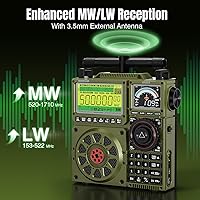
  • MW Range: Medium wave reception spans 520 to 1710 kHz for standard AM broadcast band coverage across multiple ITU regions.
  • LW Range: Long wave reception covers 153 to 522 kHz, relevant for European and select international broadcast stations.
  • Channel Memory: Up to 1600 channels can be stored across all bands, with 200 memory slots allocated per individual band.
  • Battery: Power is supplied by two 3.7V 2500mAh lithium-ion cells totaling 5000mAh, included with the unit.
  • Charging: The battery charges via USB-C at DC 5V input, compatible with standard modern phone chargers and portable power banks.
  • Speaker: The built-in speaker measures 3 inches with a 3Ω impedance and a rated 20W output, paired with a subwoofer chamber.
  • Main Display: The primary screen measures 3.54 inches and supports a seven-color adjustable backlight for use in varied lighting conditions.
  • Antenna Ports: Three external antenna ports are provided: a VHF/UHF SMA Male connector, a dedicated AM input, and a 3.5mm SW jack.
  • Bluetooth: Bluetooth 5.1 supports wireless connectivity with a rated range of up to 20 meters for app control and audio streaming.
  • SD Card: A microSD slot supports cards up to 256GB for local playback of MP3, WMA, WAV, APE, and FLAC audio files.
  • Dimensions: The unit measures 170×190×85mm (approximately 6.7×7.5×3.4 in), giving it a compact but substantial portable footprint.
  • Weight: With both batteries installed, the radio weighs approximately 1090g (about 2.4 lbs), making it portable but noticeably solid.
  • App Control: The Radio-CT app for iOS and Android connects via Bluetooth and provides full radio control from a smartphone interface.

Related Reviews
Raddy RF320 Portable Multiband Shortwave Radio
79%
88%
Band Coverage
67%
Shortwave Reception
86%
FM & VHF Reception
83%
Aviation Band (AIR)
71%
App & Bluetooth Integration
More
Raddy RE40 Portable Shortwave Radio
83%
88%
Battery Life
91%
Portability
85%
Charging Options
94%
Weather Alerts
62%
Bluetooth Performance
More
Raddy RF75A Portable Shortwave Radio
84%
91%
Reception Quality
70%
Battery Life
95%
Portability
88%
Bluetooth Connectivity
84%
App Control Experience
More
Sangean ATS-909X2 Multi-Band Radio
76%
88%
Shortwave Reception
84%
SSB Performance
86%
Build Quality
54%
Ease of Use
71%
Value for Money
More
Raddy RF760 Portable Shortwave Radio Receiver
76%
83%
SSB Reception Quality
91%
Band Coverage Breadth
88%
NOAA Weather Alert
89%
Portability & Form Factor
52%
Audio & Speaker Quality
More
CHOYONG LC90 Multi-Band Internet Radio
72%
93%
Internet Station Coverage
88%
Shortwave Reception
54%
Ease of Use
84%
Sound Quality
81%
Connectivity Flexibility
More
Radtel RT-860 Multiband Ham Radio Transceiver
75%
88%
Value for Money
76%
Reception Range & Sensitivity
59%
SSB & HF Audio Quality
83%
Build Quality & Durability
62%
Ease of Programming & Setup
More
Eton Odyssey All-Band Bluetooth Emergency Weather Radio
76%
83%
Radio Reception Quality
88%
NOAA Weather Alerts
78%
Power Versatility
74%
Build Quality
71%
Battery Performance
More
Tecsun R9700DX 12-Band Shortwave Radio
79%
83%
Reception Quality
86%
Tuner Selectivity
88%
Ease of Use
84%
Value for Money
79%
Build Quality
More
Retekess TR113 Full-Band Shortwave Radio
74%
93%
Band Coverage
81%
SSB Reception
78%
Reception Sensitivity
52%
Ease of Use
74%
Build Quality
More

FAQ

SSB reception is fully built in — no additional hardware needed. You can tune into single-sideband transmissions from ham operators, maritime vessels, and utility stations as soon as the unit is powered up. Just select SSB mode and dial into the relevant shortwave frequency.

Real-world runtime depends on volume level, which bands you are using, and whether Bluetooth is active. Based on the 5000mAh capacity and typical portable radio power draw, you can expect several hours of continuous listening, with lighter use extending that considerably. Turning off Bluetooth when you do not need it will help stretch the battery further.

Absolutely. Every function — tuning, band switching, channel memory, and antenna tuning — is accessible directly through the physical controls on the unit. The app is entirely optional and adds remote convenience for those who want it; nothing is locked behind it.

It can work for motivated beginners, but go in with realistic expectations. The nine-band range and deep menu structure create a meaningful learning curve, and the included manual does not always fill every gap. Supplementing it with online shortwave community resources and forums will make the experience much smoother.

Yes, and this is genuinely one of the stronger aspects of this receiver. Three dedicated external antenna ports cover VHF/UHF via SMA Male, AM via a dedicated input, and SW via a 3.5mm jack. The built-in antenna tuner lets you further optimize signal quality from whatever antenna you attach, which is a practical advantage at this price tier.

This shortwave receiver is receive-only — it is a passive listening and monitoring device, not a transceiver. You cannot broadcast or respond on any band. If two-way communication is part of your plan, you will need a separate licensed transceiver for that purpose.

Yes, the AIR band is included for passive monitoring of aviation frequencies, so you can pick up approach, tower, and ground control transmissions in your area. It is a genuine draw for aviation enthusiasts. Keep in mind this is strictly receive-only — transmitting on aviation frequencies without authorization is illegal.

User feedback on the app has been mixed. Some owners find it works smoothly for hands-free control from across the room, while others have reported occasional pairing hiccups or connectivity drops. The safest approach is to treat it as a convenient bonus feature rather than something your workflow depends on.

It is designed with multi-ITU region support in mind. The FM range covers 64 to 108 MHz, which accommodates the lower Eastern European broadcast band alongside the standard Western range. The shortwave and medium wave frequency ranges similarly adapt to different regional plans, making Raddy's multi-band radio a reasonable companion for international travel.

The unit uses two 3.7V 2500mAh lithium-ion cells totaling 5000mAh, which are included in the box. Replacement cells of the same specification are generally available through electronics and battery suppliers. Before purchasing replacements, it is worth confirming the exact cell dimensions and connector type to ensure compatibility.

Where to Buy