Overview

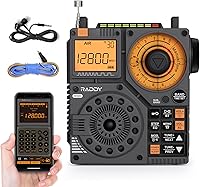
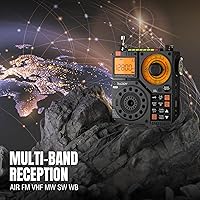
The Raddy RF320 Portable Multiband Shortwave Radio occupies an interesting middle ground — capable enough to satisfy a dedicated shortwave listener, yet approachable enough for someone who just wants weather alerts and international news on a camping trip. What sets this receiver apart from basic emergency radios is its six-band coverage, spanning FM, AM, shortwave, VHF, aviation, and weather frequencies. Raddy has layered Bluetooth 5.0 app control on top of that traditionally analog experience, which is either a welcome convenience or a mild curiosity depending on your background. The rechargeable battery and compact build keep it genuinely portable. It is not a serious DX or ham-grade receiver, but it was never meant to be.
Features & Benefits

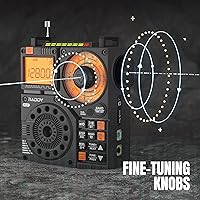
The RF320 covers more ground than most radios in its class. On the hardware side, shortwave spans 3.20 to 21.95 MHz with fine-tuning steps as small as 0.005 MHz — genuinely useful when chasing a faint international signal. The aviation band (118–138 MHz) is a real differentiator; monitoring local tower frequencies adds utility you rarely find at this price tier. The companion app handles channel naming, digital tuning, and recording, though it runs over Bluetooth, so expect the occasional hiccup. For offline listening, TF card support covers MP3, FLAC, and several other formats up to 256GB. The included 9.85-foot wire antenna makes a meaningful difference on shortwave and MW, especially indoors.

Best For

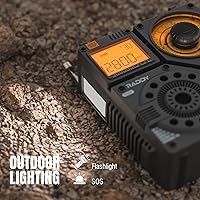
This multiband portable radio hits a sweet spot for a few specific types of buyers. Shortwave hobbyists who want digital convenience without committing to a desktop SDR rig will find it well-suited to casual band-scanning and station logging. Campers and travelers benefit from having weather, aviation, and international broadcasts covered in one pocket-sized device. It also makes a solid addition to any emergency preparedness kit — the rechargeable design, flashlight, and SOS function are practical, not gimmicks. Beginners will appreciate the app's guided approach to station management. If you want a pure analog experience or deep sensitivity for serious DX hunting, this shortwave receiver will likely leave you wanting more.

User Feedback

With a 4.1-star average across more than 470 ratings, the RF320 earns its reputation as a reliable mid-range option — but not without some honest limitations. Buyers consistently praise the app interface and FM and VHF reception quality, noting the build feels sturdier than the price suggests. Aviation band fans are particularly enthusiastic, even knowing it is receive-only. On the downside, Bluetooth connectivity can be finicky, and some users found shortwave performance underwhelming indoors without the wire antenna properly extended. Speaker clarity at high volumes also draws criticism; earphones tend to deliver noticeably cleaner audio. Overall, expectations calibrated to a capable recreational receiver will be met — just do not expect professional-grade sensitivity.

Pros

  • Six-band coverage including the aviation AIR band is genuinely rare at this price point.
  • The companion app makes channel naming and digital tuning far less tedious than manual knob-only radios.
  • FM and VHF reception quality consistently earns praise from real buyers across dozens of reviews.
  • 995-station memory storage means you rarely have to re-scan after your first setup session.
  • USB Type-C charging and a built-in 2000mAh battery make it practical for extended off-grid use.
  • The included 9.85-foot wire antenna delivers a noticeable and immediate improvement to shortwave reception.
  • TF card support for FLAC and other high-quality audio formats adds genuine versatility beyond radio use.
  • At roughly 13 ounces with a lanyard included, it is easy to carry without dedicating a full bag pocket to it.
  • An 18-month warranty provides more post-purchase coverage than most competitors in this category.
  • The flashlight and SOS function make it a credible dual-purpose emergency kit item, not just a radio.

Cons

  • Shortwave sensitivity indoors is mediocre without the wire antenna fully extended — it is not optional, it is essential.
  • Bluetooth app connectivity can drop intermittently, which disrupts recording sessions at inconvenient moments.
  • The built-in speaker loses clarity noticeably at higher volume levels; earphones are the better choice for critical listening.
  • The AIR band is receive-only, which limits its usefulness for anyone expecting two-way aviation communication.
  • No SSB (single sideband) mode means amateur radio operators and serious ham listeners are effectively locked out.
  • The shortwave range tops out at 21.95 MHz, leaving higher frequency international broadcast bands uncovered.
  • App availability and long-term support depend on the manufacturer, which carries risk for a smaller brand.
  • MW sensitivity, while functional, does not match dedicated AM portable radios in the same price bracket.

Ratings

Our scores for the Raddy RF320 Portable Multiband Shortwave Radio are generated by AI after analyzing verified buyer reviews from multiple global markets, with spam, bot-submitted, and incentivized feedback actively filtered out. Ratings reflect real-world usage patterns across a wide range of listeners — from emergency preppers and aviation hobbyists to casual shortwave beginners — and transparently capture both what this receiver does well and where it falls short.

Band Coverage
88%
Covering six distinct bands — FM, AM, shortwave, VHF, aviation, and NOAA weather — in a single portable unit is genuinely impressive at this price tier. Travelers especially appreciate having weather alerts and international broadcasts accessible from one device without carrying separate equipment.
The shortwave ceiling at 21.95 MHz leaves higher broadcast frequencies unreachable, and the absence of SSB mode means a meaningful slice of the shortwave spectrum is simply off limits for this receiver.
Shortwave Reception
67%
33%
With the included wire antenna properly extended outdoors or along a window, the RF320 pulls in shortwave stations reliably enough for recreational listening and international broadcast monitoring. Fine-tuning resolution down to 0.005 MHz steps helps lock onto signals that cheaper radios would fumble.
Indoors without the wire antenna, shortwave sensitivity is noticeably inconsistent — weaker stations fade in and out frustratingly. Users expecting desktop-level sensitivity in a portable body will find the RF320 falls short, particularly in electrically noisy urban environments.
FM & VHF Reception
86%
FM and VHF performance is arguably where this shortwave receiver earns its strongest marks. Multiple buyers describe noticeably clear FM reception without much antenna fussing, and VHF coverage across 30 to nearly 200 MHz opens up a surprisingly broad listening range for a device this compact.
In areas with crowded FM spectrums, some mild interference bleeding between adjacent stations has been reported. VHF performance, while solid, lacks the selectivity that a purpose-built scanner would offer for serious monitoring work.
Aviation Band (AIR)
83%
The AIR band covering 118–138 MHz is a genuine differentiator that aviation enthusiasts consistently highlight as a standout feature. Being able to monitor real tower and approach communications near an airport — straight out of the box — is a capability most radios in this class simply do not offer.
It is receive-only, which experienced aviation listeners already know but casual buyers sometimes discover after purchase. Reception quality near smaller regional airports can also be inconsistent depending on terrain and distance.
App & Bluetooth Integration
71%
29%
The companion app genuinely improves the experience for new users — digital frequency entry, channel naming, and scheduled recording are all meaningfully easier through a smartphone screen than through physical controls alone. Bluetooth 5.0 keeps pairing fast in most cases.
Connection drops are a documented and recurring complaint, not an isolated issue. Users who run the app in the background or let their phone screen lock during recording sessions often find the session has silently disconnected, which undermines the feature's reliability for unattended use.
Build Quality
79%
21%
For a mid-range portable radio, the RF320 feels meaningfully more solid than its price suggests. The casing resists flex, buttons have a satisfying click, and the overall assembly does not rattle — details that matter when tossing a radio in a backpack for a camping trip.
The telescopic antenna feels slightly thin and requires careful handling during extension and rotation. A few long-term users have noted early loosening at the antenna joint after extended field use, suggesting durability there is an area Raddy could reinforce.
Speaker Quality
61%
39%
At moderate listening volumes in a quiet room, the 52mm speaker produces clear, reasonably full audio that works well for news broadcasts and talk programming. Casual listeners who are not audiophiles tend to rate it as perfectly adequate for daily use.
Turn the volume past roughly two-thirds and distortion becomes apparent — speech clarity softens and music reproduction loses definition. This is a meaningful limitation for outdoor listening where ambient noise competes, and most critically attentive users end up reaching for the earphone jack instead.
Earphone Output
82%
18%
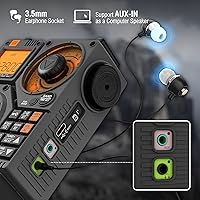
The 3.5mm earphone output is consistently rated well above the speaker in user feedback. Signal detail, separation, and clarity are all notably better through headphones, making the RF320 a much more satisfying listening device for commuters or anyone using it in a shared space.
The included earphones are functional but not particularly impressive on their own. Users who pair the radio with a better third-party set of earphones report a considerably better experience, suggesting the bundled pair is more of a starting point than a finished solution.
Station Memory & Tuning
84%
A 995-channel memory bank distributed across all six bands is genuinely useful for anyone who does regular scanning sessions. Being able to name channels through the app and recall them instantly removes most of the friction that makes shortwave radios intimidating for new hobbyists.
Without the app, managing that many presets through the physical controls alone becomes tedious. The manual tuning knob, while present, requires patience on shortwave where small frequency differences matter — users who prefer pure analog operation may find the workflow less fluid than expected.
TF Card & Media Playback
77%
23%
Supporting FLAC alongside MP3 and WAV is a genuine quality-of-life detail for listeners who store high-resolution audio on their cards. Cards up to 256GB are accepted, which is generous enough to hold entire music libraries alongside recorded broadcast sessions.
A small number of users report recognition issues with certain TF cards until they are reformatted in exFAT, which requires basic computer literacy to resolve. There is also no onboard shuffle or playlist management — it is a linear playback system that suits utility more than leisure listening.
Battery & Charging
78%
22%
USB Type-C charging is the right call for a modern portable device, and the 2000mAh lithium-ion battery handles typical recreational listening sessions without needing a mid-day top-up. Campers and travelers appreciate not having to track down disposable batteries in the field.
Raddy does not publish an official battery life figure, which makes pre-trip planning harder than it should be. Bluetooth use and high speaker volume drain the battery faster than expected, and a few users noted the charge indicator is not granular enough to reliably warn before a sudden shutdown.
Portability & Form Factor
87%
At roughly 13 oz and with a lanyard included, the RF320 is genuinely easy to carry in a jacket pocket or clipped to a bag. Its proportions feel purposeful rather than bulky, which puts it ahead of many multiband radios that sacrifice portability for a larger speaker cabinet.
The included wire antenna, while essential for shortwave performance, adds a trailing cable that reduces the convenience of truly on-the-go listening. Managing a nearly 10-foot antenna in a park or on a train requires a bit of creative rigging.
Emergency Utility
80%
20%
Having a NOAA weather band receiver, a built-in LED flashlight, and an SOS signaling mode in a single rechargeable device is a credible emergency preparedness combination. Preppers and outdoor-focused buyers consistently mention these features as purchase-justifying additions rather than token extras.
The flashlight is functional but not particularly bright compared to a dedicated emergency torch. Relying on a device with a non-replaceable battery as a primary emergency tool also carries some risk — if the battery degrades significantly over time, all functions are affected simultaneously.
Value for Money
81%
19%
Compared to similarly priced single-band or dual-band portables, the RF320 offers a noticeably wider feature set — six bands, app control, TF card playback, and emergency functions all in one purchase. For beginners or occasional listeners, that breadth represents strong value without committing to a more expensive dedicated receiver.
Buyers with specific high-performance needs — particularly strong shortwave sensitivity or SSB capability — will find they have to spend considerably more elsewhere to get what they actually need, making the RF320 feel like a compromise for that segment despite its competitive price.
Setup & Learning Curve
74%
26%
The auto-scan function and app-guided station management make the initial setup experience significantly more approachable than traditional analog-only shortwave radios. Beginners who would normally feel lost across multiple bands can be organized and listening within a short first session.
The manual, while present, is not always clear on advanced features like TF card recording or exFAT formatting requirements. Users who hit edge cases — such as app pairing failures or card recognition issues — often have to rely on forum posts and community troubleshooting rather than official documentation.

Suitable for:

The Raddy RF320 Portable Multiband Shortwave Radio is a strong match for anyone who wants broad band coverage in a single, carry-anywhere device without the complexity or cost of a dedicated hobbyist rig. Shortwave enthusiasts who are just getting into the hobby will appreciate the app-assisted tuning and the ability to save and name up to 995 stations across all bands — that kind of organization is genuinely helpful when you are still learning the landscape. Campers, hikers, and frequent travelers benefit from having NOAA weather alerts, international broadcasts, and even aviation band monitoring packed into something that weighs roughly 13 ounces. Emergency preparedness households get real practical value from the rechargeable battery, built-in flashlight, and SOS function — these are not afterthoughts. If you are the kind of listener who wants to plug in a TF card and have the device double as a music player during quieter moments, the RF320 covers that too.
Not suitable for:

Serious DX hunters or experienced shortwave operators expecting professional-grade sensitivity will likely find the Raddy RF320 Portable Multiband Shortwave Radio underwhelming, particularly on crowded or weaker shortwave frequencies indoors without the wire antenna deployed. The Bluetooth-dependent app, while genuinely useful, introduces a layer of wireless dependency that will frustrate traditionalists who prefer a purely analog, knob-and-dial experience — and app connection drops are a documented complaint, not a rare edge case. The speaker output, while adequate at moderate volumes, does not hold up particularly well at maximum levels, making it a poor fit for anyone expecting room-filling audio quality. If your primary interest is VHF or aviation monitoring with high selectivity and advanced filtering, a purpose-built scanner will outperform this receiver significantly. Buyers expecting desktop-level shortwave performance in a pocket radio will be disappointed; this is a recreational device, not a field-grade communications tool.
Specifications

  • Band Coverage: Receives six band types: FM (64–108 MHz), AM/MW (520–1710 kHz), Shortwave (3.20–21.95 MHz), VHF (30.000–199.975 MHz), AIR (118–138 MHz), and NOAA Weather Band (162.400–162.550 MHz).
  • Station Memory: Stores up to 995 preset stations distributed across all supported bands for quick recall without rescanning.
  • Fine Tuning: Shortwave fine-tuning resolution reaches a minimum step value of 0.005 MHz, allowing precise signal acquisition on crowded or narrow-spaced frequencies.
  • Bluetooth: Bluetooth 5.0 supports app control and audio streaming at a rated range of up to 20 meters, compatible with iOS, Android, and HarmonyOS devices.
  • Battery: Built-in 2000mAh lithium-ion battery is rechargeable via USB Type-C and is included in the box.
  • Charging Port: USB Type-C port is used for all charging, accepting an external input voltage of DC 5V.
  • Speaker: Internal speaker measures 52mm in diameter with a 4-ohm impedance and a 5W output rating.
  • TF Card Support: Accepts TF (microSD) cards up to 256GB formatted in exFAT, with playback support for MP3, WMA, WAV, APE, and FLAC audio formats.
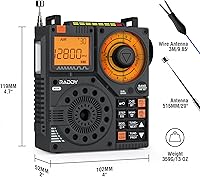
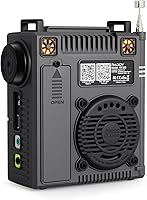
  • Antenna: Includes a 9.85-foot (approximately 3-meter) external wire antenna to significantly improve shortwave and AM reception beyond the built-in telescopic antenna.
  • Dimensions: The unit measures 4 x 2 x 4.7 inches, making it compact enough to fit in a jacket pocket or day pack side pouch.
  • Weight: Net weight is approximately 13 oz (369g), light enough for daily carry without meaningful physical burden.
  • Display: Features an LCD screen for frequency readout, band indication, and station information.
  • Signal-to-Noise Ratio: Rated SNR is 48 dB for FM and VHF, 40 dB for shortwave, and 30 dB for medium wave (AM).
  • Emergency Features: Includes a built-in LED flashlight and an SOS signaling function for emergency preparedness scenarios.
  • Quiescent Current: Standby quiescent current is rated at 10 microamps, minimizing battery drain when the unit is idle.
  • Warranty: Covered by an 18-month manufacturer warranty against defects in materials and workmanship.
  • In-Box Contents: Package includes the RF320 radio unit, one set of earphones, a Type-C charging cable, the 9.85-foot wire antenna, and a carrying lanyard.
  • Compatibility: App remote control is compatible with iOS, Android, and HarmonyOS smartphones via Bluetooth 5.0 pairing.

Related Reviews
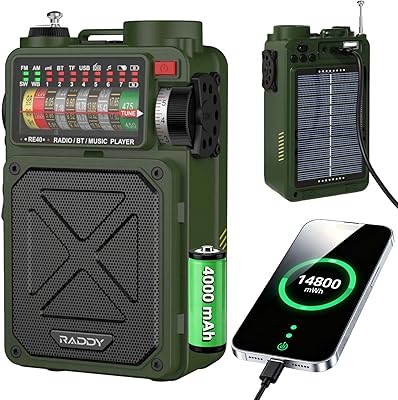
Raddy RE40 Portable Shortwave Radio
83%
88%
Battery Life
91%
Portability
85%
Charging Options
94%
Weather Alerts
62%
Bluetooth Performance
More
Raddy RF75A Portable Shortwave Radio
84%
91%
Reception Quality
70%
Battery Life
95%
Portability
88%
Bluetooth Connectivity
84%
App Control Experience
More
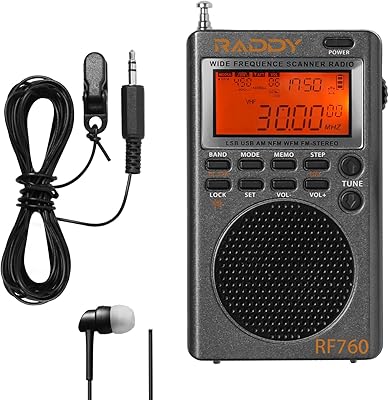
Raddy RF760 Portable Shortwave Radio Receiver
76%
83%
SSB Reception Quality
91%
Band Coverage Breadth
88%
NOAA Weather Alert
89%
Portability & Form Factor
52%
Audio & Speaker Quality
More
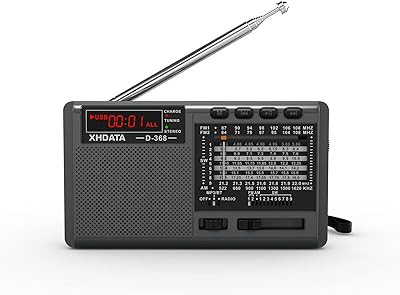
XHDATA D368 Portable Shortwave Radio
74%
84%
FM Reception Quality
71%
Shortwave Reception
58%
AM Reception Quality
66%
Build Quality & Durability
78%
Battery Life
More
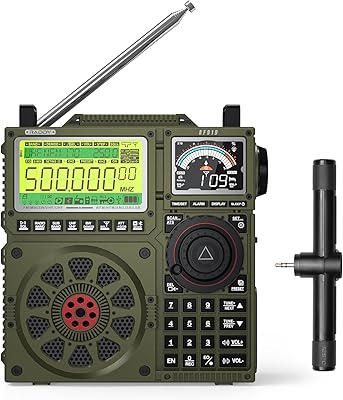
Raddy RF919 SSB Shortwave Radio
85%
89%
Performance
85%
Battery Life
83%
Ease of Use
92%
Bluetooth Connectivity
88%
Reception Quality
More
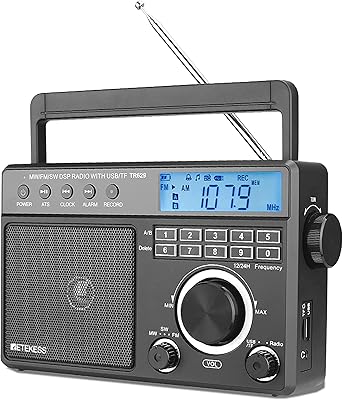
Retekess TR629 Portable Shortwave Radio
83%
88%
Reception & Signal Quality
83%
Ease of Use
91%
Portability & Design
85%
Recording Function
80%
Battery Life
More
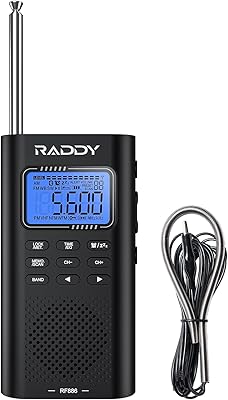
Raddy RF886 Portable Digital Radio
85%
88%
Signal Reception
90%
Bluetooth Functionality
85%
Portability & Size
84%
Battery Life
91%
NOAA Weather Alerts
More
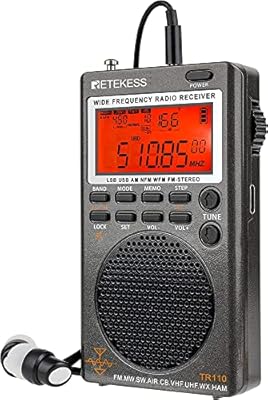
Retekess TR110 Portable Shortwave Radio
83%
88%
Reception Quality
91%
Portability
85%
Battery Life
83%
Ease of Use
89%
Weather Alert Functionality
More
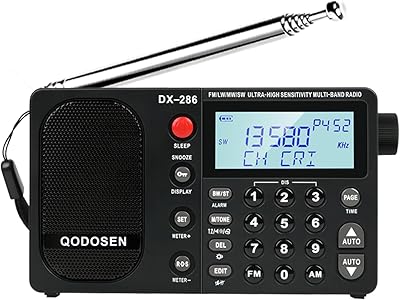
QODOSEN DX-286 Portable Shortwave Radio
76%
88%
Reception & Sensitivity
91%
Shortwave Band Performance
79%
AM & FM Everyday Usability
67%
Build Quality & Materials
62%
Battery Life
More
Greadio GR-T26 Portable AM FM Shortwave Radio
77%
93%
Ease of Use
88%
FM Reception
61%
Shortwave Reception
79%
AM Reception
72%
Speaker Quality
More

FAQ

Indoors, shortwave performance with just the built-in telescopic antenna can be hit or miss, especially if you are in a concrete building or surrounded by electronics. The included 9.85-foot wire antenna makes a genuine difference — drape it along a wall or out a window and you will notice significantly cleaner signal acquisition. Most users who complain about weak shortwave reception have not deployed that wire antenna properly, so it is worth treating it as a required accessory rather than an optional extra.

Absolutely — the RF320 operates fully as a standalone radio without the app. You can tune manually with the physical knob, use the auto and semi-auto scan functions, and navigate presets entirely from the device itself. The app adds convenience features like digital keypad entry, channel naming, and recording, but none of those are required for basic or even moderately advanced radio use.

It is not perfect. Several buyers have reported that the Bluetooth connection between the app and the radio can drop intermittently, particularly if your phone screen locks or the app runs in the background. For casual use — naming channels, jumping to a specific frequency — it works well enough. If you are trying to use the recording feature over an extended session, you may find the connection less reliable than a wired solution. Keeping your phone awake and the app in the foreground helps.

No, the RF320 does not include SSB reception. This is an important limitation if you want to listen to amateur radio operators, certain maritime communications, or utility stations that broadcast in SSB. For that use case, you would need to step up to a purpose-built SSB-capable shortwave receiver. This radio is designed for broadcast band listening, not ham or utility monitoring.

If you have any interest in aviation, the AIR band (118–138 MHz) lets you listen to live communications between pilots and air traffic control. It is receive-only, so you are just listening in — but hearing real tower and approach frequencies near an airport is genuinely fascinating. Plane spotters and aviation hobbyists tend to get a lot of enjoyment out of it. If aviation means nothing to you, it is a nice bonus rather than a deciding factor.

Raddy does not publish a specific hours-per-charge rating for the RF320, which is an omission worth noting. Based on the 2000mAh capacity and typical power draw for a radio of this type, expect somewhere in the range of 6 to 10 hours of continuous use depending on volume level, whether Bluetooth is active, and whether the display backlight is on. Charging via USB Type-C is straightforward and relatively fast compared to older micro-USB radios.

Yes, but recording is handled through the companion app, not from the radio itself. You will need a TF card inserted in the radio and the app connected over Bluetooth to initiate and manage recordings. The radio does not have a standalone record button that works independently of the app, so if you are hoping to schedule or trigger recordings without your phone nearby, that is not currently supported.

It is actually one of the better entry points available. The app makes it much easier to organize and label stations, which removes a lot of the friction beginners face when navigating multiple bands. The auto-scan function handles the initial discovery work, and the 995-channel memory means you can save everything you find and come back to it. Just set realistic expectations for shortwave sensitivity — it is solid for a portable, but a beginner using it outdoors with the wire antenna will have a much better first experience than one using it indoors with only the telescopic antenna.

Yes, and it handles a good variety of formats — MP3, WMA, WAV, APE, and FLAC are all supported, with cards up to 256GB accepted. Just make sure the card is formatted in exFAT; if the radio does not recognize it, reformatting the card in exFAT on your computer usually resolves the issue. It is a practical feature if you want one device for both radio listening and offline audio playback.

The built-in speaker is decent at low to moderate volume — clear enough for comfortable listening in a quiet room or outdoors. At higher volumes, some distortion and harshness creep in, which is a common limitation at this speaker size and power rating. The earphone output is noticeably cleaner and more detailed, so if audio quality matters to you — especially for music playback or faint shortwave broadcasts — the included earphones will give you a better experience than the speaker.

Where to Buy