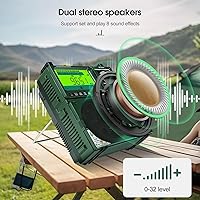
Overview

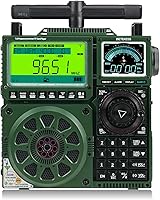
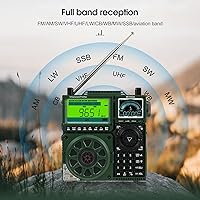
The Retekess TR113 Full-Band Shortwave Radio is one of the more ambitious portables to come out of Retekess, cramming AM, FM, shortwave, longwave, VHF, UHF, AIR, CB, and NOAA weather bands into a single handheld chassis. That full-band coverage alone sets this shortwave receiver apart from most comparably sized competition. Layered on top is SSB reception, Bluetooth 5.1, smartphone app control, and TF card audio playback — features you would typically associate with dedicated desktop gear. Priced at the higher end of portable receivers, it rewards buyers who genuinely need that capability. Approach it expecting a traditional tabletop radio experience, though, and the complexity will catch you off guard.

Features & Benefits

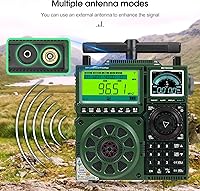
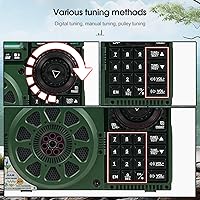
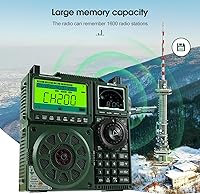
What makes the TR113 genuinely interesting is just how much frequency territory it covers without requiring multiple devices. SSB reception — the mode that lets you hear amateur radio operators, utility stations, and aviation chatter — is surprisingly capable for something this portable. Three antenna ports, plus a bundled external antenna, give you real options when signals are weak or terrain is uncooperative. Station management runs through 1600 preset slots with auto, semi-auto, and manual scanning — useful when you are traveling and need to build a local frequency library fast. Bluetooth 5.1 and the companion app let you tune, record, and lock the controls remotely, which is a genuinely practical addition.

Best For

This full-band portable radio makes the most sense for a specific type of buyer. Shortwave hobbyists and amateur radio listeners who have previously juggled multiple scanners will appreciate having AIR, CB, VHF, and UHF coverage consolidated in one unit. Travelers heading abroad benefit from the wide FM tuning range and strong shortwave reception for international broadcasts. It is also a solid pick for emergency preparedness households — the NOAA weather band, SOS alert, built-in flashlight, and large battery mean it has real utility when infrastructure goes down. Aviation enthusiasts monitoring AIR band traffic will find it capable, though a dedicated aviation scanner will edge it out on that specific front.

User Feedback

Buyers who spend time with shortwave and SSB reception tend to come away impressed — signal sensitivity and clarity on SW bands draw consistent praise, particularly from experienced listeners who know what a portable can realistically deliver. The build feels solid, though users frequently note the button layout takes real time to internalize, and the dual display, while informative, can feel busy at first. A handful of reviewers found the app connectivity less reliable than expected. Compared to rivals like the Tecsun PL-990, this shortwave receiver wins on band breadth but may trail on audio refinement. Newcomers should expect a genuine learning curve before feeling truly comfortable with all its modes.

Pros

  • Covers nine band types including AIR, CB, VHF, and UHF — an unusually broad range for a single portable unit.
  • SSB reception opens up amateur radio, aviation chatter, and utility stations that standard portables simply cannot reach.
  • Three antenna ports plus a bundled external antenna give you real flexibility when signals are weak.
  • 1600 preset slots with multiple scanning modes make frequency management practical for frequent travelers.
  • Bluetooth 5.1 and smartphone app control allow remote tuning and recording from up to 20 meters away.
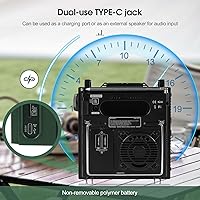
  • The 3600mAh rechargeable battery and USB-C charging make this shortwave receiver genuinely field-ready.
  • Built-in SOS alert and NOAA weather band add meaningful value for emergency preparedness use cases.
  • TF card support up to 256GB and broad audio format compatibility extend its usefulness beyond radio listening.
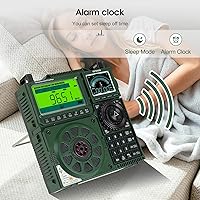
  • The dual display keeps band, battery, timer, and sleep mode visible at a glance without menu diving.
  • Build quality feels solid and purposeful, consistent with what experienced buyers expect at this price tier.

Cons

  • The interface has a steep learning curve; mastering all band modes and menu options takes considerable time.
  • Button layout can feel crowded and unintuitive, especially when switching between less familiar bands quickly.
  • The dual display, while informative, presents a lot of information at once and can feel visually cluttered.
  • App connectivity has been reported as inconsistent by some users, undermining the remote control convenience.
  • At over one kilogram, portability is more backpack-friendly than pocket-friendly for on-the-go use.
  • Audio output, while functional, lacks the warmth and depth of dedicated desktop shortwave receivers.
  • The companion app lacks the polish of first-party software, with occasional syncing lag noted in user reports.
  • Buyers focused primarily on FM or AM listening will find many premium features irrelevant to their actual usage.
  • No carrying case is included despite the weight and size, which is a notable omission at this price point.
  • SSB fine-tuning requires patience and familiarity; casual listeners may find it frustrating rather than rewarding.

Ratings

The Retekess TR113 Full-Band Shortwave Radio has been evaluated by our AI rating engine after analyzing verified purchaser reviews from global markets, with spam, bot-generated, and incentivized submissions actively filtered out. Scores reflect a balanced picture of where this full-band portable radio genuinely excels and where real buyers have run into friction. Both the strengths that won over experienced listeners and the frustrations that tripped up newcomers are transparently represented below.

Band Coverage
93%
Enthusiast reviewers consistently single out the sheer breadth of frequency coverage as the TR113's defining strength. Having FM, AM, shortwave, longwave, VHF, UHF, AIR, CB, and weather band all in one portable unit eliminates the need to own multiple devices, which buyers coming from a multi-scanner setup find immediately compelling.
A small number of users noted that having so many bands available also means some of the less common ones — particularly CB and UHF — receive less refined tuning behavior than a dedicated scanner would offer. Coverage breadth and per-band depth are not always the same thing.
SSB Reception
81%
19%
Among listeners who actively use Single Sideband mode to follow amateur radio traffic, aeronautical communications, and utility stations, SSB performance draws consistent praise. Users report the receiver locks onto SSB signals with reasonable stability for a portable, making it a practical choice for shortwave hobbyists who want more than just broadcast listening.
Fine-tuning SSB signals requires patience and some prior familiarity with how sideband reception works. Buyers new to SSB frequently report a frustrating initial experience before they calibrate their expectations and technique to what a portable receiver can realistically deliver.
Reception Sensitivity
78%
22%
In typical listening conditions, this shortwave receiver pulls in stations that cheaper portables simply miss, particularly on shortwave and longwave. The combination of three antenna ports and the included external antenna gives users meaningful options for improving weak-signal performance, which seasoned listeners take full advantage of.
In urban environments with high RF noise floors, sensitivity on VHF and UHF bands can disappoint buyers accustomed to dedicated scanners. A few reviewers noted that without an external antenna connected, shortwave reception in reinforced concrete buildings was inconsistent.
Ease of Use
52%
48%
Buyers who invest time in reading both included manuals — the hardware guide and the separate app operation manual — report that the interface eventually becomes second nature. The dual display does help by keeping band and status information visible without needing to navigate menus for basic monitoring.
This is where the TR113 collects its harshest feedback. Nine band types, 1600 preset slots, multiple scanning modes, and a companion app create a steep learning curve that casual users find genuinely off-putting. Several reviewers with no prior shortwave experience described the first few sessions as overwhelming, and button layout complaints appear frequently across reviews.
Build Quality
74%
26%
The chassis feels solid and purposeful in hand — not flimsy in the way that budget portables often are. Buyers who handle it alongside comparably priced Tecsun or Sangean models generally describe the construction as competitive, and the weight of just over one kilogram signals that corners were not cut on internal components.
Button feel has drawn mixed commentary, with some users finding the tactile response inconsistent across the keypad. A few buyers also noted that the display, while informative, reflects glare in bright outdoor light more than they expected for a radio designed with field use in mind.
App & Remote Control
61%
39%
When the app connects reliably, the ability to tune frequencies, switch bands, adjust volume, and trigger recording from across a room is genuinely useful — particularly for users who set the radio up in a fixed listening position and want to control it from a chair or bed.
Connectivity reliability is the app's Achilles heel. A meaningful portion of reviewers reported intermittent Bluetooth dropouts, delayed response to commands, and occasional failures to reconnect after the phone screen locks. The app functions as a convenient bonus when working, but it is not dependable enough to be a primary control method.
Battery Life
82%
18%
The 3600mAh lithium polymer cell is one of the more generous battery capacities in this class of portable radio. Users running the device on shortwave at moderate volume report multi-session use between charges, and the USB-C charging input means topping up is straightforward with any modern cable.
Battery drain increases noticeably when Bluetooth is active simultaneously with radio reception, which some users found shortened listening sessions more than expected. A battery percentage indicator rather than a simple icon would also improve confidence when using the radio in field or emergency scenarios.
Audio Quality
67%
33%
For a portable of this size and focus, the onboard speaker delivers acceptable audio on FM and AM broadcasts. Listeners using earphones or an external speaker via the audio output report a cleaner, more satisfying experience, which many regular users quickly default to for serious listening sessions.
The speaker output on shortwave bands carries the noise floor more noticeably than on FM, which is an inherent limitation of portable SW receivers rather than a specific fault of this unit. Buyers expecting desktop receiver audio quality at this price point will be disappointed regardless of which portable they choose.
Preset Management
77%
23%
Having 1600 preset slots is a meaningful advantage for travelers who move between countries and need to store regional FM, AM, and shortwave frequencies without overwriting earlier saves. The three scanning modes give users real flexibility in how they populate those slots, rather than forcing a one-size-fits-all approach.
Organizing and navigating 1600 presets without clear labeling or grouping capability can become unwieldy in practice. Some users noted they wished the preset system had a more intuitive category or folder structure, particularly after accumulating stations across multiple bands during extended travel.
Emergency Preparedness
86%
The combination of NOAA weather band, SOS alert, built-in flashlight, and a large rechargeable battery makes this full-band portable radio a credible entry in emergency kit builds. Users in hurricane-prone or rural areas specifically cite the weather band and SOS features as factors that justified the purchase price for their household.
The SOS alert is a useful addition but does not replace a dedicated personal locator beacon for serious backcountry use. A few emergency preparedness reviewers also noted they wished the radio had a hand-crank or solar charging option as a backup to USB-C when grid power and power banks are both unavailable.
Portability
63%
37%
At roughly the size of a thick hardcover book and just over one kilogram, the TR113 fits comfortably in a daypack or emergency bag without dominating the space. The included lanyard and storage bag suggest Retekess designed this with mobile use in mind, not just desktop placement.
Calling this a pocket radio would be a stretch — it is genuinely heavy for one-handed extended use and does not slip into a jacket pocket. Buyers who specifically want a shirt-pocket or coat-pocket portable will need to look at significantly smaller, less capable devices.
Value for Money
69%
31%
For buyers who will actively use the majority of the band coverage — particularly SSB, AIR, and VHF alongside standard AM and FM — the feature-to-price ratio holds up well against the competition. Consolidating nine band types into one portable device represents real savings over building a multi-device setup.
Buyers who realistically only need FM, AM, and basic shortwave will find the price hard to justify when capable three-band portables exist at a fraction of the cost. The value proposition is genuine but only for users whose listening habits genuinely span the full band range this shortwave receiver offers.
TF Card & Audio Playback
71%
29%
Support for up to 256GB TF cards and playback of FLAC, APE, WAV, MP3, and WMA files adds a useful layer of versatility for users who want one device to handle both live radio and stored audio. Travelers who preload cards with podcasts or music find this a practical convenience.
The playback interface is functional but basic — there is no artist or album display, and navigation through large card libraries is cumbersome. Users with extensive FLAC libraries noted the file browsing experience feels like an afterthought compared to the radio functionality.
Antenna Flexibility
84%
Three dedicated antenna ports is an unusual and practical feature that experienced radio listeners immediately appreciate. The ability to connect a longwire outdoor antenna on shortwave while keeping a separate VHF antenna attached simultaneously gives this receiver a configurability advantage over single-port portables.
The labeling and documentation around which antenna port is optimal for which band could be clearer. Some users reported spending time experimenting with port and antenna combinations before finding what worked, which adds to the overall learning curve the device already presents.

Suitable for:

The Retekess TR113 Full-Band Shortwave Radio is purpose-built for buyers who want serious frequency coverage without hauling around multiple dedicated scanners. Shortwave hobbyists and SWL (shortwave listening) enthusiasts will find the SSB capability and wide frequency range — stretching from longwave all the way through UHF — genuinely useful for chasing international broadcasts, amateur radio operators, and utility stations. Travelers heading abroad benefit from the flexible FM tuning range and robust shortwave reception, which keeps them connected to global news without relying on internet access. Emergency preparedness households will value the NOAA weather band, the SOS alert, the onboard flashlight, and a battery large enough to run the radio for extended periods off-grid. Aviation enthusiasts curious about AIR band monitoring will also find this full-band portable radio capable, even if it is not a replacement for a dedicated aviation scanner. Anyone who appreciates having app-based remote control layered on top of traditional radio functions will find that combination genuinely practical here.

Not suitable for:

The Retekess TR113 Full-Band Shortwave Radio is a poor fit for buyers expecting plug-and-play simplicity. If your use case is casual kitchen background listening or occasional AM news, the interface complexity and the learning investment required to navigate nine band types, 1600 presets, and companion app settings will feel disproportionate to the task. Audio quality, while adequate for a portable, is not going to satisfy anyone comparing it directly to a quality desktop receiver or a component stereo system — shortwave portables have inherent physical limitations, and this shortwave receiver is no exception. Buyers on tighter budgets should also weigh whether they realistically need the full band breadth, since capable AM/FM/SW portables exist at significantly lower price points. If Bluetooth audio streaming or TF card playback are your primary motivations rather than actual radio reception, purpose-built portable speakers will serve you better.

Specifications

  • Band Coverage: Supports nine band types: FM, AM, shortwave (SW), longwave (LW), VHF, UHF, CB, weather band (WB), and AIR band.
  • SSB Reception: Single Sideband (SSB) reception is supported, enabling reception of amateur radio, aviation, and utility transmissions alongside standard broadcast signals.
  • FM Range: FM reception covers three sub-ranges: FM1 (87.5–108 MHz), FM2 (76.0–108 MHz), and FM3 (64.0–108 MHz) to accommodate international broadcasting standards.
  • AM Range: AM (medium wave) reception spans 520–1710 kHz with selectable step values of 9 kHz or 10 kHz to suit regional tuning conventions.
  • SW Range: Shortwave reception covers 2.3–30.0 MHz, encompassing the main international broadcast and amateur radio allocations.
  • VHF & UHF: VHF reception spans 20–250 MHz and UHF spans 250–999 MHz, enabling monitoring of a wide range of public and utility frequencies.
  • Preset Memory: Stores up to 1600 station presets, accessible via fully automatic, semi-automatic, or manual scanning modes.
  • Antenna Ports: Equipped with three antenna ports and includes one external T-shaped antenna for improved signal reception in weak-signal environments.
  • Bluetooth: Bluetooth 5.1 supports wireless pairing with smartphones and other audio devices at a range of up to 20 meters.
  • App Control: A companion smartphone app enables remote band switching, frequency tuning, volume control, recording, and touch-lock activation from up to 20 meters away.
  • Battery: Powered by a built-in 3600mAh rechargeable lithium polymer battery charged via a USB-C port at DC 5V input.
  • TF Card: Accepts TF (microSD) cards up to 256GB and plays back MP3, WMA, WAV, APE, and FLAC audio files.
  • Display: Dual-display design simultaneously shows band, battery status, timing, and sleep mode information for at-a-glance monitoring.
  • Speaker: Integrated 3-inch speaker rated at 3Ω and 20W for onboard audio playback.
  • Safety Features: Includes a built-in SOS alert function and a built-in flashlight for emergency and low-light field use.
  • Dimensions: Unit measures approximately 3.14 × 6.69 × 7.48 inches (product listing also references a compact 2.09 × 1.02 × 3.62 inch figure for the handheld body alone).
  • Weight: Net weight is 1050g (approximately 2.31 lbs), making it a substantial handheld device suited for stationary or pack-carried use.
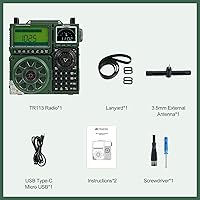
  • In the Box: Package includes the TR113 radio unit, a T-shaped external antenna, a USB-C charging cable, a lanyard, a cleaning brush, and both a product manual and an app operation manual.

Related Reviews
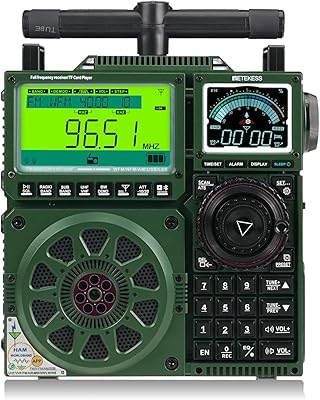
Retekess TR113 Shortwave Radio Receiver
85%
88%
Reception Quality
91%
Battery Life
85%
Portability
89%
Bluetooth Connectivity
82%
App Control Usability
More
Retekess V115 Shortwave Radio
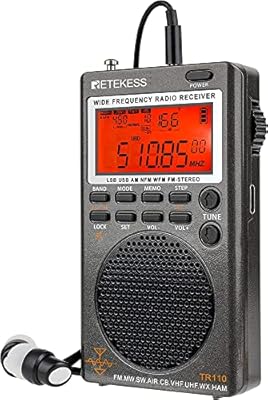
74%
88%
Value for Money
91%
Portability
79%
Battery Life
83%
AM & FM Reception
62%
Shortwave Reception
More
Retekess TR629 Portable Shortwave Radio
83%
88%
Reception & Signal Quality
83%
Ease of Use
91%
Portability & Design
85%
Recording Function
80%
Battery Life
More
Retekess TR110 Portable Shortwave Radio
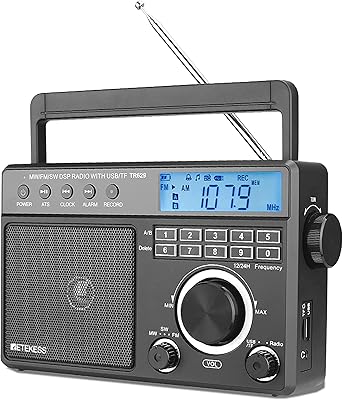
83%
88%
Reception Quality
91%
Portability
85%
Battery Life
83%
Ease of Use
89%
Weather Alert Functionality
More
Oreb ATS-20 Si4732 Full Band Radio Receiver
85%
88%
Build Quality
85%
Sound Clarity
91%
Portability
82%
Ease of Use
80%
Reception
More
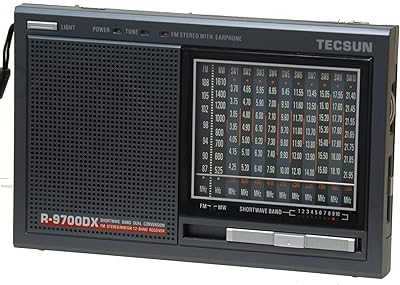
Tecsun R9700DX 12-Band Dual Conversion AM/FM Shortwave Radio
84%
92%
Reception Performance
88%
Portability and Design
86%
Ease of Use
84%
Battery Life
80%
Build Quality
More
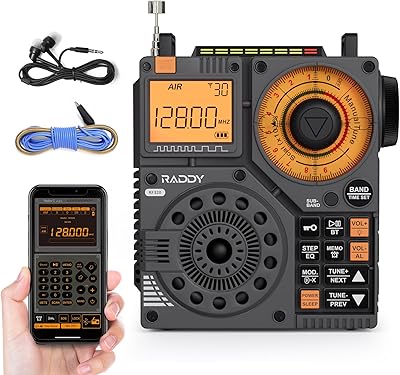
Raddy RF320 Portable Multiband Shortwave Radio
79%
88%
Band Coverage
67%
Shortwave Reception
86%
FM & VHF Reception
83%
Aviation Band (AIR)
71%
App & Bluetooth Integration
More
DreamSky AM/FM Shortwave Portable Radio
78%
93%
Ease of Use
86%
AM/FM Reception
61%
Shortwave Reception
74%
Speaker Quality
67%
Build Quality
More
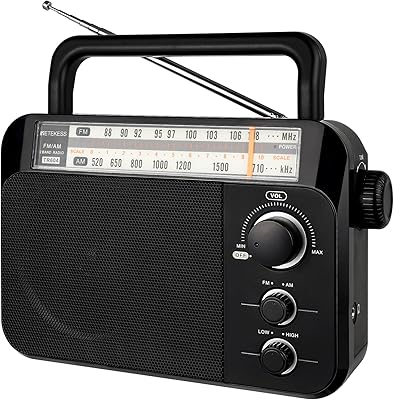
Retekess TR604 AM/FM Radio
85%
88%
Ease of Use
82%
Sound Quality
91%
Portability
84%
Battery Life
75%
Tuning Accuracy
More
ZHIWHIS ZWS-A320 Shortwave Radio
85%
91%
Reception Performance
85%
Sound Quality
88%
Bluetooth Connectivity
82%
Battery Life
93%
Portability
More

FAQ

It genuinely does support SSB reception — both USB (Upper Sideband) and LSB (Lower Sideband). That means you can tune into amateur radio operators, aeronautical single-sideband traffic, and various utility stations that broadcast in SSB mode. It is not as refined as a dedicated communications receiver, but for a portable it performs credibly.

Potentially, yes. VHF and UHF coverage lets you monitor public service frequencies, NOAA weather channels, and aviation traffic in the AIR band. If you are interested in what is happening on local emergency or utility frequencies, this full-band portable radio opens up a lot of listening territory beyond standard AM and FM broadcasts.

The initial setup is straightforward — charge the battery, extend the antenna, and power it on. Getting comfortable with all nine band types, the preset system, and the companion app takes considerably longer. Most users find the first few sessions involve a lot of manual reading. Budget an hour or two to get oriented before expecting smooth operation.

Yes, the radio has three antenna ports, so you can connect external antennas you already use. This is one of the more practical features for serious listeners — a good outdoor wire antenna on the shortwave bands can make a meaningful difference in reception quality compared to the included telescopic or T-shaped antennas.

Battery life varies significantly depending on which band you are using, volume level, and whether Bluetooth is active, but the 3600mAh lithium polymer cell is among the larger capacities you will find in this class of portable radio. Expect anywhere from several hours of active listening to a full day of light use between charges.

Yes, the companion app is available for both Android and iOS devices. That said, user reports suggest the app experience can be inconsistent — some users find it responsive and useful, while others have noted occasional connectivity drops or lag in response. It is a useful addition, but treat it as a supplement to the physical controls rather than a replacement.

Recording is supported through the app and can save audio to an inserted TF card. A TF card is not included, but the slot accepts cards up to 256GB. The radio also plays back audio files from the card directly, supporting common formats including MP3, FLAC, and WAV.

It is a good fit for travelers who rely on shortwave and FM for news and entertainment abroad. The FM tuner covers the 64–108 MHz range, which accommodates European and Asian FM bands that differ from the standard North American range. The shortwave bands cover the main international broadcast frequencies used by BBC World Service, Radio France Internationale, and others.

The TR113 edges ahead on raw band coverage, particularly the inclusion of VHF, UHF, CB, and AIR bands that the PL-990 does not cover. The Tecsun PL-990, however, is generally regarded as having more refined audio output and a more mature SSB tuning experience. Which is better depends on whether wide-band coverage or audio quality is your priority.

It is a real feature — the radio can emit a loud SOS alert tone, and combined with the built-in flashlight and the large battery capacity, it gives this shortwave receiver a practical role in emergency kits. It is not a substitute for a dedicated personal locator beacon, but for household emergency preparedness or backcountry camping where a radio is already being carried, having the SOS function costs nothing extra.

Where to Buy