Overview

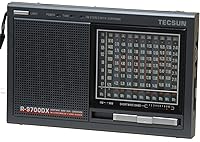
The Tecsun R9700DX 12-Band Shortwave Radio sits comfortably in the mid-range of the portable radio market, aimed squarely at hobbyists and anyone who wants to tune into international broadcasts without spending serious enthusiast money. What separates it from cheaper alternatives is its dual-conversion architecture, a design that significantly cuts down on image interference — a common nuisance in single-conversion sets that causes phantom stations to bleed into your listening. The compact, slightly retro styling gives it a tactile charm that feels deliberate rather than dated. It won't satisfy a seasoned DXer chasing SSB signals, but as a capable, approachable receiver, it punches well above its price class, especially given the decent accessory bundle included in the box.

Features & Benefits

The dual-conversion tuner is the headline spec here, and it earns its keep. Compared to the single-conversion radios cluttering the budget end of the market, the R9700DX delivers noticeably cleaner reception across all twelve bands, with far less of that ghostly image-signal interference that frustrates listeners trying to isolate a specific station. The backlit display is a quiet but genuinely useful feature — late-night listening sessions are a lot more comfortable when you can actually read the dial. A built-in battery charger might sound minor, but if you use rechargeable AAs, it removes one small but real annoyance from the routine. The included reel antenna and AC adapter round things out nicely, covering both portable and home-use scenarios without any extra spend.

Best For

This portable worldband receiver makes the most sense for people just getting into shortwave listening who want a proper step up from the cheapest radios without jumping straight to a complex digital set. It travels well — light enough at one pound to toss in a bag, and the protective case means it won't get dinged up on the road. Gift-buyers and older listeners who grew up with analog dials will appreciate the no-menu simplicity; there's nothing to program or navigate, just tune and listen. AM DX hobbyists will also find the improved adjacent-channel rejection a real benefit over single-conversion alternatives. And if you already stock rechargeable AAs, the integrated charging circuit is a quietly practical bonus.

User Feedback

Buyers consistently praise the R9700DX for its shortwave sensitivity, solid construction feel, and how quickly it's up and running out of the box. Comparing it to older analog radios from decades past is a recurring theme in reviews — and that's genuinely a compliment in this niche. That said, the analog tuning mechanism is the most common complaint: it can drift, making it hard to lock onto a station cleanly, and there's no SSB mode for those wanting to pick up amateur radio or utility transmissions. The English manual covers the basics but leaves some questions unanswered. One other consistent gripe: the bundled earphones are thin and tinny, and most users suggest swapping them out immediately.

Pros

  • Dual-conversion tuner delivers noticeably cleaner reception than similarly priced single-conversion portables.
  • Covers AM, FM, and 12 shortwave bands in one compact, easy-to-carry package.
  • Backlit display makes nighttime or low-light listening genuinely comfortable.
  • Built-in battery charger is a practical bonus for rechargeable AA users.
  • Included reel antenna meaningfully extends shortwave reception range beyond the built-in telescopic.
  • AC adapter lets you run the radio indefinitely at home without draining batteries.
  • Retro analog design is intuitive out of the box — no learning curve for new users.
  • Ships with a protective case, which is a real-world convenience many competitors skip.
  • One-year manufacturer warranty provides a reasonable safety net for a mid-range electronics purchase.
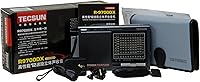
  • Comes ready to use with all core accessories included, a genuine value for first-time buyers.

Cons

  • Analog tuning can drift, making it difficult to hold a precise frequency during longer sessions.
  • No SSB mode rules it out entirely for amateur radio and utility signal monitoring.
  • Bundled earphones are widely considered low quality and typically need to be replaced immediately.
  • No digital fine-tuning option means finding and holding weak stations requires patience and manual care.
  • English user manual is thin on technical detail, leaving intermediate users with unanswered questions.
  • No memory presets or scanning function, so revisiting favorite frequencies means retuning manually every time.
  • Battery life under heavy use may disappoint without a steady supply of rechargeables or mains power.
  • The slim 1.22-inch depth limits speaker size, which keeps audio output adequate rather than impressive.

Ratings

The Tecsun R9700DX 12-Band Shortwave Radio has been scored across 15 performance categories using AI analysis of verified global buyer reviews, with spam, bot activity, and incentivized feedback actively filtered out. Scores reflect the real distribution of user sentiment — both the areas where this portable worldband receiver consistently earns praise and the specific pain points that frustrated real buyers. The result is a transparent, balanced picture of what the R9700DX actually delivers in daily use.

Reception Quality
83%
The dual-conversion tuner architecture pays clear dividends in everyday use. Listeners tuning in during evening hours consistently report pulling in European, Asian, and South American broadcasts with noticeably less phantom-station interference than comparable single-conversion radios produce. For casual to intermediate users, the real-world clarity on mid-range shortwave bands is a genuine step up.
Weak or distant signals — especially on crowded bands during peak daytime hours — can still be hard to isolate cleanly. Users with experience on higher-end receivers will notice the limitations at the edges of the shortwave spectrum, where atmospheric noise and sensitivity constraints begin to show. It is capable, not exceptional.
Tuner Selectivity
86%
Adjacent-channel rejection is one of the standout qualities that separates the R9700DX from cheaper portables. AM DX hobbyists specifically call this out, noting they can hold a station steady even when stronger signals sit nearby on the dial — a real-world test that budget single-conversion sets routinely fail.
Without a fine-tuning control or digital frequency readout, zeroing in on a station precisely still requires patience and a steady hand on the analog dial. Selectivity is strong by the standards of this class, but it falls short of what dedicated enthusiast receivers offer at higher price points.
Ease of Use
88%
This is where the analog, no-menu design genuinely shines. New users report being fully operational within minutes of opening the box with no instruction manual consulted — a stark contrast to digital portables that require setup sequences before a signal can be heard. Gift recipients, particularly older listeners, consistently highlight this as a major strength.
The flip side of analog simplicity is that there are no memory presets, no scanning function, and no way to jump directly to a known frequency. Users who want to quickly return to a favorite station have to retune manually every single time, which becomes repetitive for regular listeners following fixed broadcast schedules.
Value for Money
84%
When stacked against what the price buys — a dual-conversion tuner, a reel antenna, a carry case, an AC adapter, earphones, and a built-in battery charger — the overall package is hard to fault at this tier. Buyers regularly note that comparable performance in an older-generation radio would have cost considerably more a decade ago.
The bundled earphones drag down the perceived value noticeably, as they are widely considered the weakest component in the package. Buyers who factor in the likely cost of immediate earphone replacement will find the effective value proposition slightly less compelling than the headline price implies.
Build Quality
79%
21%
The radio has a noticeably solid feel for its weight class, with a chassis and control layout that most users describe as sturdy and well-assembled. The tuning knob has a smooth, deliberate action that feels more premium than the price might suggest, and the protective carry case adds real travel durability.
Some users note the plastic housing shows cosmetic wear after extended daily carry. The slim cabinet depth limits speaker enclosure volume, which places a ceiling on audio resonance that no external adjustment can fully overcome — a compromise baked into the physical design rather than a manufacturing shortcoming.
Shortwave Band Coverage
85%
Twelve bands across the shortwave spectrum gives listeners meaningful access to a broad range of international broadcast frequencies, covering the most active ranges used by major world broadcasters. Evening and nighttime sessions on the higher shortwave bands draw consistent praise, with users reporting reliable access to distant transmissions under good propagation conditions.
The band-segmented design means not every shortwave frequency is tunable, which limits utility for users wanting to explore non-broadcast portions of the spectrum. Enthusiasts looking for full-spectrum coverage for utility or amateur monitoring will find this approach too restrictive for their needs fairly quickly.
AM Performance
81%
19%
Medium-wave AM reception benefits directly from the dual-conversion design, with noticeably improved adjacent-channel rejection compared to cheaper alternatives. Nighttime AM DX listeners hunting distant stations report that the R9700DX holds its own respectably on the AM band, pulling in signals that budget portables simply cannot resolve cleanly.
Without a synchronous detection mode, AM reception on congested bands during the day can still suffer from selective fading and adjacent-station interference. The absence of a selectable bandwidth control means listeners cannot narrow the audio response to reduce noise on weaker signals — a limitation that more advanced receivers address directly.
Portability
91%
At one pound with a slim profile that fits easily into a shoulder bag or large jacket pocket, this portable worldband receiver travels genuinely well. The protective case keeps it scratch-free in transit, and running on standard AA batteries means reliable power is available anywhere in the world without hunting for a compatible adapter.
The need for four AA batteries adds bulk and ongoing cost compared to a unit with a built-in rechargeable cell. Travelers who want a truly shirt-pocket form factor may find even this compact footprint slightly larger than ideal, particularly when the batteries add meaningful weight to the total carry load.
FM Performance
78%
22%
FM reception is solid and handles urban environments reasonably well, making the radio a genuinely versatile daily companion for listeners who want both local FM and international shortwave in a single device. Stereo output through the earphone jack noticeably improves the FM experience over what the mono built-in speaker can deliver.
In areas with strong FM signals, occasional minor image interference can still surface — more a characteristic of the design than a defect, but present nonetheless. Rural users in areas with weak FM broadcast coverage may also find reception less robust than a dedicated FM portable of equivalent size would provide.
Display & Interface
76%
24%
The backlit frequency display is bright enough to read comfortably during late-night listening sessions, which is exactly when many shortwave enthusiasts are most active. The backlighting is not harsh and does not cause eyestrain over extended use, which is a small but genuinely appreciated detail among users who listen for hours at a stretch.
The analog dial lacks the precision of a digital frequency readout, making it difficult to confirm exactly what frequency is being received without prior knowledge of the band layout. For beginners cross-referencing published station schedules, this ambiguity adds real friction that a basic digital display would eliminate entirely.
Battery Performance
72%
28%
Running on rechargeable NiMH AAs and topping them up through the built-in charger is an efficient and cost-effective routine for home listeners who use the radio regularly. Switching to the AC adapter at home preserves battery charge for travel use — a practical pairing that regular users find genuinely convenient over time.
Battery life estimates vary widely depending on volume level and whether the speaker or earphones are in use, with heavy speaker use draining cells considerably faster than expected. Some users report shorter-than-expected run times with budget rechargeables, suggesting that cell quality has a meaningful and underappreciated impact on real-world endurance.
Audio Output
61%
39%
For speech-based content — news broadcasts, international programming, talk radio — the built-in speaker delivers clear enough audio to follow without strain in a quiet room. At moderate volume levels, the sound is intelligible and acceptably warm for the primary use case of most shortwave listeners focused on spoken-word content.
Music broadcasts and high-fidelity content expose the speaker's limitations quickly, with a narrow frequency response that strips bass and compresses dynamic range. Connecting to third-party earphones improves the experience meaningfully, but even then the audio chain has a ceiling that cannot match the output quality of more expensive portable receivers.
Accessory Bundle
74%
26%
The inclusion of a reel antenna, AC adapter, protective case, and English manual removes a lot of the post-purchase shopping that buyers of budget radios often face. For someone new to shortwave, having everything needed to start immediately is a genuine convenience that adds tangible real-world value to the purchase.
The bundled earphones are the consistent weak link and are widely flagged as the item most likely to be discarded or replaced within days. The English manual, while present, provides only surface-level guidance and leaves technically curious users without enough detail to optimize the radio's performance across different bands and conditions.
Setup Experience
87%
Unboxing and getting a signal takes under five minutes with zero configuration required, which stands out positively against digital portables that often need band programming before they function. The out-of-box experience is consistently praised, with buyers noting that the radio worked exactly as expected the moment batteries were installed and the antenna extended.
The reel antenna connection, while straightforward once understood, is not clearly explained in the manual, leaving some first-time users uncertain about the correct attachment method. A short quick-start card covering antenna setup would meaningfully improve what is otherwise a very smooth and confidence-building initial experience for newcomers.
Manual & Documentation
53%
47%
The included English-language manual is at least genuinely present and covers fundamental operating steps well enough for a complete beginner to get started without outside help. Users who only need to know how to switch bands, tune the dial, and adjust volume will find it sufficiently clear for their basic purposes.
Intermediate users wanting to understand the radio's behavior across different bands, optimize antenna placement, or troubleshoot reception issues will find the manual frustratingly thin on technical detail. Multiple buyers specifically flag the absence of a frequency reference chart or band guide — a minimal addition that would make a meaningful difference for shortwave newcomers.

Suitable for:

The Tecsun R9700DX 12-Band Shortwave Radio is a strong match for anyone stepping into shortwave listening for the first time and wanting a genuinely capable receiver without the complexity or cost of a high-end rig. Its dual-conversion tuner — a real differentiator at this price level — makes it a meaningful upgrade over the cheap single-conversion portables that flood the budget market, so curious hobbyists who want cleaner reception without going deep on research will find it hits the mark well. Travelers and emergency-preparedness minded buyers will appreciate how light and self-contained it is; at one pound with a protective case included, it packs and deploys without fuss. Older listeners or gift recipients who prefer tactile, analog controls over menu-driven digital interfaces will feel immediately at home with it. If you already use rechargeable AA batteries, the integrated charging circuit is a quietly practical convenience that removes one small but recurring hassle from regular use.

Not suitable for:

The Tecsun R9700DX 12-Band Shortwave Radio is not the right tool for listeners who need single-sideband reception, as it has no SSB mode whatsoever — amateur radio operators and utility signal hunters should look elsewhere from the start. The analog tuning mechanism, while charming to some, is a genuine limitation for anyone who wants to lock precisely onto a frequency and stay there; even slight drift can be frustrating during extended listening sessions. Dedicated shortwave enthusiasts who are already comfortable with digital tuning, synchronous detection, or advanced filtering will find this radio's feature set too basic for their needs. Audio purists may also be disappointed — the speaker output is adequate for casual listening but won't satisfy anyone accustomed to higher-fidelity portable receivers. Finally, buyers who rely on a detailed manual to learn their equipment thoroughly may find the included English documentation a bit thin for a radio with this much tuning range.

Specifications

  • Brand: Tecsun is the manufacturer, a Chinese brand widely recognized for producing affordable shortwave and portable worldband radios.
  • Model: The model designation is R9700DX, identifying this specific variant within Tecsun's portable receiver lineup.
  • Dimensions: The radio measures 7.13″ long by 4.57″ tall by 1.22″ deep, a compact footprint for a 12-band portable receiver.
  • Weight: At approximately 1 pound without batteries installed, the radio is light enough for comfortable handheld or travel use.
  • Band Count: The receiver spans 12 bands in total, covering the AM medium-wave band, FM band, and multiple shortwave frequency ranges.
  • Tuner Type: The radio uses a dual-conversion tuner architecture, which reduces image-frequency interference and improves station selectivity compared to single-conversion designs.
  • Radio Modes: Supported reception modes include standard AM, FM, and shortwave broadcast bands; SSB and CW modes are not supported.
  • Power Source: The radio operates on four AA batteries or via the included AC/DC adapter, giving the user both portable and mains-powered options.
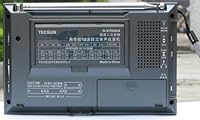
  • Battery Charger: A built-in NiMH charging circuit allows rechargeable AA cells to be topped up directly inside the radio when connected to the AC adapter.
  • Display: The frequency display includes backlighting, making it readable in low-light and nighttime listening conditions.
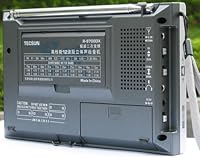
  • Connectivity: A 3.5mm auxiliary output jack is provided for connecting external earphones, headphones, or compatible speakers.
  • Included Items: The package contains a reel shortwave antenna, earphones, an AC/DC adapter, a protective carry case, and an English-language user manual.
  • Style: The radio follows a retro aesthetic with tactile analog tuning controls rather than a digital keypad interface.
  • Batteries Required: Four AA batteries are required for portable operation and are not included in the package.
  • Warranty: Tecsun provides a one-year manufacturer warranty covering defects in materials and workmanship from the date of purchase.

Related Reviews
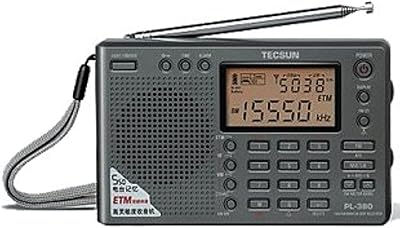
TECSUN PL-380 DSP World Band Radio
83%
88%
Reception Quality
91%
Portability
84%
Battery Life
86%
Ease of Use
82%
Build Quality
More
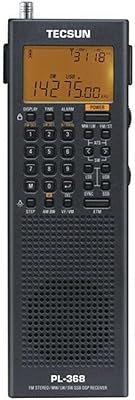
Tecsun PL368 Worldband Radio
86%
88%
Reception Quality
91%
Portability
75%
Sound Quality
80%
Battery Life
85%
Build Quality
More
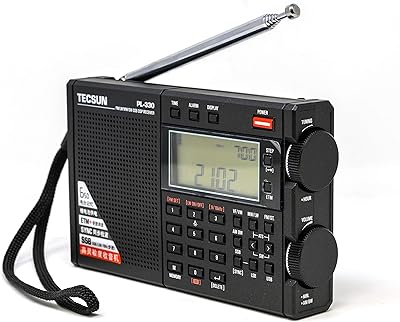
Tecsun PL330 Worldband Radio
83%
92%
Reception Quality
88%
Portability
84%
Battery Life
85%
Sound Quality
77%
Tuning Accuracy
More
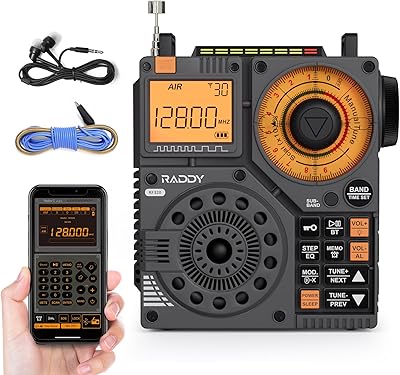
Raddy RF320 Portable Multiband Shortwave Radio
79%
88%
Band Coverage
67%
Shortwave Reception
86%
FM & VHF Reception
83%
Aviation Band (AIR)
71%
App & Bluetooth Integration
More
Retekess TR113 Full-Band Shortwave Radio
74%
93%
Band Coverage
81%
SSB Reception
78%
Reception Sensitivity
52%
Ease of Use
74%
Build Quality
More
Retekess V115 Shortwave Radio
74%
88%
Value for Money
91%
Portability
79%
Battery Life
83%
AM & FM Reception
62%
Shortwave Reception
More
DreamSky AM/FM Shortwave Portable Radio
78%
93%
Ease of Use
86%
AM/FM Reception
61%
Shortwave Reception
74%
Speaker Quality
67%
Build Quality
More
Retekess TR110 Portable Shortwave Radio
83%
88%
Reception Quality
91%
Portability
85%
Battery Life
83%
Ease of Use
89%
Weather Alert Functionality
More
Tecsun H501 Digital Worldband Radio
81%
89%
Reception Quality
84%
Sound Quality
78%
Battery Life
71%
Ease of Use
80%
Build Quality
More
Retekess TR113 Full-Band Shortwave Radio
72%
93%
Band Coverage Breadth
67%
Signal Sensitivity
51%
Ease of Use
81%
Battery Life
62%
App & Remote Control
More

FAQ

Most budget shortwave radios use a single-conversion tuner, which can let unwanted signals — called image frequencies — bleed through and create ghost-station interference. A dual-conversion design processes the incoming signal through two stages instead of one, which dramatically cleans that up. In practical terms, the Tecsun R9700DX 12-Band Shortwave Radio will give you noticeably more isolated, less cluttered reception than a same-priced single-conversion set. It's one of the main reasons this radio stands out in its price bracket.

No, it cannot. The R9700DX covers standard AM, FM, and shortwave broadcast bands only — there is no single-sideband mode. If you want to listen to amateur radio operators, utility stations, or weather fax signals, you'll need a radio with SSB capability, which typically sits at a higher price point. For international broadcast programming, though, you are well covered.

It's designed for standard NiMH rechargeable AA cells, which are the most common type available. Load in your rechargeables, connect the AC adapter, and the circuit handles the rest. It charges slowly — think overnight rather than a few hours — so plan accordingly. Never use the charging function with alkaline batteries, as they are not rechargeable and could be damaged or leak.

The reel antenna is a longer wire antenna that you unwind and string up in a room or outdoors to extend your reception range, especially on lower shortwave frequencies where antenna length makes a meaningful difference. The built-in telescopic whip works fine for stronger stations, but if you want to pull in weaker or more distant broadcasts — particularly at night when lower bands open up — the reel antenna is worth using. It requires no tools; you just attach it to the external antenna jack.

That depends on which adapter version ships with your unit, and it's worth checking the voltage markings on the adapter itself before traveling. The radio runs on four AA batteries regardless of location, and since AAs are available worldwide, battery power is a reliable backup on international trips. When in doubt, a small universal travel adapter is cheap insurance.

It's one of the more sensible choices at this price level for a newcomer. The analog controls are intuitive — no menus, no digital setup, no modes to scroll through — so you can be scanning shortwave bands within minutes of opening the box. The dual-conversion tuner also means you're starting with better signal quality than the cheapest entry-level sets provide, which matters when you're still learning what to listen for and where to find it.

Expect roughly 8 to 15 hours of use from a fresh set of quality NiMH rechargeables, depending on volume level and whether you're using the speaker or earphones. Cold weather drains cells faster than expected, so outdoor use in winter will shorten that range. Running the radio through the AC adapter at home is the easiest way to sidestep battery management entirely.

Yes, the 3.5mm auxiliary output accepts any standard earphones, headphones, or speakers with a compatible plug. The built-in speaker is workable for casual background listening in a quiet room, but plugging into a decent pair of headphones noticeably improves the experience, especially for music broadcasts or weak stations where audio clarity matters.

The tuning knob has a smooth, gradual feel that most users find manageable, but analog tuning does require a light, deliberate touch to park on a station without sliding past it. Drift is a real characteristic of analog receivers — it's not a defect so much as a trait of the design. If you need to hold a frequency precisely for extended periods, a digital-tuning radio would serve you better.

Most users replace them fairly quickly. They work for a basic listening check but the sound quality is thin and they're not comfortable for long sessions. Swapping them for any budget earphones you already own will make a noticeable improvement. Treat the included pair as a stopgap rather than a genuine accessory, and budget a few extra dollars for a replacement if audio quality matters to you.

Where to Buy