Overview

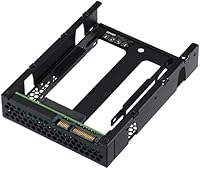
The QNAP QDA-A2AR Dual SATA Drive Adapter solves a specific but common problem: you have two 2.5-inch SATA drives — whether HDDs or SSDs — and only one 3.5-inch bay to spare. QNAP has built a solid reputation in the NAS and storage accessories space, and this bay converter reflects that practical engineering focus. Rather than buying a larger enclosure or sacrificing a second bay slot, you simply slide both drives in and mount the whole thing like any standard 3.5-inch drive. For NAS users trying to squeeze more capacity out of an existing unit, or PC builders dealing with mismatched drive sizes, the appeal is clear. Worth noting upfront: drives are not included.
Features & Benefits

The QDA-A2AR runs on a SATA III interface, supporting up to 6 Gbps — though actual throughput depends entirely on the drives you install, since the adapter itself is passive hardware. What makes it useful is the flexibility of four RAID configurations. Individual mode treats each drive independently. JBOD pools them as one large volume. RAID 0 stripes data across both for speed, while RAID 1 mirrors them for redundancy — handy if you want basic backup protection without dedicated backup software. Installation requires minimal tools and is straightforward for anyone comfortable opening a NAS or PC chassis. It also works across QNAP NAS devices, Windows, and Linux, which broadens its usefulness considerably.

Best For

This drive adapter is a natural fit for QNAP NAS owners who want to pack more storage into existing bays rather than buying a new, larger unit. It is also well-suited to home lab users or small office setups repurposing older 2.5-inch drives that would otherwise sit idle. If you are building out a workstation and need to mount laptop-sized SATA drives in a desktop chassis, this bay converter handles that cleanly. Users specifically looking to enable RAID 1 mirroring on a budget will find it practical — you get basic redundancy using drives you may already own. It is less relevant for anyone running NVMe or M.2 storage, as this is strictly a SATA solution.

User Feedback

Buyers generally respond well to this bay converter, with installation speed and reliable NAS detection coming up most often in positive comments. Many users appreciate how snugly the drives fit once seated and note the build feels solid given the compact size. On the critical side, a handful of users have run into RAID configuration confusion — the setup process is not always intuitive if you are new to RAID terminology. There are also occasional reports of compatibility hiccups with specific older NAS models, so checking QNAP compatibility lists before purchasing is worth the extra minute. Build quality feedback is mostly positive, though some find the plastic construction a bit underwhelming for the price point.

Pros

  • Lets you fit two 2.5-inch SATA drives into a single 3.5-inch bay, effectively doubling drive density.
  • Supports both HDDs and SSDs, giving you flexibility with whatever drives you already own.
  • Four RAID modes — including RAID 1 mirroring — add real data protection options at minimal extra cost.
  • Installation is straightforward and requires minimal tools, even for first-timers.
  • Works across QNAP NAS units, Windows PCs, and Linux workstations without special drivers.
  • Reliable drive detection is consistently noted by NAS users across a range of QNAP models.
  • Lightweight and compact, it adds virtually no bulk or weight concern inside any chassis.
  • A practical way to repurpose older 2.5-inch drives rather than retiring them prematurely.
  • JBOD mode allows combined capacity pooling if RAID redundancy is not a priority.

Cons

  • Drives are sold separately, which can catch budget-conscious buyers off guard at checkout.
  • RAID configuration is not always intuitive for users new to RAID terminology and setup.
  • Compatibility with older or non-QNAP NAS enclosures is not guaranteed and needs manual verification.
  • The plastic construction feels underwhelming to some buyers given the price point.
  • Performance ceiling is set entirely by the drives installed — the adapter itself contributes nothing to speed.
  • Limited to exactly two drives, so users needing higher consolidation ratios need a different solution.
  • No included documentation makes RAID mode selection confusing for less experienced users.
  • Some users report occasional detection issues after hot-swapping or reseating drives.

Ratings

The scores below reflect an AI-driven analysis of verified global user reviews for the QNAP QDA-A2AR Dual SATA Drive Adapter, with spam, bot-generated, and incentivized feedback actively filtered out before scoring. Each category is rated on real-world buyer experiences, capturing both what this bay converter genuinely does well and where it falls short. Strengths and frustrations are weighted equally so you get an honest picture before committing.

Ease of Installation
88%
Most users report that getting the drives seated and the adapter slotted into a 3.5-inch bay takes under ten minutes, even on a first attempt. NAS owners in particular appreciate that no specialized tools are required, and the drive mounting points align cleanly without fiddling.
A small but consistent group of buyers found the screw holes slightly misaligned with certain 2.5-inch drive form factors, requiring extra patience. First-time NAS builders unfamiliar with bay mechanics occasionally report confusion about the correct orientation before insertion.
RAID Configuration
71%
29%
Having four RAID modes available — including RAID 1 mirroring for redundancy and RAID 0 for striped performance — gives users meaningful flexibility without needing external software. Home lab users setting up a basic mirror for backup peace of mind find the hardware-level RAID particularly convenient.
The RAID setup process is not self-explanatory, and buyers new to RAID terminology frequently report confusion about which mode to choose and how to initialize it correctly. There is no guided setup wizard, which makes the learning curve steeper than it needs to be for less experienced users.
NAS Compatibility
83%
Across most current QNAP NAS models, the adapter is reliably detected without any driver installation or manual configuration, which users running TS-series enclosures consistently highlight as a strong point. Detection is stable across reboots, and NAS operating systems treat the configured volume as a standard drive.
A notable subset of reviews flag compatibility issues with older QNAP models and certain firmware versions, where the unit either fails to detect the adapter or misidentifies the RAID configuration. Users running non-QNAP NAS brands face an additional research burden with no official compatibility guarantees.
Build Quality
67%
33%
The adapter feels adequately sturdy once drives are installed and the unit is seated inside a bay — there is no noticeable flex or rattling during operation. Users running it in always-on NAS environments over extended periods generally report no structural degradation.
The plastic construction is a recurring criticism, with multiple buyers noting it feels lightweight in a way that reads as cheap rather than intentionally compact. A few users report that the drive retention clips feel less secure than expected, raising minor concerns about long-term mechanical durability.
Drive Detection Reliability
84%
Under normal operating conditions, both installed drives are consistently recognized by the host system at startup without requiring reseating or manual intervention. Users who run scheduled NAS health checks report that both drives register cleanly in diagnostics over months of continuous use.
Occasional detection failures after hot-swapping or power cycling are reported by a minority of users, particularly when using drives from less common manufacturers. These incidents appear intermittent rather than systematic but are frustrating when they occur in an unattended NAS environment.
Value for Money
79%
21%
For NAS owners who already have spare 2.5-inch drives sitting unused, this bay converter offers a genuinely cost-effective way to reclaim those drives and add redundancy without buying a larger enclosure. The price point is reasonable for a QNAP-branded accessory with multi-mode RAID support.
Buyers who still need to purchase drives on top of the adapter sometimes feel the total cost edges close to alternatives worth considering. Those who end up with compatibility issues feel the value proposition weakens considerably given there is no straightforward return-to-working resolution.
Throughput Performance
74%
26%
When paired with modern SATA SSDs, users report read and write speeds consistent with what those drives deliver independently, confirming the adapter introduces no meaningful bottleneck in day-to-day NAS workloads like media streaming or file transfers.
Because this is purely passive hardware, any performance limitation from the installed drives is fully inherited — there is no caching or optimization at the adapter level. Users pairing mismatched drives in RAID 1 find performance capped to the slower drive, which can be disappointing when one drive is significantly faster.
Physical Fit & Stability
81%
19%
The adapter slots into standard 3.5-inch bays with a snug fit that most users describe as satisfying, with no wobble or looseness once secured. This stability matters in NAS environments where vibration from nearby spinning drives can otherwise cause issues.
A handful of users report that in enclosures with slightly non-standard bay tolerances, the adapter sits slightly loose and requires the use of rubber padding or aftermarket screws to hold it firmly. This is an edge case but worth noting for users with older or budget enclosures.
Cross-Platform Compatibility
76%
24%
On both Windows workstations and mainstream Linux distributions, the QDA-A2AR presents as a standard SATA device without requiring any additional drivers, which PC builders repurposing 2.5-inch drives into desktop towers consistently appreciate. Setup on these platforms is genuinely plug-and-play.
RAID configuration on non-QNAP platforms is managed entirely through the host OS rather than any dedicated utility, which means Windows users need to use Disk Management and Linux users need tools like mdadm — adding complexity that is not immediately obvious from the product listing.
Documentation & Setup Guidance
54%
46%
QNAP does provide online support documentation and compatibility notes through their official portal, which experienced users find adequate for answering setup questions. For straightforward Individual or JBOD configurations, most technically minded buyers get up and running without consulting any documentation at all.
The included in-box documentation is minimal to the point of being unhelpful for less experienced buyers, and there is no quick-start guide specifically addressing RAID mode selection. Several reviewers note that the lack of clear labeling on the adapter itself makes initial drive orientation less intuitive than it should be.
Drive Compatibility Range
78%
22%
Support for both SATA HDDs and SSDs in the 2.5-inch form factor covers the vast majority of drives buyers are likely to repurpose, and users mixing older spinning drives with newer SSDs report no mechanical fit issues. Standard drive screw spacing is respected consistently.
The strict 2.5-inch SATA-only limitation means users with NVMe SSDs, M.2 drives, or 2.5-inch SAS drives are completely excluded, which is not always immediately clear from the product listing. Buyers who discover this after purchase are among the more frustrated voices in the review pool.
Thermal Management
69%
31%
In NAS enclosures with adequate airflow, users report that drive temperatures remain within normal operating ranges during extended workloads. The adapter does not add any meaningful thermal mass or obstruction to airflow around the drives.
Because the adapter holds two drives in close physical proximity within a single bay, thermal management becomes more dependent on enclosure fan placement than with a single drive. In poorly ventilated bays or warm environments, a small number of users have noted slightly elevated drive temps compared to single-drive configurations.
Long-Term Reliability
77%
23%
Users who have run the QDA-A2AR in always-on NAS environments for a year or more generally report no mechanical failures or connection degradation, suggesting the adapter holds up well under sustained operating conditions. The absence of active components means there is less to fail over time.
The long-term track record is harder to assess given the product has been available since 2019 with a relatively niche user base, meaning failure data is less statistically robust than for high-volume consumer products. Plastic housing concerns raised about build quality could become more relevant over a multi-year horizon.

Suitable for:

The QNAP QDA-A2AR Dual SATA Drive Adapter is purpose-built for NAS enthusiasts and storage-conscious users who need to stretch the capacity of an existing enclosure without spending on a hardware upgrade. If you already own 2.5-inch SATA drives — whether leftover laptop HDDs or older SSDs — this bay converter gives them a second life inside a standard 3.5-inch bay slot. It is equally useful for home lab builders who want RAID 1 mirroring on a tight budget, since pairing two drives for redundancy becomes a straightforward, low-cost exercise. PC workstation builders dealing with chassis that only accommodate 3.5-inch bays will also find it a clean, no-fuss solution. Small office users repurposing decommissioned drives for light backup or archival storage round out the core audience nicely.

Not suitable for:

Anyone expecting plug-and-play simplicity with zero learning curve may find the QNAP QDA-A2AR Dual SATA Drive Adapter frustrating, particularly when configuring RAID modes for the first time without prior experience. This bay converter is strictly a SATA solution — if your storage roadmap involves NVMe, M.2, or PCIe-based drives, this does nothing for you. Buyers who need maximum sequential throughput should also temper expectations, since performance is entirely dependent on the drives installed, not the adapter itself. It is not the right tool for users running non-QNAP NAS brands without first verifying compatibility, as some third-party enclosures may not recognize the configuration correctly. Finally, anyone who needs more than two drives consolidated into a single bay will need a different product entirely, as this handles exactly two 2.5-inch drives and no more.

Specifications

  • Manufacturer: Made by QNAP Systems, a manufacturer specializing in NAS devices and storage accessories.
  • Model Number: The official model identifier for this product is QDA-A2AR.
  • Form Factor: Fits two 2.5-inch SATA drives into a single standard 3.5-inch drive bay.
  • Interface: Uses a SATA III (Serial ATA 600) interface for both the host connection and the installed drives.
  • Transfer Rate: Supports a maximum data transfer rate of 6 Gbps, subject to the performance of the installed drives.
  • RAID Modes: Supports four configurations: Individual (each drive independent), JBOD (combined pool), RAID 0 (striped), and RAID 1 (mirrored).
  • Drive Types: Compatible with 2.5-inch SATA hard disk drives (HDDs) and solid-state drives (SSDs).
  • Max Drives: Accommodates a maximum of two 2.5-inch SATA drives simultaneously.
  • Compatibility: Works with QNAP NAS enclosures as well as Windows-based and Linux-based PCs and workstations.
  • Item Weight: The adapter itself weighs approximately 7 oz (0.2 kg), excluding any installed drives.
  • Pkg. Dimensions: Retail packaging measures approximately 10 x 12 x 9 inches.
  • Drives Included: No drives are included; the adapter is sold as a bay converter only and requires separately purchased drives.
  • Release Date: This product was first made available in May 2019.
  • Discontinuation: As of the latest available information, this product has not been discontinued by the manufacturer.
  • Installation: Designed for minimal-tool installation, sliding into any standard 3.5-inch drive bay without requiring specialized equipment.

Related Reviews
StarTech SDOCK2U33EB Dual-Bay Hard Drive Docking Station
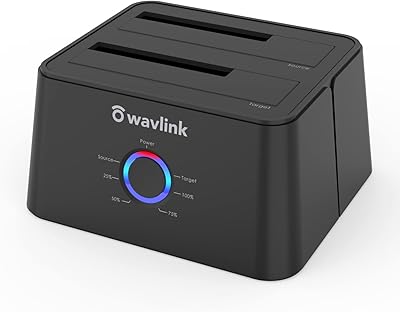
78%
83%
Hot-Swap Reliability
88%
Drive Compatibility
74%
Transfer Performance
76%
Build Quality
93%
Ease of Setup
More
WAVLINK WL-ST334UA Dual-Bay USB 3.0 Hard Drive Docking Station
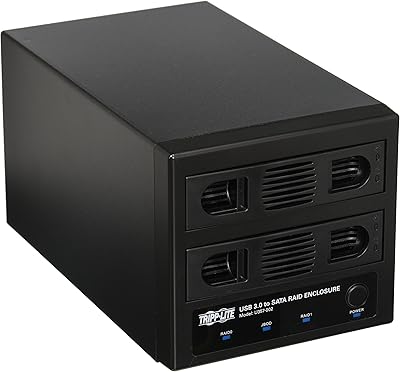
72%
83%
Offline Cloning Reliability
74%
Transfer Speed
79%
Build Quality
91%
Ease of Setup
38%
Mac Compatibility
More
Tripp Lite U357-002 USB 3.0 Dual Bay External SATA Hard Drive RAID Enclosure
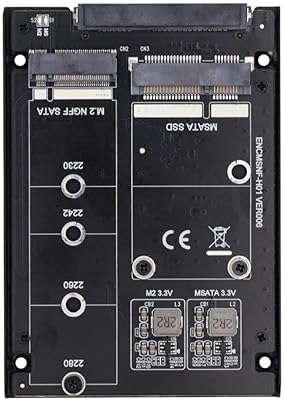
84%
88%
Performance & Speed
91%
Ease of Setup
84%
Cooling Efficiency
89%
RAID Functionality
83%
Build Quality
More
ChenYang CY-SA-060 mSATA M.2 SATA SSD Enclosure
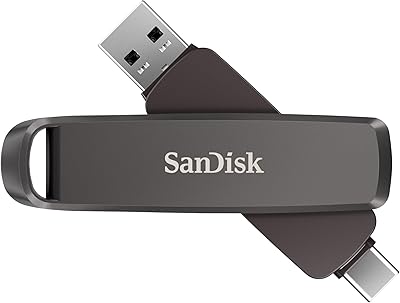
70%
88%
Value for Money
54%
Drive Compatibility
79%
JBOD Functionality
58%
Build Quality
72%
Installation Ease
More
SanDisk 512GB Extreme PRO Dual Drive
87%
92%
Read Speed
87%
Write Speed
90%
Build Quality
88%
Portability
94%
Ease of Use
More
SanDisk Extreme PRO Dual Drive 1TB Flash Drive
80%
92%
Transfer Speed
89%
Dual Connector Convenience
88%
Build Quality & Durability
93%
Portability & Form Factor
84%
Data Security Features
More
SanDisk Extreme PRO 2TB Dual Flash Drive
79%
91%
Transfer Speed
88%
Dual Connector Design
89%
Build Quality
93%
Storage Capacity
67%
Value for Money
More
Seagate Exos 7E8 4TB Enterprise Hard Drive
80%
83%
Long-Term Reliability
91%
Workload Endurance
78%
Sequential Throughput
86%
NAS Compatibility
73%
Noise & Vibration
More
Western Digital WD5000AAKX 500GB SATA Hard Drive
84%
82%
Performance
89%
Value for Money
85%
Reliability
91%
Ease of Installation
76%
Speed (7200 RPM)
More
HGST Ultrastar 1TB Enterprise Hard Drive
73%
91%
Reliability & Longevity
73%
Value for Money
67%
Performance
61%
Noise Level
63%
Heat Management
More

FAQ

No, they do not. The QDA-A2AR is sold as a bay converter only — you will need to purchase your 2.5-inch SATA drives separately. This catches a fair number of buyers off guard, so it is worth factoring into your total budget before ordering.

RAID 1 is the right choice for redundancy — it mirrors identical data across both drives, so if one fails, your data survives on the other. Keep in mind that RAID 1 halves your usable capacity, since both drives hold the same content. It is the safest option for anyone prioritizing data protection over storage size.

Technically it may work with some third-party NAS enclosures, but compatibility is not guaranteed outside the QNAP ecosystem. Before buying, it is worth checking the compatibility list on QNAP's official support pages, especially if your enclosure is an older model or from a different brand.

No. The QNAP QDA-A2AR Dual SATA Drive Adapter is strictly a SATA solution and only supports 2.5-inch SATA HDDs and SSDs. NVMe and M.2 drives use a completely different interface and will not physically fit or function in this adapter.

Not significantly, no. The adapter is passive hardware — it does not process or throttle data on its own. Your actual read and write speeds will be determined entirely by the drives you install and the SATA III bandwidth of your host system, which maxes out at 6 Gbps.

For users already familiar with RAID concepts, the setup is fairly straightforward. If you are new to RAID, there is a bit of a learning curve, particularly around understanding the difference between JBOD, RAID 0, and RAID 1. QNAP provides documentation through their support portal, and spending 10 minutes reading it before you start will save you a lot of confusion.

Yes, you can mix drive types — one HDD and one SSD installed together is physically supported. However, when using RAID modes, mixing drive types and speeds can create performance inconsistencies, and RAID 1 mirroring across mismatched drives will cap performance to the slower drive. For best results, using two identical drives is generally recommended.

The 2.5-inch drives screw into designated mounting points inside the adapter chassis, which then slides into the 3.5-inch bay like any standard drive. Most users report a snug, secure fit with no noticeable vibration or movement once properly installed.

Since the adapter presents as a standard SATA drive to the host system, it does not require special drivers and should work fine with current versions of Windows and mainstream Linux distributions. The operating system simply sees the configured volume as a regular storage device.

Changing RAID modes after initial setup almost always requires reformatting the drives, which means losing all existing data on them. It is not something you can do on the fly. Decide on your RAID configuration before you start writing data to the drives, and back up anything important before making any changes.