Overview

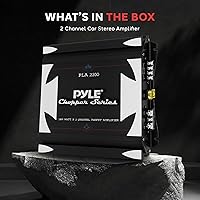
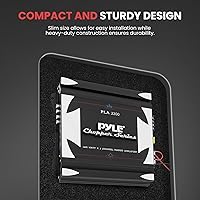
The Pyle PLA2200 2-Channel Car Amplifier has been on the market since 2001 — that longevity alone is worth noting in a category full of here-today-gone-tomorrow budget hardware. This compact car amp targets buyers who want a real power upgrade over a factory head unit without spending serious money or tackling a complicated install. The slim 1.38-inch profile lets you tuck it under a seat or behind a panel without much hassle, and the MOSFET power supply keeps things cleaner than older transformer-based designs. It won't satisfy audiophiles chasing reference-quality sound, but as an entry-level workhorse, it covers the fundamentals in a way that's held up across two decades.

Features & Benefits

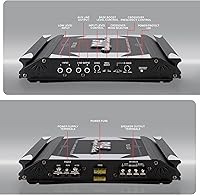
One spec worth unpacking upfront: the advertised 1400W peak output sounds bold, but continuous RMS power is considerably lower — that's standard across budget amps, and the PLA2200 is no exception, so calibrate your expectations accordingly. The MOSFET power supply does meaningfully reduce distortion at moderate volumes, which matters more in daily driving than peak numbers do. Gold-plated RCA ports are a practical touch; corroded RCA connections are a surprisingly common cause of audio degradation, and plated contacts resist that better over time. A variable electronic crossover lets you run high-pass filtering for door speakers or low-pass toward a sub without needing a separate processor, and the switchable bass boost adds tone-shaping flexibility without extra hardware.

Best For

This dual-channel amplifier makes the most sense for first-time installers stepping up from stock factory output. The flat, low-profile chassis fits neatly under most front seats or in a trunk corner — a genuine advantage in compact cars where mounting space is genuinely tight. It also suits secondary audio builds well: think an extended cab truck, a rear seating zone, or a daily driver where you want noticeably better sound without committing to a full system overhaul. DIY wiring is straightforward, which reduces the intimidation factor for beginners. If you're chasing competition-grade fidelity, look higher up the price ladder. But for practical everyday amplification without the complexity, this covers the ground it promises to.

User Feedback

Buyers who have run the PLA2200 consistently highlight two positives: the easy installation process and how well the slim profile fits into tight spaces. Value perception is generally solid among casual listeners who aren't comparing it against higher-end hardware. That said, critical reviews surface a few consistent concerns. Heat management is one — the amp runs noticeably warm under sustained, higher-volume use, so mounting with adequate airflow isn't optional. Gain calibration is another recurring issue; setting the gain too aggressively clips the signal and introduces harshness that some buyers mistakenly attribute to the amp being underpowered. A handful of installers also noted the wire terminal size accommodates thinner gauge wire than most audio professionals recommend, so plan your wiring accordingly before purchase.

Pros

  • The slim 1.38-inch profile fits under seats or in tight trunk spaces where larger amps simply won't go.
  • MOSFET power supply delivers a noticeably cleaner signal than older transformer-based budget amps at comparable volumes.
  • Gold-plated RCA ports resist corrosion over time, reducing a common cause of audio degradation in budget installs.
  • Built-in variable crossover means you can tune for door speakers or a subwoofer without buying extra hardware.
  • Switchable bass boost adds tone control flexibility directly on the amp without needing a separate equalizer.
  • Anti-thump soft turn-on circuit prevents the annoying speaker pop that plagues cheaper amplifiers at startup.
  • Thermal, overload, and short circuit protection gives genuine peace of mind during daily use.
  • Wiring and setup are beginner-friendly, with a layout that experienced installers describe as no-nonsense.
  • Has maintained market availability since 2001, which reflects a degree of reliability in the budget amp segment.
  • LED power indicators make it easy to confirm the amp is live during troubleshooting or after install.

Cons

  • Advertised 1400W is peak power only — continuous RMS output is far lower and is not clearly specified by the manufacturer.
  • The amp runs noticeably warm under sustained load; mounting without adequate airflow is a real risk.
  • Terminal blocks accommodate thinner wire gauges than most installers recommend for optimal power delivery.
  • Gain calibration requires patience — setting it too high introduces signal clipping that many buyers mistake for underpowering.
  • Long-term durability reports are mixed, with some buyers noting performance degradation after a year or more of regular use.
  • No detailed spec sheet from Pyle makes it hard to verify signal-to-noise ratio or total harmonic distortion figures.
  • Customer support and warranty resolution have drawn criticism from buyers who encountered defective units.
  • The PLA2200 is not well-suited for low-impedance speaker loads, which limits pairing options for enthusiast-grade drivers.
  • Bass boost switch lacks fine-grained control, which can push low-end response into muddy territory on some speaker setups.

Ratings

Our AI-generated scores for the Pyle PLA2200 2-Channel Car Amplifier are based on analysis of verified buyer reviews collected globally, with spam, bot-generated, and incentivized feedback actively filtered out before scoring. Each category reflects what real owners experienced after installation — not manufacturer claims — so both the strengths and the frustrations are represented honestly. Whether this compact amp earns a spot in your vehicle or falls short of your needs, the breakdown below gives you a clear, unvarnished picture.

Value for Money
78%
22%
Buyers who approached the PLA2200 with realistic expectations consistently felt the price-to-performance ratio was fair for casual daily listening. Getting a MOSFET-powered amp with a built-in crossover and gold-plated RCA ports at this price point is genuinely competitive against comparable budget options.
Users who misjudged the peak wattage as a measure of real-world power felt shortchanged, which dragged value perception down in a noticeable portion of reviews. If you come in expecting competition-grade output from a budget amp, disappointment is almost guaranteed.
Ease of Installation
83%
The straightforward terminal layout and slim chassis made installation accessible even for first-timers tackling their first car audio project. Multiple buyers noted they had the amp wired up and running within a couple of hours without professional help.
The terminal blocks accept thinner wire gauges than most installers recommend, which forces buyers to either source adapters or compromise on wire sizing. A handful of reviewers also noted the manual lacks detail on gain calibration, leaving beginners to figure that part out on their own.
Sound Clarity
69%
31%
At moderate volume levels, the MOSFET power supply does a credible job keeping distortion low, and casual listeners upgrading from a factory head unit will notice a meaningful improvement in detail and separation. For talk radio, podcasts, and everyday music listening during commutes, the output is clean enough to satisfy.
Push the gain too high or run the amp near its ceiling and clarity degrades noticeably, introducing harshness that becomes hard to ignore on higher-frequency content. Buyers with quality aftermarket speakers tended to find the PLA2200 the weak link in the signal chain at higher volumes.
Power Output (Real-World)
54%
46%
For powering a modest pair of door speakers or a small subwoofer in a compact vehicle, the amp delivers enough juice to produce satisfying volume levels well beyond what a factory head unit can manage. Users running efficient speakers in smaller cars were generally content with the headroom available.
The 1400W claim is peak bridgeable power under ideal conditions — continuous RMS output is significantly lower and officially unspecified, which creates a credibility gap that frustrated many buyers expecting more muscle. Driving power-hungry speakers or demanding subwoofer setups exposed the amp's limitations quickly.
Build Quality
61%
39%
The chassis feels solid enough for the price tier, and the surface finish holds up reasonably well against the usual trunk or under-seat environment. Gold-plated RCA ports are a notable build highlight that outperform what you typically find on competing amps at a similar price.
The overall construction leans toward functional rather than robust — the casing feels lightweight and some internal components have drawn durability concerns in longer-term ownership reviews. A subset of buyers reported performance issues appearing after 12 to 18 months of regular use.
Thermal Management
57%
43%
The built-in thermal protection circuit does its job reliably, cutting the amp off before heat causes permanent damage — a feature that has saved more than a few installs where airflow was suboptimal. Buyers in moderate climates who mounted the amp with reasonable ventilation reported no chronic overheating problems.
In warmer climates or enclosed spaces without deliberate airflow, the amp runs hot enough that thermal shutoff during long drives became a recurring complaint. Mounting it in a sealed enclosure or tight under-seat cavity without ventilation gaps is a setup that regularly led to protection trips.
Crossover Performance
72%
28%
Having a switchable high-pass and low-pass crossover built directly into the amp removes a real cost and complexity barrier for entry-level installs. Buyers running door speakers and a small sub found it covered basic frequency splitting duties without any additional hardware.
The crossover lacks the precision adjustment range that more experienced installers expect — the variable control is functional but coarse, making fine-tuned frequency management difficult. Users building more sophisticated systems quickly outgrew it and needed an external processor anyway.
Bass Boost Usability
66%
34%
The switchable bass boost gave casual listeners a quick and easy way to add low-end warmth without touching their head unit EQ settings, which a number of buyers appreciated during everyday driving. For users with modestly efficient speakers, it provided a noticeable improvement in low-frequency presence.
The boost is an on-or-off switch rather than a variable control, which means there is no middle ground — and for many speaker setups, full engagement tipped the bass response into muddy or boomy territory. More discerning listeners found it too blunt to use reliably across different music genres.
Compact Form Factor
88%
The 1.38-inch height is genuinely one of the slimmest profiles available at this price point, and buyers in compact vehicles consistently called out the size as the deciding factor in their purchase. Sliding it under a front seat or mounting it flat in a shallow trunk corner was described as surprisingly hassle-free.
The slim profile does limit internal heat dissipation, which connects directly to the thermal management concerns raised by other users. A few buyers also found the compact dimensions made accessing the terminal blocks slightly awkward during wiring, especially in tight under-seat positions.
RCA Signal Quality
74%
26%
Gold-plated RCA connectors are a meaningful practical upgrade over the standard chrome ports common on competing budget amps, and buyers appreciated the snug, corrosion-resistant connection they maintained over time. Signal integrity at the RCA stage drew no significant complaints from the majority of users.
The quality of the RCA connection is only as good as the cable you pair it with, and buyers using cheap patch cables still experienced noise floor issues that the gold plating alone could not fix. A small number of users also reported intermittent signal loss from the RCA jacks after extended use.
Gain Calibration
58%
42%
The gain control is accessible and physically easy to adjust, which helped confident DIY installers dial in the amp relatively quickly once they understood what they were doing. Users with some prior audio experience found the control range adequate for matching the amp to their head unit's output voltage.
Without clear guidance in the documentation, a large share of first-time buyers set the gain incorrectly — typically too high — which introduced clipping distortion and led to false conclusions about the amp being faulty or underpowered. This single calibration issue accounts for a disproportionate number of negative reviews.
Long-Term Durability
55%
45%
A portion of buyers have run the PLA2200 for two or more years without incident, particularly those who installed it in well-ventilated locations with appropriate wiring gauge and conservative gain settings. The amp's longevity in those cases speaks to its reliability when used within its actual operating limits.
Reviews from buyers past the one-year mark showed a meaningful uptick in failure reports, with degraded output and intermittent protection trips being the most commonly cited symptoms. The pattern suggests the amp holds up under light, careful use but is not built for high-stress daily operation over the long haul.
Soft Turn-On Circuit
81%
19%
The anti-thump turn-on behavior worked as intended for the overwhelming majority of buyers — the speaker pop that plagues cheaper amplifiers at startup was effectively eliminated, which is a small but genuinely appreciated quality-of-life detail in everyday use.
A small number of users reported a slight delay in the amp becoming active after the ignition turned on, which caused momentary audio dropouts that took some troubleshooting to identify as the soft-start circuit rather than a wiring issue. Not a common complaint, but worth noting for users sensitive to startup timing.
Documentation & Support
43%
57%
The amp ships with a basic instruction sheet sufficient for experienced installers to get up and running without reference to external guides. For straightforward stereo wiring, the diagram included covers the essential connections.
Buyers who ran into trouble — particularly around gain setting, bridged wiring configurations, or compatibility questions — found Pyle's customer support difficult to reach and inconsistent in the quality of guidance provided. The documentation gap is most harmful to the beginner audience this amp is primarily marketed toward.

Suitable for:

The Pyle PLA2200 2-Channel Car Amplifier is a practical pick for anyone taking their first real step beyond factory audio without wanting to overthink the process or overspend. It fits naturally into compact vehicles where mounting space is genuinely limited — the low-profile chassis slides under a front seat or mounts flush in a trunk corner without demanding a custom enclosure or complex bracket work. First-time DIY installers benefit particularly here, since the wiring layout is intuitive and the built-in crossover removes the need for a separate signal processor when running door speakers or a modest subwoofer. Budget-conscious drivers who want noticeably more punch from existing speakers — not reference-grade audio — will find the value proposition reasonable. It also works well as a secondary amp for a truck cab, back-seat zone, or any setup where functional amplification matters more than outright audio purity.
Not suitable for:

The Pyle PLA2200 2-Channel Car Amplifier is not the right tool for serious audio enthusiasts who prioritize measured, accurate power output and low distortion at high volumes. The advertised 1400W figure reflects peak bridgeable power under ideal conditions — real-world continuous RMS output is substantially lower, which will disappoint anyone expecting competition-ready headroom. Drivers building a high-performance system around demanding, low-impedance speakers or multiple subwoofers should look at purpose-built mono or multi-channel amps with verified RMS ratings. The amp also runs warm under sustained load, which creates a real concern in enclosed spaces without deliberate airflow planning. Anyone who needs a manufacturer warranty with serious after-sales support may also find Pyle's customer service infrastructure falls short of expectations at this price tier.
Specifications

  • Brand: Manufactured by Pyle, a consumer electronics brand with a long history in budget car audio products.
  • Model Number: This amplifier carries the model designation PLA2200.
  • Channels: Dual-channel (2-channel) configuration, with bridgeable operation supported for increased output.
  • Peak Output: Rated at 1400W peak bridgeable power; continuous RMS output is not officially specified by the manufacturer.
  • Power Supply: Uses a MOSFET pulse width modulation power supply, which reduces distortion compared to older transformer-based designs.
  • RCA Connectivity: Equipped with gold-plated RCA input and output ports to minimize signal loss and resist corrosion over time.
  • Crossover: Features a variable electronic crossover network, switchable between high-pass and low-pass filtering modes.
  • Bass Boost: Includes a switchable bass boost control for on-amp tone adjustment without requiring an external equalizer.
  • Protection: Built-in thermal, overload, and short circuit protection circuits are included to safeguard the amp and connected components.
  • Turn-On Circuit: Anti-thump soft turn-on circuit suppresses the speaker pop commonly heard when a system powers up.
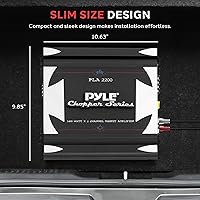
  • Dimensions: The chassis measures 9.85 x 10.63 x 1.38 inches, making it one of the slimmer options in its class.
  • Weight: The unit weighs 4.99 pounds, which is light enough for straightforward single-person installation.
  • Mounting Type: Designed for surface mounting, compatible with flat installation surfaces such as trunk floors or under-seat panels.
  • Indicators: LED power indicators are included on the unit to provide a quick visual confirmation that the amp is receiving power.
  • Color: Available in black with a standard brushed finish typical of entry-level car amplifiers.
  • Input Type: Accepts low-level RCA inputs, making it compatible with most aftermarket head units that provide preamp outputs.
  • Market Availability: This model has been continuously available since its initial release in October 2001 and is not discontinued.
  • Box Contents: The package includes the amplifier unit only; installation hardware and wiring are sold separately.

Related Reviews

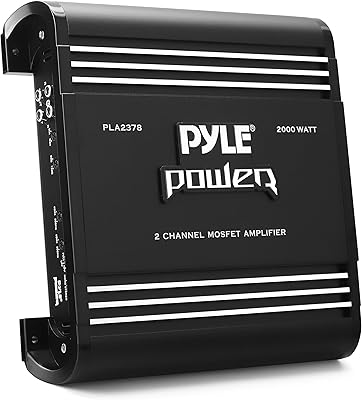
Pyle PLA2378 2-Channel Car Amplifier
72%
83%
Value for Money
51%
Power Output Accuracy
67%
Build Quality
88%
Ease of Installation
58%
Heat Management
More
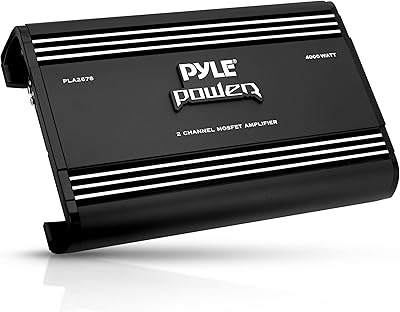
Pyle PLA2678 2-Channel Car Stereo Amplifier 4000W
85%
91%
Power Output
87%
Sound Clarity
84%
Build Quality
90%
Compact Design
67%
Thermal Management
More
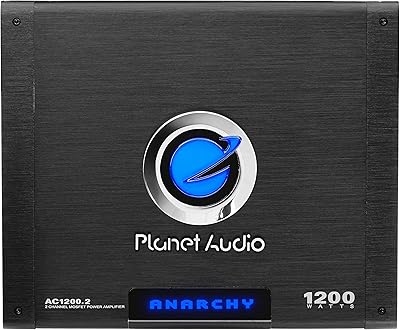
Planet Audio AC1200.2 2-Channel Car Amplifier
72%
84%
Value for Money
67%
Power Output
88%
Ease of Installation
71%
Sound Quality
58%
Thermal Performance
More
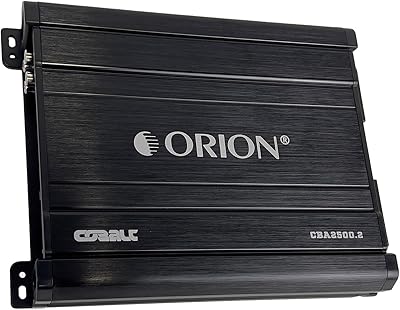
Orion Cobalt Series CBA2500.2 2-Channel Car Amplifier
88%
94%
Power Output
89%
Sound Quality
90%
Heat Management
85%
Ease of Installation
87%
Bass Boost Effectiveness
More
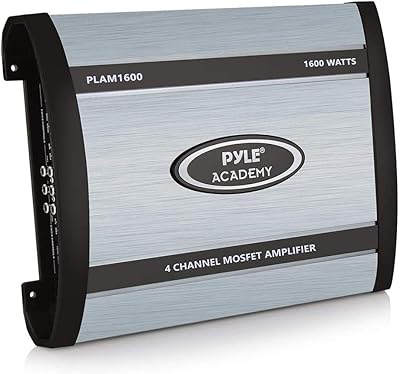
Pyle PLAM1600 4-Channel Car Amplifier
69%
74%
Value for Money
67%
Sound Quality
51%
Power Output Accuracy
83%
Ease of Installation
59%
Build Quality
More
Rockville dB25 2800W 2-Channel Car Amplifier
86%
94%
Power Output
89%
Sound Quality
85%
Ease of Installation
91%
Bass Control
82%
Durability
More
Rockville RVF-2 4-Channel Car Amplifier
84%
88%
Audio Quality
91%
Power Output
85%
Build Quality
72%
Thermals (Heat Management)
80%
Installation Ease
More
Pyle PTA1000BT 2-Channel Bluetooth Power Amplifier
73%
82%
Value for Money
51%
Power Output Accuracy
58%
Build Quality
89%
Ease of Setup
71%
Bluetooth Performance
More
Blaupunkt AMP2002 2-Channel Car Amplifier
65%
71%
Value for Money
83%
Ease of Installation
38%
Power Accuracy
74%
Sound Quality
52%
Thermal Management
More
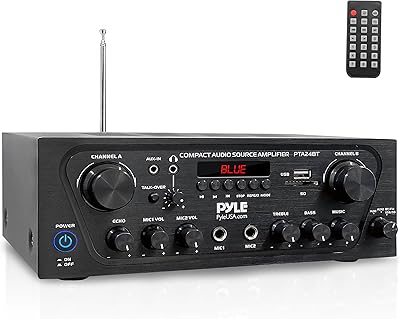
Pyle PTA24BT 2-Channel Karaoke Amplifier
73%
88%
Ease of Setup
83%
Bluetooth Reliability
74%
Microphone Performance
67%
Echo Effect Quality
54%
Actual Power Output
More

FAQ

Not in the way most people assume. The 1400W figure is peak bridgeable power measured under ideal lab conditions, and continuous RMS output — which is what actually matters for real-world listening — is considerably lower. Pyle does not publish an official RMS rating for this model, so treat the peak number as a ceiling you will never practically reach, not a baseline expectation.

You can do both, but not simultaneously in the most effective way. Running the amp in bridged mono mode lets you push more power to a single subwoofer, while stereo mode is better suited for a pair of door or component speakers. Just make sure your sub's impedance is compatible with the amp's bridged load rating before wiring it up.

In most cases, yes. At just 1.38 inches tall, the compact car amp is specifically designed for tight installs, and the footprint of roughly 9.85 by 10.63 inches fits under the seat of the majority of sedans, hatchbacks, and trucks. That said, measure your available clearance first — some vehicles with motorized seat rails or low seat frames leave less room than you'd expect.

No, and that is one of the more practical aspects of the design. The built-in variable electronic crossover lets you switch between high-pass and low-pass modes directly on the amp, which handles basic frequency filtering for both speakers and subwoofers without extra hardware. It won't replace a dedicated DSP for a complex system, but for a simple two-speaker or speaker-plus-sub setup, it's sufficient.

The Pyle PLA2200 2-Channel Car Amplifier is designed for low-level RCA input, so it works best paired with an aftermarket head unit that provides preamp outputs. If your factory stereo lacks RCA outputs, you will need a line output converter to transform the speaker-level signal into a compatible low-level signal before it reaches the amp's inputs.
It does run warm, especially at sustained higher volumes, which is fairly common among budget-tier amplifiers. The built-in thermal protection will cut the amp off before it damages itself or your speakers, but relying on that circuit as a regular occurrence isn't ideal. Mount it in a location with reasonable airflow — avoid completely sealed enclosures or areas directly next to heat sources like exhaust tunnels.

The terminal blocks on the PLA2200 physically accept thinner wire, but for reliable performance and safety, most experienced installers recommend at least 8-gauge wire for both power and ground on an amp in this power range. Using undersized wire can cause voltage drop, reduced output, and potential overheating — it is one of the most common installation mistakes buyers make with this unit.

Setting the gain too high is the most frequent cause of distorted or harsh-sounding audio from this dual-channel amplifier. The gain control is not a volume knob — it should be matched to the output voltage of your head unit. A practical approach: set your head unit to about 80 percent of its maximum volume, then slowly increase the amp gain until you hear distortion, and back it off slightly from that point.

It works best with an aftermarket head unit that has dedicated RCA preamp outputs. Connecting to a factory stereo is possible but requires a line output converter, and results can vary depending on how cleanly your factory unit outputs its signal. If you are upgrading your audio system from scratch, pairing this amp with an aftermarket head unit will give you the most predictable and clean results.

The bass boost switch amplifies the low-frequency output from your speakers or subwoofer, giving the sound more punch without requiring you to adjust your head unit's equalizer settings. Whether to leave it on depends on your taste and your speakers — some setups benefit from a little boost, while others end up sounding muddy or overloaded if the low end is pushed too hard. Start with it off, dial in your gain and crossover first, and only engage the boost if you feel the bass response is lacking.

Where to Buy