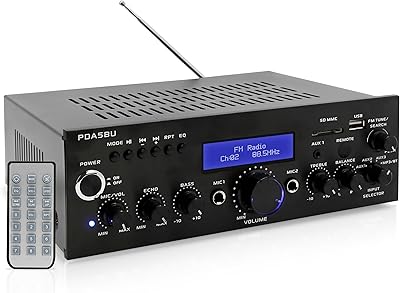
Pyle PTA62BT Bluetooth Karaoke Receiver Amplifier
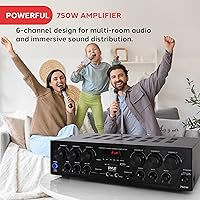
Pyle PTA62BT Bluetooth Karaoke Receiver Amplifier — image 1
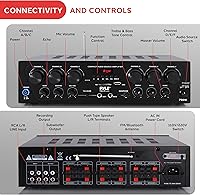
Pyle PTA62BT Bluetooth Karaoke Receiver Amplifier — image 2
Pyle PTA62BT Bluetooth Karaoke Receiver Amplifier — image 3
Pyle PTA62BT Bluetooth Karaoke Receiver Amplifier — image 4
Pyle PTA62BT Bluetooth Karaoke Receiver Amplifier — image 5

Pyle PTA62BT Bluetooth Karaoke Receiver Amplifier — image 6
Pyle PTA62BT Bluetooth Karaoke Receiver Amplifier — image 7
69%
31%

Overview

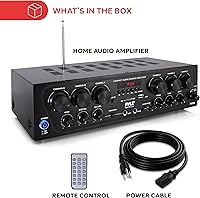
The Pyle PTA62BT Bluetooth Karaoke Receiver Amplifier is a compact, reasonably priced home audio unit that has quietly held its ground in the audio receiver market since 2017. It handles up to 750W peak power across six channels — worth noting that peak is the operative word here, not continuous RMS output. Weighing under 10 pounds and measuring roughly 6.9 by 13.8 by 3.6 inches, this karaoke amplifier fits comfortably on a shelf or AV cabinet without dominating the room. It ships with a remote control included, which feels like a thoughtful touch for a unit at this price point. Small venues, home entertainment rooms, and classroom PA setups are all realistic use cases.

Features & Benefits

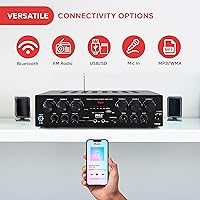
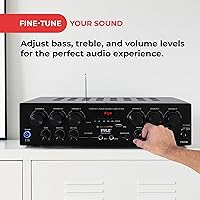
What makes this Bluetooth PA receiver genuinely useful is the range of inputs packed into a small chassis. You get Bluetooth wireless streaming, USB and micro SD playback, AUX, and a built-in FM tuner with a digital LCD display — seven inputs total, which is a lot for a unit this size. The dual microphone inputs each accept standard quarter-inch plugs and include an echo effect that adds just enough reverb for karaoke without sounding overwrought. The talk-over function is practical: press the button during a gathering and the background music dips while you make an announcement. Rotary EQ knobs and separate mic and master volume controls sit on the front panel, letting you dial things in without hunting through menus.

Best For

This home audio amp is a solid pick for people who want karaoke capability without building a rack-mounted pro system. It works well in living rooms, finished basements, or small community spaces like a church hall or classroom where a basic PA setup is all that is needed. If you are a casual event host running background music at birthday parties or family gatherings, this unit covers the basics without a steep learning curve. It also suits buyers who need both wired and wireless flexibility — connecting a phone via Bluetooth one moment and switching to a USB drive the next is straightforward. It is not the right tool for serious audio engineers or anyone expecting studio-grade output.

User Feedback

Buyers consistently point to easy Bluetooth pairing and the sheer number of input options as standout positives — for a casual home setup, having that many connection choices genuinely matters. Many users also find the value proposition strong, noting that comparable feature sets on other brands cost considerably more. On the critical side, some owners flag that real-world output falls well short of the 750W peak figure, which is expected but worth knowing upfront. The mic echo quality draws mixed reactions: enough for a fun karaoke night, not convincing for anyone with serious audio expectations. A handful of buyers mention that the FM tuner sensitivity is average and the LCD is dim in bright rooms. Long-term durability gets occasional mention as a concern, though most report no issues within the first year or two.

Pros

  • Bluetooth pairing is quick and reliable across phones, tablets, and most modern devices.
  • Seven input options give you genuine flexibility — USB, AUX, micro SD, FM, and more in one unit.
  • Dual mic inputs with echo effect make karaoke nights easy to set up and fun to run.
  • The talk-over function works well for announcements, dipping music automatically when activated.
  • Compact size and light weight make it easy to position on a shelf or move between rooms.
  • Ships with a remote control, which is a useful inclusion for a unit in this category.
  • Front-panel rotary knobs keep volume and EQ adjustments intuitive with no menu diving required.
  • RCA subwoofer output allows integration with a sub for a fuller low-end when needed.
  • Many owners feel this home audio amp punches above its weight compared to pricier alternatives for casual use.
  • A wide speaker impedance range of 4 to 8 ohms makes it compatible with most common home speakers.

Cons

  • Continuous real-world output falls well short of the advertised 750W peak figure.
  • Mic echo quality satisfies casual use but will disappoint anyone with higher audio standards.
  • FM tuner sensitivity is average, and signal reception can be weak in some locations.
  • The LCD display is dim and can be difficult to read clearly in a bright room.
  • Build materials feel lightweight, raising some questions about durability under regular long-term use.
  • No optical or HDMI input limits compatibility with newer TVs and home theater setups.
  • Only one remote control included with no mention of a replacement or app-based control option.
  • WMA is the noted media format, which may cause compatibility issues with some audio file types.
  • Heat management under extended use is worth monitoring, especially in enclosed cabinet spaces.

Ratings

The scores below for the Pyle PTA62BT Bluetooth Karaoke Receiver Amplifier were generated by AI after systematically analyzing verified global buyer reviews, with spam, bot-submitted, and incentivized feedback actively filtered out. The results reflect a candid cross-section of real-world experiences — both where this home audio amp earns genuine praise and where it falls short of expectations. Nothing has been softened or inflated; the ratings represent what actual owners consistently report across casual home use and small venue scenarios.

Value for Money
83%
Buyers frequently call out how much functionality this karaoke amplifier delivers relative to what comparable units charge. The combination of Bluetooth, dual mic inputs, multiple playback sources, and a remote control in a single unit at this price tier is genuinely hard to beat for casual home use.
The value equation depends heavily on keeping expectations realistic. Buyers who push the unit hard — running it at high volume for extended sessions or comparing it to pricier receivers on raw audio quality — tend to feel the value proposition erodes quickly.
Bluetooth Connectivity
81%
19%
Pairing is consistently described as fast and fuss-free across phones, tablets, and laptops. Most users report the connection holds steady across a typical living room or small hall without the signal drops that plague cheaper wireless audio gear.
Range and stability are average rather than exceptional, and thick walls or competing wireless signals can introduce stuttering. A small number of users report the unit occasionally fails to reconnect automatically after the source device goes to sleep.
Microphone Performance
67%
33%
For a casual karaoke night at home, the dual mic inputs and built-in echo effect do the job. Having two independent quarter-inch inputs means two singers can perform simultaneously, and the echo adds enough depth to make the experience feel more polished than singing completely dry.
Anyone with experience using a proper vocal processor will find the echo effect shallow and the mic clarity underwhelming at higher volumes. The lack of a dedicated echo depth control is a real limitation, and background hiss becomes noticeable when the mic volume is turned up.
Talk-Over Function
78%
22%
The manual talk-over button works reliably in practice — press it during a party or classroom session and the music ducks noticeably, letting your voice cut through without shouting over the audio. It is simple, immediate, and exactly what small venue PA users need.
The function is entirely manual with no automatic voice detection, so you have to press and hold or toggle it each time. This is fine for planned announcements but can feel clunky during spontaneous interruptions at a live gathering.
Input Variety
86%
Seven input options is a legitimate selling point, not marketing padding. Switching between Bluetooth from a phone, a USB stick with a playlist, or an AUX cable from a laptop covers virtually every casual entertainment scenario without needing a separate switcher or mixer.
The USB and micro SD playback is limited in media format support, with WMA being the primary listed format. Users with large MP3 or FLAC libraries may find they need to convert files or rely on Bluetooth streaming instead, which adds a minor but real inconvenience.
Build Quality
58%
42%
The chassis is compact and solid enough for shelf or cabinet placement, and most users report no functional issues within the first year of regular light use. The front-panel knobs and buttons feel adequately responsive for the price tier.
The overall construction leans noticeably plastic and lightweight, and longer-term durability is a recurring concern in buyer feedback. A handful of owners report components like the LCD display or input jacks showing wear after 18 to 24 months of consistent use.
Power Output
53%
47%
For small rooms and modest speaker setups, this Bluetooth PA receiver delivers sufficient volume to fill the space without obvious strain. It handles 4 to 8 ohm speakers competently at moderate listening levels for home use.
The 750W figure is peak power only, and real-world continuous output is significantly lower — a distinction that trips up many buyers. Anyone expecting to drive a large speaker array or sustain high output for outdoor use will hit the ceiling faster than the spec suggests.
EQ and Volume Controls
74%
26%
Having physical rotary knobs for equalization and separate controls for mic and master volume is a practical advantage over units that bury these settings in digital menus. Adjustments are immediate and tactile, which most users prefer during a live karaoke session.
The EQ range is fairly narrow, and experienced audio users will find the tuning options limited compared to even a basic graphic equalizer. There is no per-band frequency control, so correcting room acoustics beyond basic treble and bass adjustment is not really possible.
FM Tuner
51%
49%
The inclusion of a built-in FM radio with a digital LCD display adds a convenience layer that some buyers genuinely use, particularly in spaces where a standalone radio would otherwise be needed. Station locking is straightforward in areas with strong broadcast signals.
Tuner sensitivity is average at best, and users in suburban or rural areas with weaker signals report difficulty holding a clean lock. The LCD display showing frequency information is functional but dim, and reading it in a bright room requires getting uncomfortably close.
LCD Display
47%
53%
The digital display does its job of confirming FM frequency and basic input status, which is enough for simple navigation during a casual listening session. Users who set their source and leave it tend not to interact with it much anyway.
Brightness is the consistent complaint — the display is difficult to read in normal room lighting and nearly invisible in daylight. It is a minor detail but one that adds a layer of friction every time you need to confirm what input or station the unit is on.
Remote Control
72%
28%
Including a remote control in the box is a practical bonus that buyers appreciate, especially when the amp is positioned across the room from the seating area. Being able to adjust volume without walking to the unit repeatedly makes karaoke sessions feel more fluid.
The remote is a basic infrared unit with limited range and no backlit buttons, so using it in a dimly lit room requires some guesswork. There is no companion app or smart control option, and replacement remotes are not easy to find if the original is lost.
Setup Ease
84%
Most buyers report being up and running within minutes of unboxing, with no technical expertise required. Speaker connections are straightforward, Bluetooth pairing is intuitive, and the front-panel layout makes it obvious where inputs and controls are without reading the manual.
The manual itself is sparse and does not do a good job of explaining the talk-over function or the REC output, leading some users to miss features they paid for. Online support resources from Pyle are also limited, so troubleshooting beyond the basics requires community searching.
Subwoofer Integration
69%
31%
The RCA subwoofer output is a genuinely useful addition that lets users extend the system with a powered sub for fuller low-end response. In a basement or living room setup, this makes a noticeable difference when playing music at moderate volumes.
The subwoofer output level is not independently adjustable via a dedicated control, so blending the sub with the main speakers takes some trial and error. Users without a powered subwoofer get no benefit from this output at all.

Suitable for:

The Pyle PTA62BT Bluetooth Karaoke Receiver Amplifier is a practical choice for anyone who wants a capable, easy-to-use audio hub for casual home entertainment without the complexity or cost of a dedicated pro audio setup. Families who host regular karaoke nights will appreciate the dual microphone inputs, built-in echo effect, and the ability to stream music wirelessly from a phone in seconds. It also fits naturally in small community spaces — think a church fellowship hall, a school classroom, or a community center room — where basic PA functionality like voice announcements and background music is all that is really needed. Event hosts running birthday parties, small holiday gatherings, or low-key DJ sets will find the seven input options and talk-over button genuinely handy in practice. For buyers who are stepping into multi-channel home audio for the first time and want something that works out of the box, this home audio amp delivers a reasonable entry point without demanding a technical background.

Not suitable for:

The Pyle PTA62BT Bluetooth Karaoke Receiver Amplifier is not the right fit for buyers with serious audio performance expectations. The 750W figure is a peak rating, not a continuous RMS measurement, so anyone planning to drive a large speaker array at sustained high volumes will likely hit the ceiling faster than anticipated. Audiophiles, semi-professional event producers, or anyone running sound for a venue larger than a small room should look at purpose-built PA amplifiers with verified RMS output specs. The microphone echo effect, while fun for a family karaoke session, does not approach the quality of a dedicated vocal processor, so performing musicians or karaoke enthusiasts with higher sonic standards may find it underwhelming. The FM tuner is also average at best, and users in weak signal areas will notice. If long-term heavy-duty use is a priority, the build quality at this price tier introduces some uncertainty around durability over multiple years of regular use.

Specifications

  • Model Number: This unit is manufactured under the model designation PTA62BT.
  • Peak Output: The amplifier delivers up to 750W peak output power, which is a maximum burst figure rather than a continuous RMS rating.
  • Channels: The unit operates across 6 channels for multi-speaker audio distribution.
  • Impedance: Compatible with speakers rated at 4 to 8 ohms impedance.
  • Dimensions: The chassis measures 6.89 x 13.78 x 3.55 inches, making it suitable for standard shelf or cabinet placement.
  • Weight: The unit weighs 9.59 pounds, light enough for easy repositioning without assistance.
  • Connectivity: Inputs include Bluetooth, AUX, USB, micro SD, and a built-in FM radio tuner with digital LCD display.
  • Mic Inputs: Two front-panel quarter-inch microphone inputs are included, each supporting standard dynamic microphone plugs.
  • Mic Effects: Both microphone channels feature a built-in echo effect and a dedicated talk-over function that ducks background audio.
  • Outputs: The rear panel provides RCA subwoofer output and a REC output for connecting to external recording or playback devices.
  • EQ Controls: Front-panel rotary knobs handle equalization, master volume, and individual microphone volume adjustments.
  • Media Format: USB and micro SD playback supports WMA audio format files.
  • Remote Control: A remote control is included in the box for adjusting audio settings from a distance.
  • Compatible Devices: The unit is designed to work with smartphones, tablets, televisions, and passive speaker systems.
  • Display: A built-in digital LCD display shows FM tuner frequency and basic playback information.
  • First Available: This product was first listed for sale in December 2017 and remains an active, non-discontinued model.

Related Reviews
Pyle PVTA80 Bluetooth Tube Amplifier Receiver
86%
88%
Sound Quality
84%
Bluetooth Connectivity
91%
Power Output
83%
Ease of Setup
87%
Build Quality
More
Pyle PFA600BU Bluetooth Karaoke PA Amplifier
70%
81%
Value for Money
88%
Ease of Setup
62%
Audio Output Quality
58%
Microphone Performance
79%
Bluetooth Connectivity
More
Pyle PTA44BT.5 Karaoke Amplifier
71%
76%
Value for Money
67%
Sound Quality
74%
Microphone Performance
81%
Bluetooth Connectivity
88%
Input Versatility
More
Pyle PTA24BT 2-Channel Karaoke Amplifier
73%
88%
Ease of Setup
83%
Bluetooth Reliability
74%
Microphone Performance
67%
Echo Effect Quality
54%
Actual Power Output
More
Pyle PTA42BT Bluetooth Karaoke Stereo Amplifier
76%
88%
Ease of Setup
84%
Bluetooth Connectivity
79%
Microphone Performance
86%
Talk-Over Function
67%
Power & Volume Output
More
Pyle PD3000BT.5 4-Channel Bluetooth Stereo Receiver
71%
78%
Value for Money
83%
Karaoke Performance
87%
Input & Connectivity Variety
71%
Bluetooth Reliability
58%
Build Quality
More
Pyle PT888BTWM.5
Pyle PT888BTWM.5
68%
78%
Value for Money
82%
Karaoke Performance
47%
Build Quality
81%
Bluetooth Connectivity
63%
Sound Quality
More
Pyle PT588AB 5.1 Channel Home Theater Receiver
70%
74%
Value for Money
52%
Build Quality
61%
Audio Performance
83%
Karaoke Functionality
78%
HDMI Connectivity
More
Pyle PVTA90 Bluetooth Tube Amplifier
85%
89%
Sound Quality
84%
Bluetooth Connectivity
87%
Ease of Setup
91%
Power & Performance
82%
Build Quality
More
Pyle PDA69BU Stereo Amplifier Receiver
75%
83%
Bluetooth Connectivity
74%
Sound Quality
79%
Build Quality
86%
Value for Money
88%
Input Versatility
More

FAQ

You can plug in two microphones simultaneously using the two quarter-inch inputs on the front panel. Both channels operate independently, so you can adjust their volumes separately, which is handy for duet karaoke setups.

Most users report stable pairing once the initial connection is established. Bluetooth range and stability will depend on your device and environment, but for typical living room distances, the connection holds reliably. Walls and interference sources can reduce performance, as with any Bluetooth device.

It is important to understand that 750W is a peak figure, not continuous RMS output, which means real-world sustained power is considerably lower. For a typical living room, basement, or small community hall, it performs adequately. For larger venues or outdoor use, you would likely need a more powerful dedicated PA amplifier.

Yes, the rear panel includes an RCA subwoofer output, so you can run a passive or powered subwoofer alongside your main speakers to add low-end depth to the audio.

Based on the product specifications, the USB and micro SD playback is listed as supporting WMA format. If your music library is in MP3 or other formats, it is worth verifying compatibility before relying on USB playback as your primary audio source.

The talk-over function is manually activated by pressing a dedicated button on the front panel. When pressed, it ducks the background music so your voice comes through clearly. It does not respond to voice automatically — you trigger it intentionally, which actually makes it easier to control during announcements.

Yes, the unit is rated to work with speakers in the 4 to 8 ohm impedance range, so 4-ohm speakers are compatible. Just make sure you are not running the amp at maximum volume for extended periods, as that can stress components in any unit at this price tier.

The unit includes a REC output via RCA connectors, which means you can route the audio signal to an external recording device such as a digital recorder or a laptop with an audio interface. It does not record internally to USB or SD card.

The echo effect is part of the mic channel, and the front-panel controls let you adjust mic volume and overall EQ, giving you some influence over the final sound. However, dedicated echo depth control is not documented as a separate parameter, so fine-grained reverb tuning is limited compared to a standalone vocal processor.

The built-in FM tuner is functional but average in sensitivity. In urban areas with strong broadcast signals, it works fine. In rural or signal-weak locations, reception can be inconsistent, and some users report difficulty locking onto weaker stations clearly. It is a convenience feature rather than a high-performance tuner.

Where to Buy