
Overview

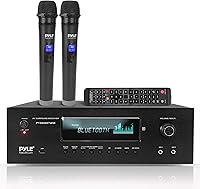
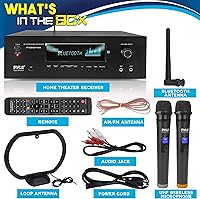
The Pyle PT888BTWM.5 is a 5.2-channel home theater receiver that bundles karaoke capability, Bluetooth streaming, and AV amplification into a single unit — a combination that's genuinely hard to find without spending significantly more. Launched in mid-2021, this home theater amp sits comfortably in the budget-to-mid-range tier, making it accessible for families who want a capable entertainment hub without piecing together a separate system from scratch. It isn't trying to compete with audiophile-grade hardware, and it doesn't pretend to. What it offers instead is practical versatility for everyday home entertainment, and for many buyers, that's exactly the point. Its consistent Amazon ranking among the top audio receivers reflects real, sustained buyer interest.

Features & Benefits

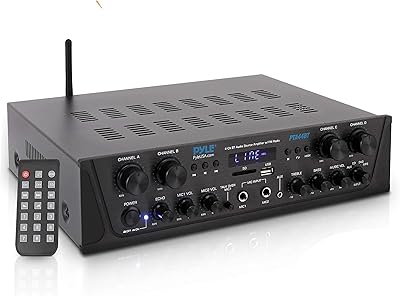
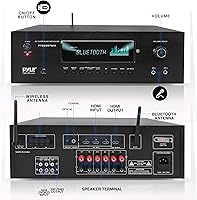
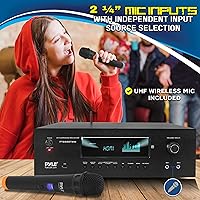
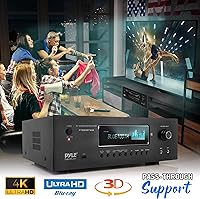
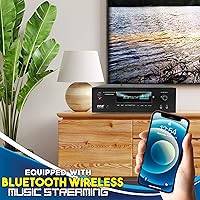
The standout detail is the inclusion of two UHF wireless microphones right in the box — not something you typically see at this price point without paying extra. Bluetooth pairing connects quickly to phones, tablets, and laptops for cable-free music playback. The HDMI input supports 4K UHD and 3D pass-through, so video quality stays intact when routing through this karaoke receiver. Beyond that, USB, RCA, optical audio, and an AM/FM tuner cover most real-world source scenarios. The built-in DSP lets you adjust echo, bass, treble, and mic levels independently, which makes a noticeable difference when you're trying to balance vocals over backing tracks during a lively gathering.

Best For

This home theater amp makes the most sense for households where karaoke is a regular occasion — think birthday parties, family gatherings, or weekend hangouts where everyone wants a turn at the mic. It also works well as a replacement for an aging stereo receiver, especially if your current setup lacks HDMI or Bluetooth. The all-in-one format suits smaller living rooms or basement setups where stacking multiple devices isn't practical. If you stream music constantly from your phone, the wireless connectivity handles that without fuss. It's not built for critical listening sessions, but for casual, social entertainment, the Pyle receiver covers a lot of ground efficiently.

User Feedback

Reviews are split, and it's worth being upfront about that. Buyers regularly praise easy Bluetooth pairing and microphone performance for home karaoke use — the echo controls in particular get favorable mentions for making casual singers sound respectable. Where things get rocky is build quality; a notable share of users report reliability concerns within the first year. Several buyers also feel the 1000W figure is misleading, which is fair — that's a peak rating, not continuous RMS output. The included manual has drawn criticism for being unclear during setup. Go in with realistic expectations and this karaoke receiver can genuinely deliver for parties; just don't expect heirloom-grade durability.

Pros

  • Two UHF wireless microphones are included out of the box, which is genuinely uncommon at this price tier.
  • Bluetooth pairing is consistently fast and reliable for daily music streaming from phones and tablets.
  • The all-in-one format saves money and shelf space compared to buying a receiver and karaoke system separately.
  • HDMI pass-through preserves 4K and 3D video quality when routing modern sources through the amp.
  • Independent DSP controls for echo, bass, treble, and mic volume make karaoke sessions easy to tune on the fly.
  • A wide range of inputs — USB, RCA, HDMI, optical, and AM/FM — means most existing home setups connect without adapters.
  • The VFD front display is bright and readable from across a room during active use.
  • Built-in over-current and over-voltage protection adds a layer of safety that budget units often skip.

Cons

  • A significant share of buyers report hardware failures within the first year of regular use.
  • The included manual is vague and poorly organized, making initial setup unnecessarily difficult for newcomers.
  • Real-world power output falls noticeably short of what the peak 1000W specification implies.
  • Microphone audio quality degrades in quieter passages, with background hiss becoming noticeable during softer songs.
  • Input switching between sources lacks the smooth, responsive feel found on competing receivers in a similar range.
  • The remote control feels flimsy and requires precise aiming, making it unreliable from across a room.
  • USB playback has format compatibility limitations that some buyers only discover after purchase.
  • No graphic equalizer or audio presets limits fine-tuned sound control beyond basic knob adjustments.

Ratings

The Pyle PT888BTWM.5 earned these scores after our AI system processed verified buyer reviews from multiple global markets, actively filtering out incentivized, duplicate, and bot-generated submissions to surface what real users actually experienced. Ratings reflect both where this karaoke receiver genuinely delivers and where it lets buyers down — nothing is softened to flatter the brand. The result is an honest, balanced picture designed to help you decide whether this home theater amp fits your specific situation.

Value for Money
78%
22%
For buyers who want an AV receiver and a karaoke system without purchasing two separate units, the pricing makes a compelling case. The inclusion of two wireless microphones alone would cost extra elsewhere, which pushes the overall value proposition noticeably higher for party-focused households.
Some buyers feel the gap between the advertised feature count and real-world performance quality undermines the deal. When build longevity is factored in, the effective cost-per-year of ownership looks less attractive than the upfront price suggests.
Karaoke Performance
82%
18%
The DSP echo controls give casual singers a genuine confidence boost during home parties — you can dial in reverb and mic volume independently, which makes a real difference when the room gets loud. Most users find the wireless mics responsive and clear enough for fun, informal sessions.
This is firmly a home-entertainment system, not a professional karaoke rig. Users expecting studio-grade vocal clarity or tight latency control will find the audio processing a step below dedicated karaoke amplifiers in the same price range.
Build Quality
47%
53%
The unit has a solid front panel aesthetic and feels substantial on a shelf, which gives a reasonable first impression out of the box. A handful of buyers report months of reliable use without any issues, particularly in lighter-use setups.
Durability is the single most common complaint across verified reviews. A notable portion of buyers experienced hardware failures, intermittent connectivity drops, or component issues within the first year, raising legitimate concerns about long-term reliability for daily or frequent use.
Bluetooth Connectivity
81%
19%
Pairing a phone or tablet is consistently described as quick and frustration-free across most reviews — no app required, no complicated menu navigation. Once connected, wireless music playback stays stable at normal listening distances, which suits typical living room or basement setups well.
A small but recurring group of users report occasional dropouts at longer ranges or interference in environments with multiple wireless devices. The Bluetooth range is adequate for casual use but not exceptional compared to newer receiver models.
Sound Quality
63%
37%
For background music, karaoke backing tracks, and general home theater audio, the Pyle receiver produces a satisfying enough sound that fills a mid-sized room without obvious distortion at moderate volumes. The bass and treble controls give users enough range to tune the output to their room.
The 1000W rating is peak output, not continuous RMS, and real-world loudness reflects that distinction clearly. Audiophile listeners or anyone pushing the system hard during extended sessions tend to notice compression and a lack of dynamic range that budget receivers in this class often struggle to overcome.
Wireless Microphone Quality
74%
26%
Two UHF wireless mics included at this price tier is genuinely uncommon, and for house parties and family karaoke nights they perform well above expectations. Range is workable for most living room configurations, and the signal stays reasonably clean during typical use.
The microphones are not built to a professional standard, and background hiss becomes noticeable in quieter musical passages. Buyers who plan to use them for anything beyond casual entertainment — like small performances or recordings — should budget for an upgrade.
Setup & Installation
59%
41%
Some buyers found the initial hookup intuitive, particularly those replacing an older receiver with similar connection types. The front panel layout is straightforward once you understand the input routing, and the remote control covers the most-used functions without excessive menu diving.
The included manual is widely criticized for being vague and poorly organized, leaving first-time receiver buyers to piece together the setup through trial and error or online searches. HDMI and optical routing in particular caused confusion for users less familiar with AV equipment.
Input & Output Versatility
84%
The range of available connections — HDMI, USB, optical, RCA, and AM/FM — means most buyers can integrate this home theater amp into their existing setup without adapters or workarounds. That breadth is a practical advantage over more limited units at a comparable price.
Some inputs feel like checkbox features rather than fully optimized connections. The USB playback functionality, for instance, has received mixed feedback regarding format compatibility, and a few users noted that switching between inputs is less smooth than expected.
Remote Control
66%
34%
The included remote covers volume, input switching, and DSP adjustments without requiring you to walk to the unit constantly, which is a convenience most buyers appreciate during karaoke sessions or movie nights. Response time is generally reliable within a reasonable line-of-sight distance.
The remote feels lightweight and cheap in hand, and several users report delayed response or the need to aim precisely at the receiver for commands to register. It covers the basics but does not inspire confidence for long-term daily use.
HDMI & Video Pass-Through
71%
29%
4K UHD and 3D video pass-through works as advertised for most users, allowing the receiver to sit between a source device and a modern TV without degrading picture quality. For buyers consolidating audio and video routing through one box, this is a genuinely useful feature.
A minority of users reported minor signal compatibility issues with certain TV and source device combinations, particularly older hardware. The pass-through is functional but not as polished as what you would find in a dedicated AV receiver at a higher price point.
AM/FM Tuner
61%
39%
The built-in AM/FM radio tuner adds practical everyday utility for users who still rely on broadcast radio, and it works reliably in areas with decent signal strength. It rounds out the all-in-one value story nicely for less digitally-focused households.
Reception quality in weak-signal areas is average at best, and the antenna provided is basic. Buyers in urban environments with interference or rural areas with weaker broadcast coverage may find the tuner underwhelming compared to a dedicated radio unit.
Display & Interface
68%
32%
The VFD front display is bright and legible from across a room, making it easy to check input source, volume level, and radio frequency without squinting. The front panel control layout is clean enough for quick manual adjustments during a party when the remote is buried under cushions.
The display provides only basic information and offers no visual feedback for DSP settings or equalizer levels, which makes fine-tuning audio by feel rather than by reference. The interface overall feels dated compared to competitors offering digital displays with more contextual information.
DSP & EQ Controls
72%
28%
Independent controls for echo, bass, treble, and microphone volume give users meaningful flexibility to shape the sound for different scenarios — turning down the echo for background music and cranking it up when karaoke starts is genuinely handy. Most buyers find this quick to learn.
The DSP options are effective for basic adjustments but limited in depth. There is no graphic equalizer or preset mode, which means users looking for more precise sonic control will find the system restrictive once they have pushed the basic knobs to their preferred positions.
Reliability & Longevity
44%
56%
Units that survive the first few months of regular use tend to continue functioning adequately for casual home entertainment purposes. Buyers who use the receiver lightly — occasional weekend karaoke, background music — generally report fewer problems than heavy daily users.
Long-term durability is the most significant unresolved concern around this home theater amp. The frequency of early failure reports across verified reviews is high enough to suggest a quality control inconsistency at the manufacturing level, which is a real risk buyers should weigh carefully before purchasing.

Suitable for:

The Pyle PT888BTWM.5 is a smart pick for households where entertainment is social and karaoke is a regular fixture — think birthday parties, family game nights, or basement hangouts where everyone wants a turn at the mic. Buyers who are upgrading from an old stereo receiver and want modern connectivity like HDMI pass-through and Bluetooth without juggling multiple devices will find this home theater amp covers a lot of ground in one box. It also makes practical sense for anyone on a tighter budget who would otherwise need to purchase a separate karaoke machine and a receiver, since bundling those functions here represents real savings. Small to mid-sized rooms are where this unit performs most comfortably — it is not trying to fill a large hall, and in the right-sized space it holds its own. Casual streamers who constantly play music from their phones will also appreciate how quickly the Bluetooth pairing works day to day.

Not suitable for:

Buyers who prioritize long-term reliability or plan to use this karaoke receiver heavily on a near-daily basis should approach with caution — the pattern of early hardware failures reported by a meaningful share of verified buyers is a legitimate red flag worth taking seriously. The Pyle PT888BTWM.5 is also not a good fit for anyone expecting true high-fidelity audio; the 1000W figure is a peak rating, not continuous RMS output, and critical listeners will notice the ceiling during demanding playback. If you need a clean, detailed setup process with a well-written manual, this unit will frustrate you — the documentation is consistently flagged as inadequate, and first-time receiver buyers may find themselves searching online for answers that should have been in the box. Dedicated home cinema enthusiasts building a serious surround sound system should look elsewhere, as this amp's processing and power delivery are calibrated for casual entertainment rather than cinematic precision. Professional or semi-professional performers who need tight mic latency and studio-grade vocal clarity will quickly outgrow what the wireless microphones here can offer.

Specifications

  • Model Number: The unit is manufactured under model designation PT888BTWM.5 by Pyle.
  • Peak Power: Total peak power output is rated at 1000W across all channels; this is a peak figure, not continuous RMS output.
  • Channels: The receiver operates on a 5.2-channel configuration, supporting five speaker channels and two subwoofer outputs.
  • Impedance: Compatible with speakers rated between 4 and 16 ohms impedance for flexible speaker pairing.
  • Dimensions: The unit measures 13.78 x 16.93 x 5.59 inches, making it a full-width component suitable for standard AV shelving.
  • Weight: The receiver weighs 23.4 pounds, reflecting a solid internal build typical of mid-range AV amplifiers.
  • Bluetooth: Built-in Bluetooth enables wireless audio streaming from smartphones, tablets, and computers without any companion app required.
  • Microphones: Two UHF wireless microphones are included in the package, connecting via dedicated 1/4-inch mic input jacks on the front panel.
  • Video Support: HDMI pass-through supports 4K Ultra HD and 3D video signals, allowing connected sources to output full-resolution video to a compatible TV.
  • Audio Inputs: Available inputs include HDMI, USB, RCA stereo, optical/digital audio, and a built-in AM/FM radio tuner.
  • DSP Controls: Onboard digital signal processing provides independent adjustment of echo, bass, treble, microphone volume, and master volume levels.
  • Display: A VFD (vacuum fluorescent display) panel on the front face shows input source, volume level, and radio frequency information.
  • Remote Control: A full-function infrared remote control is included for adjusting volume, switching inputs, and accessing DSP settings from a distance.
  • Protection Circuits: The receiver includes built-in over-current, short-circuit, and over-voltage protection to safeguard connected speakers and internal components.
  • Subwoofer Output: A dedicated RCA subwoofer output allows direct connection of a powered subwoofer for extended low-frequency performance.
  • Availability: The product was first listed and made available for purchase in June 2021.

Related Reviews
Pyle PPHP266B.5 Bluetooth Karaoke Speaker
83%
86%
Sound Quality
88%
Bass Performance
91%
Portability
85%
Ease of Use
80%
Battery Life
More
Pyle PHCD22.5 Portable CD Player Boombox
79%
75%
Sound Quality
88%
Portability
80%
Bluetooth Connectivity
90%
Ease of Use
83%
Value for Money
More
Pyle Marine ATV Powered Speakers PLATV85BT.5
86%
87%
Sound Quality
92%
Bluetooth Connectivity
85%
LED Lighting Effects
90%
Durability and Waterproofing
89%
Ease of Installation
More
Pyle PLMRF65SB Marine Speakers 6.5-Inch
85%
86%
Sound Quality
92%
Build Quality
91%
Water Resistance
88%
Ease of Installation
75%
Bass Performance
More
Pyle PLE550BS 5-Band Graphic Equalizer with Bluetooth
83%
87%
Sound Customization
91%
Bluetooth Connectivity
85%
Ease of Use
63%
Subwoofer Control
88%
Integration with Devices
More
Pyle PDIC68FG 6.5” Ceiling Speaker Set
86%
86%
Sound Quality
92%
Ease of Installation
68%
Bass Response
88%
Build Quality
90%
Compatibility with Ceiling/Wall
More
Pyle PTA44BT.5 Karaoke Amplifier
71%
76%
Value for Money
67%
Sound Quality
74%
Microphone Performance
81%
Bluetooth Connectivity
88%
Input Versatility
More
Pyle PLMRX68LEW 6.5” Waterproof Marine Speakers
84%
88%
Sound Quality
91%
Waterproof Performance
82%
LED Lighting Features
84%
Ease of Installation
89%
Build Quality & Durability
More
Pyle PCM20A.5 Compact Mini Home Power Amplifier
85%
86%
Sound Performance
91%
Portability
90%
Ease of Setup
83%
Build Quality
88%
Microphone Priority Feature
More
Pyle PLTS78DUB.5 Single DIN Head Unit Receiver
80%
88%
Value for Money
85%
Bluetooth Performance
91%
Ease of Installation
70%
Touchscreen Responsiveness
83%
Sound Quality
More

FAQ

Yes, two UHF wireless microphones are included right in the box — no extra purchase needed. They connect wirelessly to the receiver and are ready to use after a quick sync, which most buyers find takes only a minute or two.

That 1000W figure is the peak power rating, not the continuous RMS output the unit sustains during normal use. In practice, the real-world volume and headroom will be noticeably lower than that number implies, which is standard across most consumer receivers that advertise peak wattage. It is still plenty loud for a living room or basement party setup, but do not expect it to compete with a dedicated power amplifier rated at 1000W RMS.

Yes, the HDMI pass-through supports 4K UHD and 3D signals, so video from a connected source like a streaming box or Blu-ray player will pass to your TV at full resolution. You are routing audio through the receiver while the video signal continues unaltered to the display.

Honestly, the hardware connections themselves are not complicated — HDMI, RCA, and speaker wires are fairly standard. The bigger challenge is the included manual, which buyers consistently describe as unclear and thin on detail. Budget some extra time and look for setup guides or video walkthroughs online if you get stuck, as the printed documentation alone may not be enough for a first-time receiver owner.

As long as your speakers fall within the 4 to 16 ohm impedance range, they should be compatible. Most standard home speakers sold for home theater use fall within this range, but it is worth double-checking your speaker specs before connecting to avoid any impedance mismatch.

You do need speakers connected to the receiver to hear audio output — the unit does not have built-in speakers. Once you have a pair of passive speakers wired up, Bluetooth streaming works quickly and reliably for most phones and tablets.

It is fully adjustable. The DSP controls on the front panel let you dial the echo up or down independently of the microphone volume, so you can go from a light natural reverb to a heavier karaoke-style echo depending on what the room and the singer need.

The durability concern is real and worth acknowledging honestly. A meaningful portion of verified buyers have reported hardware issues within the first year, particularly with more frequent use. Buyers who use the receiver lightly — occasional weekend karaoke or background music — tend to report fewer problems than those running it daily. It is a risk factor you should weigh based on how heavily you plan to use it.

Yes, there is a dedicated RCA subwoofer output on the back panel specifically for this purpose. You would run a single RCA cable from that output to the line-level input on your powered subwoofer, and then adjust the sub volume independently from the receiver's main controls.

It works with any Bluetooth-enabled device — Android phones, iPhones, iPads, laptops, and most modern tablets all pair without issues. There is no proprietary pairing app involved, and buyers generally describe the connection process as fast and straightforward.