Overview

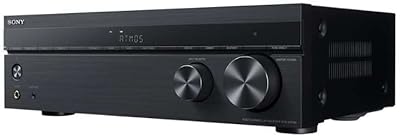
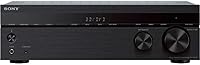
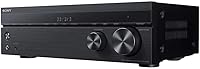
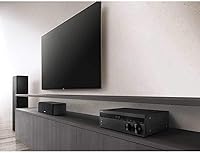
The Sony STR-DH590 has been around since 2018, and the fact that it still ranks in the top ten for audio component receivers says a lot about how well it holds up against newer competition. This Sony receiver sits comfortably in the entry-to-mid tier — not a bare-bones starter unit, but not trying to be a flagship either. It supports 4K HDR passthrough with HDCP 2.2, so it plays nicely with modern televisions and streaming sources. Bluetooth is built in, meaning wireless music from your phone works straight out of the box. The form factor is compact enough for most entertainment centers without dominating the shelf.

Features & Benefits

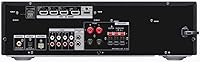
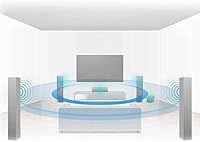
The 5.2-channel configuration lets you run a full surround setup with two subwoofer outputs — useful if you want serious low-end presence. Four HDMI inputs and a single output with Audio Return Channel keep your cable situation manageable across multiple devices. If you only have two speakers, S-Force PRO virtual surround does a respectable job widening the soundstage. The included auto-calibration system reads the room and adjusts speaker levels automatically, which is genuinely helpful for anyone not comfortable tweaking audio settings manually. Beyond home theater use, there is an FM tuner, a headphone jack, RCA inputs, and both optical and coaxial digital outputs — more connectivity than you might expect here.

Best For

This home theater receiver makes the most sense for someone stepping up from a soundbar for the first time — it handles real surround sound without requiring deep knowledge of audio equipment. Smaller living rooms and apartments benefit particularly from the virtual surround mode when speaker placement is limited. Anyone with a 4K HDR television will appreciate the HDMI hub functionality, since routing multiple sources through one unit cuts down on remote juggling. Cord-cutters who rely on phone-based music streaming will find Bluetooth genuinely convenient day to day. That said, if Dolby Atmos or dedicated Wi-Fi streaming are priorities, this receiver will leave you wanting — there are better-equipped options at a higher tier.

User Feedback

Owners consistently highlight how easy setup is, with documentation clear enough that first-timers rarely need outside help. The auto-calibration earns specific praise from non-audiophiles — it removes the guesswork from getting balanced sound in an unfamiliar room. Long-term owners frequently mention that this Sony receiver simply keeps working year after year without incident, which counts for a lot. The criticisms that surface most often are fair: the absence of Wi-Fi and no support for Dolby Atmos or DTS:X are real gaps that more demanding buyers will notice. A smaller number of users have flagged Bluetooth dropouts in larger spaces. Overall, the sentiment leans positive, with value for money being the theme that appears most consistently.

Pros

  • Genuine 5.2-channel surround sound at an entry-level price point that is hard to match in this category.
  • Four HDMI inputs with HDCP 2.2 support make it a practical hub for modern 4K entertainment setups.
  • Auto-calibration takes the guesswork out of speaker setup — ideal for first-time receiver owners.
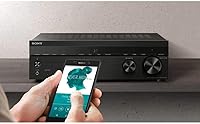
  • Built-in Bluetooth lets you stream music directly from a phone without any extra hardware.
  • Long-term owners consistently praise the reliability; this Sony receiver holds up well over years of daily use.
  • Broad input compatibility — RCA, optical, coaxial, and HDMI — means older and newer gear can coexist.
  • S-Force PRO virtual surround is a genuinely useful fallback for apartments where rear speakers are not practical.
  • FM tuner and headphone jack add everyday utility that goes beyond pure home theater use.
  • Compact dimensions fit neatly into standard entertainment center shelves without requiring significant reconfiguration.
  • Amazon Alexa compatibility allows hands-free volume and input control for smart home users.

Cons

  • No Dolby Atmos or DTS:X support — a hard ceiling for anyone building a modern object-based surround setup.
  • Complete absence of Wi-Fi rules out Spotify Connect, AirPlay, and any multi-room audio integration.
  • Bluetooth range drops noticeably in larger rooms, with dropouts reported beyond roughly 20 feet from the unit.
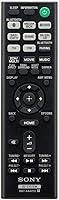
  • The bundled remote feels noticeably cheap and lacks backlighting, which is a recurring frustration in dim viewing environments.
  • No HDMI 2.1 means 4K at 120Hz passthrough is not supported — a growing concern for current-gen console users.
  • Single HDMI output limits flexibility for anyone using multiple displays or a more complex video routing setup.
  • No phono input means turntable users will need an external preamp to connect analog audio sources.
  • Smart feature set is essentially static — no companion app, no meaningful firmware expansion, and limited ecosystem growth.
  • Heat management requires meaningful clearance above the unit, which can complicate placement in enclosed media cabinets.
  • Newer buyers comparing this against current rivals will notice the 2018 feature set is starting to show its age.

Ratings

The scores below for the Sony STR-DH590 were generated by our AI engine after processing thousands of verified buyer reviews from global markets, with spam, incentivized, and bot-flagged submissions actively filtered out before analysis. What you see reflects the honest consensus of real owners — the things they genuinely love and the friction points they kept coming back to. Both sides of the picture are represented here, so you can make a grounded decision rather than a hopeful one.

Value for Money
91%
Owners repeatedly describe this Sony receiver as one of the most cost-effective ways to get real 5.2-channel surround sound into a living room. For buyers coming from a soundbar, the jump in audio depth feels disproportionate to the price difference, which earns consistent appreciation in long-form reviews.
A small but vocal group notes that once you factor in the cost of five speakers and a subwoofer, the total system spend climbs quickly — making the receiver's standalone price feel a bit misleading for true budget shoppers.
Ease of Setup
88%
First-time receiver owners are the most enthusiastic reviewers here. The included documentation is clear enough that most people complete a full 5.1 setup without consulting YouTube, and the auto-calibration removes the intimidating manual speaker-balancing step entirely.
A recurring complaint from users with more complex setups — those mixing older component gear with modern HDMI sources — is that the labeling on the rear panel could be more intuitive. It rarely causes serious problems, but it slows things down on day one.
Sound Quality
82%
18%
For its tier, the audio output is genuinely impressive during movie playback, with clear dialogue separation and a wide enough soundstage to make action sequences feel immersive. Music listening via Bluetooth also earns positive marks, especially for casual streaming sessions.
Dedicated audiophiles tend to find the sound processing a step behind higher-end units, particularly in dynamic range at louder volumes. The lack of Dolby Atmos support is the most cited limitation — buyers who want height channels will hit a hard ceiling with this receiver.
Connectivity & Inputs
86%
Four HDMI inputs is genuinely practical for a modern living room with a console, streaming stick, Blu-ray player, and cable box all competing for ports. Audio Return Channel works reliably, and the mix of RCA, optical, and coaxial outputs means older equipment integrates without adapters.
The single HDMI output is a limitation for anyone with a more complex display setup. There is no HDMI 2.1, so 8K and 4K at 120Hz passthrough are off the table — relevant if you own a recent gaming console and a compatible television.
Bluetooth Performance
74%
26%
Connecting a phone or tablet is quick, and the ability to power on the receiver remotely via Bluetooth standby mode is a small quality-of-life feature that daily streamers genuinely appreciate. Latency is low enough for casual video watching.
Range consistency is a recurring issue in larger rooms or open-plan spaces. A meaningful minority of users report dropouts when moving more than about 20 feet from the unit, which is frustrating for anyone expecting whole-room wireless coverage.
Build Quality & Durability
89%
Long-term owners — some reporting three or more years of daily use — consistently highlight that this home theater receiver simply keeps working without incident. The chassis feels solid for the price point, and the front panel controls have a reassuring tactile quality.
The remote control is widely considered the weakest physical component, described by multiple buyers as feeling cheap relative to the receiver itself. A few users also note that the ventilation design requires meaningful clearance above the unit to prevent heat buildup over extended sessions.
Auto-Calibration (D.C.A.C.)
83%
The automatic calibration system is a genuine differentiator for buyers who have never configured a surround sound system before. Running a quick calibration after positioning speakers produces noticeably more balanced audio than leaving settings at default, and most users report it takes under five minutes.
Experienced users note that the D.C.A.C. system is competent but not particularly sophisticated compared to calibration tools on higher-tier receivers. Manual fine-tuning is still recommended for rooms with unusual acoustics or unconventional speaker placements.
4K HDR Passthrough
81%
19%
HDCP 2.2 support means this Sony receiver handles protected 4K content from streaming devices and Blu-ray players without any handshake errors, which has been a genuine pain point on older budget units. HDR metadata passes through cleanly to compatible displays.
The passthrough is functionally solid but does not support newer HDR formats beyond the basics, and there is no 4K/120Hz capability. For a 2018 product this was acceptable, but buyers with newer hardware may find it starts to feel dated sooner than expected.
Virtual Surround (S-Force PRO)
71%
29%
In a small apartment where placing rear speakers is impractical, S-Force PRO delivers a meaningfully wider sound image than plain stereo. It works best at moderate volumes and with movie content, where the spatial processing has enough material to work with.
At higher volumes or with music content, the processing can introduce an artificial quality that more attentive listeners find distracting. It is a useful fallback, but it is not a replacement for a proper five-speaker layout in any room where placement is feasible.
Remote Control
58%
42%
The remote covers all primary functions and is laid out logically enough that most users can navigate inputs and volume without consulting the manual. For straightforward day-to-day use, it gets the job done.
The build quality of the remote is a recurring complaint — buttons feel mushy, and the lack of backlighting makes it awkward to use in a darkened home theater environment. Several buyers mention switching to a universal remote within the first few months.
Wi-Fi & Network Streaming
41%
59%
There is not much to praise here on its own terms, but buyers who knew what they were purchasing going in — and rely on Bluetooth or physical inputs — report that the omission does not affect their daily use at all.
The complete absence of Wi-Fi is the most polarizing specification gap in the review pool. Buyers expecting Spotify Connect, AirPlay, or multi-room audio functionality are consistently disappointed. For a receiver sold in 2024, this limitation is increasingly hard to overlook.
Dolby Atmos / DTS:X Support
38%
62%
The receiver handles standard Dolby Digital and DTS decoding competently, which covers the majority of disc and streaming content for most buyers in this tier.
No Dolby Atmos, no DTS:X. This is a hard stop for anyone building a home theater specifically around modern object-based audio formats. It is the single most mentioned technical limitation in critical reviews, and it is worth knowing before purchasing.
Input & Source Flexibility
84%
The combination of HDMI, RCA, optical, and coaxial inputs means this home theater receiver can integrate equipment spanning multiple decades without requiring adapters. The FM tuner is a quiet bonus that a surprising number of buyers mention using regularly.
There is no phono input for turntable users, and the absence of any streaming input beyond Bluetooth limits expansion options. Buyers planning to grow their system over time may find themselves needing an external streaming device sooner than expected.
Room Size Suitability
77%
23%
In small to medium rooms — roughly up to 300 to 400 square feet — this Sony receiver delivers more than enough power for an engaging surround experience. The 725W system output handles most speaker configurations in that range without strain.
In genuinely large living rooms or open-plan spaces, the receiver starts to feel underpowered at demanding listening levels. Combined with the Bluetooth range limitations, large-room buyers tend to leave less satisfied than those in more contained spaces.
App & Smart Features
62%
38%
Amazon Alexa compatibility allows voice-based volume control and input switching for users already embedded in that ecosystem, which a subset of buyers find genuinely useful as part of a broader smart home setup.
Beyond Alexa, the smart feature set is thin. There is no dedicated app, no multi-room audio support, and no firmware update path that adds meaningful functionality. Buyers expecting a connected receiver experience will find the STR-DH590 fairly static in this respect.

Suitable for:

The Sony STR-DH590 is the right call for anyone taking their first real step into home theater audio — specifically those graduating from a soundbar or relying on their television's built-in speakers. If your living room or apartment is small to medium in size, this receiver gives you genuine 5.2-channel surround sound without requiring an acoustics degree to set up. The auto-calibration handles the heavy lifting, which makes it particularly well-suited to buyers who want better sound but have no interest in manually configuring speaker levels. It also works well as a central HDMI hub for a 4K setup — four inputs means a gaming console, streaming device, Blu-ray player, and cable box can all live connected simultaneously. Cord-cutters who stream music daily from a phone will find the built-in Bluetooth reliable enough for everyday use in a standard-sized room. Sony's track record for hardware longevity makes this a reasonable long-term investment for buyers who prioritize reliability over cutting-edge features.

Not suitable for:

Buyers who want Dolby Atmos, DTS:X, or any form of height-channel audio should look elsewhere — the Sony STR-DH590 simply does not support object-based surround formats, and no firmware update will change that. If Wi-Fi streaming is part of your daily routine — whether that means Spotify Connect, AirPlay, or integrating into a multi-room audio system — this receiver will frustrate you, as Bluetooth is the only wireless audio option on offer. Enthusiasts who want to future-proof a system around 8K or 4K at 120Hz passthrough will also hit a wall, making this a poor fit for anyone who recently upgraded to a high-refresh-rate television. Large open-plan living spaces can push this receiver toward its limits both in terms of power and Bluetooth range, so bigger rooms deserve a more capable unit. Dedicated audiophiles or anyone planning a serious two-channel listening setup will find the sound processing underwhelming compared to what a similarly priced stereo amplifier could deliver.

Specifications

  • Channels: The receiver supports a 5.2-channel surround sound configuration, accommodating five speakers and two subwoofers simultaneously.
  • Total Power: System power output is rated at 725W across all channels, measured at 6 ohms, 1kHz, with 0.9% total harmonic distortion.
  • Impedance: Designed to drive speakers rated at 6 ohms, with compatibility extending to most standard home theater speaker packages.
  • HDMI: Equipped with 4 HDMI inputs and 1 HDMI output, all supporting HDCP 2.2 for protected 4K HDR content passthrough.
  • HDR Support: Passes through HDR-compatible video signals from source to display, supporting standard HDR formats via its HDMI connections.
  • Bluetooth: Built-in Bluetooth operates on the 2.4 GHz band and supports Bluetooth Standby, allowing the receiver to be powered on remotely from a paired device.
  • Audio Inputs: Offers 4 stereo RCA analog audio inputs alongside 1 optical and 1 coaxial digital audio input for connecting a range of source components.
  • Audio Outputs: Provides 1 optical and 1 coaxial digital audio output, plus a front-panel 1/4-inch headphone jack for private listening.
  • Calibration: Advanced D.C.A.C. (Digital Cinema Auto Calibration) automatically measures speaker distances, levels, and equalization using the included microphone.
  • Virtual Surround: S-Force PRO front surround processing simulates a multi-channel soundstage using only two front speakers when a full speaker layout is not possible.
  • Tuner: An analog FM radio tuner is built in, with preset storage for quick access to frequently used stations.
  • ARC Support: The HDMI output supports Audio Return Channel (ARC), enabling audio from a compatible television to be sent back to the receiver over a single HDMI cable.
  • Voice Control: Compatible with Amazon Alexa for hands-free control of basic functions including volume adjustment and input switching.
  • 360 Audio: Supports Sony 360 Reality Audio, a spatial audio format designed for compatible headphones and content sources.
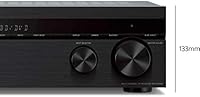
  • Dimensions: The unit measures 11.75 x 17 x 5.25 inches (W x D x H), fitting most standard entertainment center shelving without modification.
  • Weight: The receiver weighs 18.25 pounds, reflecting a solid internal build that contributes to its reported long-term durability.
  • Batteries: Two AA batteries are required for the remote control and are included in the box at time of purchase.
  • Release Date: The receiver was first made available on February 25, 2018, and remains an actively sold, non-discontinued product as of the time of writing.

Related Reviews
Sony STR-AZ1000ES
Sony STR-AZ1000ES
79%
93%
Build Quality
91%
Audio Performance
84%
Room Calibration (DCAC IX)
89%
HDMI & Video Connectivity
88%
Streaming & Wireless Features
More
Sony STR-AZ5000ES
Sony STR-AZ5000ES
82%
93%
Sound Quality
89%
Room Calibration (DCAC IX)
91%
HDMI Connectivity & Gaming
88%
Build Quality & Design
62%
Setup & User Interface
More
Sony STR-AZ7000ES 13.2 Channel 8K A/V Receiver
85%
95%
Audio Performance
94%
Video Quality
92%
Surround Sound Immersion
67%
Ease of Setup
89%
Connectivity & Ports
More
Sony STR-DH790
Sony STR-DH790
74%
84%
Sound Quality
81%
Auto-Calibration (D.C.A.C.)
86%
4K HDR Passthrough
78%
Connectivity & Inputs
47%
Wireless & Networking
More
Sony SRS-XB23
Sony SRS-XB23
87%
94%
Sound Quality
91%
Bass Performance
97%
Portability
89%
Build Durability
93%
Waterproofing
More
Sony VRDMC3 DVDirect
81%
88%
Recording Quality
91%
Ease of Use
85%
Setup & Installation
78%
Connectivity Options
84%
Disc Compatibility
More
Sony MDR-CD900ST
Sony MDR-CD900ST
89%
96%
Sound Accuracy
91%
Comfort & Fit
94%
Build Quality
92%
Durability
95%
Frequency Response
More
Sony WH-CH720NB
Sony WH-CH720NB
88%
94%
Noise Cancellation Effectiveness
91%
Sound Clarity
88%
Bass Performance
95%
Battery Life
90%
Comfort During Extended Use
More
Sony BDP-S360
Sony BDP-S360
86%
94%
Video Quality
90%
DVD Upscaling
88%
Audio Performance
91%
Setup & Installation
85%
Build Quality
More
Sony MDRXB600IP Headphones
82%
88%
Bass Performance
85%
Comfort for Extended Use
83%
Noise Isolation
78%
Build Quality
81%
Portability
More
Sony MDRE9LP Earbuds
79%
83%
Sound Quality
78%
Comfort & Fit
80%
Build Quality
75%
Microphone Performance
88%
Portability
More

FAQ

No, the calibration microphone is included in the box. You just plug it into the front of the receiver, follow the on-screen prompts, and the system measures your speaker layout automatically. It takes about five minutes and makes a noticeable difference in how balanced everything sounds.

Yes, the Sony STR-DH590 passes 4K HDR signals through its HDMI connections cleanly, including content protected by HDCP 2.2. As long as your TV and source device also support HDCP 2.2, you will not run into any handshake or compatibility issues with modern streaming services or 4K Blu-ray players.

It does not. This is one of the most important things to know before purchasing — the receiver handles standard Dolby Digital and DTS decoding, but object-based formats like Atmos and DTS:X are not supported. If height channels and ceiling speakers are part of your plan, you will need to look at a higher-tier unit.

Absolutely. The S-Force PRO virtual surround mode is specifically designed for two-speaker setups, and it does a reasonable job widening the soundstage for movies and TV. When you are ready to expand, you can add rear and center speakers at any point — the receiver supports a full 5.2-channel configuration.

There is no Wi-Fi in this receiver. Bluetooth is the only wireless audio option available, so services like Spotify Connect, Apple AirPlay, and TIDAL Connect will not work natively. If you stream heavily, you can pair your phone via Bluetooth, or connect an external streaming device through one of the HDMI or optical inputs.

You can keep up to four HDMI sources connected simultaneously — a gaming console, streaming stick, Blu-ray player, and set-top box, for example. There are also four RCA analog inputs plus optical and coaxial digital inputs, so in practice you will rarely run out of ports unless you have an unusually large number of components.

Yes, most 8-ohm speakers will work fine with this home theater receiver. The unit is rated for 6-ohm loads, but 8-ohm speakers are generally easier to drive, so compatibility is not a concern. Where you might run into issues is with very low-impedance speakers rated at 4 ohms — those are better suited to amplifiers specifically designed for low-impedance loads.

In most standard living room setups, Bluetooth is reliable and connects quickly. The issues that get reported tend to occur in larger rooms or when the phone is more than about 20 feet away with walls or furniture in between. For the majority of users in an average-sized room, it works without problems.

In most cases, yes. The receiver supports standard IR remote codes, and most programmable universal remotes — including Logitech Harmony devices — have profiles available for this model. Amazon Alexa voice control is also supported if you prefer hands-free operation as part of a smart home setup.

Sony recommends leaving several inches of open space above and around the unit to allow heat to escape during extended use. Installing it inside a completely enclosed media cabinet without ventilation can cause it to run hot, which some owners have linked to occasional shutdowns during long movie sessions. A shelf with open sides or a ventilated cabinet enclosure works well.