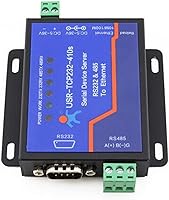
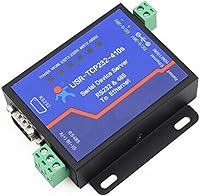
PUSR USR-TCP232-410S Serial to Ethernet Converter
Overview
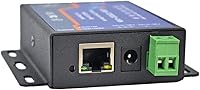
The PUSR USR-TCP232-410S Serial to Ethernet Converter is a dual-port industrial bridge built for engineers who still have RS232 and RS485 serial devices that need to communicate with modern IP networks. That situation is more common than people assume — legacy serial hardware doesn't disappear overnight, and replacing it wholesale rarely makes financial sense. Powered by an ARM Cortex-M4 running at 120MHz, this serial-to-Ethernet adapter has enough processing headroom to handle real-time protocol conversion without bottlenecks. It's compact enough to mount in a tight panel and rated to operate from -40°C to 85°C, which matters on factory floors or in outdoor enclosures where temperature extremes are routine. At its price point, it sits well below enterprise-tier alternatives while covering most practical integration scenarios.
Features & Benefits
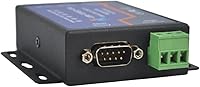
What makes the USR-TCP232-410S genuinely practical is that both serial ports — one RS232, one RS485 — run independently and simultaneously over a single RJ45 connection, letting you integrate two different devices in the same installation without adding another converter. The built-in Modbus RTU to TCP gateway handles PLC and SCADA communication directly, with no additional middleware required. Beyond Modbus, this Modbus gateway supports MQTT, HTTP, TCP, and UDP, making it straightforward to push data to a cloud endpoint in JSON format. It can track up to 128 Modbus data points and process them onboard, reducing upstream server load. Configuration runs through a web browser or virtual COM software, and SSL/TLS encryption with two-way certificate authentication covers deployments where data security is not optional.
Best For
This Modbus gateway is a practical fit for industrial automation engineers who need to connect serial PLCs or legacy sensors to an Ethernet-based SCADA environment without rebuilding their entire infrastructure. IoT developers building remote monitoring prototypes will also find it capable, particularly when a project demands simultaneous RS232 and RS485 device connectivity from a single unit. The wide operating temperature tolerance makes it a reasonable choice for outdoor enclosures or factory environments where consumer-grade hardware simply wouldn't survive long. Small integrators and independent contractors will appreciate solid protocol coverage at a fraction of the cost of branded enterprise solutions. Anyone running MQTT cloud pipelines who also needs to pull data from serial hardware will find this adapter handles both sides of that bridge cleanly.
User Feedback
Across roughly 77 ratings, this serial-to-Ethernet adapter holds a 4.0-star average — solid for a niche industrial device, though the modest review count means individual outlier experiences carry more weight than they would on a high-volume product. Several buyers specifically highlight reliable Modbus TCP conversion and describe the web configuration interface as navigable once you understand the device structure. The most consistent criticism points to documentation gaps: multiple reviewers describe the English manual as sparse or unclear, which can make first-time setup genuinely frustrating without prior experience on comparable hardware. A handful of users report stable continuous-duty operation over extended periods, which is a meaningful data point for always-on deployments. PUSR's manufacturer support responsiveness gets mixed mentions, so don't expect uniform after-sale assistance.
Pros
- Runs RS232 and RS485 simultaneously on two independent ports, a genuine time-saver for mixed-device installations.
- Native Modbus RTU to TCP conversion removes the need for additional gateway software or middleware.
- MQTT, HTTP, TCP, and UDP support makes direct cloud integration straightforward without extra hardware.
- Onboard processing of up to 128 Modbus data points reduces the load on upstream servers meaningfully.
- SSL/TLS with two-way certificate authentication is a serious security feature rarely found at this price tier.
- Wide operating temperature range of -40°C to 85°C holds up in harsh factory or outdoor environments.
- Web browser configuration interface is accessible to engineers without requiring proprietary desktop software.
- Power draw under 1W makes it practical for always-on deployments where energy efficiency matters.
- Compact footprint fits easily in DIN-rail enclosures or tight panel spaces.
- Ranked in the top 200 in its Amazon category, suggesting consistent real-world adoption among buyers.
Cons
- The English documentation is widely reported as thin and unclear, making first-time setup unnecessarily difficult.
- No prominent hardware certifications listed, which is a concern for regulated or safety-critical industrial environments.
- A base of 77 reviews is relatively small, so edge-case reliability data is limited.
- Manufacturer support responsiveness is inconsistent according to several buyers, which is a risk for production deployments.
- Virtual COM software configuration, while available, lacks the polish and documentation of competing solutions.
- Firmware update process is not well-documented, leaving long-term maintainability somewhat uncertain.
- Users unfamiliar with Modbus or serial device servers will face a steeper learning curve than expected.
- No DIN-rail mount is included in the standard package, requiring separate sourcing for panel installations.
Ratings
The scores below reflect an AI-driven analysis of verified buyer reviews for the PUSR USR-TCP232-410S Serial to Ethernet Converter, with spam, bot activity, and incentivized feedback actively filtered out to surface genuine field experience. Both the strengths that keep engineers coming back and the friction points that have frustrated first-time users are represented transparently across each category.
Protocol Coverage
Modbus Gateway Performance
Dual Serial Port Design
Setup & Configuration
Documentation Quality
Build Quality & Form Factor
Temperature Resilience
Security Features
Cloud & MQTT Integration
Power Efficiency
Firmware Stability
Value for Money
Manufacturer Support
Compatibility Range
Suitable for:
The PUSR USR-TCP232-410S Serial to Ethernet Converter is a strong fit for industrial automation engineers and system integrators who need to bring legacy serial devices into a modern networked environment without replacing the underlying hardware. If your workflow involves connecting RS232 or RS485 instruments — PLCs, sensors, meters — to a SCADA or Modbus TCP system, this adapter handles that translation directly, with no middleware layer sitting between your devices and your network. IoT developers building remote monitoring rigs will find the built-in MQTT and HTTP support useful for pushing data straight to a cloud endpoint, especially since onboard JSON formatting removes extra parsing steps on the server side. The operating temperature range makes it a realistic option for factory-floor or outdoor cabinet installations where most consumer electronics would fail quickly. Small integration teams and independent contractors working on tight budgets will get substantial protocol coverage at a fraction of what enterprise-branded alternatives typically cost.
Not suitable for:
The PUSR USR-TCP232-410S Serial to Ethernet Converter is not the right tool for buyers who need plug-and-play simplicity or thorough English documentation to guide their setup. The manual has been described by multiple buyers as sparse and difficult to follow, meaning anyone without prior experience configuring serial device servers may face a real learning curve before getting a stable connection. It is also not suited for safety-critical or certified industrial environments that require formal hardware certifications, as PUSR does not prominently advertise compliance with standards like UL, CE industrial-grade, or ATEX. Buyers who need only a single serial port type — either RS232 or RS485, not both — may find simpler and cheaper single-port alternatives more appropriate for their use case. Finally, organizations that depend heavily on vendor support should be cautious, since PUSR's after-sale responsiveness gets mixed reviews and consistent technical support is not guaranteed.
Specifications
- Model Number: The unit is designated USR-TCP232-410S, manufactured by PUSR.
- Processor: An ARM Cortex-M4 running at 120MHz handles all onboard protocol conversion and data processing.
- Serial Port 1: One RS232 serial port is provided for connecting compatible legacy devices or instruments.
- Serial Port 2: One RS485 serial port operates independently and simultaneously alongside the RS232 port.
- Ethernet Port: A single RJ45 port supports 100 Mbps Fast Ethernet with DHCP and DNS resolution.
- Protocols: Supported network protocols include TCP, UDP, HTTP, MQTT, Modbus RTU, and Modbus TCP.
- Cloud Data Format: Collected Modbus data can be formatted as JSON and transmitted directly to IoT cloud endpoints.
- Modbus Capacity: The adapter supports up to 128 Modbus data points with onboard decoding and computation.
- Security: SSL/TLS encryption is supported in TCP client, HTTP client, and MQTT modes, with two-way certificate authentication available.
- Configuration: Setup is performed via a standard web browser interface or through virtual COM port software on a connected PC.
- Operating Temp: The device is rated for continuous operation across a temperature range of -40°C to 85°C.
- Power Draw: Total power consumption is under 1W, making the unit suitable for always-on or energy-constrained installations.
- Dimensions: The housing measures 3.54 × 3.31 × 0.98 inches, enabling installation in compact enclosures or DIN-rail panels.
- Weight: The unit weighs approximately 0.007 ounces as listed, indicating an extremely lightweight embedded module form factor.
- Data Transfer Rate: Ethernet throughput is rated at 100 Megabits per second via the onboard Fast Ethernet interface.
- SCADA Support: The Modbus gateway function supports Modbus RTU to Modbus TCP conversion and multi-host Modbus polling for PLC and SCADA systems.
- Availability: The product has been available since June 2016 and is not discontinued by the manufacturer as of the latest listing update.
- Market Rank: The adapter holds a Best Sellers Rank of #194 in the Serial Adapters category on Amazon.
Related Reviews
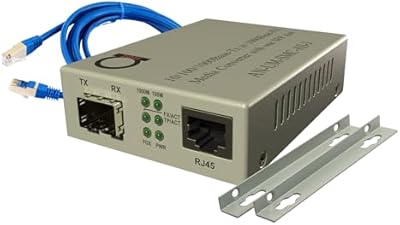
ADnet Fiber to Ethernet Converter with Open SFP Slot
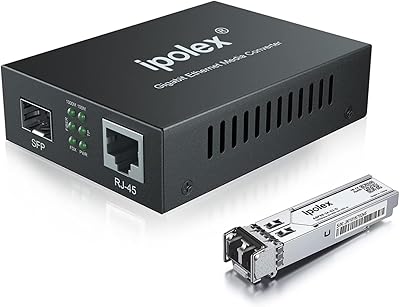
ipolex Gigabit Multimode LC Fiber Media Converter
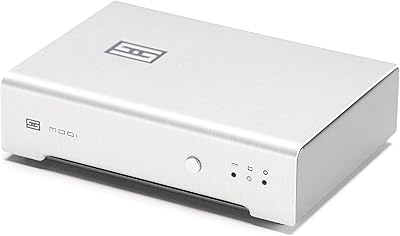
Schiit Modi+ Digital-to-Analog Converter
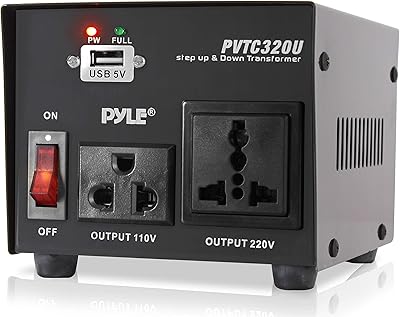
Pyle PVTC320U 500W Voltage Converter Transformer
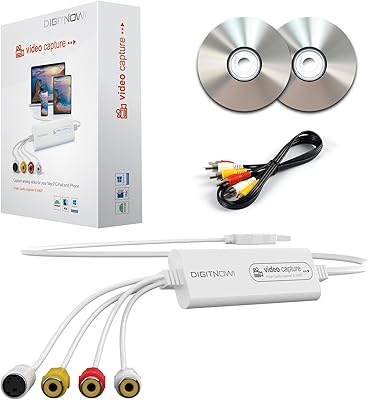
VIXLW VHSDC01 VHS to Digital Converter

Janryzone Janry-304-1 Cassette to MP3 Converter

Carhartt Convertible Backpack Tote

Sherpani Camden Convertible Backpack

AceChef 2300W Step Down Voltage Converter